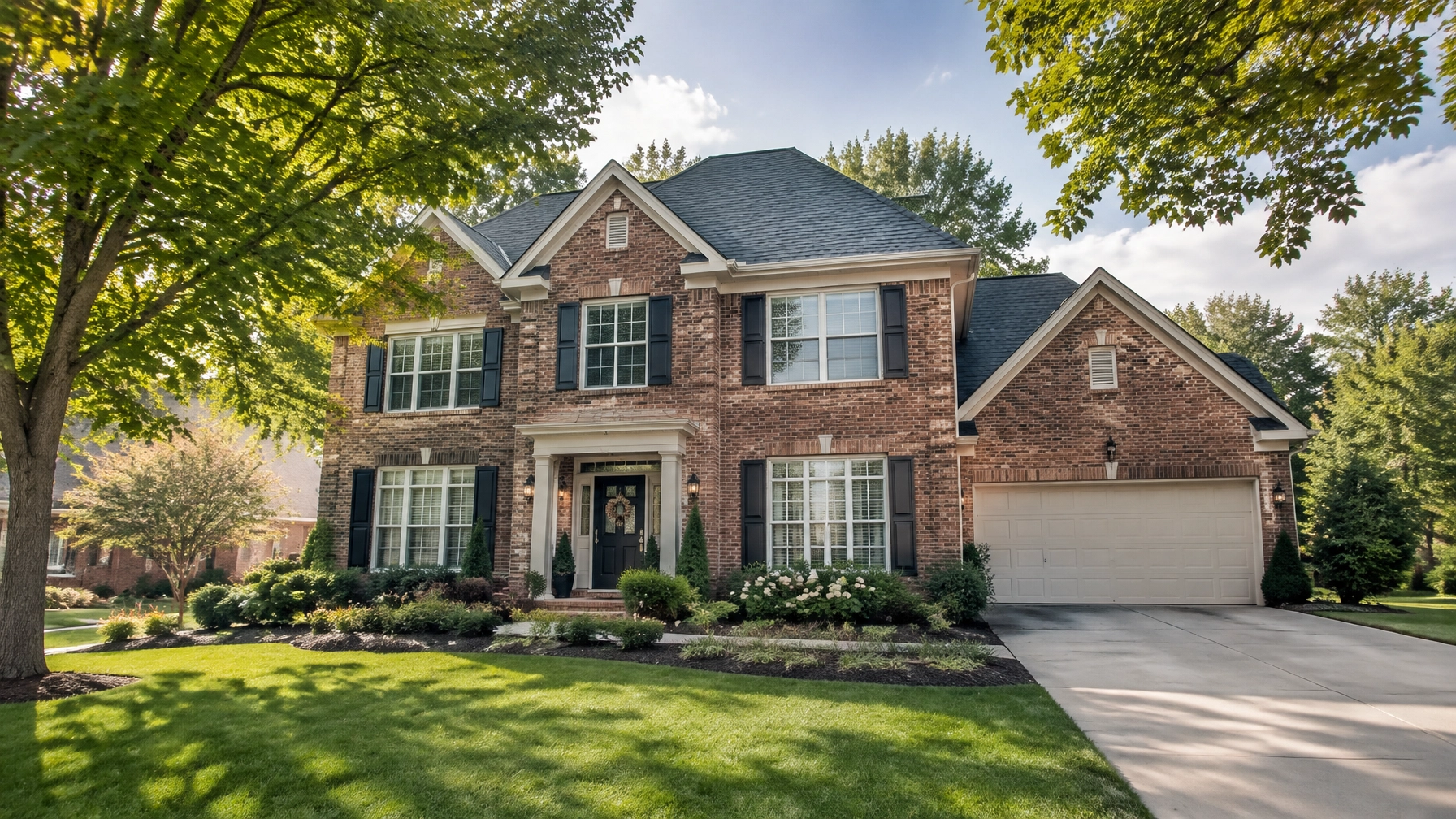
Louisville’s weather is quiet today, but the roof risks are not. Here is the latest forecast, the 2026 storm history homeowners should remember, and what a roof replacement can do for durability, curb appeal, and resale value.
Louisville weather snapshot: September 13–20, 2026
Louisville starts Sunday with patchy fog, especially across central and eastern Kentucky. The fog should lift as sunshine increases, leaving a warm afternoon near 89°F to 90°F.
A weak front could produce an isolated shower or thunderstorm near and north of I-64, but widespread rain is not expected. Overnight lows should settle in the mid-60s.
According to the WLKY Louisville forecast:
- Sunday, September 13: Partly cloudy, high near 89°F, low near 66°F, roughly a 20% rain chance
- Monday, September 14: Cooler and drier, high near 82°F with little or no rain
- Tuesday–Thursday: High pressure and a strong ridge push temperatures back into the low to mid-90s
- Thursday–Friday: A new front approaches, increasing shower and storm chances
- Next weekend: Temperatures fall back into the 80s, with Sunday potentially near 80°F
The National Weather Service Louisville office is also tracking the broader Ohio Valley pattern, including late-week storm potential.
For your roof, the important point is simple: today’s dry weather is useful inspection weather. It is a good time to check for damage before the next round of wind, hail, and heavy rain.
Why Louisville roofs take a beating
Louisville’s humid subtropical climate creates several recurring roofing problems. The Ohio River Valley sees hot, humid summers, strong spring storm systems, and winter temperature swings that can stress roofing components over time.
Spring hail (High risk)
Spring is Louisville’s primary severe-weather season. Hail can:
- Remove protective granules from asphalt shingles
- Bruise the fiberglass mat beneath the surface
- Crack shingle seals and tabs
- Damage vents, skylights, gutters, and metal flashing
- Create leaks that may not appear until the next heavy rain
Hail damage is not always obvious from the ground. A roof can look acceptable from the driveway while still having dozens of weakened impact points.
Summer wind and fallen trees (High risk)
Strong straight-line winds can lift shingle edges, loosen flashing, and damage ridge caps. Falling limbs can puncture the roof deck or crush entire roof sections.
Louisville’s 2026 storm history already includes several reminders:
- May 16: Quarter-sized hail was reported in downtown Louisville
- June 18: A tree fell onto a roof
- August 16: Severe storms produced gusts near 60 mph, with trees crashing into homes in Valley Downs, Pleasure Ridge Park, Valley Station, and along Christy Avenue
- September 10: Hailstones measuring about 1.3 inches provided a very recent warning for homeowners
If your property was affected by any of these events, schedule an inspection even if there is no active leak.
Freeze-thaw cycles (Hidden risk)
Louisville winters repeatedly move above and below freezing. Water enters small cracks, freezes, expands, and then contracts as temperatures rise.
This cycle can weaken:
- Chimney flashing
- Pipe boots
- Valley metal
- Sealants
- Roof-wall intersections
- Aging shingles
The damage often stays hidden until snow, ice, or heavy spring rain finds the opening.

When should Louisville homeowners inspect a roof?
Two inspection windows make sense:
- Late winter: Look for freeze-thaw damage before spring hail season
- Early fall: Check for summer storm damage and prepare for winter vulnerabilities
You should also inspect after any event involving hail, high winds, fallen branches, or debris. A professional inspection is especially important when the roof is more than 15 years old or has already developed recurring leaks.
Hail damage versus normal roof wear
Not every imperfection means you need a new roof. The cause, location, and extent of the damage matter.
| Condition | More likely cause | Typical implication |
|---|---|---|
| Random circular bruises or soft spots | Hail impact | Professional inspection and possible claim |
| Granules collected in downspouts after a storm | Hail or accelerated deterioration | Check shingle surface and gutters |
| Uniform fading across the roof | Normal aging or sun exposure | Usually maintenance-related |
| Cracked or lifted shingles in wind-facing areas | Wind damage | Repair may be possible if localized |
| Curling, brittleness, and widespread granule loss | Age-related wear | Replacement may be more practical |
| Damaged flashing around chimneys or vents | Storm, installation, or age | Repair promptly to prevent leaks |
| Exposed decking or punctures | Tree or debris impact | Emergency protection may be needed |
Insurance generally addresses covered storm damage, not ordinary aging or deferred maintenance. Before filing a claim, review your policy’s wind and hail deductible. Document the damage first, and avoid allowing anyone to make permanent repairs before the adjuster has inspected the roof unless temporary protection is necessary.
Louisville roof replacement costs in 2026
Roofing is priced by the square. One roofing square equals 100 square feet of roof surface. This is different from the home’s interior square footage.
Current Louisville planning ranges are:
| Roofing system | Approximate installed cost |
|---|---|
| Standard asphalt shingles (Budget) | $450–$900 per square |
| Architectural shingles (Popular) | $600–$900 per square |
| Metal roofing (Premium) | $800–$1,600+ per square |
| Typical full replacement | $8,000–$15,000 |
| Complex 2,000-square-foot roof | $13,000–$22,000+ |
A roof with multiple planes, dormers, valleys, steep pitches, skylights, or structural repairs will cost more than a simple ranch roof. Tear-off, decking replacement, difficult access, ventilation improvements, and permit requirements also affect the final price.
For a quick planning range, use the Get My Roof Estimate Now roof cost calculator. It lets you compare materials, roof pitch, size, location, and tear-off costs.
Which roof is best for home value?
For most Louisville homes, architectural shingles are the best balance of cost, appearance, durability, and resale appeal. They provide more dimension than basic three-tab shingles and complement ranch, colonial, and traditional homes.
Metal roofing can be a strong choice when your priorities include:
- Long service life
- Resistance to wind and fire
- Lower long-term maintenance
- A modern or farmhouse appearance
However, a premium metal roof does not automatically produce a higher resale return. The best roof for home value is usually the one that fits the neighborhood, the home’s architecture, and the buyer expectations in that price range.
A roof replacement can support resale value in three ways:
- Roof replacement resale value: Buyers see fewer immediate maintenance concerns.
- Roof curb appeal home value: A clean, uniform roof can improve the first impression from the street.
- Roof replacement ROI: A new roof may not return every dollar spent, but it can help protect the sale price and reduce negotiation credits.
If you are preparing to sell, prioritize a professional-looking installation, sound flashing, proper ventilation, and a transferable warranty over unnecessary upgrades.

Louisville permit and contractor requirements
A residential roof replacement generally requires a building permit in Louisville Metro. Independent communities, including Jeffersontown and St. Matthews, may have their own building departments and procedures.
Permit fees vary by jurisdiction and project valuation. Before work begins, contact the Louisville Metro Office of Construction Review at (502) 574-3321 to confirm the current requirements.
Also verify that your contractor holds a current Louisville Metro Home Improvement Contractor registration when applicable. Ask who will obtain the permit, schedule inspections, and provide documentation when the project is complete.
Pre-storm roof checklist
Before the next late-week front:
- Walk the property and look for loose or missing shingles
- Check gutters for unusual granule buildup
- Trim branches hanging over the roof
- Secure patio furniture and other loose outdoor items
- Look for water stains in attics and upper-floor ceilings
- Check flashing around chimneys, skylights, and plumbing vents
- Photograph the roof from the ground
- Save your insurance policy and deductible information
- Do not climb onto a wet or steep roof
A professional can inspect areas that are unsafe or impossible to see from the ground.
What to do after hail or wind damage
- Take photos and video from the ground and attic.
- Write down the storm date and what happened.
- Protect active leaks with temporary measures or emergency tarping.
- Contact your insurance company and ask about claim deadlines.
- Schedule a professional inspection.
- Request a written repair-versus-replacement estimate.
- Confirm permit handling and contractor registration.
- Avoid signing an assignment of benefits or broad contract under pressure.

Get a Louisville roof estimate in about 60 seconds
You do not need to wait days for several contractors to provide a starting price. Get My Roof Estimate Now uses satellite imagery to measure your roof and estimate its size, pitch, and complexity.
The estimate is:
- Free
- Available without a credit card
- Usually delivered in about 60 seconds
- Based on your property rather than a generic average
- Designed to show low, middle, and high pricing ranges
Use the result to plan maintenance, compare roofing materials, prepare for a replacement, or understand your potential roof replacement ROI before scheduling contractor visits.
Forecast sources: WLKY Louisville Weather and National Weather Service Louisville.
Leave a Reply