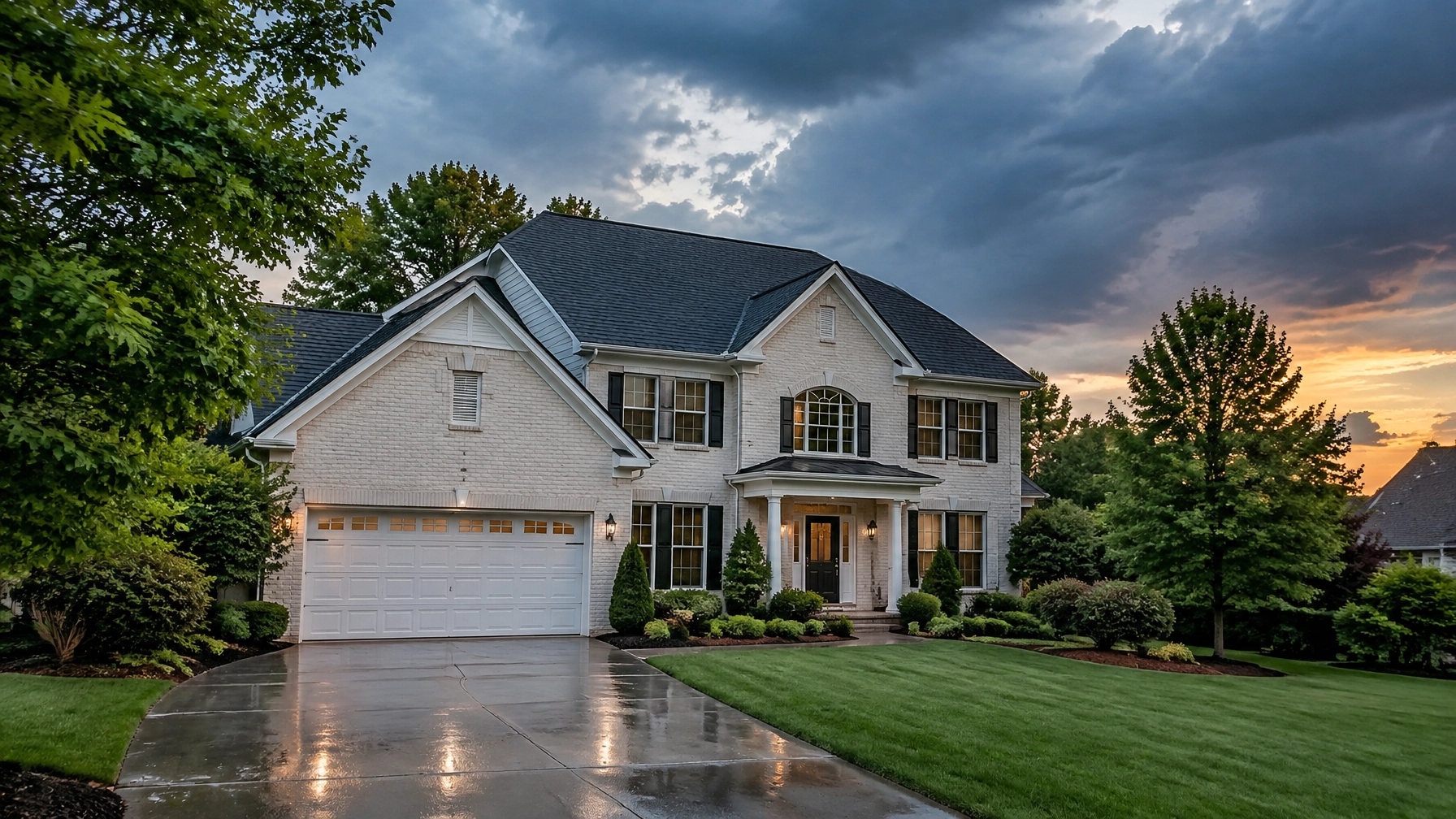
Charlotte homeowners should treat today’s weather as a roof-maintenance reminder, not just a forecast update.
Saturday, September 12, is expected to stay humid and cloudy, with a high near 86°F and a heat index in the low-to-mid 90s. Scattered showers and thunderstorms may develop through the day, with the highest storm risk this evening and early overnight.
Sunday looks warmer, near 90°F, with isolated showers and storms. Monday may reach the low 90s, with additional isolated storm chances.
That repeated cycle of heat, humidity, heavy rain, wind, and occasional hail is normal for Charlotte’s Piedmont climate. It is also one of the main reasons roofs that look acceptable from the ground can develop hidden weaknesses over time.
Charlotte’s Main Roofing Threat: Thunderstorm Wind
Charlotte’s most consistent severe-weather roof risk is not snow or sustained hurricane wind. It is the sudden wind produced by thunderstorms, downbursts, and organized wind lines.
Storm gusts in the 50–85 mph range can cause:
- Ridge-cap failures along the roof peak
- Lifted, creased, or missing shingles
- Damaged flashing around chimneys, walls, and skylights
- Debris impact from branches and loose outdoor items
- Gutter separation and denting
- Water intrusion beneath loosened roofing materials
Wind damage often begins at the roof’s most exposed edges. Ridge caps, rake edges, eaves, and areas around roof penetrations deserve special attention after a strong storm.
A roof does not need to lose an entire section of shingles to suffer meaningful damage. A few lifted tabs can allow wind-driven rain beneath the roofing system. Repeated storm exposure can also loosen fasteners gradually, creating leaks that appear weeks or months later.
The National Weather Service Raleigh office provides regional radar, warnings, and severe-weather information for central North Carolina. Always follow official alerts and avoid inspecting your roof during active storms.
Hail Season Can Shorten Asphalt Roof Life
Charlotte’s most significant hail threat typically occurs during the spring and warm-season thunderstorm cycle. Hail can range from pea-sized stones to impacts approaching 2 inches.
Even hail that does not visibly puncture a shingle can cause functional damage. Common problems include:
- Soft bruises in the shingle mat
- Granule loss that exposes the asphalt surface
- Cracks around the impact point
- Dents in gutters, downspouts, vents, and HVAC equipment
- Weakened areas that fail during a later rain or wind event
Hail bruising is difficult to identify from the ground. A roof may look intact while individual shingles have lost some of their protective surface.
After a suspected hailstorm, check the ground near downspouts for unusual granules. Look for dents in soft metals and inspect siding, window screens, outdoor furniture, and vehicles for matching impact marks. These signs do not prove roof damage, but they justify a closer inspection.
Document what you see with dated photographs. Do not climb onto the roof yourself, especially when shingles may be loose or the surface is wet.

Heat and Humidity Create Long-Term Stress
Charlotte’s humid subtropical climate puts asphalt roofing through repeated expansion and contraction.
On sunny days, roof surfaces can become much hotter than the surrounding air. After a storm, humidity and moisture remain trapped around roofing components, especially when attic ventilation is inadequate. Over time, these conditions can contribute to:
- Curling or cracking shingles
- Premature loss of flexibility
- Algae and organic growth
- Rust around exposed metal components
- Moisture accumulation in the attic
- Deterioration of roof decking and insulation
Heat and humidity do not normally destroy a sound roof in one season. The concern is cumulative stress. A roof that is already 15–20 years old may have less reserve against the next wind line or hailstorm.
Proper attic ventilation is part of the roof system: not an optional upgrade. Balanced intake and exhaust ventilation helps release heat and moisture while reducing stress on shingles and wood components. However, ventilation should be evaluated as a complete system. Adding one type of vent without adequate intake can produce limited results.
Best Roofing Materials for Charlotte
When replacement becomes necessary, material selection should reflect Charlotte’s wind, hail, heat, and humidity: not just appearance or initial price.
Architectural Asphalt Shingles (Popular)
Architectural shingles are the most practical choice for many Charlotte homeowners.
A quality system with proper installation typically offers:
- Approximately 25–35 years of expected service
- Better dimensional stability than basic 3-tab shingles
- Broad color and style selection
- Easier repairs and replacement
- Lower upfront cost than metal roofing
For additional storm protection, consider Class 4 impact-resistant architectural shingles. Class 4 products are tested under the UL 2218 impact-resistance standard and may qualify for insurance savings.
Potential discounts are insurer-specific. In North Carolina, homeowners may see savings in the 10–30% range on eligible wind or hail coverage, but the exact amount depends on the carrier, ZIP code, policy, roof age, and required documentation. Confirm eligibility with your insurance company before purchasing.
Standing Seam Metal (Premium)
Standing seam metal roofing is a strong long-term option for homeowners planning to stay in their property.
Typical advantages include:
- Approximately 45–70 years of service life
- High resistance to wind uplift when correctly engineered and installed
- Strong hail and impact performance
- Reflective surfaces that can reduce solar heat gain
- Minimal exposed fasteners
- Clean, modern rooflines
Metal roofing has a higher initial price. The current national benchmark from our roof cost calculator places many metal projects around $16,000–$22,000 or more, depending on size, pitch, complexity, and material.
Do not choose metal solely because it is marketed as “maintenance-free.” Fasteners, seams, flashing, coatings, and penetrations still require periodic review.
Avoid 3-Tab Shingles
Three-tab shingles may have a lower initial price, but they are a weaker fit for a storm-exposed, humid Piedmont climate.
They generally provide:
- Shorter service life
- Less dimensional strength
- A flatter, less substantial appearance
- Lower resistance to repeated wind stress
- Fewer durability advantages than modern architectural products
For a new roof in Charlotte, architectural shingles or standing seam metal are typically more appropriate starting points.

A Practical Post-Storm Roof Checklist
Once the storm has passed and conditions are safe, complete a ground-level inspection.
Check the roofline
Look for:
- Missing or displaced shingles
- Lifted ridge caps
- Exposed underlayment
- Loose flashing
- Sagging areas
- Branches or debris on the roof
Check the gutters
Look for:
- Heavy granule accumulation
- Dents from hail
- Separated sections
- Overflow marks
- Blockages from leaves and small branches
Clean gutters help move stormwater away from the roof edge and foundation. Clogged gutters can contribute to water backup, fascia damage, and localized roof-edge deterioration.
Check the attic and ceilings
Inside the home, look for:
- New brown stains
- Damp insulation
- Musty odors
- Daylight through roof boards
- Drips around vents or chimneys
- Unusual humidity
If you find active leaking, contain the water safely and contact a qualified roofing professional. Avoid making permanent repairs before documenting the damage for your insurer.
Document before cleanup
Take clear photographs of:
- The roof from the ground
- Fallen branches and debris
- Damaged gutters and vents
- Interior stains
- Nearby siding, screens, and outdoor equipment
- Any visible shingle or ridge-cap damage
Keep storm dates, inspection notes, contractor reports, and receipts together. Your insurance carrier may require documentation to evaluate a claim.

Know Your Replacement Budget Before the Next Storm
In 2026, a typical U.S. roof replacement often falls between $9,000 and $22,000, while many projects land within the broader $8,000–$25,000 range. Charlotte pricing depends on local labor, roof size, pitch, access, tear-off requirements, material selection, and roof complexity.
The fastest way to establish a property-specific starting point is to use a satellite-based estimate. Get My Roof Estimate Now measures roof size, pitch, and complexity from satellite imagery and provides a low-middle-high price range in about 60 seconds.
The estimate is free, requires no credit card, and can help you compare architectural shingles, impact-resistant products, and metal roofing before scheduling contractor visits.
It is not a substitute for a final in-person inspection. A contractor still needs to assess decking, flashing, ventilation, and storm damage at close range. But an instant estimate gives you a realistic planning number before the next storm makes the decision urgent.
The Charlotte Roofing Takeaway
This weekend’s 86°F, humid Saturday and warmer Sunday forecast are typical of the conditions that test Piedmont roofs.
The key risks are straightforward:
- Thunderstorm wind can lift shingles and damage ridge caps.
- Hail can bruise asphalt shingles and strip protective granules.
- Heat and humidity accelerate long-term material stress.
- Poor ventilation and clogged gutters increase moisture problems.
- Older roofs become less forgiving after repeated storm exposure.
Inspect safely after storms, document damage early, and compare replacement materials based on total service life: not just the lowest initial quote. For a quick, transparent starting point, use a satellite roof estimate before contacting local, licensed, and insured contractors.
Leave a Reply