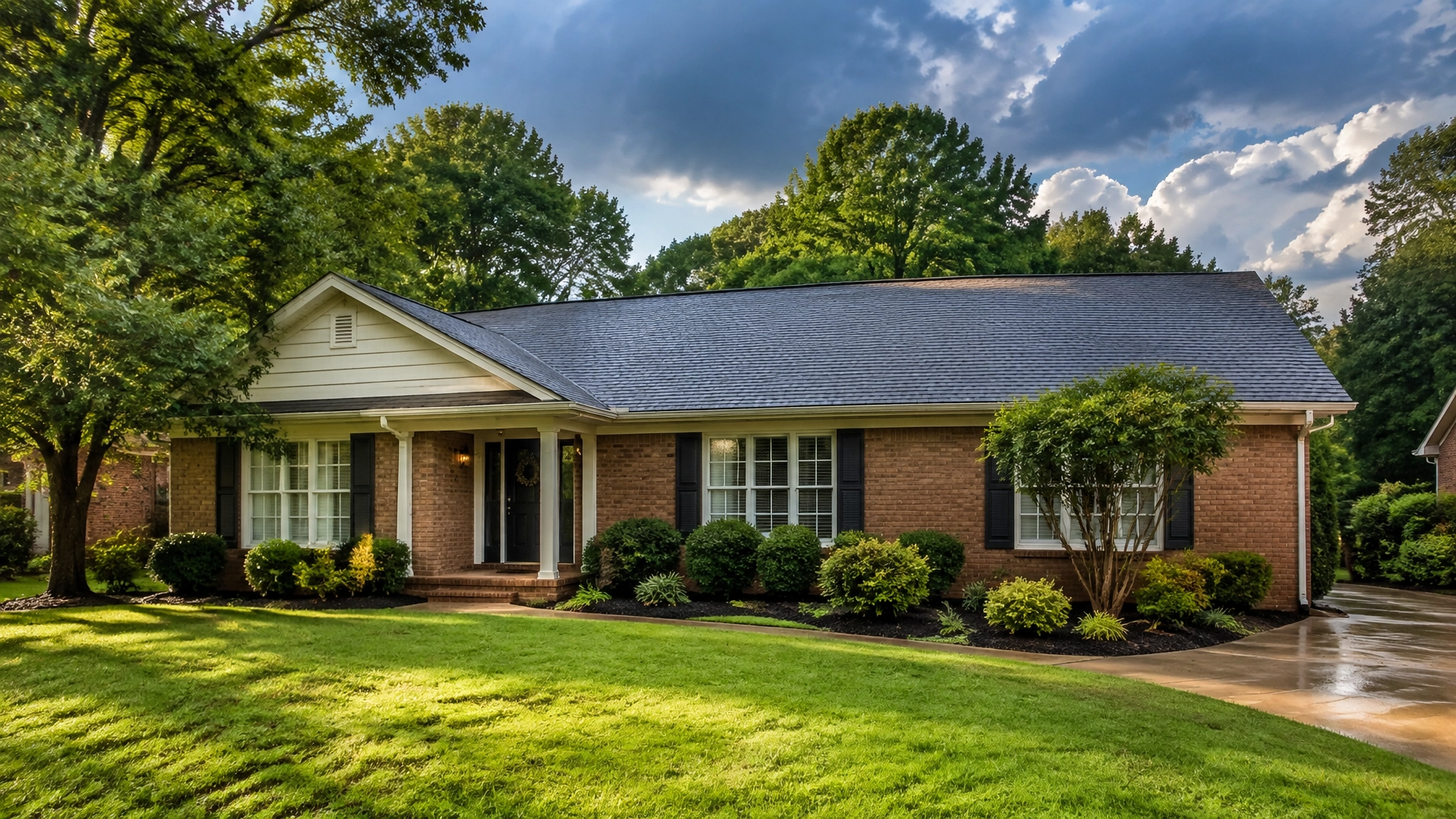
Charlotte’s roof is facing a familiar Piedmont combination today: thunderstorms, an 89°F high, a 73°F low, and heavy late-summer humidity. That pattern can expose weak shingles, loose flashing, clogged gutters, and poor attic ventilation quickly.
The Charlotte metro sits in Mecklenburg County, where hot summers, frequent afternoon storms, and occasional winter freeze-thaw cycles create a demanding roofing environment. Homeowners should treat today’s storms as a reminder to inspect and maintain the entire roof system: not just the shingles.
Charlotte’s 7-Day Roofing Weather Outlook
The upcoming forecast shows a gradual move from stormy summer conditions toward cooler, drier weather:
| Date | Conditions | High / Low |
|---|---|---|
| Saturday, Sep. 13 | Thunderstorms | 89°F / 73°F |
| Monday, Sep. 14 | Partly cloudy | 91°F / 70°F |
| Tuesday, Sep. 15 | Overcast | 85°F / 70°F |
| Wednesday, Sep. 16 | Partly cloudy | 88°F / 67°F |
| Thursday, Sep. 17 | Clear | 87°F / 69°F |
| Friday, Sep. 18 | Mainly clear | 85°F / 71°F |
| Saturday, Sep. 19 | Overcast | 83°F / 69°F |
The clear and partly cloudy days later in the week may provide better windows for roof inspections, gutter cleaning, and planned exterior work. However, storm damage can worsen quickly, so do not wait for perfect weather to address an active leak.
How Late-Summer Heat Stresses Charlotte Roofs
Air temperatures near 90°F are only part of the story. Direct sunlight can make dark asphalt shingles significantly hotter than the surrounding air. Repeated heating and cooling gradually affect the asphalt mat, seal strips, and protective surface granules.
Over time, Charlotte homeowners may notice:
- Granules collecting in gutters or downspouts
- Shingles that appear brittle, curled, or cracked
- Faded or uneven roof coloring
- Exposed fasteners or deteriorating sealant
- Increased attic temperatures
- Faster aging on south- and west-facing roof slopes
Heat damage is often gradual. A roof may look acceptable from the ground while its sealant, flashing, and underlayment are already becoming less reliable.
Poor attic ventilation can accelerate the process. Hot air trapped beneath the roof deck raises temperatures around the underside of the shingles and can contribute to premature deterioration. A properly designed system should allow air to enter through soffit vents and exit through ridge or other high vents.
Thunderstorms, Wind-Driven Rain, and Hurricane-Season Moisture
Charlotte is inland, but hurricane-season weather still matters. Tropical systems and their remnants can bring heavy rain, gusty winds, saturated soil, and tree damage to the Piedmont.
Afternoon thunderstorms create several immediate risks:
Wind-lifted shingles
Strong gusts can lift shingle edges, especially where adhesive strips have weakened with age. A shingle may remain attached after a storm but no longer seal correctly.
Damaged flashing
Flashing around chimneys, skylights, valleys, walls, and plumbing vents is especially important during wind-driven rain. Small gaps can allow water behind the roof covering and into the decking or attic.
Fast, concentrated rainfall
Charlotte storms can drop significant rain in a short period. If gutters are clogged or undersized, water may overflow against fascia boards, siding, windows, and the foundation.
Falling branches and hail
Storm debris can puncture shingles or damage vents. Hail can leave small circular impact marks, bruised shingles, dented metal flashing, and damaged gutters.
After today’s thunderstorms, inspect from the ground with binoculars. Do not climb onto a wet roof. If you see missing shingles, ceiling stains, or water entering the attic, arrange a professional inspection promptly.

Humidity and Attic Ventilation: Charlotte’s Hidden Roofing Issue
Charlotte’s late-summer humidity does not stop at the roofline. Warm, moist air can enter the attic through gaps around light fixtures, plumbing penetrations, ductwork, and the attic hatch.
When moisture becomes trapped, it can contribute to:
- Damp insulation
- Mold growth
- Wood staining or decay
- Corroded fasteners
- Musty odors
- Soft or damaged roof decking
- Reduced shingle life
A balanced attic ventilation system usually includes:
- Clear soffit or eave intake vents
- Ridge, gable, or other high exhaust vents
- Baffles that keep insulation from blocking airflow
- Properly sealed ceiling penetrations
- Bathroom and kitchen exhaust fans vented outdoors
ENERGY STAR’s attic ventilation guidance emphasizes maintaining a clear path for air to enter low and leave high. Ventilation alone cannot solve every moisture problem, so roof leaks and indoor air leaks also need attention.
Have an attic professional check for wet insulation, dark staining, blocked soffits, and bathroom fans that terminate inside the attic.
Charlotte’s Freeze-Thaw Winters Still Matter
Summer heat and thunderstorms are the dominant roofing concerns in Mecklenburg County, but winter should not be ignored. Charlotte typically experiences freezing nights and occasional ice or snow events.
Freeze-thaw cycles can stress:
- Shingle edges
- Flashing joints
- Sealants
- Gutters and downspouts
- Masonry around chimneys
- Small cracks in roof penetrations
Water enters a small gap, freezes, expands, and then contracts as temperatures rise. Repeated cycles can turn a minor defect into a leak.
The best defense is seasonal maintenance. Repair damaged flashing and sealants before winter, keep gutters clear, and confirm that water drains away from the home.
Practical Storm-Readiness Checklist for Charlotte Homeowners
Use this checklist before and after periods of heavy weather:
Before the next storm
- Clean leaves and pine needles from gutters.
- Confirm downspouts discharge several feet away from the foundation.
- Trim branches that touch or overhang the roof.
- Secure patio furniture, planters, and other loose outdoor items.
- Check that attic vents are not blocked.
- Photograph the roof, gutters, and exterior for your records.
After a storm
- Look for missing, lifted, or cracked shingles.
- Check gutters for unusual amounts of granules.
- Inspect ceilings and upper-level walls for water stains.
- Look for dents in metal vents, flashing, and gutters.
- Check the attic for damp insulation or daylight through the roof deck.
- Contact your insurer promptly if you suspect covered storm damage.
- Never perform a roof inspection during active lightning, high winds, or heavy rain.
Temporary tarping may help limit additional damage, but it is not a permanent repair. Get a written inspection and estimate before authorizing major work.
Choosing Roofing Materials for Charlotte
For many Charlotte homes, architectural shingles (Popular) offer a practical balance of cost, appearance, and service life. They are available in numerous colors and profiles, making them a good match for ranch homes, colonials, and newer suburban construction.
Other options include:
- Impact-resistant shingles (Storm-focused): Helpful in areas with recurring hail exposure.
- Metal roofing (Long-life): Reflects more solar heat and can last substantially longer than asphalt, though installation costs are higher.
- Designer shingles (Curb-appeal focused): Provide a more upscale appearance for homes where roof aesthetics matter.
- Slate (Premium): Long-lasting and distinctive, but heavy and expensive. The structure must be suitable for it.
The best roof for home value is usually the material that fits the home’s architecture, neighborhood expectations, weather exposure, and budget. A premium material is not automatically the best investment if it is out of step with comparable homes nearby.
Charlotte Roof Replacement Costs and Planning
A typical Charlotte roof replacement may cost approximately $6,000 to $22,000, depending on roof size, pitch, complexity, material, tear-off requirements, and hidden decking damage. A typical 2,000-square-foot roof with architectural shingles may cost around $9,000, but your property can differ substantially.
You can review the Charlotte roofing estimate page or use the roof cost calculator for an initial range.
Get My Roof Estimate Now uses satellite imagery to measure your roof and provide a free preliminary price in about 60 seconds. It is a convenient way to understand the likely budget before scheduling contractor visits. A local contractor should still verify the roof’s condition, decking, ventilation, flashing, and code requirements before work begins.
New Roof ROI and Charlotte Home Value
A roof replacement is both a protection project and a resale decision. National estimates commonly place asphalt roof replacement ROI in the roughly 55% to 70% range, although results vary by market, material, installation quality, and project scope.
The value is not limited to a higher potential sale price. A new roof can also:
- Improve roof curb appeal and first impressions
- Reduce inspection objections
- Lower the chance of buyer repair credits
- Make insurance and financing discussions easier
- Provide documentation of recent maintenance
- Help a home compete against properties with older roofs
A practical roof replacement resale value strategy is to choose a durable, attractive material that fits the neighborhood rather than overspending on features buyers may not recognize. Keep invoices, permits, warranties, product details, and before-and-after photographs.
For a Charlotte homeowner planning to sell within several years, a clean, properly ventilated architectural shingle roof may offer a strong balance of appearance, durability, and cost. The real roof replacement ROI depends on local buyer expectations and the condition of the rest of the property.
Bottom Line for This Charlotte Weather Blitz
Today’s thunderstorms and 89°F heat are a useful stress test for roofs across the Charlotte metro. Check for storm damage, clear drainage paths, and pay close attention to attic moisture and ventilation.
If your roof is approaching 20 years old, has recurring leaks, or shows widespread granule loss and shingle damage, start planning before an emergency forces the decision. A free, satellite-powered estimate gives you a fast starting point, while a licensed local contractor can confirm the roof’s actual condition and replacement requirements.
Leave a Reply