Welcome to today’s Daily Weather Blitz for Wilmington, North Carolina. As we navigate the heart of summer on Wednesday, July 29, 2026, coastal homeowners face a punishing combination of high heat, intense humidity, and the ongoing demand for resilient building standards. Whether you are living in a historic home near downtown or a modern build out toward Wrightsville Beach, understanding how your property interacts with our unique coastal climate is essential for long-term protection and financial peace of mind.
At Get My Roof Estimate Now, we help homeowners evaluate their roofing and structural needs quickly and transparently using advanced satellite technology. Let’s dive into today's weather conditions in Wilmington and explore how you can fortify your home against the coastal elements.
Wilmington Weather Breakdown: July 29, 2026
Today brings classic mid-summer coastal weather to the Port City. Under sunny skies, temperatures are climbing rapidly:
- Current Conditions: Sunny and clear across New Hanover County.
- High Temperature: Reaching near 93°F this afternoon.
- Low Temperature: Dropping to around 70°F to 71°F overnight.
- Heat Index: Soaring to approximately 100°F, triggering an active Heat Advisory for the Wilmington area.
- Winds: West winds at 5 to 10 mph, with occasional stronger gusts reaching up to 32 mph.
- Precipitation Chance: Minimal today at roughly 1%.
Weekend Outlook & Tropics
Looking ahead, dry conditions will persist for the next couple of days, but rain chances begin to tick upward as we head into the weekend: expect a 10% to 20% chance of isolated showers on Saturday, increasing to 50% to 60% by Sunday afternoon. Fortunately, tropical storm formation is not expected anywhere in our region this week, giving homeowners a brief window to inspect exterior maintenance and prepare for the peak of hurricane season.
The Coastal Element: How Wilmington’s Climate Tests Your Home
Wilmington's prime coastal location offers incredible lifestyle benefits, but it also creates a uniquely aggressive environment for residential buildings.

Constant exposure to high humidity, intense ultraviolet radiation, salt-laden sea breezes, and periodic severe storms places heavy stress on exterior building envelopes. Over time, these environmental factors accelerate wear and tear:
- Thermal Shock & UV Radiation: Extreme roof surface temperatures (often exceeding 150°F on sunny summer days) cause roofing materials to expand and contract rapidly, degrading shingle granules and weakening adhesives.
- Moisture & Humidity: Daily humidity levels trap moisture in attics and crawl spaces, promoting mold growth and wood rot if ventilation is inadequate.
- Salt Air Corrosion: Airborne salt deposits from the Atlantic Ocean corrode standard steel fasteners, flashings, window frames, and HVAC units at an accelerated rate.
- High Winds & Storms: Sudden gusts: such as the 32 mph winds recorded today: test roof deck adhesion and gable end walls, making structural integrity paramount.
Essential Building Materials for Coastal Resilience
To withstand Wilmington’s climate, standard building materials often fall short. Upgrading to coastal-grade specifications ensures your home remains safe, durable, and energy-efficient.
1. Roofing (Popular: Architectural Shingles | Premium: Standing-Seam Metal)
- Impact-Rated Architectural Shingles: Rated for high winds (often up to 130 mph) with multi-layered construction that resists tearing and granule loss.
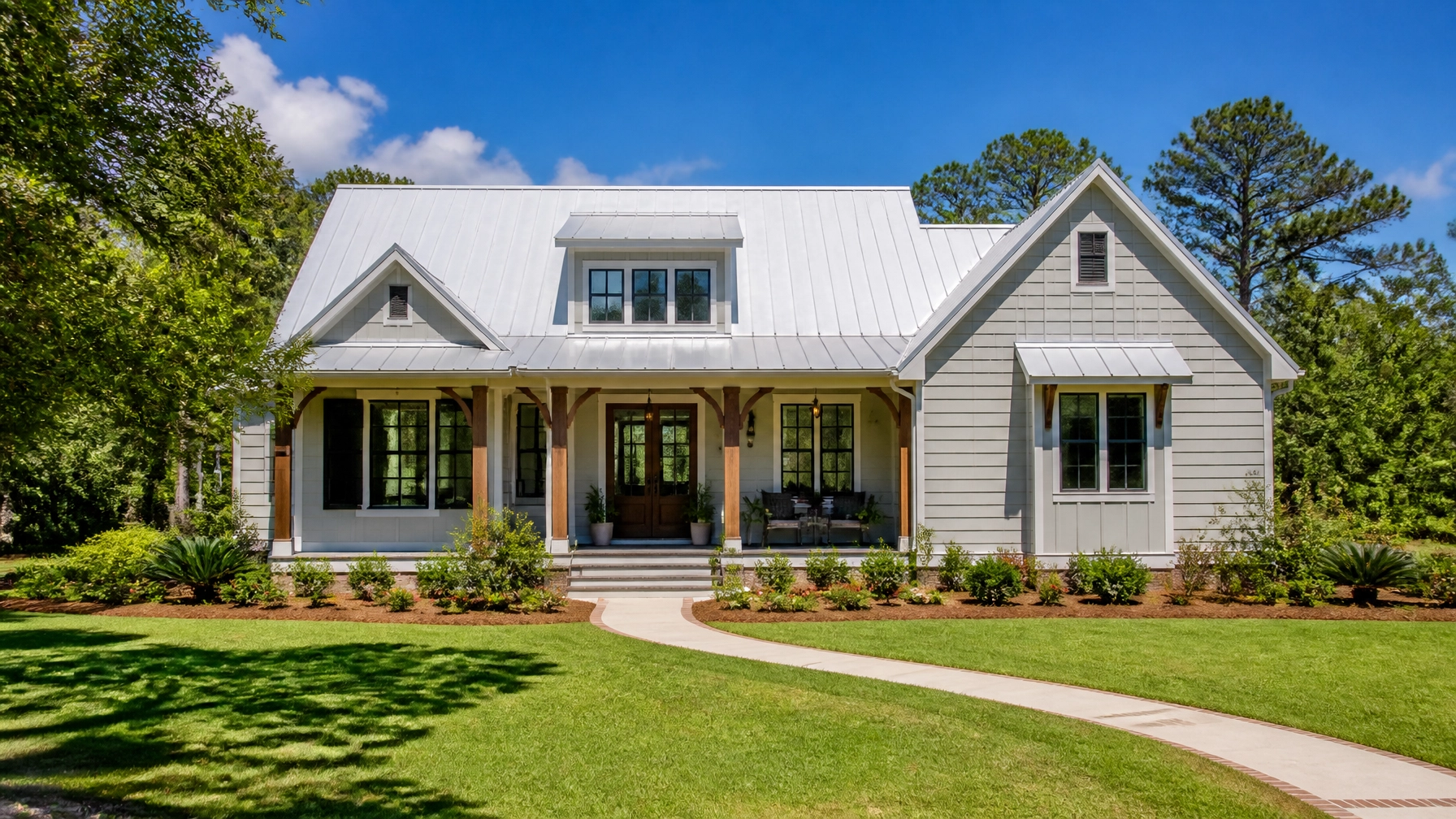
- Standing-Seam Metal Roofs: An exceptional premium choice. Metal roofs shed high winds effortlessly, reflect solar radiation to lower cooling bills, and do not corrode when paired with marine-grade coatings.
2. Fasteners & Hardware
- Always insist on 316 Stainless Steel Fasteners and hot-dipped galvanized nails. Standard nails rust out within a few years in coastal salt air, causing roof decks and siding panels to loosen during severe weather.
3. Siding & Exterior Trim (Popular: Fiber Cement)
- Fiber Cement Siding (e.g., James Hardie): Unlike wood or cheap vinyl, fiber cement is non-combustible, impervious to moisture and rot, and withstands high winds without warping or cracking.
4. Windows, Doors & Insulation
- Impact-Rated Windows and Doors: Designed with laminated glass and reinforced frames to withstand windborne debris without breaking.
- Closed-Cell Spray Foam Insulation: Acts as an air barrier, blocks moisture intrusion, and adds structural rigidity to roof decks from the inside.
- Mold-Resistant Drywall & Luxury Vinyl Plank (LVP) Flooring: Protects interior spaces from humidity and minor moisture incidents.
FORTIFIED Construction Standards & Insurance Savings
When replacing a roof or undertaking major renovations in coastal North Carolina, building to FORTIFIED Home™ standards (established by the Insurance Institute for Business & Home Safety – IBHS) is one of the smartest investments you can make.

FORTIFIED construction goes beyond standard building codes by focusing on the continuous load path from the roof deck down to the foundation. Key enhancements include:
- Sealed Roof Decks: Using tape or specialized underlayments to prevent water intrusion even if shingles are blown off.
- Enhanced Edge Metal: Securing rakes and eaves with high-performance metal edge systems tested to withstand severe uplift winds.
- Ring-Shank Nails: Using superior fasteners that hold roof decking 2x more securely than smooth nails.
Financial Benefits
Beyond superior storm protection, many homeowners in coastal North Carolina qualify for significant insurance premium discounts or windstorm insurance credits when certified under FORTIFIED standards. Contact your insurance carrier to learn about local mitigation credits.
Summer Maintenance Checklist for Wilmington Homeowners
With peak hurricane season approaching and heat indices topping 100°F today, use this practical checklist to keep your home in top shape:
- Rinse Exterior Surfaces: Periodically wash salt residue off siding, windows, and outdoor fixtures using fresh water to prevent corrosive buildup.
- Inspect Flashings & Roof Seals: Check chimney flashings, pipe boots, and valley seals for cracks or drying caulk. High heat can degrade sealants quickly.
- Manage Indoor Humidity: Keep HVAC systems serviced and utilize dehumidifiers to maintain indoor relative humidity below 50%, preventing mold growth.
- Clear Gutters & Downspouts: Ensure proper drainage so that summer downpours and future storm runoff move safely away from your foundation.
- Schedule a Professional Roof Check: If your roof is approaching 15–20 years old, don't wait for a leak to find out its condition.

Know Your Roof Replacement Costs Instantly in Wilmington
Planning a roof replacement in Wilmington doesn't have to involve waiting weeks for contractor sales calls or guessing at ballpark figures.
Using advanced satellite imagery technology, our platform measures your home's roof to within inches: calculating pitch, area, and complexity in under 60 seconds. Whether you are budgeting for durable architectural shingles or a premium metal upgrade, you can access transparent, data-driven pricing with zero hidden fees.
Ready to see what your project will cost? Head over to our Roof Cost Calculator to get your instant, free estimate today.
Conclusion
Living in Wilmington, NC brings incredible coastal charm, but it demands respect for our intense summer heat and coastal weather risks. By investing in durable, high-performance materials, adhering to FORTIFIED construction standards, and keeping up with proactive seasonal maintenance, you protect both your family and your property value.
Stay cool during today's Heat Advisory, and plan ahead with confidence using modern tools designed to make homeownership simpler and more transparent.
Leave a Reply