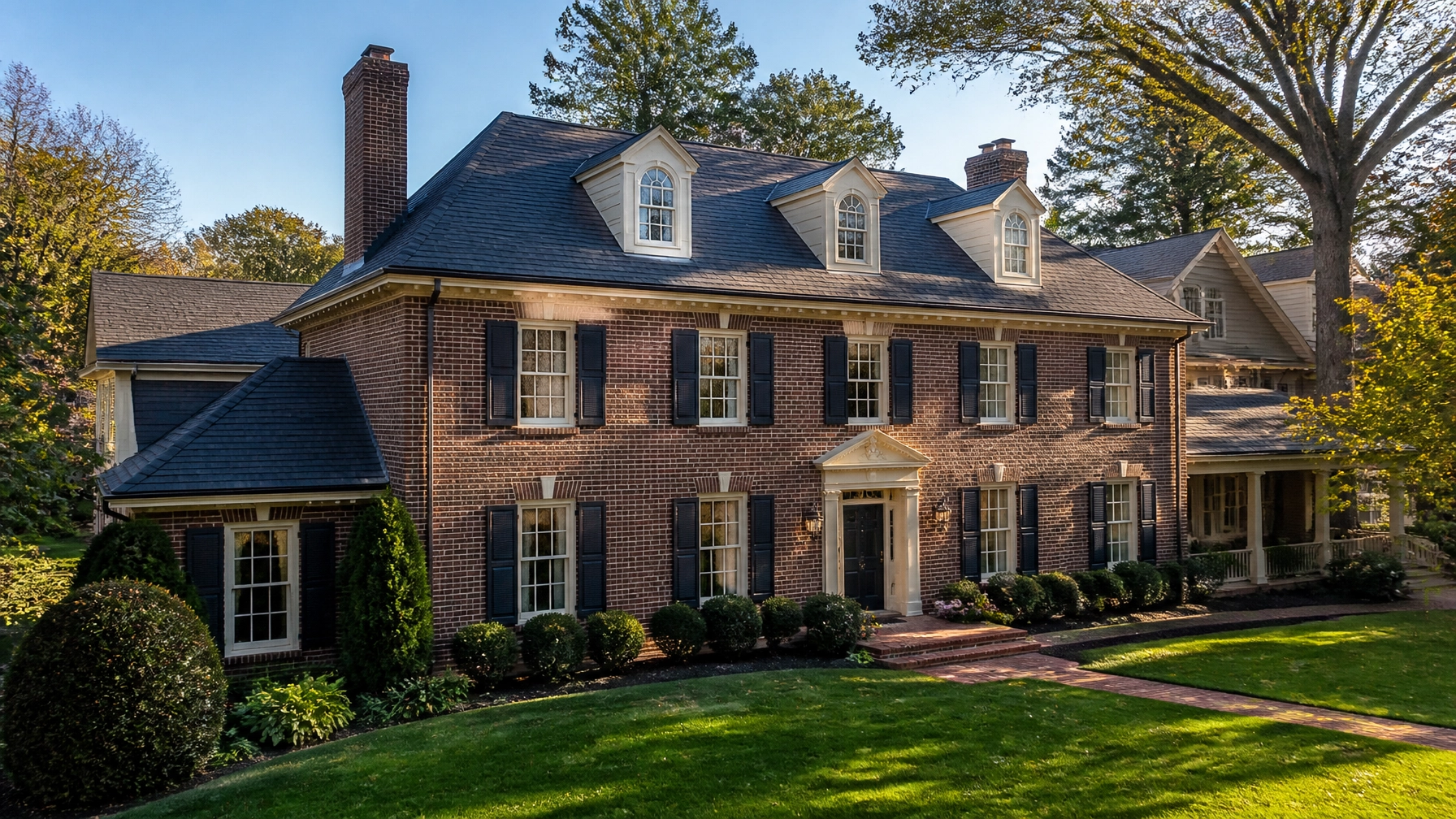
Navigating a roof insurance claim in Atlanta is significantly different in 2026 than it was just a few years ago. With the introduction of Georgia Act 277 and the increasing frequency of severe summer hail storms, homeowners in Fulton County must be more strategic than ever.
In this masterclass, we break down the complex web of Georgia insurance laws, debunk common regional myths, and explain how modern technology can help you secure a fair settlement for your Atlanta roof replacement.
The Georgia 12-Month Rule: Timing is Everything
In Georgia, the clock starts ticking the moment the storm passes. While the state’s general statute of limitations for written contracts is six years, most homeowners insurance policies in Georgia contain a suit-against-us provision that requires you to file a claim and potentially initiate legal action within one year (12 months) of the date of loss.
For Atlanta residents, this is critical. If a summer storm hits Buckhead in June 2026, you generally cannot wait until August 2027 to report the damage. Waiting too long is the #1 reason claims are denied for "late reporting."
Pro-Tip: Document the "Date of Loss" Immediately
Insurers look for specific weather events to verify claims. If you suspect damage:
- Save Local Weather Reports: Note the date of major hail or wind events in Atlanta.
- Take "Before" Photos: Maintain a folder of your roof's condition annually.
- Perform Temporary Repairs: Georgia law requires you to mitigate further damage (e.g., tarping a leak), but keep all receipts for reimbursement.

Decoding Georgia Act 277 (2026 Update)
A major shift occurred in 2026 regarding policy renewals. Under Act 277, insurance carriers are now required to provide at least 60 days’ notice before non-renewing a homeowners policy.
While this sounds like a win for consumer protection, it is often triggered by the age and condition of your roof. In Atlanta, we are seeing carriers use this 60-day window to force homeowners into one of three positions:
- Replacement Requirement: Replace the roof out-of-pocket to keep coverage.
- Coverage Shift (ACV): Moving the roof from Replacement Cost Value (RCV) to Actual Cash Value (ACV).
- The Deductible Spike: Increasing the wind/hail deductible to a percentage (e.g., 2% of home value) rather than a flat dollar amount.
Key Insight: If your roof is 15–20+ years old, you are at high risk for an ACV policy. This means if a storm hits, the insurer will subtract "depreciation" from your payout, often leaving you with 50% or less of the total replacement cost.
Debunking the "25% Rule" Myth
If you’ve moved to Atlanta from Florida, you may have heard of the "25% Rule" (where if 25% of the roof is damaged, the whole thing must be replaced).
Georgia does not have a 25% rule.
In Atlanta, replacement is governed by the "matching" principle and the "line of sight" rule. Georgia has no statutory matching law. This means that if your shingles are discontinued but the damage is only on one slope, your insurer may only pay for a "spot repair" with shingles that don't perfectly match, unless your specific policy includes a Matching Endorsement.
The Legal Side: Deductibles and Contractor Ethics
It is a common (and illegal) practice for some "storm chaser" contractors to offer to "waive" or "absorb" your deductible.
In Georgia, this is insurance fraud.
According to O.C.G.A. § 33-1-19, it is illegal for a residential contractor to pay, waive, or rebate any part of an insurance deductible. If a contractor offers this, they are asking you to participate in a felony.
Your Rights as an Atlanta Homeowner:
- Right to Choose: Your insurance company cannot force you to use a "preferred" contractor. You have the legal right to hire any licensed and insured professional you trust.
- The 5-Day Cancellation: If you sign a contract based on an insurance claim and the claim is subsequently denied, Georgia law allows you to cancel that contract within five business days of receiving the denial notice.
- The Right to Supplement: If the insurance adjuster’s estimate is too low (e.g., it misses the cost of Fulton County permits), your contractor can submit a "supplement" request with photographic evidence to bridge the gap.
Atlanta & Fulton County Permitting Requirements
Replacing a roof in Atlanta isn't just about shingles; it's about code compliance. For 2026, any full tear-off and replacement inside the City of Atlanta or unincorporated Fulton County requires a building permit.
The 2024 International Residential Code (IRC), with Georgia Amendments, is the standard for 2026. This includes strict requirements for:
- Ice and Water Shield: While not always required in GA's climate, it is often recommended in valleys and eaves.
- Drip Edge: Now a standard requirement for most code-compliant installs.
- Ventilation: The "attic breathability" must meet specific ratios to prevent mold and wood rot.

The 60-Second Advantage: Using Satellite Tech Before You File
The biggest mistake Atlanta homeowners make is calling their insurance agent before knowing the true cost of their roof. If you file a claim and the damage is below your deductible, you still end up with a "claim" on your record, which can raise your premiums.
At Get My Roof Estimate Now, we use advanced satellite imagery to provide you with a high-accuracy measurement of your roof (accurate to within inches) in under 60 seconds.
Why use our tech before filing?
- Instant Budgeting (Budget): Get a low-to-high price range based on current Atlanta labor and material rates.
- Verify Damage Scope (Accuracy): Know exactly how many "squares" (100 sq. ft. sections) your roof has so you can compare it to the adjuster's estimate.
- No Visit Required (Speed): You don't have to wait 3 days for a contractor to show up with a ladder. You get the data you need to talk to your insurer immediately.

Steps to a Successful Atlanta Roof Claim in 2026
- Get an Instant Estimate: Use our roof cost calculator to see if the replacement cost justifies a claim.
- Verify Your Deductible: Check if you have a flat $1,000 deductible or a 2% "Hurricane/Wind" deductible.
- Inspect for Damage: Have a professional look for "bruising" on shingles or dented soft metals (gutters/vents).
- File the Claim: Contact your agent and provide the specific "Date of Loss."
- Review the Adjuster's Scope: Compare their measurements against your satellite report. If they say your roof is 25 squares but we measured 30, you are being underpaid.
Conclusion
Replacing a roof in Atlanta during the 2026 storm season requires a mix of legal knowledge and modern tools. Between the new 60-day notice rules of Act 277 and the strict 12-month filing window, you cannot afford to be passive.
Don't guess at your roof's value. Empower yourself with data, hire a licensed local professional, and ensure your home is protected by a roof that meets 2026 Georgia codes.
Ready to see what your Atlanta roof replacement should cost?
Get your free, satellite-powered estimate in 60 seconds here.
Leave a Reply