Blog

  • Daily FAQ Blitz – Slot 1: AEO FAQ Quick Answers for Raleigh, NC Homeowners (2026)

    Daily FAQ Blitz – Slot 1: AEO FAQ Quick Answers for Raleigh, NC Homeowners (2026)

    Raleigh homeowners planning a roof replacement in 2026 should budget approximately $9,000–$20,000 for an architectural shingle roof on many 2,000-square-foot homes. More complex projects may reach $11,000–$23,000.

    These are planning ranges, not contractor bids. Roof pitch, design complexity, decking condition, material choice, labor, permits, and storm damage can change the final price.

    This quick-answer guide covers common questions from homeowners in Raleigh, Wake County, and nearby communities, including North Hills, Five Points, Cameron Village, Oakwood, Boylan Heights, Glenwood South, Wakefield, Brier Creek, Cary, Apex, Garner, Knightdale, Wake Forest, and other Wake County suburbs.

    Raleigh Roof Replacement: 2026 Cost Snapshot

    Roofing option 2026 planning range Typical lifespan
    3-tab shingles (Budget) Lower-cost option 10–15 years
    Architectural shingles (Popular) $9,000–$20,000 for many 2,000-square-foot homes 20–25 years
    Complex architectural roof $11,000–$23,000 20–25 years
    Standing-seam metal (Premium) $14,000–$28,000+ 40–50+ years

    A typical architectural shingle installation works out to roughly $4.50–$10.00 per square foot installed. Standing-seam metal commonly runs about $10–$18 per square foot.

    FAQ 1: How much does a new roof cost in Raleigh in 2026?

    For many 2,000-square-foot Raleigh homes, plan on $9,000–$20,000 for architectural shingles.

    Your project may fall outside that range if it includes:

    • A steep or difficult roof pitch
    • Multiple valleys, dormers, or rooflines
    • Chimney and skylight flashing
    • More than one layer of existing shingles
    • Extensive decking replacement
    • Premium ventilation or flashing upgrades
    • Class 4 impact-resistant shingles
    • A large colonial or multi-level home

    Raleigh’s local labor rates and humid, storm-prone climate also influence pricing. For a city-specific starting point, use the Raleigh roof estimate page.

    FAQ 2: What is the most popular roofing material in Raleigh?

    Architectural asphalt shingles are the standard choice (Popular).

    They offer a practical balance of:

    • Upfront cost
    • Appearance
    • Availability
    • Warranty coverage
    • Straightforward repairs
    • Color and style options

    Architectural shingles are more dimensional and durable than basic 3-tab shingles. They also provide better curb appeal for homes in neighborhoods such as Oakwood, Boylan Heights, Five Points, and Cameron Village.

    Read the asphalt shingles guide for more information on shingle types, warranties, and expected performance.

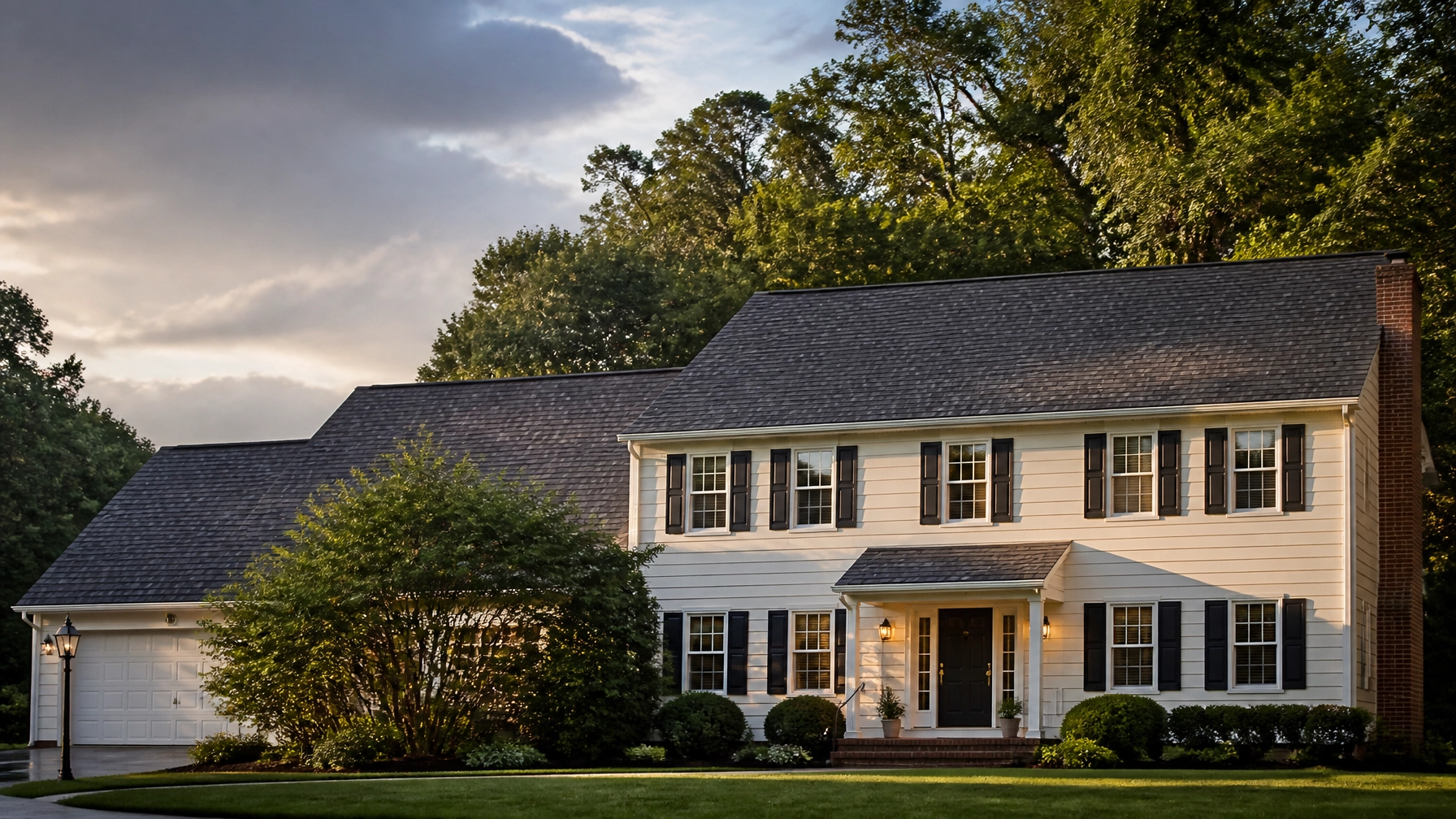
    Roofer inspecting architectural shingles on a Raleigh-area residential roof

    FAQ 3: Are Class 4 shingles worth considering for Raleigh homes?

    Often, yes: especially if your roof has experienced hail damage.

    Hail is Raleigh’s leading storm-damage driver. Class 4 impact-resistant shingles are designed to better withstand hail impact than standard shingles. They generally cost more, but your insurance carrier may offer a credit depending on the product, certification, and policy.

    Ask your insurer:

    • Whether Class 4 materials qualify for a premium credit
    • Which brands and testing standards are accepted
    • Whether the credit applies to the full policy or only the roof portion
    • Whether your deductible changes after an upgrade

    Do not assume a discount is automatic. Get confirmation in writing before choosing the material.

    FAQ 4: Is standing-seam metal roofing a good fit for Raleigh?

    Standing-seam metal is a premium, long-life option. A typical 2,000-square-foot project may cost approximately $14,000–$28,000 or more.

    Metal can make sense for homeowners who prioritize:

    • 40–50+ years of service life
    • Strong wind performance
    • Heat and UV resistance
    • A modern architectural appearance
    • Reduced replacement frequency

    It is not automatically hail-proof. Severe hail can dent metal panels, and color, gauge, seams, underlayment, flashing, and installation quality all matter.

    For a direct comparison, see metal roofing versus shingles.

    Modern Raleigh home with a new standing-seam metal roof

    FAQ 5: How long should a Raleigh roof last?

    Typical planning lifespans are:

    • 3-tab shingles (Budget): 10–15 years
    • Architectural shingles (Popular): 20–25 years
    • Standing-seam metal (Premium): 40–50+ years

    Raleigh’s hot, humid summers can accelerate asphalt shingle aging. Afternoon thunderstorms, hail, high UV exposure, algae growth, and attic heat all affect actual performance.

    A roof that is 15–20 years old should receive regular inspections, even if it is not visibly leaking.

    FAQ 6: How much does roof decking replacement cost?

    If the roof deck is soft, water-damaged, or structurally compromised, the contractor may recommend replacing plywood or OSB sheets.

    For 2026 planning, use approximately $80–$120 per sheet as a reference. The final amount depends on:

    • How many sheets are damaged
    • Whether the damage is concentrated near valleys or eaves
    • Material thickness
    • Labor and disposal
    • Whether framing or structural repairs are also needed

    Ask for the number of sheets replaced and the per-sheet price to be listed separately on the proposal.

    FAQ 7: Do I need a roof replacement permit in Raleigh?

    Verify with the City before work begins.

    Inside Raleigh city limits, a full residential re-roof is generally treated as a Level 1 alteration and typically requires a building permit. This applies even though North Carolina law under G.S. 160D-1110 may exempt certain non-structural work under $40,000.

    Structural work: including damaged decking, rafters, or trusses: requires a permit.

    For homes outside Raleigh city limits, requirements may differ by jurisdiction. Contact Raleigh Planning & Development at (919) 996-2500 and confirm which department handles your address.

    Wake County currently enforces the 2018 North Carolina Energy Conservation Code. A like-for-like roof replacement does not necessarily require attic insulation or ventilation upgrades. However, attic insulation and ventilation still matter in Raleigh’s hot climate. Climate Zone 4A insulation guidance commonly references R-38 as the attic insulation minimum.

    FAQ 8: Does my roofer need a North Carolina license?

    Check the current rules before signing.

    The planning threshold commonly cited for North Carolina residential general-contractor licensing is $30,000 or more, but the North Carolina Licensing Board for General Contractors currently publishes a $40,000 threshold on its consumer-facing materials. Because thresholds and classifications can change, verify the current requirement directly with the NCLBGC.

    For larger roofing, metal, or full-decking projects, confirm:

    • Active license status
    • Correct classification
    • General liability insurance
    • Workers’ compensation coverage
    • Written scope of work
    • Permit responsibility
    • Manufacturer certification, if relevant

    You can use the NCLBGC’s contractor license search.

    FAQ 9: What should Raleigh homeowners know about 2026 hail and wind events?

    Homeowners should review their roof after significant local storms. Important 2026 events to check against include:

    • June 26 hail: average hail around 1.1 inches, with reports up to approximately 1.3 inches and more than 4,000 properties in the hail path
    • June 27 severe wind reports: reported around Wake County
    • Hail maps and storm reports for July 26, July 28, August 7, and August 16

    Check your roof from the ground after a storm, but do not climb onto it. Look for:

    • Missing or lifted shingles
    • Exposed underlayment
    • Damaged flashing
    • Granule piles in gutters
    • Dented metal vents
    • Water stains in the attic or ceiling

    Raleigh roofing professional documenting possible hail damage after a storm

    FAQ 10: How should I handle a possible insurance claim?

    Document damage as soon as it is safe: ideally within 24–48 hours.

    Important steps:

    1. Photograph the roof, gutters, siding, windows, and interior stains.
    2. Record the storm date and location.
    3. Contact your insurance carrier.
    4. Ask whether your policy uses Replacement Cost Value (RCV) or Actual Cash Value (ACV).
    5. Confirm your wind or hail deductible, including any percentage-based deductible.
    6. Get a written inspection report from a qualified roofer.
    7. Compare the insurer’s scope with the contractor’s scope.

    Never accept a contractor’s offer to “waive” your deductible. Misrepresenting the deductible or claim amount can constitute insurance fraud in North Carolina.

    If you and the insurer disagree about the amount of loss, North Carolina law provides a binding appraisal process under N.C.G.S. 58-44-16. Appraisal addresses the amount of loss: not every coverage dispute: so review the policy and consider professional advice.

    FAQ 11: Does replacing the roof increase Raleigh home value?

    A new roof can improve marketability, buyer confidence, and inspection results. Raleigh-area cost recovery is often estimated at approximately 60%–80%, but that percentage does not tell the entire story.

    An aging roof may trigger:

    • $4,000–$12,000 in buyer concessions
    • Insurance concerns
    • Inspection failures
    • Delayed closing
    • Requests for replacement before closing

    For homeowners preparing to sell in 27601, 27603, 27605, 27607, 27608, 27609, 27612, 27613, 27615, 27616, or 27617, replacing a failing roof before listing may protect more value than the simple cost-recovery percentage suggests.

    FAQ 12: Can I get a Raleigh roof estimate without a contractor visit?

    Yes. Get My Roof Estimate Now uses satellite imagery to measure roof size, pitch, and complexity. Enter your address to receive a free estimate in about 60 seconds.

    The estimate includes:

    • Low-middle-high planning ranges
    • Material options such as architectural shingles, metal, synthetic materials, and coatings
    • Regional pricing factors
    • Roof measurements with approximately 90%–95% accuracy
    • No credit card requirement
    • No contractor visit required upfront

    Start with the free roof estimate tool. Treat the result as a planning benchmark, then obtain an in-person inspection before signing a contract.

    Final Raleigh Roof Replacement Checklist

    Before approving work, verify:

    • Roof age and storm history
    • Material and product specifications
    • Decking allowance
    • Permit responsibility
    • Contractor license and insurance
    • RCV or ACV policy terms
    • Wind and hail deductible
    • Cleanup and disposal terms
    • Warranty coverage
    • Final in-person inspection

    Categories: Home Improvement, Roofing, Roof Replacement, Raleigh, AEO FAQ

    Tags: Raleigh roof replacement, North Carolina roofing costs, 2026 roofing estimates, Wake County roofing, architectural shingles, metal roofing, Class 4 shingles, Raleigh permits, storm damage roofing, roof cost calculator, AEO FAQ quick answers
  • Daily ROI Blitz – Slot 4: Mobile, AL New Roof ROI ,  How a Storm-Ready Replacement Adds Home Value in 2026

    Daily ROI Blitz – Slot 4: Mobile, AL New Roof ROI , How a Storm-Ready Replacement Adds Home Value in 2026

    A new roof in Mobile, AL can cost roughly $11,000–$20,000 for a 2,000–2,500-square-foot home with architectural asphalt shingles. In return, homeowners may recover approximately 65%–80% of the project cost through resale value, avoided inspection concessions, improved insurability, and stronger buyer appeal.

    That makes the practical 2026 roof replacement ROI range about $7,150–$16,000 on a typical project. The exact result depends on your home’s value, roof condition, material selection, installation quality, and local market timing.

    Mobile, AL new roof ROI at a glance

    Mobile sits in Alabama’s East South Central census division, where regional roof replacement recoup is often estimated near 81%. The national 2025/2026 Cost vs. Value benchmark for a mid-range asphalt shingle replacement is closer to 68%.

    For Mobile homeowners, a realistic planning range for architectural asphalt is:

    • Low case: Approximately 65% cost recovery
    • Typical case: Approximately 70%–75%
    • Strong case: Approximately 80% or more when the existing roof is failing, the installation is storm-ready, and the home is priced competitively

    These figures are planning benchmarks, not guaranteed appraised value. Much of the return may come from avoiding a price reduction, inspection credit, insurance issue, or delayed closing.

    What does a new roof cost in Mobile in 2026?

    Local estimates vary because roofing contractors may measure the house differently. Roofers price the actual roof surface, not just the home’s interior square footage, and calculate materials in roofing “squares.” One square equals 100 square feet of roof area.

    Mobile roof project Typical 2026 planning range Best fit
    Small or simple roof $6,800–$10,000 Smaller footprint, low complexity
    2,000–2,500 sq. ft. architectural asphalt roof $11,000–$20,000 Most owner-occupied homes
    Typical local project About $11,270–$14,000 Standard pitch and limited repairs
    Large, steep, or complex roof $16,000–$19,800+ Multiple planes, steep pitch, decking work
    Metal roofing upgrade Higher than asphalt Long service life and stronger wind performance

    Get My Roof Estimate Now’s Mobile roofing cost guide places many local projects around $7,500–$20,000, with a typical architectural shingle roof near $12,500.

    Your final price may increase because of:

    • Steep or difficult-to-access roof sections
    • Multiple valleys, dormers, and roof intersections
    • Rotten decking discovered after tear-off
    • Chimney, skylight, or wall flashing
    • Multiple existing shingle layers
    • Hurricane-rated materials or FORTIFIED installation
    • Historic-district requirements
    • Coastal labor and material demand

    How a new roof adds home value

    Mobile’s 2026 housing market is generally buyer-friendly. Depending on the source, median home values fall roughly between $175,000 and $230,000. Typical days on market are around 68 days, and approximately 19% of sellers are reducing prices.

    In that environment, a new roof can improve your position in four ways.

    1. It protects the asking price

    On a $200,000 Mobile home, a $9,000 value improvement represents about 4.5% of the property’s value. That aligns with local estimates suggesting a new roof may add approximately $8,800–$9,100 in equity on a typical job.

    The improvement may not appear as a dollar-for-dollar increase in the appraisal. Instead, it may protect your list price when competing homes have aging roofs.

    2. It prevents buyer credits

    An end-of-life roof can trigger appraisal or inspection deductions of approximately $4,000–$12,000. Buyers may also request a larger credit to cover replacement after closing.

    Replacing the roof before listing can allow you to:

    • Market the home as move-in ready
    • Reduce inspection negotiations
    • Avoid a large repair concession
    • Provide permit and warranty documentation
    • Make insurance conversations easier for the buyer

    3. It improves curb appeal

    Roof condition is visible from the street and online listing photos. Clean lines, consistent shingle color, new flashing, and a finished ridge can make an older home look maintained.

    This is especially relevant in West Mobile, Spring Hill, and Midtown Mobile, where buyers compare homes with different ages and architectural styles. A new roof can strengthen roof curb appeal and home value without changing the home’s floor plan.

    4. It reduces insurance friction

    In coastal Alabama, buyers care about whether a home can be insured at a reasonable cost. A storm-ready roof can support underwriting, particularly when the project includes documented wind-resistant installation.

    Which roof is best for home value in Mobile?

    For most Mobile homeowners, architectural asphalt shingles offer the best balance of cost, appearance, availability, and resale appeal.

    Architectural asphalt shingles (Popular)

    Architectural shingles typically last 25–30 years and offer broad color and style choices. For coastal-grade performance, ask about:

    • ASTM D7158 Class H, or 150-mph-rated shingles
    • Ring-shank nails
    • Sealed roof deck
    • Six-nail-per-shingle fastening where required
    • Enhanced flashing and underlayment
    • FORTIFIED installation standards

    They are usually the strongest value choice for resale because buyers recognize the material and the upfront cost stays below premium roofing systems.

    Standing-seam metal (Premium)

    Standing-seam metal can provide wind ratings around 140–160+ mph, depending on the system and installation. It may deliver excellent long-term durability and can perform well near the coast.

    However, salt air can affect metal selection, coatings, and fasteners. Premium metal is not automatically the best financial choice for every Mobile home. The higher upfront cost may not be fully recovered at resale unless the neighborhood and buyer profile support it.

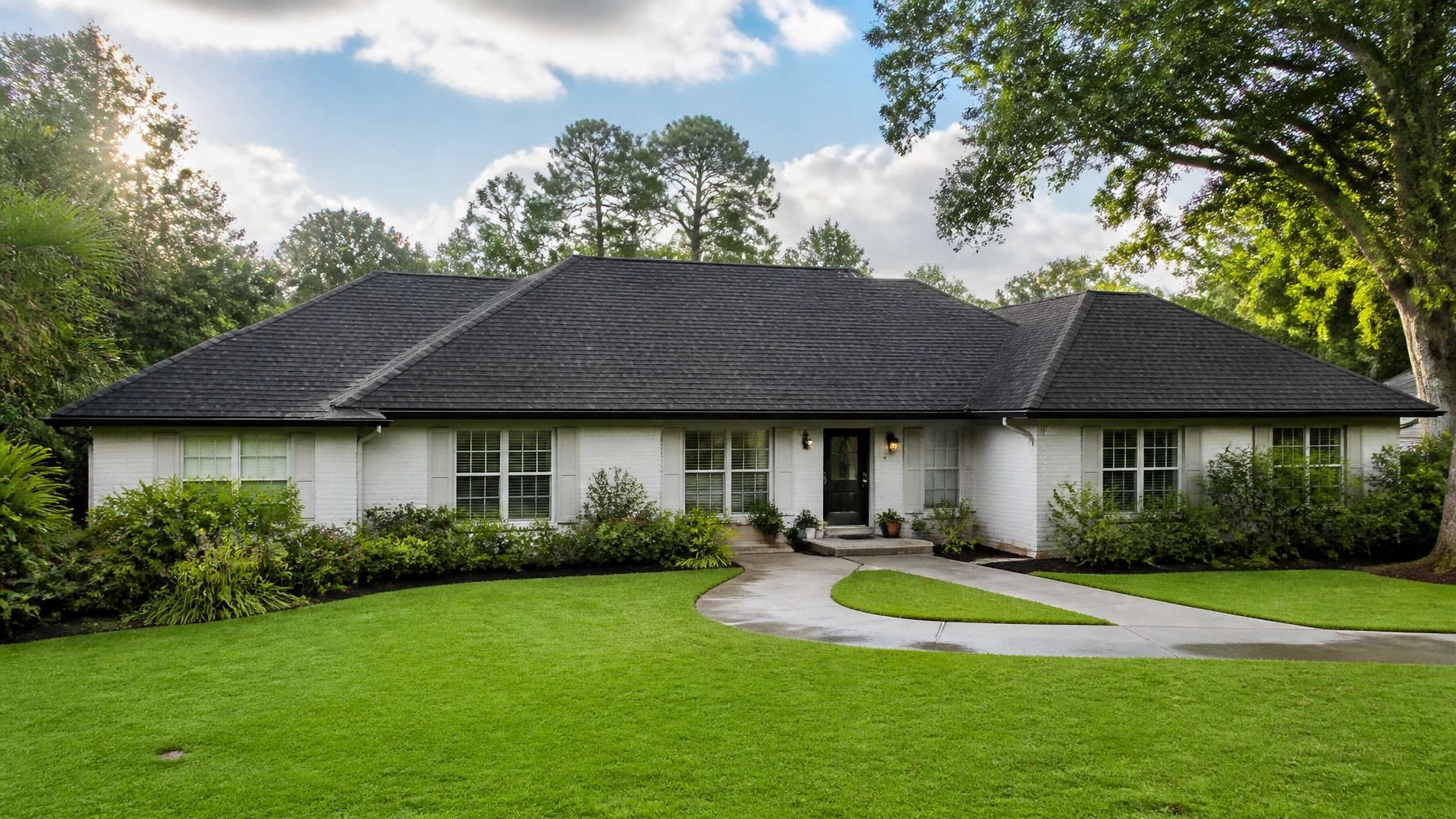
    New architectural shingle roof on an older Midtown Mobile home

    Neighborhood-specific roofing guidance

    Roof replacement ROI depends partly on local architecture.

    • Midtown Mobile: Older homes often have complex roof lines, dormers, and hidden decking damage. Budget for possible wood replacement after tear-off.
    • Spring Hill: Larger homes and mature landscaping can create more complex access and flashing conditions.
    • Oakleigh Garden District and De Tonti Square: Historic character matters. Confirm whether design review or approval applies before changing material, color, or roof profile.
    • West Mobile: Architectural shingles are often the practical resale choice for suburban homes.
    • Semmes and Saraland: Compare local labor pricing and verify which jurisdiction handles permitting.
    • Prichard, Theodore, Grand Bay, Chickasaw, and Tillmans Corner: Storm exposure, roof age, and insurance availability should be part of the decision.
    • Dauphin Island: Some ZIP codes fall within the Alabama Insurance Underwriting Association, or “Beach Pool,” zone. Confirm wind coverage requirements before selecting materials.

    Insurance discounts and FORTIFIED options

    The Alabama Insurance Underwriting Association and admitted carriers may provide wind-premium discounts for qualifying FORTIFIED roofs. Alabama law requires wind-premium discounts for eligible properties meeting FORTIFIED standards, generally described in the range of 20%–60% of the wind portion of the policy.

    The discount applies to the wind portion, not necessarily the entire homeowners premium. Your carrier, FORTIFIED level, location, and policy terms determine the actual savings.

    Eligible homeowners in Mobile and Baldwin counties may also qualify for Strengthen Alabama Homes grants of up to $10,000 for upgrades to FORTIFIED Roof or FORTIFIED Silver standards. Program openings and requirements can change, so confirm current availability through the Alabama Department of Insurance or Strengthen Alabama Homes.

    Mobile permitting and contractor requirements

    For a full roof replacement inside the City of Mobile, a re-roofing permit is required. Applications are handled through Build Mobile and the City’s CSS portal. The permitting office is located at 205 Government Street, 3rd Floor.

    Important local requirements include:

    • Residential re-roofs must follow the Coastal Construction Code supplement.
    • Mobile residential re-roofs require a six-nail-per-shingle fastening pattern.
    • Contractors must photograph work intervals and email documentation to roofingphotos@cityofmobile.org.
    • Photos should include the permit number and property address.
    • A final inspection may depend on photo approval.
    • Projects valued at $10,000 or more require an Alabama Home Builders Licensure Board license.
    • Contractors also need a City of Mobile business license.

    If the home is outside city limits, such as parts of Semmes or Grand Bay, confirm requirements with Mobile County Inspection Services instead.

    Why storm readiness matters in 2026

    Mobile’s roof decisions should account for hurricane season and severe weather. Reports from 2026 include:

    • Hail up to approximately 1.8 inches on August 17
    • Thunderstorm wind gusts near 61 mph at Mobile Regional Airport on August 18
    • An EFU-rated tornado in the Mobile River Delta on August 20
    • An EF1 tornado northeast of Grand Bay on May 7

    The Gulf hurricane season continues into fall. Even when a roof looks acceptable from the ground, wind-driven rain, lifted tabs, damaged flashing, and compromised decking can create problems months later.

    Coastal Alabama standing-seam metal roof designed for strong wind conditions

    A practical Mobile roof ROI strategy

    Before committing to a replacement, follow this process:

    1. Measure the roof accurately. Use a satellite estimate for a fast starting point, then confirm conditions with a licensed contractor.
    2. Separate value work from luxury work. Architectural shingles may provide better resale efficiency than premium materials.
    3. Ask for a full scope. Require tear-off, decking allowances, flashing, ventilation, permits, cleanup, and warranty terms in writing.
    4. Request storm-ready specifications. Confirm shingle wind rating, nail pattern, underlayment, and FORTIFIED eligibility.
    5. Check insurance before installation. Ask your agent about wind discounts and documentation requirements.
    6. Keep records. Save permits, paid invoices, product information, warranties, photos, and the FORTIFIED certificate if applicable.

    Frequently asked questions

    Is a new roof a good investment in Mobile, AL?

    Usually, yes: especially when the existing roof is near the end of its life. A practical Mobile planning range is approximately 65%–80% cost recovery, with additional value from avoided buyer credits and smoother insurance approval.

    How much does a new roof add to a Mobile home’s value?

    A typical project may add or preserve approximately $8,800–$9,100 in equity, depending on home value and roof condition. A failing roof can also cause $4,000–$12,000 in deductions or negotiated credits.

    What is the best roof for home value in Mobile?

    Architectural asphalt shingles are usually the best resale balance. Standing-seam metal may be better for long-term wind performance, but the higher cost is not always recovered at sale.

    Can a FORTIFIED roof reduce insurance costs?

    It may reduce the wind portion of your premium. Alabama discounts are commonly described in the 20%–60% range, but the exact amount depends on your insurer and certification level.

    Can I estimate my Mobile roof cost without a contractor visit?

    Yes. Use Get My Roof Estimate Now for a free satellite-powered estimate. Enter your address and receive pricing in approximately 60 seconds, with no credit card required. You can also use the dedicated Mobile, AL roof estimate page.

    Historic Mobile Alabama home with a new roof and improved curb appeal

    Get your Mobile roof ROI baseline in 60 seconds

    A new roof is one of the largest exterior investments a Mobile homeowner can make. Start with accurate measurements, realistic local pricing, storm-ready specifications, and a clear understanding of resale value.

    Get a free instant satellite roof estimate at getmyroofestimatenow.com. There is no credit card requirement, no contractor visit upfront, and results arrive in about 60 seconds. When you are ready for the next step, connect with verified local contractors who are licensed and insured.

  • Daily Weather Blitz – Slot 5: Augusta, GA : September 5, 2026: A Heat Advisory Saturday Near 101°F With 110°F Heat Indices, Gusty Evening Storms & What a Garden City Heat-to-Storm Swing Does to Your Roof

    Daily Weather Blitz – Slot 5: Augusta, GA : September 5, 2026: A Heat Advisory Saturday Near 101°F With 110°F Heat Indices, Gusty Evening Storms & What a Garden City Heat-to-Storm Swing Does to Your Roof

    Published September 5, 2026

    Augusta is moving from dangerous heat to potential thunderstorms this Labor Day weekend. As of 11:53 a.m. EDT, Augusta Daniel Field reported fair skies, 91°F, 54% humidity, a 72°F dew point, calm wind, and a 99°F heat index.

    A Heat Advisory is in effect from 12:03 p.m. to 8:00 p.m. for portions of east-central Georgia and central South Carolina. The afternoon forecast calls for a high near 101°F, with heat index values as high as 111°F.

    Storms may arrive later Saturday, with local forecasts warning of heavy rain, frequent lightning, and possible 40–60 mph wind gusts after 6–7 p.m. That rapid shift: from intense sun and heat to wind-driven rain: can expose weak points on aging roofs across the Garden City, Richmond County, Columbia County, and CSRA area, including ZIP codes 30901–30909 and 30912.

    According to the National Weather Service Augusta forecast, Sunday remains hot near 99°F before a more comfortable Labor Day Monday near 89°F.

    Augusta’s September 5 Weather Snapshot

    • Current: 91°F and fair at Augusta Daniel Field
    • Current heat index: 99°F
    • Saturday high: Near 101°F
    • Saturday heat index: Up to 111°F
    • Heat Advisory: 12:03 p.m. to 8:00 p.m.
    • Saturday night: 30% chance of showers and thunderstorms, low near 76°F
    • Sunday: High near 99°F, heat index up to 107°F
    • Sunday night: 70% chance of showers and thunderstorms
    • Labor Day Monday: High near 89°F with a chance of storms
    • Tropics: No immediate tropical threat to the CSRA in the next 7–10 days

    The main personal safety concern today is extreme heat. Avoid roof work during the afternoon. A roof surface in full sun can be far hotter than the air temperature, and wet shingles become slippery quickly when storms arrive.

    Why Augusta’s Heat-to-Storm Swing Matters for Roof Durability

    Augusta roofs already operate in a demanding climate. Strong sun, high attic temperatures, Savannah River moisture, red clay, pine and oak debris, and late-summer thunderstorms all contribute to roof wear.

    1. Extreme UV and attic heat accelerate shingle aging

    A 101°F afternoon does not mean your roof deck is only 101°F. Dark asphalt shingles and poorly ventilated attic spaces can push roof-deck temperatures above 160°F in direct sun.

    Repeated exposure can:

    • Accelerate asphalt granule loss
    • Dry out and weaken shingle oils
    • Increase brittleness and cracking
    • Reduce the effectiveness of adhesive seal strips
    • Stress flashing around vents, chimneys, and roof transitions

    A “30-year” shingle is a useful warranty category, not a guarantee of 30 years in every climate. In the CSRA, ventilation, roof color, installation quality, and maintenance all influence actual service life.

    2. Thermal cycling stresses sealants and flashing

    Saturday’s heat followed by evening storms creates a sharp temperature change. Roof materials expand in high heat and contract as clouds, rain, and nighttime temperatures arrive.

    Over time, this cycling can contribute to:

    • Lifted or split flashing
    • Opened pipe-boot seals
    • Cracked caulk around penetrations
    • Shingle edges losing adhesion
    • Small leaks that appear only during wind-driven rain

    The storm may not damage every roof directly. Instead, it can find the weakness that was already developing.

    New asphalt shingle roof and clean flashing on a Southern colonial home in Augusta

    3. Humidity encourages algae and moisture-related wear

    Augusta’s proximity to the Savannah River and its humid summer air create favorable conditions for algae growth. Black streaks are especially common on shaded, north-facing slopes.

    Algae is primarily a cosmetic issue, but persistent moisture and shade can keep shingles damp longer. That may increase the risk of surface deterioration, especially where debris collects.

    To reduce buildup:

    • Keep gutters and valleys clear
    • Trim branches that shade the roof
    • Avoid pressure washing shingles
    • Consider algae-resistant architectural shingles during replacement
    • Have heavy streaking evaluated before applying any cleaner

    4. Gusty storms test fastening and uplift resistance

    Forecast wind gusts of 40–60 mph are a different risk from ordinary afternoon breezes. Strong gusts can lift weak, loose, or poorly fastened shingles. Mature pines and oaks add another concern: falling limbs and windblown branches.

    When replacing a roof in the Augusta area, ask about:

    • Correct nail placement
    • Six-nail fastening patterns where appropriate
    • High-wind installation requirements
    • Synthetic underlayment
    • Proper drip edge and starter-strip installation
    • Class 4 impact-rated shingles for added resistance to hail and debris

    Hail is less frequent than wind and heavy rain in many Augusta storms, but strong cells can still produce isolated hail.

    Augusta Homeowner Checklist for This Labor Day Weekend

    Complete the low-risk tasks from the ground or attic. Do not climb onto a hot or wet roof.

    Before Saturday evening storms

    • Check the attic for adequate ventilation and signs of moisture.
    • Look for dark stains, damp insulation, or daylight around roof penetrations.
    • Inspect gutters for excessive granules, leaves, and pine debris.
    • Trim or schedule trimming for branches overhanging the roof.
    • Confirm downspouts discharge away from the foundation.
    • Keep insurance documents and prior roof records accessible.

    After the storm passes

    From the ground, use binoculars if needed to look for:

    • Missing or lifted shingles
    • Torn shingles near ridges and eaves
    • New debris piles
    • Detached gutters or downspouts
    • Bent flashing
    • Broken tree limbs on or near the roof

    Inside the home, check ceilings, upper walls, and attic spaces for new water spots. If you see active leaking, place a container under the drip and contact a licensed roofing professional. Do not get on the roof during lightning, high winds, or wet conditions.

    2026 Augusta Roof Replacement Costs

    Roof prices depend on measured roof area, pitch, complexity, tear-off requirements, ventilation, material selection, and local labor. For Augusta in 2026, asphalt shingles typically cost approximately $4.90–$8.00 per square foot installed, with an average near $5.50 per square foot, or about $550 per roofing square.

    For a typical 2,000-square-foot ranch home, a full replacement may run approximately $10,000–$18,000 or more. The actual roof area may be larger than the home’s floor area because of pitch, overhangs, and roof design.

    Budget: 3-tab shingles

    • Approximately $7,500–$12,000
    • Basic appearance and lower initial cost
    • Typical service life of roughly 15–20 years
    • Best suited to strict budgets or short-term ownership plans

    Popular: Architectural shingles

    • Approximately $11,000–$17,000
    • Dimensional appearance and broader color selection
    • Better durability and warranty options than basic 3-tab shingles
    • A common choice for Augusta homeowners seeking value and curb appeal

    Premium: Standing-seam metal

    • Approximately $20,000–$35,000 or more
    • Long service life and strong wind performance when correctly installed
    • Higher upfront investment
    • Fits modern homes and homeowners planning to stay long term

    Modern Augusta home with a standing-seam metal roof before a summer storm

    New Roof ROI and Augusta Home Value

    A replacement roof is both a protection project and a visible exterior upgrade. A new roof typically recovers around 60–70% of its cost at resale, although actual results depend on material, workmanship, neighborhood demand, and the condition of the rest of the home.

    Roof replacement can support:

    • New roof ROI and home value
    • Better buyer confidence during inspections
    • Improved roof replacement resale value
    • Stronger first impressions in listing photos
    • Better roof curb appeal and home value
    • Fewer negotiation issues caused by an aging roof

    For many Augusta properties, architectural shingles offer the best balance of cost, appearance, and expected performance. They are often the best roof for home value when a homeowner wants improved curb appeal without the premium price of metal.

    Residential architectural shingle roof inspected after an Augusta summer thunderstorm

    Get an Augusta Roof Estimate Before the Next Storm

    You do not need to schedule multiple contractor visits just to understand your potential replacement budget.

    Get My Roof Estimate Now uses satellite imagery to measure roof size, pitch, and complexity. Enter your address and receive a free estimate in about 60 seconds: with no credit card and no contractor visit required upfront.

    The estimate provides low, middle, and high price ranges for materials such as asphalt shingles, metal roofing, synthetic options, and coatings. Measurements are designed to be accurate within inches, typically around 90–95% accuracy, so you can plan before requesting an onsite inspection.

    For Augusta homeowners in ZIP codes 30901–30909 and 30912, this is a practical first step before storm season intensifies: know your roof’s approximate replacement cost, compare material options, and connect with verified local roofing professionals when you are ready.

    Start your free instant satellite roof estimate today.

    Sources

  • 2026 Roof Replacement Cost in Chesapeake, VA: High-Wind Zone Pricing, Permit Rules & Storm-Ready Tips

    2026 Roof Replacement Cost in Chesapeake, VA: High-Wind Zone Pricing, Permit Rules & Storm-Ready Tips

    For a 2,000-square-foot roof in Chesapeake, VA, budget approximately $11,000–$18,000 for architectural asphalt shingles installed in 2026. Many homeowners receive bids between $12,000 and $16,000, depending on roof pitch, complexity, tear-off requirements, decking condition, and storm-rated materials.

    Other planning ranges include:

    • 3-tab shingles (Budget): $7,000–$11,000
    • Architectural shingles (Popular): $11,000–$18,000
    • Class 4 impact-resistant shingles: About 10%–20% more than architectural shingles
    • Standing-seam metal (Premium): $24,000–$42,000+
    • Recommended contingency: Add 10%–15% for decking, underlayment, and permit-related costs

    Chesapeake’s coastal exposure and high-wind requirements make installation quality especially important. A low bid that omits required fastening, flashing, or storm-resistant components may not be a true bargain.

    2026 Chesapeake Roof Replacement Cost Table

    The table below uses a 2,000-square-foot roof, or approximately 20 roofing squares. One roofing square equals 100 square feet.

    Roofing option Category Installed rate Estimated total
    3-tab asphalt shingles Budget $3.50–$5.00 per sq. ft. $7,000–$11,000
    Architectural asphalt shingles Popular $4.50–$8.00 per sq. ft. $11,000–$18,000
    Class 4 impact-resistant shingles Storm-ready About 10%–20% above architectural Roughly $12,000–$21,500
    Standing-seam metal Premium $12–$21+ per sq. ft. $24,000–$42,000+

    These are planning ranges, not binding quotes. Your actual roof surface may be larger than your home’s interior square footage because of overhangs, multiple roof sections, dormers, valleys, and pitch.

    New architectural shingle roof on a Chesapeake Virginia ranch home

    Why Chesapeake Roofing Prices Are Moving Higher in 2026

    Material pricing has changed during 2026:

    • Asphalt shingles increased approximately 4%–8% early in the year, with another mid-year increase reported by suppliers.
    • Steel and aluminum roofing increased roughly 10%–22%, influenced in part by Section 232 tariffs.
    • Coastal labor demand can rise before and after major storms.
    • High-wind installation requires more fasteners and closer attention to manufacturer instructions.

    For a standard Chesapeake home, architectural shingles remain the most common balance of cost, appearance, and service life. Learn more about asphalt shingles.

    What Changes the Final Roof Replacement Price?

    A contractor’s estimate should explain each of these cost drivers.

    Roof size and layout

    Chesapeake homes commonly range from approximately 1,600 to 2,800 square feet, but roof area varies by architecture. A simple ranch roof may require fewer labor hours than a colonial roof with multiple slopes, dormers, and valleys.

    Roof pitch

    Steeper roofs require additional fall protection, staging, and labor time. A steep roof also increases the difficulty of material handling and cleanup.

    Tear-off and disposal

    Removing one existing layer is generally less expensive than removing multiple layers. Disposal fees, labor, and access to the property can affect the total.

    Decking damage

    Water intrusion, age, and past leaks can damage roof sheathing. Budget for a 10%–15% project buffer when the decking has not been fully inspected.

    Underlayment and flashing

    Coastal rain and wind make waterproofing details important. Ice-and-water protection, synthetic underlayment, pipe boots, valley materials, chimney flashing, and wall flashing can all affect the price.

    Material choice

    Architectural shingles are the most popular choice. Metal costs more upfront but can last substantially longer when properly installed. Impact-resistant shingles may also be worth comparing if your insurance carrier offers a discount.

    Chesapeake High-Wind Roofing Rules

    Chesapeake follows the 2021 Virginia Residential Code and is located in a coastal, high-wind region. Asphalt shingles generally require a six-nail fastening pattern in accordance with the product’s high-wind installation instructions.

    A proper installation should include:

    • Six nails per shingle where required by the manufacturer
    • Nails placed inside the marked nailing zone
    • Fasteners driven flush without cutting into the shingle mat
    • Correct nail length and corrosion-resistant fasteners
    • Secure roof-deck attachment
    • Properly installed starter strips, ridge caps, valleys, and flashing
    • Shingles with a wind rating suitable for the local design conditions

    Ask the contractor to identify the exact shingle model and provide the manufacturer’s installation instructions. Do not assume that every “architectural shingle” has identical wind requirements.

    For the current statewide code framework, review the 2021 Virginia Construction Code.

    Chesapeake Roofing Contractor License Requirements

    A roofing contractor working in Virginia should hold a Virginia DPOR contractor license with the Roofing (ROC) specialty classification.

    The license class depends on the contract amount:

    • Class C: Individual contracts under $30,000
    • Class B: Individual contracts from $30,000 to under $150,000
    • Class A: Individual contracts of $150,000 or more, with no monetary cap

    A typical residential roof replacement will often fall under Class C or Class B, depending on scope and contract value. Verify the contractor through the Virginia DPOR Board for Contractors.

    Also request:

    • Certificate of general liability insurance
    • Workers’ compensation coverage
    • Written material and workmanship warranties
    • Recent Chesapeake-area references
    • A detailed scope of work

    Homeowners researching local companies may encounter names such as Widmeyer Roofing, Craftsman Roofing, JNC Roofing, SlopePro Roofing, Montgomery Brothers Roofing, Weather Proof Roofers, and Atlantic Craftsman. Compare credentials, contract details, and insurance: not just online reviews or the lowest price.

    Chesapeake Roof Permit Rules

    Permit requirements depend on the exact scope of work.

    For the local rules provided for this guide:

    • A shingle-for-shingle re-cover may not require a permit when no more than eight sheets of roof decking are replaced.
    • A permit is required when more than eight sheets of decking are replaced.
    • A permit is required for structural repairs.
    • A permit is required when changing roofing materials, such as replacing shingles with metal.
    • When the scope is unclear, confirm the requirement with Chesapeake Development & Permits before work begins.

    Applications are submitted through the City of Chesapeake’s eBUILD system. The city’s Development & Permits department can help confirm how your project should be classified.

    Typical permit-related charges may include:

    • Approximately $50 administrative fee
    • Approximately $10 technology fee
    • 2% state levy
    • Approximately $15 per $1,000 of construction cost

    For many typical projects, homeowners should plan on roughly $150–$275, although the final amount depends on the declared scope and current city fee schedule. Never rely solely on a contractor’s verbal statement that “no permit is needed.” Get the answer in writing when the project includes decking or structural work.

    Standing-seam metal roof on a modern Chesapeake Virginia home

    Storm-Ready Roofing Tips for Hampton Roads

    Atlantic hurricane season runs through November 30, and Hampton Roads remains vulnerable to tropical storms, high winds, hail, and heavy rain.

    Before a storm:

    • Photograph every roof slope, gutter, vent, flashing area, and exterior wall.
    • Trim branches so they remain at least six feet from the roofline.
    • Confirm gutters and downspouts are securely attached.
    • Replace loose or missing shingles before storm season.
    • Check pipe boots, skylights, chimney flashing, and ridge caps.
    • Keep tarps, plastic sheeting, fasteners, and basic emergency supplies available.
    • Review your wind, hail, or named-storm deductible.

    Coastal Virginia policies may include a wind or hail deductible equal to 1%–5% of dwelling coverage. On a home insured for $400,000, that could mean $4,000–$20,000 out of pocket before coverage applies. Check your declarations page and ask your insurer how the deductible applies to Chesapeake storm damage.

    After a storm, inspect from the ground for:

    • Missing or curled shingles
    • Exposed underlayment
    • Granule loss in gutters
    • Dented or loose gutters
    • Damaged flashing
    • Ceiling stains or attic moisture

    Photograph damage and report it promptly. Avoid climbing onto the roof yourself.

    Storm-ready architectural shingle roof with secure gutters and flashing

    Roof Replacement ROI in Chesapeake

    Chesapeake’s median home prices are roughly $385,000–$430,000. A roof replacement typically produces an estimated 60%–70% return on investment, although the result depends on material selection, workmanship, market conditions, and the home’s overall condition.

    A new roof can support:

    • Better curb appeal
    • Easier resale conversations
    • Fewer inspection objections
    • Improved insurance eligibility
    • Better protection in neighborhoods such as Great Bridge, Grassfield, Deep Creek, and South Norfolk

    A premium roof is not automatically the best financial choice. Match the material to your budget, expected ownership period, neighborhood style, and storm exposure.

    Get a Free Chesapeake Roof Estimate in 60 Seconds

    Before scheduling several contractor visits, get a fast planning number based on your actual address.

    Get a free Chesapeake, VA roof estimate from Get My Roof Estimate Now. The satellite-powered tool provides:

    • Results in about 60 seconds
    • No contractor visit required upfront
    • No credit card
    • No cost or obligation
    • Approximately 90%–95% measurement accuracy
    • Low, middle, and high price ranges
    • Material comparisons for shingles, metal, synthetic roofing, and coatings

    Use the estimate to set a realistic budget, compare written proposals, and identify questions before selecting a licensed Chesapeake roofing contractor.

  • Daily Weather Blitz – Slot 8: Orlando, FL : September 5, 2026: A 93°F Muggy Saturday With a 105°F Heat Index, 60% Afternoon Storm Chances & What the City Beautiful’s Heat, Downpours, and Hurricane-Season Winds Do to Your Roof

    Daily Weather Blitz – Slot 8: Orlando, FL : September 5, 2026: A 93°F Muggy Saturday With a 105°F Heat Index, 60% Afternoon Storm Chances & What the City Beautiful’s Heat, Downpours, and Hurricane-Season Winds Do to Your Roof

    Image credit: Get My Roof Estimate Now; AI-generated editorial image.

    Orlando starts Saturday, September 5, with clear skies, heavy humidity, and temperatures near 77°F. By afternoon, the high should reach about 93°F, while the heat index climbs close to 105°F.

    Storms become more likely after 2 p.m., with a 60% chance of showers and thunderstorms. Stronger cells may produce frequent lightning, sudden heavy rain, and wind gusts between 35 and 45 mph.

    That combination matters for Central Florida roofs. Intense sun, daily downpours, saturated ground, and hurricane-season wind all test the same weak points: shingles, flashing, roof edges, gutters, vents, and attic ventilation.

    Orlando Weather Snapshot for Saturday, September 5

    Here is the practical forecast:

    • Morning: Clear and muggy near 77°F
    • Afternoon high: Approximately 93°F
    • Peak heat index: Near 105°F
    • Storm timing: Mainly after 2 p.m.
    • Rain chance: About 60%
    • Storm hazards: Lightning, heavy downpours, and 35–45 mph gusts
    • Possible rainfall: 2–4 inches where storms move slowly or repeat
    • Overnight low: Near 76°F
    • Evening storm chance: Approximately 50% before 8 p.m.

    The holiday weekend stays unsettled. Sunday may reach 93°F with a 50% afternoon storm chance and a heat index near 103°F. Monday is expected to be the wettest window, with an 80% rain chance. Tuesday and Wednesday remain storm-prone, with highs near 91°F and storm chances around 70%.

    The Florida Public Radio Emergency Network outlook and National Weather Service guidance place Florida under a Marginal Risk, or Level 1 of 4, for flash flooding through the holiday weekend.

    A Marginal Risk does not mean every property will flood. It does mean slow-moving or repeated storms could overwhelm drains, create ponding, and cause localized flooding in low-lying or poorly drained areas.

    How Central Florida Weather Wears Down Roofs

    1. Extreme heat accelerates shingle aging

    A 93°F air temperature can mean much higher temperatures at the roof surface. Dark shingles absorb intense solar radiation, sometimes pushing surface temperatures well above 120°F.

    Repeated heat exposure can:

    • Dry and embrittle asphalt shingles
    • Fade protective granules
    • Cause curling or blistering
    • Increase attic temperatures
    • Stress sealant lines around flashing and vents

    Central Florida roofs also experience frequent thermal cycling. The roof heats quickly during the day and cools after thunderstorms. That expansion and contraction gradually stresses joints, flashing, fasteners, and sealants.

    2. Humidity encourages algae and moisture problems

    Orlando’s warm, humid conditions are ideal for blue-green algae staining. Stains are usually cosmetic, but heavy biological growth can retain moisture and make the roof surface stay damp longer.

    Humidity also affects the attic. Poor ventilation can trap heat and moisture beneath the roof deck, increasing the risk of:

    • Damp insulation
    • Condensation
    • Wood deterioration
    • Mold growth
    • Premature shingle failure

    Do not pressure-wash asphalt shingles. High-pressure cleaning can remove protective granules and shorten roof life.

    3. Downpours expose drainage weaknesses

    A storm dropping 2–4 inches of rain quickly can overwhelm clogged or undersized gutters. Water may back up under the roof edge, overflow near the foundation, or collect around valleys and low-slope areas.

    Inspect these locations first:

    • Roof valleys
    • Gutter seams
    • Downspout outlets
    • Chimney and wall flashing
    • Plumbing vents
    • Skylights
    • Low-slope additions
    • Areas beneath overhanging trees

    Gutters do not make a roof waterproof by themselves. They are part of a larger drainage system that must move water away from the roof and foundation efficiently.

    Newly reroofed Central Florida home with architectural shingles, gutters, and wet landscaping after a heavy storm

    Image credit: Get My Roof Estimate Now; AI-generated editorial image.

    Hurricane-Season Wind Is the Bigger Roofing Test

    September is near the peak of Atlantic hurricane season. Orlando is inland, but inland does not mean wind-free.

    The 2024 hurricane season demonstrated the point. Hurricane Helene’s outer bands reportedly ripped the roof from an Apopka home. Hurricane Milton caused widespread roof damage across Orange, Osceola, and Brevard counties and contributed to the need for Operation Blue Roof assistance.

    A roof can suffer damage without losing every shingle. Wind may:

    • Lift shingle edges
    • Break adhesive seals
    • Pull out improperly installed nails
    • Damage hip and ridge caps
    • Bend flashing
    • Drive rain beneath shingles
    • Separate gutters from fascia boards

    Wind-driven rain is especially dangerous because it can enter through small openings that are not visible from the ground.

    What the 2026 Florida Roofing Changes Mean

    For roofs permitted under the 2026 Florida Building Code, homeowners should discuss updated installation requirements with a licensed roofing contractor and local building department.

    Important considerations include:

    Sealed roof decks

    New roofs and full re-roofs are subject to sealed roof deck requirements. A sealed deck adds a continuous water-resistive layer beneath the roof covering. Its purpose is to reduce water intrusion if shingles are damaged or lost during a storm.

    Ask your contractor for:

    • The exact underlayment or membrane system
    • Florida Product Approval documentation
    • Installation instructions
    • Permit details
    • Photos taken before the roof covering is installed

    Stronger hip and ridge protection

    The 2026 code includes updated wind-resistance provisions for hip and ridge components. Asphalt hip and ridge shingles must meet modified wind-test requirements, including UL 2375 testing at a 110-mph wind speed, or use an approved prescriptive attachment method.

    These roof sections are highly exposed. A contractor should explain how ridge caps will be fastened, sealed, and documented.

    Ring-shank fastening

    For qualifying wind-mitigation documentation, 8d ring-shank nails installed in the required spacing pattern may improve roof deck attachment classification. Verify the exact requirements for your structure, jurisdiction, and roof assembly.

    The contractor should identify:

    • Nail type and length
    • Field and edge spacing
    • Any tighter perimeter or corner spacing
    • Fastener compatibility
    • Attic or deck photographs before covering

    Wind Mitigation Inspections and Insurance Savings

    The updated OIR-B1-1802 wind mitigation form became effective for inspections beginning April 1, 2026.

    Qualifying features may help some homeowners receive insurance premium discounts of approximately 15% to 30%. Actual savings depend on the insurer, policy, roof characteristics, and inspection results.

    Ask an inspector or insurance agent about documentation for:

    • Roof-to-wall connections
    • Roof deck attachment
    • Secondary water resistance
    • Opening protection
    • Roof geometry
    • Roof covering condition

    Do not assume a new roof automatically earns every available credit. The features must be present, properly installed, and documented.

    Orlando Roof Replacement Cost in 2026

    A typical full roof replacement for an Orlando single-family home generally runs about $9,000 to $22,000.

    For architectural asphalt shingles, a common planning range is:

    • $450–$700 per square
    • One roofing square equals 100 square feet
    • A typical 2,000-square-foot roof may cost approximately $12,000–$18,000

    Your actual price may be higher or lower based on:

    • Roof size and pitch
    • Number of roof planes and valleys
    • Tear-off requirements
    • Deck repairs
    • Flashing replacement
    • Permit and disposal costs
    • Material selection
    • Labor availability
    • Storm-resistant installation details

    Architectural shingles are the popular, mid-range choice. Metal roofing is a premium option with typical installed costs of approximately $8–$16 per square foot and a potential service life of 40–70 years when properly installed. Review the metal roofing guide before comparing materials.

    Modern Orlando-area home with a standing seam metal roof and humid hurricane-season clouds

    Image credit: Get My Roof Estimate Now; AI-generated editorial image.

    Orlando Roof Weather-Resilience Checklist

    Use this checklist before the next major storm:

    • Confirm your roof’s installation year and material
    • Look for missing, lifted, cracked, or curling shingles from the ground
    • Clear leaves and debris from gutters and valleys
    • Check that downspouts discharge away from the foundation
    • Inspect visible flashing around vents, walls, and chimneys
    • Look for ceiling stains or damp attic insulation
    • Trim branches that could strike the roof
    • Photograph existing roof conditions before a storm
    • Keep permit, warranty, and product approval records
    • Ask whether your roof qualifies for a wind mitigation inspection
    • Never climb onto a wet roof or inspect during lightning
    • Schedule a professional inspection after significant wind damage

    Close residential roofing detail showing shingles, ridge cap, flashing, gutter, and downspout after a Central Florida storm

    Image credit: Get My Roof Estimate Now; AI-generated editorial image.

    Get an Orlando Roof Estimate Before the Next Storm

    Weather damage is easier to manage when you know your likely replacement budget before an emergency occurs.

    Get My Roof Estimate Now uses satellite imagery to measure your roof’s size, pitch, and complexity. Enter your address and receive a free, no-credit-card estimate in about 60 seconds, including low, middle, and high price ranges for different roofing materials.

    The estimate is a planning tool, not a substitute for an in-person inspection. A licensed contractor should verify decking, flashing, ventilation, and storm damage before work begins.

    How is Orlando’s weather affecting your roof this summer? Share this forecast with a Florida homeowner, and leave a comment about the roofing problems you have seen after heat, heavy rain, or hurricane-season wind.

    Weather sources: Florida Public Radio Emergency Network, National Weather Service Orlando forecast, and the 2026 Florida Building Code significant changes.

  • Daily Tech Blitz – Slot 4: Fayetteville’s Satellite Tech Edge Is Bringing Fort Liberty Precision to Cape Fear Roofs

    Daily Tech Blitz – Slot 4: Fayetteville’s Satellite Tech Edge Is Bringing Fort Liberty Precision to Cape Fear Roofs

    For Fayetteville homeowners, a new roof is both a protection project and a financial decision. In 2026, a typical replacement in the Sandhills and Cape Fear region may cost approximately:

    • 3-tab shingles (Budget): $6,000–$10,000
    • Architectural shingles (Popular): $10,000–$15,000
    • Impact-resistant shingles (Storm-ready): $11,000–$17,000
    • Standing-seam metal (Premium): $18,000–$30,000+

    The exact number depends on roof size, pitch, complexity, tear-off requirements, material selection, and local labor.

    That is where satellite technology becomes practical. Fayetteville sits beside Fort Liberty, home of the XVIII Airborne Corps and a region closely connected to Army modernization, communications, space, and resilient-networking initiatives. The same broad technology ecosystem that studies how to maintain reliable information in difficult environments is changing how homeowners measure roofs, track storms, and plan major home improvements.

    Why Fayetteville’s Technology Story Matters to Homeowners

    Fort Liberty: formerly Fort Bragg: has a long history of testing advanced communications and battlefield technologies. Earlier public demonstrations at the installation featured private 5G networking, secure mobile applications, real-time tracking, sensor-to-shooter connections, and machine-learning capabilities.

    In 2026, regional attention has also focused on a reported $14.9 million experimental 5G testbed for advanced mission applications. Separately, Army Arcane Thunder initiatives are examining multi-domain operations involving cyber, space, electronic warfare, and resilient communications.

    A note on sourcing is important: publicly available Army and Department of Defense pages confirm earlier Fort Bragg 5G demonstrations and Arcane Thunder’s multi-domain focus. They do not independently verify every reported detail about the $14.9 million award or a September 2026 Fort Liberty exercise specifically testing satellite PNT against GPS jamming. Homeowners should treat those exact program details as developing until an official release is published.

    The larger point remains clear: Fayetteville is located in a community where satellite, communications, and advanced data systems are increasingly part of everyday infrastructure.

    That includes roofing.

    From GOES Weather Data to Roof Measurements

    NOAA’s GOES satellites provide weather monitoring for the region. The National Weather Service Raleigh forecast office serves central and eastern North Carolina, including the Fayetteville and Cape Fear area. NOAA’s Raleigh sector offers GOES GeoColor imagery, which helps show:

    • Developing cloud systems
    • Tropical moisture moving inland
    • Severe thunderstorm activity
    • Coastal and inland storm patterns
    • Fog, low clouds, and overnight conditions

    GeoColor is not a roof-measurement product. It is designed to monitor weather at a regional scale. However, it gives homeowners a useful view of what is approaching before they inspect their property or contact a contractor.

    Roof measurement technology works at a different level. Get My Roof Estimate Now uses high-resolution satellite imagery to estimate:

    • Roof area
    • Roof pitch
    • Roof sections and complexity
    • Material quantities
    • Local pricing conditions

    The result is a low-middle-high replacement range delivered in about 60 seconds. It is not a substitute for a final contractor inspection, but it gives homeowners a reliable planning benchmark before scheduling multiple visits.

    Get a free satellite-powered roof estimate.

    Fayetteville Roof Replacement Costs for 2026

    A home’s living area is not the same as its roof area. A 2,000-square-foot house may have more than 2,000 square feet of roofing because of pitch, overhangs, porches, garages, valleys, and additional roof sections.

    Roofers measure in squares. One roofing square equals 100 square feet of roof surface.

    3-Tab Asphalt Shingles (Budget)

    Typical range: $6,000–$10,000 for an average-size roof.

    Three-tab shingles are the lowest-cost common asphalt option. They can make sense for a basic rental property, a short-term ownership plan, or a tight replacement budget.

    Their disadvantages are a shorter expected service life and less dimensional appearance than architectural shingles. They also may offer less wind resistance than higher-grade systems.

    Architectural Shingles (Popular)

    Typical range: $10,000–$15,000.

    Architectural shingles are the most practical choice for many Fayetteville homeowners. They provide:

    • Better visual depth
    • Wider color selection
    • Stronger curb appeal
    • Longer expected service life
    • Broad buyer acceptance
    • A strong balance of cost and resale value

    For most homeowners asking, “What is the best roof for home value?” the answer is usually a quality architectural shingle system installed correctly and supported by complete documentation.

    Impact-Resistant Shingles (Storm-Ready)

    Typical range: $11,000–$17,000.

    Impact-resistant shingles cost more than standard architectural products but may be worth considering in areas exposed to hail and repeated summer storms.

    Look for a complete roof system rather than focusing only on the shingle label. Underlayment, flashing, ventilation, fastening, and installation quality all affect performance.

    Ask contractors whether the selected product carries a recognized impact-resistance classification and whether your insurance provider offers any discount for qualifying materials. Do not assume a discount without confirming it directly with your insurer.

    Standing-Seam Metal (Premium)

    Typical range: $18,000–$30,000 or more.

    Metal roofing offers long service life, strong wind performance, and a distinctive appearance. Standing-seam systems are especially popular on modern homes, updated ranches, and properties where long-term durability is the priority.

    The higher upfront price is the main drawback. A metal roof can be an excellent long-term investment, but it is not automatically the highest direct resale ROI in every Fayetteville neighborhood.

    Two-story Fayetteville home with a new slate-gray architectural shingle roof and strong curb appeal

    Roof Replacement ROI and Resale Value

    A roof replacement does not normally return 100% of its cost through the sale price alone. Current national and local roofing analyses generally place asphalt shingle replacement ROI around 60%–70%, depending on the market, project quality, and home type.

    For example:

    • A $10,000 roof may contribute approximately $6,000–$7,000 in direct resale value.
    • A $14,000 architectural shingle roof may contribute approximately $8,400–$9,500.
    • A $20,000 premium roof may contribute approximately $12,000–$14,000, although results vary substantially by material and neighborhood.

    These numbers are planning benchmarks, not guarantees.

    The broader value can be higher because a new roof may help a seller avoid:

    • Inspection-related repair credits
    • Buyer concerns about immediate replacement
    • Insurance or financing complications
    • Negotiation delays
    • Poor listing photos caused by a visibly worn roof

    That is the practical meaning of roof replacement resale value. Buyers may not pay the full project cost as an appraised premium, but they often respond more positively to a home with a documented, recently installed roof.

    Roof Curb Appeal and Home Value

    A roof is one of the largest visible surfaces on a home. It affects the first impression from the street, listing photos, and online property searches.

    A new roof improves roof curb appeal home value when it:

    • Complements the home’s siding and exterior color
    • Creates clean, consistent rooflines
    • Eliminates curling, streaking, or mismatched shingles
    • Uses appropriate flashing and edge details
    • Looks consistent with neighboring properties

    For a traditional Fayetteville ranch or colonial home, architectural shingles are usually the safest resale choice. A charcoal, weathered wood, or slate color can provide a clean update without looking out of place.

    For a modern home, standing-seam metal can create a stronger design statement.

    Modern Fayetteville-area home with a matte charcoal standing-seam metal roof

    The Best Roof for Home Value: Shingles or Metal?

    The right choice depends on your time horizon.

    Choose Architectural Shingles If You Want:

    • Lower upfront cost
    • Broad buyer appeal
    • A familiar neighborhood appearance
    • Strong direct roof replacement ROI
    • Easier color and style matching
    • A 25- to 30-year planning horizon

    Choose Standing-Seam Metal If You Want:

    • A 40- to 70-year potential service life
    • Strong wind resistance
    • Reduced future replacement risk
    • A modern or premium appearance
    • Long-term ownership value
    • Potential cooling benefits from reflective finishes

    A metal roof may not provide the highest percentage resale ROI if you sell soon after installation. However, it may make more financial sense for homeowners planning to remain in the property for 10 years or longer.

    The best roof replacement ROI is the one that fits your ownership timeline, budget, property style, and weather exposure.

    Storm Planning for the Sandhills and Cape Fear

    Fayetteville is inland, but inland does not mean storm-free. Tropical systems can move through the region with strong wind, heavy rain, and tornado-producing bands. Summer thunderstorms can also create hail and wind damage.

    Use NOAA and NWS weather resources to monitor major systems, but do not wait for a visible leak before evaluating an aging roof.

    After a significant storm, look for:

    • Missing or lifted shingles
    • Exposed underlayment
    • Granules collecting in gutters
    • Damaged flashing
    • Fallen branches or punctures
    • Ceiling stains or attic moisture
    • New drafts or daylight in the attic

    A satellite estimate can help you understand the replacement budget before you decide whether to repair, file an insurance claim, or replace the roof.

    New impact-resistant architectural shingle roof on a Cape Fear ranch home after a summer storm

    Get Your Fayetteville Roof Estimate Before You Need It

    Technology should make planning easier, not more complicated.

    Enter your Fayetteville-area address into Get My Roof Estimate Now. The platform uses satellite imagery to measure your roof, estimates size and complexity, and provides material-based price ranges in about 60 seconds.

    There is:

    • No cost
    • No credit card requirement
    • No contractor visit needed upfront
    • No obligation to hire
    • No hidden pricing fees

    Use the estimate as a starting point. Then compare written proposals from licensed and insured roofing contractors before beginning work.

    For a homeowner near Fort Liberty, the technology connection is straightforward: satellite systems help monitor the weather, measure the roof, and improve decision-making. That gives Fayetteville homeowners a faster, more informed way to protect their homes and preserve resale value.

    Sources and Further Reading

  • Daily Weather Blitz – Slot 2: Savannah, GA : September 5, 2026: A Heat Advisory Saturday With 106–110°F Heat Indices, a Stormy Cold Front for Sunday & What a Coastal Georgia Heat-to-Downpour Swing Does to Your Roof

    Daily Weather Blitz – Slot 2: Savannah, GA : September 5, 2026: A Heat Advisory Saturday With 106–110°F Heat Indices, a Stormy Cold Front for Sunday & What a Coastal Georgia Heat-to-Downpour Swing Does to Your Roof

    Savannah’s Labor Day weekend starts with dangerous heat and ends with a much wetter, cooler pattern.

    The National Weather Service has issued a Heat Advisory for Coastal Chatham County from 11:00 a.m. to 8:00 p.m. Saturday, September 5. Savannah’s forecast calls for a high near 93°F, with heat-index values up to 106°F. Local coverage from the City of Savannah and WTOC places the worst “feels-like” temperatures near 110°F.

    Sunday stays hot before a slow-moving cold front increases the risk of showers, thunderstorms, gusty winds, and heavy downpours. WTOC identifies a Slight risk of severe storms, rated 2 on a 1-to-5 scale, for Sunday.

    For homeowners, this is a classic coastal Georgia roofing stress test: intense sun and heat first, followed by wind-driven rain and thunderstorms.

    Savannah Labor Day Weekend Forecast

    Day Savannah forecast Roofing concern
    Saturday, Sept. 5 Mostly sunny; high near 93°F; heat index up to 106°F, with local reports near 110°F UV exposure, extreme roof-surface temperatures, unsafe conditions for midday inspections
    Saturday night Mostly clear; low near 77°F Warm, humid overnight conditions
    Sunday, Sept. 6 High near 95°F; heat index up to 107°F; 60% chance of rain; storms more likely after 5 p.m. Wind-driven rain, lightning, gusts, and embedded severe storms
    Sunday night 90% chance of showers and thunderstorms; low near 75°F Heavy rainfall may expose flashing, valleys, and pipe boots
    Labor Day, Sept. 7 Showers and thunderstorms; high near 85°F; 90% rain chance; gusts up to 21 mph Prolonged wetting, clogged gutters, and storm debris
    Tuesday, Sept. 8 High near 84°F; 70% chance of showers Continued damp conditions and slower roof drying

    The City of Savannah has opened cooling centers during the Saturday heat-advisory window. Residents should avoid unnecessary midday outdoor work, including roof inspections. Roof surfaces can become substantially hotter than the official air temperature.

    What a 93°F Day and a Cold Front Do to a Savannah Roof

    1. Repeated heat stresses asphalt shingles

    Asphalt shingles are designed for hot climates, but repeated exposure to upper-90s temperatures and strong ultraviolet light can gradually age the roof system.

    The main effects include:

    • Faster drying and aging of surface oils
    • Expansion and contraction of shingle mats and flashing
    • Loss of flexibility in older shingles
    • Weakened seal strips and exposed nail heads
    • Increased granule loss when shingles are already near the end of their service life

    High humidity does not automatically damage a good roof. However, Savannah’s humid coastal air supports algae and biological growth, keeps roof components damp after storms, and makes small defects more consequential.

    If your roof is 15–30 years old, look for curling corners, bald spots, cracked sealant, exposed fasteners, or granules collecting in downspouts.

    2. Cold-front storms test the details

    The field of a roof may appear intact while vulnerable areas around the penetrations fail first. Sunday’s thunderstorms and overnight rain can push water against:

    • Chimney flashing
    • Valley flashing
    • Skylight curbs
    • Plumbing pipe boots
    • Wall-to-roof transitions
    • Ridge and box vents
    • Drip edges and gutter lines

    Wind-driven rain is especially good at finding small gaps. A leak that appears in a ceiling Sunday night may have started as a deteriorated boot or flashing seam months earlier.

    Savannah-area ranch home with a new roof, visible flashing, gutters, and ridge ventilation

    Chatham County’s Roof Weather Risk Is Real

    Savannah homeowners should think beyond this weekend. Chatham County has a long record of thunderstorm wind, hail, tropical weather, and tornado impacts.

    County weather reviews identify more than 800 severe-weather events since 1996, with thunderstorm wind and hail making up most of the roofing-relevant incidents. From 2021 through early 2026, Chatham County logged approximately 104 roof-relevant events, including:

    • 88 thunderstorm-wind events
    • 16 hail events
    • Peak reported winds near 60 mph
    • Hail reaching approximately 1.75 inches

    Savannah and coastal Chatham County have also experienced historic tropical impacts, including Hurricanes Matthew and Hermine in 2016. A January 4, 2015, tornado also affected Chatham County.

    WTOC reports no tropical development is expected in the next seven days. That is useful short-term information, but it does not remove the need for hurricane-season preparation. Labor Day falls near the climatological peak of Atlantic hurricane season.

    Coastal Georgia Roofing Upgrades Worth Considering

    Wind-rated shingles (Protection)

    Chatham County requires 130-mph wind-rated shingles installed with a six-nail pattern. Ask your contractor to document the shingle rating and fastening pattern rather than accepting a general statement that the roof is “wind resistant.”

    Where available, Class H or 150-mph-rated shingles can provide an additional performance margin. The installation still matters: starter strips, hip and ridge caps, edge securement, and correct nailing all affect wind performance.

    Synthetic underlayment (Popular)

    Synthetic underlayment typically costs about $500–$1,200 more than felt on a typical Savannah replacement. It offers better tear resistance and more reliable temporary weather protection during installation.

    For a coastal roof, pair it with:

    • Ice and water shield in valleys and vulnerable eaves
    • Reinforced flashing around penetrations
    • Properly sealed pipe boots
    • Secure drip edges
    • Manufacturer-approved ventilation components

    Algae-resistant shingles (Practical)

    Humid coastal air makes algae streaking common. Algae-resistant shingles can improve curb appeal and reduce recurring cleaning needs, especially on shaded roofs under live oaks.

    Ventilation and radiant barriers (Efficiency)

    A balanced attic ventilation system helps release trapped heat and moisture. Ridge vents, intake ventilation, and a properly installed radiant barrier can reduce attic heat buildup. Ventilation will not fix a roof leak, but it can help protect the roof deck and improve long-term durability.

    Tree and drainage maintenance (Preventive)

    Trim overhanging live oak branches before storm conditions develop. Also inspect:

    • Gutters and downspouts
    • Gutter outlets
    • Valley discharge areas
    • Downspout extensions
    • Low areas where water pools near the foundation

    New standing-seam metal roof on a modern coastal Georgia home under a developing storm sky

    2026 Savannah Roof Replacement Cost Guide

    For a typical 2,000-square-foot Savannah-area home, current installed pricing is approximately:

    Roofing system Typical 2026 installed range Category
    Architectural shingles $11,000–$17,000 Popular
    Standing-seam metal $18,000–$28,000 Premium
    Designer shingles $18,000–$25,000 Premium
    Flat/low-slope TPO $8,500–$14,000 Budget to popular

    Local neighborhood conditions can shift the range:

    • Downtown and Historic District: $13,000–$22,000 for many 1,800–3,000-square-foot homes
    • Pooler: $11,000–$19,000
    • Richmond Hill: $10,500–$17,000
    • Tybee Island: $11,000–$19,000

    Savannah-area pricing is roughly 8%–12% higher year over year, driven by material costs, coastal wind requirements, labor, and permitting conditions.

    Other common adjustments include:

    • Full tear-off with two existing shingle layers: add $1,000–$3,000
    • Steep roof at 8/12 pitch or higher: add 15%–25% for labor
    • Synthetic underlayment: add $500–$1,200
    • Historic District review or specialized trim work: price varies by project

    Georgia generally allows a maximum of two shingle layers. A contractor should inspect the existing roof and confirm whether an overlay is legal and appropriate before including it in a proposal.

    For a faster starting point, use Get My Roof Estimate Now’s free roof estimate tool. Satellite-based measurements review roof size, pitch, and complexity before you schedule contractor visits.

    Pre-Storm Checklist for Savannah Homeowners

    Complete these items before Sunday’s storms:

    • Photograph the roof, siding, gutters, windows, and exterior equipment
    • Clear leaves from gutters and downspouts
    • Trim loose or overhanging branches
    • Check visible flashing and pipe boots from the ground
    • Secure patio furniture and lightweight outdoor items
    • Confirm your insurance wind and hail deductible
    • Save your contractor’s contact information
    • Do not climb onto the roof during extreme heat or approaching storms

    Post-Storm Roof Checklist

    After the storm passes:

    1. Check ceilings, attic insulation, and upper-wall areas for new moisture.
    2. Photograph damage before making repairs.
    3. Look for missing shingles, lifted flashing, dented vents, and fallen branches.
    4. If water is entering, use a qualified professional for temporary protection. Do not climb onto a wet roof.
    5. Report the loss promptly to your insurer.
    6. Review whether your policy has separate wind or hail deductibles.
    7. Verify contractor licensing through the Georgia Secretary of State license verification portal.

    For Georgia residential work over $2,500, confirm that the contractor holds the appropriate Residential-Basic, Residential-Light Commercial, or General Contractor license, along with current insurance.

    Get a Savannah Roof Estimate Before the Next Storm

    Saturday’s heat will expose aging materials. Sunday’s cold-front storms will test flashing, fasteners, valleys, and drainage.

    If your roof is older, visibly worn, or already showing leaks, start with accurate measurements before requesting multiple in-person estimates. Get My Roof Estimate Now uses satellite imagery to estimate roof size and complexity in about 60 seconds.

    The estimate is free, requires no credit card, and provides a practical low-to-high replacement range so you can plan before storm damage turns into an emergency.

    Sources

  • 2026 Roof Replacement Cost in Galveston, TX: Island City Pricing, WPI-8 Certification & Storm-Ready Tips

    2026 Roof Replacement Cost in Galveston, TX: Island City Pricing, WPI-8 Certification & Storm-Ready Tips

    Replacing a roof in Galveston costs more than replacing a similar roof inland. For a typical 2,000-square-foot roof in 2026, plan for approximately:

    • Architectural shingles (Popular): $9,500–$18,000
    • Class 4 impact-resistant shingles (Storm-ready): $15,000–$30,000
    • Standing-seam metal (Premium): $20,000–$36,000

    These are installed project ranges that account for coastal labor, wind-zone construction, tear-off, disposal, permit requirements, and WPI-8-related work. Complex rooflines, historic properties, decking damage, multiple layers, and beachfront exposure can increase the final price.

    The fastest way to narrow your budget is to start with an address-specific measurement. Get a free satellite roof estimate in about 60 seconds before scheduling contractor visits.

    2026 Galveston roof replacement cost by material

    The following estimates assume approximately 2,000 square feet of roof surface, one existing shingle layer, ordinary access, and a standard roof design. “Low,” “middle,” and “high” reflect project complexity and the level of coastal upgrades: not simply the shingle brand.

    Roofing system Low Middle High
    Architectural shingles $9,500 $13,500 $18,000
    Class 4 impact-resistant shingles $15,000 $22,000 $30,000
    Standing-seam metal $20,000 $28,000 $36,000

    Architectural shingles (Popular)

    Architectural shingles remain the most common value choice for Galveston homeowners. They offer a dimensional appearance, broad color selection, and a typical service life of approximately 25–30 years.

    A standard architectural shingle roof generally falls between $4.75 and $9 per square foot in Galveston after coastal requirements are considered. The lower end usually applies to a simple, accessible roof. The high end may include:

    • Additional hurricane fastening
    • Marine-grade flashing and fasteners
    • Decking replacement
    • Steep pitches or multiple roof sections
    • Historic-district design requirements

    Material pricing is also changing. Asphalt manufacturers implemented increases of approximately 4%–8% early in 2026, followed by another 6%–9% increase effective June 1. Confirm that your quote identifies the material price and how long that price is guaranteed.

    Class 4 impact-resistant shingles (Storm-ready)

    Class 4 shingles are tested under UL 2218 standards and are designed to provide better resistance to hail impact than standard architectural shingles. They are useful for homeowners concerned about storm damage, insurance eligibility, and long-term durability.

    Expect approximately $15,000–$30,000 for a 2,000-square-foot Galveston roof. The upgrade typically adds several thousand dollars over standard architectural shingles, depending on the product and installation system.

    Ask your contractor for:

    • The exact Class 4 product name
    • The manufacturer’s impact-rating documentation
    • Wind-rating documentation for coastal installation
    • Whether the roof assembly supports a potential insurance discount
    • Written confirmation that the installation will be eligible for WPI-8 certification

    A Class 4 rating does not replace proper installation. Fastener placement, edge securement, flashing, underlayment, and ventilation still determine how the complete roof performs.

    Close view of a new Class 4 impact-resistant shingle roof on a Gulf Coast home

    Standing-seam metal (Premium)

    Standing-seam metal is the highest-cost option but can provide a long service life when properly specified for a salt-air environment. Galveston homeowners should look for marine-appropriate coatings, corrosion-resistant fasteners, and detailing designed for high winds.

    A realistic 2026 range is $20,000–$36,000 for a 2,000-square-foot roof. Metal prices are under additional pressure from Section 232 tariffs, with reported increases of approximately 10%–22% depending on the product and supplier.

    Metal may make financial sense when you plan to remain in the home for decades, want reduced replacement frequency, or own a beachfront property exposed to intense sun, wind, and salt spray. It is not automatically maintenance-free. Inspect fasteners, penetrations, flashing, and coating condition periodically.

    Why Galveston roofs cost 15%–25% more than inland Houston

    Galveston’s island location creates a measurable coastal premium. Roofing projects commonly run 15%–25% higher than comparable work in inland Houston because of:

    • Higher wind-design requirements
    • More expensive corrosion-resistant materials
    • Additional fastening and edge-detail work
    • Limited island logistics and material transportation
    • Salt-air exposure around fasteners, flashing, and metal components
    • Specialized inspections and documentation
    • Storm-season demand after hail, wind, or tropical weather

    Many new or replacement systems should be designed around materials and installation methods capable of meeting 150 mph wind-rated requirements, subject to the applicable code, building design, and product approvals.

    WPI-8 certification: the document Galveston homeowners should not skip

    Galveston is in Texas’s coastal windstorm territory. A WPI-8 Certificate of Compliance from the Texas Department of Insurance documents that qualifying construction complies with Texas windstorm standards.

    For a roof replacement, ask before work begins:

    1. Who is arranging the windstorm inspection?
    2. Is the inspector appointed or accepted by TDI?
    3. Which products and fastening methods will be used?
    4. Will the completed roof receive a WPI-8 certificate?
    5. Who will provide the certificate and inspection records?

    The Texas Department of Insurance windstorm program provides information about inspections, product evaluations, inspectors, and WPI-8 certificate searches.

    WPI-8-related costs can appear as a separate inspection charge or as part of the contractor’s coastal compliance allowance. Budget roughly $800–$2,500 for inspection and certification-related costs, while the broader wind-zone construction premium may add several thousand dollars.

    Do not accept a quote that simply says “coastal compliant.” Require the installation scope and certification responsibility in writing.

    Galveston permits and contractor registration

    Plan to obtain a building permit for a full roof replacement through the City of Galveston Building Division. Applications, payments, inspections, and contractor registration are handled through the city’s online ePortal.

    City contractor registration requirements include:

    • $200 initial registration fee
    • $25 annual renewal fee
    • At least $300,000 in commercial general liability insurance
    • A $25,000 surety bond for applicable contractors
    • Registration documentation submitted through the city’s system

    You can review current requirements on the City’s Contractors & Engineers page.

    Owner-builder warning

    An owner-builder exemption may sound like a way to reduce project costs, but it can create serious problems. Before using one, verify:

    • Whether you are legally allowed to act as the builder
    • Who pulls the permit
    • Who schedules inspections
    • Who obtains WPI-8 certification
    • Whether your insurance and mortgage lender accept the arrangement
    • Whether subcontractors are properly insured and registered

    A low initial bid is not useful if the completed roof cannot be documented for windstorm insurance or resale.

    Historic districts and Galveston’s older homes

    Roof replacement in the East End Historic District, Old Silk Stocking, or Lost Bayou may involve more than removing shingles and installing new ones. Historic Victorian architecture often includes steep slopes, dormers, turrets, decorative trim, unusual roof intersections, and older decking.

    Confirm whether your property requires historic review or approval before ordering materials. Color, profile, visible metal, replacement details, and changes to the roofline may be regulated.

    The added planning is worthwhile. Approximate local home-value benchmarks often place:

    • Galveston citywide median: $389,000–$449,000
    • East End Historic District: approximately $550,000
    • Old Silk Stocking: approximately $600,000
    • Lost Bayou: approximately $459,000

    These figures vary by source, condition, elevation, lot, and renovation quality. A compliant roof protects more than the structure: it helps preserve insurability, resale value, and the character of the neighborhood.

    Historic Galveston Victorian home with a new architectural shingle roof

    2026 storm context: why storm-ready roofing matters

    Galveston homeowners have already seen several reminders this year that roof condition matters.

    • A May 23 waterspout and hail event caused concern for exposed homes and prompted roof inspections.
    • May wind events included reported gusts in the 56–58 mph range in the area.
    • Tropical Storm Arthur affected the Texas coast June 16–17, 2026. The National Weather Service reported a 57-knot gust at Galveston Scholes Field, or approximately 66 mph, along with heavy rainfall, salt spray, localized flooding, and power outages. Review the NWS Arthur report.

    Peak hurricane season is still a planning factor. If your roof is more than 15–20 years old, has missing granules, lifted tabs, rusted flashing, recurring leaks, or prior storm repairs, get a measurement and inspection before the next major weather event.

    New standing-seam metal roof on a coastal Galveston residence

    Factors that change your final roof price

    Your actual quote may move substantially based on:

    • Roof size: Roofing is priced by squares; one square equals 100 square feet.
    • Pitch: Steep roofs require additional labor and safety equipment.
    • Complexity: Valleys, dormers, skylights, hips, and multiple ridges increase labor.
    • Tear-off: Multiple layers cost more to remove and dispose of.
    • Decking: Rotten or storm-damaged plywood is usually billed separately.
    • Ventilation: Ridge vents, soffit vents, and intake corrections may be needed.
    • Flashing: Chimneys, walls, plumbing vents, and coastal penetrations require careful detailing.
    • Material availability: 2026 asphalt and metal increases can affect quote validity.
    • Historic review: Older Galveston homes may require approved profiles or colors.
    • WPI-8 scope: Inspection, approved products, fastening, and documentation affect the total.

    Get a Galveston roof estimate before calling contractors

    You can begin with a free, satellite-powered estimate from Get My Roof Estimate Now. Enter your Galveston address and receive a roof measurement and local pricing range in approximately 60 seconds: without a credit card or an upfront contractor visit.

    Use the estimate to compare architectural shingles, Class 4 shingles, and standing-seam metal. Then verify the final scope, permit responsibility, insurance, contractor registration, and WPI-8 plan with a licensed and insured roofing professional.

    Frequently asked questions

    How much does a new roof cost in Galveston in 2026?

    For a typical 2,000-square-foot roof, expect approximately $9,500–$18,000 for architectural shingles, $15,000–$30,000 for Class 4 shingles, or $20,000–$36,000 for standing-seam metal.

    Is WPI-8 required for a Galveston roof replacement?

    Roof replacements in Galveston generally require windstorm compliance documentation. Ask your contractor how the project will be inspected and how you will receive the WPI-8 Certificate of Compliance from TDI.

    Does Galveston require a roofing permit?

    Plan on obtaining a City of Galveston building permit for a full roof replacement. Use the city’s ePortal and confirm current requirements with the Building Division before work starts.

    Are Class 4 shingles worth the extra cost?

    They can be worthwhile for homeowners concerned about hail, storm exposure, durability, and possible insurance savings. Confirm the product rating and potential insurance benefit with your carrier.

    Is standing-seam metal better than shingles near the seawall?

    Metal can offer a longer service life and strong wind performance, but it must use appropriate coastal coatings, fasteners, and installation details. It also costs substantially more upfront.

    Can a satellite estimate replace a contractor inspection?

    No. A satellite estimate is a fast budgeting tool based on roof measurements and local pricing. A contractor must still verify decking, flashing, ventilation, concealed damage, permits, and WPI-8 requirements.

  • 2026 Roof Replacement Cost in Houston, TX: Bayou City Pricing, Permit Rules & Storm-Ready Tips

    2026 Roof Replacement Cost in Houston, TX: Bayou City Pricing, Permit Rules & Storm-Ready Tips

    A full roof replacement in Houston typically costs $7,500–$18,000 in 2026 for a standard single-family home. Most homeowners with a roof measuring roughly 1,500–3,000 square feet should budget toward the middle of that range for architectural asphalt shingles.

    Houston pricing depends on roof size, pitch, complexity, materials, tear-off requirements, and storm-related demand. Local permit rules also matter. For most re-roofing projects larger than 100 square feet, the City of Houston requires a permit and the Residential Re-Roof Only Worksheet CE-1109.

    The fastest way to establish a realistic starting point is to get a free Houston roof estimate. Our satellite-based system measures your roof and produces an estimate in about 60 seconds, with no credit card and no contractor visit required upfront.

    Houston Roof Replacement Cost at a Glance

    Roofing contractors price materials by the square. One roofing square equals 100 square feet of roof surface.

    Roofing option 2026 Houston price per square Typical total for a standard home
    3-tab asphalt shingles (Budget) $450–$650 $7,500–$12,000
    Architectural asphalt shingles (Popular) $550–$900 $9,000–$18,000
    Impact-resistant shingles (Storm-ready) $650–$1,000+ $11,000–$20,000+
    Standing seam metal (Premium) $900–$1,700 $16,000–$30,000+

    These are planning ranges, not binding contractor quotes. A roof with multiple valleys, dormers, steep sections, skylights, or difficult access can exceed the standard range.

    For additional material information, see the 2026 asphalt shingles guide.

    What Houston Homeowners Usually Pay

    Architectural asphalt shingles (Popular)

    Architectural shingles remain the most common choice in Houston because they balance cost, appearance, availability, and service life.

    Typical installed pricing is approximately $550–$900 per roofing square, including standard installation and common accessories. A straightforward 20-square roof may cost approximately $9,000–$14,000, while a larger or more complex roof can approach or exceed $18,000.

    Architectural shingles are a practical fit for:

    • Most ranch and colonial homes
    • Homeowners replacing a 15- to 25-year-old roof
    • Properties being prepared for sale
    • Projects where budget and curb appeal both matter

    Your final price can rise if the contractor finds damaged decking, inadequate ventilation, or multiple layers of old shingles during tear-off.

    New dimensional asphalt shingle roof on a Houston colonial home

    Standing seam metal roofing (Premium)

    Standing seam metal generally costs $900–$1,700 per square in the Houston market. It requires more specialized fabrication and installation than asphalt shingles, which creates a higher initial investment.

    Metal can be attractive for homeowners focused on:

    • Long service life
    • Strong wind and weather performance
    • A modern architectural appearance
    • Reduced maintenance over time
    • Energy performance and reflective roof colors

    Metal is not automatically the best choice for every Houston home. Ask for a complete comparison that includes underlayment, trim, flashing, ventilation, fasteners, and warranties.

    Five Factors That Drive Houston Roofing Prices

    1. Roof size and slope

    A larger roof requires more materials, labor, underlayment, flashing, and disposal. Pitch also matters. A steep roof takes longer to work on and requires additional safety equipment.

    Satellite measurements can provide a useful starting point by calculating roof planes, dimensions, pitch, and estimated squares before a contractor visits.

    2. Roof complexity

    A simple gable roof is usually less expensive than a roof with:

    • Multiple valleys and ridges
    • Dormers or extensions
    • Skylights
    • Chimneys
    • Low-slope sections
    • Attached garages
    • Complex flashing around walls and penetrations

    Two homes with the same interior square footage can have very different roof replacement costs.

    3. Tear-off and decking repairs

    A full tear-off allows the contractor to inspect the roof deck. If plywood or OSB is soft, rotted, or damaged by long-term leaks, replacement adds to the project cost.

    Budget separately for potential decking repairs. A reasonable contingency is often 5%–15% of the project budget, depending on the roof’s age and visible condition.

    4. Ventilation and drainage

    Houston’s heat and humidity make ventilation important. A replacement may include ridge vents, intake vents, soffit adjustments, or repairs around exhaust penetrations.

    Gutters, drip edges, pipe boots, flashing, and drainage details also affect the final invoice. Confirm whether each item is included rather than assuming it is part of the base roofing price.

    5. Material availability and storm demand

    Hail, straight-line wind, tropical weather, and hurricane activity can quickly increase demand for roofing crews and materials across the Houston area.

    After a major storm, prices may rise because of:

    • Limited contractor availability
    • Higher material demand
    • Temporary labor shortages
    • Longer scheduling windows
    • Increased disposal and delivery costs

    Getting a baseline estimate before storm season gives you a more useful comparison point.

    Houston Permit Rules for a 2026 Re-Roof

    For work inside Houston city limits, a full re-roof generally requires a permit. Minor, non-structural repairs involving no more than approximately 100 square feet of roof covering may be exempt, but homeowners should confirm the threshold with the Houston Permitting Center.

    For a typical replacement over 100 square feet, expect to submit:

    • The building permit application
    • Residential Re-Roof Only Worksheet CE-1109
    • Required declarations or supporting documents
    • Project valuation information

    The City of Houston’s residential roofing permit information explains the current application process. The CE-1109 worksheet applies to residential re-roof work involving the roof covering and, where applicable, roof decking. It does not replace additional plans required for structural changes to rafters or joists.

    Permit cost and code expectations

    For budgeting purposes, set aside approximately $200–$500 for a typical Houston roofing permit and related administrative charges. Actual fees are based on the City’s current fee schedule and project valuation, so confirm the amount before work begins.

    Houston roofing work must comply with the 2021 International Residential Code, as amended locally. Your contractor should handle permit submission, required inspections, and documentation.

    Does Your Houston Roof Need WPI-8 Windstorm Certification?

    Most Houston homeowners do not need WPI-8 certification for a standard roof replacement.

    The important exception applies to properties in the designated Harris County catastrophe area east of State Highway 146 and within specific city limits, including areas of:

    • Seabrook
    • La Porte
    • Pasadena
    • Shoreacres
    • Morgan’s Point

    If your property falls within that area, roof work may require windstorm inspections and a WPI-8 Certificate of Compliance for eligibility with Texas windstorm and hail coverage.

    Check the Texas Department of Insurance windstorm guidance and the Harris County windstorm map before signing a contract. A contractor should not guess about WPI-8 requirements based only on your mailing address.

    Standing seam metal roof on a modern Houston home

    Storm-Ready Roofing Tips for Bayou City Homes

    A storm-ready roof is not defined by material alone. Installation quality and detailing are equally important.

    Ask potential contractors about:

    • High-wind-rated shingles or metal panels
    • Proper starter strips and ridge caps
    • Correct nail placement and fastening schedules
    • Synthetic underlayment and leak barriers
    • Flashing around chimneys, walls, and penetrations
    • Deck attachment and replacement procedures
    • Ridge and soffit ventilation
    • Impact-resistant shingle options
    • Cleanup, disposal, and warranty coverage

    If hail is a concern, ask whether Class 4 impact-resistant shingles are available. They may cost more but can improve durability and may affect insurance considerations. Confirm any potential discount directly with your insurer.

    How to Budget Before Calling Contractors

    Use this practical process:

    1. Measure the roof first. Determine approximate roof squares rather than relying only on living-area square footage.
    2. Choose a material category. Compare budget, popular, storm-ready, and premium options.
    3. Add a contingency. Reserve 5%–15% for decking, flashing, ventilation, and hidden damage.
    4. Include permits and disposal. These should appear clearly in the estimate.
    5. Request multiple written proposals. Compare scope, materials, warranties, and exclusions: not only the lowest price.
    6. Check licensing and insurance. Verify that the contractor carries appropriate general liability and workers’ compensation coverage.
    7. Document storm damage. Photograph damage and contact your insurer before making permanent repairs, unless emergency protection is needed to prevent further loss.

    You can begin with a free, no-obligation estimate using Get My Roof Estimate Now. The satellite-powered tool measures your Houston roof and applies local pricing data to return low, middle, and high planning ranges in about 60 seconds.

    Final Houston Roofing Budget

    For 2026, a realistic Houston roof replacement budget is:

    • $7,500–$12,000: Smaller or simpler asphalt roof (Budget)
    • $9,000–$18,000: Typical architectural asphalt replacement (Popular)
    • $11,000–$20,000+: Impact-resistant or complex asphalt roof (Storm-ready)
    • $16,000–$30,000+: Standing seam metal roof (Premium)

    The right number depends on your roof’s measured size, pitch, complexity, condition, material, and location-specific requirements. Start with an accurate roof measurement, confirm Houston permit rules, and use written proposals to compare the complete project: not just the shingle price.

    Aerial view of a newly reroofed Houston ranch home

    Sources and Helpful Links

  • Daily ROI Blitz – Slot 2: Dallas, TX New Roof ROI : How a Heat-Ready Replacement Can Increase Home Value in 2026

    Daily ROI Blitz – Slot 2: Dallas, TX New Roof ROI : How a Heat-Ready Replacement Can Increase Home Value in 2026

    For Dallas homeowners, a roof replacement in 2026 is more than a maintenance expense. It can protect resale value, improve curb appeal, reduce buyer objections, and make a home more competitive in a slower, more negotiable market.

    A realistic Dallas benchmark is $8,000–$18,000 for a standard asphalt roof replacement, with many typical architectural shingle projects falling near $10,000–$16,000. Class 4 impact-resistant shingles commonly range from $12,000–$18,000, while standing-seam metal roofing may cost $18,000–$35,000 or more depending on roof size, pitch, complexity, and material quality.

    For direct resale value, homeowners should generally plan around a 60%–70% roof replacement ROI benchmark, not a guaranteed dollar-for-dollar return. The final result depends on neighborhood comparables, roof condition, installation quality, buyer demand, and the material selected.

    Dallas resale conditions make roof preparation more important

    The Dallas-Fort Worth housing market has moved away from the fast-moving conditions of 2021 and 2022. Current 2026 indicators from TRERC, Redfin, Zillow, and Realtor.com point to a more balanced market.

    Depending on the data source and property segment:

    • Dallas-area values are generally flat to modestly lower than the prior year.
    • Homes may take roughly five to eight weeks to secure an accepted offer.
    • Price reductions are common.
    • Buyers have more time to inspect major systems and negotiate repairs or credits.
    • Properly priced homes can still sell close to asking price.

    That matters because buyers are less likely to overlook an aging roof. A home listed with a roof that is 18, 20, or 25 years old may attract requests for:

    • A price reduction
    • A seller-paid closing credit
    • A roof replacement before closing
    • Additional inspections
    • Proof of insurability or prior storm repairs

    A new roof does not automatically raise a home’s value by its full installation cost. However, it can remove a significant source of negotiation and uncertainty.

    Traditional Dallas-area brick Colonial home with a new gray dimensional shingle roof

    Why Dallas roofs face higher performance demands

    Dallas roofing systems must handle more than ordinary seasonal wear. North Texas homeowners regularly deal with:

    Extreme heat and ultraviolet exposure

    Dallas summers frequently bring temperatures near or above 100°F. Long periods of direct sun can accelerate shingle aging, dry out roofing components, and increase attic heat.

    Dark roofing materials absorb more solar energy. Lighter-colored or reflective products may help reduce roof-surface temperatures and cooling demand, especially when paired with:

    • Adequate attic insulation
    • Balanced intake and exhaust ventilation
    • Air sealing
    • Properly installed underlayment
    • Light or reflective roofing colors

    Hail and severe thunderstorms

    The Dallas-Fort Worth region is part of a frequent hail corridor. Hail can remove granules, fracture shingles, damage flashing, and create leaks that may not appear indoors immediately.

    Wind from severe thunderstorms can also lift poorly fastened shingles or expose vulnerable roof edges. For this reason, material ratings and installation quality are important to both long-term performance and resale confidence.

    Insurance and buyer scrutiny

    A roof with documented impact resistance, recent installation records, and transferable warranty information can be easier for buyers to evaluate. It may also help avoid questions during insurance underwriting, although homeowners should confirm any discount directly with their insurer.

    Dallas roof replacement cost benchmarks for 2026

    The following figures are planning benchmarks, not formal bids. Your property may fall outside these ranges.

    Roof system Typical Dallas benchmark Best fit
    3-tab asphalt shingles $8,000–$11,000 Budget-focused projects
    Architectural asphalt shingles $10,000–$16,000 Popular value-focused replacement
    Class 4 impact-resistant shingles $12,000–$18,000 Hail-prone Dallas homes
    Metal shingles or basic metal $17,000–$30,000 Durability and design upgrade
    Standing-seam metal roofing $18,000–$35,000+ Long-term performance and modern curb appeal

    These estimates assume a typical single-family roof, one layer of tear-off, average pitch, and no major decking or structural repairs. Costs can rise with:

    • Multiple stories
    • Steep slopes
    • Complex valleys and dormers
    • Chimneys and skylights
    • Rotted decking
    • Additional ventilation work
    • Code-required upgrades
    • Premium flashing or underlayment

    For comparison, the Get My Roof Estimate Now Dallas page lists local estimates starting around $8,000. Your address-specific estimate may be higher or lower based on satellite-measured roof size and complexity.

    Worked example: estimating new roof ROI and home value

    Consider a typical Dallas-area single-family home with:

    • Approximately 2,100 square feet of roof surface
    • A moderately complex roofline
    • One existing shingle layer
    • Class 4 architectural shingles
    • Light-to-medium gray color
    • Standard tear-off and installation

    Estimated project cost

    Benchmark replacement cost: $14,500

    Illustrative resale value contribution

    Using a 68% direct recapture benchmark:

    $14,500 × 0.68 = $9,860

    Under this example, the roof may contribute approximately $9,860 in direct resale value, leaving a difference of about $4,640 between the project cost and estimated value recaptured.

    That does not mean the homeowner “loses” $4,640. The roof also provides years of weather protection and may reduce the chance of:

    • A buyer requesting a $10,000–$20,000 concession
    • A delayed closing caused by inspection findings
    • A failed insurance review
    • Emergency repairs before listing
    • A stale listing caused by visible exterior deterioration

    Those indirect benefits are real but difficult to measure consistently. They should not be added to the ROI calculation as guaranteed value.

    Roof replacement resale value: what buyers actually notice

    A new roof can improve resale appeal in three practical ways.

    1. It reduces perceived risk

    Buyers often view a roof replacement as one less major expense after closing. A documented new roof can provide confidence that the home is protected from immediate leaks and storm-related deterioration.

    2. It improves inspection results

    A newer roof with clean flashing, proper ventilation, and no visible damage gives inspectors fewer reasons to recommend repairs or further evaluation.

    3. It improves exterior presentation

    The roof is one of the largest visible surfaces on a home. Missing shingles, dark streaks, mismatched repairs, curling edges, and uneven wear can make the entire property appear older.

    That is why roof curb appeal home value matters. A clean, consistent roofline can make brick, stone, siding, landscaping, and front-door improvements look more cohesive.

    Modern Dallas-area home with a reflective standing-seam metal roof

    Choosing the best roof for home value in Dallas

    The best roof for home value is usually not the most expensive roof. It is the roof that fits the home, neighborhood, climate, and expected ownership period.

    Best value: architectural asphalt shingles

    Architectural shingles are often the strongest resale choice for a typical Dallas home because they offer:

    • Broad buyer familiarity
    • Moderate installation cost
    • Many color options
    • Better appearance than basic 3-tab shingles
    • Typical service life of roughly 25–30 years under suitable conditions

    See the asphalt shingle guide for a comparison of shingle types and warranties.

    Best storm-focused option: Class 4 shingles

    For homeowners concerned about Dallas hail, Class 4 impact-resistant shingles may justify the added cost. Ask about:

    • UL 2218 impact rating
    • Wind rating
    • Manufacturer requirements
    • Installation specifications
    • Potential insurance savings

    Verify any insurance benefit directly with your carrier.

    Best long-term performance: reflective metal roofing

    Metal roofing costs more upfront but can provide a longer service life, strong wind performance, and excellent heat-reflection potential when the finish is properly selected.

    It may be a good fit for:

    • Modern homes
    • High-end properties
    • Homeowners planning to stay for decades
    • Roofs with strong architectural lines
    • Buyers who value durability and energy performance

    However, metal does not guarantee a higher resale return. A premium roof can be difficult to recoup if it is visually out of place or priced far above comparable homes nearby.

    Dallas suburban ranch home with new impact-resistant architectural shingles

    How to protect your roof replacement ROI

    Before signing a contract, request a clear scope covering:

    • Roof area measured in squares
    • Tear-off and disposal
    • Underlayment
    • Ice and water protection where applicable
    • Flashing
    • Drip edge
    • Ridge vents and intake ventilation
    • Decking replacement pricing
    • Manufacturer warranty
    • Workmanship warranty
    • Cleanup and documentation

    Keep copies of invoices, permits, product labels, warranties, before-and-after photos, and storm-related repair records. These documents can support your home’s condition during a future listing.

    Get a Dallas roof estimate in 60 seconds

    Planning a roof replacement does not require scheduling multiple contractor visits just to establish a budget.

    Enter your Dallas address at Get My Roof Estimate Now. Our satellite-powered system measures roof size, pitch, and complexity, then uses local pricing data to provide a free estimate in about 60 seconds.

    There is no credit card requirement and no upfront contractor visit. Use the result as a planning benchmark, then verify final scope and pricing with licensed, insured local professionals.

    Dallas roof ROI FAQs

    Does a new roof increase home value in Dallas?

    It can increase marketability and contribute to resale value, especially when replacing an old or visibly damaged roof. Direct value recapture is commonly benchmarked around 60%–70%, but results vary by home and neighborhood.

    What is the roof replacement resale value in 2026?

    For a typical mid-range asphalt replacement, a reasonable planning benchmark is approximately 60%–70% of the installed cost reflected in resale value. This is not a guaranteed appraisal result.

    Does roof curb appeal affect home value?

    Yes. A clean, consistent roof improves the visible condition of the home and can strengthen first impressions. Curb appeal does not create a fixed dollar amount, but it can support buyer interest and reduce negative negotiation points.

    Is metal roofing the best roof for home value?

    Not always. Metal may offer excellent durability and heat performance, but architectural or Class 4 asphalt shingles may deliver better value for many Dallas homes because they align with local buyer expectations and neighborhood pricing.

    Should I replace my roof before selling?

    If the roof is near the end of its service life, visibly damaged, or likely to raise inspection concerns, replacement may be worth considering. Compare the expected cost with likely buyer concessions and ask a local real estate professional about nearby comparable sales.

    Sources and verification

    All costs and ROI figures in this article are benchmarks for planning. Local labor, roof measurements, materials, storm damage, code requirements, and property-specific conditions can materially change the final price.