Blog

  • Daily FAQ Blitz – Slot 8: AEO FAQ Quick Answers for Lakeland, FL Homeowners (2026)

    Daily FAQ Blitz – Slot 8: AEO FAQ Quick Answers for Lakeland, FL Homeowners (2026)

    For a typical 2,000-square-foot Central Florida home, Lakeland roof replacement costs in 2026 generally range from $8,500–$21,000 for architectural asphalt shingles and $16,000–$38,000 for standing-seam metal. Roofing contractors measure roofs in squares, with one square equal to 100 square feet. These eight quick answers cover cost, permits, materials, insurance, resale value, and estimates across the Swan City and Polk County.

    1. What does a new roof cost in Lakeland in 2026?

    • Architectural shingles (Popular): $8,500–$21,000
    • Standing-seam metal (Premium): $16,000–$38,000

    Your final price depends on roof squares, pitch, complexity, tear-off layers, decking repairs, ventilation, flashing, material choice, and labor. A home near Lake Morton may price differently from one in South Lakeland or Highland City because roof design and local access vary.

    2. Does Lakeland require a roofing permit?

    Yes. Inside city limits, the City of Lakeland Building Inspection Division handles roof permits through its online iMS permitting system. Applications commonly require:

    • Florida Product Approval numbers for roofing materials
    • Contractor license information
    • A signed Letter of Structural Integrity when required for the project
    • Scope details and inspection scheduling

    For partial repairs, Florida’s 25% rule can require the affected roof section — or, for older noncompliant roofs, the full roofing system — to meet current code when more than 25% is repaired or replaced within 12 months. Confirm borderline work with Lakeland before starting.

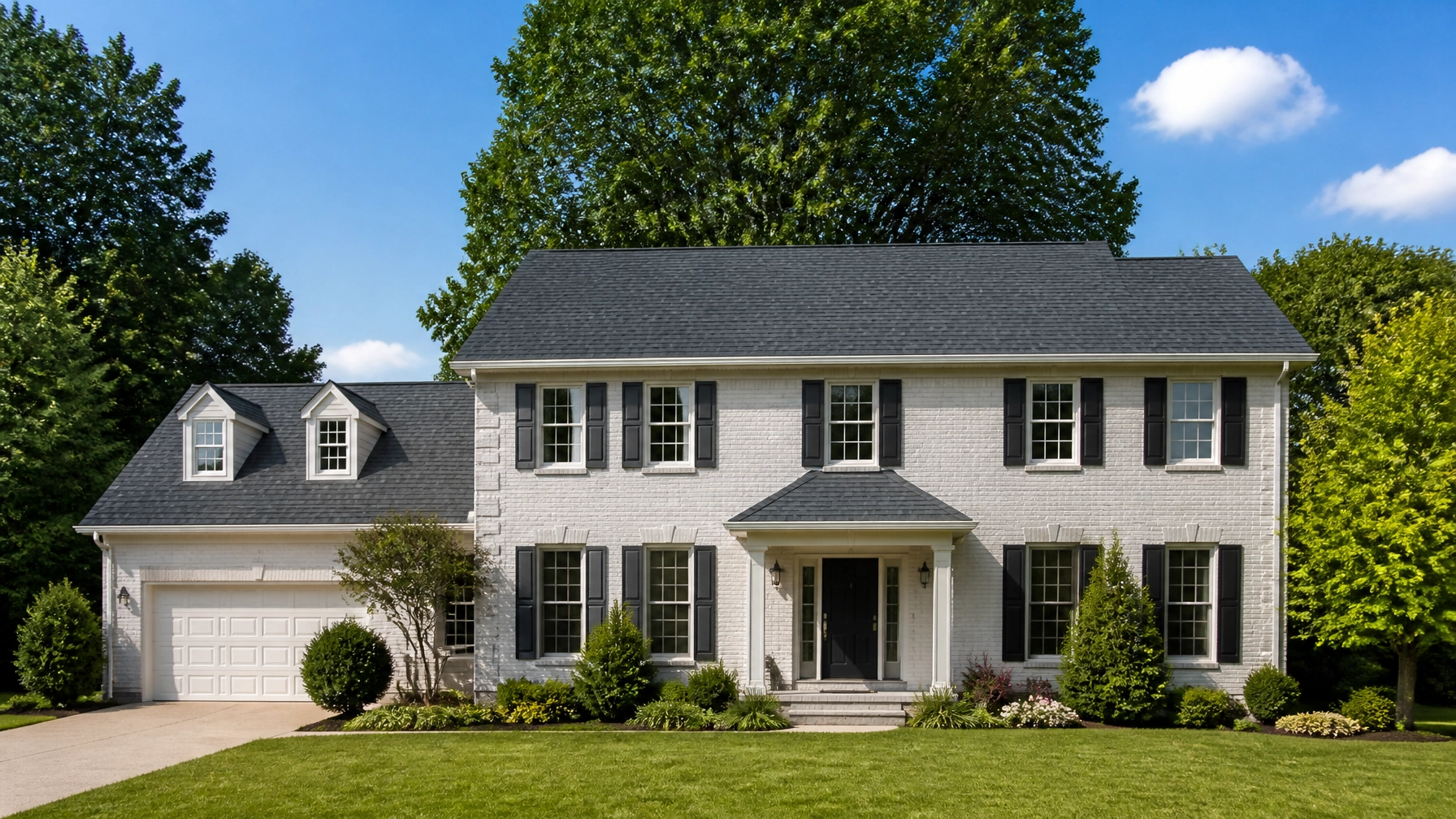
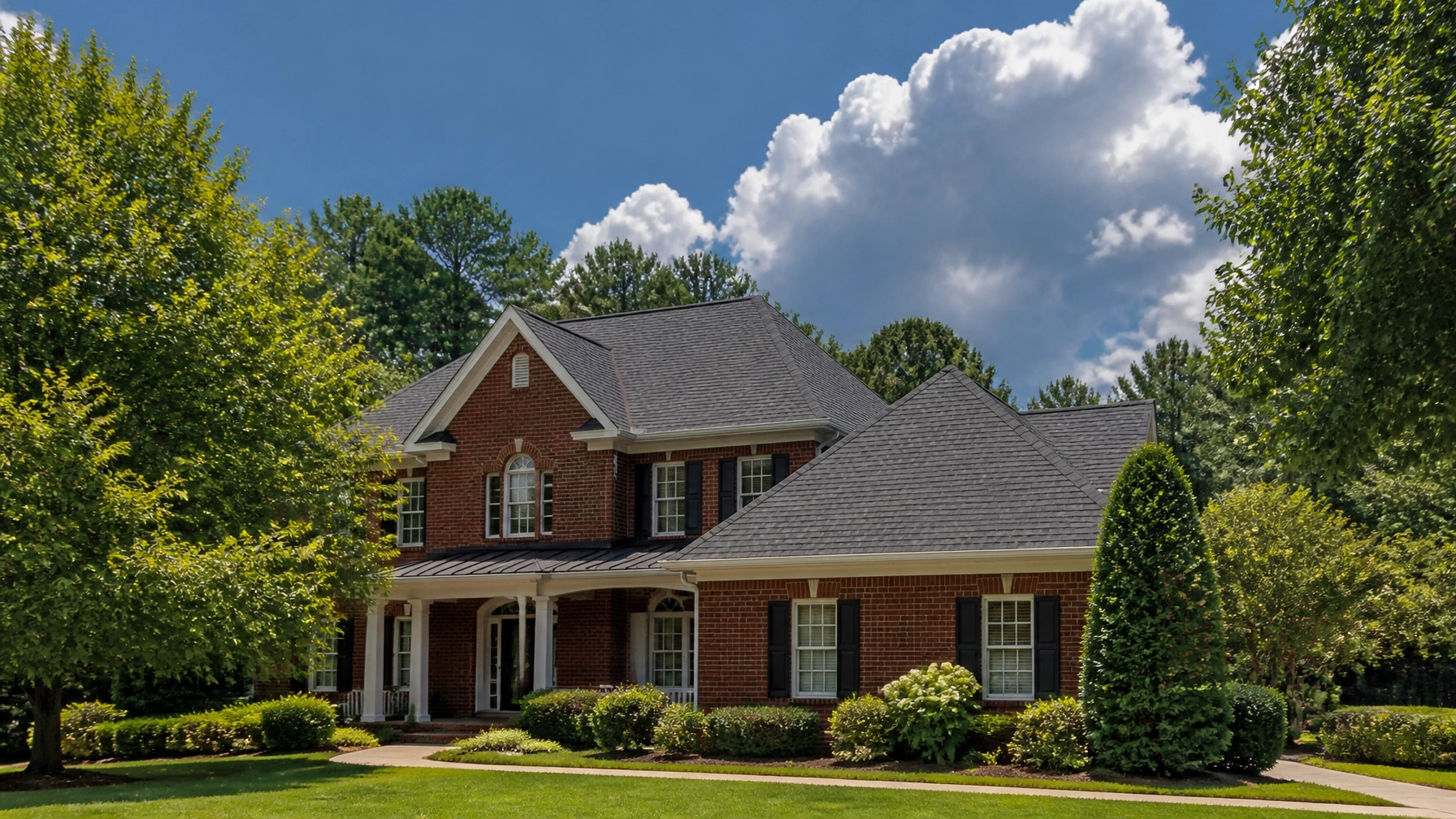
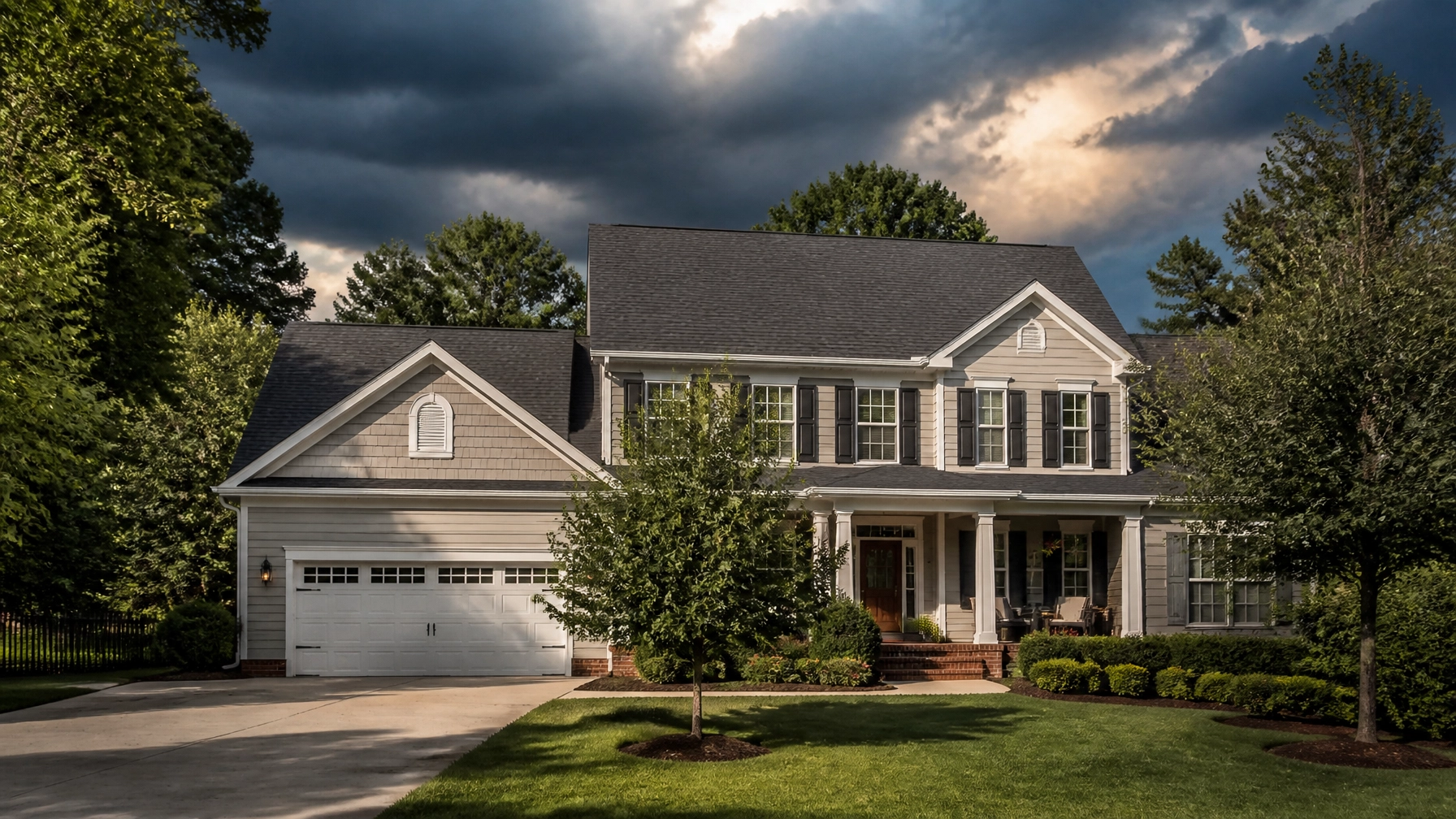
    Two-story Florida home with a new charcoal architectural shingle roof

    3. How do I check a Lakeland roofer’s license?

    Use Florida DBPR’s MyFloridaLicense license search. Search the contractor’s business name or license number, then confirm:

    • Status is Current, Active
    • License type is roofing-related
    • CCC means Certified Roofing Contractor, authorized statewide
    • RR means Registered Roofing Contractor, limited to approved local jurisdictions

    The license should match the business named on your contract and permit.

    4. Are shingles or metal better for Lakeland weather?

    Architectural shingles are the practical value choice for heat, humidity, and routine maintenance. Choose algae-resistant, wind-rated products. Metal costs more but offers longer service life, strong wind performance, reflective options, and a modern appearance. Compare both with this metal-versus-shingles guide.

    5. Which roof improves home value and curb appeal?

    For most Lakeland homes — from Grasslands to the Florida Southern College area — high-quality architectural shingles offer the strongest balance of cost, appearance, and resale appeal. Use a color that complements the siding and neighborhood. Standing-seam metal can create premium curb appeal, especially on modern homes, but the added cost may not return dollar-for-dollar at resale.

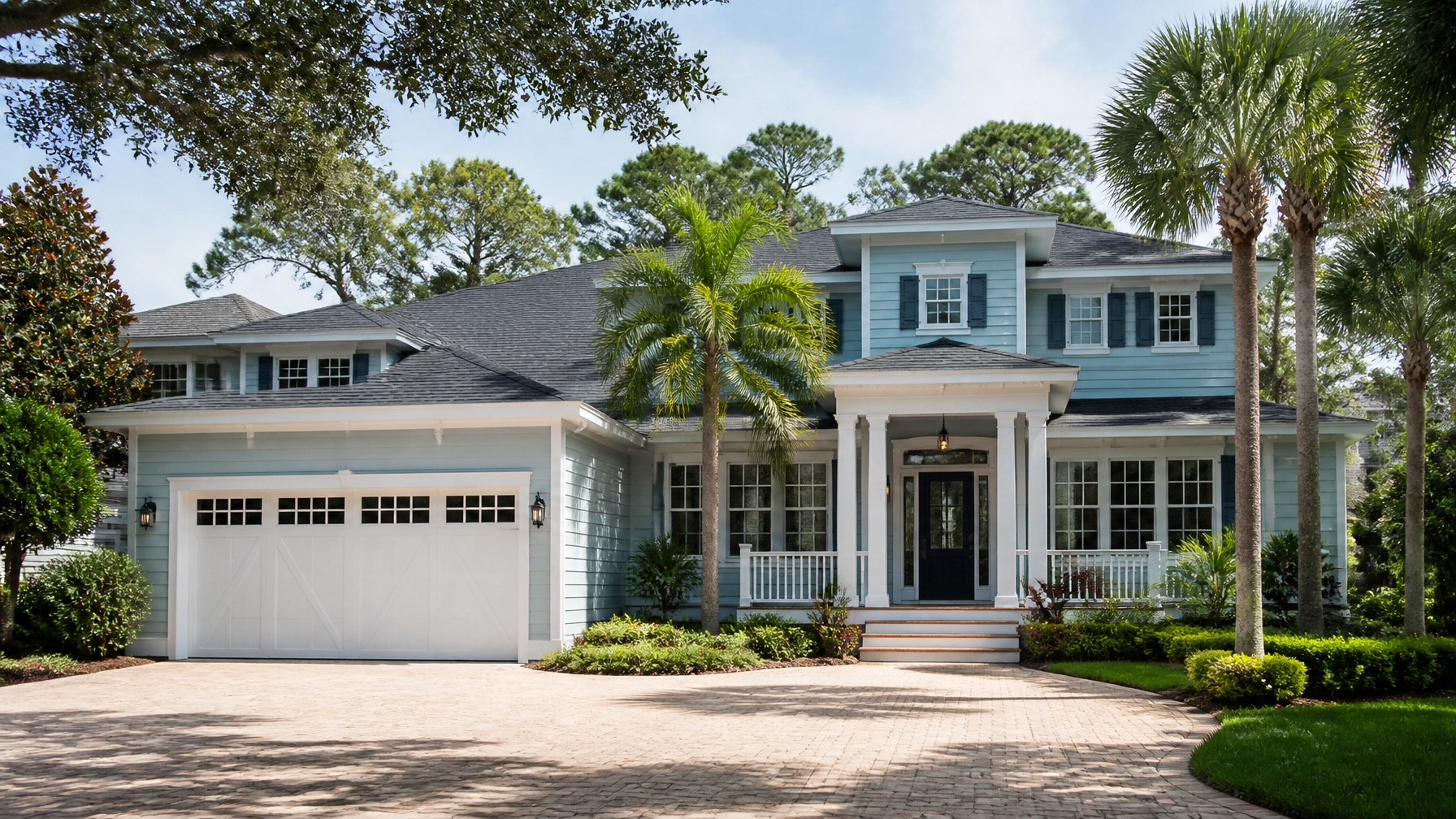
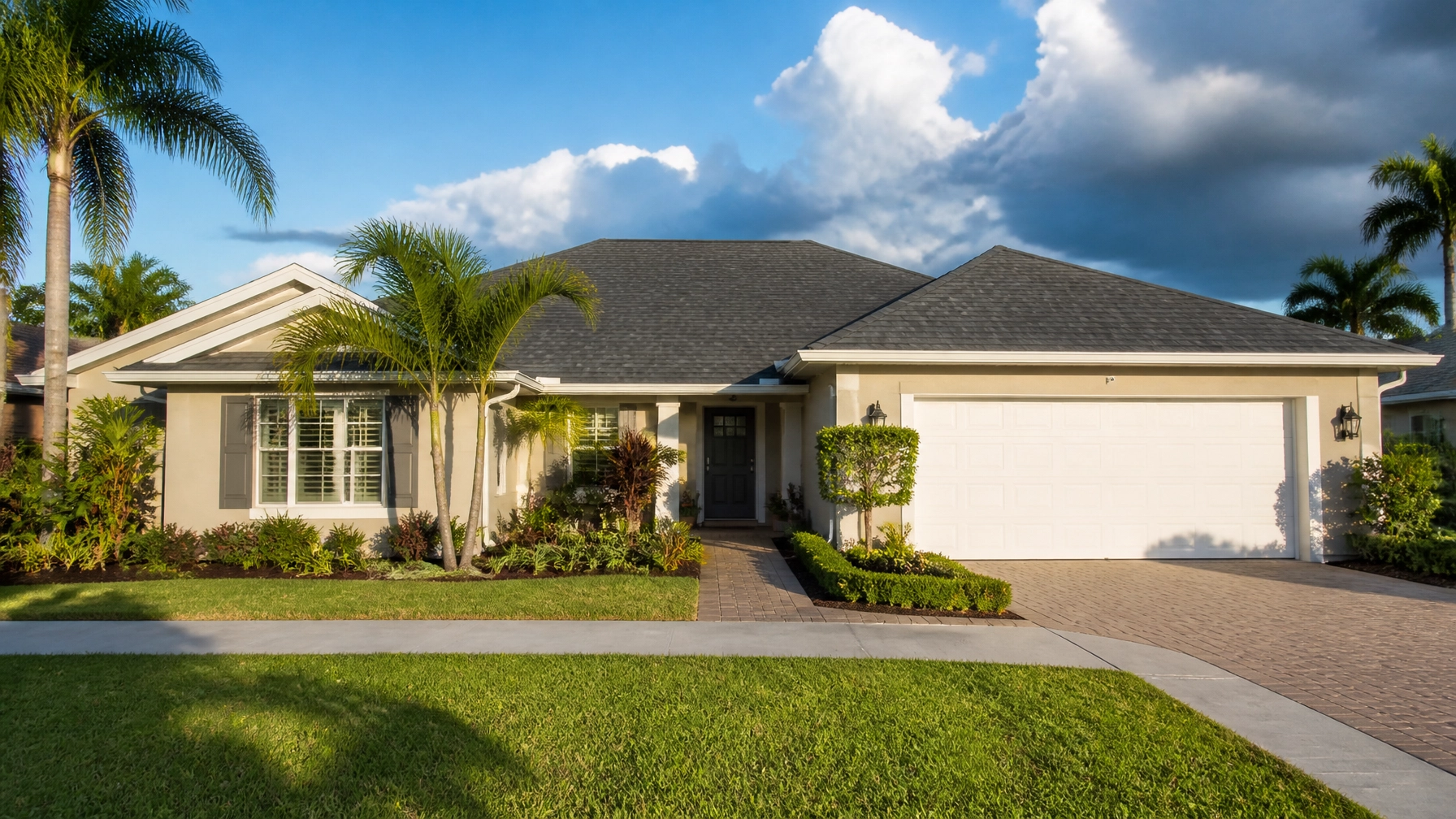
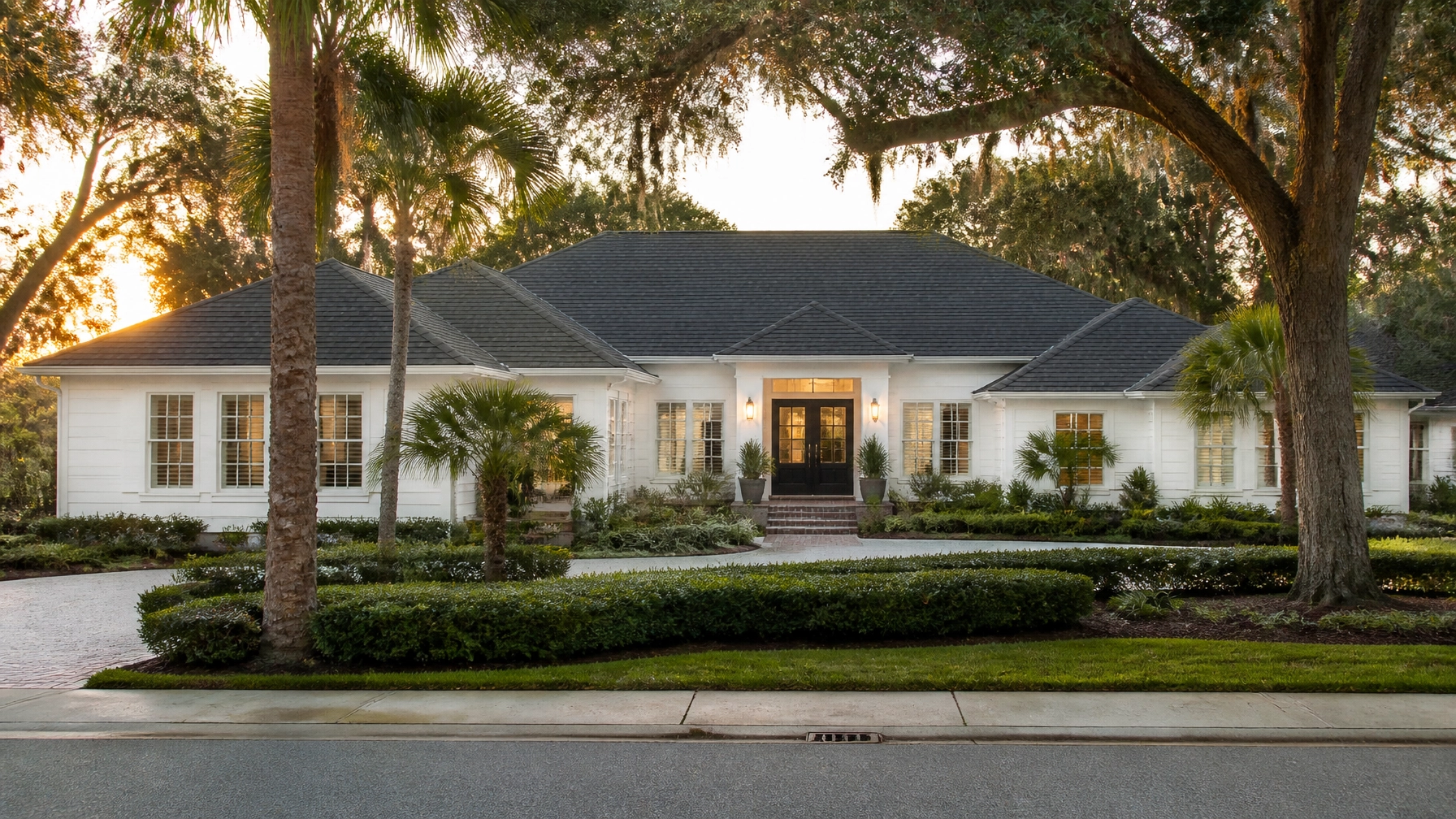
    Modern Lakeland-area home with a new standing-seam metal roof

    6. What should I do after hail or hurricane damage?

    Photograph damage safely, prevent further water entry, and notify your insurer promptly. Ask about your standard and hurricane/wind deductible before authorizing work. Request a written scope separating covered damage from elective upgrades. After replacement, obtain a Florida wind mitigation inspection; features such as improved roof attachment and secondary water resistance may support insurance credits. Hurricane season typically peaks in September.

    7. How long do asphalt roofs last in Central Florida?

    Architectural asphalt shingles commonly last 15–25 years in Central Florida heat, humidity, UV exposure, and storms. Replace sooner if you see widespread granule loss, curling, brittle shingles, recurring leaks, sagging, or damaged flashing. A roof approaching 20 years deserves a professional evaluation before storm season.

    8. Can I get a free Lakeland roof estimate without a contractor visit?

    Yes. Get My Roof Estimate Now uses satellite imagery to measure roof size, pitch, and complexity. Enter your address and receive a free, no-credit-card estimate in about 60 seconds, with transparent low-to-high pricing for materials such as shingles and metal. Start with the Lakeland estimate page.

    Get your Lakeland roof budget before scheduling multiple contractor visits. A fast satellite estimate gives you a realistic planning range, while a licensed roofer can confirm the final scope, permits, and storm-related repairs.

    Category: Roofing Costs & Home Value

    SEO Tags: Lakeland FL roof replacement, roof replacement cost Lakeland 2026, Polk County roofing FAQ, Florida roofing permit, new roof ROI home value, roof replacement resale value, roof curb appeal home value, best roof for home value, roof replacement ROI, satellite roof estimate

  • Daily FAQ Blitz – Slot 3: AEO FAQ Quick Answers for Lexington, KY Homeowners (2026)

    Daily FAQ Blitz – Slot 3: AEO FAQ Quick Answers for Lexington, KY Homeowners (2026)

    Lexington roofs face hot summers, strong UV exposure, heavy rain, thunderstorms, wind, and hail. The April 16, 2026 hail event, which included hail measuring about 1.5 inches, led to many roof damage claims across Lexington.

    If your home was affected: or your roof is already 15 to 30 years old: quick answers can help you decide what to do next. Below are the most common Lexington roofing questions for 2026, including current cost ranges, permits, insurance, contractor checks, and roof lifespan.

    1. How much does roof replacement cost in Lexington, KY, in 2026?

    A standard asphalt shingle roof replacement in Lexington typically costs about $7,000–$18,000 or more. Larger, steeper, or complex roofs can exceed $25,000.

    Installed asphalt shingle pricing commonly falls near $4.00–$7.40 per square foot, depending on roof size, pitch, material, tear-off requirements, labor, and hidden damage.

    Lexington roof replacement cost breakdown

    • Budget: Approximately $7,000–$10,000

      • Smaller or simple roofs
      • Basic 3-tab shingles
      • Limited removal or decking work
    • Popular: Approximately $10,000–$16,000

      • Average Lexington homes
      • Architectural shingles
      • Standard tear-off, underlayment, flashing, and ventilation
    • Premium: Approximately $16,000–$25,000+

      • Metal or impact-resistant roofing
      • Steep or complicated roof designs
      • Multiple layers, extensive decking repairs, or premium accessories

    Your actual price depends on the roof itself: not only the square footage of the home. Roofers measure the roof in “squares,” with one square equal to 100 square feet of roofing.

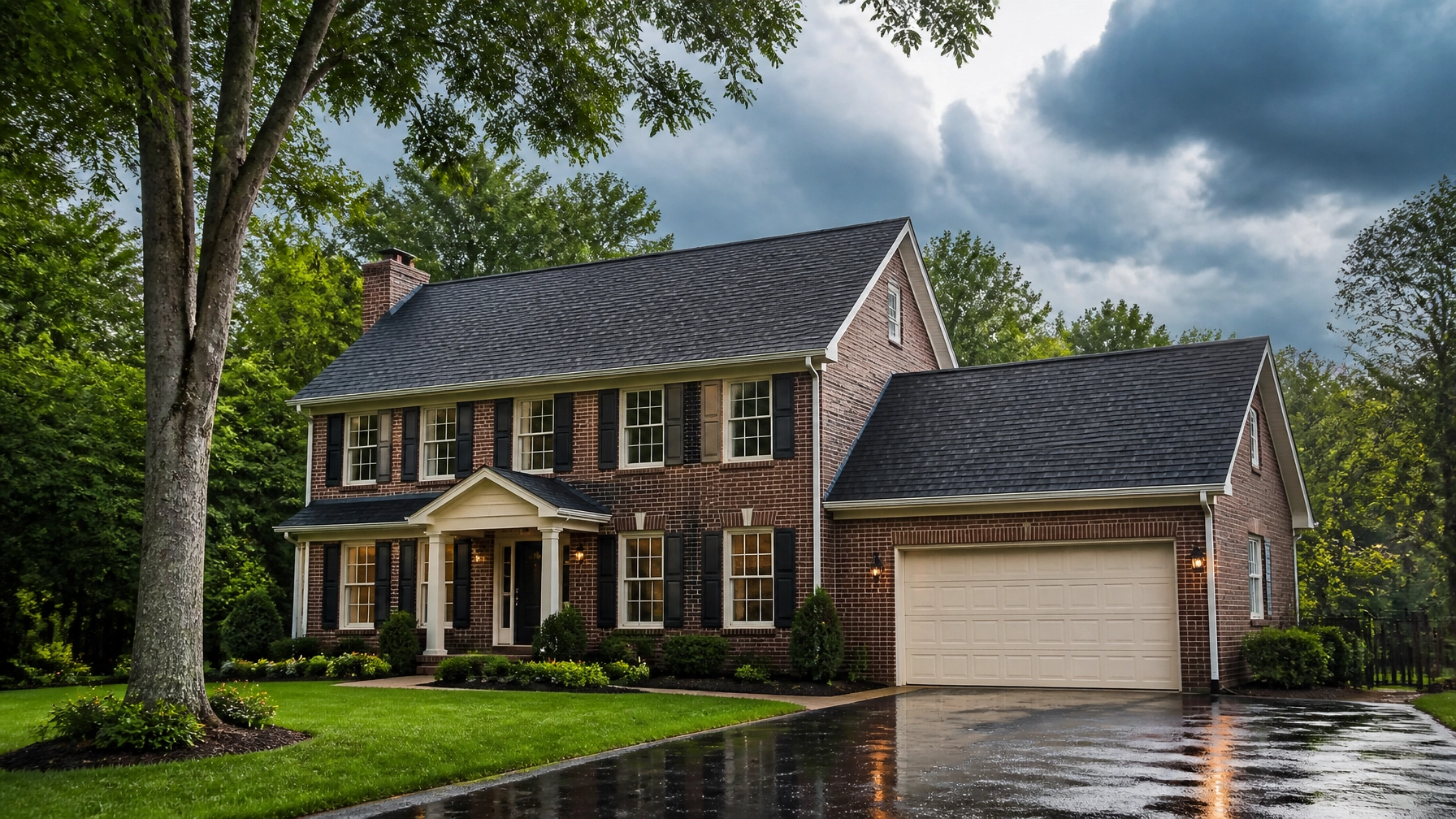
    Recently replaced architectural shingle roof on a Lexington ranch home

    2. Do I need a permit to replace my roof in Lexington?

    Yes. The Lexington-Fayette Urban County Government Division of Building Inspection generally requires a building permit for residential roof replacements, including full tear-offs and overlays.

    You can apply through the LFUCG ePermits and building permits resources or in person.

    Important points:

    • Required inspections apply under the Kentucky Building Code.
    • Ice-and-water shield installation is required at eaves where applicable under code requirements.
    • Allow approximately 2–4 weeks for processing and scheduling, depending on the project and department workload.
    • Minor maintenance repairs and small patches may be exempt, but confirm with the Division of Building Inspection.
    • Homes in historic districts may need additional approval from the Historic Preservation Office.
    • Skipping a required permit can lead to a stop-work order, fines, or retroactive permit fees.

    Ask your contractor in writing whether the permit is included and who is responsible for scheduling inspections.

    3. What should I do after hail damages my Lexington roof?

    After a storm such as the April 16, 2026 Lexington hail event, start with documentation and safety.

    Recommended steps

    1. Take timestamped photos and videos from the ground.
    2. Photograph damaged shingles, gutters, siding, vents, skylights, and HVAC fins.
    3. Use a tarp for temporary protection if water is entering the home.
    4. Avoid permanent repairs before the insurance adjuster inspects the property.
    5. Have a local roofing contractor inspect the roof before filing a claim.
    6. Be present when the adjuster visits.
    7. Review your policy for a separate wind or hail deductible.
    8. Compare the adjuster’s scope with the contractor’s written inspection.

    A 1.5-inch hailstone can bruise asphalt shingles and damage gutters, vents, flashing, siding, and outdoor equipment. However, not every hail-damaged roof requires full replacement. The extent, age, condition, and distribution of damage matter.

    Do not climb onto the roof yourself. A ground-level inspection and professional evaluation are safer.

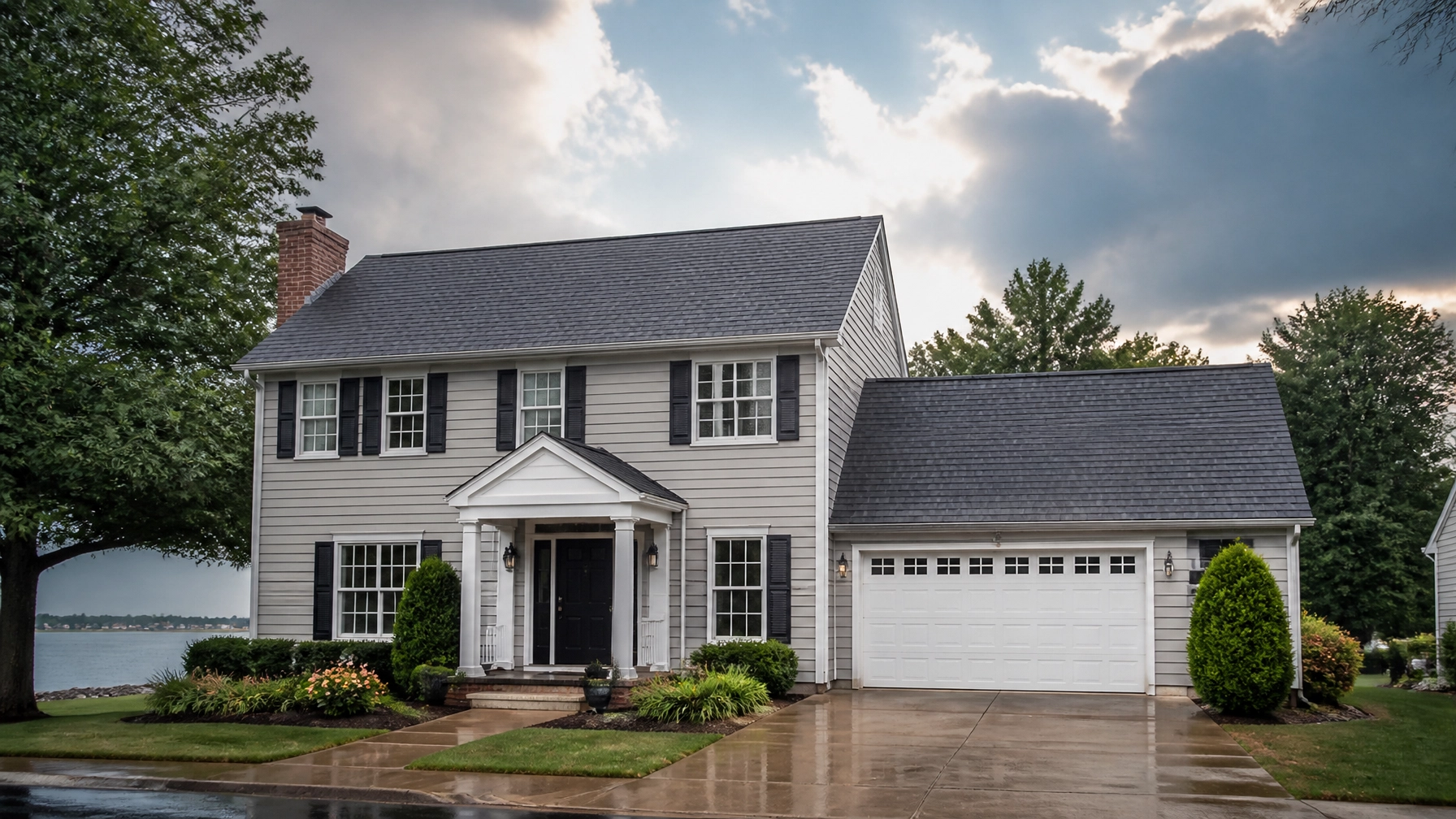
    Residential roof inspected after a Lexington, Kentucky thunderstorm

    4. What is the difference between ACV and RCV roof insurance coverage?

    ACV, or Actual Cash Value, subtracts depreciation from the replacement cost. RCV, or Replacement Cost Value, generally covers the cost to replace the roof with like kind and quality, subject to the deductible and policy terms.

    ACV example

    If a replacement roof costs $14,000 and the insurer applies $6,000 in depreciation:

    • Replacement cost: $14,000
    • Less depreciation: $6,000
    • ACV before deductible: $8,000
    • Less your policy deductible: final claim payment

    Under an ACV-only policy, the depreciation may not be recoverable.

    RCV example

    An RCV policy may issue:

    1. An initial payment based on ACV, minus the deductible.
    2. A second payment for recoverable depreciation after the roof is replaced and documentation is submitted.

    The recovery deadline can range from approximately 180 days to two years, depending on the policy. Confirm the deadline with your insurer before work begins.

    Some Kentucky policies now use roof payment schedules that limit payouts based on roof age. These schedules may provide little or no recoverable depreciation, even when the broader policy includes replacement-cost coverage.

    For official consumer information, review the Kentucky Department of Insurance wind and hail guidance.

    Also, never agree to a contractor “waiving” your deductible. In Kentucky, falsely representing the amount you paid can create insurance-fraud concerns.

    5. How do I verify a Lexington roofing contractor?

    Kentucky does not issue a single statewide roofing contractor license. Roofing regulation is handled at the local level, so Lexington homeowners should verify the contractor through local authorities and standard business checks.

    Before signing, request:

    • Local business registration information
    • General liability insurance certificate
    • Workers’ compensation certificate
    • Recent Lexington-area references
    • A detailed written scope of work
    • Material brand, type, and color
    • Tear-off and disposal details
    • Permit responsibility
    • Start and completion expectations
    • Workmanship warranty terms

    Kentucky law generally requires workers’ compensation coverage for employers with one or more employees. Ask the contractor’s insurance agent to send certificates directly when possible.

    Be especially careful after a hail event. Out-of-state “storm chasers” may arrive quickly, collect deposits, and disappear after the work is finished: or never return for warranty service.

    Avoid contractors who:

    • Pressure you to sign immediately
    • Demand full payment upfront
    • Refuse to show insurance
    • Offer only a verbal estimate
    • Ask you to sign an Assignment of Benefits agreement
    • Promise to handle the claim without explaining the process
    • Offer to waive your deductible

    A local contractor who knows Lexington permits, inspections, and weather conditions is usually easier to verify and hold accountable.

    Premium standing-seam metal roof on a Kentucky residential home

    6. How long does a roof last in Kentucky?

    Roof lifespan depends on material quality, installation, ventilation, maintenance, heat, UV exposure, hail, wind, and temperature changes.

    Typical Kentucky ranges include:

    • 3-tab shingles (Budget): Approximately 10–18 years
    • Architectural shingles (Popular): Approximately 15–25 years
    • Impact-resistant shingles: Approximately 20–30 years when properly installed

    These are planning ranges: not guarantees. Manufacturer warranties also do not guarantee the roof will perform for the full warranty period.

    Lexington’s hot summers, temperature swings, hail, wind, and moisture can shorten shingle life. If your roof is approaching 15 years old, schedule an inspection and start planning before leaks become urgent.

    7. Should I repair or replace my Lexington roof after hail?

    Repair may be appropriate when damage is limited, the roof is relatively young, and the underlying roof system remains sound. Replacement may make more sense when damage is widespread or the roof is near the end of its expected life.

    A repair may fit when:

    • Only a few shingles are damaged
    • The roof is under approximately 15 years old
    • There are no recurring leaks
    • The decking and flashing remain in good condition

    Replacement may be more practical when:

    • Hail damage appears across multiple roof slopes
    • The roof is 20 years old or older
    • Shingles are brittle, curled, or losing granules
    • Leaks have returned after previous repairs
    • The roof has multiple layers or deteriorated decking

    Get both a professional inspection and your insurer’s written scope before deciding.

    8. Can I get a Lexington roof estimate without a contractor visit?

    Yes. Get My Roof Estimate Now uses satellite-powered measurements to provide a fast budgeting range without an initial contractor visit.

    Enter your Lexington address to receive:

    • A free estimate with no credit card required
    • Results in about 60 seconds
    • Roof measurements based on satellite imagery
    • Approximately 90–95% measurement accuracy for typical properties
    • Low, middle, and high price ranges
    • Material comparisons for asphalt shingles, metal, synthetic roofing, and coatings
    • A connection to verified local contractors

    You can also visit the dedicated Lexington, KY roof estimate page.

    The estimate is a budgeting tool, not a substitute for a final on-site inspection. A contractor still needs to check flashing, decking, ventilation, hidden damage, and installation conditions before providing a final proposal.

    Get Your Lexington Roof Estimate in About 60 Seconds

    Whether you are planning ahead, comparing materials, or assessing damage from the April 16 hail event, start with clear numbers.

    Enter your Lexington address at Get My Roof Estimate Now for a free, satellite-powered estimate with no credit card and no obligation. Have another roofing question? Ask a local professional before signing anything, and use your estimate to plan with confidence.

  • Daily Weather Blitz – Slot 8: Atlanta, GA : September 4, 2026: A 96°F Heat Advisory Day With 100–106°F Heat Indices, a Labor Day Cold Front & What the ATL’s Heat, Humidity, and Hail Season Do to Your Roof

    Daily Weather Blitz – Slot 8: Atlanta, GA : September 4, 2026: A 96°F Heat Advisory Day With 100–106°F Heat Indices, a Labor Day Cold Front & What the ATL’s Heat, Humidity, and Hail Season Do to Your Roof

    Image credit: Generated for Get My Roof Estimate Now.

    Atlanta is heading into a hot and active Labor Day weekend. On Friday, September 4, temperatures are expected to reach approximately 95–96°F, while afternoon heat index values climb between 100°F and 106°F across parts of metro Atlanta and North Georgia.

    The National Weather Service Peachtree City office has issued a Heat Advisory for portions of North and Central Georgia through Saturday evening. Friday night will offer limited relief, with lows near 74–75°F and roughly a 20% chance of isolated afternoon showers or thunderstorms.

    Heat remains the main concern through Saturday. A weak front and increasing storm chances arrive over the weekend, followed by cooler air on Labor Day Monday. For homeowners, this weather pattern is more than uncomfortable. Prolonged heat, high humidity, ultraviolet exposure, and sudden thunderstorms all accelerate roof wear.

    Atlanta Weather Outlook: September 4–7, 2026

    Here is the practical forecast for the holiday weekend:

    • Friday: High near 95–96°F; heat index from 100–106°F; low near 74–75°F.
    • Friday storms: Approximately 20% chance of isolated afternoon showers or thunderstorms.
    • Saturday: Another dangerous heat day, with temperatures in the mid-to-upper 90s and heat indices in the mid-100s.
    • Sunday: Storm chances increase as a backdoor cold front moves southwest from the Carolinas into Northeast Georgia and the Atlanta region.
    • Labor Day Monday: Cooler air arrives behind the front, with highs generally in the 80s to lower 90s and continued chances for showers or thunderstorms.

    This timing matters for anyone attending Dragon Con, Atlanta Black Pride, Georgia football events, outdoor festivals, or neighborhood gatherings. Schedule strenuous outdoor activity early, stay hydrated, and follow local weather alerts. A “cooler” Monday does not eliminate the risk of lightning, gusty winds, or heavy rainfall.

    Check the latest forecast from the National Weather Service Atlanta/Peachtree City office before making weekend plans.

    Why Atlanta’s Heat Is Hard on Roofs

    A roof may be exposed to conditions much more extreme than the air temperature suggests. Under direct summer sun, dark roof surfaces in Atlanta can reach approximately 160°F.

    That repeated heating and cooling creates thermal cycling:

    1. Roof materials heat and expand during the day.
    2. They contract as temperatures fall overnight.
    3. The cycle repeats through summer and across the seasons.
    4. Small weaknesses gradually become cracks, curling, brittleness, or loose seals.

    Over time, thermal cycling can cause asphalt shingles to lose flexibility. Older shingles may crack when walked on, split around nail lines, or fail to reseal after high winds.

    UV Exposure Removes Protective Granules

    Ultraviolet radiation also breaks down roofing materials. On asphalt shingles, UV exposure gradually dries the asphalt and loosens protective granules.

    Granule loss can appear as:

    • Bare or noticeably smoother patches
    • Excess granules collecting in gutters
    • Faded or uneven shingle color
    • Exposed fiberglass mat
    • Faster deterioration on south- and west-facing roof slopes

    Granules help protect shingles from sunlight and weather. Once they are significantly depleted, the underlying material ages faster.

    Close-up of an Atlanta residential asphalt shingle roof under intense summer sun

    Image credit: Generated for Get My Roof Estimate Now.

    Humidity, Algae, and Attic Ventilation

    Atlanta’s humid climate creates a second set of roofing challenges. Moisture can remain on shaded roof sections, around dormers, beneath debris, and near clogged gutters.

    Humidity encourages:

    • Black algae streaks
    • Moss or mildew in persistently shaded areas
    • Deterioration around flashing and sealants
    • Damp attic insulation
    • Wood rot when leaks go unaddressed

    Black streaks are often caused by algae rather than structural damage. However, algae can hold moisture against the shingle surface and make it easier for debris to collect.

    Proper attic ventilation is also important. Adequate intake and exhaust ventilation helps reduce trapped heat and moisture. It cannot stop a roof from getting hot, but it can reduce the duration and intensity of heat buildup beneath the shingles.

    Georgia’s Hail and Thunderstorm Exposure

    Atlanta is not only a heat market. It is also a serious thunderstorm and hail market.

    From January 2021 through April 2026, NOAA storm data compiled for Georgia recorded:

    • 619 hail events
    • 5,249 thunderstorm and high-wind events
    • 274 tornadoes

    Georgia’s most active hail period is generally March through June, with April often the leading month for large hail activity. That does not mean late summer is risk-free. Storms during Labor Day weekend can still produce damaging wind gusts, lightning, intense rainfall, and isolated hail.

    After a storm, inspect your property from the ground for:

    • Missing, lifted, or displaced shingles
    • Exposed underlayment
    • Dented metal vents or flashing
    • Damaged gutters and downspouts
    • Fallen branches
    • Water stains on ceilings or in the attic

    Do not assume a roof is undamaged because there is no active leak. Hail impacts can bruise shingles without creating an immediate interior symptom.

    Review storm records through the NOAA NCEI Storm Events Database and report serious weather damage through the appropriate local channels.

    What Atlanta Roof Replacement Costs in 2026

    For a typical Atlanta single-family home, roof replacement commonly falls between $8,500 and $17,000. The final price depends on roof size, pitch, design complexity, material, tear-off requirements, ventilation work, and local labor rates.

    A simple roof with one layer of shingles may sit near the lower end. A larger or steeper roof with multiple valleys, dormers, multiple tear-offs, or premium materials can approach or exceed the upper end.

    For a property-specific starting point, use the Atlanta roof estimate page or the roof cost calculator. The satellite-powered tool measures roof dimensions and applies local pricing without requiring an initial contractor visit.

    Georgia Roof Lifespan Benchmarks

    Climate-adjusted lifespan is often more useful than a manufacturer’s ideal rating. Heat, humidity, poor ventilation, storm exposure, and installation quality all affect actual performance.

    Roofing material Georgia benchmark Positioning
    3-tab asphalt shingles 12–18 years Budget
    Architectural asphalt shingles 15–22 years Popular
    Standing seam metal 40–60 years Premium

    Architectural shingles are the most common value-focused upgrade for Atlanta homeowners. They offer a dimensional appearance and generally better durability than basic 3-tab shingles.

    For a direct comparison of shingle types and installed costs, review the asphalt shingles guide. Homeowners concerned about recurring hail exposure can also ask contractors about impact-resistant shingles and the associated insurance requirements.

    Practical Roof Resilience Steps for Atlanta Homeowners

    Use this checklist before the next major storm cycle:

    • Clean gutters and confirm that downspouts discharge away from the foundation.
    • Trim branches that touch or overhang the roof.
    • Check attic ventilation and look for damp insulation or daylight around penetrations.
    • Replace cracked pipe boots, damaged flashing, and missing shingles promptly.
    • Consider algae-resistant shingles when replacement is due.
    • Choose lighter roofing colors if reducing solar heat gain is a priority.
    • Photograph the roof and exterior before severe weather for insurance documentation.
    • Have older roofs checked before the spring hail season.
    • Never climb onto a roof during extreme heat, rain, high winds, or lightning.

    Atlanta-area home with a new shingle roof after a summer thunderstorm

    Image credit: Generated for Get My Roof Estimate Now.

    Get a Free Atlanta Roof Estimate in 60 Seconds

    If your Atlanta roof is 15–30 years old, showing granule loss, or has experienced recent storm exposure, it is worth knowing the likely replacement cost before an emergency develops.

    Get My Roof Estimate Now uses satellite imagery to estimate your roof’s size, pitch, and complexity. You can compare material options and receive a free pricing range in about 60 seconds, with no credit card and no contractor visit required upfront.

    Start your free satellite roof estimate.

    Have you noticed heat damage, algae, hail marks, or storm-related roof problems around Atlanta? Share your experience and pass this weather-and-roofing update along to another Georgia homeowner.

    Modern Atlanta-area home with a standing seam metal roof after rain

    Image credit: Generated for Get My Roof Estimate Now.

    Sources

  • Daily ROI Blitz – Slot 3: Jacksonville, FL New Roof ROI : How a Storm-Ready Replacement Adds Home Value in 2026

    Daily ROI Blitz – Slot 3: Jacksonville, FL New Roof ROI : How a Storm-Ready Replacement Adds Home Value in 2026

    For Jacksonville homeowners, a new roof is more than a maintenance expense. It can protect resale value, reduce inspection problems, improve curb appeal, and make a home easier to insure.

    In 2026, a typical Jacksonville roof replacement costs approximately:

    • Architectural shingles: $9,000–$24,000
    • Metal roofing: $16,000–$42,000

    Those ranges vary by roof size, pitch, complexity, tear-off requirements, permits, materials, and contractor pricing. On a 2,000-square-foot home, architectural shingles commonly run about $450–$950 per roofing square, while metal roofing may cost approximately $600–$1,400 per square.

    The key question is not whether a new roof adds value. It is how much value it protects or creates compared with the cost of the project.

    Jacksonville Market Context: Why Roof Condition Matters in 2026

    Jacksonville buyers have more choices than they did during the tightest years of the market.

    Market indicator 2026 Jacksonville / Duval County benchmark
    Redfin median home price Approximately $310,000
    Realtor.com median sold price Approximately $300,000
    Duval County median single-family price Approximately $335,000
    Median days on market 28 days
    Active inventory 3,561 homes
    Estimated supply Approximately 3.9 months

    In a market with nearly four months of inventory, buyers can compare condition more carefully. An older roof can become a negotiating tool. A buyer may request a price reduction, repair credit, insurance contingency, or full replacement before closing.

    That matters in neighborhoods with a mix of older and newer housing, including Riverside, Avondale, San Marco, Ortega, Mandarin, Arlington, Atlantic Beach, Neptune Beach, and the Ponte Vedra area.

    Three Financial Effects of a New Roof

    1. It protects your resale price

    A roof replacement does not always return every dollar spent. However, it can prevent buyers from subtracting the expected replacement cost from their offer.

    For example, if a buyer believes the roof has only a few years left, they may request:

    • A $10,000–$20,000 price reduction
    • A seller-paid repair credit
    • A roof replacement before closing
    • A higher escrow holdback
    • Additional inspection and insurance conditions

    Replacing the roof before listing can convert an obvious liability into a documented improvement.

    2. It improves roof curb appeal and buyer confidence

    Roofing can represent a large portion of the visible exterior. Clean architectural shingles, straight rooflines, new flashing, and consistent color can make a home look newer before a buyer ever walks through the front door.

    This is especially relevant for:

    • Historic homes in Riverside and Avondale
    • Older homes in San Marco and Ortega
    • Larger properties in Mandarin and Ponte Vedra
    • Coastal homes near Atlantic Beach and Neptune Beach

    A new roof will not fix every exterior issue, but it can improve the first impression and reduce the feeling that a buyer is inheriting deferred maintenance.

    3. It may reduce insurance and inspection friction

    Florida buyers and lenders pay close attention to roof age and condition. A newer roof may make it easier to document the property’s insurability, especially when paired with a wind mitigation inspection and permits.

    Insurance savings are not automatic. They depend on the carrier, roof system, wind-resistance features, inspection results, and policy terms. Still, a storm-ready roof can strengthen the overall financial profile of the home.

    Jacksonville historic-style home in Riverside or Avondale with a new dimensional shingle roof

    Jacksonville Roof Replacement Cost by Material

    Roofing material Typical local range Category Best fit
    Architectural shingles $9,000–$24,000 Popular / Value Most resale-focused homeowners
    Standing-seam metal $16,000–$42,000 Premium / Long life Coastal, modern, or long-term ownership
    Designer shingles Usually above standard architectural pricing Premium / Curb appeal Higher-end homes and distinctive exteriors

    Architectural shingles are usually the strongest pure resale choice because they balance appearance, cost, availability, and installation speed. They typically last about 25–30 years when properly installed and maintained.

    Metal roofing can provide a longer service life, improved heat reflectivity, and strong visual appeal. However, its higher upfront cost does not always translate into proportionally higher resale value.

    Worked Jacksonville ROI Examples

    National 2026 Cost vs. Value guidance estimates:

    • Asphalt shingle replacement: approximately $31,871 in cost and $21,501 in resale value added, or about 68% cost recouped
    • Metal roof replacement: approximately $51,865 in cost and $25,972 in resale value added, or about 50% cost recouped

    These are national benchmarks, not guarantees for an individual Jacksonville property.

    Example 1: Architectural shingle roof

    Assume a Jacksonville homeowner spends $16,000 on a new architectural shingle roof.

    Using a 68% recoupment benchmark:

    • Estimated resale value contribution: $10,880
    • Approximate unrecovered project cost: $5,120

    That calculation does not include the value of avoiding a buyer credit, reducing time on market, or preventing an insurance-related delay. If the old roof would have triggered a $10,000 credit, the practical financial result could be stronger.

    Example 2: Metal roof

    Assume a homeowner spends $28,000 on a new metal roof.

    Using a 50% recoupment benchmark:

    • Estimated resale value contribution: $14,000
    • Approximate unrecovered project cost: $14,000

    Metal may still be the better choice for a homeowner planning to stay for decades, but architectural shingles often provide the better short-term roof replacement ROI when resale is the primary objective.

    Why Storm-Ready Roofing Matters in Jacksonville

    Jacksonville roofs face a combination of:

    • Hurricane-season wind
    • Wind-driven rain
    • High humidity
    • Intense UV exposure
    • Heavy rainfall
    • Algae growth, especially on shaded or southern-facing slopes
    • Coastal salt exposure in beach communities

    Hurricane Matthew in 2016 caused roof damage and major flooding concerns across Northeast Florida. Hurricane Irma in 2017 again exposed Jacksonville’s vulnerability to wind, rain, and St. Johns River flooding. The 2024 Milton event reinforced the importance of wind resistance and flood preparedness, including concerns around areas such as Deep Creek.

    A storm-ready replacement should include more than attractive shingles. Ask about:

    • Current Florida Building Code requirements
    • Proper roof-deck attachment
    • Wind-rated materials
    • Sealed roof edges and penetrations
    • Drip edge and flashing
    • Underlayment and secondary water protection
    • Adequate attic ventilation
    • Corrosion-resistant components near the coast

    Algae staining and UV aging are usually maintenance or wear issues, not proof of a covered hurricane loss. Storm-related damage is more likely to involve missing or creased shingles, damaged flashing, exposed decking, or leaks that begin after a specific wind event.

    Modern Jacksonville-area coastal home with a new standing-seam metal roof

    Florida Insurance Considerations in 2026

    Florida roof-age rules deserve careful attention.

    The proposed 2026 SB 808 included roof-age and useful-life provisions, including protections for roofs under 15 years old and inspection-based consideration for older steep-slope roofs with at least five years of remaining useful life. However, the bill status should be confirmed before relying on it: Florida Senate records indicate that SB 808 died in committee and did not become effective on July 1, 2026.

    Homeowners should rely on current Florida law, their policy language, and written guidance from their insurer or licensed insurance professional.

    For a replacement, keep:

    • Permit records
    • Final inspection approval
    • Contractor license and insurance information
    • Product specifications
    • Photos of the completed roof
    • Wind mitigation inspection documentation
    • Warranty paperwork

    A wind mitigation inspection is separate from a roof-age inspection. It may identify features that qualify for insurance credits, but discounts vary by carrier and are never automatic.

    Jacksonville Resale Checklist

    Before listing your home, verify:

    • The roof’s approximate installation date
    • Whether permits were properly closed
    • Any active leaks or interior stains
    • Missing, lifted, or cracked shingles
    • Flashing around walls, chimneys, vents, and skylights
    • Algae or moss growth
    • Sagging areas or visible deck damage
    • Attic ventilation
    • Wind mitigation documentation
    • Transferable material and workmanship warranties

    If the roof is more than 15–20 years old, get a documented evaluation before listing. Buyers respond better to clear information than to uncertainty.

    Frequently Asked Questions

    What is the best roof for home value in Jacksonville?

    Architectural asphalt shingles are usually the best balance of cost, appearance, durability, and resale appeal. Metal can be a strong long-term choice, particularly for coastal or modern homes, but its higher price may produce a lower short-term ROI.

    Does a new roof increase Jacksonville home value?

    It can. The value may appear as added buyer confidence, fewer inspection objections, stronger curb appeal, fewer insurance concerns, and reduced pressure for seller credits. The exact resale value depends on the roof, home, neighborhood, and market conditions.

    Should I replace my roof before selling?

    Consider replacement when the roof is near the end of its useful life, shows active problems, or is likely to trigger buyer negotiations. If the roof is still serviceable, a professional inspection and documented repair may be more cost-effective.

    How can I estimate my Jacksonville roof replacement cost?

    Use the Jacksonville satellite roof estimate tool. Enter your address to receive a free estimate in about 60 seconds, with no credit card and no contractor visit required upfront.

    Summary: Jacksonville Roof Replacement ROI in 2026

    A new roof is rarely a guaranteed dollar-for-dollar investment. Its financial impact comes from several sources:

    1. Protecting your resale price
    2. Improving roof curb appeal
    3. Reducing inspection and insurance friction
    4. Preparing the home for Jacksonville’s heat, humidity, rain, and hurricane-season winds

    For most resale-focused homeowners, architectural shingles offer the strongest balance of investment and roof replacement ROI. Metal roofing may make more sense for long-term ownership, coastal exposure, or a home where premium design and durability are priorities.

    Get your property-specific number before making a decision. Request a free satellite-powered Jacksonville roof estimate and see your projected cost in 60 seconds.

    Sources

  • Daily FAQ Blitz – Slot 5: AEO FAQ Quick Answers for Orlando, FL Homeowners (2026)

    Daily FAQ Blitz – Slot 5: AEO FAQ Quick Answers for Orlando, FL Homeowners (2026)

    If you own a home in Orlando, FL, or elsewhere in Orange County, roofing terms can quickly become confusing. One example is “AEO.” In customs, AEO has a specific meaning. In roofing, it does not.

    This quick-answer guide covers AEO, Orlando roof permits, Florida contractor licensing, 2026 replacement costs, storm inspections, insurance rules, and the latest Florida Building Code updates.

    What does AEO mean?

    AEO means Authorized Economic Operator.

    It is an international customs and trade designation created through the World Customs Organization SAFE Framework. An AEO is a business involved in the international movement of goods that has been approved by a national customs authority for meeting supply-chain security standards.

    AEO may apply to:

    • Importers
    • Exporters
    • Manufacturers
    • Freight carriers
    • Customs brokers
    • Warehouses
    • Ports and terminal operators

    AEO is not a roofing credential, contractor license, building-code certification, or permit designation. An Orlando roofing contractor does not become qualified to install a roof by holding an AEO designation.

    Do I need a permit for a roof replacement in Orlando?

    Yes. A building permit is generally required for a full residential roof replacement in Orlando and Orange County.

    A permit is also typically required when roof repairs affect more than 25% of the total roof area within a 12-month period. Minor maintenance affecting less than approximately 100 square feet may not require a permit, but the exact exception depends on the work and local jurisdiction.

    Permits are handled through:

    Most residential permit applications take approximately 5–12 business days, depending on completeness, project complexity, and review volume. Orlando’s process also includes dry-in or in-progress inspections for re-roof projects.

    A typical application asks for:

    • Roof square footage
    • Number of stories
    • Roofing material
    • Estimated project value
    • Underlayment details
    • Fastener information
    • Contractor license details

    For many Orlando homes, high-wind fastening requires six nails per asphalt shingle, subject to the approved roofing system and product requirements. Your contractor should document the fastening pattern and use Florida-approved materials.

    What is Florida’s 25% roof rule?

    The 25% rule concerns how much of a roof may be repaired or replaced during a 12-month period before current code requirements apply.

    For an older roof, repairing more than 25% of the roof area may require the affected work: or potentially the entire roof: to meet current Florida Building Code requirements. These requirements may include:

    • Updated shingle fastening
    • Underlayment
    • Drip edge
    • Roof-deck attachment
    • Secondary water resistance
    • Approved roofing products

    There is an important Florida exception for insurance repairs. Roofs permitted under the 2007 Florida Building Code or later, generally meaning permitted on or after March 1, 2009, may be exempt from the 25% rule for certain insurance-related repairs.

    Older roofs may still need full replacement to current code when more than 25% is repaired within 12 months. The permit office, insurer, and contractor should confirm how the rule applies to your address.

    How do I verify an Orlando roofing contractor?

    Look for a Florida Certified Roofing Contractor license, commonly identified by a CCC license number, issued through the Florida Department of Business and Professional Regulation and the Construction Industry Licensing Board.

    A qualified applicant generally needs:

    • Approximately four years of qualifying experience or an approved education-and-experience combination
    • Successful completion of the required contractor examinations
    • Financial responsibility documentation
    • General liability insurance
    • Workers’ compensation coverage when required
    • A completed DBPR application and background review

    Some licensing summaries describe the process as involving three exam requirements, while current DBPR roofing materials identify the roofing certification examination by its Business & Finance and Roofing Trade Knowledge components. For that reason, verify the current requirements directly with DBPR rather than relying on a sales page or online checklist.

    Use the official DBPR license verification search before signing a contract. Confirm that:

    • The license is active
    • The license belongs to the contracting company or qualifying agent
    • The license classification covers roofing
    • Insurance certificates are current
    • The contractor will obtain the permit

    How much does a new roof cost in Orlando in 2026?

    For a typical Orlando home in 2026, installed pricing commonly falls within these ranges:

    Roofing material Installed price Typical 2,000-square-foot home
    Architectural shingles (Popular) $4.50–$8.50 per sq. ft. $9,000–$22,000
    Standing-seam metal (Premium) $8–$23 per sq. ft. $18,000–$42,000

    These are planning ranges, not binding quotes. Final cost depends on actual roof size, pitch, complexity, tear-off layers, decking repairs, ventilation, flashing, access, material selection, labor, and permit requirements.

    Roofing is priced in squares:

    • 1 roofing square = 100 square feet
    • A 2,000-square-foot roof equals approximately 20 squares before waste and complexity adjustments

    Your home’s floor area is not always the same as its roof area. Roof pitch, overhangs, garages, porches, hips, valleys, and multiple elevations can significantly change the measured roof size.

    Compare material basics in our guide to asphalt shingles, or get a free Florida roof estimate.

    New standing-seam metal roof on a modern Orlando-area home

    How does Orlando’s climate affect roofs?

    Orlando roofs must handle:

    • Intense year-round sun
    • High heat
    • Humidity and biological growth
    • Heavy afternoon thunderstorms
    • Strong wind gusts
    • Tropical systems
    • Occasional hail

    Central Florida also recorded notable 2026 severe-weather activity, including hail reports on March 15 in Brevard County, May 12 in Seminole County, and June 27 in the Orlando area. Hail does not need to puncture shingles to cause damage. It can bruise the mat beneath the surface, crack hip and ridge components, damage vents, or loosen protective granules.

    What should I check after a storm?

    Inspect from the ground first. Do not climb onto a wet or damaged roof.

    Look for:

    • Shingle pieces in the yard
    • Dark circular bruises or missing granules
    • Lifted, curled, or displaced shingles
    • Damaged ridge caps
    • Cracked vent boots or exposed flashing
    • Dents in gutters, downspouts, screens, or air-conditioning equipment
    • Water stains on ceilings or attic surfaces

    Take date-stamped photographs. Avoid making permanent repairs before documenting the condition unless water is actively entering the home. Then contact a licensed contractor and your insurer.

    Florida home with a recently installed shingle roof after a summer storm

    What does Florida’s roof-matching statute cover?

    Florida Statute F.S. 626.9744 addresses reasonable matching when covered repairs or replacements do not match undamaged materials in quality, color, or size.

    The statute allows insurers to consider:

    • Whether a reasonable match is practical
    • The cost of replacing adjoining undamaged areas
    • The remaining useful life of undamaged materials
    • The degree of uniformity that can be achieved

    Recent Florida insurance reforms have narrowed how roof-matching claims may apply. Your policy language controls the claim, so review your policy and ask the insurer to explain any matching decision in writing.

    See the Florida statute text for the legal wording.

    Can an insurer cancel coverage because my roof is old?

    Under F.S. 627.7011:

    • A roof less than 15 years old generally cannot be non-renewed solely because of age.
    • For a roof at least 15 years old, you may obtain an inspection from an authorized inspector.
    • If the inspection documents at least five years of remaining useful life, the insurer generally cannot refuse renewal solely because of roof age.

    This does not prevent an insurer from acting for other lawful underwriting reasons, such as condition, maintenance, claims history, or failure to meet policy requirements.

    Read the current Florida roof-age statute and confirm your policy’s requirements with your insurance professional.

    What changes with Florida’s 9th Edition Building Code?

    The Florida Building Code 9th Edition is scheduled to take effect on December 31, 2026.

    One new roofing requirement concerns asphalt shingles installed at hips and ridges. The shingles must be tested and classified under UL 2375, modified for a 110-mph test speed, and packaging must identify compliance.

    Orlando remains in Florida’s standard building-code wind zone, not the High-Velocity Hurricane Zone, which applies primarily to Miami-Dade and Broward counties. Orlando projects still require correct wind design, approved products, and fastening based on the applicable code and product documentation.

    Ask your contractor which code edition governs your permit date and which product approvals apply to your roof system.

    Two-story Orlando-area home with a clean new architectural shingle roof

    How can I get an Orlando roof estimate quickly?

    You do not need to wait for multiple contractor visits to establish a starting budget.

    Get My Roof Estimate Now uses satellite-powered measurements to estimate roof size, pitch, and complexity. Enter your address and receive a free estimate in approximately 60 seconds with:

    • No credit card required
    • Low, middle, and high price ranges
    • Material options
    • Regional pricing factors
    • Roof measurements designed for fast planning

    Start with a free satellite roof estimate. Use the result to plan your budget, compare contractor proposals, and decide whether a professional inspection is the next step.

    This article provides general information for Orlando and Orange County homeowners. Permit decisions, insurance coverage, licensing requirements, and code applications can vary by property and project. Confirm final requirements with the applicable permitting office, DBPR, insurer, and licensed roofing contractor.

  • Daily Weather Blitz – Slot 1: Charlotte, NC : September 5, 2026: A 98°F First Alert Heat Day With 105°F+ Heat Indices, Evening Severe Storms From a Cold Front & What a Queen City Heat-to-Storm Swing Does to Your Roof

    Daily Weather Blitz – Slot 1: Charlotte, NC : September 5, 2026: A 98°F First Alert Heat Day With 105°F+ Heat Indices, Evening Severe Storms From a Cold Front & What a Queen City Heat-to-Storm Swing Does to Your Roof

    Saturday, September 5, 2026, is a First Alert weather day across the Charlotte metro. The final day of this late-summer heat wave will bring a high near 98°F, heat indices in the 100s, and some locations toward South Carolina feeling hotter than 105°F.

    A strong cold front will then drop into the Carolinas from late afternoon through about sunset. The Charlotte area is under a Level 2 of 5 (Slight) risk for severe weather, with damaging wind gusts, hail, heavy downpours, and frequent lightning possible.

    For homeowners, this is a high-stress combination for an aging roof: intense sun and attic heat during the day, followed by wind-driven rain and hail later. It is also a practical reminder that a new roof affects more than weather protection. Roof condition, material, and curb appeal all influence resale confidence and long-term home value.

    Charlotte’s September 5 Weather Setup

    Saturday: heat first, storms later

    The current First Alert pattern calls for:

    • High near 98°F
    • Heat index values generally in the 100s
    • Some areas, especially toward the South Carolina line, feeling 105°F or hotter
    • Heat advisory conditions from 11 a.m. to 8 p.m.
    • Showers and thunderstorms developing from late afternoon through sunset
    • A Level 2 of 5 (Slight) severe-weather risk

    The most likely storm threats are:

    • Damaging straight-line wind gusts
    • Hail
    • Heavy downpours
    • Frequent lightning
    • Fallen limbs and localized power outages

    WBTV First Alert Weather, WSOC-TV Severe Weather Center 9, and the National Weather Service are the key sources to monitor for changes in storm timing and warnings.

    Sunday through next week

    The cold-front passage brings a noticeable payoff:

    • Sunday: Cooler and less humid, with highs near 85°F to 90°F and a lingering shower chance
    • Labor Day Monday: Drier air and temperatures closer to normal, with highs in the mid-80s
    • Much of next week: Generally drier weather, offering a better window for roof inspections and planning

    Do not climb onto your roof during or immediately after the storm. Wet shingles, lightning, steep slopes, and loose debris create unnecessary risk.

    Why Charlotte Roofs Take a Beating During Heat-to-Storm Swings

    Charlotte is in the Piedmont, not the coastal hurricane wind-borne debris zone. Typical residential wind design speeds are roughly 100 to 115 mph, depending on the project location and applicable code provisions.

    That does not mean roofs are immune to wind damage. In the Queen City, the main recurring threats are:

    • Hail from spring and summer thunderstorms
    • Straight-line winds from gust fronts
    • Branches falling during fast-moving storms
    • Heavy rain stressing flashing, valleys, and gutters
    • Ultraviolet exposure and attic heat
    • Humidity-related algae and moisture problems

    Rapid changes from a 98°F heat-index day to a cooler, stormy front passage can accelerate wear on older shingles. Aging materials may already have granule loss, brittle tabs, cracked seal strips, or weakened flashing before the next storm arrives.

    The roof does not need to look dramatically damaged from the street to have a problem. Hail bruising, lifted shingles, exposed fasteners, and small flashing failures can allow water into the roof deck or attic.

    Charlotte ranch home with a new architectural shingle roof after a summer storm

    North Carolina Code Update: What Charlotte Homeowners Should Know

    As of July 2026, the 2024 North Carolina Residential Code is in effect statewide. The update includes revised wind-speed maps and continued emphasis on:

    • Roof sheathing fastening
    • Wall bracing
    • Roof-to-wall connections
    • A continuous load path from the roof to the foundation

    Charlotte remains an inland, non-coastal high-wind area. Its mapped design speed is generally below the 130-mph threshold associated with North Carolina’s special high-wind zones. However, a replacement still must comply with the code requirements that apply to the specific property and project.

    When reviewing a roof replacement proposal, ask whether the contractor will:

    1. Pull the required permit.
    2. Follow the current North Carolina Residential Code.
    3. Replace damaged or deteriorated roof sheathing.
    4. Use the correct nailing pattern for the roof system.
    5. Inspect roof-to-wall connections where work exposes relevant components.
    6. Properly install flashing, underlayment, ventilation, and drip edge.

    The 2024 code update was especially important in western North Carolina after Hurricane Helene, but Charlotte homeowners also benefit from stronger attention to structural connections and storm performance.

    What to Check After Saturday’s Storm

    Once conditions are safe, inspect from the ground or hire a qualified professional. Look for:

    • Missing, lifted, or visibly creased shingles
    • Circular hail bruises or areas of granule loss
    • Shingle pieces in gutters or around downspouts
    • Bent flashing around chimneys, walls, and skylights
    • Damaged pipe boots
    • Loose ridge vents or exposed fasteners
    • Broken branches resting on the roof
    • Water stains in ceilings or attic spaces
    • Sagging areas or wet insulation

    Before Sunday’s rain chance:

    • Clear leaves and debris from gutters.
    • Make sure downspouts discharge away from the foundation.
    • Trim limbs that overhang the roof.
    • Photograph visible damage from the ground.
    • Keep before-and-after records for insurance and contractor discussions.
    • Avoid walking on wet or damaged shingles.

    If you suspect storm damage, document it before repairs begin. Do not let an unfamiliar contractor pressure you into signing immediately. Verify the company’s North Carolina licensing, liability insurance, workers’ compensation coverage, references, and written scope of work.

    Charlotte Roof Replacement Costs in 2026

    For a typical Charlotte replacement using architectural shingles, current planning ranges are approximately:

    • $4.50–$9.00 per square foot installed
    • About $450–$900 per roofing square
    • Roughly $8,000–$17,000 for a 2,000-square-foot home

    Your actual roof area is not the same as your home’s living area. Pitch, overhangs, valleys, dormers, and attached structures increase the measured roofing area.

    Budget: Architectural shingles

    Typical range: Approximately $8,000–$12,000 for many straightforward 2,000-square-foot projects.

    This option generally includes:

    • Standard architectural shingles
    • Synthetic or felt underlayment
    • Basic flashing replacement
    • Tear-off and disposal
    • Standard ridge ventilation

    Architectural shingles remain the most practical choice for many Charlotte homeowners because they offer strong curb appeal, broad color selection, and a typical service life of about 25 to 30 years when properly installed and ventilated.

    Popular: Higher-grade architectural system

    Typical range: Approximately $11,000–$17,000, depending on complexity and repairs.

    This package may include:

    • Higher-grade dimensional shingles
    • Sealed roof-deck or upgraded underlayment
    • Improved ridge and intake ventilation
    • Enhanced flashing details
    • More complete replacement of aging roof accessories
    • Stronger manufacturer warranty options

    This is often the best balance for homeowners planning to stay in the property or prepare it for resale without moving into a premium metal-roof budget.

    Premium: Metal, impact-resistant, or fortified roofing

    Typical range: Often $16,000–$25,000 or more, depending on material and design.

    Premium options may include:

    • Standing-seam metal roofing
    • Class 3 or Class 4 impact-resistant shingles
    • Designer shingles
    • Additional structural or ventilation upgrades
    • Complex roof geometry or significant deck repairs

    Impact-resistant shingles can be worth evaluating in neighborhoods that experience frequent hail. Ask your insurer whether a qualifying product could affect premiums, but do not assume a discount without written confirmation.

    Modern Charlotte-area home with a storm-resilient standing-seam metal roof

    New Roof ROI and Charlotte Home Value

    A roof replacement is not guaranteed to return every dollar at resale. Broad 2025–2026 cost-value estimates commonly place asphalt roof replacement recovery around 60% to 68%, although local market conditions, project quality, and timing matter.

    The financial value comes from more than the appraised adjustment:

    • A new roof can prevent buyer repair credits.
    • A roof with documented installation may reduce inspection objections.
    • Clean rooflines and coordinated colors improve curb appeal.
    • A newer roof can make the home easier to insure and market.
    • Better ventilation and reflective materials may improve comfort and cooling performance.

    For most Charlotte homes, the best roof for home value is usually a well-installed architectural asphalt shingle system that fits the neighborhood. Metal can be the better long-term choice when durability, energy performance, and storm resilience matter more than the highest short-term resale ROI.

    If you are selling soon, replace a roof that is visibly failing or near the end of its service life. If the existing roof is still performing well, a professional inspection and targeted repairs may produce better financial results than replacing it solely for appearance.

    Get a Charlotte Roof Estimate Before the Next Storm

    You can check your project’s likely range before scheduling contractor visits. Get a free Charlotte roof estimate using satellite imagery.

    Get My Roof Estimate Now measures your roof and provides:

    • Results in about 60 seconds
    • No credit card requirement
    • Free, no-obligation pricing
    • Low, middle, and high replacement ranges
    • Local pricing factors based on roof size, pitch, complexity, and material
    • Connections to verified, licensed, and insured local contractors

    You can also compare options with the roof cost calculator or review the 2026 asphalt shingles guide.

    An instant estimate is not a substitute for a physical storm inspection. It is a fast way to understand your roof’s likely size and replacement budget before you decide whether to repair, replace, upgrade for hail resistance, or plan around a future sale.

    Charlotte residential roof with visible valleys, pipe boots, flashing, and ridge ventilation after a storm

    Sources

  • Daily ROI Blitz – Slot 6: Myrtle Beach, SC New Roof ROI — How a Wind-Ready Replacement Adds Home Value in 2026

    Daily ROI Blitz – Slot 6: Myrtle Beach, SC New Roof ROI — How a Wind-Ready Replacement Adds Home Value in 2026

    Myrtle Beach homeowners are entering a more selective 2026 housing market. Zillow places the area’s average home value near $321,339 as of April 2026, down approximately 1.6% year over year. Across the Coastal Carolinas, the trailing 12-month median sales price was about $324,473 through June 2026, essentially flat year over year.

    That makes condition more important. When prices are stable, buyers pay closer attention to inspection findings, insurance costs, storm protection, and visible curb appeal.

    A new roof may not return every dollar invested at resale. However, in Myrtle Beach, a properly installed, wind-ready replacement can protect sale value, reduce negotiation risk, improve insurability, and help a home compete in ZIP codes such as 29572, 29577, 29579, and 29588.

    Myrtle Beach roof replacement costs in 2026

    Roof pricing depends on roof area, pitch, complexity, materials, tear-off requirements, local labor, and coastal code requirements. A 1,500- to 2,500-square-foot home may have approximately 2,000 to 3,000 square feet of actual roof area.

    Roofing option Typical installed range Best fit
    3-tab asphalt shingles (Budget) About $9,000–$13,000 Basic rentals or short-term ownership
    Architectural shingles (Popular) About $10,500–$20,740 for roughly 3,000 sq. ft. Most Myrtle Beach homeowners
    Impact-resistant shingles (Storm-ready) Often $12,000–$22,000+ Hail- and wind-exposed properties
    Standing-seam metal (Premium) About $24,000–$51,000 on larger roofs High-end homes and long-term ownership

    For many typical Myrtle Beach homes, a practical planning range is $9,000 to $18,000 for architectural shingles. Costs can rise when the roof has multiple valleys, dormers, steep sections, skylights, attached garages, or damaged sheathing.

    Roofing is measured in squares, with one square equal to 100 square feet. Before comparing contractor bids, confirm that every estimate uses the same roof area and includes tear-off, disposal, underlayment, flashing, permits, ventilation, and possible decking repairs.

    You can review general regional assumptions in the roof cost calculator, but a property-specific measurement is more useful for budgeting.

    New roof ROI and Myrtle Beach home value

    National remodeling benchmarks commonly place asphalt shingle roof replacement ROI around 57% to 68%, with approximately 68% often cited for a mid-range architectural shingle replacement. Metal roofing may produce roughly 48% to 65% in resale recovery, depending on the market, installation quality, and buyer expectations.

    Strong coastal neighborhoods can perform better, sometimes reaching 75% to 90% or more, when an old roof would otherwise trigger a buyer concession, insurance problem, or failed inspection.

    Example roof replacement ROI calculation

    Assume:

    • Replacement cost: $14,000
    • National resale recovery benchmark: 68%
    • Estimated value recovered: $9,520
    • Unrecovered project cost: $4,480

    That is the basic resale calculation. It does not include:

    • Avoided emergency repairs
    • Insurance savings
    • Reduced inspection concessions
    • Faster sale potential
    • Protection from storm-related water damage
    • The value of owning a newer roof during the remaining years

    If a failing roof would have caused a buyer to request a $12,000 concession, the financial comparison changes. Replacing the roof before listing may allow the seller to invest $14,000 while avoiding a large negotiation deduction, and still retain the benefit of a documented, wind-ready roof.

    This is why roof replacement ROI should be measured as more than a simple resale percentage.

    Coastal Myrtle Beach home with new architectural asphalt shingles

    Which roof is best for home value in Myrtle Beach?

    The best roof for home value is usually the one that matches the property, neighborhood, insurance requirements, and expected ownership period.

    Architectural shingles (Popular)

    Architectural shingles are the most balanced choice for many Myrtle Beach homes.

    Advantages include:

    • Installed cost commonly around $4–$7 per square foot
    • Typical lifespan of 25–30 years
    • Broad color and style selection
    • Strong buyer familiarity
    • Easier repairs than specialty materials
    • Good compatibility with coastal residential architecture

    For homes in Carolina Forest, Socastee, Little River, Surfside Beach, and similar areas, a well-installed architectural shingle roof often provides the strongest combination of cost control, curb appeal, and resale acceptance.

    Choose a product rated for the local wind zone. Enhanced starter strips, ridge caps, corrosion-resistant fasteners, and manufacturer-approved high-wind installation matter as much as the shingle brand.

    Impact-resistant shingles (Storm-ready)

    Impact-resistant shingles cost more but may make sense after repeated hail or wind events. The Myrtle Beach area experienced severe thunderstorms, quarter-sized hail, and wind gusts near 60 mph during August 21–24, 2026. Earlier 2026 storms also caused damage and power outages across Horry County.

    Impact-resistant products may:

    • Reduce hail-related damage risk
    • Improve the roof’s storm-resistance profile
    • Potentially support insurance savings, depending on the carrier
    • Give buyers stronger documentation during inspections

    Ask your insurer whether a Class 3 or Class 4 impact rating qualifies for a discount before paying the upgrade cost.

    Standing-seam metal (Premium)

    Standing-seam metal roofing can last 40–70 years with proper installation and maintenance. It offers a clean appearance, strong wind performance when correctly fastened, and long-term durability.

    However, the upfront investment is substantial. A $30,000–$50,000 metal roof may not generate proportionally higher resale value on every Myrtle Beach property. It is often better suited to:

    • High-value homes in 29572 or 29577
    • Modern or coastal architectural designs
    • Owners planning to stay for many years
    • Properties where longevity and storm resilience outweigh short-term ROI

    New standing-seam metal roof on a modern coastal home

    The insurance value of a wind-ready roof

    Myrtle Beach homeowners insurance can average approximately $2,500–$3,200 per year, although premiums vary by dwelling value, claims history, deductible, insurer, and distance from the coast.

    Roofs older than 15 years may increase underwriting concerns. Some carriers restrict coverage on roofs approaching 20 years old. Hurricane and named-storm deductibles commonly range from 2% to 5% of the dwelling value, which can create a significant out-of-pocket exposure.

    A newer roof can help by:

    • Supporting continued coverage eligibility
    • Reducing the risk of non-renewal or roof-related restrictions
    • Lowering premiums with certain carriers
    • Improving buyer confidence during an insurance review

    Consider a FORTIFIED Roof

    The IBHS FORTIFIED Home program focuses on stronger roof-deck attachment, sealed roof decks, improved edge details, enhanced fastening, and better resistance to wind-driven rain.

    In South Carolina, homeowners may also review the SC Safe Home program. Eligible projects may qualify for grants, including potential awards for approved roof retrofits that meet both SC Safe Home and FORTIFIED requirements.

    Reported insurance reductions vary by carrier. Some programs cite savings of approximately 10% to 35% on the wind portion of the policy. The actual discount may be lower or higher depending on your insurer and documentation.

    Before construction:

    1. Ask your insurer for the exact FORTIFIED or wind-mitigation discount.
    2. Confirm whether certification is required.
    3. Apply for any grant before work begins.
    4. Keep permits, invoices, product specifications, and certification documents.

    Myrtle Beach permitting and coastal wind requirements

    Permit rules depend on jurisdiction and project scope.

    In unincorporated Horry County, a simple shingle replacement may not require a county building permit when structural sheathing is not being replaced. However, structural work, decking replacement, framing changes, or a substantial reroof generally requires permitting. Properties inside Myrtle Beach, North Myrtle Beach, Surfside Beach, or another municipality may have stricter requirements.

    Review the Horry County building permit guidance before signing a contract.

    Myrtle Beach and coastal Horry County also face Coastal Wind Zone III requirements. Depending on the address, designs may need to withstand approximately 130–150 mph ultimate wind speeds under the applicable 2021 South Carolina Residential Code.

    Ask the contractor:

    • Who pulls the permit?
    • Is a full tear-off included?
    • Will the deck be inspected?
    • What nailing pattern will be used?
    • Are the shingles and underlayment wind-rated for the address?
    • Can they provide permit closeout and warranty documentation?

    Professional roofers installing architectural shingles on a coastal South Carolina home

    How to maximize roof replacement resale value

    Use this checklist before replacing your roof:

    1. Measure the roof accurately. Satellite measurements can establish roof size, pitch, and complexity before contractor visits.
    2. Compare three scope-matched estimates. Make sure each includes tear-off, disposal, ventilation, flashing, permits, and decking allowances.
    3. Choose materials that fit the neighborhood. A premium metal roof may be appropriate in Grande Dunes but unnecessary for a basic rental property.
    4. Prioritize installation quality. Wind-rated materials fail when installed with incorrect fastening or poor flashing.
    5. Document the project. Save permits, inspection approvals, product information, warranties, and storm-resistance certifications.
    6. Check insurance savings before upgrading. A discount can improve the project’s long-term ROI.
    7. Replace before listing if the roof is near failure. Buyers in a rental-heavy and second-home market are especially sensitive to immediate maintenance costs.

    Frequently asked questions

    Does a new roof increase home value in Myrtle Beach?

    Yes, but usually through a combination of resale value, improved marketability, fewer inspection objections, and reduced concession risk. The exact increase depends on the roof’s cost, neighborhood, home value, material, and buyer demand.

    What is the roof replacement ROI in 2026?

    A reasonable national planning range is approximately 57% to 68% for asphalt shingles. Strong coastal properties may perform better when the replacement eliminates a major inspection or insurance concern.

    What is the best roof for home value?

    Architectural shingles are usually the best value for most Myrtle Beach homes. Impact-resistant shingles may be better for storm exposure, while standing-seam metal can make sense for premium properties and long-term ownership.

    Should I replace my roof before selling?

    If the roof is near the end of its useful life, leaking, visibly damaged, or difficult to insure, replacement may protect your selling price and reduce concessions. Obtain a local estimate and compare the replacement cost with the likely buyer credit.

    How can I estimate my Myrtle Beach roof cost quickly?

    Use the free instant roof estimate tool. Enter your address to receive satellite-based measurements and local pricing in about 60 seconds, with no credit card required.

    Get your free Myrtle Beach roof estimate

    A new roof is a major investment, but the right replacement can support new roof ROI home value, improve roof curb appeal home value, strengthen insurance eligibility, and protect your resale position.

    Start with accurate numbers before scheduling contractor visits. Get a free, instant satellite roof estimate for your Myrtle Beach property at GetMyRoofEstimateNow.com.
  • Daily Weather Blitz – Slot 4: Richmond, VA : September 5, 2026: A Muggy Saturday With Afternoon Storms, Damaging Wind & Hail Risk & What a River City Heat-to-Storm Swing Does to Your Roof

    Daily Weather Blitz – Slot 4: Richmond, VA : September 5, 2026: A Muggy Saturday With Afternoon Storms, Damaging Wind & Hail Risk & What a River City Heat-to-Storm Swing Does to Your Roof

    Richmond is heading into a classic late-summer weather swing — muggy air, temperatures near 85–90°F, and scattered thunderstorms this afternoon and evening. Some storms may bring damaging wind gusts, hail, and heavy rainfall.

    The weather improves quickly after Saturday. Sunday should be cooler, with highs in the low-to-mid 80s and lower humidity. Labor Day Monday is expected to be mostly sunny and comfortable, also with highs near the low 80s.

    That change matters to your roof. Repeated heat, humidity, wind, hail, and sudden downpours can expose weaknesses that were easy to miss during dry weather. If you are planning to sell, today’s storm risk also connects directly to roof replacement resale value, curb appeal, and roof replacement ROI.

    Richmond’s Saturday forecast at a glance

    The National Weather Service forecast for Richmond calls for:

    • Saturday high: Around 90°F
    • Saturday afternoon and evening: Showers and thunderstorms possible
    • Storm concerns: Damaging wind gusts, hail risk, and heavy rainfall
    • Saturday rain chance: Approximately 60%
    • Sunday high: Around 84°F, with a lower storm chance
    • Labor Day Monday: Sunny and comfortable, with a high near 84°F

    The official National Weather Service Richmond forecast should remain your primary source for watches, warnings, and timing changes.

    For homeowners, the key point is simple: do not judge a storm by rainfall alone. A short burst of wind or hail can damage roofing materials even when the storm passes quickly.

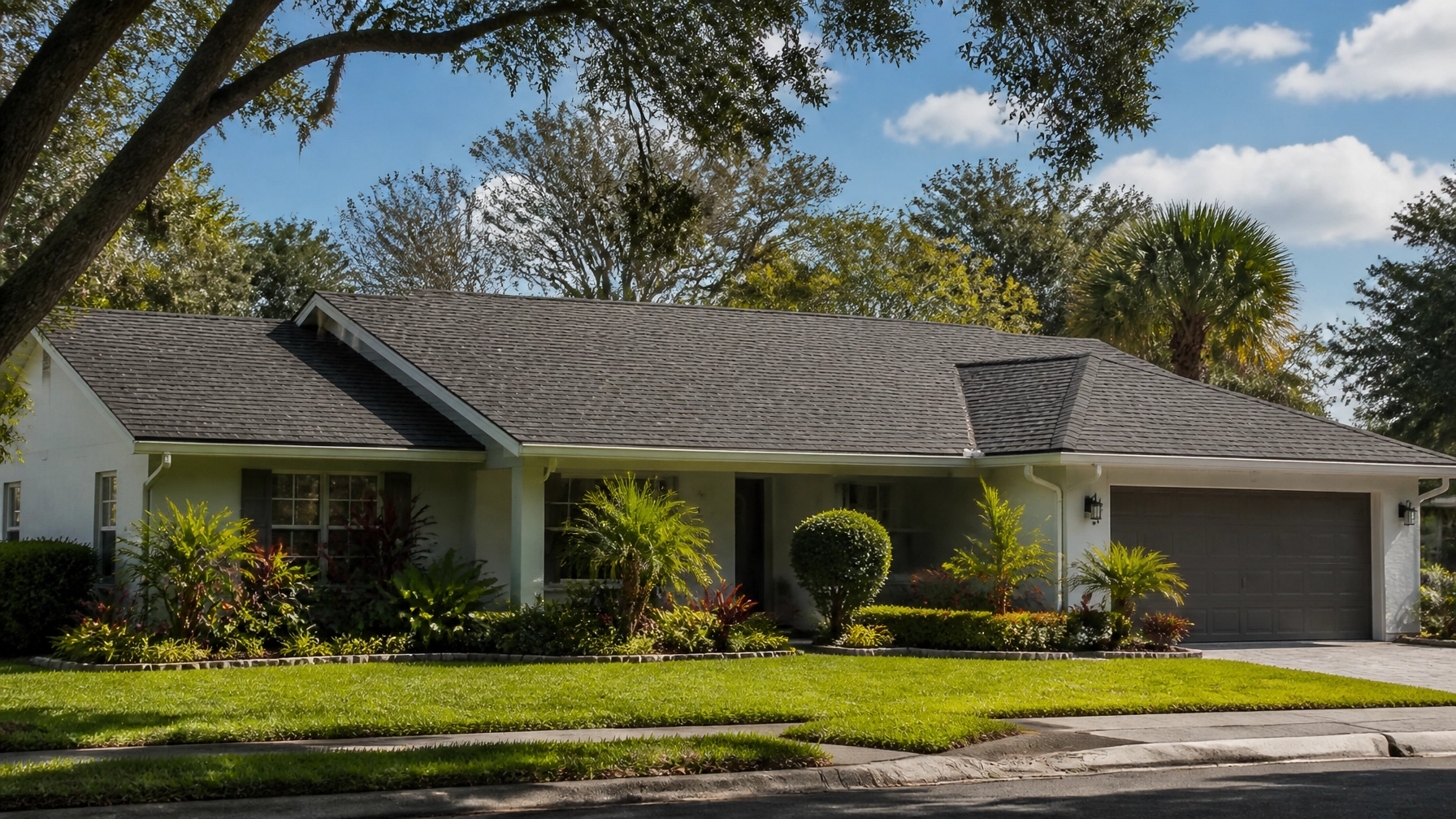
    Richmond Virginia ranch home with an intact new asphalt shingle roof after a summer thunderstorm

    How Saturday’s heat-to-storm pattern affects a roof

    1. Heat stresses aging shingles

    A roof absorbs significant heat during a 90-degree afternoon. Dark asphalt shingles can become much hotter than the surrounding air. Over time, repeated heating and cooling can contribute to:

    • Curling or cracked shingle edges
    • Brittle surfaces
    • Loss of protective granules
    • Weakened seal strips
    • Faster deterioration around vents and flashing

    A newer roof can usually handle normal summer heat. An older roof — especially one approaching 15–30 years — may have less reserve when a strong storm arrives.

    2. Wind can lift vulnerable shingles

    Thunderstorm wind does not need to remove an entire section of roofing to create a problem. Gusts can:

    • Lift shingle tabs
    • Break adhesive seals
    • Loosen ridge caps
    • Damage flashing around chimneys and skylights
    • Pull debris across the roof surface
    • Expose underlayment or decking

    A lifted shingle may not cause an immediate ceiling stain. Water can enter beneath the roofing system and remain hidden until the next downpour.

    3. Hail damage may be difficult to see

    Hail can bruise asphalt shingles, knock away granules, dent metal components, and damage soft flashing. Small impact marks may look minor from the ground but can shorten the material’s service life.

    Do not climb onto the roof after a storm. Instead, look from the ground for:

    • Dark or irregular impact marks
    • Missing or displaced shingles
    • New granules in gutters or downspouts
    • Damaged vents
    • Bent gutters
    • Debris on roof valleys
    • Water stains in the attic or upper ceilings

    If you suspect hail damage, schedule a professional inspection and photograph visible issues from a safe location.

    What to do after Saturday’s storms

    Use Sunday or Labor Day Monday’s more comfortable conditions to complete a basic post-storm check.

    Step 1: Inspect from the ground

    Walk around the home and check each roof slope that is visible from the yard or street. Look for changes that were not present before the storm.

    Pay particular attention to:

    • Roof edges and corners
    • Areas beneath large trees
    • Valleys where water concentrates
    • Chimneys and plumbing penetrations
    • Skylights and dormers
    • Gutters and downspouts

    Step 2: Check the attic safely

    Use a flashlight and look for:

    • Damp insulation
    • Fresh water stains
    • Drips
    • Musty odors
    • Darkened wood
    • Daylight visible through the roof deck

    If water is actively entering the home, contain it indoors and contact a qualified roofing professional. Avoid electrical fixtures near a leak.

    Step 3: Document the storm date

    Take clear photographs and write down:

    • The date and approximate time of the storm
    • Visible roof or gutter damage
    • Interior water stains
    • Any emergency repairs
    • Inspection and contractor visits

    Good documentation can help with an insurance claim and gives future buyers confidence that the issue was handled responsibly.

    Step 4: Review your insurance policy

    Storm damage coverage depends on your policy, deductible, roof age, and the cause of damage. Contact your insurance company before authorizing major work if you believe the roof was damaged by wind or hail.

    Be cautious with unsolicited storm-chasing contractors. Ask for licensing, proof of insurance, references, and a written scope of work before signing anything.

    Does a new roof increase Richmond home value?

    A new roof can improve a home’s marketability, but it should be viewed as both a protection upgrade and a financial decision.

    According to Redfin’s guide to new roof value, homeowners may recover approximately 52% of replacement cost at resale, although the result varies by market, roof condition, material quality, and timing.

    The most important distinction is between adding value and preventing a discount.

    A new roof may help you:

    • Improve first impressions
    • Increase roof curb appeal and exterior appeal
    • Reduce buyer concerns during inspection
    • Avoid repair credits or price reductions
    • Make the home easier to finance and insure
    • Compete more effectively against homes with newer roofs

    A visibly damaged or end-of-life roof can have the opposite effect. Buyers may request repairs, reduce their offer, or avoid the property altogether.

    That is why roof replacement ROI is not just a resale-price calculation. It can also include avoided concessions, fewer inspection problems, and a shorter time spent negotiating.

    Modern Richmond area home with a new standing-seam metal roof and clean contemporary roofline

    Choosing the best roof for home value

    For many Richmond homes, architectural asphalt shingles remain the most practical balance of cost, appearance, and availability.

    Architectural shingles (Popular)

    • Typical installed cost: Approximately $4–$7 per square foot
    • Typical lifespan: Around 25–30 years
    • Strong color and texture selection
    • Good fit for ranch, colonial, and split-level homes
    • Generally attractive to future buyers

    The asphalt shingle guide explains how architectural, designer, and impact-resistant shingles compare.

    Impact-resistant shingles (Storm-focused)

    Impact-resistant shingles can be worth considering for homeowners who want additional hail protection. They may cost more upfront, but they can provide a stronger storm-resistance profile and may qualify for insurance savings depending on the carrier and policy.

    Metal roofing (Premium)

    Metal roofing can last substantially longer than asphalt shingles and offers a clean, modern appearance. It typically has a higher initial cost, but it may appeal to homeowners prioritizing longevity, energy performance, and low maintenance.

    The best roof for home value is not necessarily the most expensive roof. It is the material that:

    • Fits the home’s architecture
    • Matches the neighborhood
    • Meets local requirements
    • Provides suitable storm resistance
    • Fits the owner’s budget and selling timeline
    • Is installed correctly with clear warranties

    Richmond roof replacement costs in 2026

    Roof pricing depends on roof size, pitch, complexity, material, labor, tear-off requirements, ventilation, and local market conditions.

    For planning purposes, our Virginia roof estimate page places Richmond-area replacement projects broadly in the $7,500–$22,000 range, depending on the property and selected materials. A smaller, straightforward asphalt roof may fall near the lower end. A large, steep, complex, or premium-material roof can move higher.

    Get your property-specific number before contacting contractors. Our instant roof estimate tool uses satellite imagery to measure your roof’s size, pitch, and complexity, then provides pricing in about 60 seconds.

    The estimate is free, requires no credit card, and gives you a low-to-high planning range before an in-person contractor visit.

    Richmond Virginia colonial home with visible post-storm shingle damage for an educational roof inspection

    Bottom line for Richmond homeowners

    Saturday’s muggy heat and afternoon storm risk are a reminder to keep your roof on the maintenance list: especially if it is older, has visible wear, or has already experienced storm damage.

    Use the improved weather Sunday and Monday to:

    1. Inspect the roof from the ground.
    2. Check the attic for signs of moisture.
    3. Photograph damage.
    4. Contact your insurer if appropriate.
    5. Get a professional assessment before problems spread.
    6. Request an instant roof replacement estimate for budgeting.

    A well-maintained or recently replaced roof supports home value, curb appeal, buyer confidence, and roof replacement resale value. Start with accurate information, compare your options, and make the decision based on your roof’s actual condition, not pressure from a passing storm.

  • Daily Weather Blitz – Slot 3: Norfolk, VA : September 5, 2026: A Heat-Busting Cold Front Brings Scattered Strong Storms & What Hampton Roads Heat, Salt Air, and Wind-Driven Rain Do to Your Roof’s Durability

    Daily Weather Blitz – Slot 3: Norfolk, VA : September 5, 2026: A Heat-Busting Cold Front Brings Scattered Strong Storms & What Hampton Roads Heat, Salt Air, and Wind-Driven Rain Do to Your Roof’s Durability

    Published: Saturday, September 5, 2026

    A cold front is finally breaking Hampton Roads’ brutal heat. After Thursday’s mid-90s temperatures and heat indices above 105°F, Norfolk and Virginia Beach are moving into a stormier, cooler pattern.

    That shift is welcome: but it also brings a practical roofing concern: strong thunderstorms, wind-driven rain, hail, and heavy runoff can expose weaknesses that weeks of heat and humidity have already stressed.

    For homeowners in Norfolk ZIP codes 23501–23551 and Virginia Beach ZIP codes 23450–23464, today is a useful reminder to inspect, maintain, and budget for a roof built for coastal Virginia.

    Norfolk weather snapshot: Saturday, September 5

    The National Weather Service forecast for Norfolk International Airport calls for:

    • Increasing clouds
    • Showers and thunderstorms, mainly after 5 p.m.
    • Approximately a 60% chance of precipitation
    • High near 89°F
    • North wind around 8 mph
    • Rainfall of approximately 0.10 to 0.25 inches, with higher amounts possible in thunderstorms

    WTKR First Warning Meteorologist Myles Henderson is also tracking scattered afternoon-to-evening storms. Some storms could be strong to severe, with possible small hail and gusty winds. It may still feel like the low-to-mid 90s because of humidity.

    Storms should taper before 8 p.m. Saturday night, with a low near 72°F.

    The weekend improves quickly:

    • Sunday, September 6: Mostly sunny, high near 83°F, 20% shower chance, northeast wind 7–11 mph
    • Labor Day, September 7: Sunny, high near 81°F, northeast wind 9–13 mph
    • Wednesday: Warming back toward the upper 80s
    • Thursday: Forecast near 95°F

    The WAVY weather blog from September 4 describes the broader setup as temporary relief before another heat build-up.

    Hampton Roads is also about one week from the climatological peak of Atlantic hurricane season, typically around September 10. There is no tropical activity at this time, but homeowners should not treat the current quiet pattern as the end of the coastal storm threat.

    What this weather does to Hampton Roads roofs

    1. Extreme heat accelerates material stress

    Repeated days near 95°F, combined with intense sun and a UV index of 8, heat roofing materials well above the air temperature.

    That creates expansion and contraction across:

    • Asphalt shingles
    • Flashing
    • Pipe boots
    • Sealants
    • Metal fasteners
    • Roof vents

    This thermal cycling can loosen aging sealants and make brittle shingles more likely to crack or lift when the next gust arrives.

    2. Salt air attacks metal components

    Norfolk, Virginia Beach, Chesapeake, and nearby coastal communities deal with salt-laden air. Salt deposits can gradually corrode:

    • Drip edge
    • Chimney flashing
    • Valley metal
    • Fasteners
    • Gutter components
    • Metal roofing finishes

    The shingles may still look serviceable while the metal details underneath are losing strength. During roof replacement, ask whether exposed metal components will use aluminum, stainless steel, or another corrosion-resistant option appropriate for the property’s distance from the water.

    3. Humidity encourages algae and mildew

    Hampton Roads’ humidity keeps roof surfaces damp longer, especially on shaded north-facing slopes. Algae can create dark streaks, while mildew and moss can hold moisture against shingles.

    Common contributors include:

    • Poor attic ventilation
    • Overhanging branches
    • Clogged gutters
    • Persistent shade
    • Low-slope roof sections

    Algae-resistant architectural shingles can help, but maintenance still matters.

    Norfolk-style ranch home with a new charcoal architectural shingle roof

    Wind resistance matters in the 757

    Hampton Roads is a high-wind coastal area. Depending on the site and applicable code zone, Virginia design wind speeds can range roughly from 115 to 145 mph.

    For new construction or substantial roof work in the highest-risk areas, a properly engineered high-wind package may include:

    • Hurricane straps connecting rafters or trusses to wall framing
    • Ring-shank or deformed-shank deck nails
    • Approximately 6-inch field and 4-inch edge nailing
    • High-wind-rated shingles, such as Class H or other approved systems
    • A sealed roof deck membrane within one mile of the coast
    • Six-nail shingle installation where required by the manufacturer and local code

    The exact requirement depends on the property’s location, construction date, roof assembly, wind map, and local building official. Do not assume every Norfolk or Virginia Beach address has the same specification.

    When comparing roofing quotes, ask the contractor to identify the wind rating, nail pattern, underlayment, deck fastening, and flashing materials in writing.

    2026 Norfolk roof replacement cost benchmarks

    For 2026 planning, architectural shingles in Norfolk commonly fall around $450–$650 per roofing square installed. One roofing square equals 100 square feet of roof surface.

    A typical 2,000-square-foot home may cost approximately $12,000–$17,000, depending on the actual roof area, pitch, complexity, tear-off requirements, ventilation, code upgrades, and contractor pricing.

    Roof system Typical benchmark Best fit
    Budget: Basic architectural shingles $450–$550 per square Straightforward roof with standard details and limited complexity
    Popular: High-wind architectural shingles $550–$650 per square Most coastal homeowners seeking a practical balance of cost and durability
    Premium: Impact-rated shingles or metal roofing $650+ per square Homeowners prioritizing hail resistance, longevity, or premium appearance

    Impact-rated architectural shingles may add approximately $75–$150 per square. Metal roofing and premium systems cost more but may offer longer service life.

    These are planning benchmarks, not a quote. A satellite measurement can estimate roof size accurately, but an in-person contractor still needs to verify decking, flashing, ventilation, and storm damage.

    Explore the company’s Virginia roof estimate information or the dedicated Norfolk roof estimate page.

    Pre-storm roof checklist for Norfolk homeowners

    Before Saturday’s storms or the next coastal weather event:

    • Clean gutters and downspouts.
    • Confirm downspouts discharge away from the foundation.
    • Remove loose items from decks and yards.
    • Trim branches that touch or overhang the roof.
    • Look from ground level for visibly lifted, missing, or curled shingles.
    • Check attic access areas for damp insulation or old water stains.
    • Photograph the roof and exterior before severe weather arrives.
    • Locate your insurance policy and confirm the wind or hail deductible.

    Gutter cleaning is particularly important in flood-prone Hampton Roads neighborhoods. Even a moderate storm can overwhelm drainage when gutters are blocked by leaves, granules, or organic debris.

    Modern Hampton Roads home with a standing-seam metal roof after a thunderstorm

    Post-storm inspection and damage documentation

    Do not climb onto a wet roof. From the ground, look for:

    • Missing or lifted shingles
    • Fresh granule piles near downspouts
    • Dented vents or flashing
    • Bent gutters
    • Broken branches on the roof
    • Water stains in the attic
    • Damp insulation
    • Wind-driven rain around chimneys, skylights, and roof-to-wall transitions

    Take clear photographs and videos from multiple angles. Record the date, approximate storm time, visible debris, and any interior leaks.

    If you believe the roof sustained covered damage:

    1. Contact your insurance company and ask about the wind or hail deductible.
    2. Request a written inspection report.
    3. Avoid signing an assignment of benefits or rushed repair agreement.
    4. Be cautious of out-of-town storm chasers offering immediate work.
    5. Choose a verified, licensed, and insured local contractor.
    6. Use temporary emergency protection only when necessary, and keep receipts.

    A roof can have wind damage without a visible hole. Lifted shingle edges, displaced flashing, and compromised seals may allow water intrusion during the next storm.

    Get an instant Norfolk roof estimate

    If your roof is 15–30 years old, has storm exposure, or you are planning ahead for replacement, start with a clear budget range.

    Get a free roof replacement estimate from Get My Roof Estimate Now in about 60 seconds. The satellite-powered system measures roof size, pitch, and complexity, then provides transparent low-to-middle-high pricing ranges.

    There is:

    • No cost
    • No credit card required
    • No contractor visit needed upfront
    • No hidden fees
    • Access to verified, licensed, and insured local contractors

    Use today’s cooler break to review your roof: not to panic, but to plan. In coastal Virginia, accurate information and timely maintenance are two of the simplest ways to improve roof durability before the next heat wave, thunderstorm, or tropical system arrives.

    Sources

    Categories: Weather, Durability, Norfolk
    Tags: Norfolk roofing, Virginia Beach roofing, Hampton Roads weather, coastal roof durability, salt air corrosion, wind damage, storm preparation, roof replacement cost, Norfolk VA, Virginia Beach VA

  • Daily FAQ Blitz – Slot 3: Tyler, TX Roof Replacement Answers for 2026

    Daily FAQ Blitz – Slot 3: Tyler, TX Roof Replacement Answers for 2026

    Planning a roof replacement in Tyler, Texas? For 2026, a typical architectural-shingle replacement may cost approximately $7,000–$18,000, depending on roof size, pitch, complexity, tear-off requirements, materials, and contractor pricing. Planning rates may run around $278–$600 per roofing square, although the low end may reflect a simple or limited-scope estimate rather than a complete installed replacement.

    Tyler homeowners are also dealing with a busy storm season. The April 18, 2026 hailstorm brought hail around 1 inch across parts of South Tyler and nearby areas, with widespread home damage claims reported. A May 23 hail event near Lindale reportedly produced hail up to approximately 1.25 inches, and a July 5 hail report added another reason for East Texas homeowners to check older roofs.

    This Tyler, Smith County, and East Texas FAQ explains what to budget, when repair is enough, how permits work, and how to get a fast planning estimate without scheduling multiple contractor visits.

    Tyler Roof Replacement FAQ for 2026

    1. How much does a roof replacement cost in Tyler in 2026?

    A typical Tyler architectural-shingle roof replacement costs about $7,000–$18,000 in 2026, with many standard homes falling near $8,000–$15,000.

    The actual price depends on:

    • Roof surface area and number of roofing squares
    • Roof pitch and accessibility
    • Valleys, dormers, skylights, chimneys, and other penetrations
    • Tear-off and disposal of old roofing
    • Decking or structural repairs
    • Material selection
    • Local labor demand and permit requirements

    For planning purposes, architectural shingles may be quoted around $278–$600 per square. One roofing square equals 100 square feet of roof surface. A contractor’s final installed price may be higher than the low end after labor, underlayment, flashing, ventilation, tear-off, disposal, permits, and repairs are included.

    Use the Tyler roof estimate page or the roof cost calculator to build an initial budget.

    2. Is roof surface area the same as my home’s living area?

    No. Roof surface area is usually larger than the home’s living area because the roof includes pitch, overhangs, attached sections, and multiple roof planes.

    For example, a 2,000-square-foot home does not necessarily have a 2,000-square-foot roof. A moderately pitched roof may have a roof surface closer to 2,200–2,600 square feet. A steep or complex roof may be larger.

    Roofers price by roof surface area, usually in squares:

    • 1,500 square feet of roof = 15 squares
    • 2,000 square feet of roof = 20 squares
    • 2,500 square feet of roof = 25 squares
    • 3,000 square feet of roof = 30 squares

    This distinction matters when comparing quotes. A contractor who prices from living area alone may be using a rough shortcut rather than an actual roof measurement.

    3. Did the 2026 hailstorms affect Tyler and nearby Lindale?

    Yes. Several 2026 storm reports are relevant to Tyler-area homeowners, but each property should be verified individually for actual damage.

    The April 18 storm affected South Tyler and nearby communities, including areas around Noonday, Gresham, Whitehouse, and Lake Tyler. Reports described hail near 1 inch, with some hail mapping services showing larger pockets. The event generated widespread vehicle and home damage claims.

    The Lindale area also experienced a reported May 23, 2026 hail event, with hail reported up to approximately 1.25 inches. A July 5 hail report should also be checked against National Weather Service, Storm Prediction Center, insurer, or hail-map records before being used as claim documentation.

    If your roof is in South Tyler, Lindale, or another Smith County community:

    1. Photograph the roof from the ground without climbing.
    2. Photograph damaged siding, gutters, screens, windows, and outdoor equipment.
    3. Save the storm date and any official weather or hail documentation.
    4. Contact your insurance carrier promptly if damage is suspected.
    5. Avoid signing an assignment of benefits or storm-chaser contract without understanding it.

    The Texas Department of Insurance storm guidance provides additional documentation and claim-filing recommendations.

    New impact-resistant shingle roof on a modern South Tyler home

    4. Should I repair my Tyler roof or replace it?

    Repair may be appropriate for isolated, recent damage; replacement is more practical when damage is widespread, the roof is near the end of its service life, or the underlying system is failing.

    A repair may make sense when:

    • Only a few shingles are missing or damaged
    • Flashing has a localized failure
    • One small leak has a clear source
    • The rest of the roof is relatively young and in good condition
    • There is no widespread granule loss, curling, or brittle material

    Replacement becomes more likely when:

    • The roof is 15–30 years old
    • Hail damage appears across multiple roof slopes
    • Shingles are cracking, curling, blistering, or losing granules
    • Leaks are recurring in several areas
    • The underlayment or decking has water damage
    • Replacement shingles will not match the existing roof

    A roof inspection should determine whether the damage is cosmetic, functional, or structural. Satellite measurements can help estimate size and complexity, but they do not replace an on-site inspection when damage or structural concerns are involved.

    5. Which roofing material is best for hail country in East Texas?

    Impact-resistant architectural shingles are a practical choice for many Tyler homeowners, while metal roofing offers longer service life at a higher initial cost.

    Common options include:

    • Architectural shingles (Popular): Affordable, widely available, and generally suited to most Tyler homes.
    • Impact-resistant shingles (Storm-focused): Designed to better withstand hail impact and may qualify for insurance savings depending on the policy.
    • Metal roofing (Premium): Durable and long-lasting, but usually costs more upfront and requires experienced installation.
    • Synthetic roofing (Premium): Can mimic slate or wood while reducing weight and maintenance.
    • Roof coatings (Specialized): More common for certain low-slope systems than standard residential pitched roofs.

    East Texas heat, humidity, heavy rain, algae growth, and occasional hail should all influence the selection. Dark roofing can absorb more heat, while algae-resistant shingles may help reduce black streaking in humid conditions. Review the asphalt shingle guide before comparing materials.

    6. Does Tyler require a permit for a roof replacement?

    Yes. A full residential roof replacement inside the City of Tyler generally requires a building permit.

    Current Tyler planning points include:

    • Residential roof replacement permit: approximately $100
    • Applications submitted through the online TylerInspections.com portal
    • Required inspections during or after the work
    • Final inspection required to close the permit
    • Minor repairs, such as replacing a few intermittent shingles, are usually exempt

    These requirements apply to properties inside the City of Tyler. A home near Lindale or in an unincorporated part of Smith County may follow different rules. Confirm the jurisdiction before work begins.

    Ask the contractor, in writing, who will pull the permit and who is responsible for scheduling the final inspection. The City of Tyler homeowner FAQ is a useful starting point.

    Brick colonial home near Lindale, Texas with a new dark architectural shingle roof

    7. How do I verify a Tyler roofing contractor?

    Texas does not issue a statewide roofing license, so homeowners should verify the contractor’s business, insurance, local registration, and credentials separately.

    Before signing a contract, request:

    • Legal business name and business address
    • Texas Secretary of State registration details, if operating as an LLC or corporation
    • City of Tyler contractor registration information, when applicable
    • General liability insurance certificate
    • Workers’ compensation certificate or written explanation of coverage
    • Manufacturer certifications for the proposed roofing system
    • Recent Tyler, South Tyler, Lindale, or Smith County references
    • A detailed written scope of work and warranty terms

    You can also ask whether the contractor holds a voluntary RCAT license. A certification is not a substitute for checking insurance and contract details, but it can provide another quality signal.

    Be cautious with contractors who demand immediate payment, refuse to provide insurance documentation, or claim they can guarantee an insurance settlement.

    8. How does the free satellite roof estimate work?

    Enter your address, and the system uses satellite imagery to estimate roof dimensions, pitch, and complexity in about 60 seconds.

    The process typically includes:

    1. Entering the property address
    2. Measuring roof planes with satellite imagery
    3. Estimating roof squares, pitch, and complexity
    4. Applying Tyler-area and regional pricing
    5. Comparing material options
    6. Showing low, middle, and high planning ranges

    The measurements are generally advertised at approximately 90–95% accuracy, making the tool useful for budgeting, comparing materials, and deciding whether to request contractor inspections. It is not a final contractor quote and cannot identify hidden decking damage or every storm-related defect.

    You can get a free satellite-powered estimate with no credit card required.

    Oblique overhead view of a newly replaced Texas residential roof showing roof planes and valleys

    Final Tyler Roof Planning Checklist

    For a Tyler or Lindale roof project in 2026:

    • Budget roughly $7,000–$18,000 for many architectural-shingle replacements.
    • Compare pricing by roofing square, not only by home living area.
    • Document possible damage from the April 18, May 23, and July 5 storm activity.
    • Separate a planning estimate from a final inspection-based quote.
    • Confirm whether the property is inside the City of Tyler.
    • Plan for a permit and final inspection for a full replacement.
    • Verify insurance and business information before hiring.
    • Consider impact-resistant materials for East Texas hail exposure.
    • Use a satellite estimate to understand likely cost before scheduling contractor visits.

    If you are still comparing options, ask a question or use the free estimate tool to get a property-specific Tyler planning range in about 60 seconds. There is no obligation to hire a contractor.