Blog

  • Daily Weather Blitz – Slot 6: New Orleans, LA : August 28, 2026: A Rare Drier Day With a 96°F Heat Index, Storms Return Monday & How Gulf Humidity, Heat, and Hurricane Season Test a Big Easy Roof

    Daily Weather Blitz – Slot 6: New Orleans, LA : August 28, 2026: A Rare Drier Day With a 96°F Heat Index, Storms Return Monday & How Gulf Humidity, Heat, and Hurricane Season Test a Big Easy Roof

    New Orleans is getting a short break from the heaviest summer storm pattern: but it is not a break from roof stress.

    At 11:53 a.m. CDT today, New Orleans Lakefront Airport reported 87°F, 67% humidity, a 75°F dew point, and a 96°F heat index. Conditions were fair to mostly sunny, with a north wind near 5 mph.

    The forecast shows a drier trend through Saturday before rain chances increase again:

    • Friday, August 28: Mostly sunny; temperatures steady near 86°F; approximately 20% chance of showers or thunderstorms after an earlier 40% chance.
    • Friday night: Partly cloudy; low near 78°F.
    • Saturday: Sunny and near 90°F; 10% storm chance after 5 p.m.
    • Sunday: 40% chance of showers and thunderstorms; high near 88°F.
    • Monday: Showers and thunderstorms likely after 1 p.m.; 60% chance; high near 90°F.

    There are currently no active heat advisories, watches, or warnings. A weak low spinning over the Gulf is helping produce a drier west-side weekend around New Orleans, but deeper moisture and higher storm chances return early next week. Check the latest National Weather Service New Orleans/Baton Rouge forecast before doing exterior work.

    For homeowners in Orleans Parish, including ZIP codes 70112 through 70131, this pattern is a useful reminder: roof durability in New Orleans depends on more than one storm. Heat, humidity, UV exposure, salt air, hail, wind-driven rain, and hurricane conditions work together over time.

    Why New Orleans weather is hard on roofing systems

    A roof in the Big Easy operates in a demanding subtropical environment. The most damaging effects are often cumulative rather than dramatic.

    1. Heat and UV exposure cause thermal cycling

    A dark roof can become significantly hotter than the surrounding air during a sunny afternoon. Later, evening temperatures drop quickly. This repeated expansion and contraction is called thermal cycling.

    Over time, thermal cycling can contribute to:

    • Shingle cracking or curling
    • Premature seal-strip failure
    • Loosened flashing and fasteners
    • Deterioration of roof coatings and sealants
    • Accelerated loss of protective asphalt granules

    UV radiation also breaks down exposed roofing materials. Granule loss matters because those granules protect the asphalt mat from sunlight and weather. If you see unusual granules collecting in gutters or scattered across the yard, the roof may be aging faster than it appears from the street.

    2. Humidity encourages algae, mold, and wood rot

    New Orleans roofs stay damp longer after rain because of high humidity, limited drying, and frequent afternoon storms. Moisture can collect around:

    • Roof valleys
    • Chimneys and wall intersections
    • Pipe penetrations
    • Skylights and vents
    • Areas shaded by live oaks
    • Gutters filled with leaves and organic debris

    Persistent moisture can support black algae growth on shingles. More serious problems develop when water reaches the decking, rafters, or attic insulation. Wet wood can begin to rot, while trapped humidity encourages mold growth and reduces the effectiveness of attic insulation.

    Good attic ventilation helps remove heat and moisture, but it must be balanced with proper intake ventilation. Simply adding an exhaust fan without addressing intake airflow may not solve the problem.

    New Orleans raised home with a fresh charcoal architectural shingle roof, gutters, and downspouts

    3. Salt air corrodes metal components

    New Orleans is not directly on the open Gulf, but Gulf moisture and coastal air still affect exposed metal components. Salt-laden moisture can accelerate corrosion on:

    • Drip edge and valley metal
    • Step flashing
    • Chimney flashing
    • Roof vents
    • Gutter hangers and fasteners
    • Metal roofing panels and exposed screws

    Corroded flashing can create small leaks long before the roof covering looks worn out. During wind-driven rain, those weak points become more vulnerable because water is forced sideways under laps, seams, and joints.

    Inspect flashing for rust, pitting, lifted edges, or failed sealant. Replacing a small section of flashing is generally less expensive than repairing damaged decking, insulation, ceilings, and wall cavities.

    Monday's storm chance makes drainage maintenance timely

    The coming weekend is a practical maintenance window. Before Monday’s 60% chance of afternoon showers and thunderstorms, clear leaves and debris from gutters and confirm that downspouts discharge several feet away from the foundation.

    Poor drainage can cause:

    • Overflow at the roof edge
    • Water staining on fascia boards
    • Rot at eaves and soffits
    • Erosion near foundations
    • Saturated soil around crawl spaces
    • Water backing up into roof valleys

    Also check that downspout extensions have not separated or become buried. A clean gutter is only effective if water has a clear path away from the home.

    Hail is a warning sign, even when damage is subtle

    A local weather note from August 21, 2026, reported hail and heavy rain in the Westbank area of New Orleans. Hail does not always create an obvious hole. It can bruise the shingle mat beneath the surface and knock away protective granules.

    After a hail event, look for:

    • Circular dark marks on shingles
    • Exposed fiberglass mat
    • Dented vents or metal flashing
    • Cracked skylight domes
    • Granules collecting near downspouts
    • Damaged screens, siding, or outdoor equipment

    Do not climb onto the roof to inspect it yourself. Use binoculars from the ground or arrange a professional inspection. Take clear photographs of visible conditions and preserve them with the date. Before a storm, photographs are especially useful for documenting the roof’s pre-loss condition for insurance records.

    Hurricane season: installation details matter

    Katrina in 2005 and Ida in 2021 demonstrated how quickly Gulf Coast roof problems can become interior water damage. High winds do not only remove shingles. They attack the entire roof system at its weakest connections.

    The most vulnerable areas are often:

    • Eaves and rake edges
    • Ridge caps
    • Valleys
    • Gable ends
    • Roof-to-wall connections
    • Flashing around penetrations
    • Poorly fastened metal edges

    A durable hurricane-ready roof should be evaluated as a system, not just by its shingle brand. Ask contractors about:

    • Correct nail placement and fastening patterns
    • High-wind-rated shingles or properly engineered metal panels
    • Reinforced roof edges
    • Sealed roof decking
    • Strong underlayment and secondary water barriers
    • Properly secured vents and flashing
    • Hurricane clips or straps where applicable
    • Verified compliance with local requirements

    The IBHS FORTIFIED program provides a recognized framework for improving resistance to wind and water. Louisiana homeowners should also review current requirements and availability through the Louisiana Department of Insurance Fortify Homes Program. Grant rounds, tax credits, eligibility rules, and insurer discounts can change, so confirm the current terms before signing a contract.

    New Orleans-style home with a premium standing-seam metal roof and Gulf Coast landscaping

    New Orleans roof replacement costs in 2026

    For 2026 planning, asphalt shingle roof replacement in New Orleans generally runs about $4–$8 per square foot installed, with a typical total project cost of approximately $8,000–$20,000.

    Roofing contractors measure roofs in squares:

    1 roofing square = 100 square feet of roof surface

    Your final price depends on the measured roof area: not simply the home’s interior square footage. Pitch, roof complexity, tear-off requirements, decking repairs, accessibility, material selection, ventilation, and storm-mitigation upgrades all affect the estimate.

    Roofing option 2026 installed range Positioning
    3-tab asphalt shingles Approximately $3–$5 per sq. ft. Budget
    Architectural shingles Approximately $4–$7 per sq. ft. Popular
    Class 4 impact-resistant shingles Approximately $5–$8 per sq. ft. Storm-focused
    Metal roofing Approximately $8–$16 per sq. ft. Premium

    For more detail, review the asphalt shingle guide and compare metal roofing versus asphalt shingles.

    These are planning ranges, not a contractor quote. A complex New Orleans roof with multiple slopes, dormers, valleys, older decking, or FORTIFIED upgrades can fall above the typical range.

    A fast way to establish your replacement budget

    You do not need to schedule several contractor visits just to get a starting number.

    Get My Roof Estimate Now uses satellite imagery to measure roof size, pitch, and complexity. The system is designed for measurements accurate to within inches, with approximately 90–95% accuracy, and produces a free estimate in about 60 seconds.

    You can compare material options and receive low-to-middle-to-high pricing without:

    • A contractor visit upfront
    • A credit card
    • Hidden fees
    • Pressure to purchase

    The estimate can help you decide whether to repair, replace, upgrade to impact-resistant shingles, or explore a metal or FORTIFIED roof system. If you move forward, the service can also connect you with verified, licensed, and insured local contractors.

    Gulf Coast ranch home with clean gutters and an architectural shingle roof after a summer storm

    New Orleans roof checklist before Monday

    Use the drier weather this weekend to complete a ground-level check:

    • Clear gutters and downspouts.
    • Trim branches that overhang the roof.
    • Look for missing, curled, cracked, or lifted shingles.
    • Check the yard and gutters for excess granules.
    • Inspect visible flashing for corrosion.
    • Confirm attic vents are unobstructed.
    • Photograph current roof conditions and exterior elevations.
    • Avoid roof access during heat, lightning, or wet conditions.
    • Schedule a professional inspection if you see leaks, sagging, exposed decking, or storm damage.

    New Orleans weather rarely gives homeowners a long maintenance window. Today’s relatively quiet conditions are a good opportunity to document the roof, correct drainage issues, and establish a realistic replacement budget before the next storm cycle arrives.
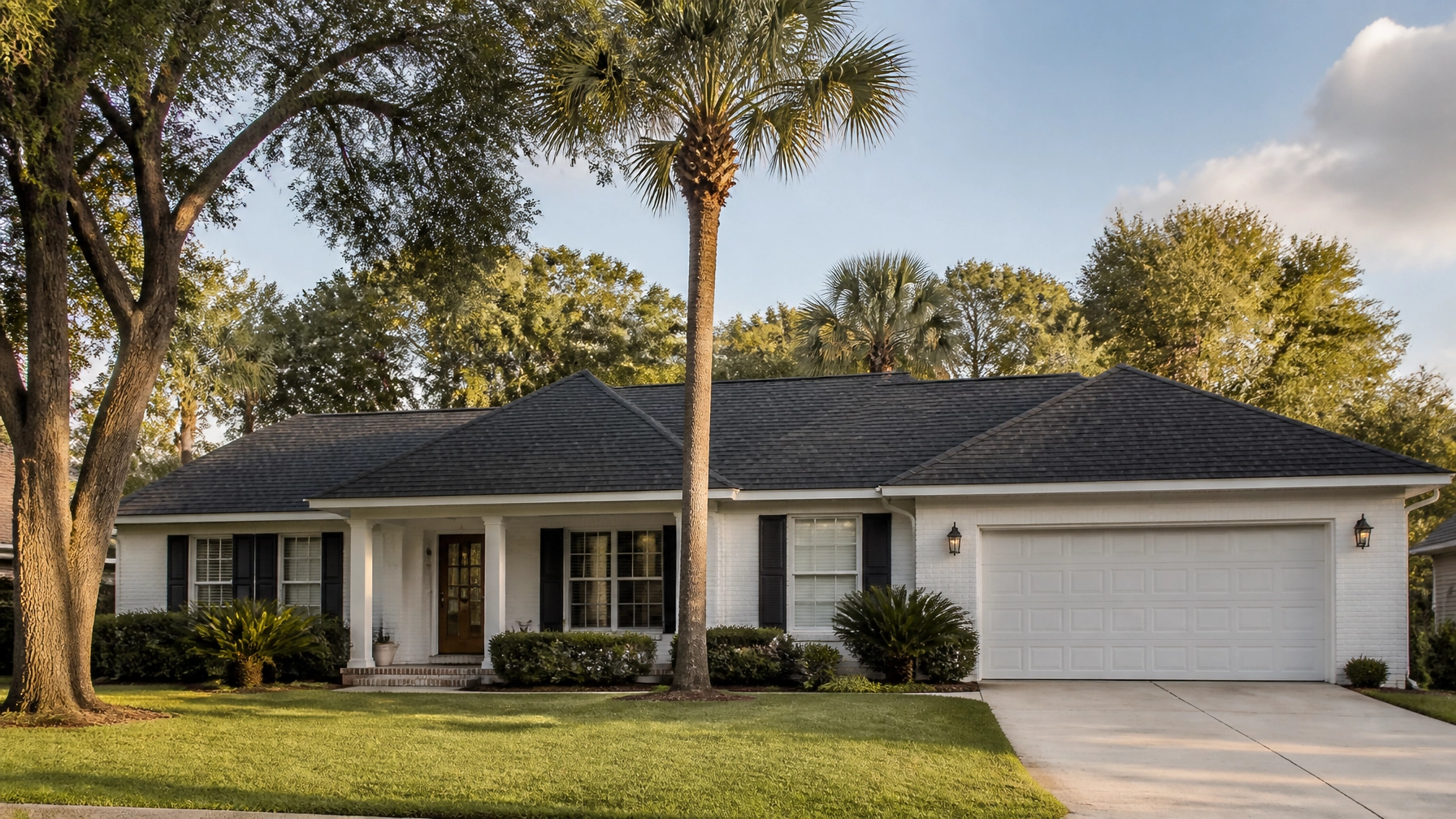
  • Daily FAQ Blitz – Slot 6: AEO FAQ Quick Answers for Pensacola, FL Homeowners (2026)

    Daily FAQ Blitz – Slot 6: AEO FAQ Quick Answers for Pensacola, FL Homeowners (2026)

    Pensacola sits in Escambia County on Florida’s Gulf Coast. The “City of Five Flags” is known for the National Naval Aviation Museum, Pensacola Beach, and established neighborhoods such as East Hill, Cordova Park, and Ferry Pass. Homeowners across ZIP codes 32501–32514 deal with salt air, high humidity, intense sun, and hurricane exposure, all of which affect roof life and replacement cost.

    For 2026, use these local planning ranges:

    • Architectural shingles (Popular): $4.50–$8.00 per square foot
    • Typical 2,000-square-foot home with architectural shingles: $11,000–$18,000
    • Metal roofing (Premium): $9.00–$16.00 per square foot
    • Typical 2,000-square-foot home with metal roofing: $24,000–$41,000
    • Beachfront or highly exposed properties: Add approximately 10%–25%
    • Roofing measurement: One roofing square equals 100 square feet

    Your actual price depends on roof size, pitch, complexity, tear-off requirements, deck condition, material selection, code upgrades, and contractor availability.

    Pensacola Roof Replacement FAQ: Quick Answers

    1. How much does a roof replacement cost in Pensacola in 2026?

    Quick answer: Architectural shingle replacement generally costs $11,000–$18,000 for a typical 2,000-square-foot home, while metal roofing often costs $24,000–$41,000.

    Key cost variables include:

    • Roof area measured in squares, not just the home’s interior square footage
    • Roof pitch, valleys, dormers, and penetrations
    • Number of existing roofing layers
    • Damaged or deteriorated roof decking
    • Hurricane-rated materials and high-wind installation
    • Coastal exposure, especially near Pensacola Beach

    Use the Pensacola roof cost calculator for a starting range based on size, material, pitch, and location.

    2. Is metal roofing worth the higher price in Pensacola?

    Quick answer: Metal roofing costs more upfront but can provide a longer service life and strong resistance to sun, wind, and coastal weather.

    Metal may be a good fit if you:

    • Plan to remain in the home for many years
    • Want a 40–70-year material life
    • Prefer lower maintenance and improved heat reflection
    • Are willing to pay a premium for specialized installation

    Aluminum can be especially useful in coastal areas because it resists corrosion. Ask for corrosion-resistant fasteners and compatible flashing. Compare expected service life, maintenance, warranties, and energy performance in this metal roofing guide, then review the metal vs. shingles comparison.

    Pensacola-area colonial home with a new wind-rated architectural shingle roof

    3. What roofing permits are required in Pensacola and Escambia County?

    Quick answer: Escambia County and the City of Pensacola require a permit for roof replacement work greater than two roofing squares, or more than 200 square feet.

    One square equals 100 square feet. Repairs under two squares usually do not require a permit, but confirm before work begins.

    • City of Pensacola: Call Inspection Services at (850) 436-5600
    • Escambia County Building Inspections: Call (850) 595-3550
    • A full roof replacement should be treated as permitted work
    • The licensed contractor should normally pull the permit and coordinate inspections

    A Notice of Commencement is also required for larger projects:

    • City of Pensacola: $2,500 or more
    • Escambia County: $5,000 or more

    Because jurisdiction and project thresholds can matter, confirm the requirement with the appropriate office. See the City of Pensacola permitting resources and Escambia County permitting information.

    4. What Florida Building Code requirements apply to a Pensacola roof?

    Quick answer: Roof replacements must comply with the Florida Building Code 8th Edition, effective 2023, including site-specific wind and water-resistance requirements.

    Ask your contractor about:

    • Shingles rated for the site-specific ultimate design wind speed
    • Product compliance under ASTM D3161, ASTM D7158, or TAS 107
    • High-wind nail patterns and approved fasteners
    • Starter strips installed at eaves and rakes
    • Hurricane-rated hip and ridge cap installation
    • A secondary water barrier across the entire roof deck
    • Proper flashing, drip edge, valleys, and penetrations
    • Corrosion-resistant fasteners because of Pensacola’s salt air

    Request the product approval information and installation specifications in writing. Code compliance is important for inspections, storm performance, and possible insurance documentation.

    5. How should I inspect my roof after a Pensacola storm?

    Quick answer: Inspect from the ground first and document visible damage before making non-emergency repairs.

    Pensacola experienced major roof and flood damage during Hurricane Sally, a Category 2 storm, in September 2020. In 2026, severe thunderstorms produced gusts up to 56 mph on August 19, and the last confirmed hail event near Pensacola occurred on March 16.

    Look for:

    • Lifted, missing, or displaced shingles
    • Exposed underlayment or roof decking
    • Damaged flashing around walls, vents, and chimneys
    • Dented vents, gutters, downspouts, or metal components
    • Granules collecting in downspouts
    • Fallen branches or visible impact marks
    • Water stains on ceilings or in attic spaces

    Do not climb onto a wet or damaged roof. Photograph conditions from the ground, arrange temporary protection if needed, and keep receipts for tarping or emergency work.

    6. Does coastal exposure increase roof replacement cost?

    Quick answer: Yes; beachfront and highly exposed Pensacola properties may carry a 10%–25% premium because of wind, salt, access, and material requirements.

    Coastal cost increases may reflect:

    • Corrosion-resistant fasteners and metal components
    • Higher-wind-rated roof coverings
    • More demanding edge and corner fastening
    • Additional flashing or underlayment requirements
    • Difficult access or elevated homes
    • Increased labor and insurance risk for contractors

    A beach-area estimate should identify these factors instead of hiding them inside a single unexplained price.

    Modern coastal Pensacola home with a new standing-seam metal roof

    7. Can My Safe Florida Home help pay for a new roof?

    Quick answer: My Safe Florida Home may provide up to $10,000 for eligible hurricane-mitigation improvements, but a full roof-covering replacement is not automatically covered.

    Eligible improvements may include:

    • Roof-to-wall connections
    • Improved roof-deck attachment
    • Secondary water resistance, such as peel-and-stick underlayment
    • Other improvements specifically recommended in the official inspection report

    Get the My Safe Florida Home inspection report before applying. Roof-covering replacement is generally eligible only when removing the roof covering is necessary to complete a recommended qualifying improvement.

    Program rules, matching requirements, and available funding can change. Review current information at mysafeflhome.com and do not start eligible work before receiving the required award approval.

    8. What should I know about insurance claims and Florida’s 25% rule?

    Quick answer: Notify your insurer quickly, document damage first, and verify your policy’s claim deadlines and roof provisions in writing.

    For 2026 planning:

    • New or reopened hurricane and windstorm claims generally must be reported within 1 year of the loss
    • Supplemental claims generally must be reported within 18 months
    • Document damage before repairs or tarping when safely possible
    • Keep photos, inspection reports, invoices, and mitigation receipts
    • Do not sign an agreement you do not understand

    Florida’s “25% rule” may require full roof replacement instead of patching when more than 25% of the roof is damaged under qualifying policies and code conditions. However, coverage depends on the policy, date of construction, code requirements, and insurer interpretation. Ask your insurer for a written explanation.

    Assignment of Benefits agreements are prohibited on newly issued or renewed property policies. Also, never hire a contractor who offers to pay, waive, or absorb your insurance deductible.

    9. How do I verify a Pensacola roofing contractor?

    Quick answer: Confirm an active Florida roofing license and verify that the business and qualifying contractor match.

    Florida roof work should be completed by a properly licensed contractor:

    • CCC: Certified Roofing Contractor, generally authorized statewide
    • RR or related registered license: Registered Roofing Contractor, subject to applicable local limitations

    Use the official MyFloridaLicense license verification portal and check:

    • License status is current and active
    • License type is appropriate for roofing
    • Contractor name matches the proposal and contract
    • Business name matches the licensed entity
    • Insurance certificates are current
    • Permit responsibility is clearly assigned

    A low price is not a substitute for licensing, insurance, code compliance, and documented workmanship.

    10. How accurate is an instant roof estimate?

    Quick answer: Get My Roof Estimate Now uses satellite imagery to estimate roof size, pitch, and complexity in about 60 seconds, with typical accuracy of approximately 90%–95%.

    The estimate provides:

    • Free results with no credit card required
    • Roof measurements based on the actual property
    • Material pricing for options such as architectural shingles and metal
    • Low, middle, and high price ranges
    • Regional cost adjustments
    • A faster starting point before contractor visits

    It is a planning estimate, not a substitute for a contractor’s final inspection of decking, flashing, ventilation, or hidden damage. Start with the free satellite roof estimate.

    Pensacola Roof Planning Checklist

    Use this checklist before signing a replacement contract:

    • Confirm whether the property is inside the City of Pensacola or unincorporated Escambia County.
    • Measure or estimate the roof in squares.
    • Compare architectural shingles, metal, and other suitable materials.
    • Add a 10%–25% exposure allowance for beachfront or highly exposed properties.
    • Request a written scope covering tear-off, decking, underlayment, flashing, ventilation, fasteners, and disposal.
    • Confirm Florida Building Code 8th Edition compliance.
    • Ask for wind ratings, product approvals, and corrosion-resistant components.
    • Verify the contractor through MyFloridaLicense.
    • Confirm who pulls the permit and schedules inspections.
    • Ask whether a Notice of Commencement is required.
    • Photograph storm damage before repairs.
    • Contact your insurer promptly after a covered loss.
    • Request the My Safe Florida Home inspection report before applying for grant funds.
    • Compare at least low, middle, and high project estimates before setting a budget.

    Get a Free Pensacola Roof Estimate in 60 Seconds

    Roof replacement is a major investment, but the first budgeting step does not need to be difficult. Enter your Pensacola address at getmyroofestimatenow.com to receive a free satellite-powered estimate in about 60 seconds.

    You will see estimated roof measurements, material options, and low-middle-high pricing ranges: without a contractor visit upfront, hidden fees, or a credit card requirement. Use the result to plan your budget, compare proposals, and decide when to bring in a verified local roofing professional.

  • 2026 Roof Replacement Cost in Tampa, FL: Projected Prices After the 4-8% Cost Hike

    2026 Roof Replacement Cost in Tampa, FL: Projected Prices After the 4-8% Cost Hike

    Replacing a roof in Tampa typically costs $9,000-$16,000 for a 2,000-square-foot architectural shingle roof. A new standing seam metal roof for the same home generally runs $20,000-$38,000.

    Those 2026 prices reflect Tampa’s labor market, Florida Building Code requirements, hurricane-ready installation, and higher material costs. Shingle manufacturers announced increases of approximately 4-8% during March and April, followed by another 6-9% adjustment effective June 1, 2026. Asphalt, fiberglass mat, steel, and aluminum costs are all affecting roofing budgets.

    This guide explains what Tampa homeowners can expect to pay, what drives the price, and how to plan before the next hurricane-season rush.

    Tampa Roof Replacement Cost at a Glance

    For a typical single-family home in Hillsborough County:

    • Architectural asphalt shingles (Popular): $4.00-$9.00 per square foot
    • Typical 2,000-square-foot shingle replacement: $9,000-$16,000
    • Standing seam metal roofing (Premium): $9.00-$25.00 per square foot
    • Typical 2,000-square-foot standing seam roof: $20,000-$38,000
    • Roofing square: 100 square feet of roof surface
    • Typical lifespan of architectural shingles: 20-30 years
    • Typical lifespan of standing seam metal: 40-70 years

    These are planning ranges, not a contractor bid. Roof pitch, valleys, dormers, roof penetrations, decking damage, and the selected product can move a project above or below the ranges.

    Your home’s living area is also not the same as its roof area. A 2,000-square-foot home may have more than 2,000 square feet of roofing after accounting for overhangs, slopes, garages, and attached structures.

    2026 Tampa Roof Replacement Pricing Table

    The following ranges use roof surface area and include typical tear-off, installation, disposal, permit, and code-compliance allowances.

    Roof Area Architectural Shingles : Low Middle High Standing Seam Metal : Low Middle High
    1,500 sq. ft. $7,000 $9,500 $12,000 $15,000 $21,000 $29,000
    2,000 sq. ft. $9,000 $12,500 $16,000 $20,000 $29,000 $38,000
    2,500 sq. ft. $11,000 $15,000 $20,000 $25,000 $36,000 $48,000

    What the Pricing Levels Mean

    • Low (Budget): Simple roof geometry, standard architectural shingles, limited decking repairs, and straightforward access.
    • Middle (Popular): Dimensional shingles, Florida-compliant underlayment, standard ventilation upgrades, and moderate roof complexity.
    • High (Premium): Impact-rated or designer materials, steep slopes, multiple roof sections, extensive decking replacement, enhanced storm protection, or premium standing seam metal.

    For a more property-specific starting point, use the Tampa roof estimate tool or review the company’s roof cost calculator.

    Architectural Shingles: Tampa’s Most Common Choice

    Architectural shingles remain the most practical choice for many Tampa homeowners. They provide more visual depth and better durability than basic 3-tab shingles without the cost of metal, tile, or slate.

    A 2026 Tampa architectural shingle roof generally costs $4.00-$9.00 per square foot installed. Most standard 2,000-square-foot projects fall around $11,000-$16,000, depending on the roof’s condition and installation requirements.

    Why Tampa Homeowners Choose Architectural Shingles

    • Lower upfront cost than metal
    • Broad selection of colors and styles
    • Easier repairs if a section is damaged
    • Familiar appearance for ranch, colonial, and Mediterranean-style homes
    • Good resale appeal when the roof is new and professionally installed
    • Available in high-wind and impact-resistant product lines

    Tampa’s high humidity, ultraviolet exposure, afternoon storms, and intense summer heat can shorten shingle life. Algae-resistant granules, proper attic ventilation, and high-quality installation are important in neighborhoods from South Tampa and Seminole Heights to Westchase and eastern Hillsborough County.

    New architectural shingle roof on a Tampa Bay colonial-style home

    Standing Seam Metal: Higher Cost, Longer Service Life

    Standing seam metal roofing usually costs $9.00-$25.00 per square foot in the Tampa Bay area. A 2,000-square-foot installation commonly lands between $20,000 and $38,000.

    Metal costs more because panels require specialized fabrication, precise flashing, stronger attention to fastening, and experienced installers. Standing seam systems use concealed fasteners and raised interlocking seams, which reduce exposed connection points.

    Metal Roofing Advantages in Tampa

    • Expected service life of 40-70 years
    • Strong wind performance when properly engineered and fastened
    • Reflective finishes can reduce solar heat gain
    • Low susceptibility to rot, mildew, and insect damage
    • Class A fire resistance for many systems
    • Less frequent replacement over a long ownership period

    Metal is not maintenance-free. Coastal and bay-adjacent homes need the right coating, metal type, and fasteners. Salt-laden air can accelerate corrosion, especially around exposed screws, cut edges, flashing, and roof penetrations. Aluminum or properly coated steel may be preferable for properties with greater salt-air exposure.

    See the company’s metal roofing guide and metal-versus-shingles comparison before choosing a system.

    Where Your Tampa Roofing Budget Goes

    A professional roof replacement is more than shingles or metal panels. A typical project includes these cost categories:

    Tear-Off and Disposal (Required on Many Projects)

    Removing the existing roof, loading debris, and paying disposal fees commonly adds $100 or more per roofing square, depending on the number of layers and site conditions.

    Roof Decking Repairs (Variable)

    Water damage, termite damage, delamination, or long-term leaks can require replacement of plywood or other decking. Ask whether the quote includes a per-sheet price for concealed decking damage.

    Underlayment and Secondary Water Protection

    Florida installations may use synthetic underlayment, self-adhered membrane, or a secondary water barrier. These materials help limit water intrusion if wind damages the roof covering and may support wind-mitigation documentation.

    Labor and High-Wind Installation

    Labor includes installation, flashing, ventilation, starter strips, ridge caps, fasteners, and cleanup. Florida’s wind-load requirements can require tighter nailing patterns, approved fasteners, and specific installation methods.

    Permit and Inspection

    Permit fees vary by jurisdiction and project scope. A complete quote should state whether permit costs, inspections, and final documentation are included.

    Ventilation and Flashing

    Ridge vents, intake ventilation, pipe boots, valley materials, drip edge, and wall or chimney flashing can materially affect the final price. Proper ventilation is especially important under Tampa’s hot, humid conditions.

    Florida Building Code and Wind Mitigation Factors

    Tampa roofs must meet applicable Florida Building Code requirements and product approval standards. Your roofer should explain how the proposed system addresses:

    • Wind-rated shingles or metal panels
    • Required nailing patterns
    • Approved underlayment
    • Roof deck attachment
    • Drip edge and flashing
    • Secondary water barrier options
    • Ridge and intake ventilation
    • Hurricane straps or clips where applicable

    A new roof may also improve your documentation for a wind mitigation inspection. Florida insurers commonly evaluate roof covering age, roof-to-wall connections, roof deck attachment, roof shape, and secondary water resistance.

    A wind mitigation inspection does not guarantee a discount. Insurance credits depend on your carrier, policy, inspection findings, and submitted documentation. Ask your roofer for product approval information and installation records, then confirm requirements directly with your insurer.

    How Tampa Weather Affects Roof Selection

    Tampa’s roofing decisions are shaped by more than appearance.

    Hurricane Season

    Peak hurricane activity typically occurs from August through October. Waiting until a named storm is approaching can mean longer lead times, fewer available crews, and material shortages.

    Afternoon Storms

    Frequent heavy rain makes flashing, valleys, pipe penetrations, and drainage details critical. A roof that looks sound from the street may still have weak points around penetrations or poorly sealed transitions.

    Heat and Humidity

    Tampa’s summer heat index can exceed 100°F. Dark shingles absorb heat, while reflective metal finishes can reduce heat gain. Ventilation helps release trapped attic heat and moisture.

    Gulf Salt Air

    Homes near Tampa Bay, the Gulf, and open waterways may experience faster corrosion on low-quality metal components. Specify corrosion-resistant fasteners and coatings rather than treating all metal roofing as interchangeable.

    Modern Tampa Bay home with a new standing seam metal roof

    Roof Replacement ROI and Home Value

    A new roof can improve more than weather protection. It can also affect buyer confidence, curb appeal, and the speed of a future sale.

    New Roof ROI and Home Value

    A new roof removes one of the largest inspection concerns for buyers. It can reduce the chance of repair negotiations and make your home easier to market, particularly when the existing roof is near the end of its expected life.

    Roof Replacement Resale Value

    The resale value of a roof depends on material, installation quality, remaining useful life, documentation, and local buyer preferences. A premium metal roof may appeal to long-term buyers, while architectural shingles often provide a stronger balance between project cost and broad market appeal.

    Roof Curb Appeal and Home Value

    Color, texture, clean rooflines, and matching trim can noticeably improve the exterior appearance of a Tampa home. Architectural shingles offer many style options and are often the best roof for home value when homeowners want attractive results without the higher cost of metal.

    Roof replacement ROI is not guaranteed or identical from one home to another. Compare the expected ownership period, storm exposure, insurance requirements, and maintenance costs before selecting the most expensive option.

    6 Practical Tips for Tampa Homeowners

    1. Book early before hurricane season. Spring and early summer can provide more scheduling flexibility than late summer and fall.
    2. Get an instant satellite estimate. Enter your address to receive a free, no-credit-card estimate in about 60 seconds. Satellite measurements assess roof size, pitch, and complexity without an initial contractor visit.
    3. Compare at least three itemized quotes. Confirm that each quote lists roof size, material, tear-off, decking, underlayment, ventilation, permits, disposal, and workmanship coverage.
    4. Verify licenses and insurance. Check the contractor’s Florida credentials, liability coverage, workers’ compensation, and references.
    5. Ask about wind mitigation documentation. Confirm what secondary water barrier, deck attachment, and product approval records will be provided after installation.
    6. Review financing and insurance options carefully. Compare financing terms rather than focusing only on the monthly payment. If storm damage caused the replacement, contact your insurer promptly, document the damage, and avoid signing over insurance benefits without understanding the agreement.

    Get Your Tampa Roof Estimate in 60 Seconds

    For 2026, plan on approximately $9,000-$16,000 for architectural shingles or $20,000-$38,000 for standing seam metal on a typical 2,000-square-foot Tampa roof.

    Your exact price depends on the measured roof area, pitch, complexity, existing damage, material selection, and Florida-code upgrades. Get a fast starting point with a free, satellite-powered roof estimate from Get My Roof Estimate Now. The tool measures your roof and provides transparent low-middle-high pricing with no credit card and no obligation.

    Storm-ready Tampa ranch home with a new light architectural shingle roof

  • 2026 Roof Replacement Cost in Waco, TX: What Heart of Texas Homeowners Should Budget

    2026 Roof Replacement Cost in Waco, TX: What Heart of Texas Homeowners Should Budget

    For a typical Waco home, plan on approximately $11,400 for a full roof replacement in 2026. Most projects fall somewhere between $4,600 and $91,100, depending on roof size, material, pitch, complexity, structural repairs, and project scope.

    Waco prices are currently about 13% above the national average. That difference reflects regional labor rates, material costs, storm-related demand, and the challenges of working on older homes throughout the Heart of Texas.

    Waco sits between Dallas and Austin along the I-35 corridor. From homes near Baylor University to older properties around downtown and neighborhoods close to Magnolia Market at the Silos, local roof replacement costs can vary significantly from one address to the next.

    Waco Roof Replacement Cost at a Glance

    Here are the most useful 2026 budgeting benchmarks:

    Roof type Estimated cost for a 2,000 sq. ft. home Cost per sq. ft.
    3-tab asphalt shingles (Budget) $9,200 $4.60
    Architectural shingles (Popular) $9,250–$13,550 $5.70 average
    Standing seam metal (Premium) $24,950 $12.47
    Tile roofing (Premium) $26,050 $13.03

    These figures are planning benchmarks, not final contractor bids. A satellite-measured estimate can help you understand your roof’s size and likely price before scheduling an in-person inspection.

    For a larger 2,500 sq. ft. two-story home, common ranges include:

    • 3-tab asphalt: $6,500–$9,000
    • Architectural shingles: $8,500–$13,500
    • Standing seam metal: $16,500–$28,000

    Two-story homes may have higher labor costs because of access, safety equipment, and staging. However, the exact roof area, not just the home’s interior square footage, determines the material quantity.

    Why Waco Roofing Costs Run Higher Than Average

    Waco’s location creates several roofing challenges.

    Spring hail and supercells

    Central Texas experiences severe spring thunderstorms, including supercells capable of producing large hail, damaging winds, and tornadoes. Hail can bruise shingles, damage flashing, crack skylights, and weaken roof vents even when the damage is not immediately visible from the ground.

    Before paying out of pocket for a replacement, check your homeowners insurance policy and ask whether recent hail damage may qualify for a claim. Photograph visible damage, save storm dates, and contact your insurer before authorizing major work.

    100°F-plus summers

    Waco’s hot summers expose roofing materials to intense ultraviolet radiation and repeated heat cycles. Temperatures above 100°F can accelerate granule loss, dry out sealants, and place additional stress on attic ventilation systems.

    A roof with inadequate ventilation can become significantly hotter than the outdoor temperature. That heat may shorten shingle life and increase air-conditioning demand.

    Two-story Waco-area home with a new weathered-gray architectural shingle roof

    Class 4 Shingles May Be Worth Considering

    Class 4 impact-resistant shingles are designed to better withstand hail impacts than standard asphalt products. They typically cost more upfront, but Waco homeowners may benefit from:

    • Improved resistance to hail-related damage
    • Longer service life in severe-weather conditions
    • Potential insurance savings of 15%–25%
    • Better protection during Central Texas spring storms

    Insurance discounts vary by carrier, policy, roof certification, and documentation. Ask your insurer for written confirmation before choosing the upgrade. You may also need the manufacturer’s impact rating and the contractor’s installation documentation.

    For many Waco homeowners, Class 4 shingles are a practical middle ground between standard architectural shingles and a much more expensive metal roof.

    Waco Homes Are Often Old Enough to Need Decking Repairs

    Waco homes average approximately 47 years old. That age matters because the roof covering may not be the only component nearing the end of its useful life.

    During tear-off, contractors may find:

    • Soft or rotted roof decking
    • Water stains around valleys and chimneys
    • Deteriorated flashing
    • Outdated vents
    • Improper prior repairs
    • Multiple layers of old roofing materials

    Decking replacement is typically charged by the sheet or square foot. The cost can increase quickly if leaks have affected large areas. A satellite estimate can measure the roof’s exterior dimensions, but it cannot confirm hidden decking damage. That requires an on-site inspection after the old roof is removed.

    What Drives the Final Price?

    The material is only one part of a Waco roof replacement estimate.

    Roof pitch and complexity

    A simple ranch roof with broad, accessible planes costs less than a steep roof with multiple ridges, valleys, dormers, or intersecting sections.

    Steep and complex roofs require more labor, safety equipment, cutting, flashing, and cleanup. A roof with numerous penetrations, such as chimneys, skylights, plumbing vents, and solar equipment, also takes longer to install correctly.

    Tear-off and disposal

    Removing one or more layers of existing roofing adds labor, disposal, and hauling costs. A full tear-off also allows the contractor to inspect the deck and install a new roof system over a clean surface.

    Some properties may qualify for a new layer over existing shingles, but local code, manufacturer requirements, roof condition, and warranty terms must be checked first.

    Flashing and ventilation

    Flashing protects vulnerable areas where roofing meets walls, chimneys, valleys, and roof penetrations. Reusing damaged flashing can create leaks after an otherwise new roof is installed.

    Ventilation is equally important in Waco’s hot climate. A complete estimate should identify the condition of ridge vents, soffit vents, turbines, and other attic ventilation components.

    Regional labor rates

    Labor prices reflect local demand, contractor availability, insurance costs, fuel, disposal fees, and material delivery. Waco’s position on the I-35 corridor can support material access, but severe storms can quickly increase demand and extend scheduling timelines.

    Modern Waco-area home with a new dark standing seam metal roof

    Which Roof Is Best for Home Value?

    A new roof can improve roof curb appeal home value, reduce inspection concerns, and make a property easier to market. It can also support roof replacement resale value when buyers are comparing homes with aging roofs.

    Architectural shingles (Popular)

    Architectural shingles are usually the best balance of cost, appearance, and buyer expectations. They provide a dimensional look, come in many colors, and typically last longer than 3-tab shingles.

    For homeowners selling within the next few years, architectural shingles often provide the strongest roof replacement ROI because the upfront cost is lower than premium materials.

    Standing seam metal (Premium)

    Metal roofing costs substantially more but can last 40–70 years with proper installation. It may also reduce cooling costs by reflecting solar heat and can appeal to buyers who value durability.

    Metal is often the better long-term choice for homeowners planning to stay for 15 years or more. However, its higher initial price may not produce the highest percentage return at resale.

    Tile (Premium)

    Tile provides a distinctive appearance and long service life, but it is heavy and may require structural evaluation. It is most appropriate when the home’s architecture and local neighborhood standards support the investment.

    The best roof for home value is usually the material that fits the home, neighborhood, climate, and buyer expectations, not necessarily the most expensive option.

    For broader material comparisons, see our guides to asphalt shingles, metal roofing, and metal vs. shingles.

    Waco Permits and HOA Timing

    The City of Waco generally requires a permit for roof replacement through its Inspection Services and Building Division.

    According to the city’s residential permit guidance, a roofing permit covers replacement of shingles, felt, flashing, and up to 32 square feet of decking. Projects involving more than 32 square feet of decking may require a Repairs and Alterations permit.

    The city’s fee schedule lists a $125 roofing permit fee, although the final amount should be confirmed when the permit is submitted and invoiced. Ask your contractor to state in writing whether they will pull the permit and coordinate required inspections.

    If your home is governed by an HOA, approval may take two to four weeks. Check color, material, reflectivity, and style requirements before ordering materials.

    Can August Lower Your Cost?

    August is often a lower-demand period for roofing in Waco because of extreme heat and homeowner scheduling patterns. Some projects may be priced approximately 15% lower than peak-season work, although savings are not guaranteed.

    Contractors still need to follow safe heat practices, and installation dates may shift because of thunderstorms. A lower quote is only valuable if the contractor maintains proper installation standards, ventilation, flashing, cleanup, and warranty coverage.

    Get Your Waco Roof Price in 60 Seconds

    A full roof replacement in Waco can be a major investment, but you do not need to wait days for a contractor visit just to establish a budget.

    Get a free instant roof estimate using satellite imagery. In about 60 seconds, you can see your roof’s estimated size, pitch, complexity, and low-to-high replacement pricing for multiple materials.

    The estimate is free, requires no credit card, and can connect you with verified, licensed, and insured local contractors for the next step.

    Brick ranch home with a new Class 4 impact-resistant shingle roof in Central Texas

    Waco Roof Replacement FAQs

    How much should I budget for a new roof in Waco?

    A typical Waco roof replacement averages approximately $11,400, while common projects range from $4,600 to $91,100 depending on size, materials, roof design, and structural repairs.

    Are Class 4 shingles worth it in Waco?

    They may be worth considering because of Waco’s hail exposure. The upgrade can improve impact resistance and may reduce insurance premiums by 15%–25%, depending on your insurer.

    Does Waco require a roofing permit?

    Yes, a roofing permit is generally required. Confirm the exact permit type with the City of Waco Inspection Services before work begins.

    What roof has the best resale ROI?

    Architectural asphalt shingles often provide the strongest percentage-based roof replacement ROI because they improve appearance and marketability without the high upfront cost of metal or tile.

    Can insurance pay for my Waco roof replacement?

    If your roof has covered hail or wind damage, your homeowners insurance may pay for some or all of the replacement cost after your deductible. Review your policy and contact your insurer before paying out of pocket.

  • Daily Weather Blitz – Slot 2: Orlando, FL : August 28, 2026: Low-90s Heat, 50% Afternoon Storm Chances & What Central Florida’s Lightning, Gusts, and Downpours Test on Your Roof

    Daily Weather Blitz – Slot 2: Orlando, FL : August 28, 2026: Low-90s Heat, 50% Afternoon Storm Chances & What Central Florida’s Lightning, Gusts, and Downpours Test on Your Roof

    Orlando homeowners should plan for a hot, humid Friday with temperatures near 89–92°F, a peak heat index around 102–107°F, and a 50–60% chance of scattered showers and thunderstorms.

    The main storm window is roughly 2 p.m. to 9 p.m. Stronger cells may produce frequent cloud-to-ground lightning, brief wind gusts of 45–55 mph, and heavy downpours. Localized flooding is possible where storms repeatedly move over the same area.

    This is not just a daily comfort issue. Late-August storms test every part of a Central Florida roof: shingles, flashing, roof-to-wall connections, underlayment, gutters, and attic ventilation.

    If you are planning a replacement, start with an accurate budget. A typical 2,000-square-foot Orlando roof replacement in 2026 may cost approximately $9,000–$22,000, depending on material, roof complexity, code requirements, and upgrades.

    Orlando Weather Breakdown for Friday, August 28

    The National Weather Service Melbourne forecast calls for a hot day followed by increasing thunderstorm chances.

    Friday’s key conditions

    • High temperature: Low 90s, with some forecasts reaching the low-to-mid 90s
    • Heat index: Approximately 102–107°F
    • Storm chances: Roughly 50–60% overall
    • Primary storm window: About 2 p.m. through 9 p.m.
    • Main hazards: Lightning, gusty winds, intense rainfall, and ponding
    • Rainfall: Generally scattered, but locally higher totals are possible beneath stronger or slow-moving storms

    The heat index is expected to remain just below typical Heat Advisory criteria, but the combination of high temperature and humidity will still create substantial heat stress: especially for anyone working on a roof.

    ClickOrlando’s Central Florida forecast also highlights the possibility of frequent lightning, gusty winds, heavy downpours, and localized flooding.

    Weekend Forecast: A Continued Afternoon Storm Pattern

    The unsettled pattern does not end Friday.

    Saturday and Sunday are expected to bring:

    • 60–70% storm coverage
    • Highs in the upper 80s to low 90s
    • Scattered to widespread afternoon and evening thunderstorms
    • Heavy rainfall in stronger cells
    • Localized flooding in low-lying areas and neighborhoods with poor drainage

    FOX 35 Orlando weather coverage describes an active afternoon and evening storm pattern continuing into the weekend. Daily storms may continue into early next week before rain coverage gradually tapers.

    Late August is a particularly demanding time for Orlando roofs because it falls within the peak of Florida’s rainy season. It also overlaps the Atlantic hurricane season’s most active period, which generally runs from mid-August through October.

    What Today’s Weather Does to Orlando Roofs

    1. Lightning exposes vulnerable components

    Cloud-to-ground lightning does not need to strike your roof directly to cause problems. Nearby strikes can damage electrical systems, attic equipment, solar components, and other connected parts of the home.

    Lightning also signals a storm environment with powerful updrafts and rapid changes in wind. That makes it important to inspect:

    • Roof vents
    • Metal flashing
    • Chimney caps
    • Skylights
    • Satellite mounts
    • Solar attachment points
    • Ridge vents and exposed fasteners

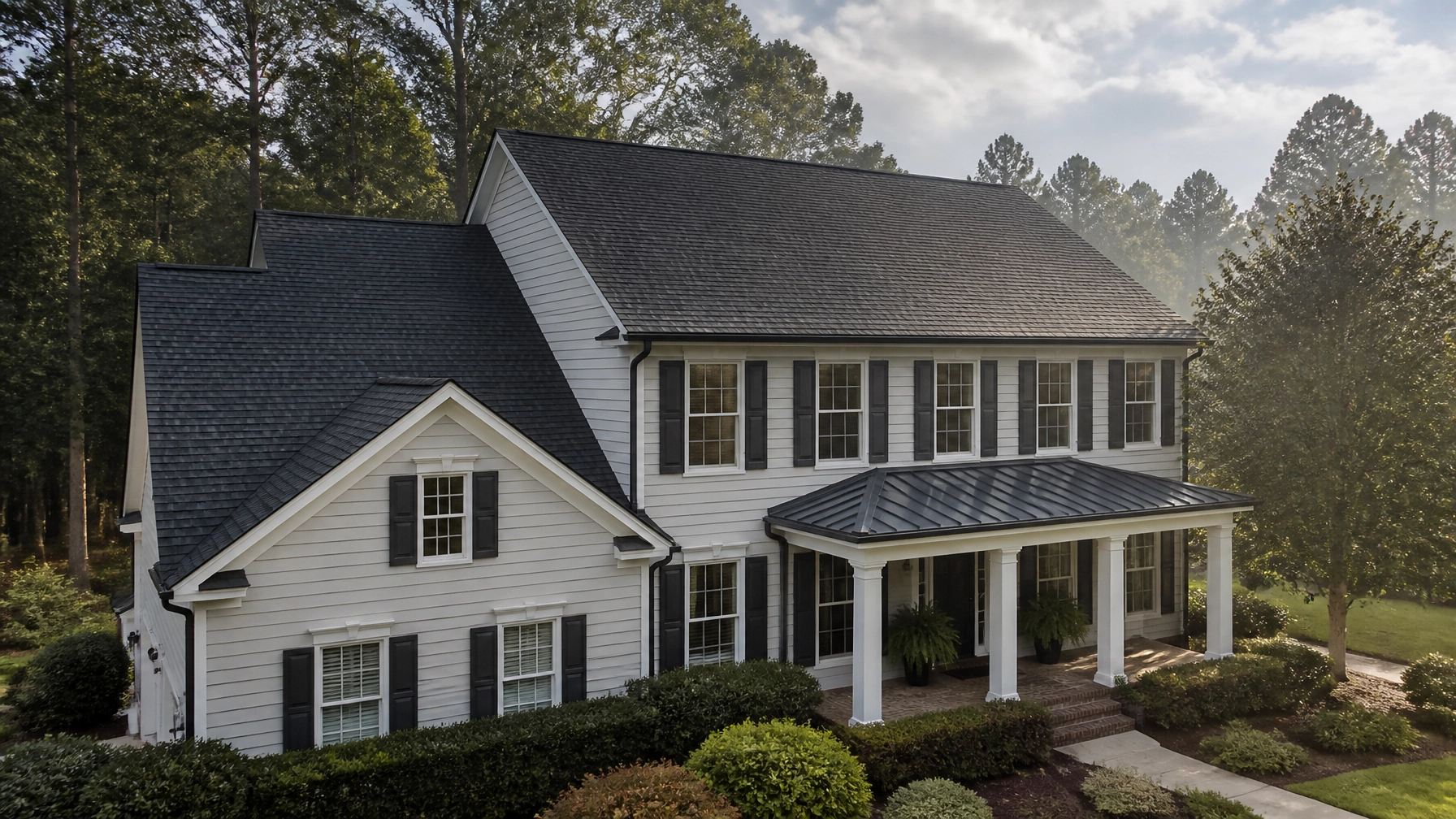
    2. Gusty winds test shingle attachment

    A 45–55 mph gust can lift an aging or poorly attached shingle, especially around roof edges, ridges, valleys, and penetrations.

    Once a shingle lifts, wind-driven rain can reach the underlayment or roof deck. Repeated summer storms can turn a small loose section into a larger leak before the next major weather event arrives.
    3. Heavy rain finds weak flashing

    Downpours are especially hard on flashing around walls, chimneys, skylights, and plumbing vents. Sealant can crack or separate after years of Florida heat and UV exposure.

    The roof covering may look acceptable from the ground while water enters through a flashing transition. Ceiling stains, damp attic insulation, musty odors, and peeling paint can all indicate concealed moisture.

    4. Heat and UV accelerate shingle aging

    Central Florida roofs receive intense sun exposure for much of the year. UV radiation dries and weakens asphalt compounds, while repeated heating and cooling cause materials to expand and contract.

    Poor attic ventilation compounds the problem. Heat trapped below the roof deck can raise shingle temperatures, accelerate deterioration, and contribute to premature deck damage.

    Central Florida neighborhood beneath heavy late-August thunderstorm clouds

    Storm-Resistant Roofing Best Practices for Central Florida

    A storm-ready roof is more than a stronger shingle. The full roof system must work together.

    Follow Florida wind-load requirements

    Roof replacements in Orlando must comply with the applicable Florida Building Code and local permitting requirements. The correct design depends on the home’s location, roof geometry, materials, attachment methods, and other structural factors.

    Miami-Dade and High-Velocity Hurricane Zone-tested products are not automatically required for every Orlando home, but they provide a useful quality benchmark. Look for products with documented testing, proper Florida approvals, and installation instructions that match the roof system.

    Consider Class 4 impact-resistant shingles

    Class 4 shingles are tested for resistance to hail and impact. They do not make a roof hailproof, but they can reduce the risk of functional damage from severe storms.

    They may also be worth discussing with your insurance agent because eligibility for premium savings depends on the insurer, policy, documentation, and installation details.

    Use stronger attachment methods

    Ask the roofing contractor to explain the fastening system, including:

    • Ring-shank nails where specified by the approved system
    • A six-nail pattern when required for the shingle and wind zone
    • Proper nail placement and depth
    • Strong edge and starter-strip installation
    • Secure ridge-cap attachment

    More nails alone do not guarantee better performance. The entire installation must follow the manufacturer’s tested assembly.

    Protect the deck from wind-driven rain

    A sealed roof deck or self-adhered underlayment can provide secondary water resistance if shingles are damaged or displaced.

    This upgrade can be particularly valuable in Florida, where wind and rain often arrive together. Confirm whether the proposal includes full-deck coverage, compatible membranes, and proper detailing around penetrations.

    Reinforce flashing and roof connections

    Pay close attention to:

    • Step flashing at walls
    • Flashing around chimneys and skylights
    • Plumbing vent boots
    • Valley construction
    • Roof-to-wall connections
    • Hurricane straps or clips
    • Gable-end bracing where applicable

    These details should be documented in the written scope of work: not left as vague references to “standard installation.”

    Maintain attic ventilation

    Balanced intake and exhaust ventilation helps reduce heat buildup and moisture accumulation. A roofing professional should assess soffit intake, ridge or off-ridge exhaust, insulation clearance, and the condition of the roof deck.

    Ventilation does not eliminate Florida heat, but it helps reduce stress on shingles and the underlying structure.

    Roofing crew installing wind-resistant architectural shingles on a Florida home

    2026 Orlando Roof Replacement Cost Breakdown

    For a typical 2,000-square-foot home, a full Orlando replacement commonly falls within the following planning ranges:

    Budget : $9,000–$12,000

    This generally represents a straightforward roof with:

    • Architectural asphalt shingles
    • Simple roof geometry
    • Standard underlayment
    • Limited flashing or decking repairs
    • No major material upgrades

    The lower end is more likely on a simple, accessible roof with minimal tear-off and no concealed damage.

    Most Popular : $12,500–$17,000

    This range often includes:

    • Architectural shingles
    • Improved ventilation
    • Updated flashing
    • Standard Florida code-compliant installation
    • A Class 4 impact-resistant upgrade or sealed roof deck
    • More detailed storm-resistance improvements

    This is a practical category for homeowners who want more protection than a basic replacement without moving to a premium metal system.

    Premium : $20,000–$25,000+

    Premium projects may include:

    • Metal roofing
    • A fully fortified roof system
    • Extensive sealed-deck work
    • Complex roof geometry
    • Steep slopes, multiple valleys, or dormers
    • Significant decking or structural repairs
    • Higher-end ventilation and flashing upgrades

    The final price depends on the actual roof surface: not just the home’s interior square footage. Roofers measure roofs in squares, with one square equal to 100 square feet.

    For a fast starting point, use the Orlando roof estimate tool. Get My Roof Estimate Now uses satellite imagery to measure roof size, pitch, and complexity and provides an instant estimate in about 60 seconds.

    Pre-Storm Roof Checklist

    Before the next storm arrives:

    • Clear leaves and debris from gutters and downspouts.
    • Trim branches within approximately 10 feet of the roofline.
    • Look for lifted, curled, cracked, or missing shingles from the ground.
    • Check visible flashing and sealant around vents, skylights, and chimneys.
    • Confirm that attic access areas are dry and free of new stains.
    • Photograph the roof, exterior walls, gutters, and visible penetrations.
    • Save date-stamped photos with your insurance records.
    • Do not climb onto a wet roof or inspect during lightning.

    Roof inspector documenting a Central Florida roof after a thunderstorm

    What to Do After a Storm

    If you suspect damage:

    1. Stay off the roof. Wet shingles are slippery, and hidden structural damage may not be visible.
    2. Take date-stamped photos from the ground and inside the attic.
    3. Use temporary tarping if a professional determines that it is needed to limit additional water damage.
    4. Contact your insurance company promptly. Follow the claim and documentation deadlines in your policy.
    5. Schedule a professional inspection.
    6. Request a written estimate that separates storm damage, code-required work, upgrades, and unrelated maintenance.

    Florida homeowners should also ask about a wind mitigation inspection. The Florida Office of Insurance Regulation says the updated OIR-B1-1802 Uniform Mitigation Verification Inspection Form is effective for inspections performed on or after April 1, 2026. The form documents qualifying wind-resistant features and may support insurance premium discounts, subject to your insurer’s rules.

    Review the official Florida wind mitigation resources and confirm that your inspector is authorized.

    Get Your Orlando Roof Cost in 60 Seconds

    Friday’s heat, lightning, gusty winds, and heavy rain are a useful reminder: roof damage often begins with details that are difficult to see from the driveway.

    If your roof is 15–30 years old, has storm damage, or you are planning ahead, get a clear starting budget before scheduling contractor visits.

    Use Get My Roof Estimate Now for a free instant satellite-powered estimate. There is no credit card requirement, no upfront contractor appointment, and no hidden fee. Your estimate is based on your roof’s measured size, pitch, complexity, material options, and regional pricing: and can help you compare the next steps with confidence.

    Sources

  • Daily Tech Blitz – Slot 5: Fort Worth’s Satellite Tech Edge Is Bringing Cowtown Precision to North Texas Roofs

    Daily Tech Blitz – Slot 5: Fort Worth’s Satellite Tech Edge Is Bringing Cowtown Precision to North Texas Roofs

    Fort Worth is becoming a serious center for satellite-powered decision-making.

    In August 2026, Fort Worth-based agtech company Ranchbot announced a Series B investment of more than $15 million and moved its global headquarters from Australia to North Texas. Its platform uses near-real-time satellite connectivity to help ranchers monitor water infrastructure across more than 12,000 customer operations, managing approximately 10 million cattle and 15 million sheep.

    At the University of Texas at Arlington, the Water Engineering Research Center is using NASA satellite imagery, artificial intelligence, and machine learning to map flooding, monitor coastal subsidence, and improve Texas disaster response.

    That same satellite-first mindset is now helping Fort Worth homeowners answer a more immediate question:

    What will a new roof cost for my specific home?

    Fort Worth Roof Replacement Costs in 2026

    Most Fort Worth homes have approximately 1,700 to 2,700 square feet of roof area, although the actual roof surface can be larger than the home’s floor area because of pitch, overhangs, garages, and multiple roof sections.

    For a standard 2,000-square-foot roof, current planning ranges are:

    Roofing option Price range Context
    Architectural shingles $9,700–$19,500 Popular, practical, strong resale appeal
    Standing-seam metal $10–$21 per sq. ft. Premium, long-lasting, energy-efficient
    Total metal roof project $20,000–$46,800 Depends heavily on size and complexity

    The Fort Worth roofing estimate page currently places many local replacement projects between $8,000 and $20,500, with architectural shingles often near $13,000 for a typical 2,000-square-foot roof.

    Your final price depends on:

    • Roof size, measured in squares
    • Pitch and accessibility
    • Number of ridges, valleys, dormers, and penetrations
    • Existing roof layers and tear-off requirements
    • Decking or structural damage
    • Material selection
    • Local labor and disposal costs

    Why Satellite Measurement Matters

    Traditional roofing estimates often begin with a contractor visit. That visit can be useful for a final inspection, but it is not always necessary for an initial budget.

    Satellite measurement provides a faster starting point.

    Our technology analyzes overhead imagery to estimate:

    1. Roof dimensions
    2. Individual roof sections
    3. Roof squares : one square equals 100 square feet
    4. Pitch and slope changes
    5. Roof complexity
    6. Material quantities

    The result is typically 90–95% accurate for planning purposes, with pricing delivered in about 60 seconds. It is not a substitute for an in-person inspection when the roof has hidden damage, but it gives homeowners a reliable starting range before scheduling contractor appointments.

    That distinction matters. A satellite estimate helps you understand the likely investment. A contractor inspection confirms the roof’s physical condition.

    Get a free Fort Worth estimate in 60 seconds.

    North Texas Weather Makes Roof Selection More Important

    Fort Worth sits in one of the most active hail regions in the United States. Severe thunderstorms bring a combination of:

    • Large hail
    • High winds
    • Heavy rainfall
    • Rapid temperature changes
    • Strong ultraviolet exposure
    • Flash-flood risk

    The National Weather Service documented a major April 24–29, 2026 severe-weather period across the Dallas-Fort Worth region, including large hail and damaging winds. A separate June 6 storm also produced hail reports in the Fort Worth area, with radar-based data indicating hail approaching 1.75 inches in some locations.

    Hail damage is often difficult to see from the ground. Look for:

    • Missing or uneven shingle granules
    • Dark impact marks
    • Cracked or bruised shingles
    • Dents in gutters, vents, flashing, or downspouts
    • Damaged screens or siding
    • New ceiling or attic stains

    Do not climb onto the roof after a storm. Take photos from the ground, use binoculars if available, and arrange a professional inspection.

    Fort Worth ranch-style home with a new dimensional shingle roof

    The Best Roof for Home Value in Fort Worth

    The best roof for home value is not always the most expensive roof. It is the material that fits the home, neighborhood, climate, and expected ownership period.

    Architectural Shingles (Popular)

    Architectural shingles are usually the strongest balance of cost, appearance, and resale value for Fort Worth homeowners.

    They offer:

    • A dimensional appearance
    • More color and style options
    • Easier repairs than metal
    • Broad contractor availability
    • Typical service life of 25–30 years
    • Strong buyer familiarity

    For homeowners planning to sell within several years, architectural shingles often provide the most predictable return without over-improving the property.

    Impact-Resistant Shingles (Storm-Ready)

    Class 3 and Class 4 impact-resistant shingles cost more than standard architectural shingles but are well suited to hail-prone areas.

    Potential benefits include:

    • Better resistance to hail strikes
    • Longer service life in severe-weather conditions
    • Possible insurance discounts, depending on the carrier
    • Stronger appeal to buyers concerned about storm damage

    Ask your insurer whether a Class 4 roof qualifies for a premium credit. Do not assume every policy provides the same discount.

    Standing-Seam Metal (Premium)

    Standing-seam metal roofing is a premium choice for homeowners who plan to stay in the property for 10 years or longer.

    Advantages include:

    • 40–70-year expected service life
    • Excellent wind performance
    • Low maintenance
    • Reflective surfaces that can reduce cooling costs
    • Modern curb appeal
    • Resistance to rot, insects, and mildew

    Metal costs substantially more upfront. It can also dent under very large hail, so homeowners should compare both performance ratings and finish options before choosing a system.

    Use the metal vs. shingles comparison guide to review cost, lifespan, energy performance, and resale considerations.

    Roof Replacement ROI and Resale Value

    A new roof supports home value in two ways.

    First, it adds visible curb appeal. A clean, uniform roof can make brick, siding, trim, and landscaping look newer. Second, it reduces buyer concern about immediate repairs, insurance problems, inspection negotiations, and water intrusion.

    For Fort Worth homeowners, a realistic roof replacement ROI range is approximately 60–80%, although results vary by material, neighborhood, timing, and market conditions.

    Typical planning benchmarks:

    • Architectural shingles: approximately 60–70% ROI
    • Impact-resistant shingles: approximately 60–75% ROI
    • Metal roofing: approximately 50–75% ROI, with greater long-term durability and energy benefits

    A roof replacement does not always return every dollar at closing. However, it can help protect the sale price and reduce concessions. A visibly worn roof may lead buyers to request a credit, lower their offer, or walk away after inspection.

    That is why roof replacement ROI is not just a resale calculation. It also includes:

    • Better curb appeal
    • Fewer inspection objections
    • Less perceived maintenance risk
    • Potentially faster marketing and sale
    • Improved buyer confidence

    If you are selling soon, architectural or impact-resistant shingles are often the safest value choice. If you are staying long term, metal may offer greater lifetime value even when its short-term resale ROI is less predictable.

    Modern Fort Worth home with a standing-seam metal roof

    What to Do After a Fort Worth Hailstorm

    Texas Department of Insurance guidance emphasizes several practical steps:

    1. Document the damage with photos and video.
    2. Prevent further damage with temporary measures such as a professional tarp.
    3. Save receipts for emergency work and materials.
    4. Notify your insurer promptly.
    5. Get multiple written estimates.
    6. Keep damaged materials available for inspection when possible.
    7. Do not sign an assignment or repair contract under pressure.

    Texas wind and hail deductibles are frequently percentage-based. Common examples include 1%, 2%, or 5% of the dwelling coverage limit. A 2% deductible on a home insured for $300,000 would equal $6,000.

    Your policy controls the filing deadline. Some policies allow up to two years, while others require notice sooner. TDI advises homeowners to report losses as soon as possible rather than relying on a general deadline.

    Also, never accept a contractor’s offer to waive or rebate your deductible. TDI warns that deductible waivers are illegal in Texas and can create problems with your claim.

    Start With a Data-Driven Estimate

    A roof replacement is a major investment. You should know the likely cost before comparing contractors, choosing materials, or deciding whether to file an insurance claim.

    Get a satellite-measured estimate first. Enter your Fort Worth address, review low-middle-high pricing, and compare options for architectural shingles, impact-resistant materials, metal roofing, synthetic systems, and coatings.

    The process is free, requires no credit card, and takes about 60 seconds.

    Calculate your Fort Worth roof replacement cost now.

    Sources and Further Reading

    Cost ranges and ROI figures are planning estimates, not guaranteed bids or resale appraisals. Insurance coverage, deductibles, and claim deadlines depend on your individual policy.

  • Daily FAQ Blitz – Slot 5: AEO FAQ Quick Answers for Spartanburg, SC Homeowners (2026)

    Daily FAQ Blitz – Slot 5: AEO FAQ Quick Answers for Spartanburg, SC Homeowners (2026)

    If you searched for AEO while researching a roof replacement in Spartanburg, SC, here is the short answer: AEO has nothing to do with roofing.

    Authorized Economic Operator (AEO) is an international customs and trade designation for companies involved in global supply chains. The U.S. equivalent is CTPAT , Customs-Trade Partnership Against Terrorism, administered by U.S. Customs and Border Protection.

    That distinction matters in the Hub City. BMW Manufacturing in Spartanburg is the largest U.S. automotive exporter by value. Roughly 70% of its vehicles move through the Port of Charleston, while containerized parts move by rail through Inland Port Greer. The region also operates within a foreign-trade-zone network.

    Those programs affect international logistics, not your roofing permit, contractor license, or replacement estimate.

    Spartanburg Roofing FAQ: AEO, Licenses, Permits, and Costs

    1. Does a Spartanburg homeowner need AEO or CTPAT status to replace a roof?

    No.

    A homeowner does not need AEO or CTPAT status to repair or replace a residential roof in Spartanburg. These are voluntary supply-chain security and customs programs for eligible businesses involved in international trade.

    For a roof replacement, the requirements that matter are:

    • A qualified roofing contractor
    • South Carolina contractor registration
    • A City of Spartanburg business license when applicable
    • The correct building permit
    • Required inspections
    • Compliance with the locally adopted residential building code

    AEO or CTPAT status is not part of the homeowner roofing process.

    2. Is AEO a roofing license or contractor credential?

    No.

    AEO is not:

    • A roofing license
    • A contractor registration
    • A building permit
    • Proof of insurance
    • A workmanship warranty
    • A manufacturer certification

    If a roofer mentions AEO, ask what they mean. They may be discussing a supply-chain partner, imported materials, or confusing the term with another certification. For residential roofing credentials, focus on South Carolina’s licensing and registration requirements.

    Why BMW and Inland Port Greer Matter Locally

    Spartanburg’s connection to global trade is significant. BMW Manufacturing’s Greer facility exported nearly 200,000 vehicles in 2025, with an export value of approximately $9 billion. BMW reports that its vehicles move primarily through the Port of Charleston, with additional rail and port connections.

    Inland Port Greer supports the region by moving containerized cargo between rail and truck networks. The nearby foreign-trade-zone structure can also help manufacturers manage imported parts and exports efficiently.

    For homeowners, this is useful context, but it does not change roofing rules. A roof replacement remains a local construction project governed by South Carolina and City of Spartanburg requirements.

    Learn more about CTPAT from U.S. Customs and Border Protection.

    New architectural shingle roof on a Spartanburg Colonial home

    3. What license should a Spartanburg roofer have?

    For residential roofing work over $500, the contractor should hold a Residential Specialty Contractor registration with the South Carolina Residential Builders Commission (SCRBC) under the Roofing classification.

    The SCRBC defines roofing work to include the installation, alteration, and repair of weather-resistant roof surfaces, along with related flashing, valleys, roof accessories, and insulation panels above the roof deck.

    A professional roofing company should also be able to provide:

    • Proof of current South Carolina registration
    • General liability insurance
    • Workers’ compensation coverage, when required
    • A written proposal
    • Warranty terms
    • Permit information
    • References or verifiable project history

    If the contractor operates through an LLC or corporation, confirm that the business has any required company authorization in addition to the individual’s registration.

    You can review South Carolina’s Residential Specialty Contractor requirements before signing a contract.

    4. Do I need a permit for a full roof replacement in Spartanburg?

    Yes.

    Inside the City of Spartanburg, a full roof replacement or a change in roofing material generally requires a residential building permit. The City’s residential updates permit application specifically includes repairs and re-roofs.

    A minor repair may be treated differently. Small, like-for-like repairs, such as replacing a few damaged shingles, may be exempt. However, the City does not publish a universal 25% roof-area rule in its public guidance. When the scope is unclear, Building Inspections should make the determination.

    For planning purposes:

    • Full tear-off and replacement: Permit typically required
    • Shingles changed to metal: Permit typically required
    • Roof framing, dormers, or skylight changes: Permit required
    • Minor patching: May be exempt
    • Damaged decking discovered during replacement: May require additional work or review

    Permit costs commonly fall in the $150–$800 planning range, depending on project valuation and local adjustments. Approval often takes approximately 5–14 business days, although timing can vary.

    Confirm whether the property is inside City limits. Unincorporated Spartanburg County uses a separate permitting process and fee schedule. The City of Spartanburg Building Inspections Department is the right starting point for city properties.

    5. What building code applies to Spartanburg roof work?

    The City of Spartanburg enforces the 2021 International Residential Code (IRC) as adopted and modified by South Carolina.

    For roofing, this can affect:

    • Underlayment
    • Flashing
    • Fastener placement
    • Roof ventilation
    • Wind resistance
    • Roof sheathing
    • Replacement materials
    • Structural changes

    The code is not a material recommendation. It establishes the minimum construction requirements. Your contractor remains responsible for installing the roofing system according to the code, manufacturer instructions, and permit conditions.

    Roof Deck Inspections and Hidden Damage

    Roof decking inspection during a residential re-roof in Spartanburg

    6. Is a roof deck inspection required?

    Not always.

    A final inspection is mandatory for most permitted re-roofing projects. A separate deck inspection may occur when the roof covering is removed or when the inspector needs to evaluate the underlying structure.

    During a deck inspection, the inspector or contractor may look for:

    • Rot
    • Water damage
    • Delamination
    • Soft or sagging sheathing
    • Structural deficiencies
    • Improper previous repairs

    Damaged decking must be repaired or replaced before the new roofing system is installed. This is one reason a low initial bid can increase after tear-off. A satellite estimate can measure roof size and complexity, but it cannot reliably confirm concealed wood damage beneath the existing roof covering.

    7. How much does a new roof cost in Spartanburg in 2026?

    For a typical Spartanburg home, architectural shingles cost approximately $425–$700 per roofing square installed. One roofing square equals 100 square feet.

    A 2,000-square-foot roof may cost approximately $8,500–$14,000 for architectural shingles. Full project budgets for a 2,000–2,500-square-foot home commonly fall between $10,000 and $22,000, depending on roof geometry, tear-off, ventilation, flashing, and decking repairs.

    Standing-seam metal roofing is usually higher, often around $18,000–$32,000 for a typical home.

    Category Typical 2026 planning range Common profile
    Budget $8,500–$11,000 Basic or entry-level architectural shingles, simple roof, limited repairs
    Popular $11,000–$16,000 Quality architectural shingles, standard tear-off, improved ventilation
    Premium $16,000–$22,000+ Designer shingles, complex rooflines, upgraded flashing, decking repairs
    Metal Premium $18,000–$32,000 Standing-seam panels, custom trims, longer service life

    Your final price depends on the roof, not just the home’s interior square footage. Key variables include:

    • Actual roof area
    • Pitch and accessibility
    • Number of valleys and roof planes
    • Chimneys, skylights, and wall intersections
    • Existing shingle layers
    • Deck condition
    • Material selection
    • Local labor and disposal costs

    Modern Spartanburg home with a standing-seam metal roof

    8. How accurate is a satellite roof estimate?

    A satellite roof estimate is approximately 90–95% accurate for planning.

    Satellite imagery can measure the roof’s footprint, roof planes, approximate pitch, squares, and complexity. That makes it useful for establishing a realistic low-middle-high budget before scheduling contractor visits.

    It cannot confirm every concealed condition. An on-site roofer may still need to verify:

    • Decking damage
    • Underlayment condition
    • Flashing details
    • Ventilation
    • Active leaks
    • Structural concerns
    • Multiple roof layers

    Use a satellite estimate as a fast planning benchmark, not as a substitute for a final construction proposal.

    Quick-Recap FAQ for Spartanburg Homeowners

    Does AEO apply to residential roofing?
    No. AEO is an international customs and trade designation.

    What is the U.S. equivalent of AEO?
    CTPAT, administered by U.S. Customs and Border Protection.

    Do homeowners need AEO or CTPAT status?
    No.

    What should a Spartanburg roofer have?
    A South Carolina Residential Specialty Contractor registration under the Roofing classification, plus applicable insurance and local business licensing.

    Is a full roof replacement permitted?
    Yes, a full replacement generally requires a City of Spartanburg residential building permit.

    What code applies?
    The 2021 IRC, as adopted and modified by the South Carolina Residential Code.

    What does a Spartanburg roof cost in 2026?
    Architectural shingles typically run about $425–$700 per square. A full project may cost $10,000–$22,000, while standing-seam metal may cost $18,000–$32,000.

    How fast can I get a planning estimate?
    In about 60 seconds using satellite-powered measurements.

    Get a Free Spartanburg Roof Estimate

    You do not need to schedule multiple contractor visits just to learn whether your roof replacement fits your budget.

    Visit the Spartanburg, SC roof estimate page, enter your address, and receive a free satellite-powered estimate in about 60 seconds.

    There is:

    • No cost
    • No credit card requirement
    • No upfront contractor visit
    • No hidden fees

    Start with accurate roof measurements, then connect with verified local contractors when you are ready for an on-site assessment.

  • Daily Tech Blitz – Slot 4: Austin’s Satellite Tech Edge Is Bringing Silicon Hills Precision to Central Texas Roofs

    Daily Tech Blitz – Slot 4: Austin’s Satellite Tech Edge Is Bringing Silicon Hills Precision to Central Texas Roofs

    Austin is known for turning advanced technology into practical tools. The region’s space industry is expanding across Bee Cave, Cedar Park, and the greater Central Texas corridor. Now, similar satellite-based technology is helping homeowners make faster, better-informed roofing decisions.

    In 2026, an Austin homeowner can enter an address and receive a free roof replacement estimate in under 60 seconds: without waiting for multiple contractor visits or climbing onto the roof.

    That matters in a market where roof replacement can cost approximately $10,000–$16,000 for a 2,000-square-foot architectural shingle roof or $20,000–$36,000 for a standing-seam metal roof.

    Austin’s Satellite Ecosystem Is Expanding

    The “Silicon Hills” reputation is no longer limited to software and semiconductors. Central Texas is becoming a serious hub for commercial space, satellite communications, launch systems, and advanced manufacturing.

    CesiumAstro in Bee Cave

    CesiumAstro is expanding its advanced manufacturing and satellite operations in Bee Cave. The company announced a Texas investment exceeding $500 million and plans to create more than 500 jobs over five years, according to the Office of the Texas Governor.

    Its 2026 growth includes:

    • Satellite communications hardware and software
    • High-performance phased-array communication payloads
    • The Element satellite program
    • A planned large-scale Synchronicity constellation
    • Expansion into semiconductor and mission software capabilities through the Jariet Technologies and 1Aardvark acquisitions

    The first Element satellite is expected to launch this fall, supporting CesiumAstro’s broader transition from satellite manufacturer to constellation operator.

    Firefly Aerospace in Cedar Park

    Just north of Austin, Cedar Park-based Firefly Aerospace is expanding across launch, lunar, and orbital services.

    In 2026, Firefly:

    • Was onboarded to NASA’s Spacecraft Processing Operations Contract
    • Received a Defense Innovation Unit contract related to a deorbit system for its Elytra spacecraft
    • Continued scaling Alpha launch vehicle production
    • Expanded its spacecraft manufacturing and processing capabilities

    The company’s work demonstrates how quickly satellite data, orbital systems, and advanced manufacturing are moving from specialized government programs into commercial applications. The Federal Reserve Bank of Dallas identifies Firefly as one of the Texas companies helping drive the region’s commercial space economy.

    The connection to roofing is straightforward: both industries depend on accurate measurements, reliable data, and efficient decision-making.

    Two-story Austin Colonial home with a new dimensional shingle roof after a summer storm

    Central Texas Weather Puts Roofs Under Pressure

    Austin roofs face a demanding combination of conditions:

    • Intense summer heat
    • High ultraviolet exposure
    • Rapid temperature changes
    • Hail
    • Gusty thunderstorm winds
    • Microbursts
    • Heavy rain and occasional flash flooding

    On August 26, 2026, a private hail-mapping analysis estimated that approximately 5,790 Texas properties were affected by hail and wind conditions. The National Weather Service also forecast scattered storms across Travis and Williamson counties on August 27, including the possibility of small hail and gusty winds.

    Private storm-impact estimates should be treated as screening data rather than an official damage count. Homeowners should verify damage through their insurer, a qualified roofing professional, and local weather records.

    Central Texas has already seen how quickly conditions can change. The well-documented Austin microburst occurred on May 28, 2025, not 2026. According to the National Centers for Environmental Information storm record, the event produced:

    • A damage path approximately 10 miles long
    • A path up to 2.5 miles wide
    • Estimated winds between 65 and 85 mph
    • A 77 mph wind gust at Austin-Bergstrom International Airport
    • Hail reports up to 1.5–2 inches in portions of the metro area
    • Minor shingle damage on some homes

    The lesson is important: a roof does not need to look dramatically damaged from the ground to have weakened shingles, exposed underlayment, damaged flashing, or compromised ventilation.

    What Is Satellite Roof Measurement?

    Satellite roof measurement uses high-resolution aerial and satellite imagery to analyze a property’s roof without an initial contractor visit.

    The technology evaluates visible roof planes and calculates:

    • Roof length and width
    • Total roof area
    • Roof pitch
    • Number of roof sections
    • Valleys and ridges
    • Dormers, penetrations, and other complexity
    • Estimated material quantities

    Roofing companies traditionally measure in squares. One roofing square equals 100 square feet of roof surface.

    For example:

    • A 2,000-square-foot roof equals approximately 20 squares
    • A 2,500-square-foot roof equals approximately 25 squares
    • A 3,000-square-foot roof equals approximately 30 squares

    Your home’s interior square footage is not always the same as its roof area. Pitch, overhangs, attached garages, and architectural details can increase the actual roofing surface.

    How Accurate Is Satellite Measurement?

    Get My Roof Estimate Now uses satellite-powered measurements with approximately 90–95% accuracy, often measuring roof dimensions within inches.

    That level of accuracy is useful for planning. It provides a property-specific starting point instead of relying on a broad national average or guessing from the home’s living area.

    However, satellite imagery has limits. It cannot fully identify:

    • Hidden deck deterioration
    • Attic ventilation problems
    • Interior leaks
    • Soft decking
    • Concealed flashing failures
    • Structural damage beneath the roofing system

    A satellite estimate is a planning tool. A contractor should inspect the roof before finalizing a contract, scope of work, or insurance claim.

    Modern Austin home with a new standing-seam metal roof, stucco exterior, and native landscaping

    Austin Roof Replacement Cost Estimates for 2026

    The following ranges are practical planning figures for Austin-area homeowners. Actual costs vary based on roof size, pitch, complexity, tear-off requirements, material availability, permits, labor, and repairs.

    Material Category Austin 2026 planning range Approximate cost for 2,000 sq. ft.
    3-tab asphalt shingles Budget $4.00–$6.50 per sq. ft. $8,000–$13,000
    Architectural asphalt shingles Popular $5.00–$9.50 per sq. ft. $10,000–$16,000
    Standing-seam metal Premium $10.00–$18.00 per sq. ft. $20,000–$36,000

    These are replacement planning ranges, not guaranteed bids. Tear-off, decking repairs, chimney work, steep slopes, and complex rooflines can increase the final price.

    For a broader starting point, use the roof cost calculator. For a property-specific result, use the free satellite estimate tool.

    Choosing the Right Roofing Material

    3-Tab Shingles (Budget)

    Three-tab shingles are the lowest-cost common asphalt option. They have a flat, uniform appearance and typically last around 15–20 years under suitable conditions.

    They may fit homeowners who:

    • Need the lowest upfront cost
    • Own a rental property
    • Plan to sell soon
    • Are replacing a basic roof with a simple design

    They generally offer less dimensional appeal and weather performance than architectural shingles.

    Architectural Shingles (Popular)

    Architectural shingles are the most common choice for Austin homeowners. They use multiple layers to create a dimensional appearance and typically last approximately 25–30 years.

    Benefits include:

    • Strong curb appeal
    • Wide color selection
    • Better durability than 3-tab shingles
    • Easy repair and replacement
    • Good compatibility with ranch, Colonial, and Hill Country-style homes

    Impact-resistant architectural shingles may also be worth considering in hail-prone areas. Ask your insurer whether qualifying products may affect your policy or discounts.

    Standing-Seam Metal (Premium)

    Standing-seam metal roofing uses interlocking panels with concealed fasteners. It typically costs more upfront but can last approximately 40–70 years when properly installed and maintained.

    Metal may be a good fit if you:

    • Plan to stay in the home for 10 or more years
    • Want long service life
    • Prefer low maintenance
    • Want improved solar reflectivity
    • Own a modern or contemporary home

    Metal is not immune to hail. Large hail can dent some panels, although cosmetic denting does not always affect roof performance. Review the material’s impact and wind ratings before choosing it. See the full metal roofing guide or compare metal versus asphalt shingles.

    Central Texas home with a clean new architectural shingle roof, chimney, vents, and mature live oak trees

    Why Instant Estimates Help After a Storm

    After a hail or wind event, local roofing contractors may receive more calls than they can immediately handle. Homeowners can wait days or weeks just to get an initial appointment.

    An instant satellite estimate helps you:

    • Understand your roof’s approximate size
    • See low, middle, and high replacement ranges
    • Compare shingles and metal
    • Create an initial insurance and budgeting checklist
    • Decide whether a contractor inspection is urgent
    • Avoid scheduling several visits just to get a ballpark figure

    The process is free, requires no credit card, and takes less than 60 seconds. After reviewing the estimate, homeowners can connect with verified, licensed, and insured local contractors for the next step.

    Get Your Austin Roof Estimate in 60 Seconds

    Whether your roof is 15 years old, showing storm-related wear, or part of a pre-sale renovation plan, accurate information makes the process easier.

    Enter your Austin-area address to receive a free satellite-powered estimate based on your roof’s size, pitch, complexity, material choice, and regional pricing.

    Get your free roof replacement estimate now.

    Estimates are planning tools, not contracts or guaranteed final bids. Actual project costs may change after an on-site inspection, material selection, permit review, tear-off, and assessment of decking or structural conditions.

    Sources

  • 2026 Roof Replacement Cost in Fort Lauderdale, FL: What Venice of America Homeowners Should Budget

    2026 Roof Replacement Cost in Fort Lauderdale, FL: What Venice of America Homeowners Should Budget

    Fort Lauderdale homeowners are not pricing an ordinary roof replacement. Broward County sits inside Florida’s High-Velocity Hurricane Zone (HVHZ), where wind uplift, salt air, intense UV exposure, heavy rain, and strict product approvals affect nearly every roofing project.

    For 2026, a typical 2,000-square-foot single-family home in Fort Lauderdale should budget approximately:

    • Architectural shingles: $9,000–$22,000
    • Standing-seam metal: $20,000–$55,000
    • Concrete or clay tile: $20,000–$70,000+
    • Flat roofing, TPO, or modified bitumen: Custom pricing for low-slope homes, additions, and coastal condominiums

    These are planning ranges, not contractor bids. Your actual roof surface may be larger than your home’s floor area, especially with hips, valleys, multiple levels, and roof overhangs.

    2026 Fort Lauderdale Roof Replacement Prices

    The following ranges assume professional installation, tear-off where required, current code compliance, and typical South Florida labor.

    Roofing material Approximate installed cost for 2,000 sq. ft. Approximate installed price
    Architectural shingles (Popular) $9,000–$22,000 About $4.75–$10.00 per sq. ft.
    Standing-seam metal (Premium) $20,000–$55,000 Commonly $10–$23 per sq. ft.
    Concrete tile (Premium) $20,000–$45,000+ Commonly $10–$19 per sq. ft.
    Clay tile (Luxury) $40,000–$70,000+ Often $12–$21+ per sq. ft.
    TPO or modified bitumen Custom estimate Used for low-slope roofs and many coastal condos

    Architectural shingles: $9,000–$22,000

    Architectural shingles remain the most common choice for Fort Lauderdale homeowners because they offer the lowest initial investment, many color options, and straightforward repairs.

    For most projects, the realistic middle range is $12,000–$18,000. The lower end may apply to a simple, accessible roof with limited tear-off. The higher end becomes more likely when the project includes:

    • Premium or impact-resistant shingles
    • Extensive decking replacement
    • Sealed roof deck installation
    • Complex hips, valleys, and penetrations
    • Multiple layers of old roofing
    • HVHZ fastening and inspection requirements

    Learn more about shingle types and warranties in our 2026 asphalt shingles guide.

    Standing-seam metal: $20,000–$55,000

    Standing-seam metal costs substantially more upfront but may last 40–70 years with proper installation. It is attractive to homeowners who plan to stay in the property, want low maintenance, or are prioritizing long-term durability.

    Metal roofing can also improve energy performance and may support insurance savings, depending on the roof’s tested assembly and your carrier’s guidelines. However, steel and aluminum tariffs have increased material and trim costs in 2026.

    Use our metal roofing comparison to compare lifetime cost, maintenance, and resale considerations.

    Tile: $20,000–$70,000+

    Concrete and clay tile are popular throughout Fort Lauderdale’s Mediterranean, coastal, and luxury neighborhoods. Tile offers excellent durability and strong architectural character, but it is heavier and more labor-intensive than shingles.

    Budget toward:

    • $20,000–$45,000+ for many concrete tile replacements
    • $40,000–$70,000+ for premium clay tile systems

    Before selecting tile, confirm that the structure can support the roof load and that the complete system: not only the visible tile: has the required approval.

    Fort Lauderdale ranch home with a new architectural shingle roof

    Why Fort Lauderdale Roofs Cost More

    1. HVHZ code compliance

    Fort Lauderdale roofing systems must be designed and installed for demanding wind conditions. A compliant replacement may include:

    • Enhanced roof-deck fastening
    • Six nails per shingle where required by the approved system
    • Self-adhered underlayment or another approved secondary water barrier
    • Sealed roof deck details
    • Stronger ridge and hip cap adhesion
    • Approved edge metal, flashing, vents, and fasteners
    • Wind-uplift documentation and required inspections

    These details add labor and material costs, but they are designed to keep the roof assembly working as a system during severe weather.

    2. Florida Product Approval and Miami-Dade NOA documentation

    In Broward County, your contractor must use roofing materials and accessories approved for the applicable wind zone. This may involve:

    • Florida Product Approval (FPA)
    • Miami-Dade Notice of Acceptance (NOA)
    • Approved installation instructions
    • Product-specific fastening schedules
    • Approved underlayment and accessory components

    Do not accept a quote that lists only “architectural shingles” or “metal roof.” Ask for the exact product line, approval documentation, fastening method, underlayment, and warranty terms.

    3. Roof-to-wall connection work

    When a roof replacement involves 25% or more of a roof section, current-code requirements and the age of the existing roof can affect the scope. Older roofs may face more extensive upgrade requirements than roofs permitted under newer Florida Building Code editions.

    Roof-to-wall connection improvements: such as clips, straps, or related hardware: may also be evaluated. Florida requirements generally limit mandated retrofit costs to a portion of the reroofing cost, but the exact application depends on the structure, roof age, permit history, and building official’s interpretation.

    4. South Florida labor demand

    Fort Lauderdale has a competitive construction market, and experienced HVHZ roofing crews command higher labor rates. Labor also becomes more expensive after widespread storms when demand spikes and scheduling becomes difficult.

    5. 2026 material increases

    Asphalt manufacturers announced price increases early in 2026, commonly reported in the 4%–8% range, followed by additional increases around June 1. Steel and aluminum tariffs have placed further pressure on:

    • Standing-seam panels
    • Flashing
    • Drip edge
    • Fasteners
    • Metal vents and trim

    A written quote should clearly state how long the price is valid and whether materials have already been ordered.

    6. Salt air, UV, algae, and moisture

    Homes near Central Beach, Las Olas Isles, Rio Vista, Coral Ridge, and other waterfront areas experience more exposure to salt air. South Florida’s sunlight can also accelerate granule loss, seal deterioration, fading, and underlayment aging.

    Warm, humid conditions encourage algae and moisture problems, particularly on shaded roof slopes. Algae-resistant shingles, proper ventilation, clean gutters, and routine inspections can extend service life.

    Fort Lauderdale Roofing Permits and Contractor Licensing

    The City of Fort Lauderdale requires a permit for roof replacement and most significant roofing work. Applications are submitted through the city’s LauderBuild portal, along with the Broward County Uniform Permit Application and required product documentation.

    For budgeting purposes, homeowners often see roofing permit and related administrative fees in the approximate range of $191–$550, although the exact amount is valuation-based and may include technology, plan review, and HVHZ charges.

    Your contractor should:

    • Pull the permit before work begins
    • Submit the correct HVHZ documentation
    • Schedule required inspections
    • Keep the permit open until final approval
    • Provide permit closure records after completion

    Verify that the contractor holds an active Florida Certified Roofing Contractor license (CCC) through MyFloridaLicense.com. Also confirm general liability and workers’ compensation coverage.

    Insurance, Wind Mitigation, and Storm Claims

    A new roof may affect your property insurance, but the discount is not automatic. After the roof passes final inspection, ask a qualified inspector about completing the updated OIR-B1-1802 wind mitigation inspection form. The revised form is required for inspections conducted on or after April 1, 2026.

    Potential insurance credits may relate to:

    • Roof-to-wall connections
    • Roof-deck attachment
    • Secondary water resistance
    • Roof covering and wind rating
    • Opening protection
    • Overall construction features

    Citizens and private carriers have their own underwriting procedures. Submit updated documentation to your agent and ask when any credit will take effect.

    If a storm damages your roof:

    1. Photograph and video the damage from the ground.
    2. Make reasonable emergency repairs, such as professional tarping, to prevent additional damage.
    3. Save receipts and damaged materials when safe.
    4. Notify your insurer promptly.
    5. Confirm the applicable claim notice deadline: Florida commonly uses a one-year notice window for property claims, subject to exceptions and policy language.
    6. Do not sign an assignment or broad repair agreement without understanding it.

    The 2026 Atlantic hurricane season runs from June 1 through November 30, with the highest activity typically occurring from August through October. Even a below-normal season can produce one damaging storm. Recent heavy-rain and tropical-weather events affecting South Florida have reinforced the importance of maintaining roof drainage, flashing, soffits, and emergency protection before peak season.

    Modern Fort Lauderdale home with a standing-seam metal roof

    Neighborhood Pricing and Home-Value Considerations

    Fort Lauderdale’s housing market varies sharply by neighborhood. Citywide sale medians in 2026 generally fall around $455,000–$595,000, depending on the data source and whether condos, townhomes, and single-family homes are combined. Listing prices are often higher.

    Coastal and luxury areas can be substantially more expensive, including:

    • Central Beach
    • Las Olas Isles
    • Victoria Park
    • Rio Vista
    • Coral Ridge
    • Imperial Point
    • Sunrise Intracoastal
    • Flagler Village
    • Colee Hammock
    • Wilton Manors, adjacent to Fort Lauderdale

    A roof replacement can support roof curb appeal and home value, especially when an aging roof is a concern during resale. The best roof for home value is usually the one that fits the property’s architecture, neighborhood expectations, insurance requirements, and buyer preferences: not necessarily the most expensive material.

    Roof replacement ROI also depends on installation quality. A properly documented, permitted, code-compliant roof is more valuable than an attractive roof with unclear approvals or unresolved permit records.

    How to Control Your 2026 Roofing Budget

    Before signing a contract:

    • Get at least three written quotes.
    • Confirm that each bid uses the same roof area and material grade.
    • Ask whether tear-off and disposal are included.
    • Request a line item for decking repairs.
    • Confirm HVHZ, FPA, and Miami-Dade NOA requirements.
    • Verify license, insurance, and references.
    • Keep a 10%–15% contingency for concealed damage.
    • Plan installation outside the most active hurricane period when possible.
    • Ask who registers the manufacturer warranty.
    • Confirm the workmanship warranty in writing.
    • Check whether the permit will be pulled and closed by the contractor.

    Start with a data-driven benchmark before scheduling sales visits. Our roof cost calculator provides general pricing by size, pitch, material, and region.

    Get a Free Fort Lauderdale Roof Estimate in 60 Seconds

    You do not need to wait for multiple contractor visits to understand your project’s likely cost.

    Get a free, satellite-powered roof estimate at getmyroofestimatenow.com. The tool measures your roof’s size, pitch, and complexity, then provides material-specific pricing in about 60 seconds.

    There is no credit card required, no upfront cost, and no obligation. Use the estimate to compare bids, plan for HVHZ upgrades, and decide whether your Fort Lauderdale roof replacement fits your 2026 budget.

    Upscale Fort Lauderdale coastal residence with a new tile roof

  • Daily Weather Blitz – Slot 1: Atlanta, GA : August 28, 2026: Muggy Mornings, Afternoon Pop-Up Storms, Then a 95°F Finish & What the ATL’s Late-Summer Swing Does to Your Roof

    Daily Weather Blitz – Slot 1: Atlanta, GA : August 28, 2026: Muggy Mornings, Afternoon Pop-Up Storms, Then a 95°F Finish & What the ATL’s Late-Summer Swing Does to Your Roof

    Atlanta’s late-August weather is following a familiar pattern: a muggy start, partly sunny skies, a brief late-day storm threat, and a warmer stretch developing next week.

    For Friday, August 28, the National Weather Service forecast for the Atlanta area calls for:

    • Current conditions at 7:52 a.m.: Partly cloudy, 73°F, 90% humidity, 70°F dew point, southwest wind at 3 mph
    • Today: Mostly sunny with a 30% chance of showers and thunderstorms, mainly between 4 p.m. and 5 p.m. High near 90°F
    • Tonight: Partly cloudy with a 30% storm chance, mainly between 11 p.m. and 1 a.m. Low around 70°F
    • Saturday: Partly sunny, high near 88°F, with a 30% chance of storms mainly after 5 p.m.
    • Sunday: Partly sunny, high near 89°F, with showers and thunderstorms possible after 2 p.m.
    • Monday through Thursday: Mostly sunny to sunny, with highs climbing from about 91°F to 95°F

    You can follow the latest updates from the National Weather Service Atlanta/Peachtree City office, including radar, warnings, and local storm reports.

    This weather matters to your roof. Atlanta’s combination of heat, humidity, heavy rain, wind, hail, and falling pine limbs creates a demanding environment for roofing materials and installation quality.

    Atlanta’s late-summer pattern is hard on roofing systems

    Atlanta has a humid subtropical climate and receives approximately 47–51 inches of rain each year. Summer storms are often short-lived, but they can deliver intense rainfall, strong gusts, lightning, and hail in a matter of minutes.

    The typical sequence creates several roofing stresses:

    1. Morning humidity adds moisture pressure.
      High humidity and warm overnight temperatures can leave roof surfaces, flashing, and gutters damp for hours.

    2. Afternoon heat expands roofing materials.
      Shingles, metal components, flashing, and roof decking all respond to repeated heating and cooling.

    3. Storms test weak points.
      Wind-driven rain can enter around worn flashing, open valleys, pipe boots, skylights, and loose shingles.

    4. Hail can cause hidden damage.
      Hail bruising is not always obvious from the ground. It may appear as small, dark depressions where the shingle’s protective granules have been knocked loose.

    5. Pine trees add a local hazard.
      Atlanta’s mature pines drop needles, branches, and occasionally larger limbs. Debris can clog gutters, trap moisture, scrape shingles, or damage roof edges during a storm.

    Roofing and insurance professionals often describe North Georgia as a regional hail corridor because severe summer storms can produce recurring hail claims. Regardless of the label, homeowners should treat every strong thunderstorm as a reason to check for damage afterward.

    New charcoal architectural shingle roof on an Atlanta ranch home after a summer storm

    What to inspect before today’s storm window

    The 4 p.m. to 5 p.m. storm window is a practical reminder to complete a quick exterior inspection before the weather changes.

    You do not need to climb onto the roof. From the ground, driveway, or a safe upper-level window, look for:

    • Shingles that appear lifted, curled, cracked, or missing
    • Dark spots or dents that may indicate hail bruising
    • Exposed underlayment or roof decking
    • Loose or damaged flashing around chimneys, walls, and vents
    • Sagging gutters or downspouts
    • Pine needles collecting in valleys or behind roofline details
    • Overhanging limbs that could strike the roof
    • Water stains on ceilings or walls inside the home

    After the storm, inspect gutters and downspout outlets for fresh granules. Granules can resemble coarse sand and may indicate accelerated shingle wear or hail impact.

    If you suspect hail damage, photograph the roof, gutters, siding, screens, and outdoor equipment. Avoid making repairs before documenting the condition unless there is an active emergency leak.

    Attic ventilation becomes critical as temperatures reach 95°F

    Atlanta’s roof does more than keep rain out. It also shields the home from intense solar heat.

    On sunny July and August afternoons, an Atlanta attic can reach 130–150°F or higher, especially when the roof is dark or ventilation is blocked or poorly balanced. A very hot attic can:

    • Accelerate shingle aging
    • Increase cooling demand
    • Stress roof decking and framing
    • Contribute to moisture and condensation problems
    • Make upper rooms uncomfortable
    • Shorten the useful life of roofing materials

    A balanced attic ventilation system typically uses intake ventilation at the soffits and exhaust ventilation at the ridge, gables, or roof vents. Insulation and air sealing are also important. Ventilation cannot compensate for major air leaks or inadequate insulation between the living space and attic.

    Before the hottest part of the season, ask a roofing professional to check whether:

    • Soffit vents are present and unobstructed
    • Ridge vents are installed correctly
    • Insulation is blocking intake paths
    • Bathroom or dryer exhaust is incorrectly vented into the attic
    • Roof vents are damaged or improperly flashed
    • The attic shows signs of moisture, mold, or wet insulation

    Ventilation will not eliminate attic heat, but it can reduce trapped heat and moisture when the system is designed correctly.

    2026 Atlanta roof replacement costs

    For Atlanta homeowners planning a replacement in 2026, architectural shingles generally run about $4.50–$10 per square foot installed, depending on roof complexity, tear-off requirements, labor, materials, pitch, access, and local conditions.

    For a typical 2,000-square-foot roof surface, that produces a broad planning range of approximately:

    • Low range: Around $9,000
    • High range: Around $21,000
    • Typical full replacement: Often falls near $9,000–$16,000 for standard architectural shingles
    • More complex roofs: Can approach or exceed $20,000

    These figures assume a roof surface of approximately 2,000 square feet. A 2,000-square-foot home may have a larger roof surface because of pitch, overhangs, garages, porches, and multiple roof sections.

    Common Atlanta pricing tiers

    Project tier Roofing option 2026 planning benchmark
    Budget Basic replacement or simpler shingle system About $9,500
    Most Popular Architectural asphalt shingles About $14,000
    Premium Metal roofing, including standing seam options $20,000+

    Architectural shingles are Atlanta’s most common choice because they balance cost, curb appeal, availability, and durability. Metal roofing costs more upfront but may provide a longer service life and improved resistance to wind, rain, and repeated sun exposure.

    Your final cost can increase when the roof has:

    • A steep pitch
    • Multiple valleys and dormers
    • Difficult access
    • Several layers requiring tear-off
    • Damaged decking
    • Chimneys, skylights, or complex flashing
    • Extensive gutter or ventilation work

    For a more specific number, homeowners can review the company’s Atlanta roof replacement cost guide or start an Atlanta roof estimate.

    Modern Atlanta home with a new standing-seam metal roof under a bright late-summer sky

    Storm-ready roofing choices for Atlanta homes

    When replacement becomes necessary, select a system based on Atlanta’s actual weather risks: not just appearance.

    Architectural shingles (Most Popular)

    Look for shingles with:

    • Strong wind-resistance ratings
    • Algae-resistant protection
    • Properly specified underlayment
    • High-quality valley and flashing details
    • Manufacturer-approved installation methods

    Impact-resistant shingles (Storm-focused)

    Class 4 impact-rated shingles may be worth considering in hail-prone areas. They do not make a roof hail-proof, but they are designed to perform better in standardized impact testing than conventional products.

    Metal roofing (Premium)

    Standing-seam metal roofs can offer long service life, strong wind performance, and lower heat absorption with appropriate colors and coatings. Installation quality is especially important around fasteners, seams, penetrations, and transitions.

    No material eliminates storm risk. Correct fastening, flashing, ventilation, drainage, and workmanship are just as important as the product itself.

    A practical Atlanta roof-readiness checklist

    Before the next storm cycle:

    • Schedule a professional roof inspection if your roof is 15–30 years old
    • Check shingles for hail bruising, cracks, curling, and granule loss
    • Inspect flashing around vents, chimneys, skylights, and wall transitions
    • Clear gutters and downspouts of pine needles and debris
    • Confirm that water drains away from the foundation
    • Trim overhanging pine limbs
    • Check attic ventilation and insulation
    • Review your insurance policy before storm damage occurs
    • Photograph your roof and exterior for baseline records
    • Get a replacement budget before a leak becomes urgent

    Atlanta’s weather can move quickly. A roof that looks acceptable from the driveway may still have damaged seals, weakened flashing, or storm-related granule loss.

    Get an instant Atlanta roof estimate before you need one

    If you are budgeting for a replacement, you do not have to wait for multiple contractor visits just to learn the likely cost.

    Get My Roof Estimate Now uses satellite imagery to measure your roof’s size, pitch, and complexity. Enter your address and receive a free estimate in about 60 seconds: with no credit card required.

    You can review low-to-high pricing for roofing materials such as architectural shingles, metal, synthetic options, and coatings before connecting with verified local contractors.

    Storm season is easier to manage when you know your roof’s condition and replacement budget in advance. Get your free satellite-powered Atlanta roof estimate today.

    Weather information: National Weather Service Atlanta/Peachtree City. Roofing prices are planning benchmarks only; actual costs vary by roof surface area, materials, labor, access, permits, disposal, and concealed damage.