Blog

  • Daily Weather Blitz – Slot 4: Lexington, KY : August 25, 2026: A Fall-Like 84°F Tuesday, Thursday’s Storm Chance & What Bluegrass Heat Swings, Hail, and Wind Do to Your Roof

    Daily Weather Blitz – Slot 4: Lexington, KY : August 25, 2026: A Fall-Like 84°F Tuesday, Thursday’s Storm Chance & What Bluegrass Heat Swings, Hail, and Wind Do to Your Roof

    Lexington is getting a brief taste of fall today.

    Tuesday, August 25, will be partly cloudy with plenty of sunshine, a high near 84°F, and a 0% chance of rain. Morning temperatures began in the mid-to-upper 50s, and a strong high-pressure system is keeping humidity low. The heat index should remain mild, generally in the 80s.

    For homeowners in the 40502 area and across Fayette County, this is an excellent day to look over the roof, clear gutters, and document existing conditions before the next storm chance arrives.

    The Week Ahead: Quiet Tuesday, Storm Chance Thursday

    The weather pattern changes gradually during the week.

    • Wednesday, August 26: Partly sunny with highs in the mid-to-upper 80s. A stray shower or thunderstorm cannot be ruled out as a weak system approaches from the west.
    • Thursday, August 27: The best chance of storms arrives as a weak front crosses Kentucky. Storms will be scattered, so not every Lexington neighborhood will see rain. Some locations could receive heavier downpours, with temperatures in the upper 80s.
    • Friday through the weekend: Conditions turn dry and tranquil again. Highs climb back toward the upper 80s to near 90°F for the final weekend of August, while humidity remains manageable.

    Current guidance does not point to a widespread severe-weather outbreak. However, any thunderstorm can produce brief heavy rain, lightning, gusty wind, or small hail. Check the National Weather Service Lexington forecast and local updates from LEX18 Weather before Thursday afternoon.

    Close-up of clean, dimensional architectural asphalt shingles with visible granule texture

    How Bluegrass Weather Tests a Roof

    Lexington’s humid subtropical climate gives homeowners four distinct seasons. That variety is part of the region’s appeal, but it also creates a demanding environment for asphalt shingles, flashing, underlayment, and attic ventilation.

    1. Thermal Cycling (Daily Expansion and Contraction)

    A Lexington roof can experience a large temperature swing between early morning and afternoon. A cool morning in the 50s may be followed by a sunny afternoon in the 80s or 90s.

    Roofing materials expand when heated and contract as they cool. Repeated cycling can gradually stress:

    • Shingle sealant strips
    • Nail penetrations and fasteners
    • Flashing around chimneys and vents
    • Ridge caps and exposed edges
    • Older, brittle asphalt shingle surfaces

    Over time, this movement can contribute to lifted tabs, nail pops, cracked sealant, and accelerated granule loss. A roof may still look acceptable from the ground while becoming less resistant to wind and driven rain.

    2. UV Exposure and Humidity

    Strong summer sunlight breaks down roofing materials slowly. Humidity adds another layer of stress.

    Dark streaks on Lexington roofs are often caused by algae, especially on shaded or north-facing slopes. Lichen and moss can also appear where leaves, moisture, and limited sunlight keep the surface damp.

    Algae is primarily a cosmetic issue, but persistent moisture can make the roof surface age faster. It can also make it more difficult to spot genuine shingle damage underneath the streaking.

    Do not pressure-wash asphalt shingles. High-pressure cleaning can remove protective granules and shorten the roof’s service life.

    3. Hail Remains a Storm-Season Hazard

    Kentucky sees roughly 75 severe hail events involving hail at least 1 inch in diameter each year statewide. Lexington does not experience every event, but its location in the Ohio Valley keeps hail in the local storm-risk picture.

    Hail damage may appear as:

    • Random dark bruises on shingles
    • Missing or exposed granules
    • Cracked shingle mats
    • Dents in metal flashing, gutters, or vents
    • Soft spots that are difficult to see without close inspection

    The National Severe Storms Laboratory explains why hail size and storm intensity matter. A roof with older or already-brittle shingles is more vulnerable than a newer roof with flexible, impact-rated materials.

    For homeowners replacing a roof in Lexington, Class 4 impact-resistant shingles (Recommended for hail exposure) are worth pricing alongside standard architectural shingles. Ask your insurance carrier whether a qualifying Class 4 installation could reduce your premium. Discounts vary by policy, carrier, roof age, and documentation requirements.

    4. Damaging Straight-Line Winds

    Kentucky homeowners often focus on tornadoes, but damaging straight-line thunderstorm winds are a more frequent roof threat.

    Strong wind can:

    • Lift shingle edges
    • Break adhesive bonds
    • Remove ridge caps
    • Bend drip edge and flashing
    • Drive rain under compromised shingles
    • Drop branches onto roof slopes

    Wind damage frequently begins at vulnerable areas: eaves, rakes, ridges, valleys, and roof penetrations. Proper installation, adequate fastening, sealed flashing, and wind-rated shingles all matter.

    2026 Lexington Roof Replacement Cost Ranges

    For a typical 2,000-square-foot roof area in Lexington, 2026 replacement pricing generally falls within the ranges below. Roofing contractors measure roofs in squares, with one square equal to 100 square feet.

    Roofing option 2026 Lexington planning range Best fit
    3-tab asphalt shingles Starting around $6,000 Budget projects and simpler roof designs
    Architectural asphalt shingles $7,000–$17,000 Popular choice for most homeowners
    Architectural shingles, mid-range About $9,000–$11,000 Popular balance of appearance, durability, and cost
    Premium architectural shingles Up to approximately $17,000 Premium appearance, warranty, and performance
    Class 4 impact-resistant shingles Usually toward the upper architectural range Storm-focused upgrade for hail exposure
    Metal roofing $14,000–$32,000 Premium, long-life option

    Your actual price may differ substantially based on roof pitch, valleys, dormers, skylights, stories, tear-off requirements, damaged decking, ventilation, flashing, and local labor conditions.

    Metal roofing generally carries a higher upfront price but can provide a longer service life. Compare exposed-fastener panels, metal shingles, and standing-seam systems separately because they are not priced or installed the same way.

    Use the company’s roof cost calculator for a general starting point, then compare that range with an address-specific estimate.

    Modern Lexington-area home with a dark standing-seam metal roof and clean contemporary rooflines

    Lexington Roof Checklist Before Thursday

    You do not need to climb onto the roof to perform a useful first inspection. Walk the property from ground level, use binoculars if needed, and inspect the attic only from a safe location.

    Exterior inspection

    Check for:

    • Missing, curled, cracked, or lifted shingles
    • Exposed black underlayment or roof decking
    • Loose ridge caps
    • Sagging roof sections
    • Damaged gutters or downspouts
    • Dents in vents, flashing, or metal trim
    • Dark streaks, moss, or lichen buildup

    Granule check

    Look inside gutters and downspout outlets for excessive black, gray, or colored granules. A small amount of loose material is normal after installation, but heavy accumulation on an older roof can indicate surface wear.

    Gutters and drainage

    Remove leaves and debris before Thursday’s downpours. Confirm that:

    • Gutters are firmly attached
    • Downspouts discharge away from the foundation
    • Water is not backing up under the roof edge
    • Valley areas are free of leaves and branches

    Trees and exterior items

    Trim dead or overhanging branches near the roof. Secure patio furniture, planters, umbrellas, and other loose items that could become windborne.

    Flashing and sealant

    From the ground, look for separated flashing around chimneys, plumbing vents, skylights, and roof-wall intersections. Do not apply caulk as a substitute for proper repair. If flashing appears loose or damaged, have it evaluated.

    Document pre-storm conditions

    Take clear photos of the roof, gutters, siding, skylights, vents, and exterior trim before Thursday. Store them with the date. This creates a useful record if a later storm causes visible damage and you need to speak with your insurer.

    Also review your policy’s wind and hail deductibles. A roof claim may be subject to a separate percentage-based deductible rather than your standard dollar deductible.

    Residential attic and roof ventilation inspection area prepared for seasonal maintenance

    Inspect Before Lexington’s Fall Storm Window

    September and October bring a second severe-weather peak to Kentucky. That makes late August a practical planning point.

    If your roof is 15 to 30 years old, has recurring leaks, or shows widespread granule loss, do not wait for a storm to force the decision. Start with measurements, a realistic budget range, and a comparison of standard, impact-resistant, and metal options.

    A new roof can also support resale value. Lexington buyers and inspectors tend to view a newer roof favorably because it reduces an immediate, high-cost maintenance concern. While the exact return depends on the home and material selected, homeowners typically recover a strong share of a properly planned roof replacement investment at resale.

    Get a Free Lexington Roof Estimate in 60 Seconds

    You can get an instant, free, satellite-powered roof replacement estimate at Get My Roof Estimate Now.

    Enter your address and receive:

    • Satellite-measured roof dimensions
    • Roof size, pitch, and complexity factors
    • Low, middle, and high price ranges
    • Material comparisons for shingles and metal
    • Local pricing adjusted for your property

    The estimate is free, requires no credit card, and takes about 60 seconds. Measurements are typically accurate to within inches, with approximately 90–95% accuracy for most properties. No contractor visit is needed upfront, and you can choose whether to connect with a verified, licensed, and insured local contractor afterward.

    Thursday’s storms may miss your neighborhood. Your roof still deserves a closer look before Lexington’s next weather cycle arrives.
  • Daily ROI Blitz – Slot 5: Columbia, SC Roof Replacement ROI : How a New Roof Supports Home Value in 2026

    Daily ROI Blitz – Slot 5: Columbia, SC Roof Replacement ROI : How a New Roof Supports Home Value in 2026

    A new roof in Columbia, SC, can support resale value — but homeowners should separate cost recovery from guaranteed appreciation.

    For a standard 2,000-square-foot home, a realistic 2026 roof replacement planning range is approximately $12,000–$22,000 total. Architectural shingles commonly run about $4.30–$7.60 per square foot, while standing-seam metal can cost approximately $11.50–$16.00 per square foot.

    The latest national benchmark for asphalt shingle replacement is more specific: the 2025 Cost vs. Value Report shows homeowners recouping about 68% of the project cost at resale. That is a national benchmark: not a guaranteed Columbia result.

    The practical takeaway is simple: a new roof may not return every dollar directly in the sale price, but it can improve buyer confidence, reduce inspection objections, support insurance readiness, and limit requests for repair credits.

    Columbia’s 2026 housing market makes roof condition more important

    Reported Columbia median sale prices vary by provider and measurement period. Current figures are approximately $241,500–$280,000, with sources such as Zillow and Redfin showing different results based on geographic boundaries, property types, and reporting windows.

    At the same time, inventory has risen compared with recent years. Buyers have more choices and may have greater leverage to request:

    • Inspection repairs
    • Closing-cost credits
    • Price reductions
    • Roof replacement concessions
    • Contractor evaluations before closing

    That shifts the resale equation. In a highly competitive market, an aging roof may be overlooked if demand is intense. In a more balanced market, visible roof wear can become a negotiating point.

    A replacement roof helps position a property as move-in ready, especially when competing homes in Forest Acres, Shandon, Rosewood, or Elmwood have similar pricing and floor plans.

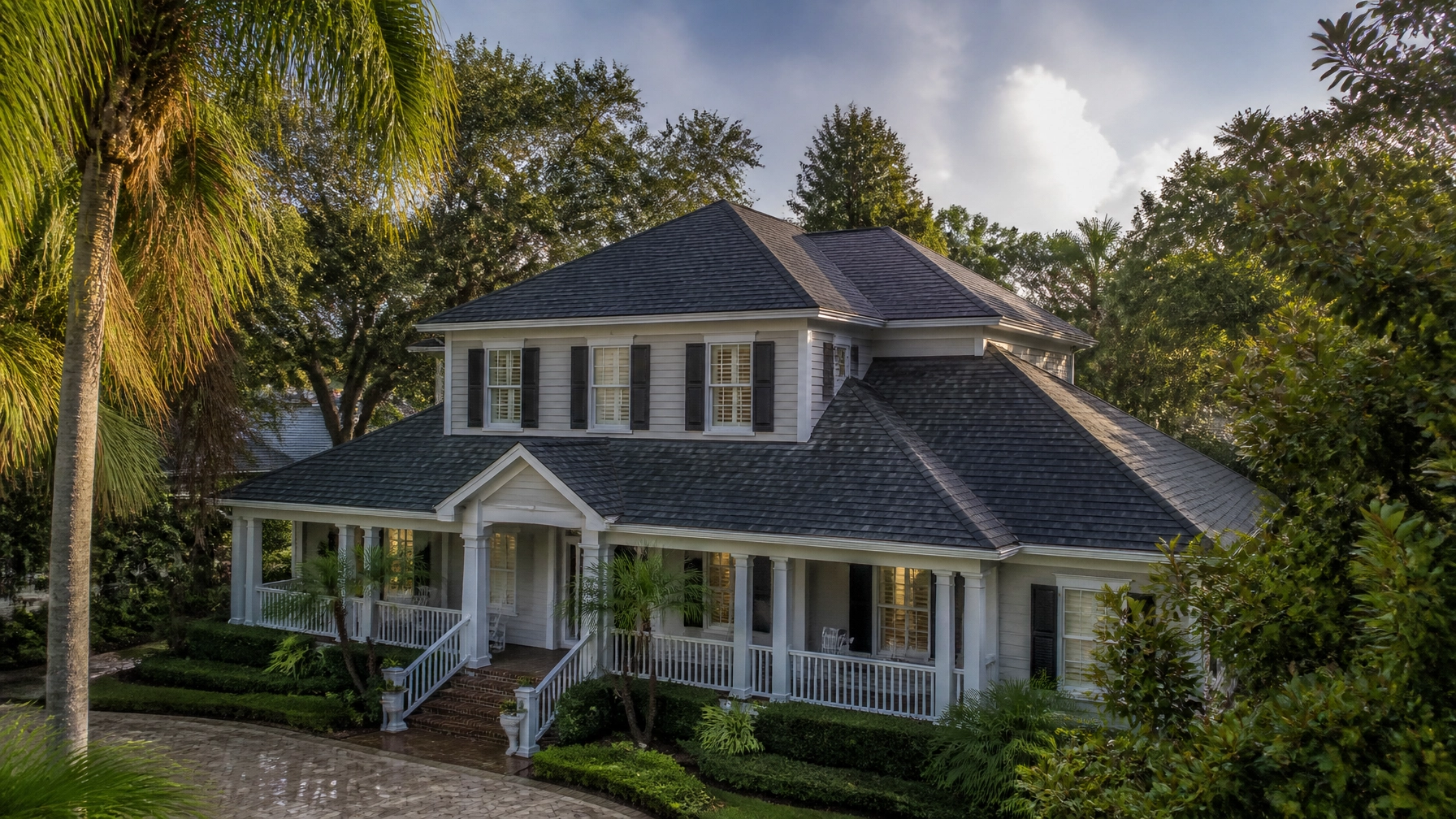
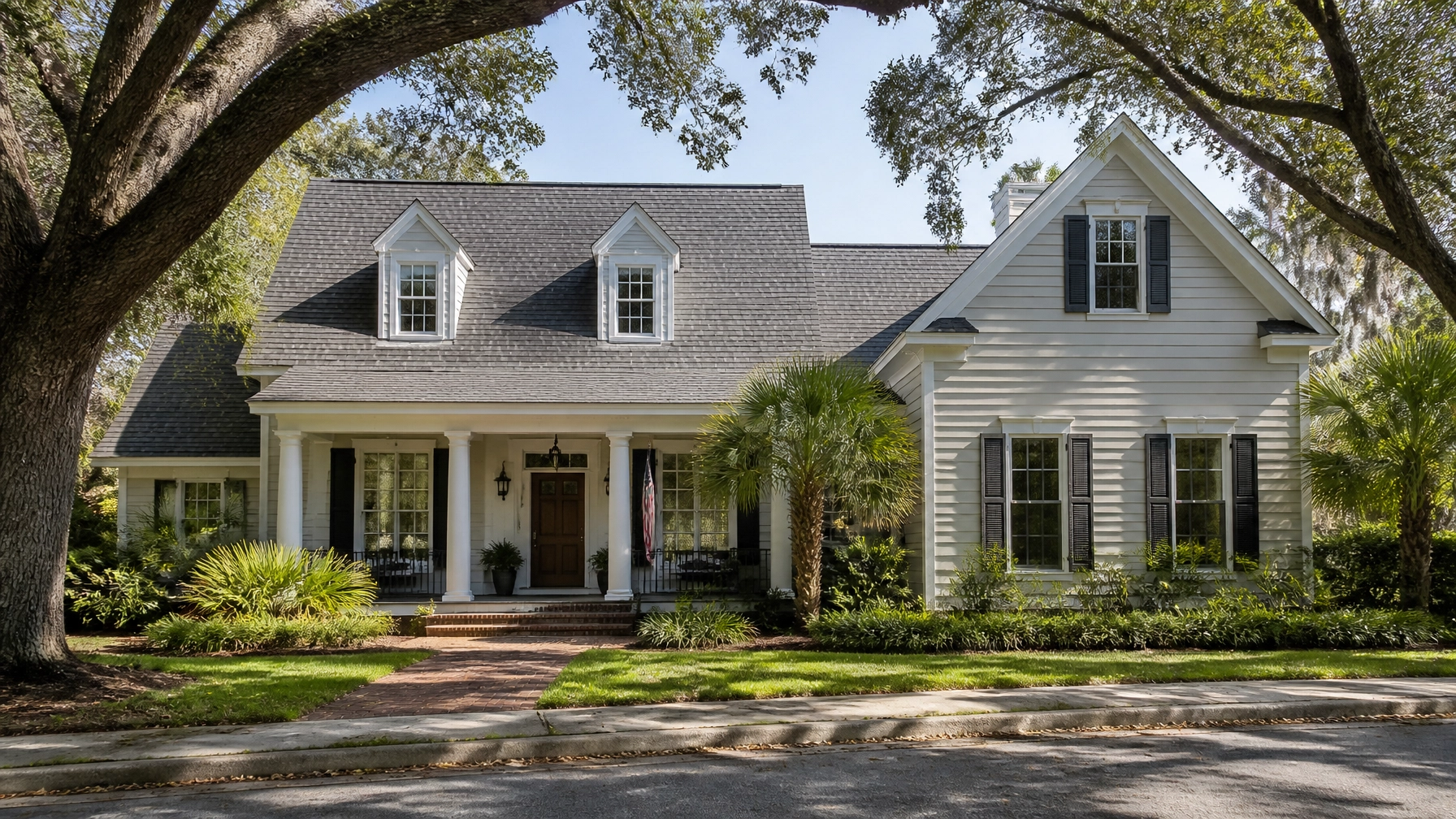
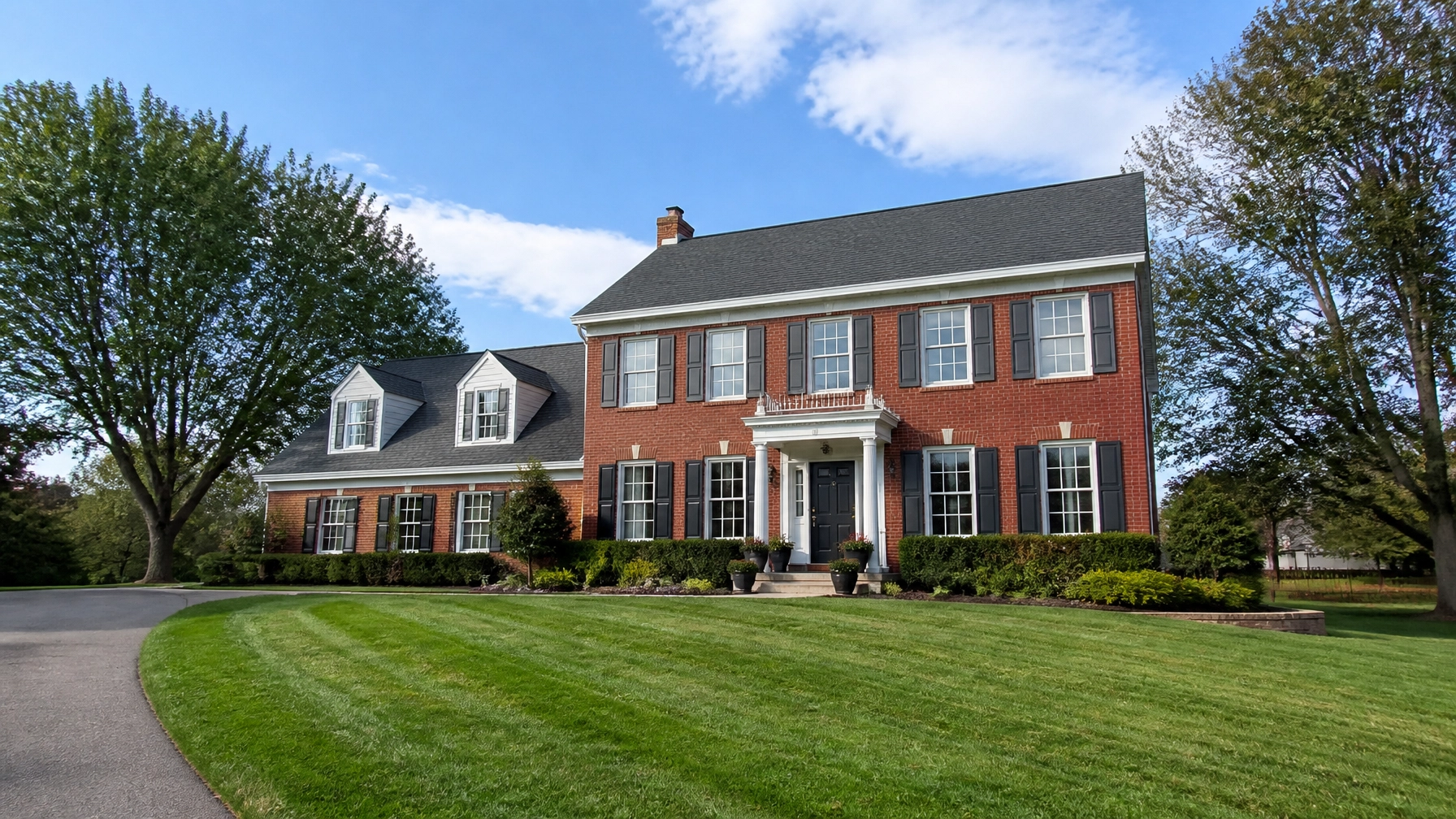
    Columbia SC colonial-style home in Forest Acres or Shandon with a new dimensional architectural shingle roof

    How a new roof supports home value

    1. It improves first impressions and curb appeal

    The roof is one of the largest visible surfaces on a home. Curling shingles, dark algae streaks, missing tabs, exposed underlayment, and mismatched repairs can make an otherwise well-maintained property look older.

    A clean, consistent roof can improve:

    • Exterior appearance in listing photos
    • Buyer perception during the first showing
    • Coordination with brick, siding, shutters, and trim
    • Overall maintenance presentation

    This is particularly relevant for older Columbia housing stock. Homes in established neighborhoods often have mature landscaping and distinctive architecture, but they may also have roofs installed 15–30 years ago.

    Architectural shingles in a balanced charcoal, weathered wood, or brown-gray tone can preserve a traditional appearance while giving the home a fresher exterior.

    2. It reduces inspection uncertainty

    A roof near the end of its service life can create uncertainty even when it is not actively leaking. Buyers and inspectors may identify:

    • Brittle or missing shingles
    • Granule loss
    • Soft decking
    • Deteriorated flashing
    • Poor attic ventilation
    • Water staining
    • Signs of previous storm damage

    A documented replacement removes some of that uncertainty. Keep the permit records, material invoices, warranty documents, before-and-after photos, and final inspection approval.

    A new roof does not eliminate every inspection concern, but it can reduce the likelihood that the roof becomes the main reason for a delayed closing or negotiated credit.

    3. It may support insurance readiness

    Columbia roofs face intense sun, humid summers, heavy thunderstorms, occasional hail, and wind-driven rain. Insurers may pay close attention to roof age and condition when writing or renewing coverage.

    A newer roof may make the property easier to insure, but homeowners should not assume it will automatically produce lower premiums. Ask your insurer about:

    • Roof-age requirements
    • Wind or hail documentation
    • Impact-resistant shingle discounts
    • Metal-roof eligibility
    • Required installation records

    Insurance coverage for storm damage also depends on the policy, deductible, exclusions, maintenance history, and cause of loss.

    4. It can reduce buyer-requested credits

    Suppose a buyer expects to spend $15,000 on a roof shortly after closing. Even if the roof is still functional, that expected expense affects the buyer’s offer.

    A replacement roof can help avoid:

    • A full replacement credit
    • Escrow holdbacks
    • Price renegotiation
    • Requests for temporary repairs
    • Delays while contractors inspect the property

    The financial benefit may appear as a stronger offer or smoother negotiation rather than a simple dollar-for-dollar increase in appraised value.

    Columbia roof replacement cost and ROI snapshot

    The table below is for planning purposes. Your actual roof area may be larger than your home’s interior floor area because of overhangs, roof pitch, garages, porches, and multiple slopes.

    Roofing option Typical 2026 planning cost Value and ROI perspective
    3-tab asphalt (Budget) Lower-cost option; often below architectural shingles Affordable protection, but less visual impact and shorter expected life
    Architectural shingles (Popular) $4.30–$7.60/sq. ft.; approximately $12,000–$22,000 total for many standard 2,000-square-foot homes Broad buyer appeal and the strongest national resale benchmark; 68% recapture is a benchmark, not a guarantee
    Standing-seam metal (Premium) $11.50–$16.00/sq. ft.; may exceed the standard shingle planning range Long service life, strong storm performance, and potential energy benefits; higher upfront cost may not fully return at resale
    Designer or specialty roofing (Premium) Varies substantially by material and installation Makes the most sense when the home’s architecture and neighborhood support the upgrade

    The final price depends on roof squares, pitch, complexity, tear-off, decking repairs, flashing, ventilation, accessibility, permits, and local labor.

    Use the Columbia satellite roof estimate for a fast property-specific starting point, or compare scenarios with the roof cost calculator.

    What is the best roof for home value in Columbia?

    For most homeowners focused on resale value, architectural asphalt shingles are the practical choice.

    They offer:

    • Familiar appearance for Columbia buyers
    • Multiple colors and profiles
    • Lower upfront cost than metal
    • Easier spot repairs
    • Strong compatibility with ranch, colonial, bungalow, and traditional homes
    • A national asphalt shingle recapture benchmark of approximately 68%

    Standing-seam metal may be the better long-term ownership choice if you plan to remain in the home for 10 or more years, want low maintenance, or prioritize heat reflection and durability. It can also suit modern homes and select historic or architecturally distinctive properties.

    However, a premium material is not automatically a better resale investment. The roof should fit the home, neighborhood, buyer expectations, and local price range. Over-improving beyond comparable homes can weaken the financial return.

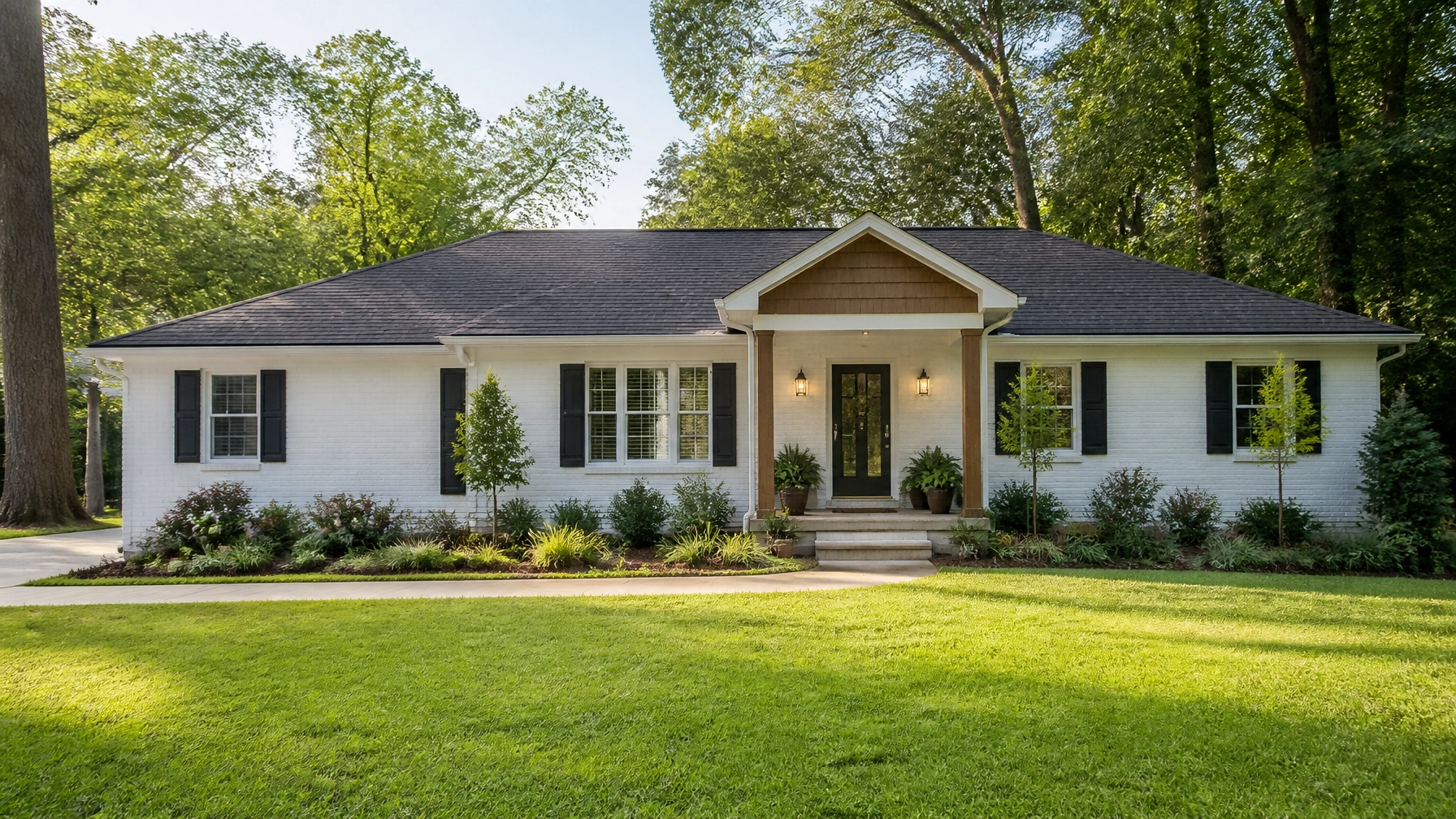
    Columbia South Carolina Rosewood-style bungalow with a dark standing-seam metal roof and mature landscaping

    Columbia-specific roof replacement guidance

    Account for heat, humidity, and algae

    Columbia’s hot, humid summers and strong UV exposure accelerate surface aging. Frequent moisture can also encourage algae staining, especially on shaded or north-facing roof planes.

    Consider:

    • Algae-resistant architectural shingles
    • Proper ridge and soffit ventilation
    • Light or moderately reflective colors
    • Regular gutter and downspout maintenance
    • Tree trimming to improve drying and airflow

    Prepare for thunderstorms and hail

    Heavy thunderstorms can expose weak flashing, damaged pipe boots, loose ridge caps, and aging shingles. Ask contractors about:

    • High-wind installation requirements
    • Impact-resistant shingle options
    • Synthetic underlayment
    • Proper flashing replacement
    • Decking inspection after tear-off

    Do not assume a “Class 4” impact rating guarantees no storm damage. It is one factor in system performance, installation quality, and insurance evaluation.

    Verify permits and contractor credentials

    Inside Columbia city limits, confirm current requirements with the City of Columbia permit applications and checklists. A full replacement or re-cover commonly requires a permit and inspection. Properties in historic or design districts may need additional approval.

    Before signing, request:

    • South Carolina contractor license information
    • General liability insurance certificate
    • Workers’ compensation proof or valid exemption documentation
    • Written scope of work
    • Material brand, profile, and color
    • Tear-off and decking-repair terms
    • Warranty details
    • Permit and inspection responsibilities

    If the home is near Elmwood, Shandon, or another area with older or historically significant properties, confirm whether material, color, or design restrictions apply.

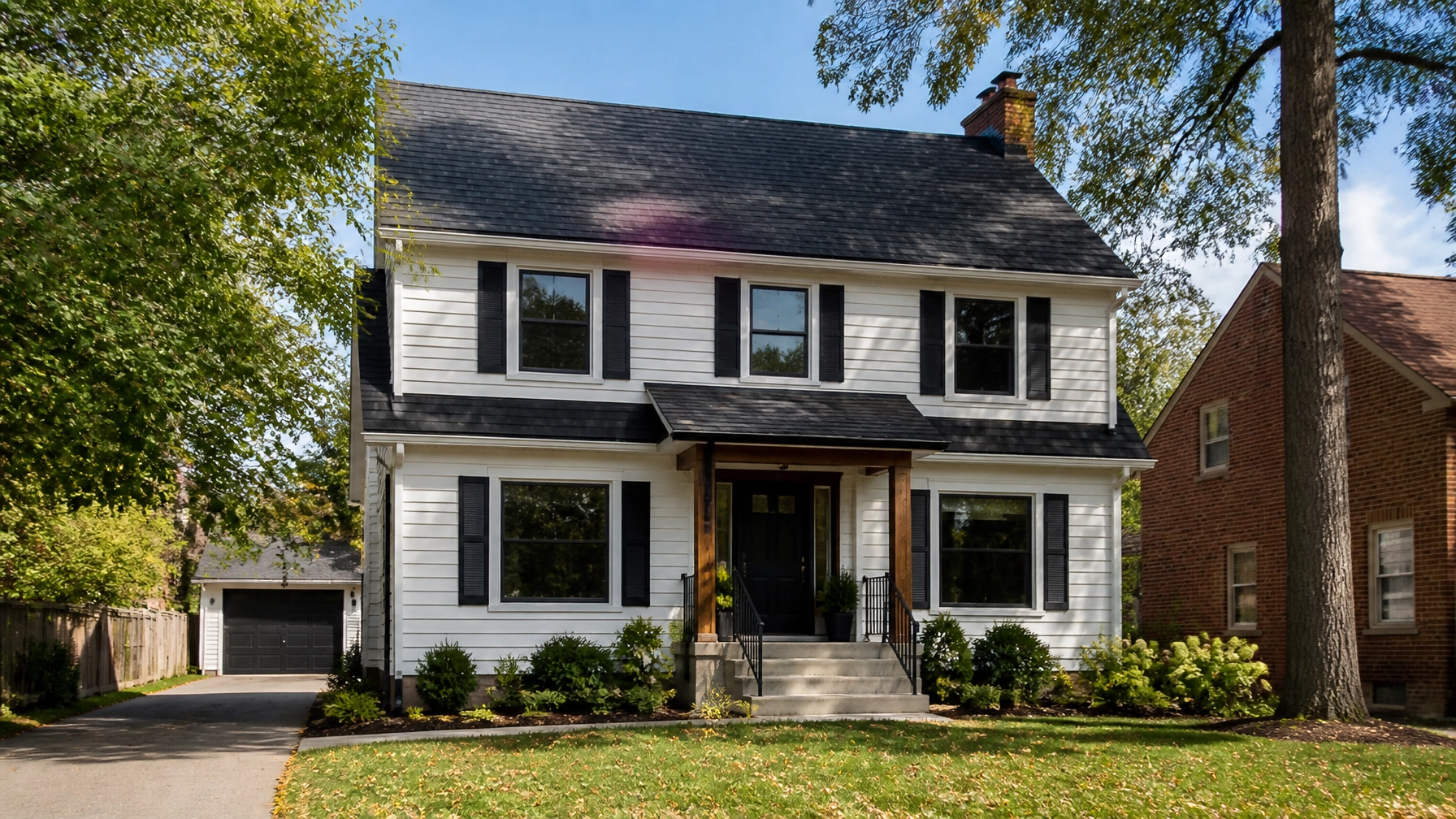
    Renovated older Columbia SC residential home with algae-resistant architectural shingles, restored trim, and mature shade trees

    A practical roof ROI checklist

    Before replacing the roof solely for resale, work through these steps:

    1. Measure the roof and establish a realistic budget. Satellite measurements are typically 90–95% accurate, and results take about 60 seconds, but they are still a planning tool.
    2. Get a contractor inspection. Final pricing requires an on-site review of decking, flashing, ventilation, gutters, and storm damage.
    3. Compare at least two or three written proposals.
    4. Choose a material that fits nearby comparable homes.
    5. Document the project from tear-off through final inspection.
    6. Ask your insurer whether the new roof changes eligibility or discounts.
    7. Avoid assuming the project will increase value by its full cost.

    Frequently asked questions

    Does a new roof increase home value in Columbia, SC?

    It can support value by improving curb appeal, reducing inspection concerns, increasing buyer confidence, and limiting repair credits. The amount depends on the roof’s prior condition, the replacement material, installation quality, comparable sales, and market conditions.

    How much does a roof replacement cost in Columbia in 2026?

    For a standard 2,000-square-foot home, plan on approximately $12,000–$22,000 total for many replacement projects. Complex roofs, structural repairs, premium materials, and multiple tear-off layers can push the total higher.

    Is the 68% roof ROI guaranteed?

    No. The approximately 68% asphalt shingle recapture rate is a national benchmark from the 2025 Cost vs. Value data. It is not a guaranteed local result, appraisal adjustment, or promise of profit in Columbia.

    Are architectural shingles or metal better for resale?

    Architectural shingles are usually the safer resale choice because they cost less and appeal to a wider range of buyers. Metal can be a strong long-term ownership choice, but its higher installation cost may not be fully reflected in the resale price.

    Can I get a Columbia roof estimate without a contractor visit?

    Yes. Enter your address into the free Columbia satellite estimate tool to receive a starting price in about 60 seconds. A contractor inspection is still required for final pricing and scope.

    Start with a Columbia-specific estimate

    A roof replacement can be a sound home-maintenance decision and a useful resale strategy when the project is appropriately priced, professionally installed, and matched to the property.

    Get a free, no-credit-card roof estimate using satellite-powered measurements. See your roof size, compare material options, and review a realistic low-to-high range before scheduling contractor visits.

    Get My Free Columbia Roof Estimate

    Sources and local references

  • Daily FAQ Blitz – Slot 3: AEO FAQ Quick Answers for Tampa, FL Homeowners (2026)

    Daily FAQ Blitz – Slot 3: AEO FAQ Quick Answers for Tampa, FL Homeowners (2026)

    Tampa homeowners should budget approximately $9,000–$25,000 for a typical 2,000-square-foot roof replacement in 2026. Architectural shingles generally cost about $4.50–$9 per square foot, while standing seam metal can range from approximately $9–$25 per square foot. Roof size, pitch, complexity, hurricane-code upgrades, tear-off work, and material selection all affect the final price.

    That range applies across Tampa Bay, including homes near Hyde Park, Davis Islands, South Tampa, Westchase, Carrollwood, New Tampa, and Brandon. Whether your property is in ZIP code 33602, 33604, 33606, 33609, 33611, 33614, 33624, 33626, or 33647, the fastest way to establish a realistic budget is to begin with a property-specific estimate.

    Below are quick answers to the most common Tampa roofing questions for 2026.

    Tampa Roof Replacement Cost at a Glance

    Roofing option Approximate Tampa price for a 2,000 sq. ft. roof Context
    3-tab asphalt shingles Below the typical architectural range Budget
    Architectural shingles $9,000–$22,000 Popular
    Full roof replacement overall $9,000–$25,000 Common planning range
    Standing seam metal $17,000–$36,000+ Premium
    Tile roofing Varies significantly by tile type and installation Florida classic

    These are planning ranges, not binding contractor quotes. A roof’s actual measured area may be larger than the home’s footprint because of slopes, overhangs, valleys, and complex sections.

    New architectural shingle roof on a South Tampa-style bungalow

    1. How much does a new roof cost in Tampa, FL, in 2026?

    Quick answer: A typical Tampa roof replacement costs about $9,000–$25,000, with architectural shingles often landing around $9,000–$22,000 for a 2,000-square-foot roof.

    The low end may apply to a straightforward roof using basic materials with limited tear-off work. Higher costs are common when the roof has multiple levels, steep slopes, dormers, valleys, skylights, or damaged decking.

    Standing seam metal is a premium option. Tampa homeowners can expect roughly $17,000–$36,000 or more, depending on panel gauge, finish, roof geometry, underlayment, and hurricane-related installation requirements.

    For a broader starting point, use the Tampa roof estimate page or the company’s roof cost calculator.

    2. What roofing material is best for Tampa’s climate?

    Quick answer: Architectural shingles, standing seam metal, and tile are the most common choices for Tampa homes.

    Tampa roofs must handle:

    • Hurricane-season wind
    • Heavy afternoon rain
    • High UV exposure and heat
    • Humidity and moisture
    • Salt air near Tampa Bay
    • Oak and palm debris
    • Mold and algae growth conditions

    Architectural shingles (Popular): A practical balance of cost, appearance, and availability. Many homeowners choose impact-resistant or high-wind-rated versions.

    Standing seam metal (Premium): Durable, reflective, and long-lasting. Metal can perform well in heat and severe weather when properly engineered and fastened.

    Tile (Florida classic): Concrete and clay tile are common in Florida and offer strong curb appeal. Tile systems can be heavier and may require additional structural and installation considerations.

    The right material depends on your budget, home design, insurance requirements, roof structure, and long-term ownership plans.

    3. What Florida license should a Tampa roofing contractor have?

    Quick answer: Verify that the contractor holds an active Florida roofing license through the Department of Business and Professional Regulation, or DBPR.

    Florida roofing licenses generally fall into two categories:

    • CCC , Certified Roofing Contractor: Authorized to work statewide in Florida.
    • RC , Registered Roofing Contractor: Authority is limited to the specific local jurisdiction or jurisdictions listed on the registration.

    Before signing a contract, use the official DBPR license lookup. Confirm:

    • The license is listed as Current, Active
    • The license type matches the roofing work
    • The business name and qualifier are correct
    • A registered contractor is authorized to work in your Tampa-area jurisdiction
    • The contractor carries current general liability and workers’ compensation coverage

    A low price is not useful if the contractor is not properly licensed, insured, or responsible for permitting.

    4. Do I need a permit to replace a roof in Tampa or Hillsborough County?

    Quick answer: Yes. A full roof replacement requires a permit, and roofing work over 500 square feet generally requires one in Tampa and Hillsborough County.

    The City of Tampa requires a roofing permit for new roof installation, re-roofing, re-covering, or repair work exceeding 500 square feet. Full replacements almost always exceed that threshold.

    Inside Tampa city limits, permit applications are commonly submitted through the City of Tampa Construction Services portal, which uses Accela. In unincorporated Hillsborough County, homeowners and contractors typically use the county’s online permitting system.

    Roofing inspections may include:

    • Dry-in or underlayment inspection
    • Fastening or nailing inspection
    • Final roof inspection

    Virtual Vu-Spex inspections are common for qualifying roofing work in Hillsborough County, although availability depends on the current project and county approval.

    Ask your contractor in writing whether the proposal includes permit fees, permit applications, and required inspections.

    5. What hurricane-related roof upgrades are important in Tampa?

    Quick answer: Tampa roof systems must be installed to meet the applicable Florida Building Code wind and water-resistance requirements.

    Depending on the property’s exact location and design, Tampa-area homes may face wind design requirements in the range of approximately 130–140+ mph. Common code and storm-resistance considerations include:

    • Six-nail fastening patterns for qualifying asphalt shingles
    • Approved high-wind installation methods
    • Secondary water barrier, or SWB, underlayment
    • Proper drip edge and flashing installation
    • Wind-rated roof coverings
    • Correct attachment at roof edges, hips, and ridges

    The Florida Building Code is updated over time. Your contractor should identify the code requirements that apply to your address and roof assembly rather than treating every Tampa home as identical.

    For homes near the coast or exposed to salt air, material finish and corrosion resistance also deserve attention.

    Modern Tampa Bay ranch home with a new standing seam metal roof

    6. Can a new roof reduce my Florida insurance premium?

    Quick answer: It may. A code-compliant roof and documented wind-mitigation features can qualify for insurance credits, but savings vary by insurer.

    Florida homeowners may receive discounts for features such as:

    • Hip roof design
    • Enhanced roof-deck attachment
    • Secondary water resistance
    • Strong roof-to-wall connections
    • Impact-protected windows and doors
    • Class 4 impact-resistant shingles

    A wind-mitigation inspection is documented using the Florida Office of Insurance Regulation’s OIR-B1-1802 form. Depending on the home and carrier, total wind-mitigation savings are often discussed in the range of approximately 15%–35%, but no discount is guaranteed.

    After a replacement, ask whether your roof qualifies for an updated wind-mitigation inspection. Then submit the completed documentation directly to your insurer.

    Also note that roofs over 15–20 years old may be settled at Actual Cash Value under some policies rather than full replacement cost. Review your policy before assuming storm damage will be paid in full.

    7. How long do I have to report storm damage in Florida?

    Quick answer: Florida generally gives homeowners 12 months from the date of a storm to report a new or reopened property claim, with a longer period for certain supplemental claims.

    If a hurricane, tropical storm, or severe thunderstorm damages your Tampa roof:

    1. Photograph visible damage from the ground.
    2. Use temporary protection if water is entering the home.
    3. Avoid climbing onto the roof.
    4. Notify your insurer promptly.
    5. Arrange a professional roof inspection.
    6. Keep repair receipts and written communications.

    Florida’s claim rules can change and policy language matters. Confirm the current deadline with your insurance company or a qualified insurance professional. Do not delay simply because damage is not visible from the street.

    8. Can I get a Tampa roof estimate without a contractor visit?

    Quick answer: Yes. Get My Roof Estimate Now provides a free satellite-powered estimate in under 60 seconds.

    Enter your Tampa address at getmyroofestimatenow.com. The platform uses satellite imagery to measure roof size, pitch, and complexity. It then provides:

    • 90%–95% measurement accuracy
    • Low, middle, and high price ranges
    • Material comparisons for options such as shingles, metal, synthetic roofing, and coatings
    • Regional Tampa pricing factors
    • No credit card requirement
    • No upfront contractor visit

    The estimate is designed for budgeting and planning. A licensed roofing contractor will still need to confirm the roof’s condition, decking, flashing, ventilation, and code requirements before construction begins.

    Florida home with a new concrete tile roof and tropical landscaping

    Final Tampa Roof Replacement Checklist

    Before approving a project, confirm that you have:

    • A measured roof area, expressed in squares
    • A written material and labor breakdown
    • Tear-off and disposal costs
    • Decking and hidden-damage allowances
    • Permit and inspection responsibilities
    • Contractor license and insurance verification
    • Wind-rating and underlayment details
    • Warranty terms
    • A realistic project timeline
    • Insurance documentation, if storm damage is involved

    Get a Free Tampa Roof Estimate in 60 Seconds

    Tampa homeowners in Hyde Park, Davis Islands, South Tampa, Westchase, Carrollwood, New Tampa, Brandon, and throughout ZIP codes 33602 through 33647 can get a property-specific starting range without scheduling a contractor visit.

    Visit getmyroofestimatenow.com for a free Tampa roof replacement estimate in under 60 seconds. The estimate uses satellite measurements, provides low-middle-high pricing, requires no credit card, and can connect you with verified, licensed, and insured local contractors.

  • Daily FAQ Blitz – Slot 2: AEO FAQ Quick Answers for Columbus, GA Homeowners (2026)

    Daily FAQ Blitz – Slot 2: AEO FAQ Quick Answers for Columbus, GA Homeowners (2026)

    Columbus, Georgia: known as the “Fountain City”: has a demanding roofing climate. Hot, humid summers, strong thunderstorms, hail, high winds, algae growth, and occasional tornadoes all affect roof life and replacement pricing. In 2026, Columbus homeowners can expect a typical architectural shingle replacement to cost about $10,000–$16,500, depending on roof size, pitch, materials, and hidden repairs.

    Get a free satellite-powered roof estimate in about 60 seconds: no credit card required.

    1. How much does roof replacement cost in Columbus, GA, in 2026?

    Quick answer: Architectural shingle replacement costs about $425–$650 per roofing square in Columbus. A 25-square roof may cost approximately $10,625–$16,250, with most full replacement projects landing between $10,000 and $16,500.

    A roofing square equals 100 square feet of roof surface: not 100 square feet of living space.

    Columbus price tiers

    • Budget ($425–$500 per square):
      • Basic architectural shingles
      • Simple roof layout
      • Standard underlayment and ventilation
    • Popular ($500–$600 per square):
      • Upgraded architectural shingles
      • Improved underlayment
      • Better attic ventilation
      • More detailed flashing work
    • Premium ($600–$650+ per square):
      • Class 4 impact-resistant shingles
      • Standing-seam metal
      • Complex roof designs
      • Higher-end warranties and accessories

    Your final estimate may also include:

    • Tear-off and disposal
    • Decking repairs
    • New flashing
    • Drip edge
    • Ridge vents or other ventilation upgrades
    • Permit fees
    • Chimney, skylight, or pipe flashing

    Columbus pricing also reflects local labor availability, heat, humidity, hail exposure, and the roof’s pitch and complexity. Use the roof cost calculator to establish an instant starting range before collecting contractor bids.

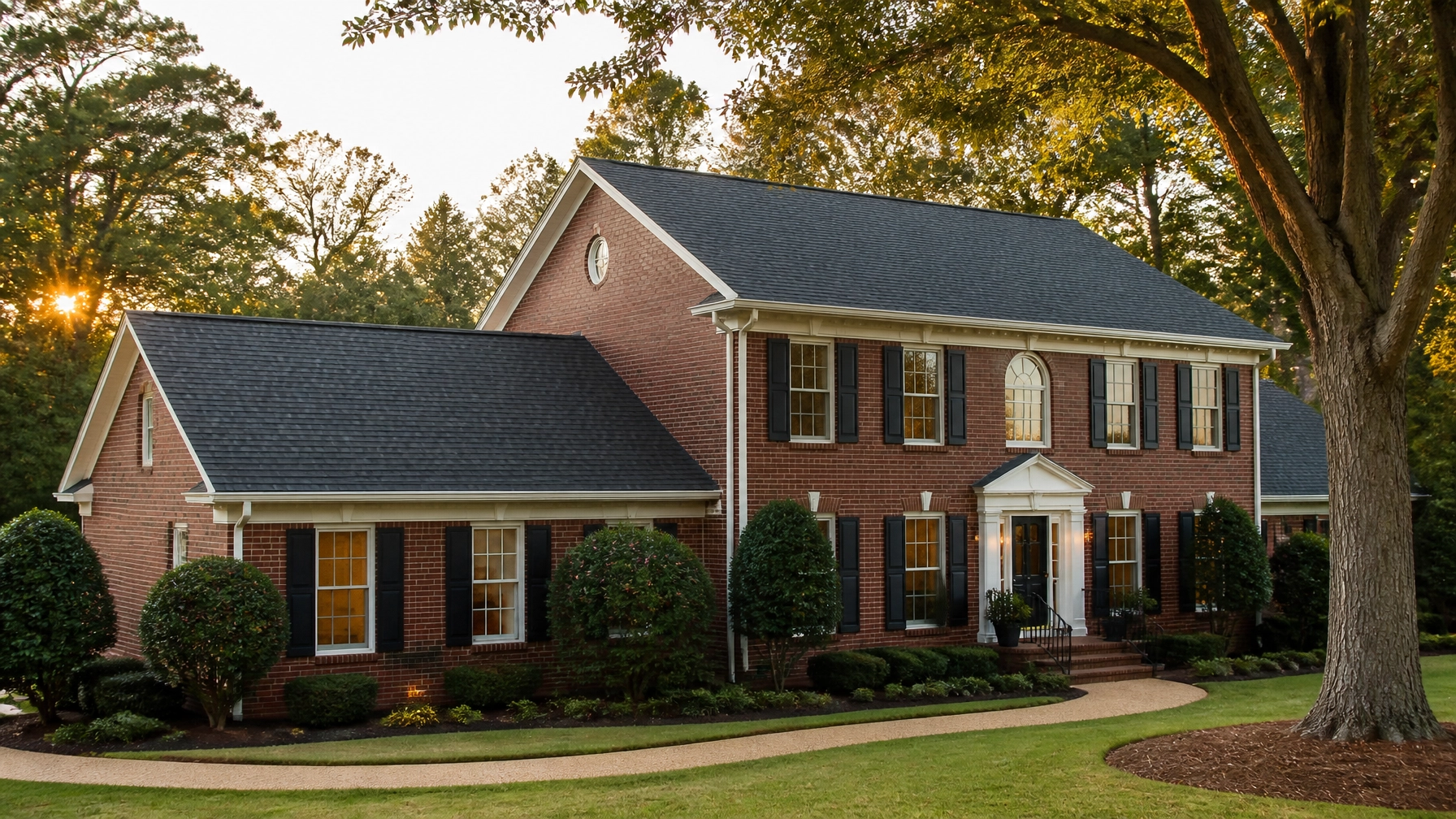
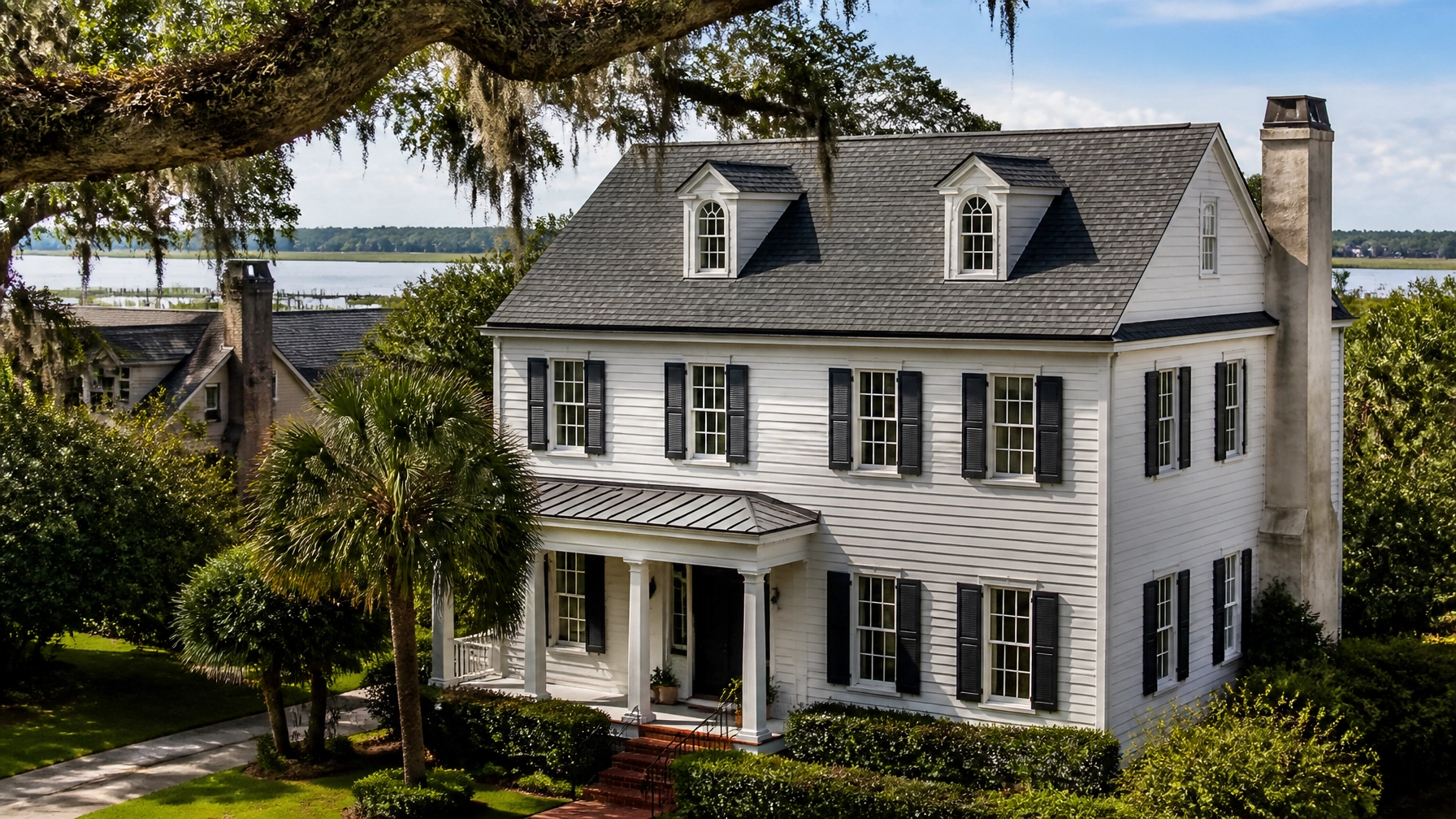
    Classic Columbus, Georgia colonial home with a new dimensional shingle roof

    2. Do I need a permit for a roof replacement in Columbus?

    Quick answer: Yes. A full re-roof generally requires a building permit through the Columbus Consolidated Government Inspections & Code department and its Self Service/Citizen Access portal.

    The work must comply with Georgia State Minimum Construction Codes.

    Permit basics

    • Full tear-offs and replacements typically require a permit.
    • Minor maintenance, such as patching a small area or replacing a few shingles, may be exempt.
    • Do not assume an exemption applies to your project without confirming first.
    • Permit applications generally require contractor and project information.
    • Skipping a required permit can trigger double fees and create complications during resale or future insurance claims.

    Ask your contractor:

    “Will you pull the Columbus permit, and is the permit fee included in the written estimate?”

    Also confirm whether the property is inside Columbus city limits or in unincorporated Muscogee County. Requirements and approval procedures can vary by jurisdiction.

    3. Does my Columbus roofing contractor need a Georgia license?

    Quick answer: Georgia does not issue a separate state “roofing contractor” license. Roofing is generally treated as a specialty trade, but contractors performing residential work of $2,500 or more should hold the appropriate residential or general contractor license where required.

    Relevant license categories may include:

    • Residential Basic
    • Residential Light Commercial
    • General Contractor

    Columbus permit applications may request this information. A roofing company may also work under a licensed qualifying agent, so ask exactly which business or individual holds the license.

    Verify before signing

    Use the Georgia Secretary of State license verification system to check:

    • License status
    • License type
    • Expiration date
    • Contractor or qualifying-agent name
    • Any listed disciplinary history

    Also require:

    • General liability insurance
    • Workers’ compensation coverage
    • Local Columbus-area references
    • A written, itemized scope of work
    • Material specifications and warranty details
    • Confirmation of who pulls the permit
    • Identification of the crew or subcontractors performing the work

    A low bid is not a substitute for proper documentation.

    4. What roofing material is best for Columbus weather?

    Quick answer: For most Columbus homes, algae-resistant architectural shingles offer a practical balance of price and performance. Class 4 impact-resistant shingles add hail protection, while standing-seam metal provides long service life, heat reflectivity, and strong wind performance.

    Columbus experiences hot, humid summers and frequent thunderstorms. On June 18, 2026, an EF-1 tornado with estimated 90 mph winds tracked through Muscogee County near Midland and Upatoi, causing roof and tree damage. The National Weather Service storm survey provides additional event details.

    Common material choices

    • Architectural shingles (Popular):
      • Broad color selection
      • Algae-resistant options
      • Lower initial cost
      • Suitable for many ranch and colonial homes
    • Class 4 shingles (Storm-focused):
      • Better resistance to impact damage
      • Useful in hail-prone areas
      • May support insurance savings, depending on the carrier
    • Standing-seam metal (Premium):
      • Long expected service life
      • Reflects more solar heat
      • Strong wind resistance when correctly installed
      • Higher upfront cost

    Ventilation is critical in Georgia. A balanced intake-and-exhaust system helps manage attic heat and moisture, reducing stress on roofing materials.

    Georgia insurers must offer a wind-mitigation premium discount or rate reduction for homes certified to IBHS FORTIFIED or another approved standard. The exact amount varies by carrier. Some programs cite approximately 5%–10% of the wind portion of the premium, but homeowners must request the discount and provide certification.

    Modern Columbus, Georgia home with a new standing-seam metal roof

    5. Will insurance pay to match shingles after storm damage?

    Quick answer: Not automatically. Georgia has no shingle-matching law that requires an insurer to replace an entire roof solely because new shingles may look different.

    Coverage depends on your policy and the documented damage.

    Review these policy details

    • Like-kind-and-quality language
    • Replacement cost value (RCV) versus actual cash value (ACV)
    • Wind and hail deductibles
    • Matching or uniform-appearance provisions
    • Applicable exclusions and limitations

    Georgia also does not permit appraisal to resolve coverage disputes. That makes documentation especially important.

    Document before authorizing work

    1. Photograph roof and interior damage.
    2. Schedule an inspection with a qualified contractor.
    3. Request the adjuster’s written scope.
    4. Ask whether the existing shingle line and color are still available.
    5. Obtain a detailed contractor estimate.
    6. Compare the contractor’s scope with the insurance estimate.

    Do not authorize replacement based only on a verbal promise that insurance will cover the entire project.

    6. How accurate is a satellite roof estimate?

    Quick answer: A satellite-powered estimate can be approximately 90%–95% accurate for roof measurements and can produce a useful price range in about 60 seconds.

    Satellite imagery technology can evaluate:

    • Roof area
    • Roofing squares
    • Pitch
    • Number of roof sections
    • Layout complexity
    • Material options
    • Regional pricing factors

    This makes an instant estimate useful for budgeting, comparing bids, and deciding whether a replacement fits your plans.

    However, satellite imagery cannot reliably identify every on-site condition. It may not reveal:

    • Rotten or sagging decking
    • Hidden flashing failures
    • Active leaks
    • Multiple shingle layers
    • Interior moisture damage
    • Ventilation deficiencies
    • Structural problems

    Use the result as a fast, accurate planning benchmark: not as a replacement for a final physical inspection and written contract.

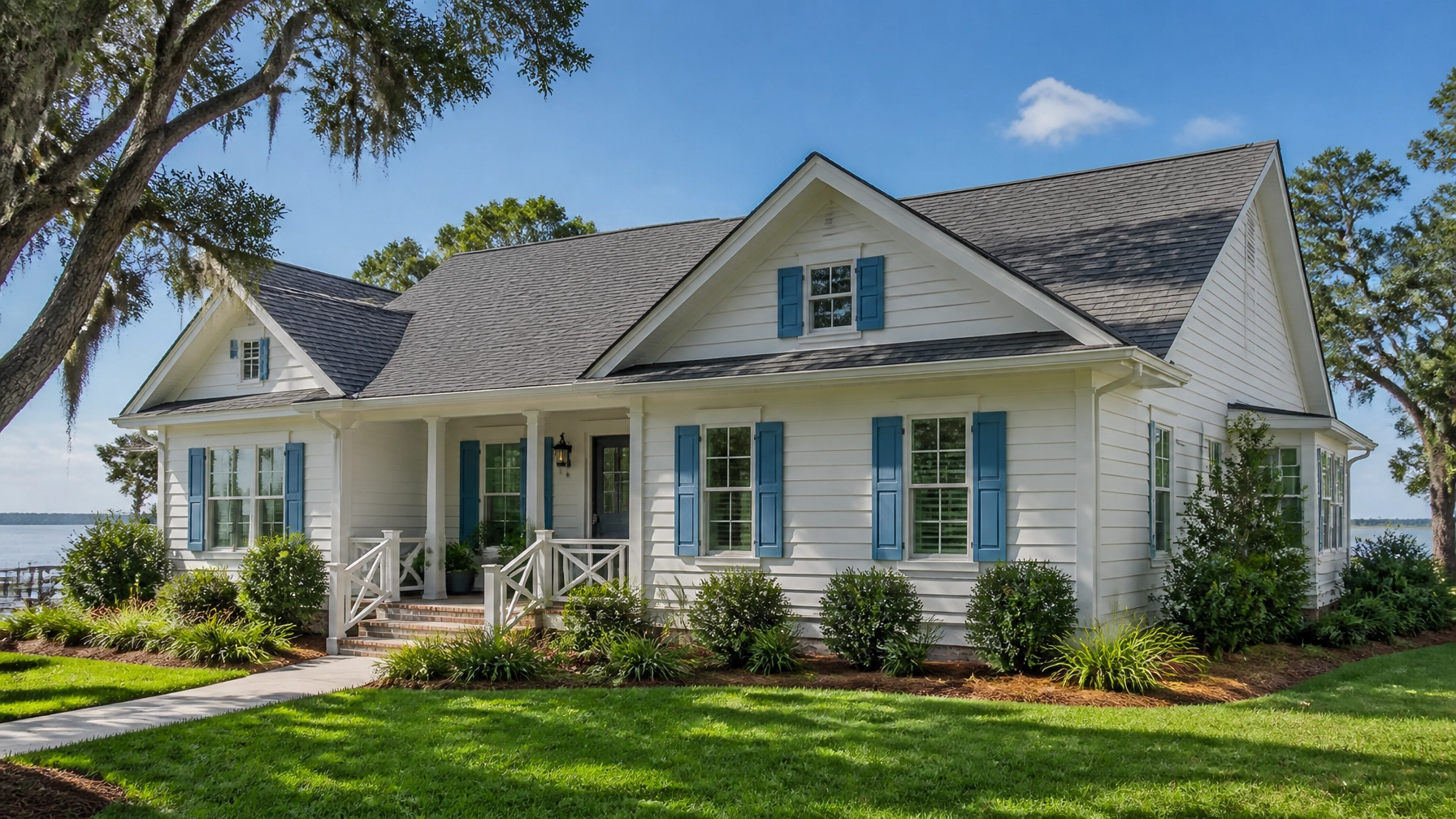
    Columbus-area ranch home with newly installed impact-resistant architectural shingles

    7. Should I repair or replace my Columbus roof?

    Quick answer: Repair an isolated problem when the roof is relatively young and structurally sound. Replacement is usually more practical when damage affects multiple slopes, the roof is near the end of its service life, or repair costs are becoming substantial.

    Repair may make sense when:

    • Damage affects less than approximately 25% of the roof.
    • The roof is still relatively young.
    • The decking is sound.
    • There are no recurring leaks.
    • Shingles are not brittle or extensively curled.
    • The repair costs well below half the replacement price.

    Replacement may make sense when:

    • Damage affects multiple slopes or more than approximately 25% of the roof.
    • The roof is near the end of its typical 15–25 year Georgia-climate life.
    • Leaks return after previous repairs.
    • Shingles are curled, brittle, or losing large amounts of granules.
    • Storm damage is widespread.
    • Repair costs approach approximately 30% or more of replacement cost.

    Replacement also creates an opportunity to install algae-resistant or Class 4 shingles, improve ventilation, upgrade flashing, and pursue applicable wind-mitigation insurance credits.

    Get your Columbus roof number before scheduling contractors

    You do not need to wait days for several contractor visits just to establish a budget. Get a satellite-based measurement and transparent low-middle-high price range first, then use an on-site inspection to confirm the final scope.

    Enter your Columbus, GA address and get a free roof replacement estimate in about 60 seconds.

  • Daily FAQ Blitz – Slot 1: AEO FAQ Quick Answers for El Paso, TX Homeowners (2026)

    Daily FAQ Blitz – Slot 1: AEO FAQ Quick Answers for El Paso, TX Homeowners (2026)

    Categories: Roofing Costs, Roof Replacement, El Paso Roofing, Texas Home Improvement, AEO FAQs
    Tags: El Paso TX roofing, roof replacement cost 2026, roofing permits El Paso, hail damage, metal roofing, Class 4 shingles, roof estimate

    El Paso Roof Replacement Cost Summary (2026)

    For a typical 2,000-square-foot roof surface in El Paso:

    • Architectural asphalt shingles (Popular): approximately $4.50–$10.00 per square foot installed
    • Standing-seam metal (Premium): approximately $7.00–$16.00 per square foot installed
    • Architectural shingle replacement: about $9,000–$18,500
    • Standing-seam metal replacement: about $14,000–$32,000
    • Common company planning range: approximately $7,000–$18,500 for many El Paso replacement projects

    Your actual price depends on roof surface area, pitch, valleys, penetrations, tear-off, decking condition, material choice, labor, and accessibility. A home’s living area is not the same as its roof area.

    Get an address-specific starting point with Get My Roof Estimate Now. Satellite imagery measures roof size, pitch, and complexity with approximately 90–95% accuracy, then provides low-middle-high pricing in about 60 seconds.

    1. How much does a new roof cost in El Paso in 2026?

    A typical El Paso roof replacement costs approximately $9,000–$18,500 with architectural shingles or $14,000–$32,000 with standing-seam metal for a 2,000-square-foot roof surface.

    The final estimate can change because of:

    • Roof size, measured in squares; one square equals 100 square feet
    • Steep or difficult roof pitch
    • Multiple valleys, dormers, skylights, and penetrations
    • Tear-off and disposal of old roofing
    • Rotten or damaged decking
    • Flashing, ventilation, gutters, and code upgrades
    • Local labor and material availability

    Use the Roof Cost Calculator for a general planning range, or use the satellite tool for property-specific pricing.

    2. Does El Paso require a permit for a roof replacement?

    Yes. A full roof replacement generally requires a building permit inside El Paso city limits. The city’s exemption applies when replacing less than 25% of the existing roof covering on a residential structure. Minor repairs, such as isolated patching or sealing, are generally treated differently.

    The City of El Paso’s FY 2026 fee schedule lists a roofing permit at $118 plus an applicable technology fee. Additional plan review, inspection, or structural work can change the total. As a planning allowance, some projects may carry permit-related costs around 2–3% of project value, depending on scope.

    Apply through the City of El Paso Citizen Access Portal or contact the Planning & Inspections One Stop Shop at 811 Texas Ave.

    Historic districts may require review by the Historic Preservation Office.

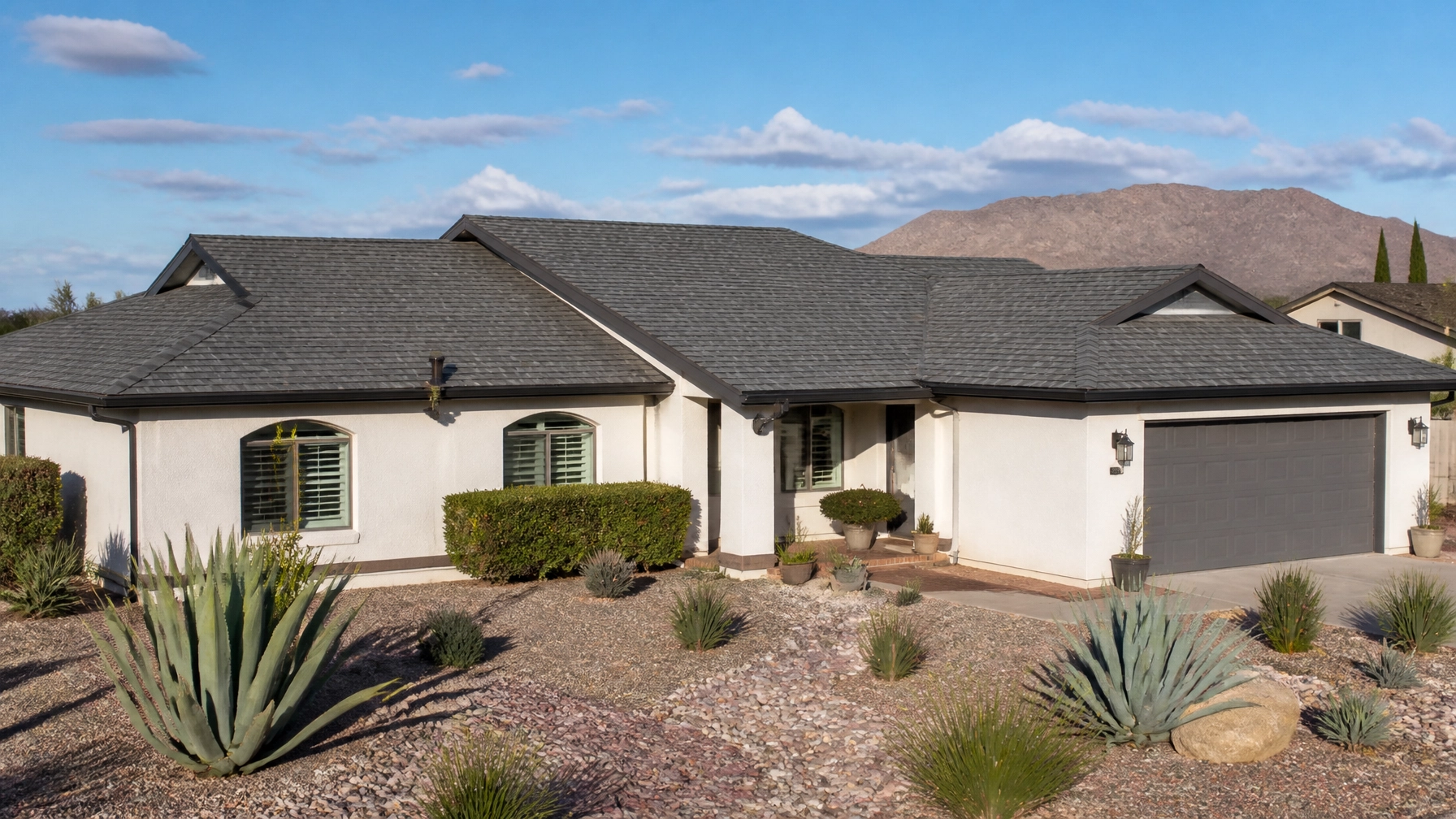
    Modern El Paso home with a charcoal standing-seam metal roof, stucco exterior, and drought-tolerant desert landscaping

    3. Does Texas require a roofing license?

    Texas has traditionally had no statewide roofing contractor license. However, a new state-level reroofing licensing process through TDLR is being introduced in 2026, so homeowners should confirm the contractor’s current state and city requirements before signing.

    For work requiring a City of El Paso permit, contractors generally need city registration. Ask for proof of:

    • El Paso contractor registration
    • Contractor Registration Application
    • Assumed Name Certificate or corporate documents
    • At least $100,000 in general liability insurance
    • Insurance certificate naming the City of El Paso as certificate holder
    • A $50,000 Blanket Building Construction Bond
    • Annual registration fee of approximately $100 plus technology fees

    RCAT Master Roofer certification is voluntary, but it can be one credential to consider when comparing contractors.

    4. How does El Paso weather affect roof life?

    El Paso roofs face more than occasional rain. Extreme summer heat, intense ultraviolet exposure, high winds, dust storms, and monsoon-season weather from roughly July through September can accelerate aging.

    Hail is also a concern. Homeowners tracking 2026 storm activity may encounter dates including July 19, August 1, and August 6 in local storm and claim discussions. Storm footprints can vary significantly by neighborhood, so verify the event date with your insurer, the National Weather Service El Paso office, and property-level hail mapping.

    After a storm, look for:

    • Granule loss in gutters or downspouts
    • Bruised or soft shingle areas
    • Cracked, missing, or lifted shingles
    • Dented vents, flashing, and gutters
    • Curling or brittle shingle edges
    • Loose metal panels or failed sealants

    Do not climb onto the roof after a storm. Take ground-level photos and schedule a professional inspection.

    5. What roofing material is best for El Paso?

    For many homeowners, Class 4 architectural shingles (Popular/Value) are the practical choice. They provide stronger impact resistance than standard shingles and may qualify for insurance discounts, depending on the carrier and policy.

    Other options include:

    • Standing-seam metal (Premium): Reflects solar heat, can reduce cooling costs by an estimated 10–30%, and typically lasts 40–70 years
    • Architectural shingles (Popular): Lower upfront cost, broad color selection, and an expected service life of roughly 20–30 years
    • Clay or concrete tile (Southwestern): Excellent heat and UV performance and a strong fit for desert architecture, but requires a structural weight check
    • Roof coatings (Specialized): May work for eligible low-slope roofs, but condition and drainage must be evaluated first

    Compare long-term costs with Metal Roofing vs. Asphalt Shingles.

    Renovated Southwestern ranch home in El Paso with a Class 4 impact-resistant architectural shingle roof and xeriscape landscaping

    6. What should El Paso homeowners know about roof insurance claims?

    Texas insurers generally must:

    • Acknowledge a claim within 15 days
    • Accept or deny it within 15 business days after receiving the requested information
    • Pay an accepted claim within 5 business days

    An insurer may extend the decision period by up to 45 days with written notice in qualifying situations. Weather-related catastrophes may also affect deadlines.

    Check your policy for a contractual claim deadline. Many homeowners policies use a 12-month filing window, but the exact requirement depends on the policy.

    Texas also prohibits roofing contractors from:

    • Waiving, rebating, or absorbing your deductible
    • Advertising “free roofs” by covering the deductible
    • Acting as your public adjuster while also performing the roof work
    • Negotiating claim settlements on your behalf

    The Texas Department of Insurance roofing guidance explains these restrictions.

    7. What is the return on investment for a new roof?

    Texas roof replacement projects typically recoup approximately 60–68% of their cost at resale. The often-cited 68% figure should be treated as an upper-end Cost vs. Value benchmark, not a guarantee.

    A new roof can support resale value by:

    • Removing a major inspection concern
    • Improving curb appeal
    • Reducing buyer requests for credits
    • Showing that the home has current weather protection
    • Supporting insurance eligibility when an older roof is a concern

    A well-priced architectural shingle roof usually offers the most practical resale balance. Metal and tile may provide stronger long-term value for homeowners who plan to stay for 15 years or more.

    Southwestern El Paso residence with a new clay tile roof, stucco facade, and desert landscaping

    8. How accurate is an instant satellite roof estimate?

    Get My Roof Estimate Now uses satellite imagery to estimate roof dimensions, pitch, and complexity with approximately 90–95% accuracy for most properties.

    The process takes about 60 seconds:

    1. Enter your property address.
    2. Confirm the correct home.
    3. Let the system measure the roof.
    4. Review low-middle-high replacement ranges for multiple materials.

    A satellite estimate is a strong budgeting and comparison tool. It cannot see concealed decking rot, hidden flashing failures, attic ventilation problems, or other conditions visible only during an inspection.

    9. Should I repair or replace my El Paso roof?

    Repair may be appropriate when the damage is localized, the roof is relatively young, and the decking remains sound.

    Replacement is more likely to make sense when:

    • The roof is approximately 20 years old or older
    • Damage appears across multiple slopes
    • Leaks keep returning after repairs
    • Shingles are curling, cracking, or losing granules
    • The roof has storm damage and limited remaining life
    • Repairs approach a substantial portion of replacement cost
    • You are preparing to sell the home

    Start with a satellite estimate to understand replacement pricing, then have a qualified contractor verify the roof’s condition in person.

    10. What is the fastest way to compare El Paso roof prices?

    Begin with a property-specific benchmark before scheduling contractor visits. Get My Roof Estimate Now provides a free satellite-powered estimate in about 60 seconds.

    There is:

    • No cost
    • No credit card requirement
    • No obligation to hire
    • Transparent low-middle-high pricing
    • Material comparisons for shingles and metal
    • Access to verified local contractors

    Quick-Reference El Paso Roofing Checklist

    • Confirm the roof’s actual surface area, not just home square footage
    • Get a free satellite estimate before collecting bids
    • Request at least two or three written proposals
    • Confirm permit responsibility and fees
    • Verify El Paso contractor registration
    • Ask for liability insurance and bond documentation
    • Photograph storm damage from the ground
    • Contact your insurer promptly after a covered event
    • Never accept a deductible waiver or rebate
    • Compare Class 4 shingles, metal, and tile by lifecycle cost
    • Check decking, flashing, ventilation, and tear-off allowances
    • Keep contracts, receipts, warranties, and completion photos

    Get Your Free El Paso Roof Estimate

    Roof replacement is a major investment. The first step does not need to be complicated.

    Enter your address at Get My Roof Estimate Now and receive a free, satellite-measured starting price in approximately 60 seconds: with no credit card and no contractor visit required upfront.

    Sources

  • 2026 Roof Replacement Cost in Birmingham, AL: A Magic City Budget Guide for Homeowners

    2026 Roof Replacement Cost in Birmingham, AL: A Magic City Budget Guide for Homeowners

    A 2,000-square-foot roof in Birmingham typically costs $10,000–$16,000 to replace with architectural shingles in 2026. Standing seam metal roofing generally costs $18,000–$32,000, while premium synthetic slate or natural slate can exceed $20,000–$40,000.

    Your final roof replacement cost in Birmingham, AL depends on roof size, pitch, tear-off requirements, decking condition, material selection, labor, and the number of valleys, dormers, and penetrations.

    This guide uses the roof’s actual surface area: not the home’s living area. Roofing contractors measure roofs in squares, with one square equal to 100 square feet.

    2026 Birmingham Roof Replacement Cost at a Glance

    Roofing system 2026 installed cost per sq. ft. Typical total for a 2,000 sq. ft. roof Cost category
    3-tab asphalt shingles $3.50–$5.50 $7,000–$11,000 Budget
    Architectural shingles $5.00–$8.00 $10,000–$16,000 Popular
    Class 4 impact-resistant shingles $5.75–$9.00 $11,500–$18,000 Storm-resistant
    Standing seam metal $9.00–$16.00 $18,000–$32,000 Premium
    Synthetic slate or premium composite $10.00–$20.00+ $20,000–$40,000+ Premium
    Natural slate $15.00–$30.00+ $30,000–$60,000+ Luxury

    These ranges include typical installation, underlayment, flashing, ventilation, and standard accessories. They may not include extensive decking repairs, structural work, permit fees, or unusual access conditions.

    For a general comparison, use the Get My Roof Estimate Now roof cost calculator. For address-specific pricing, a satellite estimate is more useful than a national average.

    What Most Birmingham Homeowners Should Budget

    For a straightforward 2,000-square-foot roof with moderate pitch and one layer of shingles:

    • 3-tab shingles: $7,000–$11,000
    • Architectural shingles: $11,000–$15,000
    • Class 4 impact shingles: $12,000–$18,000
    • Standing seam metal: $20,000–$30,000
    • Synthetic slate: $20,000–$35,000

    A complex roof in Mountain Brook, Vestavia Hills, Homewood, or older sections of Birmingham may cost more because of steep slopes, multiple rooflines, masonry details, tight access, or historic design features.

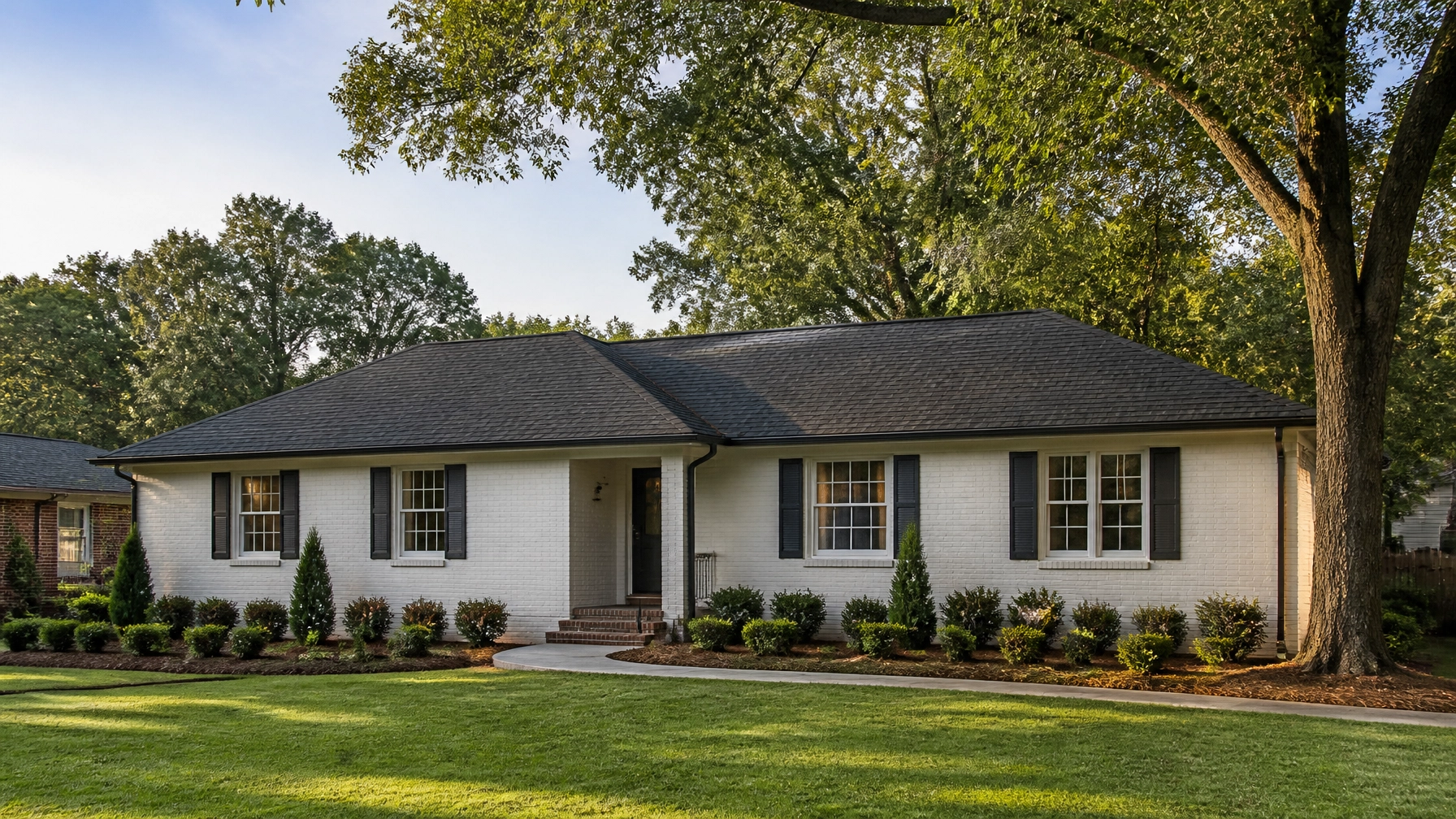
    New architectural shingle roof on a Birmingham Alabama ranch-style home

    Birmingham Roofing Material Comparison

    3-Tab Shingles (Budget)

    Three-tab shingles are the lowest-cost option. They have a flat, uniform appearance and a shorter expected service life than architectural products.

    They may work for a rental property, detached garage, or budget-sensitive replacement. However, many Birmingham homeowners choose architectural shingles because they offer better curb appeal and stronger resale appeal for a relatively modest price increase.

    Architectural Shingles (Popular)

    Architectural shingles are the most common choice for Birmingham homes. They provide a dimensional appearance, broader color selection, and better wind ratings than basic three-tab shingles.

    For most 2026 roof replacements, architectural shingles offer the best balance of:

    • Upfront cost
    • Appearance
    • Warranty options
    • Local contractor availability
    • Resale appeal

    Class 4 Impact-Resistant Shingles (Storm-Resistant)

    Class 4 shingles are designed to better resist damage from hail and flying debris. They are worth considering in Birmingham because the region sits within the broader Dixie Alley severe-weather corridor.

    Class 4 does not mean the roof is hailproof. It is a product classification, and installation quality still matters. Some insurers offer approximately 5%–28% discounts on the wind or hail portion of the premium, but the credit is carrier-specific. Ask your insurance agent before selecting the product.

    Standing Seam Metal (Premium)

    Standing seam metal uses concealed fasteners and raised seams. It offers long service life, strong weather resistance, and a clean modern appearance.

    The standing seam metal cost is higher because of the panels, trim fabrication, specialized labor, and metal-price volatility. In 2026, steel and aluminum tariffs, freight, and manufacturer increases are adding pressure to metal roofing prices.

    Metal is often a good fit for modern homes, low-slope roof sections, and homeowners planning to remain in the property for many years.

    Modern Birmingham residence with a premium matte-black standing seam metal roof

    Factors That Influence Your 2026 Roof Replacement Cost

    Roof Size and Pitch

    A steep roof requires additional fall protection, staging, labor, and material handling. A 2,000-square-foot home can have a roof area substantially larger than 2,000 square feet once pitch, overhangs, and attached garages are included.

    Tear-Off and Disposal

    Removing one or more existing roof layers can add several thousand dollars. Your quote should clearly state:

    • Number of layers included for removal
    • Disposal and dumpster charges
    • Whether felt, underlayment, and flashing are being replaced
    • Whether the contractor is allowed to install over an existing layer

    Decking Repairs

    Water damage around chimneys, valleys, skylights, and roof penetrations can weaken the plywood or OSB decking. Allowances commonly range from a few hundred dollars to several thousand, depending on the damage.

    Ask whether the estimate includes a per-sheet price for replacement decking.

    Roof Complexity

    Dormers, hips, valleys, skylights, chimneys, pipe boots, and multiple roof sections increase labor and flashing requirements. A simple ranch roof generally costs less per square foot than a detailed Colonial or historic home.

    Labor and Access

    Two-story homes, narrow driveways, landscaping, retaining walls, and limited staging areas can increase labor time. Birmingham's older neighborhoods — including Highland Park, Forest Park, and Crestline — may have tighter lots and more complex roof geometry.

    2026 Material Increases and Tariffs

    Major roofing manufacturers and distributors announced multiple 2026 price increases. Asphalt roofing products have generally experienced cumulative increases in the 10%–20% range, while metal roofing has faced heavier pressure, often around 15%–30% or more depending on product and supplier.

    Section 232 tariffs affecting steel and aluminum are especially relevant to standing seam panels, flashing, drip edge, vents, and fasteners. When comparing quotes, ask whether the price is locked and how long the contractor will honor it.

    Birmingham Weather and Roof Replacement Decisions

    Birmingham roofs must handle more than ordinary rain.

    • Dixie Alley storms: Wind, hail, and tornado-producing thunderstorms can damage shingles, vents, flashing, and gutters.
    • August 21, 2026 storm reports: Some modeled event summaries circulating after the storm cited hail up to 1.75 inches and approximately 3,300 potentially affected homes. However, those figures should be treated as modeled or marketing estimates: not as a confirmed Birmingham-wide official count. The National Weather Service and local reporting emphasized thunderstorms, heavy rain, lightning, and gusty winds, while verified hail reports varied by location.
    • Heat and humidity: Warm, humid conditions can encourage algae staining and accelerate deterioration of exposed roofing materials.
    • Freeze-thaw cycles: Although Birmingham has a moderate climate, occasional winter freezes can worsen small cracks, exposed fasteners, and water intrusion.

    If you suspect storm damage, document the roof from the ground, save dated photos, and contact your insurer before making major repairs. Avoid signing an assignment of benefits or storm contract without reading the terms carefully.

    Completed Birmingham residential roof replacement with impact-resistant shingles after a summer storm

    Birmingham Permits, Jefferson County Rules, and Contractor Licensing

    Inside Birmingham city limits, roof shingle replacement may be exempt from a building permit when no decking is repaired or replaced. A permit is generally needed when the work includes:

    • Decking or sheathing repairs
    • Rafter or structural work
    • Ridge modifications
    • Roofline changes
    • Other structural alterations

    Confirm the exact requirement with Birmingham Planning, Engineering & Permits.

    For unincorporated Jefferson County, the county lists reroofing as a Building Miscellaneous permit category. Review the Jefferson County permit guidance or contact the county before work begins. Hoover, Vestavia Hills, Mountain Brook, Homewood, and other incorporated areas may have their own building departments.

    For contractor licensing:

    • Residential roofing work above the applicable state threshold generally requires an Alabama Home Builders Licensure Board roofing license or endorsement.
    • Birmingham guidance identifies $10,000 or more as an important threshold for home-builder licensing on single-family work when the owner is not performing the work.
    • Verify the contractor’s license, insurance, references, written scope, and warranty before signing.

    FORTIFIED Roof, Class 4 Shingles, and Alabama Grants

    A FORTIFIED Roof is a roof system installed and documented to meet stronger wind and rain-resistance standards. According to FORTIFIED’s Alabama incentives information, homeowners may receive approximately 25%–35% off the wind portion of their insurance premium, with some carrier-specific savings reaching roughly 40%.

    The Strengthen Alabama Homes program may provide grants of up to $10,000 for eligible owners of existing, owner-occupied single-family homes in participating counties. Jefferson County availability, funding, application windows, and program requirements can change.

    Important distinctions:

    • Class 4 shingles are a product upgrade.
    • FORTIFIED Roof is a documented roof-system standard.
    • Insurance discounts are based on your carrier’s rules and usually apply to the wind portion: not the entire homeowners policy.
    • A FORTIFIED Roof may require an evaluator, enhanced installation details, documentation, and certification.

    Does a New Roof Add Value in Birmingham?

    A roof replacement rarely returns every dollar at resale, but it can protect the home’s marketability. National cost-versus-value studies commonly place direct recovery for an asphalt roof around 60%–70%, with additional value from avoiding inspection credits, repair negotiations, and buyer concerns.

    The benefit can be especially important in:

    • Mountain Brook: high-value homes where buyers expect excellent condition
    • Vestavia Hills and Hoover: competitive suburban markets
    • Homewood: strong demand and close inspection of older homes
    • Highland Park, Forest Park, and Crestline: historic housing stock where roof age can affect buyer confidence

    For current market context, Birmingham home values vary widely, from lower citywide figures to substantially higher medians in Mountain Brook, Vestavia Hills, Hoover, and Homewood. A new roof is not a guaranteed investment return, but it is often a practical defensive improvement when the existing roof is near the end of its service life.

    Get an Instant Birmingham Roof Estimate

    You do not need to schedule several contractor visits just to learn whether your roof may cost $10,000 or $25,000.

    With Get My Roof Estimate Now, enter your Birmingham-area address and receive a free satellite-powered estimate in about 60 seconds. The system measures roof size, pitch, and complexity, then provides low-to-high pricing for materials such as architectural shingles, metal, synthetic products, and coatings.

    There is:

    • No credit card requirement
    • No upfront cost
    • No contractor visit required to get started
    • Transparent low-middle-high pricing
    • Access to verified, licensed, and insured local contractors

    Use the estimate to set a realistic budget before requesting detailed bids.

    Birmingham Roof Replacement FAQ

    How much does a new roof cost in Birmingham, AL, in 2026?

    For a typical 2,000-square-foot roof, plan on approximately $10,000–$16,000 for architectural shingles and $18,000–$32,000 for standing seam metal. Extensive decking repairs or complex roof geometry can increase the total.

    Are Class 4 shingles worth the extra cost in Birmingham?

    They can be, particularly for homeowners concerned about hail exposure or insurance discounts. Confirm your insurer’s requirements and discount before paying for the upgrade.

    Does Birmingham require a permit for roof replacement?

    Shingle replacement may be exempt when no decking is repaired or replaced. Permits are generally needed for decking, rafters, ridge work, or structural changes. Confirm with the city or the applicable Jefferson County authority.

    Can I get a $10,000 FORTIFIED Roof grant?

    Eligible Alabama homeowners may qualify for up to $10,000 through Strengthen Alabama Homes when funding is available. Requirements include an owner-occupied single-family home, an approved evaluation, qualified contractors, and successful FORTIFIED certification.

  • 2026 Roof Replacement Cost in Charleston, SC: What Holy City Homeowners Should Budget

    2026 Roof Replacement Cost in Charleston, SC: What Holy City Homeowners Should Budget

    For 2026, the Charleston roof replacement cost for a typical 2,000-square-foot roof is approximately $7,000–$19,400 for architectural shingles and $15,000–$36,000 or more for standing-seam metal. These installed ranges include materials, labor, tear-off, and disposal.

    Most Charleston homeowners choosing architectural shingles should budget $10,000–$15,000. Standing-seam metal is a premium investment, with many projects starting around $15,000 and reaching well above $36,000 for complex homes.

    2026 Roofing Costs Charleston: Material Price Breakdown

    Roofing material Installed cost per sq. ft. Typical 2,000 sq. ft. roof
    Architectural shingles (Popular) $3.50–$9.70 $7,000–$19,400
    Standing-seam metal (Premium) $7.55–$18.00 $15,000–$36,000+

    Your final new roof cost Charleston homeowners pay depends on roof pitch, valleys, dormers, flashing, decking condition, accessibility, and the number of existing layers requiring removal.

    Standing-seam metal roof on an upscale Charleston coastal home

    Charleston’s 140 MPH Wind Code Adds Necessary Cost

    Charleston’s coastal exposure means roofing must meet a 140 mph wind-zone code. Asphalt shingles must generally carry an ASTM D3161 Class F or ASTM D7158 Class H wind rating.

    Installers must also use a six-nail fastening pattern, rather than the lighter fastening commonly used in inland markets. These requirements increase labor and material costs, but they are non-negotiable protections against hurricane-force uplift and wind-driven rain.

    Charleston’s roof also faces:

    • Salt air and coastal corrosion
    • High humidity and algae growth
    • Intense ultraviolet exposure
    • Tropical storms and hurricanes from June 1 through November 30

    Recent conditions show why compliance matters. Charleston experienced 50–55 mph wind gusts from August 22–24, 2026, while a July 10 severe thunderstorm produced 60 mph gusts and quarter-size hail.

    Permits, Historic Districts, and Contractor Requirements

    A full roof replacement requires a building permit through the City of Charleston’s Residential Alterations/Additions application. The process is often over the counter, with same-day approval possible for complete applications at the Permit Center, 2 George Street. Confirm requirements with the City of Charleston Permit Center.

    Homes in downtown Charleston, Old Village, or another protected historic area may need Board of Architectural Review (BAR) approval before permitting. Historic materials, profiles, and colors can increase the project price and timeline.

    Before signing a contract, verify that your roofer:

    • Is registered with South Carolina LLR as a Residential Specialty Contractor
    • Has the roofing classification
    • Carries current liability insurance
    • Provides workers’ compensation coverage when applicable
    • Has the required $5,000 surety bond for projects over $5,000

    Use the South Carolina LLR license resources to confirm registration.

    New architectural shingle roof on a Charleston-area ranch home

    Plan for 2026 Material Increases

    Asphalt shingle prices rose approximately 4%–8% early in 2026, with additional increases effective June 1. Steel and aluminum tariffs are also placing upward pressure on metal roofing.

    Build a 5%–15% contingency into your budget. This helps cover price changes, damaged decking, extra flashing, ventilation improvements, or code-required upgrades discovered after tear-off.

    Charleston Home Values Make Roofing a Strategic Investment

    Charleston is a premium housing market. Median home values are approximately:

    • Mount Pleasant: $995,000
    • James Island: $689,000
    • West Ashley: $450,000–$562,000

    A quality roof supports resale value, inspection results, and buyer confidence. Industry estimates suggest asphalt roofing can recover roughly 60%–75% of its cost, while premium metal roofing may recover up to 80%, depending on the property and market conditions.

    To control your roof replacement Charleston SC budget:

    • Compare three verified contractors
    • Schedule work before hurricane-season demand peaks
    • Ask about Class 4 impact-resistant shingles and insurance discounts
    • Document storm damage quickly for an insurance claim
    • Avoid storm chasers arriving after hail or wind events

    Get a Charleston Roof Estimate in 60 Seconds

    Before scheduling contractor visits, get a property-specific starting point. Get My Roof Estimate Now uses satellite technology to measure roof size, pitch, and complexity with approximately 90%–95% accuracy.

    Your estimate is free, takes about 60 seconds, requires no contractor visit upfront, and needs no credit card. Get a transparent Charleston roof replacement estimate today.

  • 2026 Roof Replacement Cost in Savannah, GA: Coastal Price Guide for Hostess City Homeowners

    2026 Roof Replacement Cost in Savannah, GA: Coastal Price Guide for Hostess City Homeowners

    For a typical 2,000-square-foot roof in Savannah, GA, the 2026 roof replacement cost is approximately:

    • Architectural shingles (Popular): $12,400–$19,200 installed
    • Most common architectural shingle total: $13,000–$17,000
    • Standing-seam metal (Premium): $22,000–$41,100 installed
    • Typical full replacement range across materials: $8,000–$25,000+

    Savannah pricing is higher than many inland Georgia markets because roofs must handle intense sun, high humidity, salt air, heavy rain, and tropical-storm conditions. Older homes in Ardsley Park, the Victorian District, and downtown may cost more because of dormers, steep slopes, complicated rooflines, and historic review requirements.

    This guide explains the local cost factors, materials, permits, climate concerns, and budgeting steps for homeowners throughout Chatham County.

    2026 Savannah Roof Replacement Cost by Material

    Roofing contractors price projects by the actual roof area, not the home’s interior square footage. Roofing is measured in squares, with one square equal to 100 square feet.

    A “2,000-square-foot roof” equals approximately 20 roofing squares before waste, overhangs, valleys, and roof complexity are considered.

    Roofing material 2026 installed price Typical 2,000 sq. ft. project Best fit
    Architectural shingles (Popular) $4.50–$8.20 per sq. ft. $12,400–$19,200 Most Savannah homes
    Impact-resistant shingles (Mid-tier) Custom product pricing Usually above standard architectural shingles Wind and hail protection
    Standing-seam metal (Premium) $9.40–$20.00 per sq. ft. $22,000–$41,100 Long-term coastal durability
    Synthetic roofing (Alternative) Varies by product Custom quote required Specialty or historic appearances
    Roof coating (Maintenance alternative) Varies by roof type Custom quote required Compatible low-slope roofs

    Installed pricing should include materials, labor, tear-off, disposal, underlayment, flashing, required fasteners, and permitting. Ask contractors to identify each item separately so you can compare bids accurately.

    Use the Get My Roof Estimate Now roof cost calculator for a general planning range, or request a satellite-measured estimate based on your address.

    Why Savannah Roofing Prices Increased in 2026

    Material pricing changed significantly during 2026.

    • Asphalt roofing prices increased approximately 4%–8% early in 2026.
    • A further 6%–9% asphalt increase took effect June 1, 2026.
    • Steel and aluminum prices are approximately 15%–25% higher than in 2024.
    • A 50% Section 232 tariff on certain steel and aluminum imports began April 6, 2026.

    These increases affect both shingles and metal roofing. Metal estimates may change more quickly because panels, trim, flashing, and fasteners are all tied to steel and aluminum costs.

    When comparing estimates, ask how long the contractor will honor the price. A 30-day price guarantee is more useful than a quote that can change when materials are ordered.

    New architectural shingle roof on a renovated Savannah ranch-style home

    Coastal Climate Factors That Affect Roof Life

    Savannah has a humid subtropical climate with mild, mostly freeze-free winters. That reduces freeze-thaw damage, but coastal moisture creates other roofing problems.

    Humidity and algae growth

    Savannah averages approximately 74% relative humidity. Warm, damp conditions encourage algae and organic growth, including the black streaks commonly associated with Gloeocapsa magma.

    For better performance, consider:

    • Algae-resistant architectural shingles with copper granules
    • Proper ridge and soffit ventilation
    • Clean gutters and downspouts
    • Regular removal of leaves and Spanish moss
    • Manufacturer-approved roof cleaning methods

    Algae staining is usually cosmetic at first, but moisture trapped by debris can contribute to premature shingle deterioration.

    Salt air and corrosion

    Salt air affects more than metal roofing. It can corrode:

    • Roof flashing
    • Fasteners
    • Drip edges
    • Gutter components
    • Chimney caps
    • Rooftop equipment
    • Metal valley and wall flashing

    Homes closer to marshes, Wilmington Island, Tybee Island, and other coastal areas should use corrosion-resistant fasteners and properly coated or marine-suitable metal components.

    UV exposure and storm winds

    Savannah’s strong ultraviolet exposure dries and weakens roofing materials over time. Hurricane season runs from June 1 through November 30, bringing tropical-storm winds, wind-driven rain, and potential debris impact.

    Roof installation matters as much as material selection. A high-quality shingle installed with the wrong fastening pattern can perform poorly during a storm.

    Expected Roof Lifespan in Savannah

    Coastal conditions can reduce a roof’s practical life compared with manufacturer ratings.

    • Architectural asphalt shingles: approximately 18–25 years
    • Impact-resistant shingles: often approximately 20–30 years, depending on product and maintenance
    • Standing-seam metal: approximately 35–50+ years
    • Synthetic roofing: commonly 30–50 years, depending on the system
    • Roof coatings: typically require periodic inspection and reapplication

    Metal generally offers a longer service life, but it has a much higher upfront cost. Compare the initial investment with how long you expect to own the property. The metal versus asphalt comparison guide can help you evaluate both options.

    Recommended coastal upgrades

    For a Savannah roof replacement, ask about:

    • Six-nail fastening for high-wind shingle installations
    • Corrosion-resistant nails and screws
    • High-wind-rated shingles
    • Self-adhered underlayment in vulnerable areas
    • Ice and water protection around valleys and penetrations
    • Adequate attic ventilation
    • Reinforced flashing around chimneys, walls, and skylights

    Impact-resistant shingles are a practical mid-tier option for homeowners who want stronger protection without moving all the way to standing-seam metal.

    Standing-seam metal roof on a coastal home near Savannah, Georgia

    Savannah Roof Replacement Permits and Regulations

    A full roof replacement inside the City of Savannah generally requires a building permit through the city’s eTRAC portal. The city identifies reroofing as a permit category for roof-covering replacement, recover work, and certain structural deck repairs.

    Review the City of Savannah construction permit information before work begins.

    Permit cost

    For a typical single-family roof replacement, plan for approximately $75–$150 in base permit fees, with possible plan-review, technology, or inspection charges depending on the project.

    See the City of Savannah permit fee schedule for current classifications and charges.

    Coastal fastening requirements

    Savannah follows the 2018 International Residential Code with Georgia amendments. Coastal wind exposure may require:

    • Six-nail shingle fastening patterns
    • Wind-rated roofing products
    • Enhanced roof-deck attachment
    • Proper edge and perimeter fastening
    • Wind-uplift documentation for certain properties

    If your home is in a flood overlay zone such as V or AE, plan for a sealed wind-uplift plan when required by the jurisdiction.

    Historic districts

    Roof replacement may involve additional review in areas such as:

    • Ardsley Park
    • Victorian District
    • Downtown National Historic Landmark District
    • Landmark Historic District
    • Mid-City

    A change in roofing material, color, or visible profile may require a Certificate of Appropriateness from the City of Savannah Historic Preservation Office. Obtain approval before ordering materials if the property is subject to historic review.

    Historic homes may also have slate, metal, dormers, wood decking, or unusual roof geometry. Those conditions can push the cost above standard architectural shingle pricing.

    Finished roof replacement on a historic-style Savannah Victorian home

    Neighborhood Pricing Differences in Savannah

    The same material can cost more or less depending on the neighborhood and house design.

    Ardsley Park

    Ardsley Park homes have a median value near $666,000, based on recent neighborhood market data tracked by sources such as Redfin’s Ardsley Park housing market page.

    Roofing costs may run 15%–25% higher than a simple ranch roof because many properties include:

    • Steep roof sections
    • Dormers
    • Multiple valleys
    • Decorative gables
    • Older decking
    • Historic design considerations

    Midtown Savannah

    Midtown includes a mix of ranch homes and older properties. Straightforward rooflines may fall near the middle of the architectural shingle range, while additions, enclosed porches, and previous repairs can increase labor.

    Wilmington Island and Isle of Hope

    Homes in coastal areas may need corrosion-resistant components, higher wind specifications, and additional attention to flashing and water intrusion. Those upgrades can place the project toward the upper end of local pricing.

    Roof Replacement ROI in Savannah

    A roof replacement usually recovers approximately 60%–70% of its cost at resale. For a $15,000 project, that represents roughly $9,000–$12,000 in added value.

    The financial benefit is not limited to appraisal value. A new roof can also:

    • Reduce inspection objections
    • Make insurance placement easier
    • Prevent buyer requests for large credits
    • Improve curb appeal
    • Help the home compete with updated listings
    • Potentially shorten the selling timeline

    A reasonable planning benchmark is that a well-presented home with a newer roof may sell 15–25 days faster than a similar property with a visibly aging roof. Results vary by price, condition, season, and the broader Savannah market.

    How to Compare Savannah Roofing Estimates

    Before selecting a contractor:

    1. Get at least three written estimates.
    2. Confirm each bid uses the same roof area and material grade.
    3. Ask whether tear-off and disposal are included.
    4. Confirm the underlayment, flashing, ventilation, and fastening pattern.
    5. Verify active licensing and insurance.
    6. Check whether the contractor will obtain the eTRAC permit.
    7. Ask how decking repairs will be priced if discovered.
    8. Review your homeowners insurance policy for storm damage before paying out of pocket.
    9. Keep a 10%–15% contingency for decking, flashing, ventilation, or structural repairs.
    10. Avoid scheduling during the peak of hurricane season when possible.

    A satellite estimate is a useful first step because it provides roof measurements before you schedule contractor appointments. It does not replace an on-site inspection for hidden decking or structural damage, but it can give you an accurate starting budget.

    Get a Free Savannah Roof Estimate in 60 Seconds

    You do not need to wait for multiple contractor visits to understand your likely replacement cost.

    Get My Roof Estimate Now uses satellite imagery to measure your roof’s size, pitch, and complexity. You receive a free estimate in about 60 seconds, with transparent low-to-high pricing ranges for common materials.

    There is:

    • No contractor visit required upfront
    • No credit card required
    • No hidden fees
    • No long scheduling delays

    Start with an instant, satellite-powered 2026 roof replacement cost estimate for your Savannah home at getmyroofestimatenow.com.

  • Daily Tech Blitz – Slot 4: Detroit’s Satellite Tech Edge Is Bringing Motor City Precision to Rooftop Estimates

    Daily Tech Blitz – Slot 4: Detroit’s Satellite Tech Edge Is Bringing Motor City Precision to Rooftop Estimates

    Detroit built the modern world through precision manufacturing. In 2026, that same focus on accurate measurement is moving from factory floors to rooftops: and some of the technology is arriving from orbit.

    Satellite-powered roof estimating is changing how Motor City homeowners plan a replacement. Enter your address, and in about 60 seconds, you can receive a free roof estimate based on your property’s actual roof size, pitch, and complexity. No contractor visit is needed upfront, and no credit card is required.

    That matters in Detroit, where older homes, freeze-thaw cycles, wind, hail, and complicated rooflines can make a simple “average price” unreliable.

    Detroit’s Satellite Advantage Is More Than a Marketing Phrase

    Southeast Michigan has a growing aerospace, defense, remote-sensing, and advanced manufacturing ecosystem. That local technology base helps explain why satellite-powered measurement feels especially appropriate for Detroit.

    General Orbit: Navigation Beyond GPS

    Michigan-based General Orbit develops GPS-independent magnetic navigation hardware for satellites, drones, and other autonomous systems.

    Its technology uses Earth’s magnetic field as a positioning reference. That creates an alternative navigation layer when GPS signals are jammed, blocked, spoofed, or unreliable.

    The connection to rooftop estimating is straightforward: modern satellite systems depend on precise positioning, sensor data, and software-based analysis. The same broader ecosystem that supports resilient navigation also supports more accurate ways to understand physical structures from above.

    Wolverine Radar Company: Seeing Through Clouds and Darkness

    Founded in 2021 and based in Ann Arbor, Wolverine Radar Company focuses on synthetic aperture radar (SAR) applications, radar processing, satellite data, and constellation modeling.

    Unlike ordinary optical imagery, SAR can collect useful information through clouds and at night. That makes it valuable for:

    • Storm damage assessment
    • Surface and infrastructure monitoring
    • Large-area mapping
    • Change detection after severe weather
    • Tracking conditions when visible imagery is limited

    SAR is not the same thing as the satellite imagery used for every instant roof estimate. However, it demonstrates the direction of remote sensing: faster, more detailed property intelligence without waiting for a site visit.

    Detroit-area ranch home with a new dimensional shingle roof

    University of Michigan: Small Satellites, Big Data

    The University of Michigan is also contributing to the state’s space technology profile.

    NASA’s SunRISE mission is led by U-M and uses six toaster-size CubeSats to study solar activity and space weather. The launch is targeted for summer 2026. U-M’s broader small-satellite work includes the planned STARI mission, which is designed around two briefcase-size CubeSats and formation flying for exoplanet research, with a 2029 target.

    The Michigan Exploration Laboratory further expands hands-on CubeSat development and mission operations. These projects build expertise in orbital systems, sensor coordination, data processing, and precise measurement.

    Selfridge and Michigan’s Defense-Aerospace Momentum

    Selfridge Air National Guard Base is part of the region’s larger defense and aerospace push.

    In 2026, Michigan and federal partners committed significant funding for a new cybersecurity lab, facility improvements, and preparation for future F-15EX and KC-46A missions. The connected vehicle cybersecurity center is expected to support advanced work involving military and commercial vehicles.

    This is not residential roofing technology directly. It is regional context. Detroit’s manufacturing, cybersecurity, aerospace, and autonomous-systems capabilities create a workforce and supplier network comfortable with high-precision data.

    DTE Energy: Remote Sensing at Infrastructure Scale

    DTE Energy has used high-density LiDAR and remote-sensing data for vegetation management and grid resilience across southeast Michigan. Its Detroit-area LiDAR work helped identify vegetation encroachment near power lines and prioritize maintenance based on measured risk rather than fixed schedules.

    DTE has also explored satellite imagery as part of broader remote-sensing strategies. In the 2026 regulatory environment, MPSC approval of approximately $242.4 million for grid upgrades in February underscores the scale of infrastructure investment underway across the region.

    For homeowners, the lesson is simple: remote sensing is no longer limited to research labs. It is increasingly used to measure, map, prioritize, and plan real-world projects.

    How Satellite Imagery Supports an Instant Roof Estimate

    A satellite-powered roof estimate turns a property address into a practical planning range.

    The process generally includes:

    1. Enter your address. The system identifies the property and available imagery.
    2. Measure roof area. The roof is calculated in squares, with one square equal to 100 square feet.
    3. Analyze pitch and complexity. Roof planes, valleys, dormers, hips, ridges, and other features affect labor and material quantities.
    4. Compare materials. Pricing can be modeled for architectural shingles, metal, synthetic systems, and coatings.
    5. Apply regional pricing. Detroit-area labor, material, disposal, and market conditions are included.
    6. Show a low-middle-high range. You see a realistic planning band instead of one misleading number.

    Get My Roof Estimate Now uses satellite-powered measurements designed to reach approximately 90–95% accuracy, with measurements accurate to within inches in suitable conditions.

    The estimate is:

    • Free
    • Available in about 60 seconds
    • No credit card required
    • Based on your property rather than a national average
    • Useful for comparing material options
    • A planning estimate, not a final contractor proposal

    You can also review general assumptions with the roof cost calculator.

    Detroit Roof Replacement Costs in 2026

    Most Detroit-area single-family roofs fall between 1,500 and 2,500 square feet, or approximately 15–25 roofing squares. Final pricing depends on roof surface area, not just the home’s interior square footage.

    Architectural Shingles (Popular)

    Installed architectural shingle replacement commonly runs approximately:

    • $4.50–$9.50 per square foot
    • About $12,000–$18,000 for many average Detroit-area homes

    Architectural shingles remain the most practical choice for many Detroit homeowners because they balance upfront cost, appearance, repairability, and resale appeal.

    Standing-Seam Metal (Premium)

    Standing-seam metal roofing commonly runs approximately:

    • $7.00–$18.00 per square foot
    • About $18,000–$36,000 for many average homes

    Metal costs more initially but can offer a longer service life, low maintenance, energy benefits, and strong resistance to wind and fire. Compare the two systems with Metal Roofing vs. Asphalt Shingles.

    Common Add-On Costs

    Your contractor’s final proposal may include additional charges for:

    • Tear-off and disposal
    • Decking or sheathing repairs
    • Attic ventilation upgrades
    • Chimney, wall, and pipe flashing
    • Steep pitch
    • Multiple roof levels
    • Valleys, dormers, and skylights
    • Ice-and-water protection
    • Permits and inspections

    Wayne County-area permit fees can range roughly from $146 to $500, depending on the municipality, project value, and scope.

    Modern Detroit suburban home with a premium standing-seam metal roof

    Detroit Storm Planning: Hail, Wind, and Impact Resistance

    Detroit homeowners should account for storm exposure when comparing roofing materials.

    The June 10, 2026 severe-weather event produced approximately 1 to 1.25-inch hail in Dearborn and Dearborn Heights, along with damaging winds. A June 14 hail event was also mapped near Detroit. On August 11, severe storms with damaging winds and large hail were possible across the Detroit area.

    After a storm, look for:

    • Missing or lifted shingles
    • Bruised or fractured shingle surfaces
    • Exposed underlayment
    • Damaged flashing
    • Dented vents, gutters, or metal components
    • Granules collecting in downspouts

    Class 4 impact-resistant shingles tested under UL 2218 may improve hail resistance. Some insurers offer discounts for qualifying products, but discounts vary by carrier, policy, roof age, and documentation. Confirm eligibility with your insurance company before choosing a material based on a potential discount.

    Detroit Permit Reminder

    Michigan permit requirements vary by city, township, and project scope. In some Michigan jurisdictions, a simple like-for-like roof-covering replacement may not require a permit.

    However, Detroit proper is stricter. The City of Detroit’s roof replacement requirements state that a permit must be obtained before recovering or replacing a roof. Other Wayne County municipalities may have different procedures.

    A permit may also be required for:

    • Structural repairs
    • Decking or rafter work
    • A new roof area or addition
    • Changes to ventilation or insulation
    • Projects above local valuation thresholds

    Before work begins, confirm the rule with the local building department. Do not rely only on a contractor’s verbal assumption.

    Does a New Roof Improve Detroit Home Value?

    A roof replacement can support resale value in several ways.

    Industry benchmarks commonly place direct roof replacement ROI around 60–70% of installed cost, although actual results vary. A $16,000 architectural shingle replacement, for example, might contribute approximately $9,600–$11,200 in direct resale value under that range.

    The total benefit may be larger than the sale-price increase alone. A new roof can:

    • Improve roof curb appeal and home value
    • Reduce buyer concerns during inspection
    • Prevent requests for repair credits
    • Make the home easier to market
    • Improve buyer confidence in an older Detroit property
    • Support a stronger asking price compared with a home needing immediate replacement

    For many typical Detroit homes, architectural shingles offer the best roof for home value because they deliver strong appearance and broad buyer acceptance without the upfront cost of premium metal.

    Metal can produce better long-term value for homeowners planning to stay 10 or more years, especially when durability, maintenance, energy efficiency, and storm resistance matter more than immediate resale ROI.

    Michigan home with a newly installed impact-resistant roof after a storm

    Detroit Roofing FAQ

    How accurate are satellite roof estimates?

    A satellite estimate is designed to measure roof size, pitch, and complexity with approximately 90–95% accuracy, often within inches in suitable conditions. It is an excellent budgeting tool, but a contractor should confirm decking damage, ventilation, flashing, and other conditions before installation.

    How much does a new roof cost in Detroit?

    For a typical 1,500–2,500-square-foot roof in 2026, architectural shingles often total $12,000–$18,000. Standing-seam metal commonly totals $18,000–$36,000. Complexity, tear-off, repairs, and permits can change the final number.

    Is a metal roof worth it in Detroit?

    It can be, especially if you plan to remain in the home for 10 years or longer. Metal generally costs more upfront but may last longer and require less maintenance. Compare the lifetime benefits against your budget and resale timeline.

    Do I need a permit to replace my roof?

    Rules depend on the local jurisdiction. Simple like-for-like work may be exempt in some Michigan communities, but Detroit generally requires a permit for roof replacement or recovery. Confirm with the building department before scheduling work.

    Get Motor City Precision for Your Roof Budget

    Detroit’s satellite and aerospace ecosystem is built around better data, resilient systems, and precise decisions. Homeowners can apply that same principle to roof planning.

    Enter your address, receive a free satellite-powered estimate in about 60 seconds, compare materials, and move forward with a clearer budget before contacting local, licensed, and insured contractors.

  • Daily Weather Blitz – Slot 5: Wilmington, NC : August 25, 2026: Warm 89°F Tuesday, Afternoon Storm Chance & What Coastal Salt Air, Humidity, and Hurricane Season Do to Your Roof

    Daily Weather Blitz – Slot 5: Wilmington, NC : August 25, 2026: Warm 89°F Tuesday, Afternoon Storm Chance & What Coastal Salt Air, Humidity, and Hurricane Season Do to Your Roof

    Wilmington’s weather today is typical for late August on the Cape Fear coast: sunny early, hot and humid by midday, then a chance of sea-breeze showers and thunderstorms after 2 p.m.

    For homeowners, the larger issue is not one afternoon storm. It is the cumulative effect of salt air, persistent humidity, strong seasonal storms, hail, and hurricane-season wind on the roof system.

    Wilmington, NC Weather Snapshot for Tuesday, August 25

    Expect:

    • High: Near 89°F
    • Low: Around 72°F
    • Humidity: Approximately 70%, with muggy conditions continuing overnight
    • Storm chance: About 30% after 2 p.m.
    • Wind: Light north-northeasterly winds near 6 mph
    • Heat index: In the 90s
    • Pattern: Mostly sunny morning followed by possible afternoon thunderstorms

    A storm is not guaranteed at every Wilmington address. However, coastal thunderstorms can produce brief heavy rain, lightning, localized wind gusts, and wind-driven rain that expose weak points around roof edges, valleys, vents, chimneys, and flashing.

    According to WECT’s August 25 forecast, storm chances are expected to rebuild through the week, with daily highs remaining in the 80s to around 90°F.

    Wednesday Outlook

    Wednesday, August 26, should bring:

    • A high near 88°F
    • Mostly sunny conditions for much of the day
    • A 30% chance of storms before 2 p.m.
    • A 50% chance of showers or thunderstorms after 2 a.m. overnight
    • A low near 73°F

    That morning-sun, afternoon-storm, steamy-night cycle is hard on roofing materials because the roof repeatedly heats, absorbs moisture, dries, and then faces sudden rainfall and gusty conditions.

    Why Coastal Salt Air Damages Roofing Components

    Wilmington’s proximity to the Atlantic Ocean and Intracoastal Waterway creates a marine environment. Salt particles carried in the air settle on exposed metal and remain active when mixed with humidity or rainwater.

    The most vulnerable components include:

    • Metal flashing around walls, chimneys, and skylights
    • Drip edge and roof-to-wall transitions
    • Exposed fasteners
    • Vent caps and pipe boots
    • Gutter hardware
    • Metal roof clips and trim
    • Exposed nail heads

    Corrosion may begin as surface discoloration or light rust. Over time, it can weaken the metal, open gaps, and create pathways for wind-driven rain.

    When replacing a roof near Wilmington, ask about corrosion-resistant flashing and fasteners. The exact material should match the roof system and exposure. A contractor should also explain how metal components will be protected at roof edges, penetrations, valleys, and wall intersections.

    Standing seam metal roof on a coastal North Carolina home

    Humidity Encourages Algae, Moss, and Mold

    Warm, damp conditions accelerate biological growth on shaded or slow-drying roof surfaces. North-facing slopes, roof sections beneath trees, and areas with poor airflow are especially vulnerable.

    Algae often appears as dark streaks or blotches. Moss and lichen can create thicker green or gray growth. These conditions matter because growth can:

    • Hold moisture against shingles
    • Lift or separate shingle edges
    • Block drainage paths
    • Hide cracked or damaged shingles
    • Reduce curb appeal
    • Shorten the practical life of the roof

    Do not pressure-wash asphalt shingles. High-pressure water can remove protective granules and damage the shingle surface. If growth is widespread, have a qualified roofing professional recommend a roof-safe cleaning method.

    For a replacement, consider algae-resistant architectural shingles containing copper or zinc granules. They cost more than entry-level shingles but are often a sensible upgrade for humid coastal neighborhoods.

    Close-up comparison of algae-stained and clean algae-resistant roof shingles

    Hurricane Season and Wind Uplift Risk

    August is part of the Atlantic hurricane season. Even when no specific hurricane is approaching Wilmington, homeowners should plan for the background risk of tropical storms and hurricanes.

    Roof damage commonly begins at vulnerable edges and transitions:

    • Eaves and rake edges
    • Gable ends
    • Ridge caps
    • Valleys
    • Roof-to-wall connections
    • Skylights and chimneys
    • Loose flashing
    • Poorly secured soffits and fascia

    Wilmington has experienced major storm impacts, including Hurricane Florence in 2018. More recently, the area saw severe weather on August 21, 2026, including quarter-size hail and wind gusts reported near 60 mph. That makes both wind and hail inspection relevant after the storm passes.

    Look for:

    • Missing or lifted shingles
    • Exposed underlayment
    • Fresh dents in vents, gutters, or flashing
    • Bruised shingles with soft spots
    • Unusual granule loss
    • Bent ridge caps
    • Water stains in the attic or ceilings

    Do not climb onto the roof after a storm. Use binoculars from the ground or arrange a professional inspection.

    Why FORTIFIED Roofing Matters in Wilmington

    For coastal North Carolina, FORTIFIED roofing is a leading storm-resilience standard. The system goes beyond simply installing new shingles. It focuses on keeping the roof deck attached and limiting interior water intrusion if the outer roof covering is damaged.

    Depending on the designation and current standard, FORTIFIED roof improvements can include:

    • Enhanced roof-deck fastening with ring-shank nails
    • A sealed roof deck
    • Reinforced roof edges
    • Stronger attachment at vulnerable corners and gable ends
    • Properly secured roof coverings
    • Documentation and third-party verification

    The IBHS FORTIFIED Roof program provides the technical framework. Ask your contractor whether the work will qualify for a formal FORTIFIED Roof: Hurricane designation or whether it is simply a code-minimum installation.

    Also ask your insurance provider whether a documented FORTIFIED roof may qualify for a premium credit or other policy benefit. Requirements vary by insurer and property location.

    Best Roofing Materials for Coastal North Carolina

    Architectural Shingles (Popular)

    • Typical life: Approximately 18–25 years in coastal conditions
    • Cost: Most accessible replacement option
    • Best for: Homeowners seeking a balanced price, appearance, and performance
    • Recommended upgrade: Algae-resistant granules and higher wind ratings

    Architectural shingles remain the most practical choice for many Wilmington homes. Choose a product rated for the local wind exposure and confirm that installation includes proper edge fastening, flashing, ventilation, and underlayment.

    Standing Seam Metal (Premium)

    • Typical life: Approximately 40–70 years
    • Cost: Higher initial investment
    • Best for: Long-term ownership and homeowners prioritizing durability
    • Advantages: Long service life, strong wind performance when properly installed, and excellent resistance to algae

    Metal roofing still requires careful coastal detailing. Ask about the metal type, protective coating, concealed fastening system, fastener material, and compatibility between dissimilar metals.

    Roof Coatings (Situational)

    Roof coatings may be useful for certain low-slope roof systems, but they are not a universal solution for asphalt shingle roofs. A professional should inspect the existing assembly before recommending a coating.

    Wilmington Roof Replacement Cost Guide for 2026

    For a typical 2,000-square-foot roof, coastal Wilmington replacement pricing may fall into these ranges:

    • Budget architectural shingles: Approximately $9,000–$12,000
    • Popular algae-resistant architectural shingles: Approximately $12,000–$16,000
    • Premium standing seam metal: Approximately $22,000–$32,000

    These are planning ranges, not final bids. Your actual price depends on:

    • Roof size measured in squares
    • Roof pitch and accessibility
    • Number of valleys, dormers, and penetrations
    • Tear-off and disposal requirements
    • Decking repairs
    • Coastal-grade flashing and fasteners
    • FORTIFIED upgrades
    • Material availability and local labor rates

    Use the Wilmington roof estimate page for local planning or compare material scenarios with the roof cost calculator.

    Roofer checking flashing and roof details on a coastal Carolina home

    How a Storm-Ready Roof Protects Home Value

    A roof replacement is a major expense, but it also protects one of the largest assets most homeowners own.

    A sound, storm-ready roof can support:

    • New roof ROI home value: Buyers are more comfortable with a documented roof that does not require immediate replacement.
    • Roof replacement resale value: A newer roof may reduce negotiation pressure and make the home easier to market.
    • Roof curb appeal home value: Clean, consistent shingles or a well-installed metal roof can improve the first impression from the street.
    • Best roof for home value: For many Wilmington properties, algae-resistant architectural shingles offer the strongest balance of cost and appearance. Metal may be the better long-term choice for owners who plan to stay for decades.
    • Roof replacement ROI: The return is not only resale value. It also includes reduced leak risk, better storm readiness, and fewer emergency repair costs.

    Before listing your home, document the installation date, material warranty, contractor warranty, permits, inspections, and any FORTIFIED certification.

    Coastal Roof Durability Checklist

    Complete this checklist at least annually and before peak storm activity:

    • Schedule a professional coastal roof inspection.
    • Check flashing, vents, and fasteners for corrosion.
    • Look for missing, cracked, curled, or bruised shingles.
    • Inspect gutters for excessive granules.
    • Trim overhanging branches away from the roof.
    • Clean gutters and downspouts before storm season.
    • Check the attic for damp insulation, mold odor, daylight, or water stains.
    • Confirm that soffit and ridge ventilation are unobstructed.
    • Photograph storm damage from the ground.
    • Avoid signing emergency contracts before reviewing licensing, insurance, scope, and price.
    • Get an instant satellite roof estimate before storm season so you understand your likely replacement budget.

    Get a free satellite-powered roof estimate at Get My Roof Estimate Now. Enter your address and receive low, middle, and high replacement pricing in about 60 seconds: at no cost and with no credit card required.

    Bottom Line for Wilmington Homeowners

    Today’s 89°F heat and afternoon storm chance are normal for Wilmington. The long-term durability challenge comes from the combination of salt, humidity, algae, hail, wind, and hurricanes.

    If your roof is 15–30 years old, has visible granule loss, or sustained damage from the August 21 storm, now is the time to inspect it. A free satellite estimate gives you a fast budget benchmark before you schedule contractor visits or face an emergency leak.

    Sources