Blog

  • Daily Weather Blitz – Slot 7: Savannah, GA : August 21, 2026: Heat Advisory, 110°F Heat Index & How Hostess City Heat and Storms Test Your Roof’s Durability

    Daily Weather Blitz – Slot 7: Savannah, GA : August 21, 2026: Heat Advisory, 110°F Heat Index & How Hostess City Heat and Storms Test Your Roof’s Durability

    Savannah is under a Heat Advisory from 11:00 AM to 8:00 PM today, Friday, August 21, 2026. The actual high should reach approximately 94°F, but humidity could push the heat index to 110°F.

    Scattered showers and thunderstorms are expected mainly after 5:00 PM, with roughly a 30%–34% chance of rain depending on the forecast period. Some storms could bring frequent lightning, heavy downpours, damaging wind gusts, and localized flash flooding. A few storms may become strong to severe.

    The National Weather Service Savannah forecast is a useful reference point, but conditions can change quickly in coastal Georgia. For homeowners, today’s forecast is more than a comfort issue. Extreme heat, high humidity, and sudden storms place repeated stress on roofing systems.

    Savannah Weather Snapshot for Friday

    Heat Advisory: 11:00 AM–8:00 PM

    • Actual high: Approximately 94°F
    • Heat index: Up to 110°F
    • Storm timing: Mainly late afternoon through evening
    • Rain chance: Approximately 30%–34%
    • Primary storm threats: Lightning, heavy rain, damaging wind, and localized flooding
    • Overall pattern: Hot and humid Lowcountry conditions continuing through the week

    The heat index combines air temperature and humidity. At 110°F, your body loses heat less efficiently because moisture in the air slows evaporation of sweat. The same moisture also affects building materials, attic spaces, wood decking, insulation, and roof ventilation.

    Limit strenuous outdoor activity during the advisory. If thunder is audible, move indoors. Do not climb onto your roof before, during, or immediately after a storm.

    What This Forecast Means for Daily Life and Infrastructure

    Savannah’s late-summer weather creates a fast shift from intense heat to storm exposure.

    During the afternoon, dark roofing materials absorb solar radiation and can become significantly hotter than the surrounding air. Attic temperatures rise, increasing demand on air-conditioning systems and placing stress on shingles, flashing, sealants, and underlayment.

    After 5:00 PM, storms can arrive quickly. Heavy rain may overwhelm gutters or downspouts that are clogged with leaves and oak debris. Strong wind gusts can lift loose shingles, break branches, or push water beneath vulnerable roof edges.

    Localized flooding is especially possible where drainage is poor. Water may collect around foundations, back up at overflowing gutters, or enter through damaged roof penetrations.

    How Coastal Georgia Heat and Storms Impact Roofs

    1. UV exposure and granule loss

    Long periods of intense sunlight gradually dry and age asphalt shingles. The protective ceramic granules on the surface can loosen over time.

    Watch for:

    • Granules collecting in gutters or downspout outlets
    • Bare or shiny areas on shingles
    • Faded sections with uneven color
    • Cracked, curled, or brittle shingle edges

    Granule loss does not always mean an immediate leak, but it reduces the roof’s protection against ultraviolet radiation and rain.

    2. Thermal cycling

    A roof expands during extreme afternoon heat and contracts as temperatures fall overnight. Repeated expansion and contraction can stress:

    • Flashing around chimneys and vents
    • Pipe boots
    • Sealants
    • Fasteners
    • Shingle bonds
    • Roof decking joints

    This process is called thermal cycling. It happens gradually, but older roofs often show the effects first.

    3. Humidity, moisture, and mold

    Savannah’s humid subtropical climate creates favorable conditions for algae, mildew, and mold growth: especially on shaded roof sections with poor airflow.

    Moisture can also accumulate in the attic when ventilation is unbalanced. Excess attic humidity may contribute to:

    • Damp insulation
    • Mold growth
    • Wood rot
    • Rusted fasteners
    • Premature shingle aging
    • Higher cooling costs

    A roof can be technically intact while the attic environment is damaging the system from below.

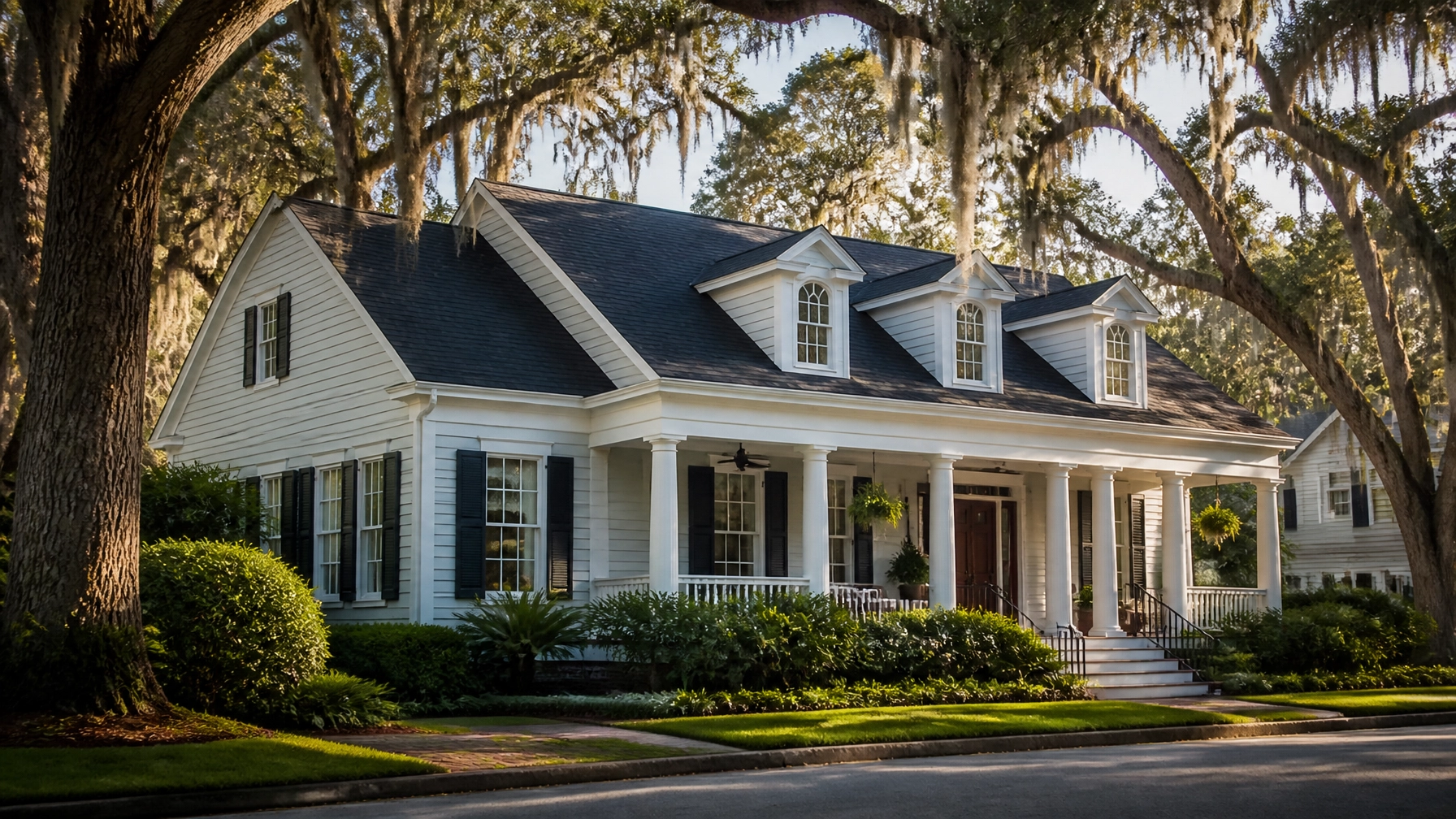
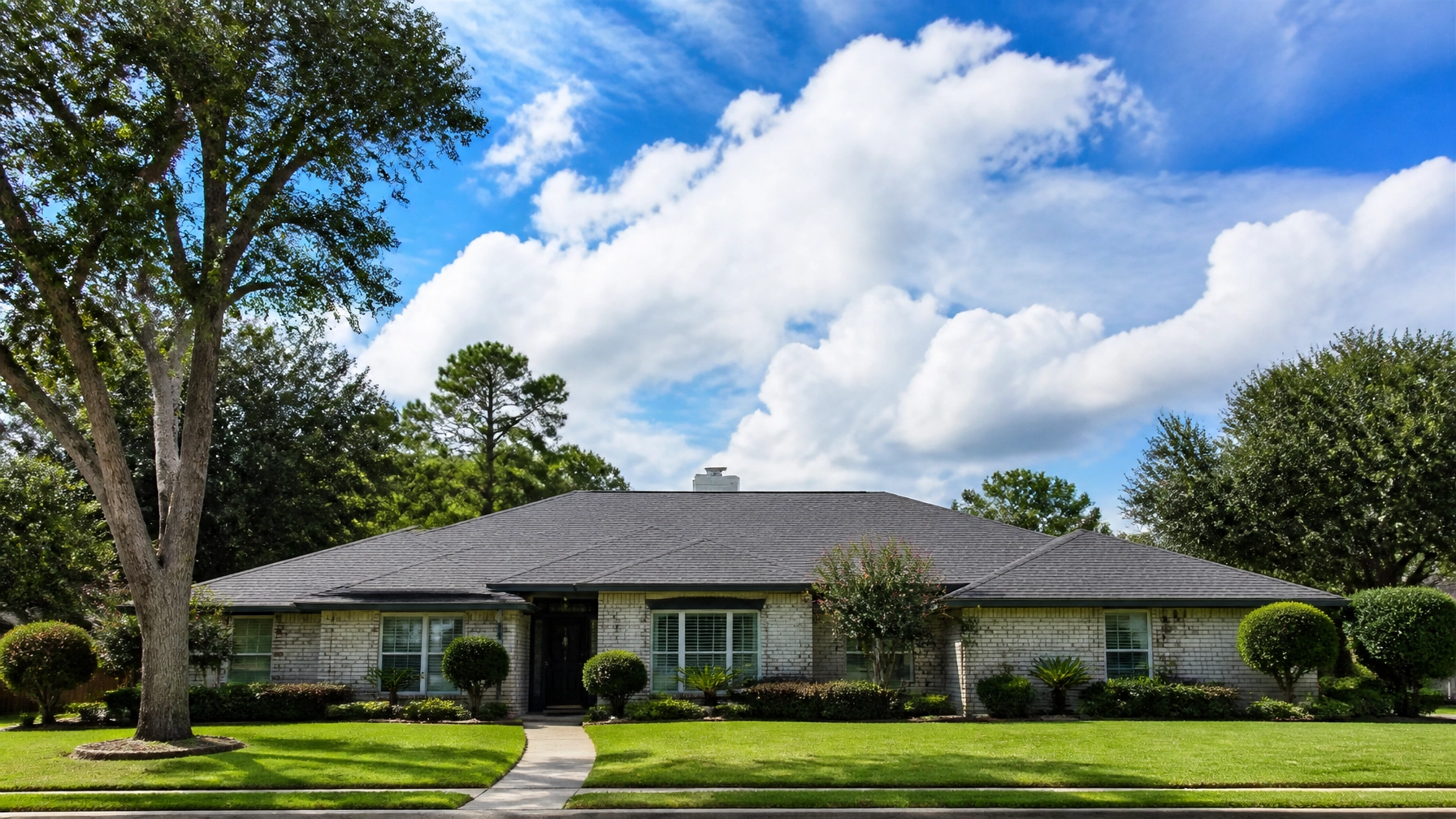
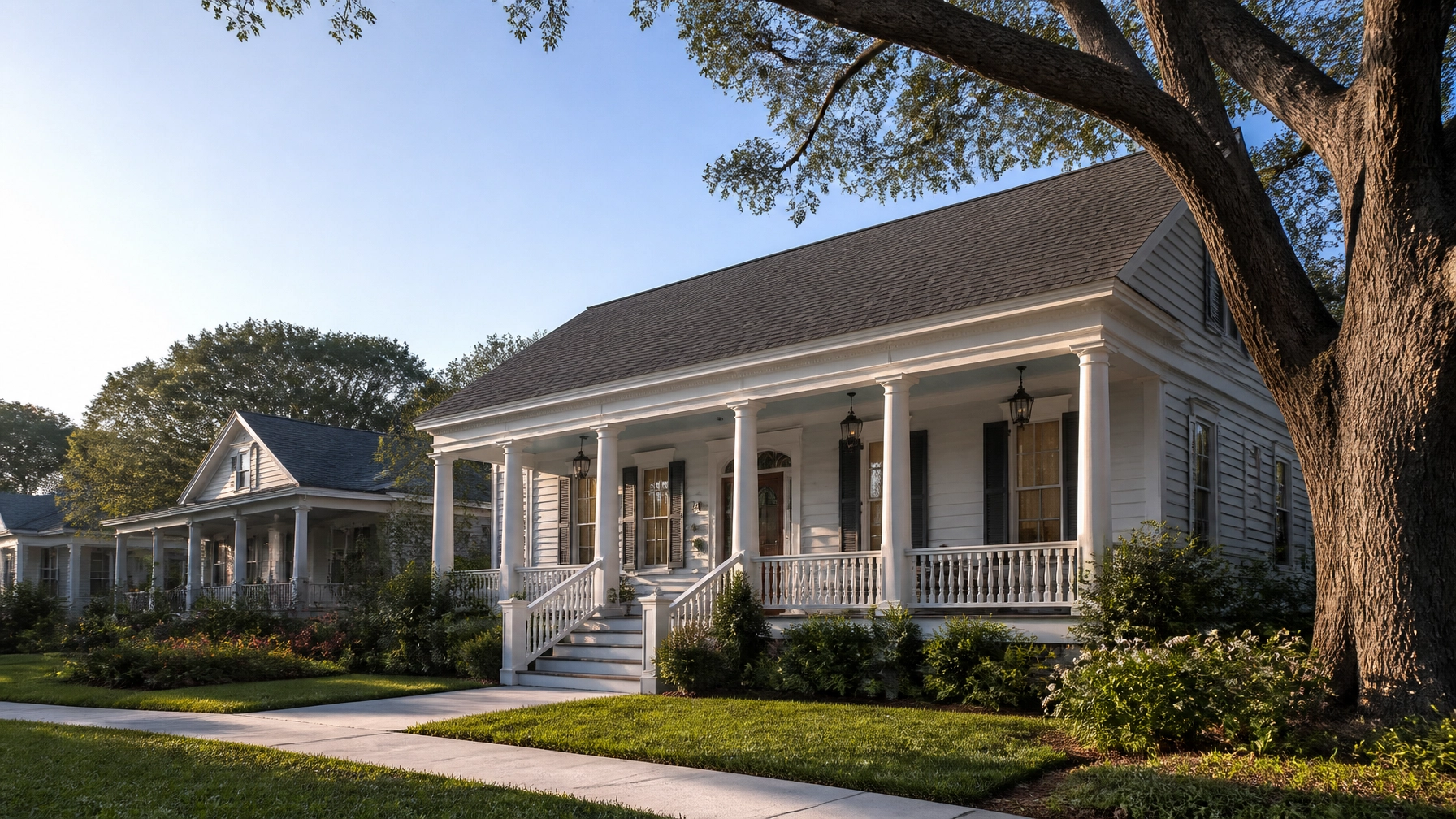
    Traditional Savannah home with architectural shingles, ridge vent, and maintained gutters

    4. Wind uplift

    Thunderstorm wind does not need to reach hurricane strength to damage a roof. Loose shingles, exposed edges, poorly secured flashing, and aging seal strips can become entry points for wind.

    The roof perimeter is especially important. Eaves, rakes, ridges, and roof-to-wall transitions experience concentrated wind pressure.

    5. Tree and branch damage

    Savannah’s mature live oaks add shade and character, but branches can scrape shingles or fall during storms. Even small limbs can damage flashing, gutters, vents, and roof surfaces.

    Keep branches trimmed away from the roof while preserving proper clearance from electrical lines and structures.

    Durability and Preparedness Tips for Savannah Homeowners

    Use balanced attic ventilation (Preventive)

    A balanced system typically combines intake ventilation near the roof edge with exhaust ventilation near the ridge. The goal is steady airflow: not simply adding more roof vents in random locations.

    Ask a qualified roofer to check:

    • Soffit intake vents
    • Ridge vents or other exhaust vents
    • Blocked insulation at the eaves
    • Moisture levels
    • Bathroom and kitchen exhaust ducts
    • Signs of attic mold or condensation

    Poorly balanced ventilation can leave hot, humid air trapped in the attic.

    Consider Class 4 impact-resistant shingles (Storm protection)

    Class 4 shingles are designed to provide enhanced resistance to impact from hail and flying debris. They can be a practical choice for homeowners concerned about severe thunderstorms.

    Some insurance companies offer discounts for qualifying impact-resistant roofing. Requirements vary by insurer, product, installation, and documentation. Confirm eligibility before choosing a material.

    For a broader comparison, review our asphalt shingles guide.

    Confirm the six-nail installation pattern (Wind performance)

    In high-wind or coastal areas, ask whether the shingles will be installed using the manufacturer-approved six-nail pattern. Some standard installations use fewer nails, while enhanced fastening may improve resistance to wind uplift when specified correctly.

    Your written proposal should identify:

    • Shingle brand and product line
    • Wind rating
    • Required nail pattern
    • Fastener type
    • Warranty conditions
    • Underlayment and flashing details

    The installation method matters as much as the shingle itself.

    Add a secondary water barrier (Coastal protection)

    A peel-and-stick or self-adhered underlayment can provide an additional layer of protection at vulnerable locations, including:

    • Eaves
    • Valleys
    • Roof penetrations
    • Skylights
    • Wall intersections
    • Areas exposed to wind-driven rain

    It is not a substitute for correct flashing or quality workmanship. However, it can add valuable backup protection in coastal Georgia’s humid, storm-prone environment.

    Clean gutters before the next storm

    Gutters should move water away from the roof and foundation without overflowing. Before the next heavy-weather period:

    • Remove leaves, pine needles, and shingle debris
    • Check for sagging sections
    • Tighten loose hangers
    • Clear downspouts
    • Confirm water exits away from the foundation
    • Look for standing water after rain

    Gutter maintenance is one of the lowest-cost ways to reduce preventable water damage.

    Post-Storm Roof Inspection Checklist

    Do not get on the roof yourself. From the ground, look for:

    • Missing, lifted, or displaced shingles
    • Exposed underlayment or roof decking
    • New ceiling stains or damp attic insulation
    • Broken gutters or downspouts
    • Fallen branches or visible punctures
    • Damaged flashing around vents and chimneys
    • Water pooling near the foundation
    • Granules or shingle pieces in gutters
    • Daylight visible through the attic roof deck

    Photograph visible damage from a safe location. If the roof is leaking, place a container under the leak and contact a licensed, insured roofing professional. Avoid signing over insurance benefits or accepting emergency repairs without a written scope of work.

    Savannah Roof Replacement Cost: What to Budget in 2026

    For a typical 2,000-square-foot Savannah home, a roof replacement may fall roughly between $8,000 and $20,000. The roof’s actual surface area: not just the home’s floor area: determines the final price.

    Typical planning benchmarks include:

    • Budget : approximately $7,000: 3-tab shingles and basic roof layouts
    • Most Popular : approximately $11,500: Architectural shingles with standard-quality components
    • Premium : $22,000 or more: Metal roofing, Class 4 systems, designer materials, complex rooflines, or upgraded ventilation and underlayment

    Coastal Georgia can add a regional premium for wind-rated materials, enhanced fastening, upgraded underlayment, complex flashing, and storm-resistant accessories.

    Your price may also change based on:

    • Roof pitch and complexity
    • Number of roof squares
    • Tear-off requirements
    • Damaged decking
    • Chimneys, skylights, and valleys
    • Permit and disposal costs
    • Material availability
    • Contractor qualifications

    Compare material options with our metal roofing guide and metal versus shingles comparison.

    Why This Matters for Your Home Value

    A durable, wind-rated roof is one of the strongest contributors to resale value and curb appeal in coastal markets.

    An aging roof can make buyers concerned about immediate repair costs, insurance availability, and future storm damage. A newer roof with documented installation, strong warranties, and an appropriate wind rating can make a home easier to market.

    Roofing affects value in several ways:

    • New roof ROI and home value: Buyers often value reduced near-term maintenance.
    • Roof replacement resale value: A recent replacement can reduce negotiation pressure during inspection.
    • Roof curb appeal and home value: Clean, consistent roofing improves the first impression of the property.
    • Best roof for home value: The best choice balances local durability, neighborhood expectations, budget, and long-term ownership plans.
    • Roof replacement ROI: Architectural shingles may offer strong value for many homeowners, while metal can appeal to buyers prioritizing longevity and energy efficiency.

    No roofing material guarantees a specific return. However, a properly installed, well-maintained roof is a measurable advantage when selling in Savannah’s hot, humid, storm-exposed market.

    Get a Free Savannah Roof Estimate in 60 Seconds

    You do not need to wait for multiple contractor visits just to learn what a roof replacement could cost.

    Use Get My Roof Estimate Now for a free, satellite-powered estimate based on your roof’s size, pitch, and complexity.

    You’ll receive:

    • Pricing in under 60 seconds
    • Satellite measurements accurate to within inches
    • Low, middle, and high price ranges
    • Material comparisons for shingles, metal, and other options
    • No contractor visit required upfront
    • No credit card required
    • No hidden fees

    Get a clear starting point before the next storm arrives: getmyroofestimatenow.com.
  • Daily ROI Blitz – Slot 2: Knoxville, TN New Roof ROI ,  What a Replacement Adds to Your Home Value in 2026

    Daily ROI Blitz – Slot 2: Knoxville, TN New Roof ROI , What a Replacement Adds to Your Home Value in 2026

    For Knoxville homeowners, a roof replacement in 2026 typically recovers 60%–75% of its project cost in resale value. On a $13,500 architectural shingle replacement, that represents approximately $8,100–$10,125 in added home value.

    That does not mean every roofing project produces the same return. Material choice, installation quality, roof condition, neighborhood expectations, and buyer confidence all affect the result. But in Knoxville’s current market, a clean, dependable roof can make a meaningful difference when you sell.

    Knoxville’s 2026 Market Makes Roof Condition More Important

    Recent Knoxville market snapshots show:

    • Median sold price: approximately $396,375
    • Sale-to-list ratio: around 100%
    • Median days on market: about 47 days
    • Buyer behavior: homes are selling near full asking price

    These figures indicate a market where buyers are still carefully evaluating condition and future costs. A roof that looks worn, shows storm damage, or is near the end of its expected life can become a negotiation point.

    A buyer may respond by:

    • Reducing an offer
    • Requesting a seller-paid credit
    • Asking for a roof replacement before closing
    • Delaying the transaction while obtaining inspections
    • Choosing a competing home with a newer roof

    A replacement will not automatically raise your home’s value dollar for dollar. However, it can protect your asking price, improve buyer confidence, and reduce the risk of a costly concession.

    For broader local context, see our Knoxville roof replacement estimate guide.

    Why a New Roof Can Improve Knoxville Home Value

    1. It removes a major buyer objection

    The roof is one of the most expensive systems in a home. Buyers understand that replacing one can cost thousands of dollars, especially when the roof has multiple slopes, valleys, dormers, or difficult access points.

    A newer roof gives buyers a clearer ownership outlook. Instead of wondering whether they will face an immediate expense, they can focus on the home’s layout, location, and other improvements.

    2. It strengthens curb appeal

    Roof color and condition affect the entire exterior. Curling shingles, dark stains, missing sections, and visible patchwork can make an otherwise attractive home look neglected.

    A new roof improves:

    • Roofline definition
    • Exterior symmetry
    • Color coordination with siding and brick
    • First impressions in listing photos
    • Overall roof curb appeal home value

    This matters in neighborhoods where exterior character and presentation influence buyer expectations.

    3. It improves inspection results

    A roof replacement completed with proper flashing, ventilation, underlayment, and documentation can make the inspection process easier. It may also reduce questions about active leaks, water stains, exposed decking, and storm damage.

    Keep your:

    • Final invoice
    • Product information
    • Warranty documents
    • Permit records
    • Before-and-after photos
    • Contractor license and insurance information

    These records help demonstrate that the roof was professionally installed and maintained.

    Character home in Knoxville with a new architectural shingle roof

    Knoxville Neighborhood Context: The Best Roof May Depend on the Home

    A roof replacement should match the property and neighborhood. The most expensive material is not always the best investment.

    Sequoyah Hills and Bearden (Premium)

    Homes in Sequoyah Hills and Bearden often compete on character, location, landscaping, and architectural detail. A visibly worn roof can detract from a premium presentation.

    Architectural shingles with a refined color blend may provide a strong balance of appearance and cost. On certain homes, standing seam metal can also work well when the design supports a modern or high-end exterior.

    Old North Knoxville and Fourth & Gill (Character Homes)

    Older homes in Old North Knoxville and Fourth & Gill may have distinctive rooflines, steep sections, additions, or historic design elements.

    For these properties, prioritize:

    • Consistent roof proportions
    • Appropriate shingle color
    • Proper flashing around chimneys and dormers
    • Ventilation improvements
    • Careful protection of trim and exterior details

    The goal is to improve performance without making the roof look out of place.

    Farragut and West Knoxville (Suburban Practicality)

    In Farragut and West Knoxville, buyers often value durability, predictable maintenance, and strong overall condition. Architectural shingles are usually the practical resale choice for a typical suburban home.

    Impact-resistant shingles may be worth comparing if your property has experienced hail or wind damage. Ask contractors whether the material could affect insurance pricing or warranty coverage.

    2026 Knoxville Roof Replacement Costs

    Roofers measure roofing projects in squares. One square equals 100 square feet of roof area. The roof’s actual measured area is usually larger than the home’s interior square footage because of pitch, overhangs, and roof complexity.

    Typical installed costs for a 2,000-square-foot Knoxville home include:

    Roofing option Typical installed cost Category
    Basic asphalt shingles $8,000–$13,000 Budget
    Architectural shingles $10,500–$17,500 Popular
    Standing seam metal $16,000–$30,000+ Premium

    Material-specific benchmarks are approximately:

    • Architectural shingles: $600–$1,000 per square installed
    • Standing seam metal: $1,200–$1,800 per square installed

    Your total may increase if the project requires extensive tear-off, replacement of damaged decking, chimney work, steep-slope safety systems, additional ventilation, or complex flashing.

    Practical ROI Example: A 22-Square Architectural Roof

    Assume a Knoxville home needs a 22-square architectural shingle roof with a total installed project cost of approximately $13,500.

    At a 60%–75% resale recovery rate:

    • 60% recovered: $8,100 in resale value
    • 75% recovered: $10,125 in resale value
    • Estimated unrecovered cost: approximately $3,375–$5,400

    This is a planning range, not a guaranteed appraisal result. The actual return depends on comparable homes, the roof’s prior condition, buyer demand, workmanship, and how soon you sell.

    The roof can still provide value beyond the resale calculation. A new system may reduce leak risk, improve marketability, and help prevent a buyer from negotiating a larger credit.

    How 2026 Severe Weather Affects Roof ROI in Knoxville

    Knoxville homeowners face recurring wind, hail, heavy rain, and storm risks. In 2026:

    • February 19: Storms produced wind gusts near 60 mph, with reported roof and tree damage.
    • May 20: A wind event across Knox County included gusts near 60 mph, damaging roofs and trees.
    • August 17: Severe storms brought wind and flooding concerns, with warnings for gusts up to 60 mph and possible roof, siding, and tree damage.

    The National Weather Service severe weather documentation explains why winds above 58 mph can create roof damage. Local Knoxville storm reporting also highlights the region’s exposure to damaging weather.

    Hail is another recurring local risk. Even when shingles remain in place, hail can bruise the surface, remove protective granules, and shorten the roof’s remaining service life.

    After a major storm, photograph damage from the ground and avoid climbing onto the roof. Look for missing shingles, exposed underlayment, dented vents, granules in gutters, and ceiling stains. If you suspect an insurance claim, contact your carrier and request a professional inspection.

    Premium standing seam metal roof on a modern Knoxville home

    Which Roof Is Best for Home Value?

    Architectural shingles (Popular)

    Architectural shingles are usually the strongest all-around choice for resale. They offer:

    • Broad buyer appeal
    • Many color options
    • Lower upfront cost than metal
    • A dimensional appearance
    • Straightforward replacement and repair

    For most Knoxville homes, this option offers the best balance of roof replacement ROI, curb appeal, and budget control.

    Standing seam metal (Premium)

    Metal roofing can be an excellent long-term investment, particularly if you plan to remain in the home for many years. It may offer better durability, a longer service life, and strong storm performance.

    However, its higher upfront cost does not always produce a proportionally higher resale return. Buyers may appreciate it, but the local market may not repay the full premium.

    Basic asphalt shingles (Budget)

    Basic shingles can make sense when the immediate goal is to protect the home and control costs. Before listing, though, a budget-grade roof may not create the same visual improvement or buyer confidence as architectural shingles.

    Get an Address-Specific Knoxville ROI Starting Point

    Before speaking with contractors, get a realistic project range for your actual roof. Get My Roof Estimate Now uses satellite imagery to estimate roof size, pitch, and complexity.

    The estimate is:

    • Free
    • No credit card required
    • Available in under 60 seconds
    • Approximately 90%–95% accurate for most properties
    • Presented with low, middle, and high pricing ranges

    Use the result as a planning benchmark, then confirm the final scope with a licensed, insured local contractor.

    Frequently Asked Questions

    How much does a new roof increase home value in Knoxville?

    A Knoxville roof replacement typically recovers about 60%–75% of the project cost in resale value. A $13,500 replacement may contribute approximately $8,100–$10,125 in recovered value, although the actual result varies by home, neighborhood, material, and market conditions.

    Is an architectural shingle roof worth it before selling?

    Usually, yes: especially when the existing roof is visibly worn, storm-damaged, or near the end of its life. Architectural shingles provide strong curb appeal and broad buyer appeal without the premium cost of metal roofing.

    Does a metal roof have better ROI?

    Not necessarily. Metal roofing can last longer and perform well in severe weather, but its higher upfront cost may reduce the percentage recovered at resale. It is often a better long-term ownership decision than a short-term pre-sale upgrade.

    How accurate is a satellite roof estimate?

    Get My Roof Estimate Now’s satellite-powered estimates are approximately 90%–95% accurate for most homes. They are free, require no credit card, and typically provide a price range in under 60 seconds. A contractor visit is still needed to verify hidden damage and produce a final project quote.

    Check Your Knoxville Roof Replacement ROI Today

    Knoxville buyers are paying close to asking price, but they are still evaluating future expenses. A roof that looks dependable can protect your sale strategy, improve curb appeal, and recover a meaningful portion of its replacement cost.

    Enter your address at getmyroofestimatenow.com for a free, satellite-measured estimate in 60 seconds: before you schedule contractor visits or make a pricing decision.

  • Daily ROI Blitz – Slot 3: Jacksonville, FL New Roof ROI : What a Replacement Adds to Your Home Value in 2026

    Daily ROI Blitz – Slot 3: Jacksonville, FL New Roof ROI : What a Replacement Adds to Your Home Value in 2026

    A new roof can add approximately 2% to 5% to a Jacksonville home’s value, depending on the roof’s age, material, installation quality, neighborhood, and the condition of the rest of the property.

    On a Jacksonville home valued near the 2026 median sale range of $304,000 to $315,000, that represents a potential value difference of roughly $6,080 to $15,750.

    That does not mean every roof replacement produces a guaranteed profit. The real return often comes from a combination of:

    • Higher perceived value
    • Fewer inspection objections
    • Less negotiating leverage for buyers
    • Better curb appeal
    • Improved wind and water resistance
    • Potential insurance savings
    • A faster, more confident sale

    Here is how new roof ROI and home value work in Jacksonville, FL in 2026.

    Jacksonville’s 2026 Housing Market Rewards Move-In-Ready Homes

    Jacksonville remains one of the country’s notable housing hotspots for 2026, according to housing-industry outlooks from NAHB and NAR. However, the market is more normalized than the bidding-war environment of previous years.

    Current 2026 market benchmarks include:

    • Jacksonville median home sale price: approximately $304,000 to $315,000
    • Duval County median: approximately $319,000, up about 1.3% year over year
    • Price per square foot: roughly $185 to $192
    • Typical time to sell: approximately 56 to 60 days
    • Sale-to-list ratio: approximately 97% to 99%
    • About 23% of listings experienced price cuts
    • Active inventory is down roughly 17% to 20% year over year in some market segments
    • Northeast Florida metro median: approximately $388,500 in February 2026

    The takeaway is straightforward: Jacksonville buyers are still active, but they are negotiating. A home that looks maintained, correctly priced, and ready to occupy has an advantage.

    A roof that is 15 to 20 years old can quickly become a negotiating point. Buyers may request repairs, seek a credit, reduce their offer, or move on to another property.

    For current local pricing, see our Jacksonville roof replacement estimate guide.

    How Much Does a Jacksonville Roof Replacement Cost in 2026?

    For a typical Jacksonville home with approximately 2,000 to 2,250 square feet of roof area, 2026 planning ranges are:

    Roofing option Typical Jacksonville 2026 cost Value position
    Basic asphalt shingles Approximately $8,500–$12,000 Budget
    Architectural shingles Approximately $11,000–$16,000 Popular
    Class 4 impact-resistant shingles Often toward the upper asphalt range Protection-focused
    Metal roofing Approximately $22,000–$38,000 for a 2,000 sq. ft. home Premium

    Local installed asphalt pricing runs approximately $375 to $900 per roofing square, with one square equal to 100 square feet. The higher end usually reflects premium shingles, impact resistance, complex roof geometry, steep pitches, decking repairs, or upgraded installation requirements.

    Metal roofing commonly runs approximately $9 to $16 per square foot installed. It can provide a long service life and strong storm performance, but the higher upfront cost does not always produce the highest resale percentage.

    Your actual price depends on:

    • Roof size and measured roof squares
    • Pitch and accessibility
    • Number of valleys, hips, and penetrations
    • Tear-off and disposal requirements
    • Damaged or rotted decking
    • Underlayment and flashing
    • Wind-rated installation requirements
    • Material selection
    • Permit and inspection requirements

    New dimensional asphalt shingle roof on a Jacksonville residential home

    The National Roof Replacement ROI Benchmark

    The 2025 Cost vs. Value report places the average national asphalt shingle roof replacement at:

    • Average project cost: $31,871
    • Estimated resale value added: $21,501
    • Cost recouped: approximately 68%

    That is a national benchmark, not a guaranteed Jacksonville result. Local roof sizes and labor costs can be different. Jacksonville’s typical asphalt replacement range is often lower than the national project average, especially for a standard 2,000-square-foot home.

    Still, the benchmark shows why a roof replacement can make financial sense. Homeowners may recover much of the investment through resale value while also avoiding:

    • Buyer repair credits
    • Inspection-related delays
    • Insurance concerns
    • Emergency leak repairs
    • A lower appraisal
    • Extended time on the market

    A roof replacement is not usually a dollar-for-dollar improvement. Instead, it protects the value of the entire home.

    Why Buyers Discount Homes With Older Roofs

    A roof nearing the end of its expected life creates uncertainty. Buyers may not know whether it has two years left or ten.

    In Jacksonville, a roof older than approximately 15 years can trigger additional questions because of:

    • Heavy rain and humidity
    • Ultraviolet exposure
    • High summer temperatures
    • Tropical storms and hurricanes
    • Wind-driven rain
    • Algae and moisture-related wear

    A buyer may calculate the likely replacement cost and subtract more than the actual cost from an offer. This is common because buyers are also pricing in inconvenience, financing risk, and the possibility of hidden damage.

    A new roof removes that uncertainty. It gives the buyer a documented, visible improvement that can support your asking price and strengthen the home’s condition during appraisal.

    Roof Curb Appeal Can Influence Home Value

    The roof is one of the largest visible surfaces on a Jacksonville home. When shingles are faded, streaked, curled, or visibly mismatched, the entire exterior can look older.

    A clean, well-installed roof creates a psychological anchor. It signals that the property has likely received regular maintenance.

    The strongest curb appeal combination includes:

    • A new roof with consistent color
    • Clean rooflines and properly installed flashing
    • Pressure-washed exterior surfaces
    • Trimmed landscaping
    • Repaired gutters and downspouts
    • Freshly painted or cleaned entry areas
    • A roof color that fits the home’s architecture

    Research on exterior improvements has found that curb appeal projects can sometimes recover more than 100% of their cost, particularly when the improvements are visible, practical, and completed before listing.

    A new roof does not work in isolation. Pairing it with simple exterior maintenance can make the replacement more noticeable without requiring a major remodel.

    Jacksonville coastal home with a new standing-seam metal roof

    What Is the Best Roof for Home Value in Jacksonville?

    For most Jacksonville homeowners, the best balance of cost, appearance, and resale value is architectural asphalt shingles.

    Architectural shingles (Popular)

    These are widely accepted by buyers, available in many colors, and generally fit ranch, Colonial, suburban, and traditional Jacksonville homes. They often provide the strongest practical balance between installation cost and marketability.

    Class 4 impact-resistant shingles (Protection-focused)

    Class 4 shingles may cost more, but they can be attractive in a storm-prone region. They may also help with insurance qualification or wind mitigation depending on the roof system, documentation, and insurance carrier.

    Metal roofing (Premium)

    Metal can offer long service life, energy benefits, and a clean modern appearance. It may be a strong choice for coastal homes, modern architecture, or homeowners planning to stay long term. However, the national Cost vs. Value benchmark shows metal roofing recouping approximately 50% of its cost, compared with 68% for asphalt shingles.

    The best roof for home value is not necessarily the most expensive roof. It is the roof that matches:

    • The home’s architecture
    • The surrounding neighborhood
    • Local wind and building requirements
    • Buyer expectations
    • Your expected time before selling

    Jacksonville Wind, Building Code, and Insurance Factors

    Jacksonville is in a hurricane-prone region. Some areas east of Phillips Highway fall within the Wind-Borne Debris Region, where stricter performance considerations may apply.

    The Florida Building Code 8th Edition, based on 2023 updates and ASCE 7-22 wind loads, affects reroofing requirements. A properly installed roof may include:

    • Sealed roof deck protection
    • High-wind nailing patterns
    • Upgraded underlayment
    • Proper flashing and edge-metal installation
    • Wind-rated roof coverings
    • Required permits and final inspections

    NOAA’s 2026 Atlantic outlook called for a below-normal season of approximately 8 to 14 named storms, 3 to 6 hurricanes, and 1 to 3 major hurricanes in its seasonal forecast. CSU still estimated Florida had a 74% chance of tropical storm impact and a 43% chance of hurricane impact.

    A below-normal forecast does not eliminate risk. One storm can expose weaknesses in an aging roof.

    Florida law requires insurers to offer wind mitigation discounts for verified protective features. After a replacement, ask about a new inspection using the OIR-B1-1802 form. Credits generally apply to the wind portion of the policy, and the actual savings depend on your carrier’s filed rates.

    A new roof does not automatically guarantee a specific premium reduction. Keep your permit records, product documentation, final inspection, and wind mitigation report.

    Fresh roof and improved landscaping on a Jacksonville neighborhood home

    Neighborhood Considerations: From Riverside to the Beaches

    Roof replacement decisions should fit the neighborhood.

    • Riverside and Avondale: Historic character and established streetscapes make color and material selection especially important.
    • San Marco: Homes may benefit from classic architectural shingles that complement traditional exteriors.
    • Ortega: Large, mature properties may have more complex rooflines and higher replacement costs.
    • Mandarin: Tree coverage, roof pitch, and drainage details deserve close attention.
    • Springfield: Historic homes may require additional planning and careful visual matching.
    • Atlantic Beach, Neptune Beach, and Jacksonville Beach: Coastal exposure increases the importance of corrosion resistance and wind performance.

    In Riverside, Avondale, and San Marco historic districts, a re-roof may require Historic Preservation Commission review. Like-for-like replacements are typically faster to approve, while material or color changes may take longer. Confirm local requirements before signing a contract.

    How to Estimate Your Roof ROI Before Selling

    Use this practical process:

    1. Determine the roof’s measured size and current condition.
    2. Get a realistic Jacksonville replacement range.
    3. Compare repair costs with full replacement costs.
    4. Ask your agent how buyers respond to older roofs in your neighborhood.
    5. Request a pre-listing inspection if the roof’s condition is uncertain.
    6. Keep all permits, warranties, invoices, and wind mitigation documents.
    7. Compare the expected value benefit with the cost of delaying the project.

    For many homeowners, the roof replacement ROI is not just the resale price. It is the cost of reducing risk before a buyer’s inspection puts you under pressure.

    Get Your Jacksonville Roof Value Estimate in 60 Seconds

    Planning a Jacksonville roof replacement does not have to begin with multiple contractor appointments.

    Get My Roof Estimate Now uses satellite imagery to measure your roof and provide a free estimate in under 60 seconds. You receive:

    • No-cost pricing with no credit card required
    • Satellite-powered measurements based on roof size, pitch, and complexity
    • Low, middle, and high price ranges
    • Transparent estimates with no hidden fees
    • Material comparisons for shingles, metal, and other options
    • Connections to verified, licensed, and insured local contractors

    Get the information you need to budget, plan, improve curb appeal, and protect your Jacksonville home’s resale value.

    Sources and Helpful Resources

  • Daily ROI Blitz – Slot 5: Warner Robins, GA New Roof ROI : What a Replacement Adds to Your Home Value in 2026

    Daily ROI Blitz – Slot 5: Warner Robins, GA New Roof ROI : What a Replacement Adds to Your Home Value in 2026

    If you are replacing a roof in Warner Robins, Georgia, plan on spending approximately $9,300–$15,700 for a typical architectural asphalt shingle replacement. A standing seam metal roof generally costs more: about $16,700–$29,200 for a standard home.

    The investment can also add meaningful resale value. National data indicates that homeowners typically recover about 60%–70% of a roof replacement cost, with asphalt shingle projects reporting approximately 57%–68% ROI. In dollar terms, a new roof often contributes $15,000–$25,000 in perceived or appraised home value, depending on the property, roof quality, and local buyer demand.

    For Warner Robins homeowners, the timing is especially relevant. The city’s median home sale price was approximately $255,000 in July 2026, while home values were up about 5.4% year over year. Homes are often selling close to asking price, supported by steady demand from Robins Air Force Base personnel, VA buyers, and entry-level homeowners.

    Warner Robins Housing Market: Why Roof Condition Matters

    Warner Robins remains one of Middle Georgia’s more active housing markets. The area benefits from:

    • Continued employment connected to Robins Air Force Base
    • Relocation demand from military and civilian personnel
    • Strong interest from VA and FHA buyers
    • Entry-level affordability compared with larger Georgia metros
    • Homes selling near asking price in many neighborhoods

    Recent market reports place the July 2026 median sale price near $255,000. Other market trackers show homes selling for approximately 98%–99% of list price, indicating that sellers generally have limited room to offer large repair credits.

    That matters when a roof is near the end of its service life. A buyer may not automatically add the full replacement cost to an offer discount, but an aging roof can still create several problems:

    • An appraisal adjustment
    • An insurance underwriting issue
    • A buyer request for repairs or closing credits
    • Longer time on the market
    • Reduced buyer confidence during inspection

    In a market where homes often sell close to asking, a new roof can help protect your list price instead of forcing you into negotiations.

    Warner Robins Roof Replacement Costs in 2026

    Roof prices depend on measured roof area: not the home’s interior square footage. Pitch, roof complexity, tear-off requirements, decking repairs, flashing, ventilation, and material selection all affect the final number.

    Use these figures as planning benchmarks, not a final quote.

    Roofing system Typical installed price Common full replacement range
    Architectural asphalt shingles (Popular) $4.50–$8.10 per sq. ft. $9,300–$15,700
    Standing seam metal (Premium) $8.80–$15.60 per sq. ft. $16,700–$29,200
    Most Warner Robins projects : $6,500–$18,000

    Published Georgia roofing estimates generally place standard architectural shingles near the lower and middle portions of this range. More complex roofs, premium shingle lines, steep pitches, multiple layers, and structural repairs can push pricing higher.

    For additional planning, use the Get My Roof Estimate Now roof cost calculator, or request a property-specific estimate based on your address.

    New architectural shingle roof on a traditional Southern colonial home

    What ROI Can Warner Robins Homeowners Expect?

    A roof replacement is not usually a dollar-for-dollar investment. The return comes from a combination of measurable and indirect benefits.

    National benchmarks commonly show:

    • Approximately 57%–68% ROI for asphalt shingle roof replacements
    • A broader planning range of 60%–70% cost recovery
    • Roughly $15,000–$25,000 in added home value for many replacement projects
    • Greater buyer confidence and fewer inspection-related concessions

    For example:

    • A $12,000 asphalt roof may contribute approximately $6,840–$8,160 in direct resale value using the 57%–68% ROI range.
    • A $15,000 roof may contribute approximately $8,550–$10,200.
    • A $20,000 roof may contribute approximately $11,400–$13,600.

    These figures do not include the value of avoiding a buyer credit, preventing water damage, improving curb appeal, or reducing the risk of an insurance problem. Those benefits can influence the final sale even when they do not appear as a separate line item in an appraisal.

    Review national benchmarks from Angi’s roofing cost and ROI guidance and compare them with local pricing before making a decision.

    Why a New Roof Can Add More Value Than an Old Roof

    A roof near the end of its useful life creates uncertainty. Buyers may wonder:

    • How long will it last?
    • Will insurance cover the home?
    • Is there hidden moisture damage?
    • Will the roof need replacement immediately after closing?
    • Will the seller negotiate after the inspection?

    A new roof removes much of that uncertainty. It gives the buyer a visible improvement, a clearer maintenance outlook, and documentation that the home has been properly updated.

    For a Warner Robins home priced around the $255,000 median, a new roof can also prevent the property from appearing less competitive than similar homes. Buyers comparing several entry-level or military-relocation properties may choose the home with fewer immediate projects, even if the price is slightly higher.

    Local Factor 1: Storms and Hail

    Middle Georgia roofs face intense summer heat, heavy rain, high winds, and occasional hail. Storm damage is not always obvious from the ground. Hail can bruise shingles, loosen protective granules, and shorten the roof’s remaining service life.

    After a severe storm:

    1. Photograph visible damage from the ground.
    2. Check gutters and downspouts for excessive granules.
    3. Look for missing, lifted, or cracked shingles.
    4. Inspect ceilings and attic areas for water stains.
    5. Contact your insurance carrier if damage appears likely.
    6. Get an independent roofing inspection before signing a contract.

    Do not climb onto the roof yourself. A professional can identify damage while reducing safety risks.

    Local Factor 2: Middle Georgia Heat

    Warner Robins summers can place significant thermal stress on roofing materials. Prolonged heat can accelerate shingle aging, especially when attic ventilation is poor.

    When replacing your roof, ask about:

    • Proper intake and exhaust ventilation
    • Reflective or lighter-colored roofing options
    • High-quality architectural shingles
    • Manufacturer wind and algae warranties
    • Upgraded underlayment and flashing
    • Decking repairs if the wood beneath the roof is damaged

    Standing seam metal may provide long service life and strong heat performance, but its higher upfront price may not be fully recovered at resale. It can make sense for homeowners planning to stay long term, while architectural shingles are often the more practical ROI choice for sellers.

    Modern Middle Georgia home with a standing seam metal roof

    Local Factor 3: The Robins Air Force Base Relocation Market

    Military-related buyers often value speed, predictability, and move-in readiness. A buyer relocating to Warner Robins may not want to inherit a roof project immediately after closing.

    A newer roof can help your listing by:

    • Reducing inspection objections
    • Supporting a clean insurance review
    • Making the home easier to market as move-in ready
    • Giving relocating buyers confidence in the property
    • Limiting requests for closing credits

    This does not mean every homeowner should replace a functional roof before selling. If your roof has several good years remaining, cleaning, repairing, and documenting its condition may be the better strategy.

    Should You Replace Before Selling?

    A replacement is more likely to make financial sense when:

    • The roof is 20 years old or older
    • Shingles are curling, cracking, or losing granules
    • Leaks have occurred repeatedly
    • A storm caused widespread damage
    • The roof is likely to be flagged during inspection
    • Your insurance company may question its age or condition
    • Comparable homes have newer roofs

    If you are selling within the next year, choose a broadly appealing material and color. Architectural asphalt shingles are usually the safest choice for a Warner Robins resale because they balance appearance, durability, availability, and cost.

    Avoid overbuilding for the neighborhood. A premium metal roof may be attractive, but a $25,000 upgrade may not return the same percentage as a well-installed $12,000–$15,000 shingle roof.

    Get Your Warner Robins Roof Price Before You List

    The first step is knowing your actual roof size and realistic local price range. Get an address-specific estimate before scheduling multiple contractor visits.

    Get My Roof Estimate Now uses satellite imagery to measure roof size, pitch, and complexity. Homeowners receive low, middle, and high price ranges for different materials in about 60 seconds.

    The estimate is:

    • Free
    • Available without a credit card
    • Based on satellite-powered measurements
    • Typically accurate within approximately 90%–95%
    • Designed to help you compare options before speaking with contractors

    You can then connect with verified, licensed, and insured local roofing professionals for an in-person inspection and final proposal.

    Bottom Line: A New Roof Is a Strong Warner Robins Value-Protection Move

    With a median home sale price near $255,000, values up approximately 5.4% year over year, and buyers connected to Robins Air Force Base keeping demand steady, Warner Robins homeowners have a favorable environment for protecting property value.

    A new architectural shingle roof costing roughly $9,300–$15,700 may recover about 57%–68% of its cost at resale, while also reducing inspection friction and buyer concerns. Metal roofing can offer longer service life, but its higher cost should be weighed against your expected ownership period and neighborhood expectations.

    The best decision starts with accurate numbers. Measure your roof, compare materials, review local quotes, and understand your likely resale timeline before committing.

    Sources and further reading

  • Daily Weather Blitz – Slot 4: Wilmington, NC : August 21, 2026: 109°F Heat Index, Storm Risk & What Coastal Heat Means for Roof Durability

    Daily Weather Blitz – Slot 4: Wilmington, NC : August 21, 2026: 109°F Heat Index, Storm Risk & What Coastal Heat Means for Roof Durability

    Wilmington homeowners are facing a demanding late-summer weather pattern on Friday, August 21, 2026: a Heat Advisory through about 8 PM EDT, heat-index values near 105–109°F, high humidity, and isolated-to-scattered afternoon thunderstorms.

    Some storms may produce locally heavy rain, frequent lightning, and damaging wind gusts near 60 mph. The National Weather Service office in Wilmington is the best source for changing advisories, warnings, and storm timing.

    This combination is more than uncomfortable. Coastal heat and storm exposure gradually affect roofing materials, flashing, gutters, attic ventilation, vehicles, and exterior maintenance. Here is what Wilmington homeowners should know now: and how to plan for the rest of 2026.

    Wilmington’s August Weather Creates a Compound Roof Stress Test

    A roof in Wilmington does not experience heat, moisture, and wind separately. These stressors work together.

    The main coastal durability challenges

    • Intense UV exposure: Prolonged sun breaks down asphalt, fades roof coatings, and accelerates sealant aging.
    • Thermal cycling: Roof surfaces heat sharply during the day and cool after sunset or thunderstorms. Repeated expansion and contraction stresses seams, fasteners, flashing, and caulked joints.
    • High humidity: Warm, damp conditions encourage algae, mold, moss, and attic moisture problems.
    • Salt air: Coastal salt deposits can accelerate corrosion on metal flashing, gutters, fasteners, vents, and HVAC components.
    • Wind-driven rain: Heavy rain pushed beneath shingle edges or around penetrations can expose weak flashing and underlayment.
    • Tropical-storm exposure: August falls within the Atlantic hurricane season. Even when a storm does not make landfall, outer bands can bring wind, rain, and flying debris.
    • Drainage demands: A short, intense downpour can overwhelm clogged gutters and poorly directed downspouts.

    The NWS Wilmington forecast office and its Area Forecast Discussion provide updates as storm coverage and hazards evolve.

    What the August 21 Heat Does to Your Roof

    A 109°F heat index measures how hot outdoor conditions feel to people. Roof surfaces can become substantially hotter than the surrounding air, especially when dark shingles receive direct afternoon sun.

    Asphalt shingles (Popular)

    Architectural asphalt shingles are common in Wilmington because they offer reasonable upfront cost and strong curb appeal. However, coastal heat can accelerate:

    • Granule loss in gutters
    • Curling, cracking, or brittle shingle tabs
    • Fading and uneven color
    • Breakdown of factory-applied seal strips
    • Algae staining and moisture retention
    • Loosening around roof edges after repeated wind events

    A shingle roof rated for 25 or 30 years may not deliver that full rating under constant UV, humidity, salt exposure, and storm stress. In Wilmington, a practical service-life expectation for many asphalt roofs is often closer to 12–20 years, depending on product grade, installation quality, ventilation, slope, and exposure.

    Choose architectural, algae-resistant, and high-wind-rated shingles rather than assuming a basic product will perform equally well near the coast.

    Metal roofing (Premium)

    Metal roofing handles UV exposure and thermal cycling differently. The panels themselves do not lose granules or become brittle like asphalt. A quality standing-seam system can provide decades of service.

    Coastal specification still matters. Look for:

    • Aluminum or properly coated steel panels
    • Coastal-grade paint and corrosion protection
    • Stainless or approved corrosion-resistant fasteners
    • Concealed fasteners where appropriate
    • Correctly detailed trim, valleys, penetrations, and wall transitions

    Salt air can corrode inadequately protected steel, screws, flashing, and gutters. A metal roof is not maintenance-free simply because it is metal.

    Wilmington-style colonial home with a new standing-seam metal roof and coastal landscaping

    Storm Risk: Where Roof Failures Usually Begin

    Afternoon thunderstorms can expose small weaknesses that were not obvious during a routine walk-around.

    Inspect these areas after strong storms

    • Missing, lifted, or creased shingles
    • Exposed underlayment or roof decking
    • Bent drip edge or damaged flashing
    • Loose ridge caps
    • Torn pipe boots and vent collars
    • Displaced chimney or wall flashing
    • Dented or punctured metal panels
    • Sagging gutters or separated downspouts
    • Tree limbs resting on the roof
    • New ceiling stains or damp attic insulation

    Wind damage is not always visible from the ground. A shingle can remain in place while its seal is broken or its fasteners are loosened.

    Do not climb onto the roof after a storm

    Wet roofing is slippery, and lightning may remain a risk even after the heaviest rain passes. Use binoculars from the ground, check attic and ceiling areas from inside, and hire a qualified professional for close inspection.

    If you suspect storm damage:

    1. Photograph visible damage from a safe location.
    2. Record the date and approximate storm time.
    3. Protect interior areas with a temporary container or tarp if water is entering.
    4. Contact your insurer if damage appears significant.
    5. Ask for a written inspection report.
    6. Avoid signing an assignment of benefits or emergency contract before reviewing the terms.

    Same-Day Wilmington Roof and Property Checklist

    Before the hottest part of the day:

    • Clear leaves, pine needles, and roof debris from gutters.
    • Confirm downspouts discharge several feet away from the foundation.
    • Remove loose patio furniture, umbrellas, planters, and decorations.
    • Park vehicles away from large trees and avoid low-lying areas.
    • Check that attic vents are not blocked by insulation or debris.
    • Keep pets and children away from areas where storm debris may fall.
    • Make sure exterior doors, windows, and storm shutters close securely.
    • Do not perform roof work during extreme heat, active lightning, or wet conditions.

    After storms pass:

    • Check ceilings, attic corners, and insulation for moisture.
    • Look for overflowing gutters or water pooling beside the foundation.
    • Rinse visible salt and storm residue from vehicles when practical.
    • Inspect outdoor HVAC units, satellite equipment, fences, and solar installations.
    • Remove small branches before they clog drainage systems.
    • Call a professional if you see widespread granule loss, exposed fasteners, or displaced roofing.

    Seasonal Resilience Tips for Coastal Homes

    Improve attic ventilation

    Balanced intake and exhaust ventilation helps release trapped heat and moisture. It will not make an attic cool, but it can reduce heat buildup and help roofing materials perform closer to their expected service life.

    A contractor should evaluate soffit vents, ridge vents, gable vents, insulation levels, and signs of condensation together. Adding an exhaust vent without adequate intake can create an imbalanced system.

    Maintain flashing and sealants

    Sealants around vents, skylights, chimneys, and wall transitions age faster under UV and thermal cycling. Inspect these details at least annually and after major storms. Replace failed sealant with a product compatible with the roofing material: not simply the cheapest exterior caulk.

    Control algae and moisture

    Do not pressure-wash asphalt shingles. High-pressure cleaning can remove protective granules. Use a roofing professional or an approved low-impact treatment for algae or moss. Keep nearby tree limbs trimmed to improve sunlight and airflow across the roof.

    Match gutters to rainfall

    Gutters need adequate capacity, proper slope, secure hangers, and clear outlets. In coastal storms, a roof can shed a large volume of water quickly. A gutter system that works during light rain may fail during a concentrated downpour.

    Coastal North Carolina home with a new high-wind shingle roof after a summer storm

    Wilmington Roof Replacement Cost Benchmark for 2026

    The following is a planning estimate, not a contractor quote, for a typical Wilmington single-family home with approximately 2,000 square feet of roof area and a full asphalt-shingle replacement:

    • Low (Budget): $7,000–$9,500
    • Middle (Popular): $10,000–$14,000
    • High (Premium/coastal upgrades): $14,000–$20,000

    Your actual price can change based on:

    • Roof size, measured in squares
    • Pitch and accessibility
    • Valleys, dormers, hips, and other complexity
    • Tear-off and disposal requirements
    • Decking repairs
    • High-wind installation requirements
    • Coastal flashing and corrosion-resistant hardware
    • Ventilation upgrades
    • Shingle grade or metal roofing selection
    • Local labor and material availability

    For context, Get My Roof Estimate Now lists national 2026 planning ranges of approximately $5,000–$15,000 for asphalt shingles and $16,000–$22,000 or more for metal roofing. Wilmington’s coastal requirements and local conditions can move a project toward the higher end.

    Instead of scheduling multiple visits just to learn your roof’s approximate size and cost, use the free roof estimate tool. Satellite imagery measures roof dimensions, pitch, and complexity, then provides low-middle-high pricing in about 60 seconds. There is no credit card required.

    When to Plan Replacement Instead of Repeated Repairs

    Replacement deserves serious consideration when:

    • The roof is 18–20 years old or older.
    • Leaks occur in multiple locations.
    • Shingles are curling, cracking, or shedding granules.
    • Wind damage is widespread.
    • Flashing and roof penetrations repeatedly fail.
    • Decking is soft, stained, or deteriorated.
    • Repair costs approach a meaningful portion of replacement cost.

    An instant satellite estimate is useful for budgeting. A final contractor inspection is still needed to verify decking, flashing, ventilation, code requirements, and storm-related damage that imagery cannot see.

    Frequently Asked Questions

    Is a 109°F heat index dangerous for a roof?

    The heat index describes human heat stress, not the roof surface temperature. Roofing materials can become much hotter in direct sunlight. Extreme heat accelerates sealant aging, thermal movement, and asphalt deterioration, especially on older roofs.

    Should I replace asphalt shingles with metal roofing in Wilmington?

    Metal can be a strong long-term choice for coastal exposure, especially aluminum or properly coated standing seam steel. It costs more initially. High-wind architectural shingles may be a practical alternative when installed with coastal-grade flashing, underlayment, fasteners, and ventilation.

    Can thunderstorms cause a roof leak without removing shingles?

    Yes. Storms can loosen fasteners, break seals, damage flashing, or push rain beneath shingle edges. Water may travel through the roof system before appearing as a ceiling stain.

    How often should Wilmington homeowners inspect a roof?

    Schedule at least one professional inspection each year and another after a major thunderstorm, tropical storm, or hurricane. Also inspect the attic and ceilings after heavy rain.

    How accurate is a satellite roof estimate?

    Get My Roof Estimate Now reports typical satellite-powered measurements accurate to approximately 90–95%, often within inches for roof dimensions. The estimate is a fast planning tool; an in-person inspection is still required for hidden damage and a final proposal.

    Is the estimate really free?

    Yes. Get My Roof Estimate Now provides a free estimate with no credit card required and no obligation to hire a contractor. Enter your address and receive a localized price range in about 60 seconds.

    Final Takeaway

    Wilmington’s coastal climate rewards proactive maintenance. Extreme heat, humidity, UV exposure, salt air, wind-driven rain, and tropical-storm risk can shorten roof life and expose weak drainage or flashing details.

    Use today’s heat and storm risk as a reminder to check your gutters, attic ventilation, roof edges, and storm-readiness. If replacement may be approaching, start with a fast, transparent baseline using the Get My Roof Estimate Now roof estimator. It is free, satellite-measured, and available in about 60 seconds.

    Sources

  • Daily Tech Blitz – Slot 4: Savannah’s Satellite Tech Edge Is Bringing Orbital Precision to Hostess City Roofs

    Daily Tech Blitz – Slot 4: Savannah’s Satellite Tech Edge Is Bringing Orbital Precision to Hostess City Roofs

    A typical roof replacement cost in Savannah, GA is $8,500–$16,000 for most single-family homes in 2026. Larger, steeper, or highly complex roofs can exceed that range, while premium standing-seam metal systems commonly begin around $16,000 and may reach $30,000 or more.

    Savannah homeowners are also asking a more strategic question: Will a new roof improve home value?

    In the Southeast, roof replacement typically recovers approximately 60%–70% of its cost at resale. The return is not limited to the sale price. A newer roof can improve curb appeal, reduce inspection concerns, support insurance credibility, and improve energy performance during Savannah’s long, hot summers.

    The first step is knowing your actual roof size, pitch, and complexity. That is where Savannah’s growing satellite and geospatial technology ecosystem provides a useful local connection.

    Savannah Already Uses Space-Based Data to Measure Change

    Savannah is known for historic squares, coastal charm, live oaks, and Spanish moss. It is also a serious center for remote sensing, geospatial analysis, satellite research, and aerial mapping.

    At the UGA Skidaway Institute of Oceanography, researchers use satellite and remote-sensing technology to study coastal and global systems. Its Bio-Optical and Satellite Oceanography Laboratory helped confirm the accuracy of the SeaHawk CubeSat’s HawkEye ocean-color sensor in 2025. The compact satellite collects high-resolution imagery for inland, coastal, and open-ocean research.

    SkIO researchers are also using advanced technology to study climate systems such as the Atlantic Meridional Overturning Circulation, or AMOC. On the local level, drone-based LiDAR and historical Landsat mapping are helping monitor erosion and beach changes on Tybee Island. See the SeaHawk validation study, AMOC research, and Tybee Island coastal monitoring project.

    The same technology family, satellite imagery, LiDAR, aerial sensing, and AI, can also help homeowners understand their roofs before scheduling a contractor visit.

    From Satellite Image to Savannah Roof Estimate

    A roof has more than a simple length and width. Pricing depends on several measurable details:

    • Total roof area, usually calculated in squares
    • Roof pitch and steepness
    • Number of planes and roof sections
    • Valleys, dormers, skylights, and penetrations
    • Chimneys, vents, and flashing
    • Regional labor and material prices
    • Tear-off and disposal requirements

    One roofing square equals 100 square feet. Typical Savannah single-family homes have approximately 1,500–2,600 square feet of roof area, although historic properties, large suburban homes, and additions may be larger.

    Our Savannah roof estimate page uses satellite-powered measurements to estimate roof size, pitch, and complexity. The system is designed to deliver measurements within inches with approximately 90%–95% accuracy, giving homeowners a practical planning range before an in-person inspection.

    Aerial Savannah rooflines with a subtle satellite measurement overlay

    2026 Savannah Roof Replacement Cost Comparison

    The following ranges are planning benchmarks for Savannah and Chatham County. Your final price will depend on the roof’s measured area, condition, access, and selected roofing system.

    Roofing option Typical installed pricing Best fit
    Architectural asphalt shingles (Budget/Popular) $4.50–$7.00 per sq. ft. Most homeowners seeking value, appearance, and broad color selection
    Standing-seam metal (Premium) $8.00–$20.00 per sq. ft. Long-term durability, coastal exposure, and premium performance
    Typical Savannah replacement $8,500–$16,000 Most standard-sized homes with asphalt shingles
    Large or complex replacement $16,000+ Bigger homes, steep pitches, multiple rooflines, or structural repairs

    These prices may include shingles or panels, underlayment, flashing, labor, tear-off, disposal, and permits. Always ask contractors to separate each cost in writing.

    Choosing the Best Roof for Home Value in Savannah

    There is no single best roof for every property. The right choice balances resale plans, weather exposure, maintenance, appearance, and budget.

    Architectural Shingles (Popular)

    Architectural asphalt shingles are the most common choice for Savannah homeowners because they offer a practical mix of cost and curb appeal.

    Advantages include:

    • Lower upfront cost than metal
    • Wide range of colors and profiles
    • Strong compatibility with ranch, Colonial, and Southern-style homes
    • Easier repair and replacement availability
    • Good resale appeal when professionally installed

    Choose algae-resistant products where possible. Savannah’s humidity, rainfall, and shaded tree coverage can contribute to dark streaks, algae growth, and faster-looking wear.

    Standing-Seam Metal (Premium)

    Standing-seam metal costs more initially but can provide a longer service life and strong performance in coastal conditions.

    Potential benefits include:

    • High durability and long service life
    • Reflective surfaces that can reduce heat absorption
    • Strong wind performance when properly engineered and fastened
    • Reduced exposure to granule loss and algae staining
    • Distinctive curb appeal on modern, coastal, and higher-end homes

    Metal is not automatically the best investment for resale. The premium must fit the neighborhood, architecture, and expected holding period.

    Close-up of architectural shingles and standing-seam metal roofing materials

    Wind Ratings and Coastal Conditions Matter

    Chatham County enforces 130 mph wind-rating requirements for roofing. That makes product selection and installation quality especially important.

    Homeowners should ask whether the proposed system includes:

    • Wind-rated shingles or panels
    • The manufacturer’s required fastening pattern
    • Proper starter strips and ridge caps
    • High-quality synthetic underlayment
    • Correct drip edge and flashing
    • Adequate attic ventilation
    • Corrosion-resistant fasteners and metal components

    Savannah roofs also face roughly 48–50 inches of rain annually, high humidity, intense UV exposure, salt air, tropical storms, and hail. Hurricane season runs from June 1 through November 30.

    Recent 2026 hail activity has included mapped events on June 26, July 8, and August 13. Dime-sized hail, approximately 0.75 inches, was reported near Richmond Hill on July 29. July wind events also caused downed trees in parts of the region.

    After a storm, look for:

    • Missing or displaced shingles
    • Granule loss in gutters
    • Bruised or cracked shingle surfaces
    • Bent vents or flashing
    • Damaged skylights
    • Ceiling or attic leaks
    • Tree limbs contacting the roof

    Take photos from the ground, contact your insurance carrier before hiring a contractor, and avoid climbing onto the roof yourself.

    How Roof Replacement Affects Resale Value

    The roof replacement resale value equation has several parts.

    A new roof can improve:

    • Roof curb appeal home value: Clean rooflines and consistent materials can make the entire property look better maintained.
    • Buyer confidence: A buyer is less likely to worry about an immediate major expense.
    • Inspection results: A newer permitted roof may reduce repair requests and negotiation credits.
    • Insurance credibility: Wind-rated, impact-resistant materials may support underwriting discussions, depending on the carrier.
    • Energy performance: Reflective materials, correct ventilation, and improved insulation can reduce heat gain.

    For a $12,000 replacement, a 60%–70% resale recovery would represent approximately $7,200–$8,400 in direct value recovery. The remaining benefit may come through fewer concessions, reduced maintenance, and a stronger first impression.

    That is the practical meaning of roof replacement ROI: the project may not return every dollar immediately, but it can protect value while improving the home’s marketability.

    Savannah’s Broader Geospatial Technology Network

    The city’s technology edge extends beyond ocean research.

    The UGA Center for Geospatial Research supports monitoring for the Savannah Harbor Expansion Project using geospatial data and environmental analysis. The center’s work combines satellites, UAVs, field sensors, photogrammetry, and GeoAI.

    Local environmental organizations also launched a public Warehouse Dashboard in July 2026. Using GIS and aerial imagery, it maps nearly 700 warehouse developments across the Greater Savannah area.

    The City of Savannah is applying similar principles to civic infrastructure. A project involving AI-powered building-envelope diagnostics uses drone-based thermal and RGB imaging, computer vision, and 2D and 3D mapping to identify moisture intrusion, thermal bridges, and other building deficiencies.

    In August 2026, Ogeechee Riverkeeper also highlighted aerial river imagery as part of its digital environmental resources.

    The lesson for homeowners is straightforward: better imagery and better measurements create better decisions. Satellite roof estimating brings that same data-driven approach to properties in ZIP codes such as 31401, 31404, 31405, 31406, 31410, and 31419.

    Permits and Contractor Verification

    Roof replacements generally require a building permit through the appropriate local authority. Before work begins, check with Chatham County Development Services or Savannah Building Safety for current requirements.

    A qualified contractor should be able to provide:

    • License and insurance information
    • A detailed written estimate
    • Product specifications and wind ratings
    • Permit responsibilities
    • Tear-off and disposal details
    • Warranty terms
    • A process for handling hidden wood damage

    Do not choose a contractor based on the lowest number alone. Compare the complete roofing system and installation scope.

    Get a Savannah Roof Estimate in 60 Seconds

    Start with a clear planning number before scheduling contractor visits.

    Use the free Savannah roof cost calculator to receive:

    • A satellite-measured roof estimate
    • Low, middle, and high price ranges
    • Regional Savannah pricing
    • Material comparisons
    • No credit card requirement
    • Results in approximately 60 seconds
    • Connections to verified, licensed, and insured local contractors

    The estimate is free and creates no obligation. It gives you a practical benchmark for budgeting, insurance discussions, and contractor comparisons.

    Licensed roofing contractor installing architectural shingles on a Savannah home

    Savannah Roofing FAQ

    How much does roof replacement cost in Savannah, GA?

    Most Savannah homeowners should plan for approximately $8,500–$16,000 for a typical architectural asphalt shingle replacement. Larger, steeper, or more complex roofs may cost more.

    What is the best roof for home value in Savannah?

    Architectural shingles are usually the best value-focused option because they offer strong curb appeal at a moderate price. Standing-seam metal may be a better long-term choice for homeowners prioritizing durability, coastal exposure, and lower replacement frequency.

    Does a new roof increase home value?

    Usually, yes. A new roof can improve curb appeal, buyer confidence, inspection results, energy efficiency, and insurance credibility. In the Southeast, homeowners commonly recover roughly 60%–70% of replacement costs at resale.

    Do I need a permit for a roof replacement in Savannah?

    Roof replacements generally require a building permit. Confirm current requirements with Chatham County Development Services or the City of Savannah Building Safety department before work starts.

    Can I get a Savannah roof estimate without a contractor visit?

    Yes. Get My Roof Estimate Now uses satellite imagery to measure roof size, pitch, and complexity. You can receive a free low-middle-high estimate in about 60 seconds without a credit card.

    What should I do after hail or wind damage?

    Stay off the roof, photograph visible damage from the ground, prevent additional water intrusion if it is safe, contact your insurance company, and request written estimates from qualified local contractors.

  • Daily Tech Blitz – Slot 7: Grand Rapids’ Satellite Tech Edge Is Putting West Michigan in Orbit

    Daily Tech Blitz – Slot 7: Grand Rapids’ Satellite Tech Edge Is Putting West Michigan in Orbit

    Published August 18, 2026

    Grand Rapids is building a stronger connection to space technology.

    The city already has a deep aerospace and advanced-manufacturing presence. Now, universities, high schools, and major employers are creating new pathways into satellite engineering, mission systems, and space-focused research.

    That matters beyond the launchpad. The same satellite technology used to understand Earth, guide spacecraft, and monitor orbital conditions is also improving ordinary home services: including roof replacement planning.

    At Get My Roof Estimate Now, homeowners can use satellite-powered measurements to receive a free roof replacement estimate in approximately 60 seconds. The system measures roof size, pitch, and complexity from imagery, with typical accuracy of 90–95%: often within inches for standard residential properties.

    Grand Rapids shows how satellite technology moves from an advanced research environment into practical tools used at home.

    Calvin University Launches a Student-Built CubeSat Program

    In March 2026, Calvin University launched a student-led CubeSat program within its aerospace engineering curriculum.

    A CubeSat is a standardized miniature satellite, typically measuring 10 centimeters on each side. Despite its compact size, it can include sophisticated hardware, software, communications equipment, sensors, and experiments.

    Calvin students will work across aerospace engineering, physics, computer science, and related fields to:

    • Define a satellite mission and scientific objective
    • Design the satellite’s hardware and software
    • Build and test the flight system
    • Manage communications and telemetry
    • Operate the satellite after launch
    • Analyze data collected in orbit

    The program was made possible through a transformational gift from Calvin alumni Michael and Wendi VanWoerkom, founders of satellite propulsion company ExoTerra. Their support is helping establish the VanWoerkom Aerospace Lab and expand Calvin’s space-focused engineering capabilities.

    The planned facilities are designed to replicate the discipline of professional aerospace development. They include:

    • A clean room for satellite assembly
    • A thermal vacuum chamber to simulate space conditions
    • A vibration table to reproduce launch stresses
    • A dedicated mission control center for satellite operations

    The program’s current target is to launch the CubeSat in August 2028 on a NASA-supported rideshare mission, subject to the appropriate mission and launch approvals. NASA’s CubeSat Launch Initiative provides a framework for educational institutions to pursue launch opportunities as secondary payloads.

    Calvin’s announcement describes the program as a long-term initiative. Future student groups will be able to build on the first mission rather than treating space engineering as a one-time project. Read the university’s CubeSat program announcement for additional details.

    Calvin University students learning about the CubeSat program from Michael VanWoerkom

    Calvin’s program gives students experience across the full satellite mission lifecycle, from design through operations.

    Innovation Central Students Are Tackling Space Junk

    The region’s satellite interest is not limited to higher education.

    Six juniors and seniors at Innovation Central High School partnered with NASA’s Galaxy Frontier Project to research one of the most important problems in the space industry: orbital debris, commonly called space junk.

    Their work focused on possible approaches to cleaning up discarded satellites, rocket components, and other debris in orbit. The students also explored the engineering and safety challenges involved in space missions before presenting their research at Kennedy Space Center.

    The project gives students exposure to a problem that is becoming more urgent as satellite launches accelerate. Every new spacecraft must be designed with the broader orbital environment in mind. Engineers need to consider collision avoidance, end-of-life disposal, tracking, and the long-term sustainability of space operations.

    Junior Kenneth Hood-Hood captured the appeal of that work:

    “I want to be an astronaut, but then I thought, maybe it would be cooler to make the things that take them there?”

    That mindset reflects the broader shift in aerospace. Space careers are not limited to astronauts. They include software developers, systems engineers, materials specialists, data analysts, mission planners, and technicians who build and maintain the equipment that makes exploration possible.

    Local coverage of the Innovation Central students’ work is available through FOX 17’s report.

    GE Aerospace Is Expanding the Engineering Pipeline

    Grand Rapids also has a significant industrial foundation for this growth.

    GE Aerospace employs approximately 1,500 people in Grand Rapids, with local work focused on avionics, mission systems, and computing systems. These disciplines connect directly to satellite and aerospace technology because they require the same core capabilities: reliable electronics, real-time computing, advanced testing, and systems that must perform under demanding conditions.

    In January 2026, the GE Aerospace Foundation announced that its Next Engineers program would expand to Grand Rapids. The initiative aims to reach 4,000 students over four years, with programming scheduled to begin in early 2027.

    The program will include:

    • Engineering Discovery for students ages 13–14
    • Engineering Academy for students ages 15–18
    • Hands-on design challenges
    • Career coaching
    • College-readiness support
    • Scholarships for qualifying graduates entering engineering programs

    Dev Rajakrishna, Grand Rapids Site Leader at GE Aerospace, explained the purpose of the expansion:

    “Bringing Next Engineers to Grand Rapids will expand access to hands-on engineering experiences and help build robust talent pipelines for the future.”

    The GE Aerospace Foundation announcement identifies Grand Rapids as a natural fit because of its aerospace, automotive, manufacturing, and engineering connections.

    Together, Calvin’s CubeSat program, Innovation Central’s student research, and GE Aerospace’s workforce investment create a progression:

    1. Early exposure to engineering
    2. Hands-on technical projects
    3. Advanced university-level mission work
    4. Professional aerospace and systems careers

    That is how a technology ecosystem develops. It is built through repeated contact with real engineering problems.

    What Satellite Technology Means for Homeowners

    The satellite industry may sound distant from residential construction. In practice, the connection is straightforward.

    Satellite imagery provides a detailed overhead view of a property. Roof-measurement systems can use that data to estimate:

    • Total roof area
    • Individual roof planes
    • Roof complexity
    • Approximate pitch
    • Sections, hips, valleys, and ridges
    • Material quantities

    Roofers typically measure in squares, with one square equal to 100 square feet of roofing area. Getting that measurement right is essential because roof size drives material quantities, labor, disposal needs, and the starting price.

    For homeowners, the advantage is speed. Instead of scheduling multiple contractors simply to obtain a ballpark figure, they can enter an address and receive an initial price range in about one minute.

    The estimate can show low, middle, and high pricing for options such as:

    • Architectural shingles (Popular): approximately $9,000–$13,000 for a 2,000-square-foot roof
    • Metal roofing (Premium): approximately $20,000–$28,000 for a comparable roof
    • Synthetic roofing (Premium): approximately $16,000–$32,000
    • Roof coatings (Budget, where appropriate): approximately $6,000–$7,500

    These are planning benchmarks, not final contractor bids. A physical inspection may identify conditions satellites cannot see, including rotten decking, hidden leaks, damaged flashing, ventilation issues, or structural problems.

    Still, satellite measurement provides a strong first step. It helps homeowners understand the likely investment before committing time to contractor visits.

    Renovated West Michigan Colonial home with a new charcoal architectural shingle roof

    Grand Rapids Roof Planning Requires Local Context

    Satellite measurements provide the physical data. Local conditions determine how that data translates into a project price.

    Grand Rapids homeowners should account for:

    • Snow and ice exposure
    • Freeze-thaw cycles
    • Wind damage
    • Ice dams
    • Moss and moisture retention
    • Shorter installation windows during cold weather
    • Older housing stock with complex roof designs

    The national cost of a typical roof replacement in 2026 is roughly $9,000–$22,000, with many homeowners paying near $12,500. Actual pricing varies based on roof size, material, pitch, accessibility, labor rates, tear-off requirements, and local market conditions.

    A steep roof, for example, can increase labor costs because installers need additional safety equipment and more time. A roof with multiple dormers, valleys, and sections also requires more labor than a simple ranch roof.

    The practical approach is to establish a data-based range first, then compare it with detailed bids from verified local contractors.

    Modern Grand Rapids home with a new standing-seam metal roof and clean architectural lines

    The Satellite Edge Is Already Here

    Grand Rapids is developing satellite expertise from the classroom to the factory floor. Calvin students are preparing a spacecraft for a potential 2028 launch. Innovation Central students are studying how to make orbit safer. GE Aerospace is investing in the next generation of engineers.

    For homeowners, the same technology is already useful today.

    A free satellite-powered roof estimate can provide a fast, transparent starting point: without a credit card, contractor visit, or obligation. Enter your address through Get My Roof Estimate Now to see your roof’s estimated size, material options, and replacement price range in approximately 60 seconds.

    That is the real technology edge: advanced tools producing practical information when people need it.

    Sources

  • Daily Weather Blitz – Slot 5: Houston, TX : August 21, 2026: Heat Advisory, 110°F Heat Index & How Bayou City Heat and Humidity Test Your Roof’s Durability

    Daily Weather Blitz – Slot 5: Houston, TX : August 21, 2026: Heat Advisory, 110°F Heat Index & How Bayou City Heat and Humidity Test Your Roof’s Durability

    Houston is heading into another dangerous heat stretch. A Heat Advisory is in effect across southeast Texas, including Harris County, from noon to 7 PM on Friday, August 21, and Saturday, August 22.

    Expect:

    • Actual highs: Approximately 99–101°F, with some locations potentially reaching 100°F or higher
    • Heat index: About 106–110°F, with peak readings possibly reaching 112–113°F
    • Rain chances: Isolated to scattered showers and thunderstorms Friday evening and Saturday afternoon/evening, especially north of I-10
    • Sunday: Mostly dry, overcast, and near 0% rain
    • Extended pattern: Strong heat risk continuing through the end of August as high pressure peaks this weekend before gradually retreating

    The National Weather Service Houston/Galveston office is also warning that hot weather may continue into next week.

    This is more than a comfort issue. Houston’s combination of intense sun, Gulf moisture, high humidity, sudden thunderstorms, hail, and hurricane-season wind can steadily reduce roof durability.

    Why Houston Heat Is Hard on Roofing

    A heat index of 110°F describes how hot the air feels to people. It does not mean your roof is exactly 110°F.

    Roof surfaces absorb direct solar radiation. On a sunny afternoon, dark asphalt shingles can reach approximately 150–170°F. In poorly ventilated attics, temperatures can approach or exceed 150°F in extreme conditions, especially beneath dark roof slopes facing west or south.

    That heat creates several long-term stress points.

    1. Thermal Expansion and Contraction

    Roofing materials expand during the hottest part of the day and contract after sunset. Houston’s humid nights do not eliminate this cycle; they simply add moisture to an already demanding environment.

    Repeated expansion and contraction can stress:

    • Shingle seals and adhesive strips
    • Ridge caps
    • Metal flashing
    • Pipe boots and vent collars
    • Fasteners
    • Underlayment
    • Roof decking

    A single 100°F day will not destroy a sound roof. The concern is the cumulative effect of hundreds of hot afternoons over the roof’s service life.

    2. Shingle Granule Loss

    Asphalt shingles rely on ceramic granules to protect the asphalt surface from ultraviolet radiation. When shingles age under intense heat and UV exposure, the binder can become brittle and granules may loosen.

    Check your gutters and downspouts for unusual amounts of gritty material. A small amount of granule loss is normal after installation, but heavy accumulation may indicate accelerated wear.

    Look for:

    • Bare or shiny patches on shingles
    • Uneven color across roof slopes
    • Granules collecting near downspouts
    • Exposed fiberglass mat
    • Thin-looking or eroded shingle surfaces

    Granule loss matters because it exposes the asphalt to more sun, accelerating the aging process.

    Houston home with a reflective standing-seam metal roof designed for hot Gulf Coast conditions

    Heat, Humidity, and Asphalt Aging

    Houston’s humid subtropical climate adds moisture to the attic and roof system. High humidity can slow overnight drying and increase the potential for condensation, especially when ventilation is inadequate.

    Over time, this combination can contribute to:

    • Asphalt oxidation and brittleness
    • Shingle curling or lifting
    • Cracking around exposed edges
    • Algae or mildew growth
    • Corrosion on metal fasteners
    • Moisture damage to roof decking
    • Mold or mildew on the underside of the roof deck

    Curling shingles are not always caused by heat alone. Age, improper fastening, poor installation, inadequate ventilation, and manufacturing defects can also contribute. A qualified roofing professional should evaluate the cause before repairs are planned.

    Ridge Caps and Flashing Need Special Attention

    Ridge caps sit at the highest and most exposed part of the roof. They experience strong sun, wind, and temperature swings. They also become vulnerable during thunderstorms when wind attempts to lift or separate roofing components.

    Flashing is equally important. It protects areas where the roof meets walls, chimneys, valleys, skylights, and plumbing penetrations.

    Inspect these areas for:

    • Loose or displaced ridge caps
    • Cracked sealant
    • Lifted flashing
    • Rust or corrosion
    • Gaps around vents and pipes
    • Water stains in the attic
    • Damp insulation or musty odors

    A roof can look acceptable from the street while still having flashing or ventilation problems that become serious during heavy rain.

    Houston Thunderstorms Add Wind, Hail, and Rain Risk

    Friday evening and Saturday may bring isolated to scattered thunderstorms, with the best chance north of I-10. Even a storm that is not tropical can produce damaging wind gusts, hail, and intense rainfall.

    Houston homeowners should pay close attention to the roof’s most wind-sensitive areas:

    • Perimeter shingles
    • Rake edges
    • Ridge caps
    • Valleys
    • Roof-to-wall transitions
    • Skylights and vents
    • Older repairs

    Hail can bruise asphalt shingles without creating an obvious hole. From the ground, hail damage may appear as dark circular marks, exposed matting, or inconsistent granule coverage. Do not climb onto the roof yourself, particularly during extreme heat. Use ground-level photos or schedule a professional inspection.

    Hurricane Season Preparation Starts Before a Storm Forms

    The tropics are mostly quiet right now, with no organized threat to Texas. However, late August is approaching the climatological peak of Atlantic hurricane season in September.

    That makes this a practical time for prevention: not panic.

    A pre-hurricane-season roof inspection can identify small weaknesses before wind-driven rain turns them into interior damage. Houston homeowners should also review the NWS hurricane preparedness guide and complete basic exterior maintenance.

    Houston Roof Readiness Checklist

    • Clear leaves and debris from gutters.
    • Confirm downspouts discharge water away from the foundation.
    • Trim branches that could strike the roof.
    • Check attic ventilation and soffit vents.
    • Look for missing, cracked, or curled shingles.
    • Inspect visible flashing from the ground.
    • Photograph the roof’s current condition for your records.
    • Secure loose outdoor items before storms.
    • Schedule an inspection if the roof is 15–20 years old or older.
    • Contact your insurer promptly after confirmed storm damage.

    Do not assume a roof is protected simply because it has never leaked. Wind and hail can expose weaknesses that were not visible during normal weather.

    Practical Ways to Improve Roof Durability

    Improve Attic Ventilation (Maintenance)

    A balanced ventilation system uses intake vents: typically at the soffits: and exhaust vents near the ridge or upper roof. The goal is to release heat and moisture without pulling conditioned air from the living space.

    Have a roofing professional evaluate:

    • Blocked soffit vents
    • Missing baffles
    • Inadequate ridge ventilation
    • Improperly installed powered fans
    • Insulation coverage and moisture levels

    Ventilation cannot prevent all heat buildup, but a properly designed system helps reduce stress on the roof deck and shingles.

    Consider Reflective Roofing Materials (Energy Efficiency)

    If replacement is approaching, material and color can affect heat absorption.

    • Architectural shingles (Popular): Lower upfront cost, broad color selection, and approximately 25–30 years of typical service life under favorable conditions
    • Impact-resistant shingles (Storm-focused): Designed to improve hail resistance and may offer insurance benefits, depending on the policy
    • Metal roofing (Premium): Higher initial cost but typically lasts 40–70 years and can reduce cooling costs through solar reflectivity
    • Clay tile (Premium): Durable and well suited to certain architectural styles, but heavier and more installation-sensitive

    Review the differences in metal roofing and asphalt shingles before choosing a system.

    The best roof for home value is not necessarily the most expensive material. The right choice should match your home’s architecture, neighborhood, budget, insurance requirements, and expected time of ownership.

    Close view of well-aligned Houston architectural shingles, ridge cap, flashing, and clean gutters

    Does a New Roof Improve Houston Home Value?

    A replacement roof can support both immediate marketability and long-term protection. National 2025 remodeling benchmarks commonly place asphalt roof replacement cost recovery near 60%–68%, although actual results vary by market, material, project quality, and sale timing.

    The value comes from more than a simple resale calculation. A new roof may provide:

    • Stronger buyer confidence
    • Fewer inspection objections
    • Reduced requests for repair credits
    • Better exterior presentation
    • Improved roof curb appeal and home value
    • Lower risk of an emergency replacement during a listing

    For homeowners considering a sale, the new roof ROI and roof replacement resale value depend heavily on the condition of the existing roof. Replacing a failing roof usually creates more practical value than replacing a relatively new one solely for appearance.

    A clean, proportional roof can also improve roof replacement ROI by making the entire home appear better maintained. Choose colors and profiles that complement the home rather than overpower it.

    Know Your Houston Replacement Budget Before Storm Season

    The Houston roof estimate guide places typical replacement costs around $8,500–$22,000, with many homeowners paying approximately $14,000 for architectural shingles on a 2,000-square-foot roof.

    Roofing option Typical context
    Budget: $8,500 range Basic materials and simpler roof designs
    Popular: Around $14,000 Architectural shingles on a typical home
    Premium: Up to $22,000 or more Designer shingles, metal, complex rooflines, or added repairs

    Your actual price depends on roof size, pitch, complexity, tear-off requirements, ventilation, decking condition, permits, and material selection.

    You do not need to wait for a contractor appointment to establish a planning number. Get an instant Houston roof replacement estimate using satellite imagery. Enter your address and receive a free, no-credit-card estimate in about 60 seconds: without an upfront contractor visit.

    The estimate uses satellite-powered roof measurements to assess size, pitch, and complexity. It is a fast starting point for comparing materials, planning maintenance, and preparing for a replacement before Houston’s next major storm threat.

    Bottom Line for August 21

    Today’s heat is a warning about accumulated exposure, not an automatic sign that your roof has failed. But a Houston roof already showing granule loss, curling, loose ridge caps, poor ventilation, or aging flashing deserves attention before the next thunderstorm or tropical system arrives.

    Stay off the roof during extreme heat. Check the attic, clean the gutters, document visible conditions, and get a professional inspection when warning signs appear. If replacement may be within your next few years, use a free satellite roof estimate now to understand your options and protect your budget.

    Sources

  • Daily Weather Blitz – Slot 2: Charlotte, NC : August 21, 2026: Heat Advisory, 105°F Heat Index & How Queen City Thunderstorms & Flash Flooding Test Your Roof

    Daily Weather Blitz – Slot 2: Charlotte, NC : August 21, 2026: Heat Advisory, 105°F Heat Index & How Queen City Thunderstorms & Flash Flooding Test Your Roof

    Charlotte’s August weather is putting roofs through a demanding cycle: intense heat, high humidity, sudden afternoon thunderstorms, strong outflow winds, and heavy rainfall that can overwhelm urban drainage.

    For Friday, August 21, the Charlotte area is under a Heat Advisory from 11 a.m. to 8 p.m., with heat index values reaching approximately 101–105°F. Actual highs are expected to reach about 89–91°F, with dew points in the upper 60s to low 70s. Showers and thunderstorms become more likely after 3 p.m., and some storms may produce:

    • Heavy rainfall and rainfall rates approaching 3 inches per hour
    • Damaging wind gusts
    • Wet microbursts and localized downbursts
    • Flash flooding in urban and poor-drainage areas
    • Lightning and rapidly changing conditions

    The National Weather Service Charlotte forecast calls for afternoon and evening thunderstorms, while the Weather Prediction Center excessive rainfall outlook identifies a broader Carolinas flash-flooding concern.

    This is more than a weather update. It is a practical reminder that Charlotte homeowners should understand how the Piedmont’s summer pattern affects roof performance.

    Charlotte’s Summer Pattern Creates Four Roofing Threats

    A roof does not experience heat, wind, and rain as separate events. It absorbs the combined effect of repeated weather cycles.

    1. Extreme heat expands roofing materials

    When the heat index reaches 105°F, roof surfaces can become significantly hotter than the surrounding air. Dark asphalt shingles, flashing, vents, and metal components absorb solar energy throughout the afternoon.

    Repeated heating and cooling can contribute to:

    • Shingle curling or buckling
    • Cracked sealant around flashing
    • Faster deterioration of underlayment
    • Expansion and contraction at metal joints
    • Premature aging of exposed roof accessories

    Heat alone may not cause an immediate leak. However, it can weaken materials before the next thunderstorm arrives.

    2. Humidity keeps roofing components damp

    Charlotte’s high dew points mean that moisture remains in the air, especially overnight. After a storm, damp conditions can linger in shaded roof sections, valleys, gutters, and attic spaces.

    Poor ventilation can make the problem worse. A hot, humid attic may contribute to:

    • Moisture buildup beneath the roof deck
    • Mold or mildew growth
    • Swollen or weakened wood
    • Higher indoor cooling costs
    • Reduced shingle service life

    A balanced ventilation system should allow air to enter through properly placed intake vents and exit through ridge, gable, or other approved exhaust vents. More vents are not automatically better; the system must be designed to move air consistently.

    3. Wind gusts target roof edges and weak points

    Thunderstorm wind damage often begins at the roof’s perimeter. Eaves, rakes, hips, ridges, and flashing transitions experience greater wind pressure than the middle of a roof plane.

    A strong gust or wet microburst can lift vulnerable shingles, damage ridge caps, or send branches onto the roof. Pay particular attention to:

    • Missing or lifted shingles
    • Loose ridge caps
    • Exposed nail heads
    • Damaged drip edges
    • Loose chimney or wall flashing
    • Torn pipe boot collars
    • Debris resting on roof surfaces

    Wind resistance depends on both materials and installation quality. Proper fastening patterns, sealed edges, secure flashing, and compatible roof components matter as much as the shingle label.

    4. Heavy rain exposes drainage weaknesses

    A roof can be structurally sound and still experience water problems if its drainage system is blocked or undersized.

    During Friday’s storms, heavy rainfall may fall faster than water can safely move through gutters, downspouts, valleys, and surface drainage. This can cause:

    • Overflowing gutters
    • Water backing up beneath shingles
    • Saturated fascia boards
    • Foundation-adjacent ponding
    • Basement or crawl-space moisture
    • Erosion around downspout outlets

    The NWS Raleigh DSS briefing describes the potential for intense rainfall and rapid flash flooding in vulnerable areas. Charlotte homeowners should treat low-lying driveways, streets, and yards as potential flood zones during the heaviest cells.

    Charlotte-area ranch home with architectural shingles, clean flashing, and storm-ready roof details after heavy rain

    What Storm-Ready Roofing Looks Like in the Piedmont

    A storm-ready roof is not necessarily the most expensive roof. It is a complete roofing system installed correctly and maintained before small issues become major failures.

    Architectural shingles (Popular)

    Architectural asphalt shingles remain the most common choice for Charlotte homes because they balance cost, appearance, and weather resistance.

    Typical 2026 planning range for a standard local replacement:

    • Budget: Approximately $6,500–$9,000 for basic asphalt shingles
    • Popular: Approximately $9,500–$15,500 for architectural shingles
    • Premium: Higher-end systems with upgraded ventilation, flashing, and manufacturer coverage

    The actual cost depends on roof size, pitch, complexity, accessibility, tear-off requirements, and local labor.

    Standing-seam metal (Premium)

    Metal roofing offers strong performance against heat and weather when properly specified and installed. It can reflect more solar energy than dark shingles and may last 40–70 years with appropriate maintenance.

    Typical Charlotte planning range:

    • Premium: Approximately $18,000–$35,000 or more

    Metal roofs still require careful detailing around chimneys, valleys, skylights, vents, and wall transitions. A metal panel system is only as reliable as its fasteners, seams, flashing, and installation.

    Modern Charlotte home with a bronze standing-seam metal roof and strong curb appeal after summer thunderstorms

    Five Roof Details That Matter During Friday’s Storms

    1. Secure flashing

    Flashing directs water away from vulnerable transitions. Inspect the areas around:

    • Chimneys
    • Skylights
    • Dormers
    • Roof-to-wall intersections
    • Plumbing vents
    • Valleys
    • Exterior walls

    Flashing should lie flat, remain sealed, and show no visible gaps or corrosion.

    2. Keep gutters and downspouts clear

    Remove leaves, pine needles, and sediment before storms arrive. Confirm that downspouts discharge several feet away from the foundation or connect to a functioning drainage system.

    Do not climb onto a wet roof or use a ladder during thunderstorms. If cleaning gutters is unsafe, hire a qualified professional.

    3. Check attic ventilation and insulation

    From inside the attic, look for:

    • Water stains
    • Damp insulation
    • Darkened roof decking
    • Mold-like growth
    • Daylight entering through the roof
    • Rust around fasteners or vents

    A hot attic does not prove that the roof needs replacement, but persistent moisture or poor airflow deserves professional evaluation.

    4. Inspect roof penetrations

    Pipe boots, vents, satellite mounts, and other penetrations are common leak points. Rubber collars can crack with age, while sealants can dry out under repeated heat exposure.

    If your roof is more than 15 years old, include these areas in a seasonal inspection.

    5. Trim dangerous branches

    Tree limbs can scrape shingles, block gutters, or fall during microbursts. Keep branches away from the roof where practical, and have large or unstable trees evaluated by a qualified tree professional.

    Colonial-style Charlotte home with oversized gutters, effective downspouts, and a clean storm-ready shingle roof

    A Safe Friday Roofing Schedule

    The safest approach is to complete exterior inspections early, before peak heat and afternoon storm development.

    Morning

    • Check the attic from inside
    • Look for ceiling stains or new leaks
    • Confirm gutters and downspouts are clear
    • Photograph existing roof conditions
    • Secure outdoor furniture and loose items

    Late morning through afternoon

    Avoid roof work during the Heat Advisory, especially between 11 a.m. and 8 p.m. Professional roofing crews should monitor heat stress, take cooling breaks, and stop work when lightning or dangerous wind approaches.

    Homeowners should never inspect a roof during active lightning, heavy rain, or strong wind.

    After the storm

    Wait until conditions are safe and surfaces are dry. Then inspect from the ground for:

    • Missing shingles
    • Exposed underlayment
    • Bent flashing
    • Fallen branches
    • Gutter separation
    • Water stains inside the home
    • New attic moisture

    Document damage with photographs. If you suspect storm damage, contact your insurer and a licensed, insured roofing contractor. Avoid signing an agreement under pressure from door-to-door “storm chasers.”

    How Much Should Charlotte Homeowners Budget in 2026?

    For many Charlotte-area homes, a full replacement falls somewhere between $8,500 and $25,000, although complex roofs and premium materials can exceed that range.

    A standard 2,000-square-foot roof may fall into these broad categories:

    Roof option Category Typical 2026 planning range
    Basic asphalt shingles Budget $6,500–$9,000
    Architectural shingles Popular $9,500–$15,500
    Standing-seam metal Premium $18,000–$35,000+
    Synthetic tile or slate Luxury $30,000–$55,000+

    These figures are planning benchmarks, not a final quote. Roofing is measured in squares, with one square equal to 100 square feet. Pitch, roof complexity, multiple stories, old-roof removal, damaged decking, ventilation upgrades, and flashing repairs can all change the final price.

    You can review Charlotte-specific pricing in our Charlotte roof replacement estimate guide or request a free Charlotte roof estimate.

    Get Ahead of the Next Storm Cycle

    Charlotte’s hot and humid pattern is expected to continue through the weekend, with afternoon storm chances and highs in the upper 80s to low 90s.

    If your roof is 15–30 years old, shows granule loss, has recurring leaks, or suffered previous storm damage, do not wait for the next major downpour to start budgeting.

    Get My Roof Estimate Now uses satellite-powered measurements to estimate your roof’s size, pitch, and complexity in about 60 seconds. The service is free, requires no credit card, and provides transparent low-middle-high pricing for materials such as architectural shingles, metal, synthetic roofing, and coatings.

    Use the estimate as a planning benchmark, then have a verified, licensed, and insured local contractor complete the final inspection before work begins.

    Weather sources

  • Daily ROI Blitz – Slot 4: New Orleans, LA New Roof ROI : What a Replacement Adds to Your Home Value in 2026

    Daily ROI Blitz – Slot 4: New Orleans, LA New Roof ROI : What a Replacement Adds to Your Home Value in 2026

    Replacing a roof in New Orleans typically costs $9,600–$23,100, with most homeowners paying about $15,400 for a standard architectural shingle replacement.

    The resale return can be meaningful. National Cost vs. Value benchmarks indicate that an asphalt shingle replacement recoups approximately 68% of its cost, while a metal roof recoups about 50% at resale. In New Orleans, however, the total return may be higher when you include insurance savings, storm resilience, buyer confidence, and improved curb appeal.

    Here is how to evaluate new roof ROI and home value in the 2026 New Orleans market.

    New Orleans Housing Market: Why Roof Condition Matters

    Current New Orleans housing data places the median sale price roughly between $337,000 and $357,000, depending on the source, geography, and time period:

    • NOMAR Orleans Parish data: Approximately $337,000 median in July 2026
    • Redfin three-month median: Approximately $354,000
    • Realtor.com June median sold price: Approximately $357,250

    You can review current market trends through Redfin’s New Orleans housing market data and compare them with local market reporting from Revere Realtors.

    At this price level, a roof is not a minor feature. It protects a six-figure asset and can influence:

    • Buyer offers
    • Inspection negotiations
    • Appraisal confidence
    • Insurance costs
    • Time on market
    • First impressions from the street

    A worn roof can make buyers assume that other parts of the home have been neglected. A new, well-documented roof creates the opposite impression.

    New Orleans Roof Replacement Cost: Low, Middle, and High

    The final price depends on roof size, pitch, shape, material, tear-off requirements, ventilation, flashing, and hidden decking damage.

    Replacement level Typical New Orleans cost Common choice
    Low (Budget) $9,600–$12,000 Basic asphalt shingles and simple rooflines
    Middle (Popular) $13,500–$17,500 Architectural shingles with upgraded underlayment
    High (Premium) $18,000–$23,100+ Metal, designer shingles, slate, or complex roofs

    Architectural shingles remain the most practical mid-range option for many New Orleans homeowners. They provide better visual depth and wind performance than basic three-tab shingles without the upfront cost of metal or slate.

    For a property-specific number, use the New Orleans roof estimate tool. It uses satellite imagery to measure roof size, pitch, and complexity before producing a free estimate in about 60 seconds.

    New Orleans historic-style home with a new architectural shingle roof

    National Roof Replacement ROI Benchmarks

    The national numbers provide a useful baseline, but they do not capture every local benefit.

    Roof replacement Estimated resale cost recovered Best value profile
    Asphalt shingles (Popular) About 68% Strong balance of cost, appearance, and resale appeal
    Metal roofing (Premium) About 50% Long service life, energy performance, and storm resistance

    These figures come from national Cost vs. Value reporting, including the Journal of Light Construction asphalt roofing benchmark.

    The percentages should not be treated as guaranteed sale-price increases. They estimate how much of the project cost may be reflected in the home’s value. Your actual result depends on neighborhood conditions, roof quality, documentation, buyer demand, and whether the existing roof was visibly failing.

    Best Roof for Home Value in New Orleans

    Architectural Shingles (Popular)

    Architectural shingles are often the strongest choice for direct resale ROI.

    They offer:

    • Broad buyer familiarity
    • Many color and profile options
    • Better curb appeal than basic shingles
    • Lower upfront cost than metal
    • Easier matching with traditional New Orleans homes

    Choose a high-wind-rated product and confirm that installation includes appropriate underlayment, flashing, ventilation, and fastening.

    Metal Roofing (Premium)

    Metal roofing costs more but may make sense for homeowners planning to stay longer.

    Advantages include:

    • Long service life, often 40–70 years depending on the system
    • Strong resistance to wind and weather
    • Reflective surfaces that can reduce heat gain
    • Distinctive appearance on modern, raised, and coastal-style homes

    Metal may not deliver the highest immediate resale percentage because of its higher installation cost. Its value is often realized through longevity, reduced maintenance, energy performance, and insurance considerations.

    Slate or Tile (Premium)

    Slate and tile can complement high-end or historic architecture, but structural requirements, installation costs, and maintenance should be evaluated carefully. They are not automatically the best financial choice for every New Orleans property.

    How a New Roof Adds Value

    1. It removes a major buyer objection

    A roof near the end of its service life gives buyers a reason to negotiate aggressively. They may request a credit, delay closing, or walk away after inspection.

    A replacement completed before listing can remove that uncertainty.

    2. It improves curb appeal

    Roof area is highly visible from the street. Clean lines, consistent color, new edging, and properly finished penetrations can make the entire home look better maintained.

    This matters in neighborhoods such as:

    • Uptown
    • Garden District
    • Mid-City
    • Lakeview
    • Gentilly
    • Bywater
    • Marigny

    A new roof can be especially effective when paired with fresh trim, repaired gutters, exterior paint, or updated landscaping.

    3. It strengthens inspection results

    A replacement roof with permits, invoices, warranty documents, and installation records gives an inspector fewer reasons to flag the property.

    Keep documentation for:

    • Material brand and product line
    • Wind rating
    • Tear-off and disposal
    • Decking repairs
    • Ventilation work
    • Contractor license and insurance
    • Manufacturer and workmanship warranties

    4. It supports better insurance planning

    New Orleans homeowners face hurricane, tropical storm, wind-driven rain, heat, and heavy humidity. A newer roof can improve insurability, although policy terms vary by carrier.

    Do not assume that a new roof alone guarantees lower premiums. Ask your insurer what documentation and roof features qualify for discounts.

    New Orleans home with a storm-ready standing-seam metal roof

    FORTIFIED Roofs: New Orleans’ Unique ROI Opportunity

    Louisiana’s FORTIFIED programs create an additional return that many other markets do not offer.

    The Louisiana Fortify Homes Program has offered grants of up to $10,000 for eligible homeowners who upgrade to an IBHS FORTIFIED Roof. Orleans Parish is eligible for 2026 lottery rounds, although specific registration periods and funding availability can change. Check the Louisiana Department of Insurance Fortify Homes information before planning around a grant.

    New Orleans also has an Owner-Occupied FORTIFIED Roof Program that may provide up to $35,000 in CDBG funds for eligible homeowners. Details and funding availability are listed through the City of New Orleans FORTIFIED Roof Program.

    Starting January 1, 2027, Louisiana Regulation 136 requires insurers to provide discounts on the hurricane portion of premiums for qualifying FORTIFIED properties. For South Louisiana, a basic FORTIFIED Roof may qualify for an estimated 29% discount on the wind or hurricane portion of the policy: not necessarily 29% off the entire premium.

    That distinction matters. Still, the savings can become a powerful selling feature.

    Some market estimates suggest a FORTIFIED roof may add up to 7% in resale value, but this is not a guaranteed appraisal adjustment. Treat it as a potential marketability and pricing advantage, supported by:

    • Transferable FORTIFIED certification
    • Lower expected storm risk
    • Potential insurance savings
    • Stronger buyer confidence
    • Reduced near-term repair exposure

    Should You Replace the Roof Before Selling?

    Replacing before selling usually deserves serious consideration when:

    • The roof is more than 20 years old
    • Shingles are curling, missing, or severely faded
    • There are active leaks or ceiling stains
    • An insurance inspection may create problems
    • Buyers in your neighborhood expect move-in-ready homes
    • You have enough equity to complete the project without over-improving

    Do not replace solely to chase a theoretical ROI percentage. First compare the cost of replacement with the likely buyer credit or price reduction.

    A roof replacement may also help your home sell faster, even if the full project cost is not recovered dollar for dollar.

    Historic Neighborhood Guidance

    Historic New Orleans homes require extra attention to appearance and approvals. A replacement should respect the home’s original proportions, roofline, color, and architectural character.

    Before work begins:

    1. Confirm whether the property is inside a historic district.
    2. Check current City or HDLC requirements.
    3. Select a material that fits the home and surrounding streetscape.
    4. Preserve visible architectural details where possible.
    5. Keep permits, product records, and completion documents.

    A dark architectural shingle may suit a Garden District residence, while a standing-seam metal roof may better complement a modern renovation or raised home. In Bywater and Marigny, material color and profile can have a noticeable effect on curb appeal.

    Restored New Orleans neighborhood home with a clean, attractive replacement roof

    A Simple New Roof ROI Calculation

    Assume your New Orleans replacement costs $15,400 and uses architectural shingles.

    • Estimated national resale recovery: 68%
    • $15,400 × 0.68 = $10,472 in recovered value
    • Estimated unrecovered project cost: $4,928

    That calculation excludes insurance savings, reduced maintenance, avoided inspection credits, and possible storm-resilience incentives.

    Now consider a FORTIFIED upgrade. If a qualifying homeowner receives a grant, the effective project cost may fall substantially. Add potential insurance savings over several years, and the total financial return can improve further.

    For a more accurate starting point, use the roof cost calculator or enter your New Orleans address for a satellite-powered estimate.

    Bottom Line for New Orleans Homeowners

    A new roof can add value through more than resale price. In New Orleans, the strongest ROI case combines:

    • Approximately 68% direct resale recovery for asphalt shingles
    • Improved curb appeal in high-character neighborhoods
    • Fewer inspection and negotiation problems
    • Better storm readiness
    • Potential FORTIFIED grants
    • Insurance premium savings beginning under Regulation 136
    • Transferable documentation that benefits the next owner

    Start with accurate measurements before comparing materials or contractor proposals. Get your free, no-credit-card New Orleans roof estimate in about 60 seconds at GetMyRoofEstimateNow.com.