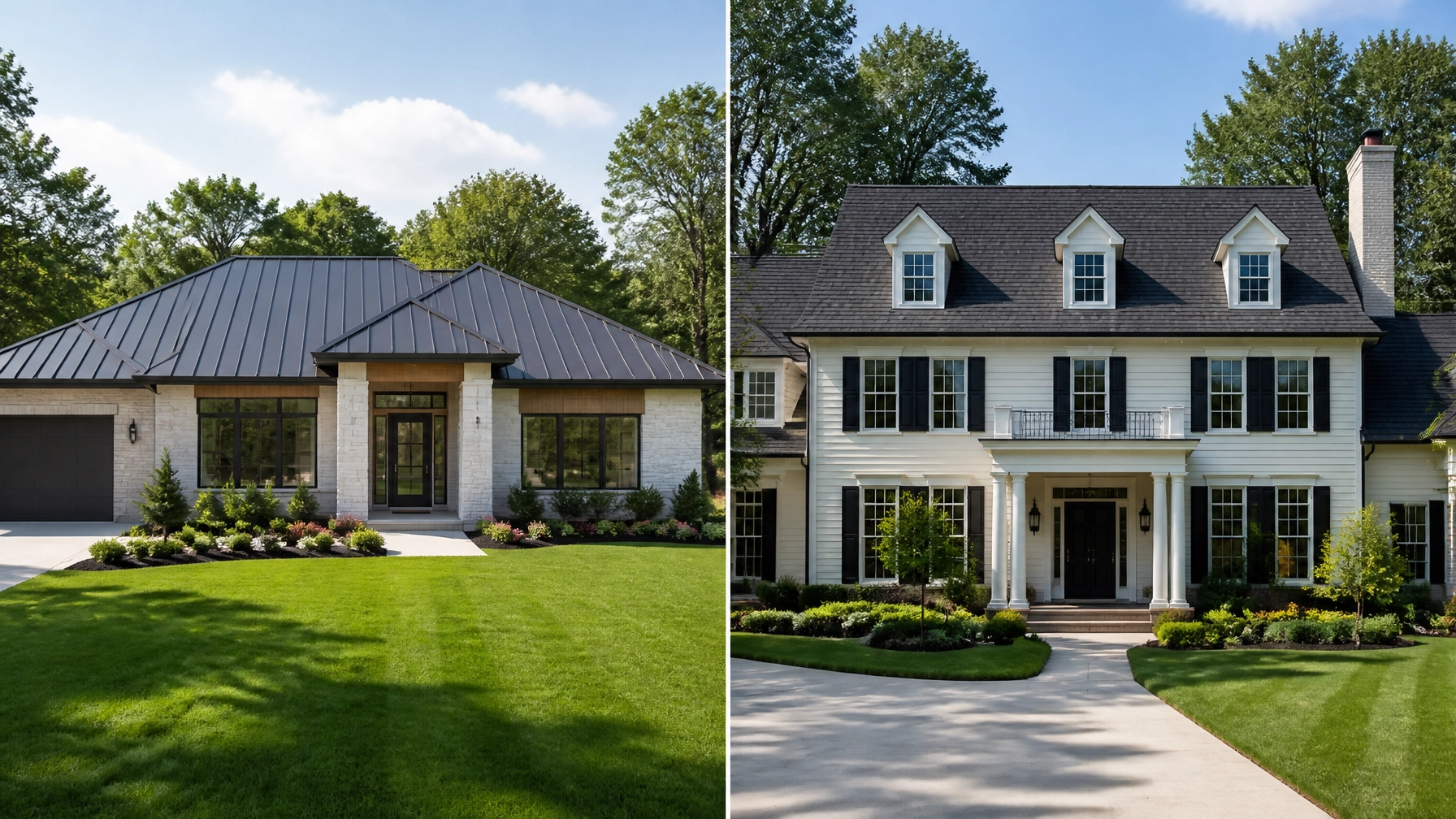
For Indianapolis homeowners in 2026, the roof is no longer just a functional necessity: it is a critical component of home efficiency and curb appeal. As traditional asphalt shingles continue to face challenges with longevity in the volatile Indiana climate, many residents are upgrading to premium systems. Two materials have emerged as the frontrunners for those seeking the ultimate balance of aesthetics and performance: Standing Seam Metal and Synthetic Slate.
Choosing between these two high-performance systems requires a deep dive into local costs, installation complexity, and long-term ROI. In this guide, we break down the 2026 Indianapolis data to help you decide which material is the right investment for your property.
The Core Difference: Aesthetics and Engineering
Before looking at the dollars and cents, it is essential to understand what these systems are designed to achieve.
- Standing Seam Metal (Modern / Industrial / Durable): This system features continuous metal panels that run from the ridge of the roof down to the eaves. The "seams" are raised (standing) above the level of the roof, and the fasteners are concealed, which eliminates the primary source of leaks in traditional metal roofing.
- Synthetic Slate (Classic / Stately / Aesthetic): Also known as composite slate, these tiles are engineered from advanced polymers and recycled materials to mimic the texture, thickness, and color variance of natural stone slate. It provides the "old world" look of a $50,000 roof at a fraction of the cost and weight.
2026 Indianapolis Cost Comparison: Standing Seam vs. Synthetic Slate
In the current 2026 market, Indianapolis pricing for premium roofing has stabilized, though labor remains a significant portion of the investment. Because both materials require specialized training to install, you can expect labor to account for approximately 50–60% of your total quote.
Material & Installation Price Ranges (Installed)
| Factor | Standing Seam Metal (Popular) | Synthetic Slate (Premium) |
|---|---|---|
| Cost Per Square Foot | $10.00 – $18.00 | $9.00 – $16.00 |
| Total Cost (2,000 sq ft Home) | $20,000 – $36,000 | $18,000 – $32,000 |
| Lifespan | 40 – 70+ Years | 40 – 50+ Years |
| ROI / Home Value Add | High (Energy Efficiency) | High (Curb Appeal) |
Note: Estimates include full tear-off of one layer of existing shingles and typical underlayment.
For an accurate, location-specific price that factors in your unique roof pitch and complexity, you can get an instant roof estimate online using our satellite imagery technology.

Standing Seam Metal: The Engineering Powerhouse
Standing seam metal is widely considered the "Gold Standard" for durability in the Midwest. In Indianapolis, where heavy snow, summer humidity, and high winds are common, metal offers several distinct advantages.
The Benefits
- Snow Shedding: Metal roofs heat up quickly and have a slick surface, allowing snow to slide off rather than accumulating and causing ice dams.
- Fire Resistance: Most standing seam systems carry a Class A fire rating, which can occasionally lead to lower homeowner insurance premiums in Indiana.
- Reflectivity (Cool Roof): Even in darker colors, modern Kynar 500 coatings reflect solar heat, reducing cooling costs during the humid Indianapolis summers.
The Investment Reality
Standing seam is a "lifetime" roof. While the upfront cost is nearly double that of architectural shingles, the cost-per-year of ownership is significantly lower. You are effectively paying for two or three asphalt roof replacements upfront to never have to worry about your roof again.
Synthetic Slate: The Aesthetic Champion
For homeowners in historic neighborhoods or those with colonial and manor-style architecture, synthetic slate is the preferred choice. It offers the prestige of stone without the structural reinforcement required for heavy natural slate.

The Benefits
- Weight Advantage: Natural slate can weigh between 800 and 1,500 pounds per square (100 sq ft). Synthetic slate weighs roughly the same as a standard asphalt shingle, meaning no extra structural support is needed.
- Impact Resistance: Many synthetic products (like DaVinci or Brava) are Class 4 Impact Rated, meaning they can withstand the hail storms that frequently roll through Central Indiana.
- Consistency: Unlike natural stone, which can have hidden fissures and break during installation, synthetic tiles are uniform and durable.
The Cost Nuance
While synthetic slate often starts at a slightly lower price point than standing seam metal, premium brands with custom color blends can quickly close that gap. In Indianapolis, synthetic slate is frequently chosen for its 50-year warranty and its ability to maintain a home’s historic character.
60-Second Accuracy: The Role of Satellite Technology
The traditional way of getting a roof estimate in Indianapolis involved calling three contractors, waiting for them to show up, and having them walk around your shingles with a tape measure. In 2026, that process is obsolete.
At Get My Roof Estimate Now, we use advanced satellite imagery to measure your roof's size, pitch, and complexity to within inches. By factoring in current 2026 Indianapolis labor rates and material costs, we provide a transparent price range in under a minute.

This technology eliminates the "sales pressure" of an in-home visit and gives you the data you need to budget before you ever speak to a contractor. Our measurements are 90-95% accurate, providing a reliable benchmark for your project.
Indianapolis Local Factors: Permits and Vetting
A premium roof is only as good as the installation. In Indianapolis, there are specific local requirements you must keep in mind.
1. Permits and Inspections
Most roof replacements in Marion County and surrounding areas require a building permit. In 2026, permit fees typically range from $250 to $500. Ensure your contractor's bid explicitly states that they will handle the permit application and the final inspection with the local building department.
2. Contractor Vetting
Because standing seam metal and synthetic slate are specialty products, you cannot hire a general "shingle chaser."
- Manufacturer Certification: Ask for proof that the roofer is certified by the specific manufacturer (e.g., a "Certified Master Piece" for DaVinci Slate).
- The 3-Bid Rule: Always vet at least three, and preferably five, licensed and insured contractors.
- Workmanship Warranty: While the manufacturer covers the material (usually 50 years), you want a workmanship warranty from the contractor of at least 10–25 years for these premium systems.
Summary: Which is Right for You?
The decision between Standing Seam Metal and Synthetic Slate ultimately comes down to your home’s architectural style and your personal priority.
- Choose Standing Seam Metal if: You want a modern, high-tech look, you are concerned about heavy snow accumulation, and you want the absolute longest possible lifespan (70+ years).
- Choose Synthetic Slate if: You own a traditional or historic home, you want the high-end look of stone, and you want a material with incredible impact resistance against Indiana hail.
Both options represent a significant upgrade over asphalt and will likely be the last roof you ever install on your home.

Ready to see what a premium roof would cost for your specific address? Don't wait for a contractor's schedule. Get your instant satellite roof estimate here and take control of your home improvement project today.
Leave a Reply