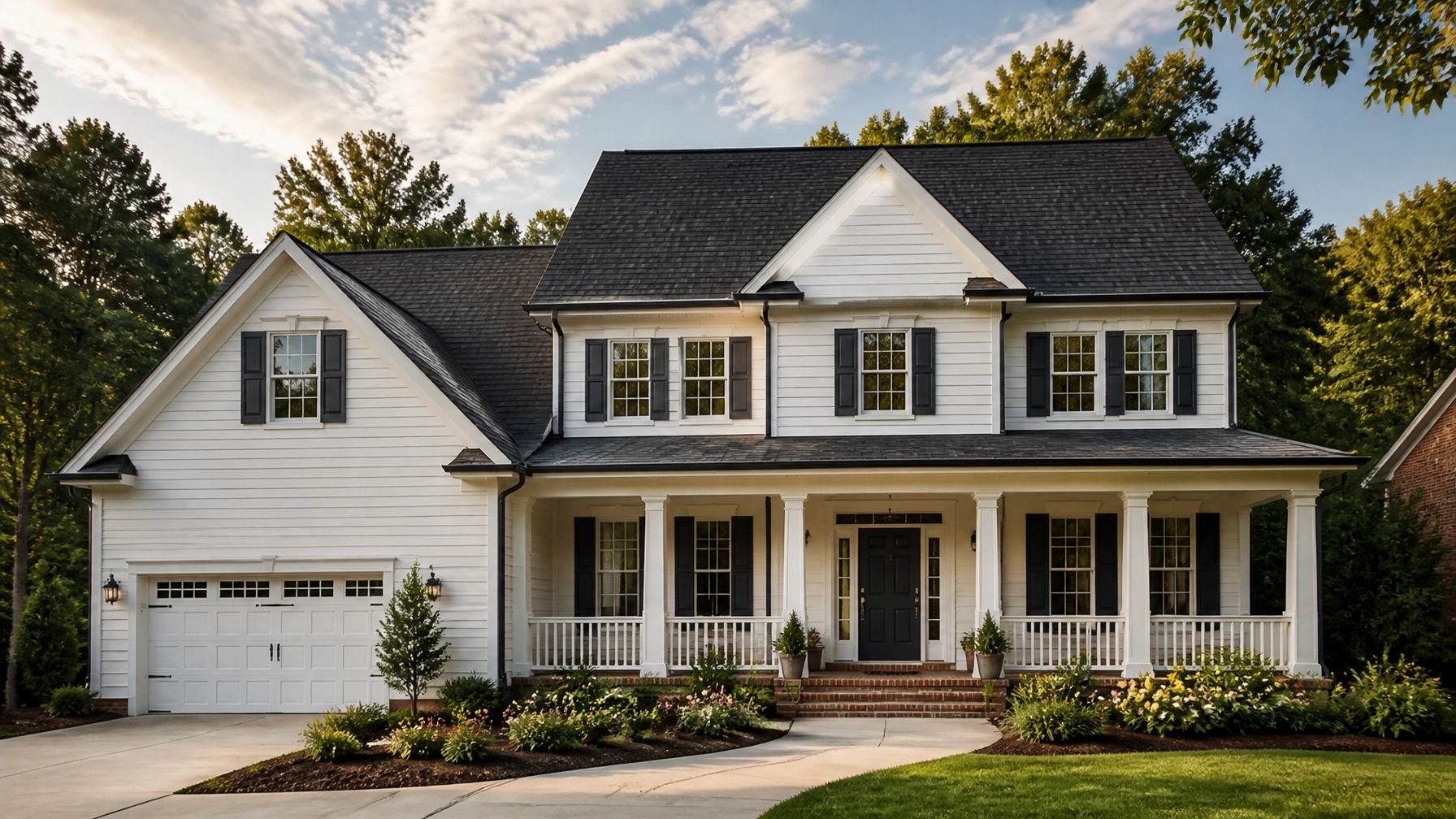
Charlotte is becoming a stronger technology city: and that advantage is now reaching the roofing market.
From machine-learning flood forecasts to aerospace engineering and satellite connectivity, the Queen City is building systems designed to measure conditions earlier, respond faster, and make better decisions with real-world data. Homeowners can apply the same principle to roof replacement planning.
In 2026, a typical Charlotte roof replacement costs approximately $6,000–$22,000. Most homeowners with a 2,000-square-foot roof pay close to $9,000 for architectural shingles, while premium materials and complex roof designs can push costs much higher.
The first step is no longer scheduling several contractors just to get a rough number. Satellite-powered roof measurement can provide a free, property-specific estimate in about 60 seconds.
Charlotte’s technology edge is built around better measurements
Charlotte-Mecklenburg Storm Water Services is working with Woolpert on a machine-learning flood forecasting system. The project is designed to use rainfall predictions and historical data to estimate creek levels up to 12 hours in advance.
The system builds on the county’s existing Flood Information and Notification System, or FINS, which uses:
- Rainfall and stream-stage sensors
- Real-time camera feeds
- Inundation mapping
- Automated alerts
- Historical flood data
During Tropical Storm Debby, these tools helped emergency managers barricade West Morehead Street at Stewart Creek before conditions became dangerous. Afterward, the county visited approximately 80 flood sites, most involving single-family homes.
The lesson is practical: better data creates more lead time.
Roof measurement technology applies the same idea to home improvement. Instead of waiting for a contractor’s schedule, homeowners can first use satellite imagery to understand their roof’s approximate size, pitch, and complexity. That information creates a more useful budget before an in-person inspection.
The technology does not replace a final contractor quote. It improves the starting point.
Charlotte’s aerospace and satellite culture matters
Charlotte’s technology economy also includes advanced manufacturing and aerospace connections.
Honeywell moved its corporate headquarters to Charlotte in 2018. In 2025, the company announced plans to separate into three businesses. The Charlotte-based automation company is remaining in the city, reinforcing Charlotte’s position as a center for industrial technology and autonomy.
The wider regional supply chain includes companies working with precision machining, aerospace hardware, robotics, and advanced manufacturing. Collins Aerospace also has a presence in the region. Companies such as RivCut market tight-tolerance CNC machining services to Charlotte-area hardware and defense teams, although any specific supplier relationship must be confirmed directly.
This kind of work depends on exact measurements. A component may look small, but a fraction of an inch can determine whether it fits, seals, or performs correctly.
A residential roof is a different application, but the measurement principle is similar. Roof replacement pricing depends on the actual surface area: not simply the square footage listed for the home.
Satellite internet and satellite roof imagery are different: but connected
Charlotte businesses are also using satellite connectivity for backup internet, temporary construction sites, hospitality Wi-Fi, and mobile operations. Starlink and similar services can provide a rapid connection when fiber, cable, or cellular service is unavailable or disrupted.
That does not mean satellite internet and satellite roof measurement use the same system. They solve different problems:
- Satellite connectivity: Delivers internet access to a location.
- Satellite imagery: Provides overhead property data for analysis and measurement.
- Machine learning: Processes data to identify patterns and generate useful forecasts or estimates.
Together, these technologies reflect a broader shift toward faster, less disruptive services.
For homeowners, the benefit is simple: get a reasonable roof budget before committing to appointments, sales visits, or multiple inspection requests.

Charlotte roofs face wind, humidity, heat, and sudden storms
Charlotte’s roof risks are not identical to those in coastal Florida, tornado-heavy parts of the Midwest, or hail-prone areas of Texas.
The region’s most common roofing challenges include:
- High humidity and algae growth
- Intense summer heat and UV exposure
- Heavy rain
- Sudden thunderstorm wind
- Downbursts and straight-line winds
- Tropical storm remnants
- Occasional hail and ice events
Hurricane Helene demonstrated the importance of wind and water preparedness. A roughly 65-mph wind gust was recorded at Charlotte Douglas International Airport during the storm. While the most severe damage occurred farther west, wind at that level can expose weaknesses in older roofing systems.
Wind damage often begins at vulnerable points:
- Loose or aging shingles
- Ridge caps
- Roof edges
- Flashing around chimneys and walls
- Plumbing boots
- Ridge vents
- Areas previously repaired
A roof can appear acceptable from the ground and still have lifted shingles or compromised flashing. Do not climb onto the roof after a storm. Use binoculars for a basic ground-level check, then arrange a professional inspection if you notice missing materials, ceiling stains, granules in gutters, or visible damage.
2026 Charlotte roof replacement costs
Charlotte roofing prices vary by size, slope, access, materials, and the condition of the roof deck. Use these benchmarks for early planning, not as a final contract price.
| Roofing option | Typical Charlotte 2026 benchmark | Best fit |
|---|---|---|
| 3-tab asphalt shingles | $6,000–$10,000 | Budget |
| Architectural asphalt shingles | $8,500–$18,000 | Popular |
| Corrugated or exposed-fastener metal | $12,000–$18,000 | Durable value |
| Standing-seam metal | $18,000–$28,000+ | Premium |
| Designer shingles or slate | $18,000–$35,000+ | High-end |
Many standard architectural shingle projects fall between $4.50 and $7 per square foot before or around tear-off adjustments, while metal roofing commonly falls near $10–$15 per square foot, with a broader range depending on the system.
For comparison, a 2,000-square-foot roof might be priced approximately as follows:
- Budget: $6,000–$9,000
- Middle: $9,000–$14,000
- Premium: $18,000–$28,000+
These totals can increase when the project includes:
- Multiple layers of old roofing
- Rotted decking
- Steep slopes
- Multiple valleys and dormers
- Skylights or complicated penetrations
- Difficult access
- Extensive flashing replacement
- Permit and inspection requirements
Always ask whether tear-off, disposal, underlayment, ventilation, flashing, permits, and possible decking repairs are included.
Roof size is measured in squares: not just house square footage
Roofing contractors use a unit called a square.
One roofing square equals 100 square feet of roof surface.
A home advertised as having 2,000 square feet of living space may have more than 2,000 square feet of actual roof area. Roof pitch, overhangs, attached garages, porches, and architectural details all affect the final measurement.
For example:
- 1,800 square feet of roof area = 18 squares
- 2,400 square feet of roof area = 24 squares
- 3,000 square feet of roof area = 30 squares
The roof’s pitch also matters. A steep roof has more surface area than a low-slope roof covering the same footprint. It also requires additional safety equipment and labor time.
That is why an estimate based only on tax records or living-space square footage can be misleading.
How satellite-powered estimates help Charlotte homeowners
Get My Roof Estimate Now uses satellite imagery to measure roof dimensions and estimate pricing based on the property’s apparent size, pitch, and complexity.
The platform provides:
- 90–95% measurement accuracy
- A property-specific roof measurement
- Pricing for asphalt shingles, metal, synthetic materials, and coatings
- Low, middle, and high price ranges
- Regional cost adjustments
- A free result in approximately 60 seconds
- No credit card requirement
- No contractor visit required upfront
The result is a planning estimate: not a guarantee of the final construction price. An in-person contractor still needs to verify decking, ventilation, flashing, attic conditions, code requirements, and storm damage.
However, a satellite estimate can answer the first questions homeowners usually have:
- Is replacement likely within my budget?
- Would metal roofing be a major premium over shingles?
- Should I plan for a $9,000 project or a $20,000 project?
- Does it make sense to repair, replace, or wait?
- What might a new roof contribute to resale readiness?

Roof ROI starts with accurate project planning
A new roof is both a protective system and a visible part of a home’s value.
A replacement can support:
- Better curb appeal
- Improved buyer confidence
- Fewer inspection concerns
- Reduced risk of water damage
- Better energy performance with appropriate materials
- A more predictable selling process
But roof ROI depends on the home, neighborhood, material choice, installation quality, and market timing. Homeowners should not assume they will recover every dollar spent.
The strongest financial decision is usually a balanced one: choose a material that fits the home, the Charlotte climate, and the expected ownership period. Architectural shingles are often the practical middle option. Metal roofing may make more sense for homeowners prioritizing long service life, heat reflectivity, and reduced replacement frequency.
What to do before hiring a Charlotte roofer
Once you have an initial budget, use it to evaluate contractors more effectively.
Ask each roofer for:
- A written scope of work
- Material brand, grade, and color
- Tear-off and disposal details
- Ventilation and flashing plans
- Permit responsibility
- Warranty terms
- Proof of licensing and insurance
- A process for hidden decking damage
- Estimated start and completion dates
Compare at least two or three written proposals. Be cautious with unusually low bids, pressure to sign immediately, or contractors who cannot provide current insurance documentation.
You can also review local options through Get My Roof Estimate Now’s Charlotte roofing contractor guide.

Get a Charlotte roof estimate before the next storm
Charlotte’s technology ecosystem is built around anticipation: forecast the flood, maintain backup connectivity, machine precision components, and use data before making a decision.
Roof replacement planning can work the same way.
If your roof is 15–30 years old, has visible storm damage, or is part of a planned home sale, start with a property-specific number. Use the Charlotte, NC satellite roof estimate page to see your low, middle, and high replacement ranges in about 60 seconds.
It is free, requires no credit card, and gives you a clearer budget before you speak with a local roofing professional.
Sources and further reading
- Charlotte-Mecklenburg Storm Water Services flood tools
- WFAE: Mecklenburg County flood prediction service
- Honeywell’s 2025 portfolio update
- National Hurricane Center Hurricane Helene report
- Get My Roof Estimate Now roof cost calculator
Frequently asked questions
How much does a roof replacement cost in Charlotte in 2026?
Most Charlotte roof replacements cost approximately $6,000–$22,000. Architectural shingle projects commonly fall near $8,500–$18,000, while metal roofing often costs $12,000–$28,000 or more.
How accurate is a satellite roof estimate?
Satellite-powered measurements are typically 90–95% accurate for estimating roof size and complexity. A contractor must still verify structural conditions, decking, flashing, ventilation, and storm damage before providing a final quote.
What is a roofing square?
A roofing square equals 100 square feet of roof area. Contractors use squares to calculate materials, labor, tear-off, and disposal.
Can I get a Charlotte roof estimate without a contractor visit?
Yes. You can enter your address and receive a free satellite-based estimate in approximately 60 seconds. No credit card is required, and there is no contractor visit upfront.
What roofing material is best for Charlotte?
Architectural shingles are the most common choice because they balance cost, appearance, and service life. Metal roofing is a higher-cost option that can provide longer service life and strong heat-reflective performance. The right choice depends on your budget, roof design, and ownership plans.
Leave a Reply