Author: James Turner

  • Columbia Roof Replacement Secrets: What Storm Chasers Don’t Want You to Know

    Columbia homeowners are no strangers to the sudden, violent thunderstorms that roll through the Midlands. When the hail hits or the winds pick up, your roof takes the brunt of the damage. But in the wake of a storm, a second "storm" often follows: the arrival of out-of-state roofing contractors, commonly known as "storm chasers."

    These companies flood neighborhoods from Shandon to Lexington, knocking on doors and making promises that sound too good to be true. At Get My Roof Estimate Now, we believe transparency is the best defense. Before you sign anything or let a stranger onto your roof, you need to know the secrets these solicitors are hiding and what a roof replacement in Columbia actually costs in 2026.

    The Storm Chaser Playbook: Red Flags to Watch For

    Storm chasers are high-volume, traveling crews that follow severe weather patterns. They are not local businesses; they are sales machines designed to maximize insurance payouts and move on to the next city before you notice a leak.

    1. The "Free Roof" Scam (Illegal in South Carolina)

    The most common hook is the promise of a "free roof" where the contractor offers to "waive" or "absorb" your insurance deductible.

    The Secret: In South Carolina, this isn't just a marketing gimmick: it’s a crime. Under SC Code §38-75-756, it is strictly illegal for a contractor to pay, waive, or rebate any portion of an insurance deductible. If a contractor offers this, they are asking you to participate in insurance fraud. Your insurance company can deny the entire claim if they discover this arrangement.

    2. Out-of-State Plates and Temporary Addresses

    Look at the trucks parked on your street. If you see license plates from Texas, Florida, or Georgia, you’re likely dealing with a storm chaser.

    The Secret: These crews have no local ties. If your roof leaks two years from now, that "lifetime warranty" they promised is worthless because the company has disappeared or reorganized under a different name three states away. Always verify a local Columbia or Midlands-area physical address.

    3. High-Pressure "Today Only" Pricing

    "I have a crew around the corner, and I can give you this price if you sign right now." This is a classic manipulation tactic.

    The Secret: A legitimate roofing project requires careful planning, permitting, and material selection. Any contractor pressuring you to sign a contract before they leave your driveway is more interested in your signature than your home’s structural integrity.

    Close-up of high-quality architectural shingles being professionally installed on a residential roof, showing the layered texture and durability.

    Columbia Roof Replacement Costs: 2026 Benchmarks

    Transparency starts with real numbers. In 2026, Columbia homeowners are seeing specific price ranges based on material choice and roof complexity. Understanding these benchmarks helps you spot an estimate that is suspiciously low (indicating cut corners) or predatory (overpriced).

    Asphalt Shingles (Budget to Popular)

    Most homes in the Midlands (1,500–2,500 sq. ft. roof area) fall into these ranges for a full replacement:

    • 3-Tab Shingles (Budget): $9,000 – $13,000. These are less common today due to lower wind resistance.
    • Architectural Shingles (Popular): $12,000 – $18,000. This is the standard for most Columbia neighborhoods, offering 20-30 years of performance and better curb appeal.
    • Installed Cost per Square: Expect to pay $350 – $475 per square (a 10' x 10' area), which includes tear-off, disposal, and all components like underlayment and flashing.

    Metal Roofing (Premium)

    Metal is growing in popularity in SC due to its longevity and energy efficiency in our hot summers.

    • Standing Seam Metal (Premium): $20,000 – $35,000+.
    • Installed Cost per Square: $700 – $1,200 per square.
    • The Secret: While the upfront cost is 2x to 3x higher than shingles, a metal roof can last 50+ years, potentially outlasting your mortgage.

    Low-Slope and Coatings (Specialized)

    For homes with flat sections or porches:

    • Silicone/Acrylic Coatings: $3.00 – $6.00 per sq. ft.
    • TPO/EPDM: $8.00 – $14.00 per sq. ft.
    Material Type Typical Lifespan 2026 Columbia Cost Range
    Architectural Shingles 18–25 Years $12,000 – $18,000
    Standing Seam Metal 40–60 Years $20,000 – $35,000
    Synthetic Slate/Shake 50+ Years $30,000 – $55,000

    Why Satellite Imagery Beats the Ladder

    Traditional contractors spend hours driving to your home, climbing a ladder, and manually measuring with a tape measure. This process is slow, prone to human error, and often results in "fudge factors" that pad the estimate by 10-15%.

    At Get My Roof Estimate Now, we utilize advanced satellite imagery technology to provide an instant roof estimate in under 60 seconds.

    The Precision Advantage:

    • 90-95% Accuracy: Our technology measures size, pitch, and complexity (hips and valleys) to within inches.
    • Transparent Logic: We factor in regional labor rates for Columbia and current material costs for 2026.
    • Zero Pressure: You get the data you need to budget without a salesman sitting at your kitchen table for two hours.

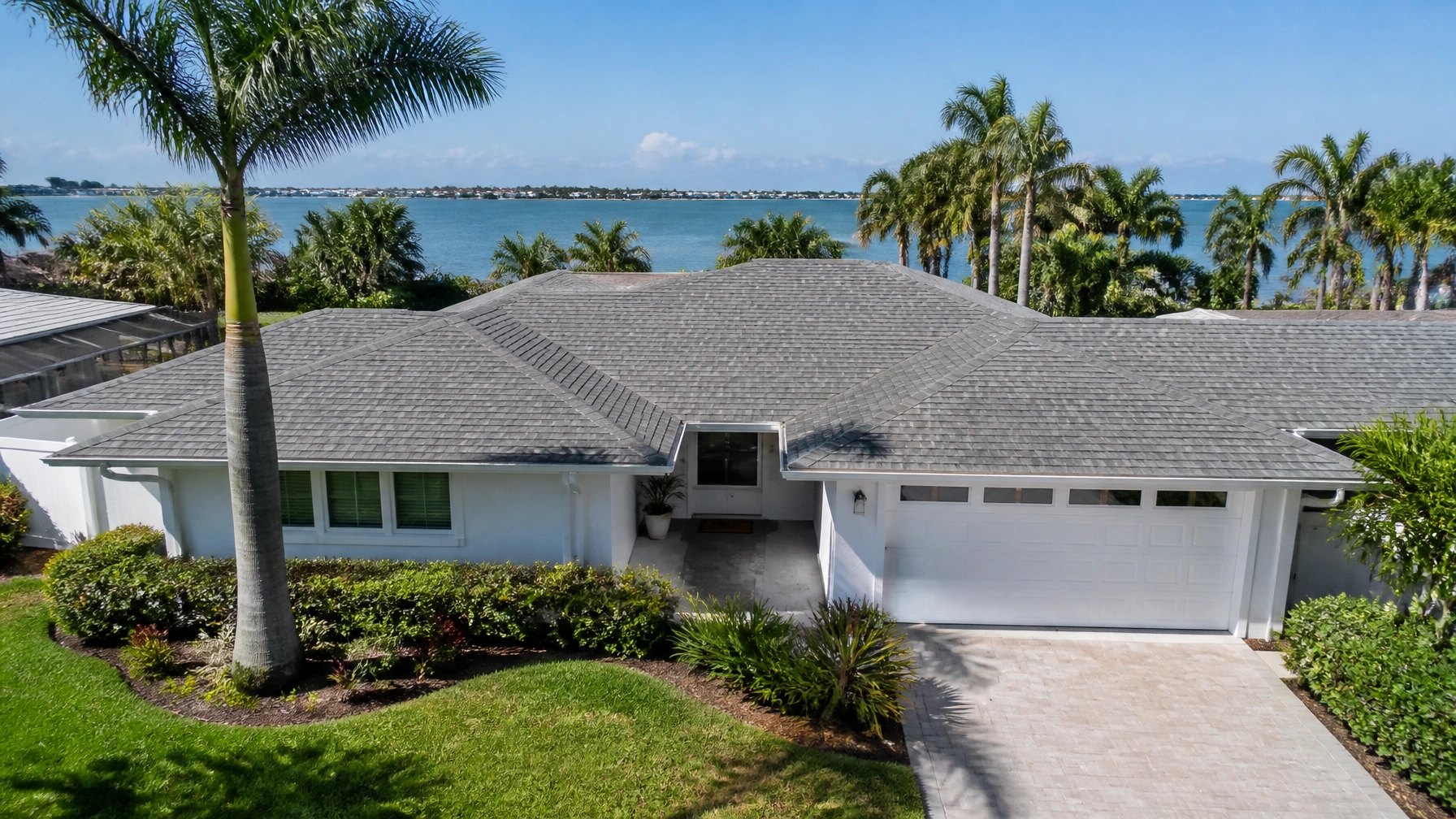
    A modern ranch-style home in South Carolina featuring a sleek, energy-efficient charcoal metal roof, highlighting modern architectural appeal.

    Vetting Your Columbia Contractor: The Professional Checklist

    If you decide to move forward after getting your free estimate, you must vet your local contractor with professional rigor.

    Verify the South Carolina License

    Don't take their word for it. In South Carolina, residential specialty contractors must be registered with the SC Department of Labor, Licensing and Regulation (LLR). Ask for their license number and check it against the LLR database. If they aren't licensed, you have zero legal recourse if the job goes south.

    Insurance: Liability and Workers' Comp

    A storm chaser might show you a piece of paper that looks like insurance.

    • General Liability: Protects your home if a tree limb falls through your window during the job.
    • Workers' Comp: This is critical. If a worker is injured on your property and the contractor doesn't have workers' comp, you could be held liable for their medical bills.

    Local References and Permits

    Ask for three homes they’ve roofed in Columbia, Lexington, or Irmo within the last year. Furthermore, ensure they are pulling the necessary building permits. In many SC jurisdictions, skipping a permit is a code violation that can complicate your home sale later.

    Don't Let Storm Chasers Control the Narrative

    The goal of a storm chaser is to keep you in the dark about actual costs and legal requirements. They want you to believe that the insurance process is a "black box" that only they can navigate.

    By using technology to get an accurate roof cost estimate upfront, you take the power back. You’ll know if a contractor’s bid is realistic or if they are trying to price-gouge your insurance carrier (which ultimately raises everyone's premiums).

    Ready for the Truth About Your Roof?

    Stop waiting for a contractor to show up. Get the data you need right now. Our satellite-powered system provides a transparent, no-obligation estimate based on your home's unique dimensions.

    Get Your Free 60-Second Roof Estimate Now

    A smartphone displaying a detailed satellite roof measurement map with accurate dimensions and a cost estimate breakdown for a Columbia home.

  • The Ultimate Guide to Charlotte Roof Replacement Cost: Everything You Need to Succeed in 2026

    The Ultimate Guide to Charlotte Roof Replacement Cost: Everything You Need to Succeed in 2026

    Navigating a roof replacement in the "Queen City" requires more than just a quick Google search in 2026. As Charlotte continues its rapid expansion: from the bustling streets of Uptown to the quiet suburbs of Ballantyne and Huntersville: the demand for skilled labor and high-quality materials has reached an all-time high.

    If you are a Charlotte homeowner, you are likely facing a market where prices have shifted. Following a projected 4% to 8% industry-wide price hike for 2026, budgeting for a new roof is no longer about "ballpark guesses." It is about data-driven precision.

    At Get My Roof Estimate Now, we utilize advanced satellite imagery to provide you with the transparency you deserve. This guide breaks down exactly what a roof replacement will cost you in Charlotte this year, the factors that drive those numbers, and how to avoid the common pitfalls of the Mecklenburg County permitting process.

    The Raw Numbers: Charlotte Roofing Costs in 2026

    To understand your investment, you first need to look at the current market averages in the Charlotte-Concord-Gastonia metro area. While every roof is unique, local data suggests the following price ranges for a standard 2,000-square-foot roof.

    Material Type Estimated Cost Range (2026) Classification
    3-Tab Shingles $8,500 – $11,000 (Budget)
    Architectural Shingles $10,500 – $16,500 (Popular)
    Standing Seam Metal $18,000 – $32,000 (Premium)
    Synthetic/Slate $35,000 – $60,000+ (Luxury)

    Why the 2026 Price Jump?

    The 4-8% increase we are seeing this year is driven by two main factors: Supply Chain Stabilization Fees and Regional Labor Demand. Charlotte’s construction boom means roofing crews are in high demand. When you factor in the cost of high-grade asphalt and the specialized equipment required for modern installations, the "low-cost" options of five years ago have largely disappeared.

    A modern ranch-style home in Charlotte, NC, featuring a sleek, matte black standing seam metal roof.

    Factor 1: Material Selection (The Biggest Variable)

    In Charlotte’s humid subtropical climate, your choice of material isn't just about aesthetics; it's about longevity and cooling costs.

    • Architectural Shingles (Popular): These are the gold standard for Charlotte homes. They offer a dimensional look, are rated for high winds (crucial during storm season), and generally carry a 30-to-50-year manufacturer warranty. Expect to pay between $450 and $650 per square (a "square" is a 10×10 foot area) installed.
    • Metal Roofing (Premium): Increasingly popular in neighborhoods like Plaza Midwood and NoDa, metal roofs are prized for their energy efficiency. They reflect solar radiant heat, which can reduce cooling costs by up to 25% during Charlotte’s sweltering July afternoons.
    • Impact-Resistant Shingles (Practical): Given the frequency of hailstorms in the Piedmont region, many Charlotte homeowners are opting for Class 4 impact-resistant shingles. While the upfront cost is 15-20% higher, many insurance providers offer premium discounts for these installations.

    Factor 2: The Complexity of Your Roof

    Your neighbor might have paid $12,000 for their roof, but your quote came back at $16,000. Why? It likely comes down to complexity.

    1. Pitch (Slope): If your roof is "walkable," labor costs are lower. If it’s a steep-slope roof (common in older Myers Park homes), contractors must use specialized safety harnesses and scaffolding, increasing the price.
    2. Layers: If your home has two layers of old shingles, the "tear-off" labor and disposal fees at the Mecklenburg County landfill will double.
    3. Penetrations: Every chimney, skylight, and vent pipe requires custom flashing. A roof with ten "penetrations" will always cost more than a simple gable roof with two.

    A high-resolution aerial satellite view of a residential neighborhood in Charlotte, NC, with digital measurement overlays.

    Technology Overcomes the Hassle: The Satellite Advantage

    Historically, getting an estimate meant calling three different contractors, waiting for them to show up, and dealing with high-pressure sales pitches in your living room.

    In 2026, that process is obsolete. Get My Roof Estimate Now uses satellite-powered measurements that are accurate to within inches. Our technology factors in:

    • Total Square Footage: No more "eyeballing" the size.
    • Pitch and Waste Factor: Automated calculations ensure you only pay for the material you actually need.
    • Regional Pricing: We sync with real-time labor and material costs specifically for the Charlotte market.

    By using our roof cost calculator, you receive a transparent, objective price range in under 60 seconds. This allows you to walk into a contractor negotiation with the data you need to ensure you aren't being overcharged.

    Navigating Mecklenburg County Permits

    One of the most confusing aspects of a Charlotte roof replacement is the legal requirement. In Mecklenburg County, the rules for 2026 are clear:

    • The $40,000 Rule: For most residential homes, if your project is valued at $40,000 or less and involves a "like-for-like" replacement (same material, no structural changes), a building permit is generally not required.
    • Structural Changes: If you are replacing rotted roof decking (sheathing) or repairing rafters, a permit is mandatory.
    • Material Changes: Switching from shingles to a heavy tile or slate roof requires a permit and a structural engineer's review to ensure your home can handle the additional weight.

    Always verify that your chosen contractor is licensed and insured in North Carolina. You can check their status through the North Carolina Licensing Board for General Contractors.

    A close-up photograph of a professional roofing installation in progress in a sunny North Carolina suburb.

    2026 Local Market Insights: The "Charlotte Effect"

    Why are costs in Charlotte different from, say, Raleigh or Greensboro?

    1. The Labor Gap: Charlotte’s unemployment rate remains lower than the national average, and skilled tradespeople are in high demand. This pushes labor rates to the higher end of the state spectrum.
    2. Landfill Fees: Disposal fees for construction debris in Mecklenburg County have seen a slight increase in 2026, which is passed on to the homeowner in the "tear-off and haul-away" portion of your quote.
    3. Climate Demands: The humidity in the Piedmont leads to faster algae growth (those black streaks you see on roofs). In 2026, almost all local contractors include "algae-resistant" shingles as a standard, which carries a small premium over basic materials used in drier climates.

    Step-by-Step: How to Replace Your Roof in Charlotte

    1. Get Your Instant Estimate: Use our satellite-powered tool to establish your baseline budget.
    2. Inspect for Storm Damage: Before paying out of pocket, check if recent wind or hail has affected your zip code. Your replacement might be covered by insurance.
    3. Interview Three Contractors: Look for local Charlotte companies with a physical office and verified reviews.
    4. Compare the "Scope of Work": Ensure every quote includes underlayment replacement, new flashing, and a clean-up guarantee (magnetic nail sweep).
    5. Schedule for "The Sweet Spot": In Charlotte, the best months for roofing are March-May and September-November. Avoid the peak heat of August if possible, as it can be harder on the roofing crews and the materials themselves.

    The Bottom Line

    A roof replacement in Charlotte for 2026 is a significant investment, likely ranging between $10,500 and $18,000 for the average home. While the 4-8% price hike is unavoidable, overpaying is not.

    By leveraging technology, understanding local permitting, and choosing materials suited for the North Carolina climate, you can protect your home's value without the stress of traditional "guesswork" estimates.

    Ready to see what your specific roof will cost today? Get your instant, free estimate in 60 seconds here.

  • How to Choose the Best Houston Roofer: Local Pros vs. Storm Chasers (Compared)

    Houston homeowners face a unique challenge. Between the humidity of the Gulf Coast and the frequent threat of hurricanes and hail, our roofs take a beating. When the clouds clear after a major storm, the "storm chasers" arrive. These out-of-state contractors descend on neighborhoods from Katy to Sugar Land, promising quick fixes and insurance "magic."

    Choosing the wrong roofer doesn't just lead to a leak next year; it can cost you thousands in unrecoverable deposits or voided manufacturer warranties. In this guide, we break down the critical differences between established local professionals and the transient storm chasers who vanish as fast as the rain.

    The Comparison: Local Pros vs. Storm Chasers

    Feature Local Houston Professional Out-of-State Storm Chaser
    Physical Office Permanent address in the Houston area. Temporary hotel room or a P.O. Box.
    Licensing RCAT Licensed (Voluntary) & City Registered. No local credentials or history.
    References Verifiable neighbors and local projects. "Generic" photos or out-of-state leads.
    Warranty Multi-year workmanship warranties. Warranties that disappear when they leave town.
    Timeline Realistic schedules based on permits. High-pressure "sign today" tactics.
    Estimates Detailed, data-driven, and transparent. Vague, often "matching" insurance only.

    1. Spotting the Storm Chaser (Red Flags)

    The Texas Department of Insurance (TDI) and the Better Business Bureau (BBB) frequently warn against roofing scams. In 2026, the tactics have become more sophisticated, but the warning signs remain the same.

    • The Unsolicited Knock: If someone shows up at your door in The Heights or Pearland without an appointment right after a storm, be wary. Most reputable local roofers are busy enough with referrals.
    • The "Free Roof" Pitch: Be skeptical of any contractor claiming they can "waive your deductible." In Texas, this is actually illegal under Texas Business and Commerce Code Chapter 701.
    • Pressure for Immediate Payment: Never pay the full amount upfront. A standard local practice is "the rule of thirds": one-third for materials, one-third during work, and the final third only after you are 100% satisfied.

    Close-up of high-quality architectural shingles being installed on a Houston home, showing the layering and professional craftsmanship. Hyper-realistic photography of roofing materials.

    2. Houston Roofing Costs: 2026 Benchmarks

    To avoid being overcharged: or falling for an "under-bid" that results in corners being cut: you need to know the current market rates. For a typical 2,500 sq. ft. home in the Houston metro area, here is what you can expect to pay:

    • Architectural Shingles (Popular): $11,250 – $18,750. These are the standard for Houston due to their wind resistance (up to 130 mph).
    • Impact-Resistant Shingles (Premium Shingles): $14,000 – $22,000. Recommended for those wanting a discount on their Texas homeowners' insurance.
    • Standing-Seam Metal (Premium): $22,500 – $40,000. These offer maximum longevity and heat reflection for Houston summers.
    • Silicone Roof Coatings (Maintenance/Budget): $3,000 – $7,000. Often used for flat-roof sections or extending the life of an existing commercial-grade roof.

    3. The Texas Licensing Loophole

    It is a common misconception that Texas roofers are state-licensed. Texas does not have a mandatory state license for roofing. This is why vetting is your responsibility.

    To protect yourself, only hire contractors who hold a voluntary license from the Roofing Contractors Association of Texas (RCAT). This ensures they have:

    1. Passed a rigorous technical exam.
    2. Proven a multi-year history of business in the state.
    3. Maintained consistent general liability insurance.

    Before signing anything, ask for their city registration. Most Houston-area municipalities, including The City of Houston, require contractors to register before they can pull the necessary permits for your project.

    A professional roofing project manager showing a homeowner a digital roof estimate on a tablet, with a residential Houston home in the background. Hyper-realistic photography.

    4. Why Satellite Technology is Your Best Defense

    The traditional way of getting a roof estimate: waiting days for a contractor to show up, climb a ladder, and manually measure: is outdated. It also invites high-pressure sales pitches in your living room.

    At Get My Roof Estimate Now, we use advanced satellite imagery to measure your roof's size, pitch, and complexity to within inches of accuracy.

    • Zero Pressure: You get your estimate in 60 seconds without talking to a salesman.
    • Budgeting Power: Know exactly what your roof should cost before you ever call a contractor.
    • Accurate Data: Our reports factor in regional Houston pricing for materials like architectural shingles and metal.

    If you’re in a Houston zip code like 77002, 77494, or 77380, you can see your instant roof replacement cost here.

    Aerial satellite-style top-down view of a suburban neighborhood with house roofs highlighted for measurement, illustrating advanced roofing technology.

    5. Your 5-Step Vetting Checklist

    Before you commit to a Houston roofer, run through this checklist:

    1. Check the "Permanent" Address: Does the company have a physical office in the Houston area? (Verify this on Google Maps).
    2. Verify Insurance: Ask for a Certificate of Insurance (COI) that names you as the "Certificate Holder."
    3. Read Local Reviews: Look for reviews from the last 6 months specifically in Houston or surrounding suburbs like Cypress, Humble, or Friendswood.
    4. Ask About the Crew: Will the work be done by local employees or a "subbed-out" crew that just arrived from another state?
    5. Get a Detailed Contract: Ensure the contract specifies the brand of shingles, the type of underlayment, and the specific disposal plan for old materials.

    Conclusion

    Houston is a prime target for storm chasers, but you don't have to be a victim. By leading with data and using tools like our satellite-powered estimate, you take the power back from the high-pressure salesman.

    Know your numbers, vet your local pros, and ensure your Houston home is protected by a roof that was built to last.


  • 2026 Charleston Roof Replacement Cost Explained in Under 3 Minutes

    2026 Charleston Roof Replacement Cost Explained in Under 3 Minutes

    If you are a homeowner in Charleston, South Carolina, looking to replace your roof in 2026, you likely don't have the time to schedule four different contractor walkthroughs just to get a ballpark figure. You need data, you need it fast, and it needs to be accurate to the Lowcountry market.

    The average roof replacement in Charleston currently ranges from $10,000 to $40,000+, depending heavily on material choice and roof complexity. In this guide, we break down these costs with surgical precision so you can budget effectively in under three minutes.

    The 2026 Charleston Price Index

    Cost per square foot in Charleston is influenced by local labor rates, debris disposal fees (which vary by county), and specific coastal building codes designed for hurricane resistance. Below are the current market benchmarks for a standard 2,000-square-foot residential roof.

    Material Type Estimated Cost Per Sq. Ft. Total Project Estimate (2,000 Sq. Ft.) Category
    Basic 3-Tab Shingles $4.00 – $6.00 $8,000 – $12,000 (Budget)
    Architectural Shingles $5.50 – $8.00 $11,000 – $16,000 (Popular)
    Luxury Shingles $8.00 – $11.00 $16,000 – $22,000 (Premium Shingle)
    Corrugated Metal $9.00 – $13.00 $18,000 – $26,000 (Mid-Range Metal)
    Standing Seam Metal $13.00 – $19.00 $26,000 – $38,000+ (Premium)

    Note: These estimates include full tear-off of one layer of old roofing, standard underlayment, and professional installation.

    Why Charleston Costs Are Different

    Roofing in the Lowcountry isn't the same as roofing in the Upstate. Charleston homeowners face unique environmental and regulatory factors that impact the final invoice.

    1. High-Wind Speed Zones

    Due to our proximity to the coast, many areas in Charleston County require roofing systems rated for wind speeds up to 130-150 mph. This often means using specialized high-wind shingles and specific nailing patterns (6 nails per shingle instead of the standard 4), which adds a small but necessary labor and material premium.

    2. Salt Air Corrosion

    If you live in Mount Pleasant, Isle of Palms, or West Ashley, salt spray is a real factor. For metal roofs, this necessitates the use of aluminum or specialized coatings to prevent premature rusting, which carries a (Premium) price tag compared to standard galvanized steel.

    3. Complexity and Pitch

    Charleston is home to a wide variety of architectural styles, from simple ranch homes to complex historic Colonials with multiple dormers and steep pitches. A roof with a "steep" pitch (anything over 6/12) requires extra safety equipment and labor time, typically increasing costs by 10-15%.

    A sleek, charcoal-colored standing seam metal roof on a modern Charleston coastal residence, highlighting durability and modern design.

    Breaking Down Material Choices

    Architectural Shingles (Popular)

    This is the standard for 80% of Charleston roof replacements in 2026. These shingles provide a dimensional look and are engineered to withstand the humid, stormy SC climate better than basic 3-tab shingles.

    • Pros: 25-30 year lifespan, excellent wind resistance, high ROI for resale.
    • 2026 Cost Trend: Prices have stabilized after the supply chain volatility of previous years, making this the most cost-effective "long-term" solution.

    Standing Seam Metal (Premium)

    Increasingly popular in coastal neighborhoods for its modern aesthetic and "lifetime" durability. Unlike corrugated metal, standing seam has no exposed fasteners, which virtually eliminates the risk of leaks over its 50+ year lifespan.

    • Pros: Energy efficient (reflects solar heat), hurricane-grade durability, 50-year lifespan.
    • Cons: High upfront investment (2-3x the cost of shingles).

    Synthetic Slate or Tile (Elite)

    For historic homes in downtown Charleston or luxury estates on Kiawah Island, synthetic options offer the look of natural stone or clay without the extreme weight. This is a (Specialty) category and requires a custom quote.

    The Secret to an Accurate Estimate: Satellite Technology

    Traditional roofing estimates involve a contractor climbing a ladder, taking manual tape measurements, and often "eyeballing" the waste factor. This process is prone to human error and usually takes 3-5 days to schedule.

    At Get My Roof Estimate Now, we’ve eliminated the wait. We utilize high-resolution satellite imagery and AI-powered measurement tools to calculate your roof's square footage, pitch, and complexity within inches of accuracy.

    How it works in 60 seconds:

    1. Enter Your Address: Our system pulls up-to-date satellite photos of your specific home.
    2. AI Analysis: Our tech measures every ridge, valley, and slope.
    3. Instant Pricing: You receive a detailed roof replacement estimate showing price ranges for Shingles, Metal, and Premium options.

    Top-down satellite imagery of a Charleston neighborhood with a digital measurement overlay demonstrating accurate AI-powered roofing technology.

    Local Labor and Permit Costs in Charleston

    Labor typically accounts for 40-50% of your total roofing bill. In 2026, skilled roofing labor in South Carolina remains in high demand. Expect to see labor rates ranging from $250 to $400 per "square" (a 10×10 foot area).

    Permitting Fees:
    In Charleston, building permits are based on the total value of the work. For a $15,000 roof, expect to pay between $150 and $300 in permit fees. Licensed contractors should always handle the permitting process to ensure the work meets the South Carolina Residential Specialty Contractor standards.

    Don't Forget the "Hidden" Costs

    When reviewing a quote, ensure it includes:

    • Decking Replacement: If your plywood is rotted (common in humid SC), expect to pay $75–$110 per sheet.
    • Flashings: Replacing the metal around chimneys and valleys is non-negotiable for a leak-free roof.
    • Debris Disposal: Roll-off dumpster fees are usually built into your estimate but can vary if your roof has multiple layers of old shingles to remove.

    A beautiful ranch-style home in a Charleston suburb showcasing a new weathered-wood colored shingle roof under a warm sunset glow.

    Final Checklist Before You Sign

    Before you commit to a roofing project in the Holy City, verify these three things:

    1. Licensing and Insurance: Ensure the contractor carries General Liability and Workers' Comp.
    2. Local Experience: Coastal roofing requires specific knowledge of SC wind codes.
    3. Transparent Pricing: Never accept a "handshake" deal. Use our instant calculator to get a baseline price before you even talk to a salesperson.

    Frequently Asked Questions (FAQ)

    What is the cheapest roof to install in Charleston?

    The most affordable option is a 3-tab asphalt shingle roof (Budget). However, most Charleston roofers recommend architectural shingles (Popular) because they offer significantly better wind resistance for a relatively small price increase.

    How long does a roof replacement take?

    For most standard homes (1,500 – 2,500 sq. ft.), the actual installation takes 1 to 2 days. Prep work and permit approval may take an additional week.

    Can I get a roof estimate without a home visit?

    Yes. Using Get My Roof Estimate Now, you can receive a satellite-verified estimate in under 60 seconds without having to schedule an appointment or clear your calendar for a salesperson.

    Does a new roof increase my home value in SC?

    Absolutely. A new roof in a coastal market like Charleston is one of the highest ROI home improvements, often recovering 60-70% of its cost in increased home value, not to mention the improved curb appeal and lower insurance premiums.


    Ready to see your price? Don't guess: know. Use our satellite technology to get your free instant roof estimate now.

  • How to Get Your Roof Replaced by Insurance in Charleston, SC (5 Steps to Success)

    In Charleston, the question isn’t if your roof will face a major storm, but when. From the high-velocity winds of a tropical system to the sudden, pea-sized hail of a Lowcountry afternoon thunderstorm, your roof is your home’s first line of defense.

    When damage occurs, the financial burden of a full replacement: which typically ranges from $9,500 to $18,000 for asphalt shingles in the Charleston area: can be overwhelming. Fortunately, if the damage is "sudden and accidental," your homeowners insurance is designed to cover the cost. However, navigating the claims process in South Carolina requires more than just making a phone call; it requires a strategic, data-backed approach.

    At Get My Roof Estimate Now, we help homeowners bypass the traditional 3-week wait for contractor inspections by providing instant, satellite-powered roof estimates in under 60 seconds. Use this guide to master the insurance game and ensure your Charleston home gets the protection it deserves.


    Step 1: Detect and Document (The Evidence Phase)

    Insurance companies operate on proof. In Charleston, the most common covered perils are wind (shingle blow-offs) and hail (impact marks that bruise the shingle mat).

    What to Look For:

    • Wind Damage: Lifted, creased, or missing shingles. After a storm, check your yard for "shingle grit" or actual shingle pieces.
    • Hail Damage: Small, circular indentations on soft metals (like roof vents or gutters) often indicate that the shingles have also taken a hit.
    • Interior Signs: Water spots on ceilings or damp insulation in the attic.

    Pro Tip: Do not climb on your roof. Use your smartphone to take high-resolution photos from the ground. Document the date of the storm and any neighborhood debris. If you have active leaks, you are legally required to perform "reasonable repairs": like tarping: to prevent further damage. Keep the receipts; these are usually reimbursable.

    Close-up of wind-damaged architectural shingles on a South Carolina home, showing creased edges and missing granules after a coastal storm.


    Step 2: Establish a Baseline Value (The 60-Second Estimate)

    Before you call your insurance agent, you need to know the "Scope of Work." Most homeowners fly blind, waiting weeks for an adjuster to tell them what the roof is worth.

    By using our satellite-powered calculator, you can generate a professional-grade estimate based on your home's exact footprint, pitch, and complexity. This gives you immediate leverage. When the insurance adjuster provides their initial "Actual Cash Value" (ACV) payment, you’ll know instantly if they are low-balling the local Charleston market rates.

    Charleston Market Benchmarks (2024-2026):

    • Budget (3-Tab Shingles): $4.50 – $6.00 per sq. ft.
    • Popular (Architectural Shingles): $6.00 – $8.50 per sq. ft.
    • Premium (Standing Seam Metal): $12.00 – $18.00+ per sq. ft.

    Step 3: File the Claim and Understand Your Deductible

    Contact your insurance company’s claims department to "open a loss." You will be assigned a claim number. This is the time to clarify your policy type:

    1. RCV (Replacement Cost Value): This is the gold standard. The insurer pays the full cost to replace the roof (minus your deductible). They usually send a first check (ACV) and hold back the "recoverable depreciation" until the job is finished.
    2. ACV (Actual Cash Value): The insurer only pays what your old roof was worth today. If your 20-year-old roof is at the end of its life, you may only receive a fraction of the replacement cost.

    Important Charleston Note: Many South Carolina policies have a separate Hurricane or Named Storm Deductible. This is often a percentage (e.g., 2% to 5%) of your home’s total insured value, rather than a flat $1,000 fee. Ensure you know which deductible applies to your specific storm event.

    A digital rendering of a Charleston home with a satellite measurement overlay, illustrating how technology identifies roof sections and pitch for accurate pricing.


    Step 4: The Adjuster Inspection (The Meeting)

    The insurance company will send an adjuster to verify the damage. In Charleston, adjusters are often overwhelmed after a major storm.

    You have the right to have your own contractor present during this inspection. A seasoned contractor can point out damage the adjuster might overlook, such as damaged flashing or "hidden" hail hits.

    South Carolina Consumer Protection:

    Under South Carolina Code §40-59-25, if you sign a contract with a roofer that is contingent on insurance approval, you have a 5-business-day right to cancel that contract once you receive the written claim decision from your insurer. Never feel pressured to sign an iron-clad agreement before you see the insurance paperwork.


    Step 5: Review, Supplement, and Build

    Once you receive the "Summary of Loss" (the insurance estimate), compare it to the estimate you generated with our online tool. If the insurance estimate is missing items: like ridge vents, starter shingles, or local building code requirements: your contractor can submit a "Supplement."

    Supplementing is a standard part of the industry. It ensures the insurance company pays for the actual materials and labor required to meet Charleston's strict coastal building codes.

    Final Execution:

    • Select a Licensed Expert: Ensure your contractor is licensed, insured, and verified.
    • Choose Your Material: While insurance pays for "like-kind," many Charleston homeowners use the claim as an opportunity to upgrade to Metal Roofing to better withstand future hurricanes. You simply pay the price difference out of pocket.
    • Submit Certificate of Completion: Once the roof is installed, send the final invoice and photos to your insurer to release any withheld depreciation funds.

    A newly installed standing seam metal roof on a coastal ranch-style home in the Charleston area, showcasing high wind resistance and modern curb appeal.


    Charleston Roofing FAQ

    How long do I have to file a claim in South Carolina?
    While SC doesn't have a strict statutory deadline for all policies, most require "prompt notice." Typically, you should file within 60–90 days of the storm, though some policies allow up to a year.

    Will my premiums go up if I file a roof claim?
    In many cases, an "act of God" claim (like a hurricane or hail) cannot be the sole reason an insurer raises your individual rates. However, regional rate increases are common after major disasters.

    Can I pocket the insurance money and fix the roof myself?
    If you have a mortgage, the check will likely be made out to both you and your mortgage company. They will require proof of professional installation before releasing the funds. Furthermore, failing to replace the roof can lead to a cancellation of your policy.

    Get Your Accurate Estimate Today

    Don't wait for an adjuster's schedule. Get the data you need to handle your insurance claim with confidence. Enter your address into our Instant Roof Estimator and get your free, satellite-accurate quote in 60 seconds.

  • How to Choose the Best Roof for Your Charlotte Home (Cost & Durability Compared)

    How to Choose the Best Roof for Your Charlotte Home (Cost & Durability Compared)

    Replacing a roof in Charlotte, North Carolina, is a significant investment that requires balancing immediate costs against long-term durability. In 2026, the average cost for a roof replacement in the Queen City ranges from $8,000 to $15,500, depending on your home’s square footage and the materials you select.

    Whether you are dealing with the aftermath of a Piedmont storm or preparing your home for sale in a competitive market like Myers Park or Ballantyne, choosing the right material is critical. This guide provides a data-driven breakdown of roofing options, current Charlotte pricing, and durability benchmarks to help you make an informed decision in under five minutes.

    The Charlotte Climate Challenge: Why Durability Matters

    Charlotte’s weather profile presents unique challenges for residential roofing. Our humid subtropical climate means roofs face high UV exposure, heavy seasonal rain, and the occasional threat of severe wind or hail.

    1. High Humidity: Moisture retention can lead to algae and moss growth, particularly on North-facing roof slopes.
    2. UV Degradation: Intense summer sun can "cook" low-quality asphalt shingles, leading to premature granule loss and cracking.
    3. Thermal Expansion: Rapid temperature swings between humid days and cooler nights cause materials to expand and contract, which can stress sealants and fasteners.

    For these reasons, choosing a "budget" material without considering local performance can often lead to a full replacement 10 years earlier than expected.

    Material Comparison: Cost vs. Performance

    When evaluating roofing materials for the Charlotte market, we categorize them into three tiers: Budget, Popular, and Premium.

    Comparison of architectural shingles, metal roofing, and slate

    1. Architectural Asphalt Shingles (Popular)

    Currently the gold standard for North Carolina homeowners, architectural shingles offer the best balance of aesthetics and price.

    • Cost: $4.50 – $7.25 per square foot (Installed).
    • Lifespan: 25–35 years.
    • Pros: High wind resistance (up to 130 mph), dimensional appearance, and widely available.
    • Best For: Most single-family homes in Charlotte suburbs.

    2. Metal Roofing (Premium / High-Efficiency)

    Metal is surging in popularity due to its longevity and energy efficiency. It reflects solar heat, which can lower cooling costs during North Carolina’s sweltering July and August months.

    • Cost: $8.50 – $14.50 per square foot (Installed).
    • Lifespan: 40–70 years.
    • Pros: Fire-resistant, impervious to rot/mildew, and incredibly durable against hail.
    • Best For: Homeowners planning to stay in their property for 20+ years or those looking for a modern aesthetic.

    3. 3-Tab Asphalt Shingles (Budget)

    While once common, many local contractors are moving away from 3-tab shingles due to their lower wind ratings.

    • Cost: $3.50 – $5.50 per square foot (Installed).
    • Lifespan: 15–20 years.
    • Pros: Lowest upfront cost.
    • Best For: Rental properties or tight budgets where immediate replacement is required.

    2026 Charlotte Roof Replacement Cost Breakdown

    To accurately budget, you must understand how Charlotte roofing companies calculate their bids. Most use "squares" (a 10' x 10' area, or 100 square feet). Below is the projected pricing for a typical 2,000-square-foot roof in the Charlotte metro area.

    Material Category Estimated Total Cost (2,000 sq. ft.) Value Rating
    3-Tab Shingles (Budget) $7,000 – $10,500 Economy
    Architectural Shingles (Standard) $9,000 – $14,500 Best Value
    Synthetic/Designer Shingles $14,000 – $22,000 High-End
    Standing Seam Metal $18,000 – $29,000 Lifetime

    Note: These estimates include the removal of one layer of old shingles, local disposal fees, and standard underlayment. Prices may increase if there is significant wood rot in the decking or if the roof has a steep pitch.

    Professional roofing installation in a Charlotte neighborhood

    Understanding the Installation Process in Charlotte

    A quality roof is only as good as the installation. In Charlotte, the process typically follows these high-efficiency steps:

    1. Permitting: Your contractor should secure a permit from Mecklenburg County or your specific municipality.
    2. Tear-Off: Removing old materials is essential to inspect the roof deck for structural integrity.
    3. Deck Preparation: Replacing any rotted plywood to ensure a solid foundation.
    4. Underlayment & Flashing: Installing ice and water shields in valleys and around chimneys: critical for preventing leaks during heavy Southern rains.
    5. Shingle/Metal Application: Precise installation according to manufacturer specifications to maintain warranty coverage.

    For an instant, 60-second estimate tailored to your specific address, use our Roof Cost Calculator. Our satellite technology provides 95% accurate measurements without a contractor ever stepping on your property.

    AEO FAQ: Quick Answers for Charlotte Homeowners

    How much does a new roof cost in Charlotte, NC?

    In 2026, most Charlotte homeowners pay between $8,000 and $15,000 for a full replacement. Factors like roof size, material choice (asphalt vs. metal), and the complexity of the roofline (valleys, dormers) are the primary cost drivers.

    What is the best roofing material for the North Carolina climate?

    Architectural asphalt shingles are widely considered the best value for North Carolina. They provide sufficient wind resistance for regional storms and handle humidity well. However, metal roofing is the superior choice for long-term durability and heat reflection.

    How long does a roof replacement take?

    For an average 1,500 to 2,500 square foot home in Charlotte, a professional crew can typically complete a tear-off and replacement in 1 to 2 days, weather permitting.

    Do I need a permit for a roof replacement in Mecklenburg County?

    Yes. Most roofing projects in Charlotte require a building permit. A reputable, licensed contractor will handle the permitting process for you to ensure the work meets local building codes.

    Can I get a roof estimate without a contractor visit?

    Yes. By using advanced satellite imagery, Get My Roof Estimate Now provides accurate, transparent pricing in under 60 seconds. This allows you to budget and compare options before ever speaking to a salesperson.

    Modern Charlotte home with a premium metal roof

    Final Verdict: Which Material Should You Choose?

    • Choose Architectural Shingles if: You want a beautiful, durable roof with a manageable upfront cost. This is the most common choice for homes in neighborhoods like Plaza Midwood or Dilworth.
    • Choose Metal if: You plan on living in your home for the next several decades and want to maximize energy efficiency while virtually eliminating the need for future replacements.
    • Choose Synthetic/Slate if: You own a high-end luxury property and require a specific architectural look that mimics natural materials without the extreme weight and maintenance.

    Don't guess on your home's most important protective layer. Access our blog for more regional guides or see our materials database to compare styles.

    Ready to see your price? Get your instant roof estimate now and skip the two-week wait for a contractor's visit.

  • How to Choose the Best Dallas Roofing Contractor (Local Pros vs. Storm Chasers Compared)

    If you live in Dallas, you know that a roof isn’t just a structural necessity: it’s a shield. Between the brutal North Texas sun, sudden spring hailstorms, and high-wind events, your roof takes more punishment in a single season than most roofs in other states face in a decade.

    When it’s time for a replacement, the Dallas market becomes a "gold rush" for contractors. Within 48 hours of a major storm, your front door will likely be pelted with flyers and your phone will ring with "free inspection" offers. This is where homeowners often make their most expensive mistake: failing to distinguish between a Local Pro and a Storm Chaser.

    In this guide, we’ll break down the data-driven differences between these two types of contractors, provide current 2026 Dallas pricing benchmarks, and show you how to use satellite technology to protect your wallet.

    The Dallas Dilemma: Why Vetting is Non-Negotiable

    Dallas is a top-five market for roofing insurance claims. Because the stakes are high, the industry attracts two very different business models.

    1. Local Pros: These are established businesses with physical offices in DFW (e.g., Plano, Irving, or Richardson). They rely on local reputation, word-of-mouth, and high-quality workmanship to stay in business year-round.
    2. Storm Chasers: These are "traveling" crews that follow weather patterns across the country. They set up temporary shop in Dallas after a storm, sign as many contracts as possible, and often disappear before the first warranty claim is ever filed.

    Choosing the wrong one doesn't just mean a poor-quality roof; it can lead to legal issues, insurance fraud complications, and zero support when that new roof inevitably starts leaking in three years.

    7 Red Flags: Spotting a Storm Chaser in 60 Seconds

    Identifying a "chaser" doesn't require a private investigator. You just need to watch for these common tactics:

    • The "Covered Deductible" Offer (Illegal): In Texas, it is a Class B misdemeanor for a contractor to offer to "waive" or "absorb" your insurance deductible. If they are willing to break state law on your contract, they will definitely cut corners on your roof.
    • High-Pressure Timelines (Urgency): If they claim you’ll "lose your claim" if you don’t sign today, or that they have "leftover materials" from a neighbor's house, walk away.
    • Out-of-State License Plates: Check the trucks. If the crew is driving vehicles with plates from Oklahoma, Florida, or Louisiana, they are likely part of a traveling "storm team" with no local ties.
    • P.O. Box Addresses: If their business card doesn't list a physical Dallas-area office address, they aren't a local business.
    • Door-to-Door Canvassing: While some locals do this, storm chasers rely on it exclusively.
    • Assignment of Benefits (AOB): Be extremely wary of any document that asks you to sign over your entire insurance claim to the contractor.
    • No "Google Footprint": If they have zero reviews from more than 12 months ago, they likely just "spawned" for this specific storm.

    A professional roofing contractor explaining a detailed estimate to a homeowner, focusing on material quality and local building codes.

    The Local Advantage: Why Proximity Matters

    Why should you prioritize a contractor who lives where you live? It comes down to three factors: Codes, Claims, and Cleanup.

    1. Dallas Building Codes

    Dallas-Fort Worth has specific requirements for wind resistance and ventilation. A local pro knows exactly what the city inspectors are looking for. Storm chasers often use "universal" methods that may fail a local inspection, leaving you with a project that can't be closed out.

    2. Insurance Expertise

    Local Dallas roofers have established relationships with adjusters from major carriers (State Farm, Allstate, USAA). They know how to document "collateral damage" (gutters, siding, fences) that a traveling crew might miss, ensuring your claim covers the full scope of the repair.

    3. Warranty Reliability

    A "Lifetime Workmanship Warranty" is only as good as the company behind it. If your contractor is based in another state, they aren't coming back to fix a minor flashing leak in 2028. A local contractor has a brand to protect in your neighborhood.

    Data Breakdown: Dallas Roofing Costs in 2026

    To avoid getting overcharged (or suspiciously undercharged), you need to know the current market rates. In 2026, Dallas pricing is approximately 5-10% higher than the Texas state average due to labor demand and permit costs.

    Material Type Typical Total Cost (2,000 sq. ft. roof) Price Category
    Architectural Shingles $9,000 – $14,000 (Popular)
    Class 4 Impact Resistant $11,000 – $16,500 (Hail-Ready)
    Standing Seam Metal $18,000 – $35,000 (Premium)
    Concrete/Clay Tile $20,000 – $40,000+ (Luxury)

    Note: These estimates are benchmarks for a standard 2,000 sq. ft. roof with a mid-range pitch. Complex rooflines or steep pitches will increase labor costs.

    To get an exact figure for your specific home without the salesperson's pitch, you can use our Dallas Roof Cost Calculator. We use satellite imagery to measure your roof's exact square footage and pitch, providing an accurate estimate in under 60 seconds.

    A high-resolution satellite imagery view of a residential roof in a Dallas neighborhood, illustrating how precision technology is used for accurate measurements.

    5 Steps to Choose the Right Dallas Contractor

    Follow this checklist to ensure you are hiring a professional, not a predator.

    Step 1: Demand Proof of Insurance

    General Liability and Workers' Comp are non-negotiable. If a worker falls off your roof and the contractor isn't insured, you (the homeowner) could be held liable. Ask for the certificate and call the agent to verify it is active.

    Step 2: Check the "Manufacturer Certification"

    Top-tier manufacturers like GAF, Owens Corning, and CertainTeed have "certified" or "master" programs. Only contractors who pass rigorous background and quality checks earn these. It also allows them to offer extended manufacturer-backed warranties.

    Step 3: Use Technology to Verify Size

    Contractors often "pad" their estimates by over-measuring the number of "squares" (100 sq. ft. units) on your roof. Before you meet them, get your own measurements. Our Texas roof estimate tool gives you the data you need to keep them honest.

    Step 4: Review the Cleanup Plan

    Roofing creates a massive amount of debris (thousands of nails and old shingles). A professional Dallas roofer will include a specific plan for property protection (using plywood/tarps) and magnetic sweeping of your lawn and driveway.

    Step 5: Compare 3 "Real" Estimates

    Don't just look at the bottom line. Compare the brand of shingles, the type of underlayment (synthetic vs. felt), and the ventilation upgrades included.

    Close-up of high-quality Class 4 impact-resistant shingles being installed on a Dallas home, highlighting the durability needed for Texas weather.

    How Get My Roof Estimate Now Protects Dallas Homeowners

    The traditional way of getting a roof estimate is broken. You call three contractors, wait a week for them to show up, sit through three 90-minute sales pitches, and end up with three wildly different prices.

    At Get My Roof Estimate Now, we’ve simplified the process using advanced satellite technology.

    • Accuracy (90-95%): Our satellite-powered measurements are accurate to within inches.
    • Speed (60 Seconds): You don't have to schedule a visit. Just enter your Dallas address and get your price instantly.
    • Transparency (No Hidden Fees): We provide low, middle, and high price ranges so you can budget for budget-friendly shingles or premium metal.
    • Vetted Professionals: Once you have your estimate, we can connect you with licensed and insured local Dallas contractors who are pre-screened for quality.

    Whether you're in Lake Highlands, Preston Hollow, or Oak Cliff, you deserve an honest price without the hassle of a "storm chaser" knock on your door.

    Ready to see your Dallas roof's true value?

    Get your instant roof estimate here.


  • Houston Roof Replacement Cost: 10 Things You Should Know for 2026

    Houston Roof Replacement Cost: 10 Things You Should Know for 2026

    If you own a home in Houston, you know that the roof isn't just about curb appeal: it’s your primary defense against relentless Texas heat and the volatile Gulf Coast storm season. As we move through 2026, the landscape of roofing has shifted. Supply chain stabilization has met new local building codes, and technology has finally replaced the "wait two weeks for a quote" model.

    Replacing a roof in Houston right now typically costs between $8,000 and $22,000 for a standard single-family home. However, "standard" is a broad term in a city that ranges from historic Heights bungalows to sprawling suburban estates in Sugar Land or Katy.

    To help you budget accurately, here are the 10 essential factors driving Houston roof replacement costs in 2026.


    1. The Material Hierarchy (Budget, Popular, and Premium)

    Your choice of material is the single largest variable in your final invoice. In 2026, Houston homeowners are gravitating toward materials that offer higher solar reflectance to combat rising energy costs.

    • Asphalt Shingles (Budget/Popular): The go-to for 80% of Houston homes. Expect to pay $3.50 to $5.50 per square foot. For a standard 2,000 sq. ft. roof, this averages $8,500 to $13,000.
    • Architectural Shingles (Popular/Durable): These offer better wind resistance and a thicker profile. They typically add 15–20% to the cost of basic shingles but are highly recommended for Houston’s wind zones.
    • Metal Roofing (Premium/Permanent): Growing in popularity due to its 50+ year lifespan. Standing seam metal roofs in Houston now range from $12.00 to $18.00 per square foot. While the upfront cost is higher ($25,000+), the "cool roof" properties can save you 20% on AC bills.

    Comparison between architectural asphalt shingles and modern standing-seam metal roofing

    2. Measuring in "Squares," Not Feet

    Roofing professionals don't talk in square feet; they talk in "squares." One square equals 100 square feet of roof surface.

    A 2,500-square-foot home doesn't necessarily have a 25-square roof. Factors like the pitch (steepness) and overhangs mean your roof surface area is often 1.3x to 1.5x the footprint of your home. In 2026, we use satellite imagery technology to measure these dimensions to within 95% accuracy in under 60 seconds, eliminating the need for a contractor to climb your roof just for a ballpark figure.

    3. The "Windstorm" Factor (WPI-8 Certification)

    Houston sits in a designated catastrophe area. If you are in Harris County or surrounding coastal counties, your roof replacement may require a WPI-8 Windstorm Inspection.

    This certification, issued by the Texas Department of Insurance, proves your roof was installed to withstand hurricane-force winds. Without it, you may find it impossible to secure or renew homeowners insurance. Meeting these codes involves specific fastening patterns and reinforced underlayment, which can add $500 to $1,500 to the total project cost.

    4. Labor Rates in the Houston Metro

    Labor typically accounts for 45% to 60% of your total bill. In 2026, the median labor rate for roofing in Greater Houston has stabilized at approximately $2.50 to $4.50 per square foot.

    However, Houston is a massive market. Pricing in Pearland might differ slightly from The Woodlands due to local demand and contractor travel time. Using a Texas-specific roof estimate tool allows you to factor in these regional price differences instantly.

    5. Pitch and Complexity (The "Difficulty Tax")

    A flat or low-slope roof is easy to walk on and quick to install. A "steep-slope" roof (anything over a 6/12 pitch) requires specialized safety equipment, harnesses, and more man-hours.

    • Simple Roofs: Single ridge line, low pitch.
    • Complex Roofs: Multiple dormers, valleys, skylights, and chimneys.
      Expect a 10% to 25% price increase if your home features a complex architectural design. The more cuts the crew has to make in the material, the more waste is generated and the longer the labor takes.

    6. Permitting and Harris County Regulations

    You cannot legally replace a roof in the City of Houston without a building permit. While the permit fee itself is relatively low (often ranging from $60 to $300 depending on the project value), the administrative time and the requirement for a final inspection are baked into your contractor's quote.

    Always verify that your contractor is handling the City of Houston residential permits. If a contractor asks you to pull the permit yourself, it is a major red flag: it usually means they aren't licensed or insured to operate in the city.

    7. Satellite-Powered Estimating (The 2026 Standard)

    The days of waiting three days for a contractor to "swing by" are over. Advanced satellite imagery now allows homeowners to get an accurate, transparent quote in under a minute.

    By analyzing high-resolution aerial photos, our technology calculates the exact square footage, pitch, and complexity of your Houston home. This transparency forces local contractors to be more competitive and prevents the "price creep" that often happens during an in-person sales pitch.

    Satellite technology interface showing precise roof measurements for a Houston residence

    8. Tear-Off and Disposal Fees

    Rarely can you "roof over" an existing layer in Houston. The extreme heat causes double-layered shingles to bake and fail prematurely.

    A standard "tear-off" of one layer of shingles usually costs $1.00 to $2.00 per square foot. If your home has two or more layers of old roofing, expect to pay a premium for the additional labor and the higher dumpster fees at Houston-area landfills. Disposal fees are currently trending around $100–$150 per ton of debris.

    9. Impact-Resistant Upgrades (Insurance Discounts)

    In 2026, many Houston homeowners are opting for Class 4 Impact-Resistant shingles. While these cost about 10–15% more than standard architectural shingles, they are designed to withstand the hail often seen in North and West Houston.

    The "hidden" benefit? Most Texas insurance providers offer a significant premium discount (sometimes up to 20% annually) for homes with Class 4 roofs. Over the lifespan of the roof, the upgrade often pays for itself.

    10. Timing: The "Hurricane Surcharge"

    Seasonality is a massive factor in Houston.

    • Peak Season (June–October): Demand spikes during hurricane season, especially if a major storm has recently moved through the Gulf. Labor rates can jump 20% due to scarcity.
    • Off-Peak (January–March): This is often the best time to replace a roof in Houston. The weather is milder (easier on the crews), and contractors are often looking to fill their schedules, leading to more competitive bidding.

    Professional roofing crew installing energy-efficient underlayment on a Texas home


    Final Thoughts for Houston Homeowners

    A roof replacement is a significant investment, typically ranging from $8,000 to $25,000 for most Houston homes in 2026. The key to avoiding overpayment is data.

    Don't start your project by calling five different contractors for five different opinions. Start with a baseline. Use our satellite-powered tool to get a free, instant roof estimate based on your actual roof dimensions. Within 60 seconds, you’ll have a transparent price range (Low-Middle-High) that you can use to hold contractors accountable.

    Ready to see your number? Get your instant Houston roof estimate now.

  • How to Get Insurance to Pay for Your Roof: A Masterclass for Austin Homeowners

    How to Get Insurance to Pay for Your Roof: A Masterclass for Austin Homeowners

    If you live in Austin, you know that a "clear sky" can turn into a hail-pelting nightmare in under ten minutes. Central Texas is notoriously the hail capital of the state, and for homeowners, that translates to one thing: constant roof anxiety. Replacing a roof is a significant financial investment, often ranging from $10,000 to over $35,000 depending on your materials.

    The good news? Your homeowners insurance is designed to cover "sudden and accidental" damage. The bad news? Navigating the claims process in Texas has changed significantly over the last few years. This masterclass will walk you through exactly how to get your roof replaced via insurance without falling into legal traps or leaving money on the table.

    The "Golden Rule" of Texas Roof Claims: HB 2102

    Before we dive into the steps, we have to address the elephant in the room. In 2019, Texas passed House Bill 2102. This law made it a criminal offense (a Class B misdemeanor) for a roofing contractor to "waive," "absorb," or "rebate" your insurance deductible.

    In the past, many Austin roofers would offer "free roofs" by inflating their invoices to cover the homeowner's deductible. Those days are over. Under current law:

    • You MUST pay your deductible. (Legal Requirement)
    • Insurers can demand proof of payment. (Financial Safeguard)
    • Contractors must include bold-face warnings in their contracts stating that you are responsible for the deductible. (Transparency)

    If a contractor tells you they can "take care of your deductible," walk away. They are asking you to participate in insurance fraud. Instead, focus on maximizing your claim's legitimate value so your out-of-pocket costs remain manageable.


    Section 1: Identifying "Insurance-Grade" Damage

    Insurance companies don’t pay for a roof just because it’s old. They pay because it’s damaged by a covered peril: usually hail or wind in the Austin area.

    Hail Damage (The Silent Killer)

    Close-up of hail damage on an asphalt shingle roof showing circular indentations and granule loss

    Hail damage isn't always visible from the ground. It looks like small, dark "bruises" on your shingles where the protective granules have been knocked off. This exposes the underlying asphalt mat to UV rays, which causes the shingle to become brittle and fail.

    • What to look for: Look at your gutters and downspouts. If you see a heavy accumulation of shingle granules (it looks like coarse sand), that’s a sign of significant roof wear or recent hail impact.
    • The "Collateral" Check: Check your window screens, mailbox, and garage door for dings. If those are dented, your roof likely is too.

    Wind Damage (The Lift-Off)

    Wind damage is more obvious. It involves "creased," torn, or missing shingles. High winds common during Austin spring storms can lift shingles, breaking the thermal seal. Even if the shingle lays back down, the seal is gone, and the next storm will rip it off completely.


    Section 2: Decoding Your Policy (RCV vs. ACV)

    Not all policies are created equal. Before you file a claim, you need to know which type of coverage you have.

    1. Replacement Cost Value (RCV) – [Recommended]

    Most modern policies in Austin are RCV. This means the insurance company pays the full cost to replace your roof today, minus your deductible.

    • How it works: They send you an initial check for the "Actual Cash Value" (the depreciated value of your old roof). Once the work is finished and you provide proof of payment (including your deductible), they release the "Recoverable Depreciation" check to cover the rest of the bill.

    2. Actual Cash Value (ACV) – [Budget]

    ACV policies only pay for what your roof is worth right now. If your 20-year-old shingle roof is destroyed, they will only pay you for the remaining value of a 20-year-old roof. You will have to cover the difference out of pocket.

    Pro Tip: If you aren't sure what you have, Get My Roof Estimate Now can help you establish a baseline for your roof's current replacement cost so you can compare it to your policy's limits.


    Section 3: The 5-Step Claim Masterclass

    Follow these steps to ensure your claim is handled professionally and quickly.

    Step 1: Get an Instant Measurement

    Before calling your insurance company, you need to know the "scope." Use our satellite-powered roof cost calculator to get an accurate measurement of your roof's square footage, pitch, and complexity in under 60 seconds. Having this data prevents the insurance adjuster from "under-measuring" your home.

    Step 2: Document Everything

    Take photos of the interior of your home if you have leaks. Capture the exterior damage if it's safe to do so. Note the date of the storm: insurers will check weather records to verify a "hail event" occurred in your specific Austin zip code on that day.

    Step 3: File the Claim

    Contact your insurance company’s claims department. Tell them you suspect storm damage and provide the date of the loss. They will assign you a claim number and an adjuster.

    Step 4: The Adjuster Meeting

    Professional roofing crew installing a new standing seam metal roof on a suburban Austin home

    The adjuster will visit your home to inspect the damage. It is highly recommended to have a reputable contractor present during this meeting. They speak the same "language" as the adjuster and can point out damage the adjuster might overlook, such as damaged flashing or ventilation components.

    Step 5: Review the Estimate

    The insurance company will send you a "Scope of Loss." This is a line-item breakdown of what they are willing to pay for. Compare this carefully to your Texas roof estimate. If there are discrepancies: such as the insurer missing a layer of felt or undercounting the number of "squares" (100 sq. ft. sections): your contractor can submit a "supplement" to request more funds.


    Section 4: Austin 2026 Cost Benchmarks

    What should you expect to pay for a roof in Austin today? Prices have stabilized but remain reflective of high labor demand and material logistics. Here is a breakdown of typical 2026 costs for a standard 2,000–2,400 sq. ft. roof in the Austin metro area.

    Material Type Cost Per Sq. Ft. (Installed) Total Project Range (Est.) Categorization
    Architectural Shingles $4.75 – $6.00 $11,000 – $18,000 [Popular]
    Impact-Resistant Shingles $5.50 – $7.50 $13,000 – $22,000 [Premium/Value]
    Standing Seam Metal $9.00 – $15.00 $22,000 – $40,000 [Ultra-Durable]
    Synthetic Slate/Composite $15.00 – $25.00 $35,000 – $55,000 [Luxury]

    Note: Impact-resistant shingles (Class 4) can often land you a significant discount on your annual insurance premiums in Texas, sometimes paying for the upgrade cost within 3-5 years.


    Section 5: Choosing a Contractor & The Satellite Advantage

    Beautiful two-story colonial-style home in an Austin suburb with a premium synthetic slate roof

    In the wake of a big Austin storm, "storm chasers" from out of state will flood your neighborhood. They knock on doors, offer "free" inspections, and try to get you to sign a contract on the spot.

    Avoid the hassle. You don't need a contractor to climb your roof just to give you a ballpark price. At Get My Roof Estimate Now, we use advanced satellite imagery to provide you with a transparent, accurate estimate in under a minute.

    • Accuracy: Within inches of physical measurements.
    • Speed: Under 60 seconds.
    • Zero Pressure: No salesman in your living room for two hours.

    Once you have your estimate, we can connect you with verified, licensed, and insured local Austin contractors who are experts in the insurance claims process and fully compliant with Texas HB 2102.

    Summary Checklist for Austin Homeowners

    1. Verify Coverage: Check if you have RCV or ACV.
    2. Instant Estimate: Get your accurate satellite measurement here.
    3. Inspect: Look for hail "bruising" or wind "creasing."
    4. Claim: File with your insurer and request an adjuster.
    5. Contract: Hire a local expert who requires your deductible payment upfront or via a verified installment plan.

    Getting insurance to pay for your roof doesn't have to be a battle. By arming yourself with data-driven estimates and understanding your legal obligations in Texas, you can ensure your home is protected with a high-quality roof that will last for decades.


  • 7 Mistakes You’re Making with Your Atlanta Roof Insurance (and How to Fix Them)

    7 Mistakes You’re Making with Your Atlanta Roof Insurance (and How to Fix Them)

    If you live in Metro Atlanta, you know the drill. One minute it’s a beautiful 80-degree day, and the next, a localized hailstorm is pummeling your North Fulton or Cobb County neighborhood. While your first instinct is to check your car for dents, your roof is actually the biggest financial asset sitting in the line of fire.

    Most Atlanta homeowners assume that because they pay their premiums every month, a roof replacement after a storm will be a smooth, "sign here and it’s done" process. Unfortunately, the insurance landscape in Georgia has changed. Carriers are tightening their belts, and a single mistake in how you handle your claim can cost you $10,000 or more in out-of-pocket expenses.

    At Get My Roof Estimate Now, we see homeowners navigate these hurdles every day. Here are the seven most common mistakes Atlanta homeowners make with their roof insurance claims and exactly how you can fix them.

    1. The "Wait and See" Trap (Missing the Deadline)

    In Georgia, most insurance policies require you to report damage within a specific window: often 365 days from the date of the "loss" (the storm). However, many homeowners wait until they see a yellow water stain on their ceiling before they think about calling their agent.

    By the time a leak manifests inside your home, months or even years may have passed since the actual hail or wind event. If you file a claim 14 months after a major storm hit Atlanta, your insurance company has a high probability of denying the claim based on late reporting.

    How to Fix It:
    Don't wait for a leak. If a significant storm hits your ZIP code, get an inspection immediately. Even if you don't see shingles in your yard, hail damage (functional damage) is often invisible from the ground. Use our roof cost calculator to get a baseline idea of your roof's value before you even talk to an adjuster, so you know what’s at stake.

    2. Ignoring the "ACV vs. RCV" Fine Print

    This is the single biggest financial "gotcha" in the industry today.

    • RCV (Replacement Cost Value): The "Premium" choice. The insurance pays to replace your roof at today’s prices, minus your deductible.
    • ACV (Actual Cash Value): The "Budget" choice. The insurance pays what your roof is worth today, meaning they subtract depreciation for age.

    If you have a 15-year-old roof in Marietta and an ACV policy, the insurance company might only cut you a check for 40% of the cost of a new roof. You’ll be responsible for the other 60% plus your deductible.

    Close-up of hail damage on Georgia architectural shingles

    How to Fix It:
    Review your "Declarations Page" right now. Look for a "Roof Surfacing Amendment" or an "Actual Cash Value" endorsement. If you have an ACV policy on an older roof, start budgeting for a significant out-of-pocket expense. If you’re unsure of the cost, our satellite-powered tool provides instant, accurate pricing in under 60 seconds so you can see exactly what that gap looks like.

    3. Letting the Adjuster Do All the Measuring

    Insurance adjusters are busy, especially after a big storm moves through Georgia. They often use manual tape measures or lower-resolution software to estimate your roof’s "squares" (a 10×10 area). If they under-measure your roof by just two or three squares, that’s a $1,500 difference in your payout.

    Adjusters may also miss the complexity of your roof: factors like the pitch (steepness) or the number of valleys and hips: which significantly increase labor and material costs in the Atlanta market.

    How to Fix It:
    Go into the meeting with your own data. We use advanced satellite imagery technology to provide measurements accurate to within inches (90-95% accuracy). By having a transparent, third-party estimate in your hand before the adjuster arrives, you set the professional tone for the claim. You aren't guessing; you have data.

    4. Poor Documentation (The "He-Said, She-Said" Problem)

    Georgia insurance carriers are increasingly strict about approving hail claims. Because Atlanta doesn't get the "softball-sized" hail common in the Midwest, damage here is often subtle. If you don't have clear, dated photos of the damage immediately following the storm, the insurance company may claim the damage is "wear and tear" or "granule loss from age," neither of which are covered.

    How to Fix It:
    Create a "Storm Folder." Include:

    • Photos of hail on the ground with a ruler or coin for scale.
    • Photos of your gutters (hail often leaves "dings" in aluminum gutters).
    • Screenshots of local weather reports or radar for your specific Atlanta ZIP code.
    • A professional inspection report from a licensed contractor.

    Satellite view of an Atlanta residential neighborhood for roof measurements

    5. Falling for the "Free Roof" Storm Chaser Pitch

    After a storm, you’ll likely see out-of-state trucks roaming neighborhoods in Alpharetta, Sandy Springs, or Decatur. These "storm chasers" often promise to "waive your deductible" or give you a "free roof."

    In Georgia, it is technically illegal for a contractor to pay or rebate a homeowner's insurance deductible. More importantly, these companies often disappear once the check is cashed, leaving you with a sub-par roof and no one to call when it leaks two years later.

    How to Fix It:
    Stick with verified, licensed, and insured local contractors. Our platform connects you with vetted professionals who live and work in Georgia. They understand Atlanta’s specific building codes and wind requirements, ensuring your roof is built to last: and that your warranty actually means something.

    6. Forgetting the "Recoverable Depreciation" Step

    If you have an RCV policy (Replacement Cost), your insurance company won't send the full amount upfront. They’ll send an initial check for the ACV (the depreciated value), and they will "hold back" the rest (the recoverable depreciation).

    Many homeowners receive that first check, think that’s all they get, and try to find a "cheap" roofer to do the job for that amount. By doing this, they forfeit the remaining thousands of dollars held by the insurance company.

    How to Fix It:
    Understand that the second check is only released after the work is completed and an invoice is submitted. To get the full value of your policy, you must hire a professional who provides a proper invoice. If you try to cut corners, you’re essentially giving your insurance company a discount on your own policy.

    7. Ignoring Atlanta's Local Building Codes

    Building codes change. If your roof was installed 20 years ago, it likely doesn't meet today’s Atlanta or Georgia state requirements for drip edges, ice and water shields, or ventilation. If your insurance estimate doesn't include "Code Upgrade" coverage (Ordinance or Law coverage), you could be stuck paying for these mandatory items out of pocket.

    How to Fix It:
    Check your policy for "Ordinance or Law" coverage. When you get your instant estimate, our system factors in regional price differences and complexity, giving you a realistic price range (Low-Middle-High) that accounts for the modern materials required by today’s codes.

    Modern Atlanta ranch home with a new matte black metal roof

    Conclusion: Take Control of Your Claim in 60 Seconds

    Navigating insurance is stressful, but you don't have to do it blindly. The biggest mistake you can make is relying entirely on the insurance company to tell you what your roof is worth.

    At Get My Roof Estimate Now, we provide the transparency you need to budget and plan. Whether you're in Gwinnett, Dekalb, or Fulton County, our technology gives you an accurate, free estimate based on real satellite data: no credit card required and no high-pressure salesman sitting on your couch for two hours.

    Stop guessing and start measuring. Get your instant Atlanta roof estimate here and go into your insurance claim with the data you need to win.