Author: James Turner

  • The Cost of a New Roof in Richmond, VA: 2026 Pricing Trends

    The Cost of a New Roof in Richmond, VA: 2026 Pricing Trends

    For Richmond homeowners, 2026 has brought a shift in the home improvement landscape. As one of Virginia’s most historic and rapidly evolving markets, Richmond is seeing a unique intersection of rising material costs and advanced estimation technology. If you are planning a roof replacement this year, understanding the current local benchmarks is essential for accurate budgeting and avoiding contractor overcharges.

    The days of waiting a week for a contractor to hand-measure your roof with a ladder are over. Today, savvy Richmond residents are leveraging satellite-powered estimates to get precision data in seconds. This guide breaks down exactly what you can expect to pay for a new roof in the River City, factoring in current 2026 labor rates and material fluctuations.

    The 2026 Price Landscape: Richmond, VA

    In 2026, the average cost for a full roof replacement in Richmond ranges between $10,000 and $20,000 for a standard single-family home (approximately 2,000 square feet) using high-quality architectural shingles. For those opting for premium metal systems, that range shifts significantly higher.

    Average Installed Cost by Material (2026 Estimates)

    Material Type Cost Per Sq. Ft. (Installed) Total (2,000 Sq. Ft. Roof)
    Architectural Shingles (Popular) $5.00 – $8.50 $10,000 – $17,000
    Standing Seam Metal (Premium) $12.00 – $18.00 $24,000 – $36,000
    Designer/Luxury Shingles (High-End) $8.00 – $12.00 $16,000 – $24,000
    Synthetic Slate (Premium) $14.00 – $22.00 $28,000 – $44,000

    These figures reflect the "all-in" price, including professional tear-off of one layer, disposal, standard underlayment, and local labor.

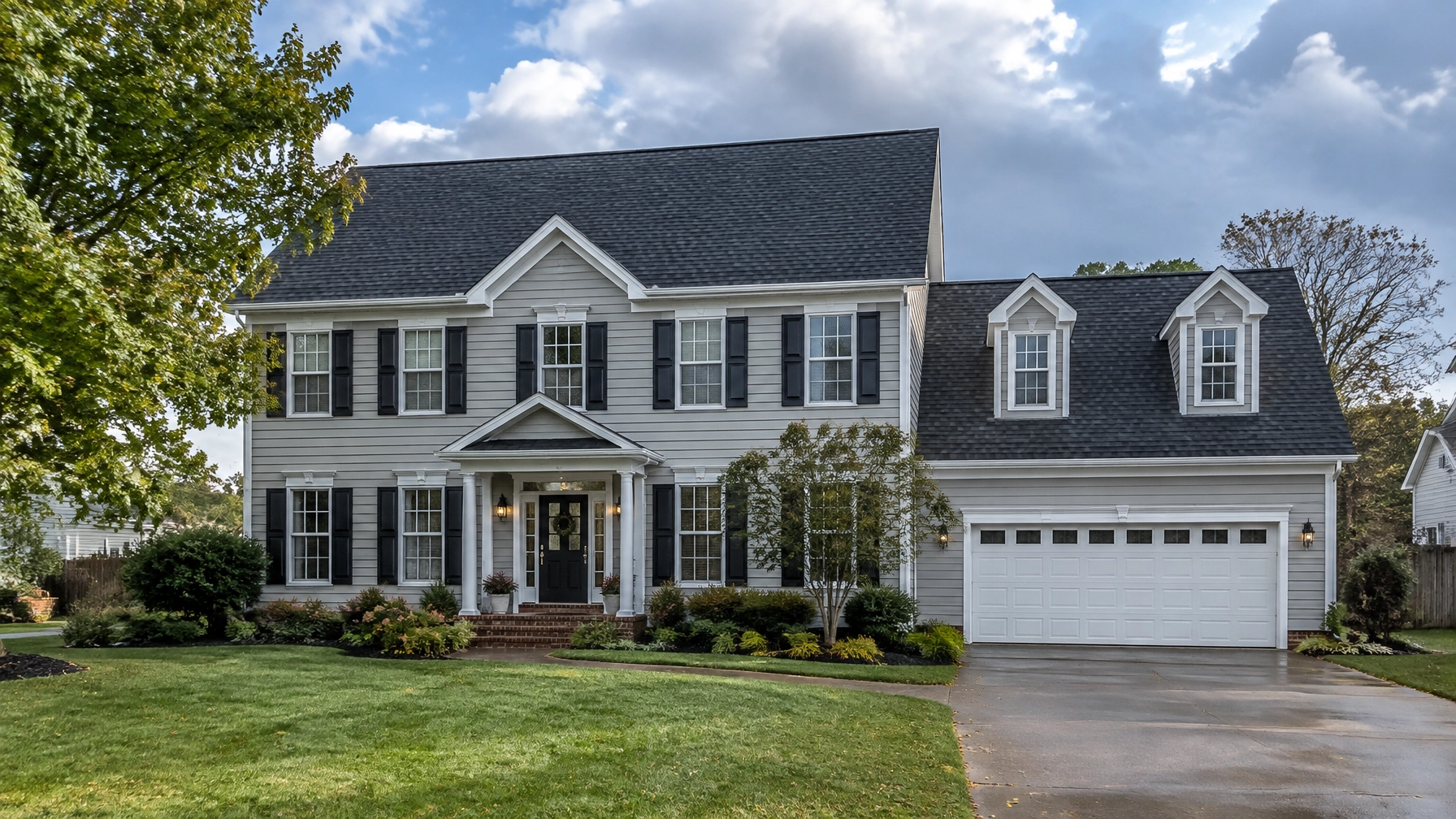
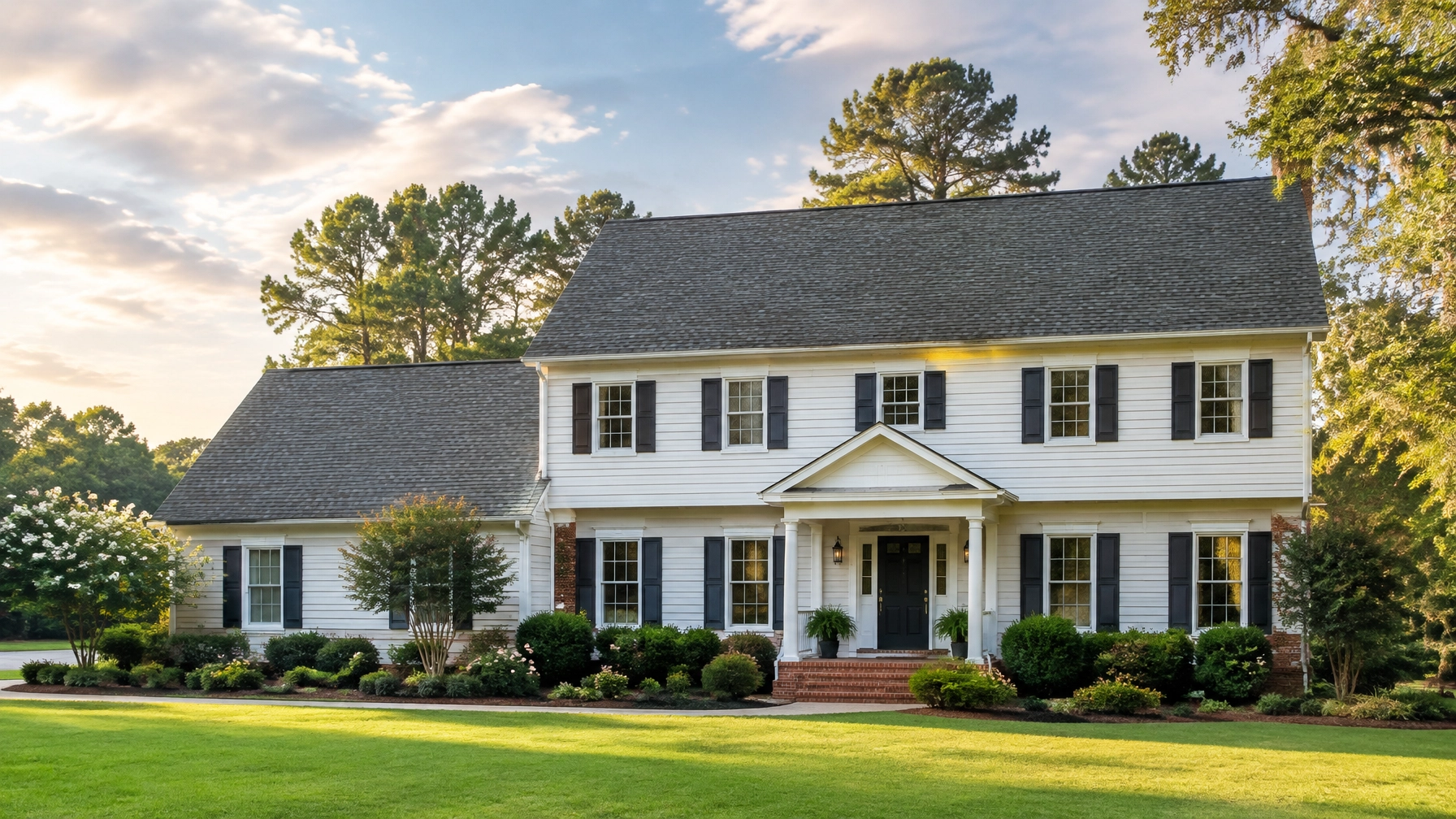
    A classic Richmond white clapboard Colonial home with a new matte black standing seam metal roof, showcasing clean lines and modern appeal.

    Understanding Richmond Labor Rates

    Labor currently accounts for 40% to 60% of your total roofing bill in the Richmond metro area. In 2026, labor rates have seen a 5-8% increase compared to previous years due to a high demand for skilled trades and the specialized knowledge required for modern high-performance materials.

    In Richmond, labor typically runs between $2.50 and $5.50 per square foot for asphalt installations. This rate fluctuates based on:

    • Roof Pitch (Steepness): Richmond’s historic Colonial and Victorian homes often feature steep pitches (8/12 or higher). Steep roofs require specialized safety equipment and more time, often adding a 20-30% "steep charge" to the labor estimate.
    • Complexity: A simple gable roof is far cheaper to install than a roof with multiple valleys, dormers, and chimneys.
    • Tear-off Layers: Removing a single layer of old shingles is standard. If your home has two or more layers (common in historic neighborhoods like Fan or Church Hill), expect an additional $100–$150 per "square" (100 sq. ft.) for the extra labor and disposal fees.

    The Satellite Advantage: Precision Meets Speed

    One of the biggest breakthroughs for Richmond homeowners in 2026 is the accessibility of satellite-powered measurement technology. At Get My Roof Estimate Now, we use high-resolution satellite imagery to measure your roof's size, pitch, and complexity with 95% accuracy.

    Why this matters for your budget:

    1. Instant Transparency: You no longer need to wait for a salesperson to visit your home. You can calculate your roof cost in under 60 seconds.
    2. Accuracy: By eliminating human error in manual measurements, you ensure that material orders are precise, preventing "over-ordering" costs.
    3. No Pressure: You receive a data-backed price range before ever speaking to a contractor, giving you the upper hand in negotiations.

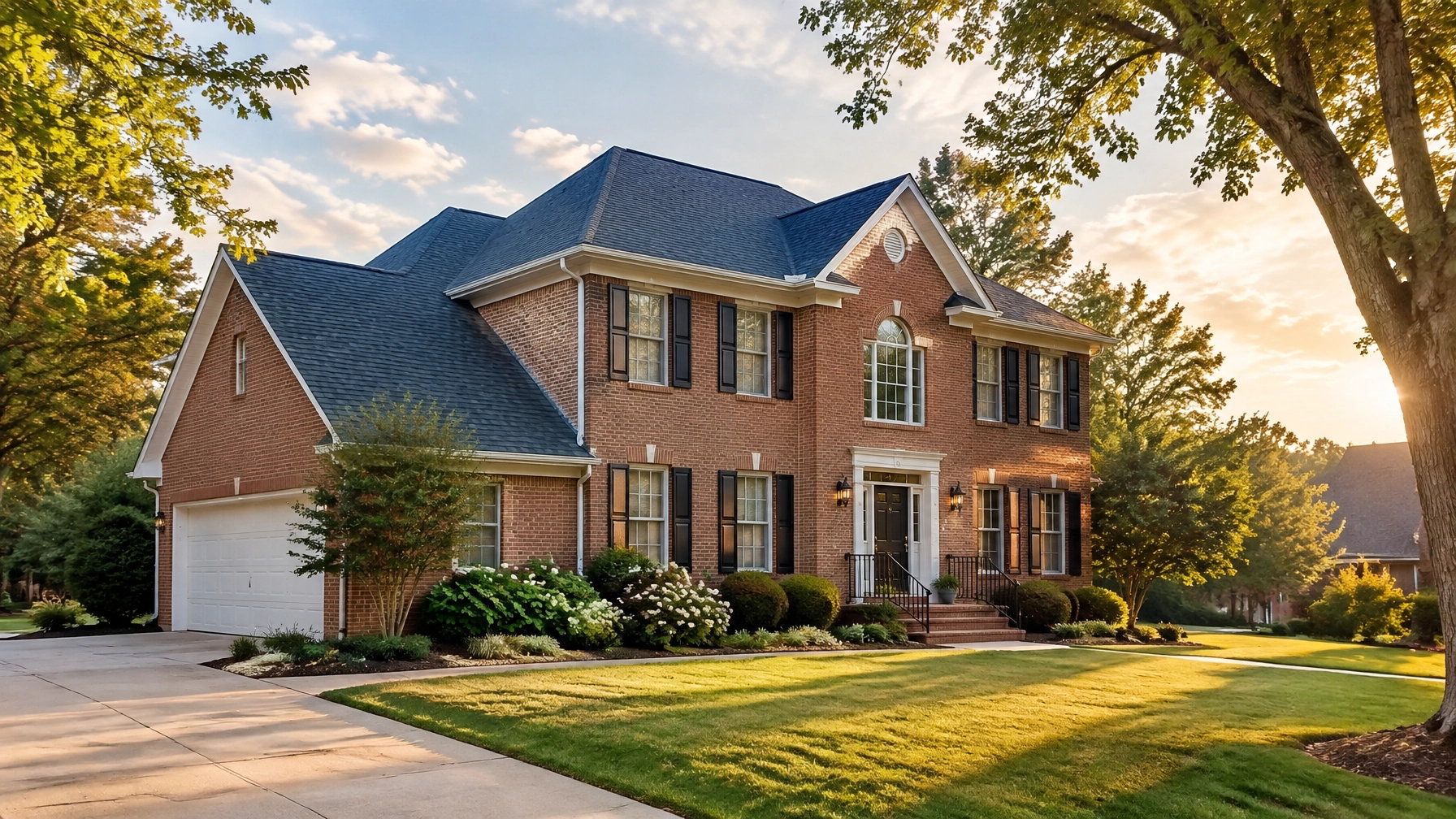
    A detailed close-up of professional roofing work on a Richmond home, showing architectural shingles and meticulous flashing around a brick chimney.

    Material Breakdown: Choosing the Right Protection

    Richmond’s climate, characterized by hot, humid summers and occasional heavy snow or ice in winter, requires materials that can handle rapid thermal expansion and moisture.

    1. Architectural Shingles (Popular)

    This is the standard for most Richmond residential projects. They provide a three-dimensional look that complements the city's traditional architecture while offering a 25- to 50-year lifespan.

    • Budget Range: $5.00 – $7.00/sq. ft.
    • Best For: Most homeowners looking for a balance of durability and curb appeal.

    2. Metal Roofing (Premium)

    Metal is surging in popularity in 2026, particularly in suburban Richmond. While the upfront cost is nearly double that of shingles, the lifespan of 50–70 years and energy efficiency make it a smart long-term investment.

    • Budget Range: $10.00 – $16.00/sq. ft.
    • Best For: Homeowners planning to stay in their homes for 20+ years or those looking for modern aesthetics.

    3. Designer/Designer Shingles (Premium)

    Often used on Richmond’s larger estates in the West End or Ginter Park, designer shingles mimic the look of natural slate or cedar shakes without the massive weight and maintenance requirements.

    • Budget Range: $8.00 – $12.00/sq. ft.
    • Best For: High-end homes requiring specific architectural historical accuracy.

    Richmond-Specific Roofing Factors

    Algae and Humidity

    Richmond's high humidity leads to "Gloeocapsa magma", the black algae streaks often seen on older roofs. When choosing materials in 2026, ensure you select shingles with copper-infused granules (Algae-resistant) to maintain that clean look.

    Historic Districts

    If you live in a protected historic district, your material choice may be limited by local ordinances. While satellite imagery can measure these roofs, always verify that your material choice (like specific shingle colors or metal profiles) meets the Richmond Commission of Architectural Review (CAR) standards.

    The Four-Season Advantage

    Richmond allows for roofing projects year-round, but spring and fall remain the peak seasons. Scheduling your project in late winter or early summer can sometimes result in more competitive labor rates as local crews look to fill their calendars.

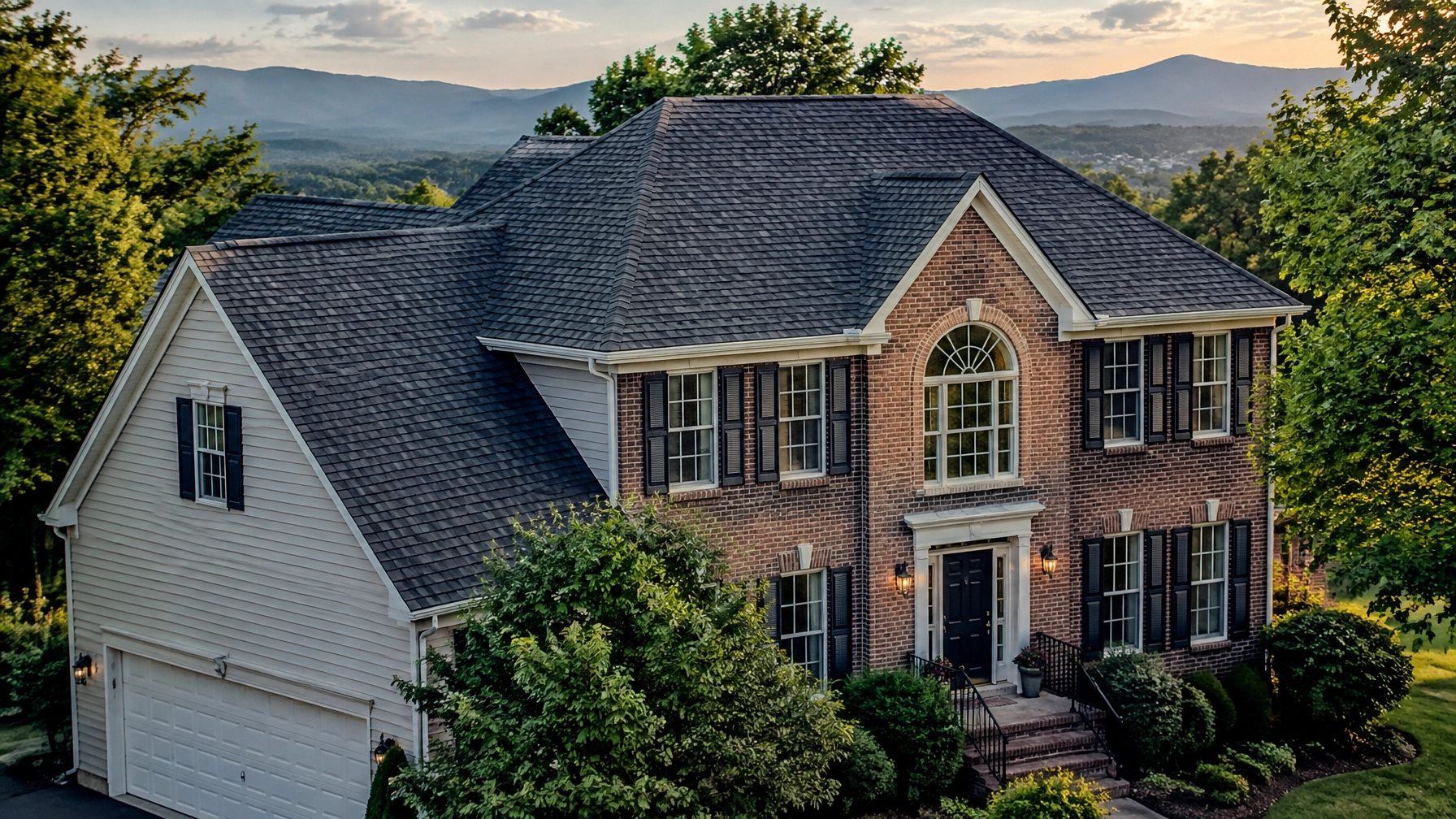
    A wide-angle photo of a large Richmond estate with a complex roofline and premium designer shingles, showcasing high-end curb appeal in a prestigious suburb.

    How to Get Your Richmond Estimate Today

    Stop guessing what your roof might cost. Whether you are in Midlothian, Short Pump, or downtown Richmond, you can get a professional-grade estimate without leaving your couch.

    By using our satellite measurement tool, you get:

    • 60-Second Results: No more waiting days for a callback.
    • Verified Contractors: We connect you with licensed and insured Virginia roofing professionals.
    • Transparent Pricing: See the breakdown of labor and materials based on your specific roof size.

    Don’t pay "ballpark" prices. Get the data you need to make an informed decision for your Richmond home.


    FAQ: New Roof Costs in Richmond, VA

    Q: How long does a typical roof replacement take in Richmond?
    A: For a standard 2,000 sq. ft. home, most professional crews can complete the tear-off and installation in 1 to 2 days, weather permitting.

    Q: Will insurance pay for my new roof?
    A: In Virginia, homeowners insurance typically covers roof replacement if the damage is caused by a sudden event like wind, hail, or a fallen tree. It does not cover "age-related" wear and tear.

    Q: Is metal roofing worth the extra cost in Richmond?
    A: Yes, if you plan to stay in the home for more than 15 years. Metal roofs offer superior wind resistance (crucial for Virginia's storm seasons) and can lower cooling costs during Richmond's humid summers.

    Q: Are there local permits required?
    A: Yes. A building permit is required for roof replacements in the City of Richmond and surrounding counties like Henrico and Chesterfield. A reputable contractor will handle this process for you.

  • Jacksonville Roof Replacement: Storm-Proofing Your Home for 2026

    Jacksonville Roof Replacement: Storm-Proofing Your Home for 2026

    In 2026, owning a home in Jacksonville means more than just enjoying the River City’s views; it means staying ahead of the increasingly volatile Atlantic hurricane season. For many First Coast homeowners, the roof over their head is the only thing standing between a comfortable summer and a catastrophic insurance claim.

    If your roof is over 15 years old, or if you’ve noticed missing granules after the last afternoon thunderstorm, you aren't just looking for a "repair." You are looking for a fortress.

    This guide breaks down the actual costs of roof replacement in Jacksonville for 2026, the specific materials required to meet Florida's stringent building codes, and how you can leverage state programs like "My Safe Florida Home" to save thousands on both installation and future insurance premiums.

    The 2026 Jacksonville Pricing Reality

    Roofing costs have shifted significantly due to supply chain stabilization and new 2026 labor regulations in Northeast Florida. In Jacksonville, the average cost for a professional roof replacement currently ranges from $8,500 to $25,000, with a sweet spot of $13,500 for a standard 2,000-square-foot home using architectural shingles.

    Here is the breakdown of what you should expect to pay based on material quality:

    • $8,000 – $10,500 (Budget): 3-tab shingles. These are becoming less common in Florida due to lower wind resistance ratings.
    • $11,000 – $18,500 (Popular): Architectural/Laminate shingles. These are the gold standard for Jacksonville, offering 130 mph wind ratings and a 25-30 year lifespan.
    • $21,000 – $45,000+ (Premium): Standing seam metal or clay tile. These provide maximum storm protection and can last up to 70 years.

    Factors Driving Your Estimate

    In Jacksonville, two houses with the same square footage can have vastly different prices. Factors like roof pitch (steepness) and complexity (the number of valleys and dormers) can add 10-25% to the labor cost. Furthermore, coastal zones near Neptune Beach or Atlantic Beach often require specialized corrosion-resistant fasteners, adding a small but necessary premium to the material list.

    Satellite scanning a house to provide an instant, accurate roof estimate

    Why Satellite Tech is the New Standard

    Traditionally, getting a roof estimate involved scheduling three different contractors to climb your house, poke around, and mail you a quote three days later. In 2026, that's obsolete.

    At Get My Roof Estimate Now, we utilize high-resolution satellite imagery to measure your roof's square footage, pitch, and orientation within inches of accuracy. This allows us to provide a comprehensive, transparent price range in under 60 seconds.

    For Jacksonville residents, this means you can budget for your project on your lunch break without the high-pressure sales pitch of an in-person visit. We provide a low-middle-high range so you can see exactly where your budget fits before you ever talk to a contractor.

    Storm-Proofing: The "Fortified" Standard

    Florida building codes are among the strictest in the world for a reason. To survive a Category 3 hurricane or higher, your roof needs more than just new shingles; it needs a system.

    1. The Secondary Water Barrier (SWB)

    In Jacksonville, we highly recommend (and codes often require) a self-adhered "peel-and-stick" underlayment. If your shingles are blown off during a storm, this secondary barrier keeps the water out of your attic. It’s the difference between a minor roof repair and a total interior loss.

    2. Enhanced Nailing Patterns

    Standard installation involves four nails per shingle. In high-wind zones like Duval County, we recommend a six-nail pattern. This simple adjustment significantly increases the wind uplift rating of your roof for a negligible increase in labor cost.

    3. Ring-Shank Nails

    Ensure your contractor is using 8d ring-shank nails for the roof deck. These nails have "teeth" that grip the wood, making it much harder for the entire roof deck to be ripped off during extreme wind events.

    Close-up of high-quality architectural shingles being installed with professional precision

    Unlocking Insurance Discounts & Grants

    One of the most overlooked benefits of a 2026 roof replacement in Florida is the immediate impact on your bank account via insurance premiums.

    The "My Safe Florida Home" Program

    The Florida legislature has extended the My Safe Florida Home program into 2026. This program provides grants: often up to $10,000: to help homeowners strengthen their homes against storms. A new roof is a primary qualifier for these funds.

    Wind Mitigation Credits

    Once your new roof is installed, you should immediately schedule a Wind Mitigation Inspection. This report proves to your insurance carrier that your home has modern hurricane straps, secondary water barriers, and high-wind shingles. In Jacksonville, this inspection can trigger premium discounts of 10% to 25% annually.

    Vector illustration of a shield protecting a policy and savings, representing insurance benefits

    Material Spotlight: What Works Best in Jacksonville?

    Choosing the right material is a balance of aesthetics, budget, and durability.

    • Architectural Shingles (Popular): Best for most neighborhoods in Southside or Orange Park. They handle the heat well and are easily repaired after minor storms.
    • Metal Roofing (Premium): Ideally suited for the humid, salt-air environments of the coast. Metal reflects UV rays, which can lower your cooling bills by up to 20% during those brutal July afternoons.
    • Concrete Tile (Premium): Commonly found in high-end communities like Queens Harbour. While expensive and heavy, they are virtually fireproof and offer incredible wind resistance.

    How to Get Started in Jacksonville

    Waiting for a leak to appear is the most expensive way to replace a roof. By the time water hits your ceiling, you're likely dealing with rotted decking and mold, which can add thousands to the final bill.

    1. Get Your Instant Estimate: Use our Jacksonville Roof Estimate Tool to get a ballpark figure in 60 seconds.
    2. Verify Your Contractor: Ensure they are licensed by the State of Florida and carry both Liability and Workers' Comp insurance.
    3. Check for Storm Damage: If you suspect recent wind or hail damage, have a professional inspection performed. You may be eligible for a replacement covered largely by your insurance policy.

    Aerial view of a Jacksonville neighborhood showing various high-quality roof types

    Final Thoughts for Jacksonville Homeowners

    A roof is an investment in your home’s equity and your family’s safety. With the tools available in 2026: from satellite imagery estimates to state-funded grants: there has never been a better time to upgrade. Don't wait for the next "named" storm to find out your roof wasn't ready.

    Calculate your Jacksonville roof cost now and take the first step toward a storm-proof home.

  • Raleigh Roofing Materials: Should You Choose Shingles or Metal in 2026?

    Raleigh Roofing Materials: Should You Choose Shingles or Metal in 2026?

    Choosing the right roofing material in Raleigh, North Carolina, used to be a simple decision: you either chose basic asphalt shingles or, if you were in a historic district, perhaps slate. But as we move through 2026, the landscape has shifted. Homeowners in the Triangle area are facing more intense summer heatwaves, unpredictable storm seasons, and a rapidly changing economic environment that has pushed material costs to new heights.

    At Get My Roof Estimate Now, we’ve seen a massive surge in Raleigh residents debating between the traditional reliability of architectural shingles and the long-term resilience of metal roofing. This isn't just about aesthetics: it's a financial calculation involving energy efficiency, insurance premiums, and resale value.

    If your roof is hitting that 20-year mark, you need an accurate, data-driven comparison to make the right call for your property.

    The Raleigh Climate Challenge: Why Your Material Choice Matters

    Raleigh sits in a unique "transition zone." We don't get the coastal battering of Wilmington, but we certainly feel the remnants of Atlantic hurricanes. In 2026, we are seeing three specific climate factors that are aging roofs faster than ever:

    1. Thermal Cycling: The swing from 95°F humid summer days to freezing winter nights causes shingles to expand and contract. Over time, this "thermal shock" leads to granule loss and cracking.
    2. Humidity & Algae: Our high humidity levels are a breeding ground for Gloeocapsa magma, the black algae that creates those unsightly streaks on your roof. While mostly cosmetic, it can trap moisture and shorten the lifespan of asphalt products.
    3. High-Wind Events: Frequent spring thunderstorms and tropical remnants bring gusts that can easily peel back aging or poorly installed shingles.

    Architectural Shingles: The Popular Choice (Budget / Reliable)

    Architectural shingles (also known as dimensional or laminate shingles) remain the most popular choice for North Carolina homeowners. Unlike the flat 3-tab shingles of the past, these are composed of multiple layers of asphalt and fiberglass, giving them a thicker, more textured look that mimics wood shakes or slate.

    Hyper-realistic close-up of high-end architectural asphalt shingles showing deep texture and granule density

    2026 Cost Benchmarks in Raleigh

    For a standard 2,000-square-foot home in neighborhoods like North Hills or Brier Creek, expect the following:

    • Installed Cost: $4.00 – $7.00 per square foot.
    • Total Project Range: $8,000 – $14,000.
    • Estimated Lifespan: 22 – 28 years (NC climate adjusted).

    The Verdict: Architectural shingles are the best option if you plan to sell your home within the next 10 years or if you want the lowest upfront investment that still offers a Class A fire rating and decent wind resistance (up to 130 mph).


    Metal Roofing: The Premium Investment (Durable / Efficient)

    Metal roofing has transitioned from a niche "farmhouse" look to a high-end suburban staple. In Raleigh, the most common residential choice is Standing Seam Metal, where the fasteners are concealed, creating a sleek, leak-proof barrier.

    Hyper-realistic low-angle view of a modern slate gray standing seam metal roof with sharp, clean vertical lines

    2026 Cost Benchmarks in Raleigh

    • Installed Cost: $12.00 – $18.00 per square foot (Standing Seam).
    • Total Project Range: $24,000 – $36,000+.
    • Estimated Lifespan: 50 – 70 years.

    The Verdict: While the upfront cost is nearly triple that of shingles, a metal roof is often the last roof you will ever buy. It reflects up to 40% of solar radiation, which is a massive advantage during North Carolina's sweltering July and August, often lowering cooling bills by 10% to 25%.


    Comparison at a Glance: Shingles vs. Metal

    Feature Architectural Shingles Metal (Standing Seam)
    Upfront Cost Low ($$) High ($$$$)
    Raleigh Lifespan 20-25 Years 50+ Years
    Maintenance Moderate (Algae/Wind) Minimal
    Energy Savings Low High (Cool Roof)
    Wind Resistance 110-130 MPH 140+ MPH
    Best For Resale / Immediate Budget Forever Homes / Efficiency

    How Technology is Changing the Estimate Game

    Traditionally, getting a quote for these materials required three different contractors climbing onto your roof with tape measures. That’s 2010 technology.

    At Get My Roof Estimate Now, we utilize high-resolution satellite imagery and AI-driven measurements to provide an instant roof estimate in under 60 seconds. Our technology is accurate to within inches, allowing us to calculate the exact "square" count of your roof without anyone stepping foot on your property.

    Vector illustration of a satellite measuring a suburban Raleigh home using blue laser technology

    By entering your address on our North Carolina estimate page, you can see the price difference between a shingle and metal installation immediately. This transparency eliminates the "sales pressure" and allows you to budget effectively.


    The Long-Term ROI: Is Metal Worth It?

    In Raleigh’s competitive real estate market, a metal roof is a significant "value-add." However, you must consider your timeline.

    Vector illustration comparing the long-term cost-of-ownership between shingles and a 50-year metal roof

    If you plan on living in your home for 20+ years, metal is the clear financial winner. You will avoid at least one (if not two) full shingle replacements during that time. Additionally, many insurance providers in North Carolina offer discounts for metal roofs due to their superior hail and fire resistance.

    On the other hand, if you are looking to freshen up a property before listing it on the market, architectural shingles provide the "curb appeal" buyers want at a fraction of the cost.

    Final Steps for Raleigh Homeowners

    Don't guess at your roofing costs. Whether you are in Cary, Apex, or downtown Raleigh, the first step is getting the data.

    1. Get Your Instant Quote: Use our satellite-powered calculator to see your 2026 pricing.
    2. Check Local Codes: Ensure your HOA allows metal roofing (some older Raleigh subdivisions have restrictions).
    3. Compare Verified Pros: Once you have your estimate, we can connect you with licensed North Carolina contractors who specialize in your chosen material.

    Ready to see your number? Get your free estimate in 60 seconds here.

  • 2026 Austin Roof Replacement: Local Price Guide & Cost Factors

    2026 Austin Roof Replacement: Local Price Guide & Cost Factors

    Replacing a roof in Austin, Texas, is no longer the "ballpark" game it used to be. In 2026, market volatility, labor shortages in the Hill Country, and evolving building codes have shifted the financial landscape for homeowners. If your roof is approaching the 20-year mark or you’ve recently weathered a Central Texas hailstorm, understanding the local price factors is the difference between a successful project and a budget disaster.

    At Get My Roof Estimate Now, we provide instant roof estimates in Texas using high-resolution satellite imagery. We know that Austin homeowners face unique challenges, from the intense UV radiation of the "Flash Flood Alley" climate to the premium labor rates of one of the fastest-growing cities in the U.S.

    This guide breaks down exactly what a roof replacement costs in Austin in 2026, why our satellite technology is more accurate than a tape measure, and how you can plan your investment with 95% accuracy.

    The Austin Premium: Why Local Costs Are Higher

    It’s a reality every local homeowner eventually faces: Austin is expensive. In 2026, roof replacement costs in the Austin-Round Rock-Georgetown metro area are typically 15% to 20% higher than the Texas statewide average. While a homeowner in Lubbock or El Paso might pay $7,500 for a basic replacement, an Austin resident should expect to start closer to $9,500 for the same square footage.

    Key Drivers for the 2026 Austin Price Hike:

    • Labor Demand (High): With continuous residential development in areas like Cedar Park, Buda, and East Austin, skilled roofing crews are in high demand, driving up day rates.
    • Material Volatility (Moderate): Asphalt shingle prices have stabilized compared to the 2024 spikes but still saw an 8–10% increase entering 2026.
    • Building Codes (Strict): City of Austin inspections are rigorous. Requirements for specific ventilation types and "cool roof" reflection standards (in some zoning areas) add to the bottom line.

    2026 Austin Roof Pricing by Home Size

    Most roofers in Austin price their work by the "square." One square equals 100 square feet of roof surface area. For a typical 2,000-square-foot Austin home, you aren't just paying for 20 squares of material; you’re paying for the "waste" factor (overlap and cuts), underlayment, and labor.

    Home Square Footage Estimated Roof Squares 2026 Price Range (Asphalt) 2026 Price Range (Metal)
    1,000 – 1,500 sq ft 15 – 22 $8,000 – $12,500 $16,000 – $24,000
    1,500 – 2,500 sq ft 25 – 35 $11,500 – $19,500 $26,000 – $42,000
    2,500 – 3,500 sq ft 38 – 50 $18,000 – $28,000 $40,000 – $65,000
    3,500+ sq ft 55+ $27,000+ $60,000+

    (Note: These ranges include tear-off, disposal, and standard labor. They are benchmarks, not final quotes.)

    Satellite interface showing precise roof measurements for an Austin property

    Material Breakdown: Budget vs. Popular vs. Premium

    Your choice of material is the single largest variable in your estimate. In Austin’s 2026 market, the focus has shifted toward longevity and heat resistance.

    1. Architectural Shingles (Popular)

    • Cost: $4.50 – $6.75 per sq ft (installed).
    • Lifespan: 25 – 30 years.
    • The Austin Factor: These are the "standard" for most Austin neighborhoods (Circle C, Steiner Ranch). They offer a great balance of aesthetic appeal and storm resistance.

    2. Standing Seam Metal (Premium)

    • Cost: $12.00 – $15.50 per sq ft (installed).
    • Lifespan: 50 – 70 years.
    • The Austin Factor: Metal roofs have exploded in popularity in West Lake Hills and Tarrytown. They reflect solar heat, significantly reducing cooling costs during 100-degree Austin summers. In 2026, metal material costs rose 12–15%, making this a significant investment.

    3. Clay or Concrete Tile (Luxury)

    • Cost: $14.00 – $22.00 per sq ft (installed).
    • Lifespan: 50 – 100 years.
    • The Austin Factor: Primarily seen in Spanish-style villas. These require heavy-duty structural support, which can add thousands to the labor and engineering costs.

    Iconic comparison of different roofing materials including shingles, metal, and tile

    The Hidden Complexity Multipliers

    When you use our roof cost calculator, we factor in complexity that a standard "price per square" doesn't see. In Austin, many homes built in the late 90s and early 2000s feature complex rooflines that increase labor costs.

    • Pitch (Steepness): A standard 4/12 or 6/12 pitch is common. However, if your roof is a 10/12 or higher (very steep), expect a 20–30% increase in labor. Crews must use specialized safety harnesses and move slower, which costs more.
    • Penetrations (Skylights & Chimneys): Every hole in your roof is a potential leak point. Flashing a chimney or resealing a skylight typically adds $500 to $1,200 per item in the Austin market.
    • Stories: A two-story or three-story home requires more equipment (scaffolding/ladders) and more time to move materials. Expect a 10–15% "height premium" for multi-story homes.

    Detailed roof diagram showing complexity factors like dormers and steep pitches

    Accuracy in 60 Seconds: The Satellite Advantage

    In the past, getting a roof quote in Austin meant taking a half-day off work to wait for a contractor who might or might not show up. They would climb a ladder, walk your roof (potentially damaging shingles), and give you a handwritten quote that often changed later.

    We’ve changed the game. Using satellite imagery, we can measure your roof’s area, pitch, and complexity with 90-95% accuracy without ever stepping on your lawn.

    How it works:

    1. Address Identification: Our system pulls high-res aerial views of your specific Austin zip code.
    2. 3D Modeling: We calculate the exact slope and every ridge and valley.
    3. Local Pricing Integration: We apply current 2026 Austin labor and material rates to those measurements.
    4. Instant Delivery: You get a transparent price range in under a minute.

    This transparency allows you to budget effectively before you even talk to a contractor. It eliminates the "sales pressure" and gives you the data you need to make an informed decision.

    Preparing for Your Austin Roof Replacement

    If you're ready to move forward, keep these three 2026-specific tips in mind:

    1. Check for Insurance Discounts: Many Texas insurers offer significant discounts for Class 4 Impact-Resistant shingles. Given Austin's history with hail, this material often pays for itself in premium savings within 5–7 years.
    2. Permit Fees: Ensure your estimate includes the City of Austin building permit fees (typically $50–$500). Reputable contractors handle this for you.
    3. Timing: The best time for a replacement in Central Texas is late fall or early spring. Avoid the "storm season" rush (April/May) when demand peaks and pricing can spike.

    Get Your Estimate Today

    Don't rely on outdated 2024 or 2025 data. The Austin market is moving fast. Whether you're in Round Rock or South Lamar, get the most accurate, technology-driven pricing available.

    Visit our blog for more regional updates or get your Free Austin Roof Estimate Now. In 60 seconds, you’ll have a professional, data-backed price range tailored to your specific home.

  • Miami Roof Costs & HVHZ Codes: 2026 Guide for Coral Gables & Pinecrest Homeowners

    Miami Roof Costs & HVHZ Codes: 2026 Guide for Coral Gables & Pinecrest Homeowners

    Owning a home in Miami-Dade County comes with a unique set of structural responsibilities, especially when it concerns the "fifth wall" of your house: the roof. In 2026, the intersection of rising material costs and the strict High Velocity Hurricane Zone (HVHZ) building codes has made roof replacement a complex, high-stakes investment. For homeowners in prestigious neighborhoods like Coral Gables, Pinecrest, and Coconut Grove, a new roof isn't just about curb appeal: it’s about survival in a Category 5 environment and protecting one of your most valuable assets.

    This guide provides a data-driven breakdown of 2026 roofing costs, localized code requirements, and the fastest way to secure an accurate free roof estimate online.


    The Miami Reality: HVHZ Standards in 2026

    If you live in Miami-Dade, you are in the High Velocity Hurricane Zone (HVHZ). This isn't just a label; it is the most stringent building code in the United States. Unlike standard Florida Building Codes used in Orlando or Jacksonville, HVHZ requires every single component of your roofing system: from the nails to the underlayment to the tiles themselves: to have a Notice of Acceptance (NOA).

    In 2026, the cost of compliance has shifted due to labor shortages and a 4-8% surcharge on specialty materials. Homeowners in Coral Gables and Pinecrest, where larger estates are common, must account for these technical variables before signing a contract.

    Key HVHZ Requirements That Drive Cost:

    • Deck Re-Nailing: Building inspectors now mandate that the roof deck be re-nailed to current wind-uplift standards during any reroofing project. (Essential)
    • Secondary Water Barrier (SWB): Often a "peel-and-stick" self-adhered membrane that prevents water intrusion even if your primary tiles or shingles blow off. (Required)
    • Enhanced Fastening: Shingles require 6 nails per piece (vs. 4 elsewhere), and tile systems often require specific mechanical or foam-adhesion patterns. (Standard)

    2026 Roofing Price Per Square Foot: Miami-Dade Data

    Comparison of orange Spanish clay tile and blue standing seam metal roof panel

    For a typical 2,500 to 3,500 square-foot home in Pinecrest or Coconut Grove, the choice usually comes down to Tile or Metal. While architectural shingles are an option, the architectural standards and HOA requirements in these neighborhoods heavily favor premium materials.

    Tile Roofing Costs (2026)

    Tile remains the gold standard for the Mediterranean and Spanish Colonial styles iconic to Coral Gables.

    • Average Cost: $6.30 – $12.30 per square foot.
    • Budget Tier: Concrete tiles ($6.30–$8.00/sq ft). Durable, but heavier and may require structural reinforcement.
    • Premium Tier: Authentic Clay or Barrel tiles ($9.50–$12.30/sq ft). Superior color retention and longevity, though more labor-intensive to install.

    Metal Roofing Costs (2026)

    Metal is the fastest-growing segment in the Miami luxury market due to its exceptional wind resistance and "cool roof" energy efficiency.

    • Average Cost: $7.50 – $17.00 per square foot.
    • Standard Tier: 26-gauge standing seam panels ($7.50–$11.00/sq ft). High performance with a modern aesthetic.
    • High-End Tier: 24-gauge Galvalume or Aluminum with Kynar 500 finishes ($12.00–$17.00/sq ft). Necessary for coastal homes in Coconut Grove to prevent salt-air corrosion.

    Note: These figures represent the material and installation cost. Total project costs for a 2,500 sq ft home in Miami often range from $25,000 to $55,000 depending on complexity.


    Neighborhood Breakdown: Coral Gables, Pinecrest, and Coconut Grove

    Each neighborhood has distinct factors that influence your roofing price per square foot.

    1. Coral Gables (The City Beautiful)

    Homeowners here must navigate the Board of Architects and strict historical preservation rules. If your home is in a historic district, you may be limited to specific clay tile profiles or colors. The overhead of navigating these permits and the frequent requirement for higher-end materials can add 10-15% to the total project cost.

    2. Pinecrest

    Pinecrest is known for large, sprawling ranch-style and modern estate homes. These roofs often have extensive square footage (4,000+ sq ft) and complex pitches. While you have more freedom in material choice than in Coral Gables, the sheer scale of these projects makes the metal roof cost calculator a vital tool for early budgeting.

    3. Coconut Grove

    The "Grove" presents a unique challenge: Salt air and dense tree canopies. For waterfront properties, Aluminum is the recommended metal choice over steel to prevent rust. Additionally, the heavy foliage often requires a roof with a high "washability" factor (like metal or glazed tile) to prevent algae and moss buildup from humidity.


    The Technical Edge: HVHZ Component Breakdown

    Diagram of HVHZ-compliant roof layers showing deck, blue barrier, and orange tiles

    To ensure your roof passes a Miami-Dade inspection in 2026, your contractor must follow a specific "dry-in" process. Understanding this helps you vet contractors who might try to cut corners on a "standard" Florida install.

    1. The Deck Inspection: Once the old roof is removed, the wood deck is inspected. Any rot must be replaced. In 2026, the cost of 5/8" plywood has stabilized, but labor for re-nailing remains a significant factor.
    2. The Secondary Water Barrier: In HVHZ zones, we recommend a full-coverage self-adhered underlayment. This acts as a "second roof." If a hurricane strips your tiles, this layer keeps your interior dry.
    3. Drip Edge and Flashing: All metals used must be a minimum of 26-gauge and must be primed before the underlayment is applied to ensure a permanent bond.
    4. The Final Layer: Whether it’s Tile or Metal, it must be installed according to the specific NOA (Notice of Acceptance) number assigned to that product. This document dictates exactly how many screws or how much foam adhesive is required per square.

    Insurance ROI: Wind Mitigation in 2026

    A common question we hear from Miami homeowners is: "How much will this save me on my premium?"

    With Florida’s insurance market remaining volatile, a new roof is the single best way to lower your costs. By installing a roof that meets 2026 HVHZ standards, you qualify for Wind Mitigation Credits.

    • Secondary Water Barrier Credits: Installing a "peel-and-stick" barrier can save you hundreds annually.
    • Roof-to-Wall Connection: While the roof is off, many homeowners choose to upgrade their hurricane straps. If your home was built before 1994, this is the best time to add "clips" or "double wraps," which can slash premiums by 20-30%.

    Why The "Old Way" of Getting Estimates is Obsolete

    Smartphone showing a 60-second timer and a satellite scan of a roof

    Traditionally, getting a roof estimate in Miami involved:
    1. Calling 3-5 contractors.
    2. Waiting for them to call back (usually 2-3 days).
    3. Scheduling a "window" where you have to stay home for 4 hours.
    4. Waiting another week for a PDF quote.

    In 2026, homeowners in tech-forward areas like Pinecrest don't have time for that. Get My Roof Estimate Now uses high-resolution satellite imagery to measure your roof's square footage, pitch, and complexity with 90-95% accuracy: without anyone ever stepping foot on your property.

    Get Your Free Roof Estimate Online in 60 Seconds

    By entering your address into our roof cost calculator, our AI analyzes your home’s specific footprint and provides a transparent price range based on current 2026 Miami-Dade material and labor rates.

    • Instant: No phone tags or 4-hour waiting windows.
    • Accurate: Measurements are calculated using the same satellite tech the pros use.
    • Transparent: We provide low-middle-high pricing for Shingles, Tile, and Metal.

    Summary of 2026 Miami Roofing Costs

    Material Type Cost Per Sq. Ft. (Installed) Expected Lifespan HVHZ Performance
    Architectural Shingle $5.00 – $9.00 15–20 Years Moderate (Impact Rated)
    Concrete Tile $6.30 – $9.50 30–50 Years High (Heavy/Durable)
    Clay Tile $9.50 – $12.30 50+ Years High (Aesthetic/Longevity)
    Standing Seam Metal $7.50 – $17.00 40–70 Years Superior (Highest Uplift)

    Conclusion: Take Control of Your 2026 Roof Project

    Replacing a roof in Coral Gables, Pinecrest, or Coconut Grove is a major financial decision, but it doesn't have to be a stressful one. By understanding the HVHZ code requirements and utilizing modern technology, you can enter the process with confidence.

    Don't wait for a leak or a storm to start your research. Use our satellite-powered tool to get your free roof estimate online today. Within 60 seconds, you'll have the data you need to budget, plan, and protect your Miami home for the next 30 years.


    Frequently Asked Questions (FAQ)

    Does my insurance cover roof replacement in Miami?
    Most policies cover damage from "sudden and accidental" events like hurricanes or hailstorms. However, if your roof is simply at the end of its life (15-20+ years), insurance typically will not cover it. In fact, many Florida insurers are now requiring replacement for roofs over 15 years old to maintain coverage.

    How long does a roof replacement take in Miami-Dade?
    The physical installation usually takes 3 to 7 days for tile or metal. However, the permitting process in cities like Coral Gables can take 4 to 8 weeks. It is best to start your online estimate at least three months before you want the project completed.

    Is metal roofing louder than tile during rain?
    This is a common myth. With the heavy insulation and solid wood decking required by Miami HVHZ codes, a metal roof is no louder than a tile or shingle roof during a typical tropical downpour.

    What is an NOA and why do I need one?
    An NOA (Notice of Acceptance) is a document issued by Miami-Dade County that certifies a product is tested and approved for use in high-wind zones. Your roofer MUST provide these NOAs with your permit application.

  • Is Your Orlando Roof Storm-Ready? 2026 Weather Trends & Tips

    Is Your Orlando Roof Storm-Ready? 2026 Weather Trends & Tips

    As we move through May 2026, Orlando homeowners are facing a unique "weather whiplash." After a record-setting dry start to the year dominated by La Niña, Central Florida is rapidly transitioning into a wetter, more volatile El Niño pattern. For your roof, this is a dangerous combination. Prolonged heat and drought in early 2026 have likely dried out sealants and cracked older shingles, leaving them vulnerable to the heavy rains and tropical systems expected throughout the rest of the year.

    In Orlando, your roof isn't just a covering; it is a high-performance shield against 90°F+ heat, intense UV radiation, and 130 mph wind gusts. Understanding the specific 2026 weather trends and the current state of roofing technology is the only way to ensure your home remains protected and your insurance policy remains valid.

    The 2026 Orlando Weather Shift: Drought to Deluge

    The first quarter of 2026 was one of the driest on record for Florida. While this was great for outdoor activities, it was brutal for roofing materials. Intense UV exposure without the cooling relief of afternoon rain causes asphalt shingles to become brittle and lose their protective granules.

    As of May 2026, the transition to an El Niño pattern is underway. Historically, this means:

    • Wetter Conditions: Increased rainfall frequency, which will immediately test any cracks formed during the drought.
    • Severe Thunderstorms: A higher probability of strong frontal systems bringing wind and hail.
    • Tropical Volatility: While hurricane activity varies, the increased moisture provides the fuel needed for localized flooding and wind damage.

    If your roof is over 15 years old, these shifts in weather patterns are no longer a theoretical risk: they are a direct threat to your home’s structural integrity.

    Orlando Roof Replacement Costs: 2026 Benchmark Data

    Transparency is key when planning a major home investment. In Orlando, the cost of a new roof varies significantly based on material choice and roof complexity. Based on our 2026 data, here is what you can expect to pay for a standard 2,000-square-foot roof in the Orlando metro area:

    • Budget ($8,500 – $10,000): Basic 3-tab shingles. While affordable, these often carry lower wind ratings (typically 60-80 mph) and a shorter lifespan (15 years).
    • Popular ($14,000 – $18,000): High-quality architectural shingles. These are the gold standard for Orlando, offering 130 mph wind resistance and a 25–30 year lifespan.
    • Premium ($23,000 – $35,000+): Metal roofing or concrete tile. These materials offer the highest durability and can last 50+ years, often lowering insurance premiums in the process.

    To get a precise figure based on your specific address, you can use our roof cost calculator to receive a satellite-powered estimate in under 60 seconds.

    Roofing material comparison icons

    Choosing the Right Material for Florida Durability

    When the next major storm hits Orlando, the material on your roof determines whether you’re filing a major insurance claim or just watching the rain from your window.

    1. Architectural Shingles (The Most Popular Choice)

    Architectural (or laminate) shingles are designed with multiple layers of fiberglass and asphalt. They provide a dimensional look and, more importantly, a higher "blow-off" resistance. In 2026, most Orlando building codes require shingles to meet a 130 mph wind rating.

    2. Metal Roofing (The Performance Choice)

    Metal is gaining massive traction in Central Florida. It is virtually impervious to the UV degradation that plagues shingles during drought periods. Furthermore, metal reflects solar heat, which can reduce cooling costs by up to 25% during Orlando’s sweltering July and August.

    3. Concrete and Clay Tile (The Aesthetic Standard)

    Common in many Orlando subdivisions, tile roofs are exceptionally durable against heat and rot. However, they are heavy and require a reinforced roof deck. If you are switching to tile, a structural inspection is mandatory.

    The Florida Building Code: Non-Negotiable Standards

    Florida has the most stringent roofing codes in the United States. When replacing your roof in 2026, "doing it cheap" is often illegal or uninsurable. Your contractor must adhere to the following:

    • Secondary Water Barrier: This is a self-adhered membrane applied directly to the wood deck. If your shingles blow off, this barrier prevents water from entering your attic.
    • Ring-Shank Nails: Smooth nails are no longer enough. Ring-shank nails act like screws, providing double the holding power against high-velocity winds.
    • Enhanced Drip Edges: The perimeter of your roof is its weakest point. Modern codes require thicker, more securely fastened metal drip edges to prevent wind from getting under the roofing material.

    Digital roof inspection checklist

    2026 Pre-Storm Inspection Checklist

    Don't wait for a leak to appear on your ceiling. Use this checklist to evaluate your roof's storm readiness today:

    1. Check for Granule Loss: If you see "sand" in your gutters, your shingles are losing their UV protection and becoming brittle.
    2. Inspect Flashings: Check the metal around chimneys and vents. The 2026 drought may have caused sealants to shrink and pull away.
    3. Look for Lifted Shingles: Even a slight gap allows wind-driven rain to enter your home.
    4. Clear Gutter Debris: Heavy El Niño rains will overflow clogged gutters, leading to fascia rot and foundation issues.
    5. Trim Overhanging Branches: High winds turn heavy limbs into roof-piercing projectiles.

    The Speed of Modern Technology: Satellite-Powered Accuracy

    The days of waiting a week for a contractor to climb a ladder just to give you a "ballpark" price are over. We utilize high-resolution satellite imagery to measure the exact square footage, pitch, and complexity of your roof.

    This technology allows us to provide estimates that are 90–95% accurate without anyone ever setting foot on your property. This is particularly valuable in Orlando, where the heat makes physical inspections during the day difficult and time-consuming.

    Satellite measuring a roof illustration

    DIY vs. Professional Installation in Orlando

    While DIY projects are popular in many home categories, roofing is not one of them: especially in Florida.

    • Permitting: Orlando and Orange County require strict permitting and multiple inspections (dry-in and final).
    • Insurance: Most Florida insurance companies will refuse to cover a roof that was not installed by a licensed and insured professional.
    • Safety: The high pitch and humidity-slick surfaces of Orlando roofs make them incredibly dangerous for amateurs.

    For a professional result, we connect you with verified, local contractors who understand the specific needs of the Central Florida climate. Whether you are in Orlando, Jacksonville, or Tampa, the standards remain the same: high wind ratings and moisture protection.

    Final Thoughts: Don't Get Caught Off Guard

    The 2026 weather transition from La Niña to El Niño is a "stress test" for every roof in Orlando. If your roof survived the drought, it doesn't mean it will survive the storm season. Taking 60 seconds to understand your replacement costs and checking your roof's condition now can save you tens of thousands of dollars in emergency repairs later.

    Ready to see where you stand? Get your instant, free roof estimate now and start planning for a storm-ready 2026.


  • Houston Roofing FAQ: Quick Answers for Every Homeowner

    Houston Roofing FAQ: Quick Answers for Every Homeowner

    Living in Houston means you’re essentially in a long-term, committed relationship with humidity and the occasional hurricane. Your roof is the only thing standing between you and a living room that feels like a sauna. Whether you’re recovering from a "typical" afternoon thunderstorm or planning a major upgrade, you probably have questions.

    At Get My Roof Estimate Now, we’ve seen it all: from the scorching August heat that turns shingles into liquid to the hail that sounds like a drum solo on your rafters. We’ve compiled the most frequent questions Houston homeowners ask us, answered with the data you need and the directness you deserve.

    1. How much does a new roof actually cost in Houston? (The "Million Dollar" Question)

    Let’s talk numbers. In H-Town, roofing costs vary wildly based on your home’s square footage, the complexity of your roof (all those gables look great but cost more), and your material choice.

    Roofing costs and dollar sign vector illustration

    On average, Houston homeowners are looking at the following ranges:

    • Small Homes (under 1,500 sq ft): $5,500 – $8,500 (Budget)
    • Average Suburban Homes (1,800 – 2,500 sq ft): $9,000 – $15,000 (Popular)
    • Large or Complex Homes (3,000+ sq ft): $18,000 – $25,000+ (Premium)

    Keep in mind, these are ballpark figures. Factors like roof pitch (how steep it is) and the number of layers being torn off can shift the price. If your current roof has three layers of shingles from the 1980s, expect a higher labor and disposal fee. You can get a precise figure for your specific address using our Texas roof cost calculator in about 60 seconds.

    2. How can a satellite possibly measure my roof accurately?

    We get it. It sounds like science fiction. But while you’re using satellites to find the nearest Torchy’s Tacos, we’re using them to measure your roof down to the inch.

    60 second stopwatch vector illustration

    Using high-resolution satellite imagery (think 90-95% accuracy), we can calculate:

    • Total Square Footage: No more "guesstimating" based on your home's footprint.
    • Pitch & Slope: We see the angles that make the job harder or easier.
    • Waste Factor: We know exactly how much material to order so you aren’t paying for shingles that just sit in your driveway.

    The best part? No contractor has to climb a ladder just to give you a quote. You can get an instant roof estimate without having to brew a pot of coffee for a salesperson.

    3. Do I really need a permit for a Houston roof replacement?

    In a word: Yes.

    Houston and its surrounding areas (like Katy, Sugar Land, or The Woodlands) have strict building codes, especially regarding windstorm requirements. Most jurisdictions charge between $200 and $500 for a residential roofing permit.

    Why does it matter? If you skip the permit, you might run into issues when you try to sell your home. Even worse, if a major storm hits and your roof wasn't permitted or inspected, your insurance company might decide they don't want to play ball. Always ensure your contractor pulls the permit in their name, not yours: it keeps the liability where it belongs.

    4. What materials survive the "Texas Sizzle"?

    Houston isn’t just hot; it’s vibrantly hot. Your material choice determines if your roof lasts 15 years or 30.

    • Architectural Shingles (Popular): These are the gold standard for Houston. They are thicker and more wind-resistant than old-school 3-tab shingles. They can handle the 100+ mph gusts we get during "storm season."
    • Metal Roofing (Premium): If you want to be the "coolest" house on the block (literally), metal reflects solar heat. It’s more expensive upfront but can last 50+ years.
    • Impact-Resistant (IR) Shingles: These are designed to survive the hail that typically treats Houston roofs like a punching bag. Many insurers offer a discount for these.

    5. Hail happened. Now what? (The Insurance Maze)

    Houston is essentially a giant target for hail. When the sky starts dropping ice cubes, here is your game plan:

    Storm and hail hitting a roof vector illustration

    1. Don’t Panic: You usually have 12–24 months to file a claim, but sooner is always better.
    2. Document Everything: Take photos of the hail next to a coin for scale and any visible damage on your downspouts or gutters.
    3. Get an Estimate First: Use our tool to see what a fair price looks like before the insurance adjuster arrives. Knowledge is power.
    4. Avoid "Deductible Eaters": If a contractor offers to "cover your deductible," run. In Texas, this is illegal and is considered insurance fraud.

    For more deep dives into the insurance process, check out our roofing blog.

    6. How long does the actual replacement take?

    We know you don't want your house to look like a construction site for a month. In Houston, a standard roof replacement usually takes 1 to 3 days.

    • Day 1: Tear-off of old materials and inspection of the wooden decking.
    • Day 2: Installation of underlayment, flashing, and shingles.
    • Day 3: Final cleanup and "nail sweep" (to ensure your tires stay inflated).

    Large homes or roofs with complex designs might take a few extra days, but our contractors aim for speed without sacrificing quality.

    7. Should I repair or replace?

    If you have a single leak near a chimney, a repair is likely all you need ($300 – $800). However, if you see these "red flags," it’s time for a replacement:

    • The 20-Year Rule: If your roof is approaching its 20th birthday, it’s lived a full life.
    • Bald Spots: If you see piles of granules in your gutters, your shingles are losing their "sunscreen."
    • Curling Edges: If the shingles are curling like a bad perm, they are no longer protecting your home.

    Roofing checklist and tablet vector illustration

    Final Thoughts for Houston Homeowners

    Roofing doesn't have to be a headache. By using satellite technology, we’ve removed the "mystery" from pricing and the "hassle" from the process. You deserve to know exactly what your investment will be before you ever talk to a contractor.

    Ready to see what your Houston roof actually costs?
    Get your free, 60-second estimate now!


  • 2026 Roof Replacement Cost in Dallas, TX: Your Complete Guide

    2026 Roof Replacement Cost in Dallas, TX: Your Complete Guide

    If you’re a homeowner in the Big D, you know that the Dallas skyline isn't the only thing that's high: roofing costs are climbing too. Whether you're in a historic craftsman in M-Streets or a sprawling modern build in Frisco, planning for a roof replacement cost in 2026 requires looking at fresh data.

    For 2026, Dallas homeowners should prepare for a 4% to 8% price increase compared to previous years. This jump is driven by rising labor costs across North Texas and the continued demand for high-performance, hail-resistant materials. In this guide, we’re breaking down exactly what you’ll pay, why the prices are moving, and how to get an accurate Dallas roofing estimate in under a minute.

    The Average Cost of New Roof in Dallas (2026 Projections)

    The average cost of a new roof in Dallas typically falls between $9,500 and $23,500 for most single-family homes. However, Dallas is a diverse market; a simple townhome in Oak Lawn will have vastly different requirements than a custom estate in Preston Hollow.

    Here is the 2026 baseline for a standard 2,000 to 2,500 square foot roof:

    • Budget (Basic Shingles): $9,500 – $12,000
    • Popular (Architectural Shingles): $14,500 – $19,500
    • Premium (Metal or Designer Shingles): $22,000 – $45,000+

    These figures include the full tear-off of your old roof, disposal fees, and professional installation. If your roof has multiple layers or significant wood rot (common in older Dallas neighborhoods), expect to add another $1,500 to $3,000 to the total.

    Comparison of roofing materials: shingles, metal, and tile

    Breaking Down Material Costs per Square Foot

    In the roofing world, we measure by the "square." One square equals 100 square feet of roof surface. For 2026, here is the price per square foot you can expect for Dallas roofing:

    Material Type Estimated Cost per Sq. Ft. (Installed) Durability Rating
    Architectural Shingles (Popular) $5.00 – $8.10 Excellent (Hail resistant)
    Metal Roofing (Premium) $8.50 – $15.00 Lifetime (Heat reflective)
    3-Tab Asphalt (Budget) $4.25 – $5.50 Basic (Limited lifespan)
    Synthetic Slate/Tile (Luxury) $16.00 – $28.00 Ultimate (High-end aesthetic)

    Why Architectural Shingles Win in Dallas

    The most popular choice for North Texas is the Architectural Shingle (Popular). Why? Because they are designed to handle the 100-degree summers and the unpredictable hail storms that roll through North Texas every spring. In fact, many Dallas insurance companies offer premium discounts if you install Class 4 impact-resistant shingles: a smart move for your 2026 budget.

    The "Dallas Factors": What Changes Your Price?

    Pricing a roof isn't just about size. Several local variables will push your estimate up or down:

    1. Roof Pitch (Steepness): If your roof is too steep to walk on safely, contractors have to use specialized harness equipment. This adds to the labor cost.
    2. The "Hail Alley" Tax: Because Dallas is in a high-risk hail zone, local building codes often require specific underlayments and ventilation systems that aren't necessary in other parts of the country.
    3. Zip Code Accessibility: Replacing a roof in the dense streets of Uptown (75204) often costs more than in the open suburbs of Plano or McKinney due to permit complexities and equipment staging challenges.

    Illustration of hail impacting a durable Dallas roof

    How Dallas Weather Impacts Your 2026 Investment

    In Dallas, your roof is your first line of defense against two major enemies: Intense UV Heat and Spring Hail.

    • The Heat Factor: With average summer highs hitting 96°F, your roof can easily reach surface temperatures of 150°F. Without proper attic ventilation, your shingles will literally bake from the inside out, cutting their lifespan by 50%.
    • The Hail Factor: According to data from Roofing Ranger, Dallas remains one of the top cities in the U.S. for hail damage claims. When planning your 2026 replacement, investing in a Class 4 roof might cost 15% more upfront, but it could save you $500+ a year on insurance premiums.

    Why Satellite Estimates are Changing the Game

    Gone are the days of waiting two weeks for three different contractors to show up at your house with ladders. Today, we use high-resolution satellite imagery to measure your roof with 95% accuracy.

    At Get My Roof Estimate Now, we factor in your specific Dallas zip code, the current cost of materials in the North Texas market, and the exact geometry of your home.

    60-second instant roof estimate app interface
    How to Get Your Dallas Estimate in 60 Seconds:

    1. Enter your address: We use satellite data to pull the exact dimensions of your roof.
    2. Select your materials: Choose from Budget, Popular, or Premium options.
    3. Get your price: No phone calls, no high-pressure sales, just an instant roof cost calculator result.

    2026 Checklist for Dallas Homeowners

    Before you sign a contract for your 2026 project, make sure you've checked these boxes:

    • Verify the Texas License: While Texas doesn't have a state-wide roofing license, reputable Dallas contractors will be registered with the city and carry significant liability insurance.
    • Check for Hail History: If you’re replacing your roof due to storm damage, make sure your contractor is an expert at navigating insurance claims in Dallas County.
    • Ask About Ventilation: Ensure your quote includes ridge vents or solar fans. In the Dallas heat, this is non-negotiable.
    • Get a Detailed Quote: Your estimate should break down material costs, labor, permits, and debris removal. No hidden fees allowed.

    Map of Dallas showing distributed roofing project locations

    Final Thoughts on Dallas Roofing Costs

    A roof replacement is likely the biggest maintenance investment you’ll make in your home. For 2026, the average cost of new roof in Dallas is sitting at a point where quality matters more than ever. Cutting corners with cheap materials or uncertified labor often leads to leaks during the next North Texas "supercell" storm.

    Ready to see what your home will cost? Skip the ladder and the long wait. Get your instant Dallas roof estimate now and start planning your project with confidence.


    Frequently Asked Questions (FAQ)

    What is the average cost to replace a roof in Dallas in 2026?
    Most homeowners in Dallas will spend between $14,500 and $19,500 for a standard architectural shingle roof on a 2,500 sq. ft. home.

    Does insurance cover roof replacement in Dallas?
    If your roof was damaged by a specific weather event like hail or high winds (very common in Dallas), your homeowner's insurance will typically cover the cost, minus your deductible.

    How long does a roof replacement take in Dallas?
    Most residential roof replacements in the Dallas area can be completed in 1 to 2 days, depending on the weather and the complexity of the roofline.

    What is the best time of year to replace a roof in North Texas?
    Late fall and early spring (before the heavy hail season) are the ideal times. The moderate temperatures allow shingles to seal properly without the extreme heat of July or the risk of winter ice.

  • Nashville Roof Replacement Costs 2026: Pricing for Green Hills & Belle Meade Homes

    Nashville Roof Replacement Costs 2026: Pricing for Green Hills & Belle Meade Homes

    Navigating the Nashville roofing market in 2026 requires more than just a ballpark figure. With material costs fluctuating and labor demand at an all-time high in Middle Tennessee, homeowners in high-end neighborhoods like Green Hills and Belle Meade need precise data to budget effectively.

    Whether you are dealing with the aftermath of a spring storm or planning a proactive upgrade, the average cost of a new roof in Nashville currently ranges from $8,500 to over $49,000, depending heavily on material and architectural complexity. At Get My Roof Estimate Now, we eliminate the guesswork. Using advanced satellite imagery, we provide instant roof estimates accurate to within inches, allowing you to bypass the traditional two-week wait for a contractor visit.

    The 2026 Nashville Pricing Landscape

    The Nashville metro area remains one of the most expensive roofing markets in Tennessee. For a standard 2,000-square-foot home, homeowners should expect the following baseline ranges for 2026:

    • Total Project Average (Luxury Neighborhoods): $20,000 – $30,000
    • Asphalt Shingles (Standard 2,000 sq ft): $8,500 – $14,000 (Popular)
    • Metal Roofing (Standard 2,000 sq ft): $18,000 – $49,000 (Premium)

    Why Nashville Costs More Than the State Average

    While Tennessee generally offers competitive roofing rates, Nashville’s rapid growth and strict building codes in Davidson County drive prices higher. When compared to nearby cities, the "Nashville Premium" becomes clear:

    • Nashville: $12,500 avg. (Architectural Shingles)
    • Clarksville: $10,800 avg.
    • Chattanooga: $11,200 avg.

    Regional cost comparison map for Tennessee roofing

    Material Breakdown: Budget vs. Premium Choices

    Choosing the right material for the Nashville climate, characterized by high humidity and the occasional severe thunderstorm, is the biggest factor in your total investment.

    1. Architectural Asphalt Shingles (Most Popular)

    • Price Range: $8,500 – $14,000
    • Lifespan: 25–30 years
    • Best For: East Nashville bungalows and traditional Green Hills builds.
      These shingles offer a high-dimensional look and superior wind resistance compared to basic 3-tab shingles, which are increasingly rare in modern Nashville renovations.

    2. Standing Seam Metal (Premium)

    • Price Range: $22,000 – $40,000
    • Lifespan: 40–70 years
    • Best For: Modern farmhouse styles in Belle Meade and eco-conscious homeowners.
      Metal is a significant upfront investment but offers the best ROI for Nashville’s summer heat, reflecting solar radiation and lowering cooling costs by up to 25%.

    3. Designer/Synthetic Slate (Luxury)

    • Price Range: $30,000 – $60,000+
    • Lifespan: 50+ years
    • Best For: Historic estates and high-value properties.
      In neighborhoods like Belle Meade, synthetic slate provides the aesthetic of natural stone without the extreme weight and structural reinforcement requirements.

    Roofing material comparison icons

    Neighborhood Spotlight: Neighborhood-Specific Costs

    Green Hills: Complexity and Pitch

    In Green Hills, homes often feature steep pitches and complex rooflines with multiple dormers and valleys. These architectural features require more labor and safety equipment, often adding a 15–25% surcharge to standard labor rates. A typical roof replacement in Green Hills often lands in the $18,000 to $28,000 range for high-quality asphalt.

    Belle Meade: Luxury Standards

    Properties in Belle Meade frequently demand premium materials to maintain property value. It is common to see standing seam metal or designer shingles used here. Due to the sheer size of many Belle Meade estates (often 4,000+ sq ft of roof area), project totals frequently exceed $45,000.

    East Nashville: Modern Infill and Historic Preservation

    East Nashville presents a mix of small historic cottages and tall, skinny modern infill homes.

    • Historic Cottages: Often require specific shingle colors to match neighborhood character.
    • Modern Infill: These vertical homes often have smaller footprints but complex flat-roof sections or parapet walls that require specialized membrane roofing (TPO), typically costing $10,000 to $16,000.

    Illustration of complex rooflines typical of Belle Meade

    Accuracy Matters: The Satellite Advantage

    The traditional way to get a roof cost estimator involves calling three contractors, waiting for them to show up with a ladder, and receiving three wildly different handwritten quotes.

    In Nashville’s competitive 2026 market, that process is obsolete. We use satellite-powered measurements to analyze your roof's size, pitch, and complexity in 60 seconds. Our technology is 90-95% accurate, providing a transparent price range before you ever talk to a contractor. This is especially vital for the complex rooflines found in Belle Meade and Green Hills, where manual measurement errors can lead to "surprise" change orders mid-project.

    Planning Your Investment: Financing & ROI

    A new roof is one of the highest-ROI home improvements in Nashville. Current 2026 data shows that Nashville homeowners can expect to recoup 65–75% of their roof cost in added home value.

    If you are looking for roof replacement financing, many local Nashville lenders offer specialized home improvement loans. For projects in the $20k-$30k range, monthly payments typically range from $250 to $450 depending on credit and term length.

    Action Checklist for Nashville Homeowners:

    1. Check for Storm Damage: If your roof is over 15 years old, Nashville's recent hail events may have caused hidden damage.
    2. Get an Instant Estimate: Use our online tool to get your 2026 pricing in under a minute.
    3. Review Local Codes: Ensure your contractor is familiar with Davidson County’s specific permitting and debris disposal requirements.

    Nashville Roofing FAQs

    How much does a new roof cost for a 2,000 sq ft home in Nashville?
    For 2026, a standard architectural shingle roof for a 2,000 sq ft home in Nashville costs between $12,500 and $22,000. Premium metal options for the same size range from $22,000 to $40,000.

    Does insurance cover roof replacement in Tennessee?
    Yes, if the damage is caused by a "covered peril" like hail, wind, or a fallen tree. Standard wear and tear or lack of maintenance is not covered. Nashville homeowners are encouraged to document storm damage immediately to assist in the claims process.

    Why is my Green Hills roof estimate higher than my neighbor's in Clarksville?
    Nashville labor rates are currently 15–20% higher than in Clarksville or Chattanooga. Additionally, Green Hills homes often have steeper pitches (8/12 or higher), which increases labor time and safety requirements.

    How long does it take to replace a roof in Nashville?
    Most residential projects in Nashville take 1 to 3 days. Large estates in Belle Meade or complex commercial-style roofs in East Nashville may take 4 to 5 days.


    Ready to see your property's specific data? Get your instant Nashville roof estimate here.

  • 2026 Atlanta Roofing Costs: What Homeowners in Buckhead & Sandy Springs Need to Know

    2026 Atlanta Roofing Costs: What Homeowners in Buckhead & Sandy Springs Need to Know

    Owning a home in the Atlanta metro area comes with unique challenges, from the sprawling tree canopies of Buckhead to the heavy commuter traffic that makes scheduling even a simple home repair a logistical nightmare. In 2026, the complexity of maintaining a home in "The A" has increased, specifically regarding roof replacement.

    If you are a homeowner in Buckhead, Sandy Springs, or Midtown, you are likely seeing your neighbors update their roofs. Between the intense Georgia humidity and the increasing frequency of severe afternoon thunderstorms, your roof is your first line of defense. However, the traditional process of getting a quote: calling three contractors, waiting for them to navigate I-285, and sitting through three separate sales pitches: is outdated.

    At Get My Roof Estimate Now, we provide a faster, more transparent alternative. Using high-resolution satellite imagery, we can calculate your roof's size and complexity to provide an accurate estimate in under 60 seconds.

    Here is the essential data you need to budget for your Atlanta roof replacement in 2026.

    The 2026 Atlanta Pricing Landscape

    In 2026, roofing costs in Atlanta have stabilized slightly after the volatility of previous years, but they remain higher than historical averages. For a standard single-family home in neighborhoods like Sandy Springs or Midtown, a full roof replacement using high-quality architectural shingles typically ranges between $12,000 and $20,000.

    Average roof replacement cost range: $12,000 - $20,000

    Neighborhood Specifics:

    • Buckhead (Premium): Due to larger square footage and complex architectural designs (multiple gables and steep pitches), homeowners here should budget toward the higher end, often exceeding $25,000 for premium materials or larger estates.
    • Sandy Springs (Mid-Range): A mix of mid-century and modern builds. Most projects here fall into the $14,000–$18,000 bracket.
    • Midtown (Urban/Specialty): While roof sizes may be smaller (bungalows and townhomes), access issues and strict HOA or historical guidelines can add a 10-15% labor premium.

    Why are Prices Rising? The GA Material Surcharge

    One factor Atlanta homeowners cannot ignore this year is the 4% to 8% material price increase specific to the Georgia market. Logistics costs and a surge in regional demand for impact-resistant materials have driven up the base cost of shingles and underlayment.

    When you use our roof cost calculator, our algorithm factors in these current regional price shifts. This ensures that the number you see on your screen isn't a "guesstimate" from last year: it is a data-driven reflection of today’s market.

    Breaking Down the Cost Per Square

    In the roofing industry, we measure roofs in "squares." One square equals 100 square feet of roof surface. For a typical Atlanta home in 2026:

    1. Architectural Shingles (Popular): Expect to pay $450 to $700 per square installed. These are the "standard" for most modern Atlanta homes, offering a blend of durability and aesthetic appeal.
    2. Metal Roofing (Premium): Expect $900 to $1,500 per square. While the upfront cost is higher, metal roofs are gaining popularity in North Atlanta for their longevity and energy efficiency in the summer heat.
    3. Impact-Resistant (Class 4) Shingles: These typically add a $1,500 to $3,000 total premium to your project but can lead to significant insurance discounts.

    The Atlanta Weather Factor: Humidity & Storms

    Atlanta's climate is notoriously hard on roofing materials. We average over 50 inches of rain annually: significantly higher than the national average.

    Weather protection icons for high humidity and storms

    1. High Humidity & Algae

    If you see black streaks on roofs in your neighborhood, that’s Gloeocapsa magma, a type of algae that thrives in Georgia’s humidity. In 2026, we recommend only using shingles with copper-infused granules that offer 25-year algae resistance. This is a "Standard" feature in high-quality architectural shingle quotes.

    2. Severe Thunderstorms

    With the increase in "microburst" wind events in the Southeast, the "Wind Rating" of your shingle is critical. Most architectural shingles installed today are rated for 130 MPH winds. In neighborhoods like Buckhead with older, taller trees, the risk of limb damage makes Class 4 Impact-Resistant shingles a wise investment. They are designed to withstand hail and debris that would crack a standard shingle.

    Skip the Traffic: The 60-Second Estimate

    The biggest hurdle for most homeowners isn't the cost: it's the time. Atlanta’s traffic makes it difficult for contractors to be punctual, and it's frustrating for homeowners to take time off work just to get a ballpark figure.

    60-second estimate process on a laptop

    Our technology eliminates this friction. By entering your address into our system, we pull satellite data that measures your roof's:

    • Total Square Footage: Accurate to within inches.
    • Pitch (Slope): Determines the amount of material and labor required.
    • Complexity: Factors in valleys, hips, and dormers that traditional "flat" measurements miss.

    Within a minute, you receive a transparent, low-to-high price range. No credit card is required, and no one has to knock on your door.

    Permitting and Local Compliance

    If you live within the City of Atlanta or Sandy Springs city limits, a building permit is mandatory for a roof replacement. In 2026, permit fees are typically calculated based on the total value of the project. A reputable local contractor will handle this process for you, but it is a cost (usually $200–$500) that is baked into your final quote.

    Furthermore, if you live in a community with a strict HOA: common in Sandy Springs: be sure to verify the approved color palette before finalizing your material choice. Most HOAs in the area favor "Weathered Wood" or "Charcoal" tones, which are readily available and help maintain the neighborhood's resale value.

    Conclusion: Take Control of Your Budget

    A new roof is one of the most significant investments you will make in your home. In a market like Atlanta, where material prices are rising and weather patterns are shifting, having accurate data is your best tool for negotiation and planning.

    Don't spend your weekend waiting for contractors to show up. Get the information you need right now.

    Get your free, instant roof estimate in 60 seconds here.