Category: Uncategorized

  • 2026 Roof Replacement Cost in Columbus, GA: A Fountain City Budget Guide for Homeowners

    2026 Roof Replacement Cost in Columbus, GA: A Fountain City Budget Guide for Homeowners

    A full roof replacement in Columbus, Georgia, typically costs $7,000–$17,000 for asphalt shingles and $18,000–$30,000 or more for standing-seam metal in 2026. For a typical 2,000-square-foot roof, most homeowners choosing architectural shingles should plan on approximately $10,000–$13,500, with a broader possible range of $8,000–$15,500.

    Those numbers reflect Columbus labor, current material costs, roof complexity, tear-off requirements, and the hot, storm-prone Chattahoochee Valley climate.

    Use this guide to compare materials, understand local permit requirements, and plan your budget before requesting contractor quotes.

    Columbus, GA Roof Replacement Cost by Material

    Roofing material 2026 installed price Approximate cost for a 2,000 sq. ft. roof Best fit
    3-tab asphalt shingles (Budget) $3.50–$5.00/sq. ft. $7,000–$10,000 Lowest upfront cost
    Architectural asphalt shingles (Popular) $4.50–$6.50/sq. ft. $8,000–$15,500; most common $10,000–$13,500 Most Columbus homes
    Class 4 impact-resistant shingles (Storm-ready) About 10%–20% above architectural $10,500–$17,000 Hail and wind exposure
    Standing-seam metal (Premium) $7–$14+/sq. ft. $18,000–$30,000+ Long-term durability

    These are planning ranges, not fixed bids. Roofers may measure a roof in squares, with one square equal to 100 square feet. A home with a 2,000-square-foot footprint may have more than 2,000 square feet of actual roof area once slopes, overhangs, valleys, and attached structures are included.

    For a faster property-specific starting point, use the Get My Roof Estimate Now roof cost calculator or request a free satellite-powered estimate.

    Why Columbus Roof Prices Increased in 2026

    Roofing material pricing changed significantly this year.

    • Asphalt shingles increased approximately 4%–8% early in 2026.
    • A second increase of approximately 6%–9% took effect June 1, 2026.
    • Combined, architectural shingle pricing is roughly 18%–27% higher than in 2024, depending on manufacturer and product line.
    • Metal roofing costs also increased after a 50% Section 232 tariff on imported steel and aluminum took effect in April 2026.

    When comparing bids, ask:

    • How long is the quote valid?
    • Is the price locked after signing?
    • Are material increases or permit costs excluded?
    • Does the estimate include disposal, flashing, ventilation, and decking repairs?

    A 5%–15% contingency is sensible, especially for older roofs or properties with multiple layers.

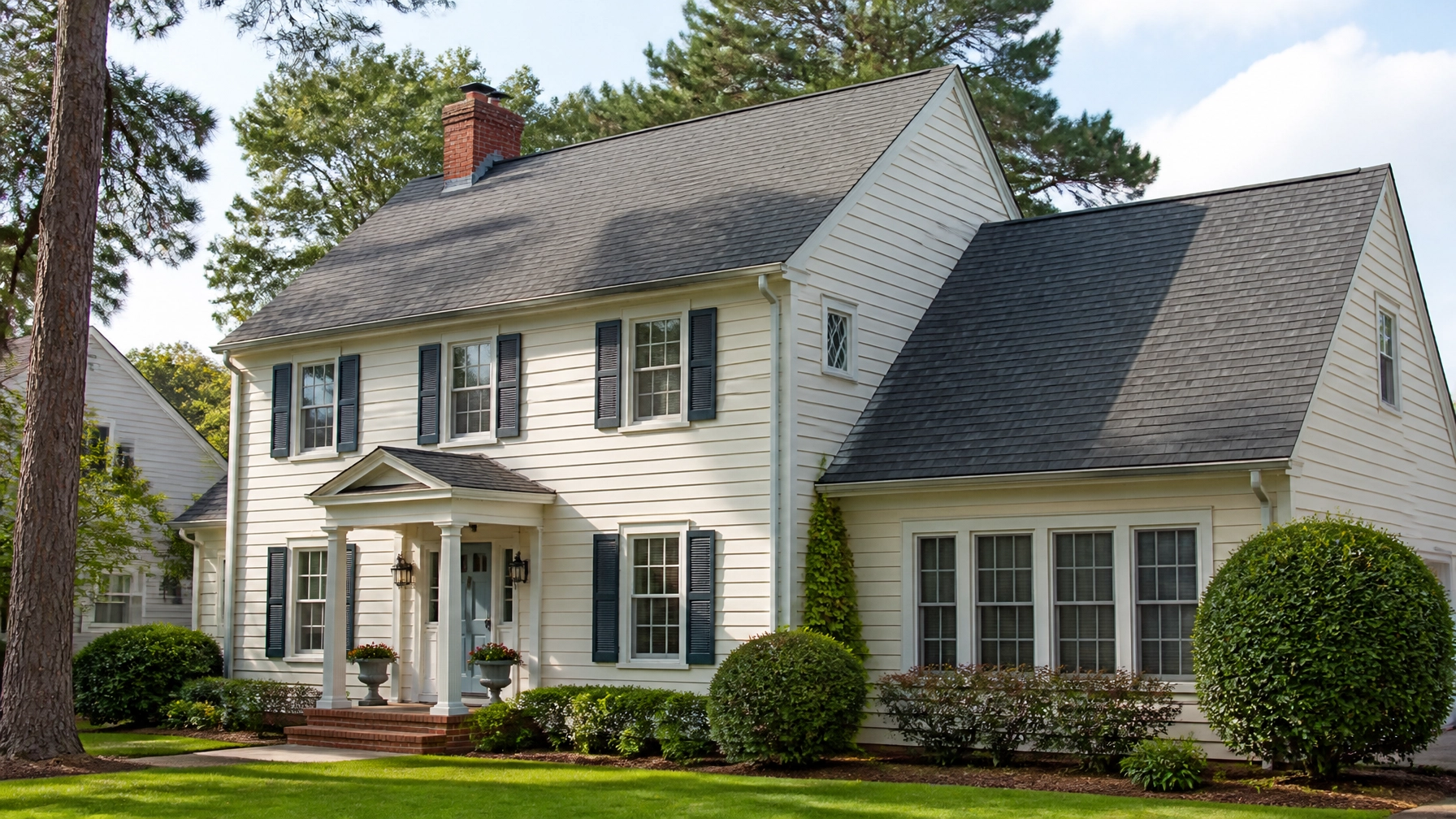
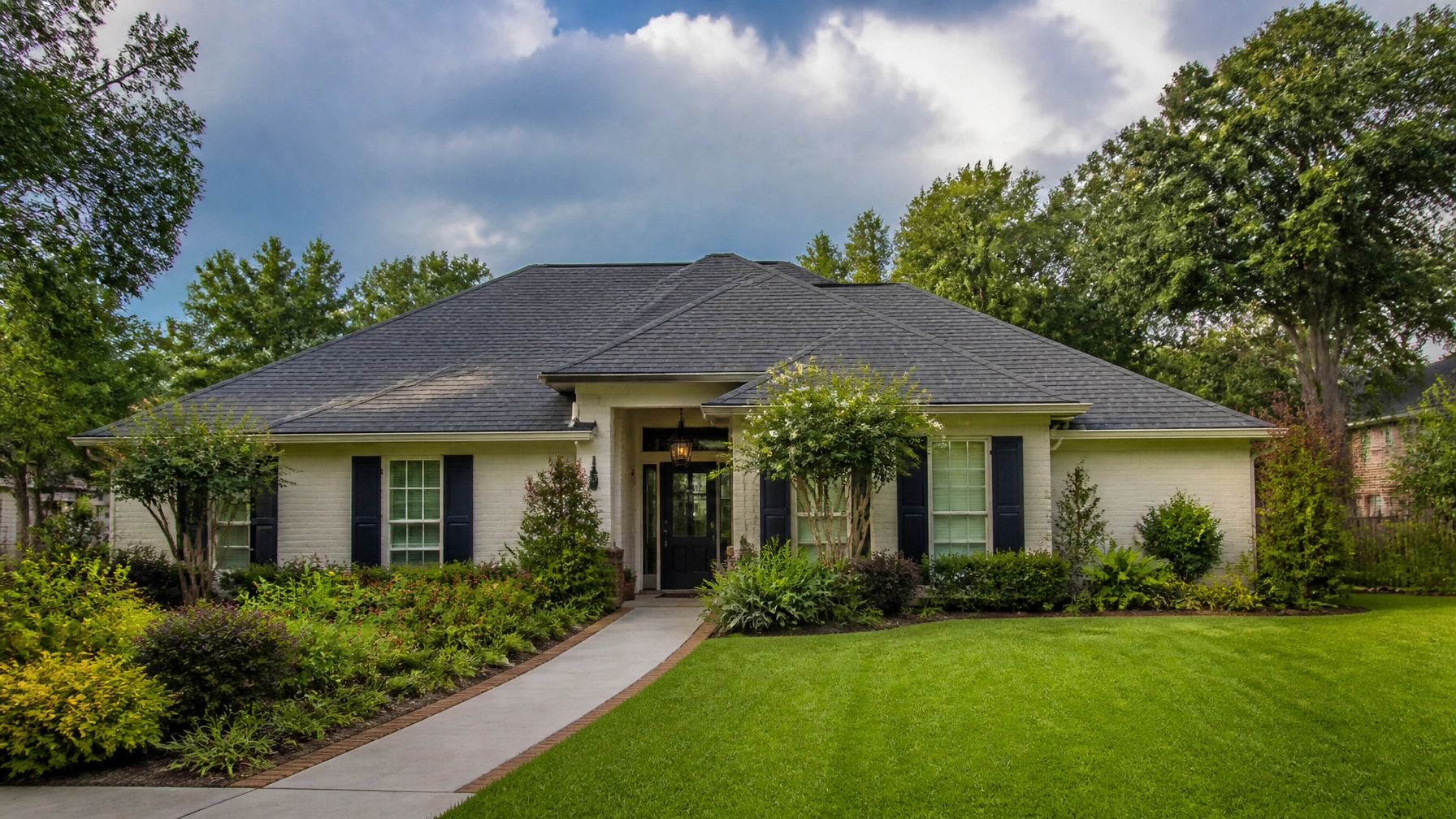
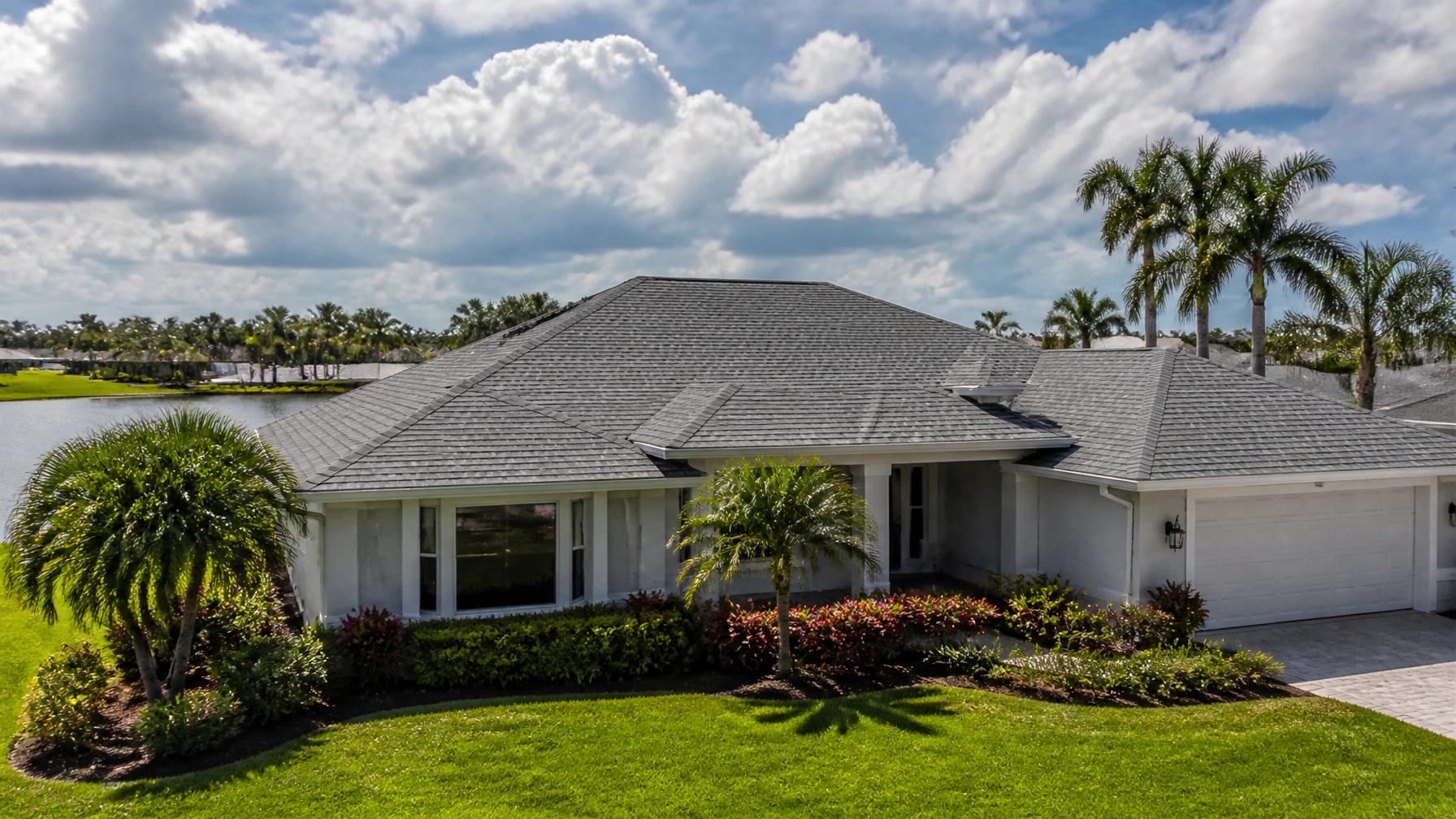
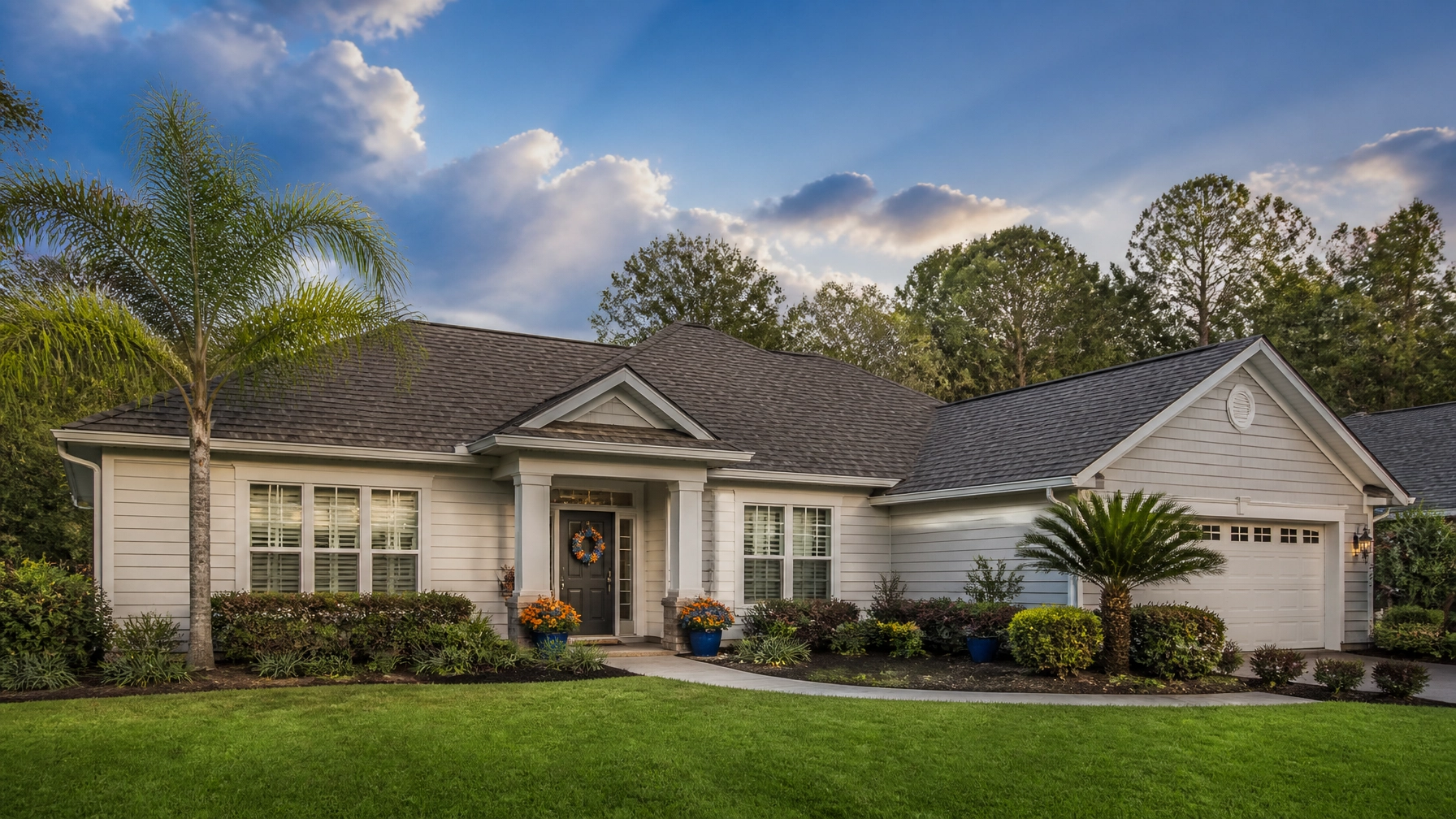
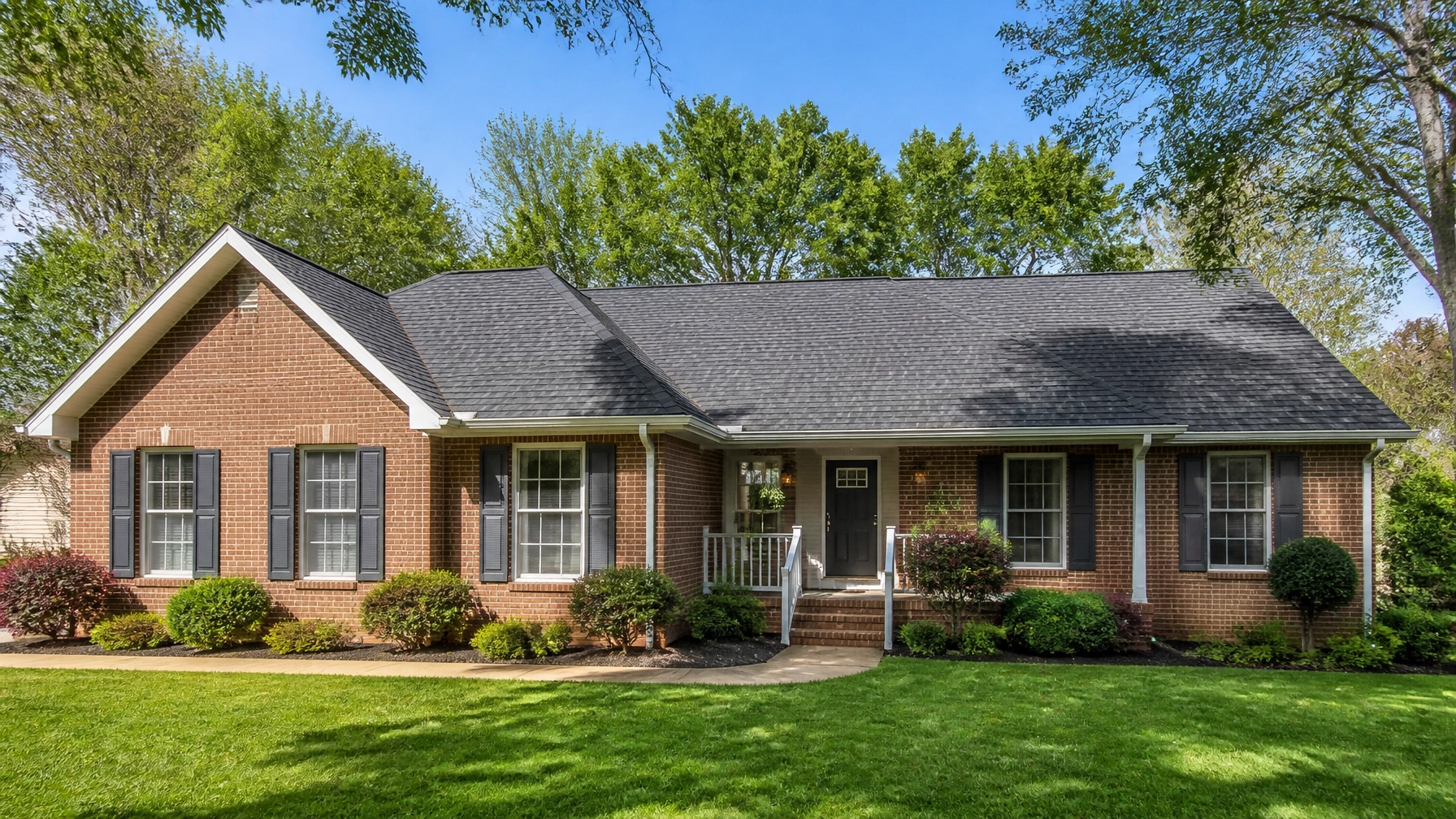
    New impact-resistant shingle roof on a ranch home near Fort Moore in South Columbus

    Local Factors That Affect a Columbus Roof Replacement

    Roof age and military housing stock

    Columbus has a large number of homes built or renovated 15–30 years ago, particularly in South Columbus and Midtown near Fort Moore. Many roofs from that period are approaching the end of their expected asphalt-shingle life.

    If your roof is more than 20 years old, recurring repairs may no longer be the best financial choice. Compare the cost of continued patching with a full replacement.

    Heat, humidity, and algae

    Columbus has a humid subtropical climate with hot summers, intense ultraviolet exposure, and high moisture near the Chattahoochee River. Shaded slopes in neighborhoods such as Wynnton, Weracoba, and Midtown may develop algae or moss.

    Algae-resistant architectural shingles can improve appearance and reduce maintenance. Proper attic ventilation is also important because trapped heat can accelerate shingle aging and increase cooling demand.

    Thunderstorms, hail, and wind

    Storm exposure is a major consideration in the Fountain City area. Columbus experiences frequent thunderstorms, occasional tornado warnings, damaging wind, and hail risk associated with the broader Dixie Alley region.

    A severe-weather event on September 6, 2026, brought damaging-wind and quarter-sized-hail concerns to the region. Local reports also noted snapped trees and power outages affecting thousands of customers. Additional severe-weather activity occurred on June 18 and March 12, while hail-tracking reports identified area activity on March 11 and July 9.

    After a storm, photograph:

    • Missing or lifted shingles
    • Dents in metal vents and gutters
    • Exposed underlayment
    • Broken siding or screens
    • Fallen branches
    • Interior ceiling stains

    Record the storm date and contact your insurer promptly. Do not make permanent repairs before documenting the damage and, when appropriate, allowing an adjuster to inspect it.

    Which Roof Material Is Best for Columbus?

    Architectural shingles (Popular)

    Architectural shingles are the most balanced option for many Columbus homeowners. They offer better curb appeal and longer expected service than basic 3-tab shingles without the upfront cost of metal.

    They are often the best roof for home value when you want a broadly appealing material that fits neighborhood expectations.

    Class 4 impact-resistant shingles (Storm-ready)

    Class 4 shingles are engineered to resist impact better than standard products. They cost more, but they may make sense for homeowners concerned about hail exposure or planning to remain in the home long term.

    Ask your insurance carrier whether impact-resistant roofing qualifies for a premium reduction. Discounts vary by policy and insurer.

    Standing-seam metal (Premium)

    Standing-seam metal can last 40–70 years when properly installed. It offers strong wind performance, reflects solar heat, and may reduce the need for another replacement if you plan to stay in your home for decades.

    The tradeoff is a substantially higher upfront price, especially after 2026 steel and aluminum cost increases. Metal is usually easier to justify for long-term ownership than for a quick resale.

    Standing-seam metal roof on a two-story colonial home in Midtown Columbus, Georgia

    Columbus Roof Replacement Permits and Inspections

    A full roof replacement generally requires a building permit in Columbus and Muscogee County. Minor repairs typically do not.

    Permits are handled through the Columbus Consolidated Government Inspections & Code Department. Homeowners can use the CCG Self Service portal or confirm whether an in-person residential alteration submission is appropriate at:

    Inspections & Code Department
    420 East 10th Street
    Columbus, GA
    Phone: 706-225-4126

    Ask who will obtain the permit and whether the cost is included in your quote.

    Inspections may cover:

    • Drip edge at eaves and rakes
    • Six-nail shingle fastening patterns
    • Flashing around penetrations
    • Attic ventilation
    • Decking condition
    • Proper tear-off

    A full tear-off is required when the roof has three or more existing layers. Hidden decking damage, rotten wood, and inadequate ventilation can increase the final price.

    For projects costing more than $2,500, verify that the contractor holds the appropriate Georgia license. Use the Georgia Secretary of State professional license search and confirm general liability and workers’ compensation insurance.

    Roof Replacement ROI and Columbus Home Value

    A new roof supports more than weather protection. It also affects buyer confidence, inspection results, insurance discussions, and exterior appearance.

    Columbus housing benchmarks include approximate typical home values near $177,000, with median sold prices around $190,000 in the city and approximately $213,000 across the metro area. Values vary significantly:

    • South Columbus near Fort Moore: approximately $130,000–$210,000
    • Midtown: approximately $185,000–$300,000
    • North and East Columbus: broad ranges based on age and condition
    • Harris County bedroom communities: often higher prices for newer or larger homes

    A roof replacement may recover roughly 60%–70% of its cost for asphalt roofing. Metal may achieve approximately 75%–80%, depending on the property and buyer demand.

    That does not mean a $12,000 roof automatically adds $12,000 to the sale price. The practical benefit is often stronger marketability, fewer inspection objections, improved roof curb appeal home value, and less negotiation over an aging roof. Those factors contribute to overall roof replacement resale value and new roof ROI home value.

    New roof installation details showing shingles, ridge ventilation, drip edge, and flashing on a Columbus residence

    How to Budget Before Calling Contractors

    Start with a satellite measurement instead of guessing from your home’s living area. A quick estimate can show roof size, pitch, complexity, and low-middle-high pricing before scheduling multiple inspections.

    Then request at least three written quotes. Each should identify:

    • Exact shingle or metal product
    • Roof squares and estimated waste
    • Tear-off and disposal
    • Decking replacement price
    • Underlayment and ice/water protection
    • Flashing and ventilation work
    • Permit fees
    • Labor warranty
    • Material warranty
    • Quote expiration date

    Get your free Columbus roof estimate in about 60 seconds through Get My Roof Estimate Now. It is free, requires no credit card, and gives you a useful budget benchmark before you speak with verified local contractors.

    Frequently Asked Questions

    How much does a new roof cost in Columbus, GA, in 2026?

    For a 2,000-square-foot roof, expect approximately $7,000–$10,000 for 3-tab shingles, $8,000–$15,500 for architectural shingles, $10,500–$17,000 for Class 4 shingles, and $18,000–$30,000 or more for standing-seam metal.

    Is a metal roof worth the extra cost?

    Metal can be worthwhile if you plan to stay in the home for many years, want a longer service life, or prioritize durability. It usually has a higher upfront cost than asphalt and is not automatically the best choice for every resale situation.

    Should I repair or replace my roof?

    Repair may be reasonable when damage is localized and the roof is under 15 years old. Replacement is more likely to make sense when the roof is over 20 years old, leaks recur, decking is damaged, or repairs approach half the cost of a new roof.

    Does Columbus require a permit for roof replacement?

    A full replacement generally requires a permit. Confirm the project classification and submission process with Columbus Inspections & Code at 706-225-4126.

    What should I do after hail or wind damage?

    Take photos, document the storm date, prevent further water entry with temporary measures, contact your insurer, and arrange a professional inspection. Avoid signing with a door-to-door contractor before verifying licensing, insurance, and written terms.
  • Daily ROI Blitz – Slot 2: Lexington, KY New Roof ROI : How a Storm-Ready Replacement Adds Home Value in the Horse Capital in 2026

    Daily ROI Blitz – Slot 2: Lexington, KY New Roof ROI : How a Storm-Ready Replacement Adds Home Value in the Horse Capital in 2026

    A new roof in Lexington can recover approximately 60%–75% of its project cost at resale. For a typical 2,000-square-foot home, a 2026 architectural shingle replacement commonly costs $9,000–$18,400, with many standard projects landing near $11,500–$11,900.

    That makes roof replacement a meaningful investment: but also a practical one in Lexington’s competitive housing market.

    The city’s 2026 median sold price is approximately $375,000, with homes spending about 22.6 days on the market. Prices are up roughly 7.3% year over year, while inventory remains near two months of supply. Lexington is still seller-friendly, although conditions are stabilizing. Forecasts call for more moderate appreciation of approximately 2%–4% through the rest of 2026.

    In this market, a clean, storm-ready roof can protect your selling position, improve curb appeal, and reduce buyer objections.

    Lexington’s 2026 Market Makes Roof Condition Matter

    Lexington buyers are moving quickly. They are also paying close attention to deferred maintenance.

    A worn roof creates uncertainty during inspections. Buyers may calculate the replacement cost themselves and adjust their offer accordingly. Common outcomes include:

    • A lower purchase offer
    • A seller credit at closing
    • A request for roof replacement before closing
    • Delays while insurance, contractors, and inspectors evaluate the roof
    • A lost buyer if the roof appears near the end of its useful life

    This matters across the market, from newer homes in Hamburg, Andover, and Brannon Crossing to historic properties in Chevy Chase and Ashland Park.

    The Horse Capital identity also shapes buyer expectations. UK-connected professionals, relocating families, and buyers seeking Bluegrass estates often expect strong presentation. In premium neighborhoods, roof color, material, flashing, and overall roofline should complement the architecture: not look like a basic afterthought.

    What Is the New Roof ROI in Lexington?

    The most practical planning range for roof replacement ROI is 60%–75% of the project cost recovered at resale.

    That does not mean a $12,500 roof automatically adds $12,500 to your sale price. A roof’s value comes from several sources:

    • Direct resale value
    • Better buyer confidence
    • Fewer inspection negotiations
    • Stronger curb appeal
    • Reduced risk of leaks and storm damage
    • Possible insurance savings for impact-resistant materials
    • Faster marketability compared with a home needing immediate work

    Lexington ROI example: 22-square roof

    Assume a 22-square architectural shingle roof with a total project cost of approximately $12,500.

    Cost recovery Estimated resale value recovered Unrecouped project cost
    60% $7,500 $5,000
    65% $8,125 $4,375
    75% $9,375 $3,125

    This is a planning benchmark, not a guaranteed appraisal adjustment. The final result depends on neighborhood comparables, roof quality, installation documentation, material choice, and the condition of the rest of the home.

    Refined Lexington historic-style home with a premium architectural shingle roof

    Spring and Summer 2026 Storms Raise the Stakes

    Roof condition has become a more visible issue after Lexington-area severe weather in 2026.

    The April 16 storm event brought reports of hail reaching approximately 1.5–2.0 inches in parts of Kentucky, along with wind gusts reported near 59 mph. Roofing damage was reported in and around Lexington-area communities, including areas near Hamburg and Andover.

    Another late-July thunderstorm produced reported wind gusts near 63 mph, while June and summer storms damaged buildings in nearby Jessamine County.

    After a major storm, contractor demand can rise quickly. In some markets, storm-related demand pushes roofing prices 20%–40% higher because crews, materials, inspections, and insurance appointments become harder to schedule.

    If you are planning to sell within the next one to three years, waiting until after another major storm may expose you to:

    • Higher replacement pricing
    • Longer contractor wait times
    • Emergency repair costs
    • Insurance claim complications
    • Buyer concerns about hidden storm damage

    For storm documentation, keep dated photos, inspection reports, and insurance claim records. The National Weather Service April 16, 2026 storm summary and local reporting from WKYT on Jessamine County storm impacts provide useful regional context.

    2026 Lexington Roof Replacement Cost Benchmarks

    Roofing contractors price projects by square, with one square equal to 100 square feet of roofing.

    For a typical 2,000-square-foot roof in Lexington, use these 2026 planning ranges:

    Roofing material Typical material and installation range Best fit
    Basic asphalt shingles $4.00–$7.00 per sq. ft. Budget
    Architectural shingles $4.60–$7.40 per sq. ft. Popular
    Standing-seam metal $7.00–$16.00 per sq. ft. Premium

    A standard architectural shingle replacement commonly falls between $9,000 and $18,400. Straightforward projects often land closer to $11,500–$11,900.

    The higher end may be justified by:

    • Steep roof pitch
    • Multiple valleys or dormers
    • Chimneys and skylights
    • More than one existing shingle layer
    • Decking repairs
    • Premium or Class 4 impact-resistant shingles
    • New ventilation, flashing, and pipe boots
    • Difficult access or extensive tear-off

    Fayette County permit costs may add approximately $141–$400, depending on the project and permit handling. Ask whether a contractor’s permit line includes only the government fee or also administrative and inspection coordination.

    For a preliminary benchmark, use the Get My Roof Estimate Now roof cost calculator. For a property-specific range, the free satellite roof estimate measures your actual roof and returns pricing in about 60 seconds.

    Which Roof Is Best for Home Value?

    Architectural shingles (Popular, best all-around)

    Architectural shingles are usually the strongest resale-value choice for an average Lexington home.

    They provide:

    • Better curb appeal than basic three-tab shingles
    • Broad color and texture selection
    • Familiarity with local buyers
    • Lower upfront cost than standing-seam metal
    • Good compatibility with ranch, colonial, and suburban home styles

    For most Lexington homeowners, architectural shingles offer the best balance of appearance, cost, durability, and resale value.

    Basic asphalt shingles (Budget)

    Basic asphalt shingles can make sense for a lower-cost replacement or a rental property. They are functional, but they may not create the same visual upgrade.

    Use them when:

    • The neighborhood is highly price-sensitive
    • You plan to hold the home for a limited period
    • The existing home has modest finishes
    • Your priority is weather protection at the lowest cost

    Avoid choosing the cheapest product solely to maximize ROI. A visibly low-grade roof may weaken the roof curb appeal and home value benefit.

    Standing-seam metal (Premium, better long-term)

    Standing-seam metal roofing can be a strong choice for long-term ownership, modern homes, rural properties, and select horse-farm estates.

    It offers:

    • Long service life
    • Strong wind performance
    • Distinctive architectural appeal
    • Potential energy benefits
    • Premium storm resistance

    However, the higher initial cost is not always recovered dollar-for-dollar at resale. Metal works best when it fits the home’s architecture and the surrounding neighborhood. A premium metal roof can be appropriate in Ashland Park estates or horse-country properties, but it may be unnecessary over-improvement for a standard suburban home.

    Class 4 impact-resistant shingles (Storm-focused)

    Class 4 shingles are designed for improved impact resistance and may be worth considering after Lexington’s recent hail activity.

    Before choosing them:

    • Ask whether the product meets the applicable UL 2218 standard
    • Confirm the installation requirements
    • Ask your insurance carrier about available discounts
    • Compare the upgrade cost with the expected premium savings
    • Verify whether Kentucky programs or local incentives are currently available

    Insurance discounts vary by carrier and policy. Never assume a discount applies without written confirmation.

    New impact-resistant architectural shingle roof on a Lexington suburban home

    Match the Roof to the Lexington Neighborhood

    The best roof for home value is not always the most expensive roof. It is the roof that fits the home and local market.

    Chevy Chase and Ashland Park

    These historic and premier neighborhoods often include homes valued from approximately $600,000 to more than $1 million, with some Ashland Park estates reaching $2 million–$3 million or more.

    Buyers may expect:

    • Refined architectural shingle colors
    • High-quality flashing and trim details
    • Properly scaled rooflines
    • Premium metal where architecturally appropriate
    • Documentation showing professional installation

    Hamburg, Andover, and Brannon Crossing

    These newer suburban areas may place more emphasis on:

    • Hail resistance
    • Clean, consistent roof color
    • Manufacturer warranties
    • Modern ventilation
    • Clear storm-damage documentation

    Do not over-improve relative to nearby homes. A high-end roof can support value, but only when buyers in that neighborhood recognize and reward the upgrade.

    Protect Your Roof Replacement Resale Value

    If you replace the roof before selling, organize the paperwork immediately.

    Keep:

    • Final invoices and payment records
    • Product names and specifications
    • Manufacturer warranties
    • Contractor workmanship warranty
    • Fayette County permit and inspection records
    • Before-and-after photos
    • Roof measurement or inspection reports
    • Insurance claim information
    • Documentation for impact-resistant materials
    • Photos of replaced decking or flashing

    This documentation gives buyers and their inspectors a clear record. It also helps your agent market the property as move-in ready.

    For inspections, storm documentation, and contractor connections, review the available roofing services from Get My Roof Estimate Now.

    Should You Replace the Roof Before Selling?

    Replace before listing when the roof is:

    • Near the end of its expected life
    • Showing widespread granule loss or curling
    • Leaking in multiple locations
    • Visibly mismatched or heavily repaired
    • Damaged by hail or wind
    • Likely to fail a buyer’s inspection

    If the roof is still serviceable, a professional inspection and documented repairs may be more cost-effective than a full replacement.

    The key is to avoid making a rushed decision. Start with an accurate roof measurement, compare local project costs, and evaluate how the replacement will fit your neighborhood’s buyer expectations.

    FAQ: Lexington Roof Replacement ROI

    Does a new roof increase home value in Lexington?

    Yes. A new roof can improve resale value, reduce inspection objections, and strengthen buyer confidence. Most homeowners should plan for approximately 60%–75% cost recovery, although results vary by material, neighborhood, installation quality, and market conditions.

    What is the best roof for home value in Lexington?

    Architectural shingles are usually the best all-around choice because they offer strong curb appeal at a moderate cost. Class 4 shingles may provide additional storm protection. Standing-seam metal can be a better fit for premium, modern, or rural properties where the style matches the home.

    How much does a new roof cost in Lexington in 2026?

    A typical 2,000-square-foot architectural shingle replacement costs approximately $9,000–$18,400, with many standard projects near $11,500–$11,900. Pitch, complexity, tear-off, decking, materials, labor, and permits affect the final price.

    Should I replace my roof after hail damage?

    Have the roof professionally inspected and document the damage first. Contact your insurance carrier if you suspect a covered loss. Avoid signing a rushed contract after a storm, and compare written scopes of work before choosing a contractor.

    Get Your Lexington Roof ROI Starting Point in 60 Seconds

    Before scheduling multiple contractor visits, get a property-specific budget range.

    Enter your Lexington address into the free satellite roof estimator. You can receive an instant estimate based on your roof’s size, pitch, and complexity: with no credit card and no upfront contractor appointment.

    A clearer number helps you decide whether to repair, replace, upgrade for storm resistance, or prepare your home for resale.

    Kentucky horse-country estate with a premium standing-seam metal roof

    Cost ranges and ROI figures are planning estimates, not guaranteed quotes or appraisal adjustments. Final pricing requires contractor verification, local permit review, and an onsite inspection for hidden conditions.

    Sources and Local References

  • 2026 Roof Replacement Cost in Norfolk, VA: Tidewater Pricing, Wind-Code Rules & Storm-Ready Tips

    2026 Roof Replacement Cost in Norfolk, VA: Tidewater Pricing, Wind-Code Rules & Storm-Ready Tips

    For a typical 2,000-square-foot roof in Norfolk, VA, expect to spend approximately:

    • 3-tab asphalt shingles (Budget): $7,000–$10,500
    • Architectural shingles (Popular): $10,500–$19,500
    • Class 4 impact-resistant shingles: $12,500–$19,500
    • Exposed-fastener metal: $14,000–$24,000
    • Standing-seam metal (Premium): $18,000–$40,000+

    Most Norfolk homeowners choosing architectural shingles should plan on approximately $12,500–$16,500 for a standard replacement. Your final roof replacement cost in Norfolk VA depends on roof size, pitch, complexity, tear-off requirements, decking condition, material choice, and coastal installation requirements.

    For a fast starting point, use the free roof cost calculator or get a property-specific satellite roof estimate. Results are available in about 60 seconds with no credit card required.

    New dimensional shingle roof on a Norfolk-style ranch home

    2026 Norfolk Roof Replacement Cost by Material

    Roofing contractors measure roofs in squares. One square equals 100 square feet. A 2,000-square-foot roof contains approximately 20 squares.

    The following installed ranges include typical labor and materials but may not include major structural repairs.

    Roofing material Installed cost per sq. ft. Approximate cost for 2,000 sq. ft.
    3-tab asphalt shingles (Budget) $3.50–$5.00 $7,000–$10,500
    Architectural shingles (Popular) $5.00–$8.50 $10,500–$19,500
    Class 4 impact-resistant shingles About 10%–20% above architectural $12,500–$19,500
    Exposed-fastener metal $7.00–$12.00 $14,000–$24,000
    Standing-seam metal (Premium) $9.00–$18.00 $18,000–$40,000+

    Synthetic roofing and other premium materials can exceed these ranges. Historic homes, steep roofs, complex rooflines, and extensive decking replacement can also push a project above the typical range.

    Why 2026 Pricing Is Changing

    Material pricing is an important part of current regional trends.

    In 2026, asphalt shingle manufacturers applied two price increases: approximately 4%–8% early in the year, followed by an additional 6%–9% increase effective June 1, 2026. Metal roofing has faced even more pressure, with steel and aluminum costs rising approximately 10%–22% after Section 232 tariff changes in April.

    For a project later in the year, set aside a 5%–15% contingency. This reserve can cover price changes, disposal costs, additional underlayment, flashing repairs, or damaged decking discovered after the old roof is removed.

    The Main Factors Influencing Roof Replacement Cost

    1. Roof size and number of squares

    The roof surface is usually larger than the home’s interior living area. A 2,000-square-foot house may have a roof measuring 2,000–2,500 square feet or more after accounting for overhangs and roof geometry.

    A satellite measurement provides a faster starting point than guessing from floor area. Get My Roof Estimate Now measures roof size, pitch, and complexity from imagery and provides a low-middle-high pricing range.

    2. Pitch and complexity

    A simple gable roof is less expensive than a roof with multiple valleys, dormers, skylights, chimneys, or intersecting sections.

    Steep or complicated roofs require:

    • Additional fall-protection equipment
    • More labor hours
    • Extra material for cuts and waste
    • More detailed flashing work
    • Greater cleanup and access planning

    Norfolk homes in Ghent, Colonial Place, Riverview, and Lafayette-Winona may have older or more detailed rooflines. Homes near Ocean View and other coastal areas can also require additional inspection for moisture damage and deteriorated decking.

    3. Tear-off and disposal

    Removing one layer of old shingles adds labor, dumpster, and disposal costs. Multiple layers may cost more and can reveal hidden problems.

    A written estimate should clearly state:

    • Number of existing roof layers
    • Tear-off price
    • Disposal fees
    • Underlayment replacement
    • Flashing replacement
    • Whether ridge vents and starter strips are included

    4. Decking and structural repairs

    Roof decking is the wood sheathing beneath the shingles or metal panels. Soft, stained, or deteriorated decking must be replaced before the new roof is installed.

    Older housing stock in areas such as Ocean View, Bayview, Norview, and Ballentine Place may have more decking repairs than newer construction. Ask contractors to provide a per-sheet or per-square-foot price for replacement decking before work begins.

    5. Salt air and regional labor

    Homes near the Elizabeth River, Chesapeake Bay, Lafayette River, and Ocean View face salt-air exposure. Salt can accelerate corrosion on metal components, fasteners, flashing, vents, and gutters.

    A Tidewater roofing estimate may also reflect:

    • Regional labor rates
    • Wind-uplift installation requirements
    • Corrosion-resistant fasteners
    • Additional flashing protection
    • Local demand after storms

    Historic Norfolk home with a new premium architectural shingle roof

    Norfolk’s Climate Makes Storm-Ready Installation Important

    Norfolk has a humid subtropical climate. Roofs must handle high humidity, intense summer UV exposure, algae and moss on shaded slopes, wind-driven rain, and occasional nor’easters.

    The Atlantic hurricane season runs from June 1 through November 30, with the climatological peak around September 10. NOAA’s 2026 outlook projects a below-average season because of El Niño, but below average does not mean no risk. One storm can still cause serious damage.

    Local 2026 weather events reinforce the need for regular inspections:

    • On April 5, National Weather Service reporting identified strong storm winds in the broader Hampton Roads region, including a reported 61 mph gust.
    • A July 28 waterspout near Ocean View was associated with downed trees and vehicle damage.
    • Severe thunderstorms on August 20 affected Oakdale Farms and the Norview area, including downed power lines and nearby trees.

    After any major storm, look for missing shingles, lifted flashing, exposed underlayment, dented vents, fallen branches, and ceiling stains. Damage is not always visible from the ground.

    For storm-related issues, review the available storm damage roofing services and document damage before making permanent repairs.

    Norfolk Re-Roofing Permits and Virginia Code Rules

    The City of Norfolk states that a building permit is generally not required for re-roofing one- and two-family residential homes when the work is limited to replacing the roof covering.

    However, a permit may be required when the project includes:

    • Changing the roof pitch
    • Installing new framing
    • Constructing an addition
    • Making significant structural changes
    • Replacing extensive decking
    • Performing commercial re-roofing

    Commercial re-roofing projects must go through Norfolk’s E-Permit and building permit process.

    Even when a residential re-roof does not require a permit, the installation must comply with the 2021 Virginia Residential Code. In Norfolk’s wind environment, pay close attention to:

    • Required shingle fastening patterns for the 100 mph wind-design standard
    • Proper starter-strip installation
    • Hip and ridge shingle requirements
    • Underlayment and flashing
    • Roof-to-wall and roof-to-chimney details
    • Ventilation and manufacturer specifications

    A re-roof does not require an elevation certificate, even when the home is located in a flood zone. Still, confirm the project scope with the city or contractor if structural work is involved.

    Your contractor should hold a current Virginia contractor license through the Virginia Department of Professional and Occupational Regulation. Verify the license before signing a contract, and request proof of general liability and workers’ compensation insurance.

    Modern coastal Virginia home with a standing-seam metal roof

    How to Compare Norfolk Roofing Estimates

    Do not compare bids by price alone. Make sure each estimate includes the same scope of work.

    Ask whether the quote covers:

    • Complete tear-off and disposal
    • Synthetic or felt underlayment
    • Ice and water protection where appropriate
    • New drip edge and flashing
    • Starter strips and ridge caps
    • Ventilation improvements
    • Decking replacement allowance
    • Cleanup and magnetic nail sweep
    • Manufacturer and workmanship warranties
    • Final payment schedule

    Get at least two or three detailed estimates. A low bid may exclude decking, ventilation, flashing, or proper wind-rated fastening.

    For older homes or properties in historic areas such as Ghent, ask whether the material, color, or roof appearance requires additional review. A new roof can improve curb appeal and support home value, but only when the installation matches the property and meets local requirements.

    Get Your Norfolk Roof Estimate in 60 Seconds

    You do not need to schedule several contractor visits just to learn whether your roof may cost $10,000 or $25,000.

    Enter your address at getmyroofestimatenow.com to receive a free satellite-powered estimate based on your roof’s measured size, pitch, and complexity.

    You will receive:

    • Pricing for common roofing materials
    • Low, middle, and high replacement ranges
    • A measurement based on your property
    • No credit card requirement
    • Results in approximately 60 seconds
    • Connection to verified, licensed, and insured local contractors

    Start with an instant estimate, then use a contractor inspection to confirm decking, flashing, ventilation, and storm damage before work begins.

    Norfolk Roof Replacement Cost FAQs

    What is the average roof replacement cost in Norfolk, VA, in 2026?

    A typical 2,000-square-foot architectural shingle replacement costs approximately $10,500–$19,500, with many standard projects falling between $12,500 and $16,500.

    Is metal roofing worth the extra cost in Norfolk?

    Metal roofing costs more initially but can offer long service life and strong performance when properly installed. Standing-seam metal typically costs $18,000–$40,000 or more for a 2,000-square-foot roof.

    Does Norfolk require a permit to replace a residential roof?

    Norfolk generally does not require a building permit for re-roofing one- and two-family residential homes when the work is limited to roof covering replacement. Structural changes and commercial projects have different requirements.

    How long does a roof replacement take?

    Many average residential replacements take one to three days. Steep roofs, complex layouts, weather delays, decking repairs, and material availability can extend the schedule.

    Should I get a roof estimate before calling a contractor?

    Yes. A satellite estimate gives you a useful budget range before scheduling inspections. It is not a substitute for an on-site evaluation, but it helps you compare contractor proposals and identify unusual pricing.

  • Daily Weather Blitz – Slot 1: Baton Rouge, LA : September 8, 2026: Mid-90s Heat, Scattered Afternoon Storms & What the Capital City’s Gulf-Moisture, Hurricane-Season Climate Does to Your Roof’s Durability

    Daily Weather Blitz – Slot 1: Baton Rouge, LA : September 8, 2026: Mid-90s Heat, Scattered Afternoon Storms & What the Capital City’s Gulf-Moisture, Hurricane-Season Climate Does to Your Roof’s Durability

    Published: September 8, 2026

    Baton Rouge starts Tuesday hot, humid, and mostly sunny: but the roof still faces another round of Gulf-driven stress.

    At 6:53 a.m. CDT, Baton Rouge Metro Airport reported 72°F, 97% humidity, and an east wind of 5 mph. The National Weather Service expects a high near 93°F, heat index values up to 106°F, and a 40% chance of afternoon showers and thunderstorms.

    No severe weather is expected today, and storms should be fewer and faster-moving than Monday’s storms. However, the broader pattern remains active. An upper-level disturbance along the northern Gulf Coast is keeping daily storm chances elevated across the Capital Area.

    For homeowners in East Baton Rouge Parish, that means repeated cycles of heat, moisture, heavy rain, lightning, and occasional gusty wind. Those conditions can expose weak flashing, aging shingles, clogged gutters, and hidden decking problems before the next major storm arrives.

    Baton Rouge’s 7-Day Roof Weather Outlook

    Forecast conditions are based on the National Weather Service Baton Rouge point forecast.

    Day Forecast High-Low Storm Risk
    Tuesday, Sept. 8 Mostly sunny, afternoon showers and thunderstorms 93° / 76° Moderate : 40%
    Wednesday, Sept. 9 Increasing clouds with afternoon storms 91° / 75° Moderate : 40%
    Thursday, Sept. 10 Showers and thunderstorms, deeper Gulf moisture 91° / 75° High : 80%
    Friday, Sept. 11 Mostly sunny, afternoon storms likely 91° / 75° High : 70%
    Saturday, Sept. 12 Afternoon showers and thunderstorms likely 91° / 75° High
    Sunday, Sept. 13 Showers and possibly a thunderstorm 92° / 76° Elevated
    Monday, Sept. 14 Mostly sunny with a chance of storms 92° / 76° Elevated

    WPC guidance projects approximately 1–2 inches of rain across Baton Rouge during the next seven days, with 2–3 inches or more south of the I-10/I-12 corridor.

    Saturday is also an LSU home-game weekend at Tiger Stadium, commonly called Death Valley. Expect busy roads, crowded neighborhoods, and limited contractor availability if storm damage develops before kickoff.

    What Monday’s Storms Mean for Baton Rouge Roofs

    Labor Day brought dangerous heat and strong afternoon storms across the Capital Area. A confirmed EF-0 tornado touched down near Hammond around 2:39 p.m. in Tangipahoa Parish. There were no reported deaths or injuries, but the event demonstrates how quickly a routine summer storm pattern can produce damaging wind.

    Southern University cancelled Tuesday classes because of storm-related campus power issues. That type of outage is a reminder that wind, falling limbs, and lightning can affect an entire area even when a specific neighborhood avoids direct structural damage.

    Baton Rouge also experienced a recent warning sign on August 21, when a large tree branch fell on a vehicle along South Acadian Street. Trees and roof systems are closely connected during Gulf Coast storms. A roof may avoid direct wind damage but still suffer from:

    • Punctures from branches
    • Broken ridge caps
    • Displaced shingles
    • Damaged vents or pipe boots
    • Gutter separation
    • Water intrusion around flashing

    Document visible damage from the ground. Do not climb onto a wet roof after a storm.

    How Gulf Moisture and Heat Wear Down a Roof

    Baton Rouge’s late-summer roofing environment is demanding even when no hurricane is nearby.

    Thermal cycling (Budget concern)

    A roof can heat rapidly under strong afternoon sun, then cool quickly when a thunderstorm passes. Repeated expansion and contraction can stress:

    • Shingle seals
    • Flashing seams
    • Roof cement
    • Pipe boots
    • Metal fasteners
    • Older underlayment

    This is one reason a roof that appears acceptable from the yard may still develop leaks during the next heavy downpour.

    Heavy rain and drainage

    Rainfall is not only a surface issue. Water can back up beneath shingles when gutters are clogged or valleys contain leaves and debris. Saturated roof edges can also expose deteriorated fascia and soffit materials.

    Gusty thunderstorm wind

    Severe wind is East Baton Rouge’s most common historical severe-weather category. Even a non-severe storm can lift loose shingles or move debris across the roof. Missing or creased shingles should be repaired before the next storm cycle.

    Lightning and humidity

    Frequent lightning increases the risk of damage to electrical systems and nearby trees. High humidity also encourages algae growth, moss in shaded areas, and moisture retention around poorly ventilated attic spaces.

    Tropical conditions

    The National Hurricane Center currently expects no tropical cyclone formation in the Gulf, Caribbean, or Atlantic during the next seven days. That is notable because only 1992 and 2025 had no tropical activity between September 5 and September 15 since 1950.

    No current tropical formation does not eliminate hurricane-season risk. It simply gives Baton Rouge homeowners a useful maintenance window.

    Baton Rouge colonial home with a new charcoal architectural shingle roof after a summer storm

    Baton Rouge Severe-Weather History

    The NWS East Baton Rouge Parish severe-weather climatology recorded 238 total severe events from 1950 through 2009:

    • 154 severe wind events
    • 51 hail events
    • 33 tornado events

    Notable local examples include:

    • A wind gust near 86 mph on August 1, 1959
    • Severe thunderstorm winds near 80 mph on March 26, 2009, causing widespread damage, including approximately $4 million in damage at LSU
    • 2.5-inch tennis-ball-size hail reported near Airline Highway and Old Hammond Road on April 22, 2008
    • 1.75-inch golf-ball-size hail near Greenwell Springs on March 31, 2005
    • F2 tornadoes on June 8, 1989, damaging approximately 90 houses and 35 mobile homes, primarily affecting roofs, siding, and windows

    September remains an active month in the parish’s severe-weather calendar. A roof built only for average sunshine is not the same as a roof prepared for Baton Rouge’s storm pattern.

    Local Code and Wind-Resistance Basics

    Louisiana uses the 2021 Louisiana Residential Code, based on the 2021 International Residential Code. Baton Rouge’s local wind-resistance planning context includes ultimate design wind speeds around 140 mph, although the exact design value for a property must be confirmed with the City-Parish building department.

    For asphalt shingles, homeowners should ask contractors about:

    • ASTM D7158 Class H wind classification
    • ASTM D3161 Class F testing
    • Ring-shank or other wind-resistant fasteners
    • Correct nail placement and quantity
    • Proper starter strips and ridge-cap installation
    • In-progress inspections by local building officials

    A complete roof replacement in the City of Baton Rouge and East Baton Rouge Parish generally requires a permit. Contractors should handle the required reroofing information forms, permit applications, and inspections. Confirm the exact requirements for your address through the Baton Rouge government website.

    Code compliance does not guarantee that a roof will avoid all storm damage. It does provide an important baseline for installation quality and wind performance.

    Storm-Ready Roofing Tips for Baton Rouge Homeowners

    Complete these steps before the next major storm:

    1. Schedule a roof inspection. Focus on roofs older than 15 years, especially after Monday’s storms.
    2. Check gutters and downspouts. Clear leaves and confirm that water drains away from the foundation.
    3. Inspect flashing. Pay special attention to chimneys, walls, valleys, skylights, and plumbing vents.
    4. Look for loose or missing shingles. Ground-level binoculars can help identify damage safely.
    5. Trim hazardous limbs. Remove branches that overhang the roof or touch power lines.
    6. Confirm attic ventilation. Balanced intake and exhaust ventilation helps reduce heat and moisture buildup.
    7. Ask about impact-resistant shingles. These can provide added hail protection, though availability and insurance discounts vary.
    8. Secure outdoor items. Patio furniture, tools, and decorations can become roof-damaging debris.
    9. Review your insurance policy. Check wind, hail, hurricane deductibles, and roof-age requirements.
    10. Document damage quickly. Take photographs from the ground and contact your insurer and a licensed contractor.

    Modern Baton Rouge home with a standing-seam metal roof and Gulf Coast landscaping

    2026 Baton Rouge Roof Replacement Cost Tiers

    For a typical 2,000-square-foot single-family home, local roof replacement pricing commonly falls between $6,000 and $23,000 or more, depending on roof size, pitch, complexity, tear-off requirements, material, labor, permits, and structural repairs.

    Tier Typical Material Estimated Baton Rouge Range Best Fit
    Budget Standard asphalt shingles $8,000–$12,500 Straightforward roof with moderate pitch and limited repairs
    Popular Architectural shingles $11,000–$18,500 Most homeowners seeking a balance of appearance, wind performance, and cost
    Premium Standing-seam metal or upgraded systems $20,000–$23,000+ Long service life, enhanced durability, and premium curb appeal

    Regional benchmarks include approximately $4.25–$7.20 per square foot for asphalt shingles, $460–$968 per roofing square for architectural shingles, and $10.20–$16.00 per square foot for standing-seam metal.

    A roof with steep slopes, multiple valleys, dormers, skylights, poor access, or damaged decking can exceed these ranges. Use the roof cost calculator for a general benchmark, then obtain a property-specific estimate.

    Roofing inspector examining shingles, flashing, and gutter edges on a Louisiana home

    Get an Instant Baton Rouge Roof Estimate

    You do not need to wait several days for a contractor visit to understand your project’s likely cost.

    Enter a Baton Rouge address: such as a home in 70802 or 70806: at Get My Roof Estimate Now. Satellite imagery measures the roof’s size, pitch, and complexity, then provides a free low-to-middle-to-high replacement range in about 60 seconds.

    There is:

    • No cost
    • No credit card requirement
    • No obligation
    • No hidden fee for the preliminary estimate

    The estimate can help you plan for storm damage, compare asphalt and metal options, prepare for hurricane season, or decide whether a 15- to 30-year-old roof needs replacement.

    Sources

    Categories: Baton Rouge Roofing, Louisiana Roofing, Roof Replacement, Storm Damage, Hurricane Season, Roof Maintenance, Roofing Costs

    Tags: Baton Rouge roof replacement, East Baton Rouge Parish roofing, Louisiana roof estimate, storm damage, Gulf moisture, hurricane season, architectural shingles, metal roofing, hail damage, wind damage, roof inspection, 2026 roofing costs, 70802 roofing, 70806 roofing

  • DIY vs Pro Roof Replacement in Fort Myers FL: What City of Palms Homeowners Should Know Before Going Solo in 2026

    DIY vs Pro Roof Replacement in Fort Myers FL: What City of Palms Homeowners Should Know Before Going Solo in 2026

    Fort Myers roof replacement costs in 2026

    For a typical Fort Myers home with approximately 2,000–2,500 square feet of roofing, a full architectural shingle replacement usually costs:

    • Professional installation: $10,000–$18,000, or about $5–$9 per square foot installed
    • DIY materials-only route: approximately $4,000–$8,500
    • More realistic all-in DIY cost: Higher after tools, dumpster rental, disposal, permit fees, safety equipment, delivery, and deck repairs
    • Standing-seam metal (Premium): approximately $12–$21+ per square foot installed
    • Class 4 impact-resistant shingles: generally add 15%–25% over standard architectural shingles

    These are planning ranges, not quotes. Roof pitch, valleys, dormers, access, tear-off requirements, wood damage, product approvals, and storm-related demand can move your final price.

    For a property in ZIP codes such as 33901, 33905, 33907, 33908, 33916, 33919, or 33966, the first step is knowing your actual roof size and complexity.

    Get a free satellite-powered Fort Myers roof estimate in about 60 seconds. No credit card is required.

    DIY vs. professional roof replacement: a quick comparison

    Factor DIY replacement Professional replacement
    Upfront price Lower material cost in ideal conditions Higher, but includes labor and project management
    Safety Homeowner assumes fall, heat, and weather risks Trained crew with safety procedures and equipment
    Permits Owner handles applications, documents, and inspections Contractor usually manages the permit process
    Code compliance Homeowner is responsible for correct installation Licensed roofer is responsible for compliant workmanship
    Hurricane performance Easy to miss nailing, flashing, or secondary barrier details Crew should follow approved high-wind assemblies
    Warranty Material warranty may be limited by installation requirements Manufacturer and workmanship warranties may be available
    Timeline Can take weeks around work and weather Often completed in a shorter, coordinated window
    Resale impact Documentation and inspection may be difficult Permitted work is easier to document for buyers

    Why Fort Myers is a demanding DIY roofing market

    Fort Myers is a high-wind, hurricane-prone coastal market. A roof here must handle more than ordinary rain.

    In 2026, Southwest Florida homeowners saw several reminders of that exposure:

    • A confirmed EF-0 tornado in North Fort Myers on September 6 reportedly damaged mobile-home roofs at Tamiami Village.
    • A separate June 28 EF-0 tornado, with reported winds near 85 mph, damaged mobile-home roofs.
    • A July 2 landspout and a July 10 severe storm with approximately 58 mph gusts near Bell Tower caused additional localized damage and outages.
    • On May 18, storm winds were strong enough to lift a truck.
    • Hail events were reported around August 25 and August 29.

    Salt air can accelerate metal corrosion. High heat and humidity can affect adhesives and worker endurance. Hurricane wind zones make installation details: especially edge fastening, flashing, underlayment, and roof-to-wall connections: critical.

    A roof that looks acceptable from the ground can still fail at the eaves, ridges, valleys, penetrations, or fastener locations.

    Professional roofing crew installing architectural shingles with fall protection on a Florida home

    Florida code and wind requirements matter

    Roof replacement work in Fort Myers is governed by the Florida Building Code 8th Edition (2023) and local requirements.

    In Lee County’s high-wind environment, roof coverings must be tested and labeled for the site’s required ultimate design wind speed. Depending on the assembly, documentation may reference standards such as ASTM D3161 or ASTM D7158.

    Your roofing system may also require:

    • Approved shingle or metal product documentation
    • Florida Product Approval or Notice of Acceptance information
    • Correct nail quantity and placement
    • Secondary water barrier or approved self-adhered underlayment
    • Proper drip edge, flashing, ridge, hip, and valley details
    • Wind-rated fasteners and accessories
    • Inspections before the roof is covered

    A DIY installation that skips one of these items can create inspection problems and weaken the roof during the next tropical system.

    Permits: City of Fort Myers vs. unincorporated Lee County

    Inside the City of Fort Myers

    The City’s Building, Permitting & Inspections department uses the EnerGov online portal. The city’s Roofing Trade Permits Checklist identifies several important requirements.

    Expect to provide:

    • A completed Roofing Trade application
    • An Owner-Builder Disclosure Statement, if applicable
    • Florida Product Approval or NOA information
    • A site plan or roof plan when required by the scope
    • Proof of ownership when records do not match the application
    • A recorded and notarized Notice of Commencement for work over $5,000

    A Notice of Commencement must be recorded before the required inspection process begins. The city also requires a roof inspection affidavit before final inspection on many re-roof permits.

    In unincorporated Lee County

    The Lee County Roof Application and Permitting Guide states that roof permits are required for replacement, repair, or re-cover work.

    Contractors use the county’s eConnect system. Owner-builders may submit paperwork, but they must personally appear at the Lee County Public Works Building at 1500 Monroe Street, Fort Myers, to sign for the permit.

    Owner-builder applicants should be prepared for:

    • The Owner-Builder Disclosure Statement
    • Product approval numbers
    • Wind pressure documentation
    • Any required roof plan
    • A recorded Notice of Commencement for projects over $5,000
    • Required dry-in and final inspections

    Florida’s owner-builder exemption under Fla. Stat. 489.103(7) applies to an owner-occupied primary residence under specific conditions. It generally does not apply to rental or investment properties. Confirm eligibility with the applicable building department before starting.

    Licensing: verify the roofer before signing

    Florida roofing contractors must hold the appropriate credential for the work. Depending on the contractor and jurisdiction, that may include a Certified Roofing Contractor (CCC) with statewide authority or a Registered Roofing Contractor (CRC) limited to the applicable local jurisdiction.

    Use the Florida DBPR license search to verify:

    • Active license status
    • Correct roofing classification
    • Business name and qualifying contractor
    • Complaints or disciplinary history
    • Insurance and registration information where available

    Do not rely only on a truck logo, online review, or verbal promise. Ask for a written scope, product details, permit responsibility, warranty terms, and proof of insurance.

    Which roofing material is best for Fort Myers?

    Architectural shingles (Popular)

    Architectural shingles are the most common balance of cost, appearance, and availability. Choose a product with Florida approval and the wind rating required for your address.

    Class 4 impact-resistant shingles (Storm-focused)

    Class 4 shingles can add approximately 15%–25% to the project price. They may be worth considering where hail exposure, insurance requirements, and long-term durability are priorities. Ask your insurer whether a qualifying product changes your premium.

    Standing-seam metal (Premium)

    Standing-seam metal offers a long service life and strong curb appeal. It can also perform well in coastal environments when the system uses appropriate corrosion-resistant coatings, fasteners, trim, and detailing. The higher purchase price: about $12–$21+ per square foot installed: makes professional installation especially important.

    Finished Fort Myers style home with a premium standing-seam metal roof and subtropical landscaping

    When DIY roof replacement may make sense

    DIY work may be reasonable for:

    • Small repairs on a simple, low-slope roof
    • Replacing a limited number of damaged shingles
    • Ground-level maintenance and debris removal
    • Homeowners with professional roofing experience, proper equipment, and time

    A full replacement is different. It involves tear-off, material staging, flashing, dry-in, ventilation, fastener placement, inspections, cleanup, and weather coordination.

    Why hiring a professional is usually the better choice

    Professional installation is generally the safer option when:

    • The roof is steep, complex, or more than one story
    • The home has multiple valleys, skylights, or penetrations
    • The deck may need repairs
    • The property is in a high-wind exposure area
    • You need insurance or grant documentation
    • You are replacing a roof before selling
    • You need a transferable workmanship warranty
    • You cannot safely work in Fort Myers heat and changing storm conditions

    Falls are not the only risk. Roofing involves heat stress, dehydration, unstable surfaces, wind gusts, sharp tear-off debris, nail injuries, and ladder accidents. Never work during rain, lightning, or high winds.

    Roofing professional inspecting wind-rated shingles and flashing after a Florida storm

    Insurance, grants, and resale value

    The My Safe Florida Home program may provide a free wind-mitigation inspection and a matching grant commonly reaching up to $10,000 for eligible homeowners. Typical requirements include a homestead exemption, a site-built single-family primary residence, an original permit before January 1, 2008, and an insured value generally at or below $700,000. Work must be completed by a licensed contractor after the award letter.

    A properly documented FORTIFIED Roof may also qualify for discounts on the wind portion of a homeowners policy: often roughly 25%–35% of the wind premium, depending on the carrier and certification.

    For resale, permitted work matters. National asphalt roof replacement ROI benchmarks are commonly around 60%–68%. A permitted roof with a transferable manufacturer warranty, workmanship warranty, inspection records, and final approval can support:

    • New roof ROI and home value
    • Roof replacement resale value
    • Roof curb appeal and home value
    • The best roof for home value in your neighborhood
    • Better buyer confidence during inspection

    Unpermitted or failed DIY work can create disclosure issues and reduce negotiating power.

    Get your Fort Myers roof cost before choosing DIY or pro

    Before buying materials or accepting a quote, measure the actual roof and establish a realistic budget.

    Use our roof cost calculator for a quick planning range, or enter your address at Get My Roof Estimate Now for a free satellite-powered estimate in about 60 seconds. The estimate uses roof size, pitch, complexity, material options, and regional pricing: without a contractor visit upfront and without a credit card.

    Fort Myers roof replacement FAQ

    Is it cheaper to replace a roof yourself in Fort Myers?

    DIY materials may cost less, but the savings narrow after tools, safety equipment, disposal, permits, deck repairs, failed inspections, and lost work time. For a full replacement, professional installation is usually the more predictable financial choice.

    Does Fort Myers require a roof permit?

    Yes. Roof replacement, repair, or re-cover work generally requires a permit. The correct process depends on whether the property is inside the City of Fort Myers or in unincorporated Lee County.

    Can I pull my own roof permit?

    You may be able to apply as an owner-builder if the property is your owner-occupied primary residence and you meet Florida’s requirements. Rentals and investment properties generally do not qualify. Owner-builders must complete the required disclosure and personally appear where required.

    What is the best roof for resale in Fort Myers?

    A permitted, professionally installed roof with strong wind ratings, attractive curb appeal, complete documentation, and transferable warranties is usually the safest resale choice. Architectural shingles are the popular value option; standing-seam metal is a premium option with strong durability and appearance.

    How much roof cost can I recover at resale?

    A national asphalt roof replacement ROI benchmark is approximately 60%–68%, but local market conditions, roof age, material, workmanship, permits, documentation, and buyer demand affect the actual result.

  • DIY vs Pro Roof Replacement in Gainesville FL: What Gator Nation Homeowners Should Weigh Before Going Solo in 2026

    DIY vs Pro Roof Replacement in Gainesville FL: What Gator Nation Homeowners Should Weigh Before Going Solo in 2026

    For a typical 2,000–2,500-square-foot Gainesville home, a full roof replacement in 2026 commonly falls between $11,600 and $24,000. Architectural shingles (Popular) generally cost about $8–$10 per square foot installed, while standing-seam metal (Premium) can run $12–$21 per square foot, or approximately $18,000–$46,000 depending on roof size and complexity.

    A DIY architectural shingle project may require roughly $4,500–$8,500 in materials. After equipment, disposal, permits, underlayment, and minor repairs, a more realistic DIY total is about $5,300–$10,000 before unexpected structural problems.

    That potential savings is significant. So is the risk.

    In Gainesville, Alachua County weather includes severe thunderstorms, hail, and recurring tropical wind events. Whether your home is in Haile Plantation, Duckpond, Forest Ridge, Glen Springs, West End, Tioga, or near the University of Florida, installation quality affects water protection, wind performance, insurance documentation, and future buyer confidence.

    Gainesville roof replacement cost: DIY vs. professional

    Cost factor DIY architectural shingles Professional installation
    Roofing materials $4,500–$8,500 Included in project price
    Equipment and fall protection $300–$1,500+ Included in labor
    Permit and inspection costs Homeowner responsibility Usually handled by contractor
    Tear-off and disposal $500–$1,500+ Included or itemized
    Deck repairs and flashing Extra, if needed Identified during inspection
    Typical total $5,300–$10,000+ $11,600–$24,000 for architectural shingles
    Metal roofing comparison Not recommended for most DIY projects $18,000–$46,000 for standing-seam metal

    The professional price includes labor, safety systems, installation experience, cleanup, warranty support, and responsibility for inspections. The DIY price does not include the cost of your time or the financial impact of a failed installation.

    For a quick baseline, use the Get My Roof Estimate Now roof cost calculator. It provides general pricing by size, material, pitch, and Florida region.

    What DIY roofing really requires

    Replacing a roof is more than carrying shingles up a ladder. A complete DIY project may require you to:

    • Measure the roof in squares, with one square equal to 100 square feet
    • Remove the existing roof without damaging the deck
    • Inspect plywood and roof framing for rot or water damage
    • Install approved underlayment and a secondary water barrier
    • Replace flashing around walls, chimneys, vents, and skylights
    • Install drip edge, starter shingles, field shingles, ridge caps, and ventilation
    • Maintain correct nail placement and exposure
    • Protect landscaping, siding, windows, and outdoor equipment
    • Load, transport, and dispose of several tons of roofing debris
    • Schedule required inspections and correct any failed work

    Satellite imagery can help estimate roof size, pitch, and complexity before you start. It cannot identify every soft deck panel, damaged flashing detail, or hidden leak. A professional inspection remains important before finalizing a replacement plan.

    Roofing crew safely installing architectural shingles on a Florida home

    Safety is the largest DIY concern

    Falls are one of the most serious hazards in residential construction. A roof that appears manageable from the ground can become dangerous because of pitch, wet shingles, heat, wind, and loose materials.

    A responsible DIY plan may require:

    • OSHA-compatible fall protection
    • Roof anchors and harnesses
    • Properly secured ladders and roof brackets
    • Hard hats, eye protection, gloves, and non-slip footwear
    • A ground crew for material handling
    • Heat and lightning monitoring
    • A plan for emergency access and first aid

    Gainesville heat and afternoon storms can quickly change jobsite conditions. If you cannot safely work on the roof without improvising equipment, hiring a professional is the safer financial decision.

    Gainesville permits, licensing, and inspections

    A Gainesville roof replacement generally requires a building permit. The common exception is limited repair or replacement work under 100 square feet, but homeowners should confirm whether their specific work qualifies.

    You can begin through the City of Gainesville’s Building Application Process and the PermitGNV online portal.

    Important requirements include:

    • A recorded Notice of Commencement for projects costing $5,000 or more
    • Current Florida Product Approval numbers for roofing materials, verifiable through Florida Building Product Approval
    • A code-compliant secondary water barrier on the roof deck, generally required under Florida roofing provisions including FBC R905.2.7.1
    • Required in-progress and final inspections
    • Documentation showing approved materials and installation methods

    Owner-builder permits are possible, but they are not a way to avoid responsibility. You must supervise the work and accept responsibility for code compliance. Gainesville requires an in-person owner-builder signature at the Building Division, located at 306 NE 6th Avenue, Building B. Call 352-334-5050 before applying to confirm current requirements and jurisdiction.

    Florida roofing work generally requires a properly licensed contractor: either a Certified Roofing Contractor (CCC), valid statewide, or a Registered Roofing Contractor (CRC), valid in the issuing local jurisdiction. Verify the license through the official DBPR license search.

    City limits matter

    A home in ZIP codes 32601, 32603, 32605, 32606, 32607, 32608, or 32609 may fall inside Gainesville city limits or in unincorporated Alachua County. The permitting office and process can differ. Confirm the property jurisdiction before buying materials or starting work.

    ROI, resale value, and curb appeal

    A new roof is one of the most visible improvements a homeowner can make. Clean architectural shingles can improve curb appeal in neighborhoods such as Haile Plantation, Forest Ridge, Tioga, and West End. A properly installed roof can also help buyers feel more confident about maintenance costs.

    Roof replacement does not normally return every dollar spent. A practical planning benchmark is approximately 60%–68% cost recovery, although actual results depend on:

    • Roof condition before replacement
    • Material selection and color
    • Neighborhood pricing
    • Quality of installation
    • Buyer demand
    • Whether the old roof created inspection or insurance concerns

    Architectural shingles are usually the strongest resale-value balance for Gainesville homeowners. Standing-seam metal may provide longer service life and a distinctive appearance, but its higher initial price may not be recovered fully at resale.

    New standing-seam metal roof on a modern Gainesville Florida residence

    Insurance, wind mitigation, and FORTIFIED requirements

    Florida’s My Safe Florida Home program may provide a free wind-mitigation inspection and matching grants commonly up to $10,000 for approved improvements. However, this is not an automatic free-roof program. Eligibility, funding, inspection findings, and prior approval matter. Roof replacement may need to be connected to an approved wind-mitigation improvement, such as secondary water resistance, roof-deck attachment, or roof-to-wall connections.

    FORTIFIED designations can also support insurance savings when the work is properly documented and certified. Commonly cited ranges are approximately:

    • FORTIFIED Roof: 25%–35% of the wind portion
    • FORTIFIED Silver: 35%–45% of the wind portion
    • FORTIFIED Gold: 45%–55% of the wind portion

    These are not guaranteed statewide discounts. They apply to the wind portion of the policy, not necessarily the entire premium. Confirm the exact credit with your insurance carrier and the current FORTIFIED program requirements.

    A DIY roof may not qualify if you cannot provide the required permits, inspection records, product approvals, installation documentation, or certified verification.

    When DIY roofing may make sense

    DIY work may be reasonable when:

    • You have professional roofing or construction experience
    • The roof is low-slope, simple, and one story
    • You have appropriate fall-protection equipment
    • You understand Florida Building Code requirements
    • You can manage permits and inspections
    • You have a reliable crew and a weather-safe schedule
    • You are prepared for tear-off, disposal, and unexpected repairs

    Even then, consider hiring a professional for the final inspection, structural repairs, or wind-mitigation documentation.

    When hiring a pro is the better choice

    Professional installation is usually better when:

    • The roof has multiple slopes, valleys, dormers, or penetrations
    • The home is two stories or difficult to access
    • The roof deck may have rot or storm damage
    • You want FORTIFIED documentation or insurance credits
    • You are selling soon
    • You need standing-seam metal or another specialized material
    • You cannot safely complete the work in a short weather window
    • You want a workmanship warranty and a clear point of responsibility

    Before signing, verify the contractor’s CCC or CRC license, general liability insurance, workers’ compensation coverage, written scope of work, permit responsibility, cleanup terms, and warranty.

    Get a Gainesville roof estimate before deciding

    You do not have to choose between DIY and professional installation without knowing your property-specific numbers.

    Get a free satellite roof estimate from Get My Roof Estimate Now in about 60 seconds. The service uses satellite imagery to estimate your roof’s size, pitch, and complexity, then provides low, middle, and high pricing ranges for different materials.

    There is no credit card, no upfront cost, and no obligation. Use the estimate as a planning benchmark before comparing contractor proposals or purchasing materials.

    New architectural shingle roof improving curb appeal on a Gainesville Florida home

    Frequently asked questions

    Is it cheaper to replace a roof yourself in Gainesville?

    Usually, yes. DIY architectural shingle materials may cost about $4,500–$8,500, with total DIY spending often reaching $5,300–$10,000 after equipment, disposal, permits, and minor repairs. However, a failed installation can erase the savings through leaks, deck damage, failed inspections, or lost warranty and insurance benefits.

    Does Gainesville require a permit for roof replacement?

    Yes, a building permit is generally required for roof replacement. Limited repair or replacement work under 100 square feet may be exempt. Confirm your project with Gainesville Building Division before beginning.

    Can I pull my own roof permit in Gainesville?

    Yes, an owner-builder permit may be possible if you meet Florida requirements. Gainesville requires an in-person signature at the Building Division, 306 NE 6th Avenue, Building B. Call 352-334-5050 for current instructions.

    What is the best roof for resale in Gainesville?

    Architectural shingles are usually the most practical resale choice because they offer broad appeal and lower upfront cost. Standing-seam metal can be attractive for buyers who value durability, but its higher cost may not be recovered dollar for dollar.

    How much roof replacement cost can I recover at resale?

    A reasonable planning range is approximately 60%–68%, but the actual recovery depends on the home, neighborhood, roof material, installation quality, and local market conditions.

  • Daily Weather Blitz – Slot 3: Charleston, SC : September 8, 2026: Gusty Northeast Winds, Spot Showers, a Coastal Flood Advisory & What the Holy City’s Salt Air, Tidal Flooding, and Hurricane-Season Winds Do to Your Roof’s Durability

    Daily Weather Blitz – Slot 3: Charleston, SC : September 8, 2026: Gusty Northeast Winds, Spot Showers, a Coastal Flood Advisory & What the Holy City’s Salt Air, Tidal Flooding, and Hurricane-Season Winds Do to Your Roof’s Durability

    Charleston is in a classic Lowcountry weather pattern today: mostly sunny skies, gusty northeast winds, isolated showers, and elevated coastal water levels during the evening commute.

    For homeowners, the weather is a useful reminder that roof durability is not tested by one storm alone. Charleston roofs face repeated exposure to salt air, humidity, wind-driven rain, tidal flooding, intense sunlight, and hurricane-season conditions.

    Charleston weather today: September 8, 2026

    The National Weather Service forecast for Charleston calls for:

    • High: Near 86°F
    • Overnight low: Around 75°F
    • Wind: East to northeast at 14–18 mph, with gusts as high as 28 mph
    • Rain: A 20% chance of showers today, increasing slightly overnight
    • Coastal flooding: Advisory from approximately 5–9 PM
    • Beach conditions: High risk of rip currents
    • Wednesday: Mostly sunny with a 30% chance of showers and a high near 86°F
    • Thursday: Mostly sunny with a chance of showers and thunderstorms
    • Friday: Warmer, with a high near 90°F and a 50% chance of showers and storms

    The northeast wind is strongest near the coast and may push saltwater into low-lying areas around tidal creeks, marshes, and downtown streets. Homeowners should avoid driving through flooded roads and should never climb onto a roof during active wind, rain, or flooding.

    See the NWS Charleston forecast for current updates and official advisories.

    Why today’s wind matters to Charleston roofs

    Wind gusts near 30 mph are not hurricane-force conditions, but they can expose existing weaknesses. Roof components that are already aged, loose, or improperly installed may respond first.

    Pay particular attention to:

    • Lifted or curled shingles
    • Loose ridge caps
    • Exposed or deteriorated flashing
    • Missing pipe boot seals
    • Gutter sections pulling away from the fascia
    • Loose soffit or fascia panels
    • Debris accumulating in valleys
    • Shingles with visible granule loss

    Wind-driven rain is especially concerning along roof transitions. Water does not need a large opening to cause damage. It can enter beneath a lifted shingle, around a chimney flashing detail, or through a deteriorated vent boot.

    A roof that looks acceptable from the street may still have hidden damage beneath the surface.

    Close view of architectural shingles, ridge caps, and flashing on a Charleston coastal roof

    The Charleston durability problem: salt air, humidity, and heat

    Charleston’s coastal environment creates a demanding roof maintenance cycle. Each factor can be manageable by itself. Together, they accelerate wear.

    1. Salt-air corrosion (Coastal)

    Salt carried by sea air and spray can gradually corrode exposed metal components. This includes:

    • Step flashing
    • Chimney flashing
    • Valley metal
    • Drip edge
    • Roof vents
    • Fasteners
    • Gutter hardware
    • Metal roof clips and seams

    Corrosion may begin as discoloration or surface rust. Over time, it can weaken connections and create openings where water enters.

    Homes closer to the harbor, beaches, marshes, and tidal waterways generally experience more exposure. Metal components should be checked periodically, especially after windy stretches.

    2. Tidal flooding and standing water (Coastal)

    Today’s Coastal Flood Advisory covers the evening high-tide period. Minor to moderate saltwater flooding may affect low-lying roads and areas near tidal waterways.

    Floodwater does not usually flow across the sloped roof surface, but it can affect the roofing system indirectly. Standing water may reach:

    • Low roof edges
    • Porches and attached structures
    • Exterior walls
    • Crawl spaces
    • Gutters and downspouts
    • Roof-mounted equipment
    • Lower flashing and trim

    Saltwater is more corrosive than ordinary rainwater. After flooding, inspect exposed metal, gutters, downspouts, fascia, and any roof sections over porches or additions.

    3. Humidity and shaded slopes (Maintenance)

    High humidity creates favorable conditions for algae, mildew, and moss on shaded roof slopes. Growth is more common where branches restrict sunlight or where leaves hold moisture against shingles.

    Algae may be mostly cosmetic, but moss can lift shingle edges and retain water. Avoid pressure-washing asphalt shingles. It can remove protective granules and shorten roof life.

    4. Thermal expansion (Heat)

    Lowcountry sunlight heats roofing materials substantially. Roof surfaces expand during the day and contract as temperatures fall overnight.

    Repeated movement can stress:

    • Flashing joints
    • Sealants
    • Fasteners
    • Pipe boots
    • Ridge vents
    • Metal roof panels
    • Shingle tabs

    Proper installation and attic ventilation help reduce unnecessary heat and moisture buildup.

    Modern coastal South Carolina home with a standing-seam metal roof and clean roofline

    What hurricane-season wind can reveal

    The Atlantic hurricane season typically reaches its peak around September 10. Even when there is no immediate tropical threat, September is an appropriate time to document your roof’s condition.

    The goal is not to panic. It is to identify maintenance issues before a major weather event makes them more expensive.

    A pre-season review can help you:

    • Document existing wear for your records
    • Identify loose or missing roofing materials
    • Check whether gutters are securely attached
    • Photograph flashing and roof penetrations
    • Review your homeowners insurance requirements
    • Discuss wind-resistant upgrades with a qualified contractor
    • Confirm that attic ventilation is functioning properly

    If a storm later damages the roof, dated photographs may help distinguish pre-existing wear from new storm damage. Follow your insurance provider’s instructions and avoid making permanent repairs before an adjuster or qualified professional evaluates the roof, unless emergency work is needed to prevent additional interior damage.

    Charleston roof replacement costs in 2026

    For a typical 1,500–3,000 square-foot roof, Charleston homeowners commonly see total replacement costs of approximately $8,000–$25,000 in 2026.

    Actual pricing depends on the roof’s measured area, pitch, accessibility, complexity, tear-off requirements, materials, and local labor conditions.

    Architectural asphalt shingles (Popular)

    Installed pricing is approximately:

    • $4.75–$10.50 per square foot
    • Commonly selected for value, appearance, and broad contractor availability
    • Suitable for many Lowcountry homes when properly installed and maintained

    Architectural shingles are available in wind-rated and impact-resistant versions. Ask contractors which products meet current local code and manufacturer requirements.

    Impact-resistant upgrades (Enhanced durability)

    An impact-resistant shingle upgrade may add approximately:

    • $1,500–$3,500 to a typical replacement project

    These shingles may provide additional resistance to certain impacts and can be worth considering for homeowners planning to remain in the property long term. Insurance benefits vary, so confirm eligibility with your carrier.

    Standing-seam metal (Premium)

    Standing-seam metal is a premium option with a clean appearance and long service potential. It can perform well in coastal environments when the correct metal, coatings, fasteners, and installation methods are used.

    It typically costs more than asphalt shingles. In salt-air locations, material selection and corrosion-resistant details matter as much as the panel itself.

    You can compare general material and pitch factors with the 2026 roof cost calculator, but a property-specific measurement is more useful for budgeting.

    Homeowner checklist for Charleston’s next windy stretch

    Use this checklist from the ground. Do not climb onto the roof during gusty or wet conditions.

    • Check roof slopes with binoculars for lifted, missing, or curled shingles.
    • Look for loose ridge caps along the roof peak.
    • Inspect visible flashing around chimneys, walls, skylights, and vents.
    • Check gutters for standing water, sagging, or separation.
    • Clear leaves from gutters only when conditions are safe.
    • Look for rust or corrosion on exposed metal components.
    • Check shaded slopes for algae or moss growth.
    • Inspect the attic for damp insulation, stains, or musty odors.
    • Confirm that attic intake and exhaust ventilation are unobstructed.
    • Photograph existing wear before hurricane-season landfalls.
    • Arrange a professional inspection if you see active leaks or significant movement.

    Traditional Charleston-area home with architectural shingles, gutters, and realistic coastal landscaping

    Get a Charleston roof estimate in 60 seconds

    If your roof is approaching 15–30 years old, has recurring leaks, or shows wind and salt-air wear, start with a clear budget range.

    Get My Roof Estimate Now uses satellite imagery to measure your roof’s size, pitch, and complexity. In about 60 seconds, you can receive a free replacement estimate with no credit card required.

    The estimate can account for material choices, regional pricing, and low-to-high project ranges. If you decide to move forward, the service can also connect you with verified, licensed, and insured local contractors.

    A fast estimate does not replace an on-site inspection. It gives you a practical starting point before scheduling contractor visits, comparing materials, or planning for hurricane-season improvements.

    Sources and additional information

    Categories: Weather, Durability, Charleston

    Tags: Charleston roofing, South Carolina weather, roof durability, coastal roofing, hurricane season, salt air corrosion, roof replacement

  • Daily Tech Blitz – Slot 6: Waco’s Satellite Tech Edge Is Bringing Heart of Texas Precision to Central Texas Roofs

    Daily Tech Blitz – Slot 6: Waco’s Satellite Tech Edge Is Bringing Heart of Texas Precision to Central Texas Roofs

    Waco homeowners are entering September with several reasons to look up.

    The June 14, 2026 flash flood stranded vehicles and shut down I-35 near Waco and Hewitt. McLennan County declared a disaster and asked residents to document damage through the official “June 14 Flood” survey. Before that, Central Texas saw repeated large-hail events in April and May, including quarter-size hail near the Waco area on May 10–11.

    Now, record heat is lingering into early September while the Atlantic hurricane season reaches its peak. Even when a storm does not produce a direct roof leak, hail, wind, heat, and repeated weather exposure can shorten shingle life.

    That makes fast, accurate roof planning especially valuable in Waco ZIP codes including 76701, 76704, 76705, 76706, 76707, 76708, 76710, 76711, and 76712.

    The good news: homeowners can now use the same broad technology ecosystem transforming space exploration, weather forecasting, and flood mapping to get a property-specific roof replacement estimate in about 60 seconds.

    Why Waco is a strong market for satellite-powered roof estimates

    Waco sits in a growing Central Texas technology corridor. Firefly Aerospace, a Texas-based space company, completed the first successful commercial Moon landing with Blue Ghost Mission 1 in 2025. Its upcoming Blue Ghost Mission 2 is designed for the Moon’s far side, with launch targeted no earlier than late 2026 aboard a SpaceX Falcon 9.

    The local workforce connection is direct. In March 2026, Firefly employees trained at the Texas State Technical College Waco campus on advanced composites used in aerospace manufacturing.

    Baylor University adds another layer of remote-sensing expertise. Research led by Dr. Yang Li uses NASA’s TEMPO satellite observations to study wildfire smoke chemistry and air quality. Baylor geosciences programs also use remote sensing and GIS to understand environmental conditions across Texas.

    The same basic principle applies to roof estimating:

    1. Capture information from above.
    2. Analyze measurements digitally.
    3. Apply local conditions and pricing.
    4. Deliver useful information before an in-person visit.

    For a Waco homeowner, that means you can understand the likely size, complexity, and cost of your roof before scheduling multiple contractor appointments.

    2026 Waco roof replacement costs at a glance

    Company planning data places the typical full roof replacement in Waco at approximately $11,400 in 2026. Waco prices run about 13% above the national average, reflecting local labor, material, and regional demand factors.

    A typical Waco home may have a roof area between 1,500 and 2,800 square feet, although the roof surface is often larger than the home’s interior floor area. Roofers measure in squares, with one square equal to 100 square feet.

    Here is a practical benchmark for a 2,000-square-foot roof:

    Roof system Planning position Approximate total Approximate rate
    3-tab asphalt Budget $9,200 $4.60/sq. ft.
    Architectural shingles Popular $9,250–$13,550 About $5.70/sq. ft. average
    Standing-seam metal Premium $24,950 $12.47/sq. ft.
    Tile Premium $26,050 $13.03/sq. ft.

    These are planning ranges, not contractor bids. Your final price can change because of:

    • Roof pitch and accessibility
    • Valleys, dormers, chimneys, and penetrations
    • Tear-off and disposal
    • Damaged decking
    • Material availability
    • Permit requirements
    • Contractor labor rates
    • Insurance or storm-related scope

    Use the roof cost calculator for a broad starting point, then get an address-specific satellite estimate for a more precise range.

    How satellite roof estimating works

    Get My Roof Estimate Now uses satellite imagery and automated analysis to evaluate the property before a contractor visit.

    The process takes three steps:

    1. Enter your Waco address

    Type your property address and confirm the correct home. This works for homes across Waco and surrounding McLennan County communities.

    2. Analyze the roof from above

    The system evaluates:

    • Roof dimensions
    • Roof sections and planes
    • Approximate pitch
    • Shape complexity
    • Regional pricing conditions

    The measurements are typically 90–95% accurate and accurate to within inches for most properties. This is strong enough for budgeting, comparing materials, and deciding whether a full replacement deserves closer attention.

    3. Receive a low-middle-high estimate

    You receive pricing ranges rather than one misleading number. That helps you compare:

    • Budget asphalt options
    • Architectural shingles
    • Metal roofing
    • Tile and other premium systems

    The estimate is free, requires no credit card, and is delivered in under a minute.

    Satellite-style roof measurement view for a Central Texas home

    What Central Texas storms can do to a roof

    Hail is the leading roof-claim driver in the Waco area. The April and May 2026 storm pattern is a reminder that damage can accumulate across multiple events.

    Quarter-size hail may:

    • Bruise shingle mats beneath the surface
    • Remove protective granules
    • Crack flashing and vent components
    • Damage skylights or soft metals
    • Create weak spots that leak later

    Repeated storms can make a roof look acceptable from the ground while reducing its remaining service life.

    Class 4 impact-resistant shingles may also qualify for insurance discounts of approximately 15–25%, depending on the carrier, policy, documentation, and local underwriting rules. Ask your insurer before selecting a product.

    A practical post-storm roof checklist

    After a severe storm, inspect from the ground. Do not climb onto a wet or damaged roof.

    • Photograph missing, lifted, cracked, or bruised shingles.
    • Check gutters for unusual amounts of granules.
    • Look for dents on vents, flashing, downspouts, and metal edging.
    • Inspect ceilings and attic areas for water stains.
    • Photograph fallen branches and exterior damage.
    • Record the storm date and approximate time.
    • Keep invoices for temporary repairs.
    • Do not authorize permanent work before understanding the insurance process.
    • Complete the official Texas disaster information or local damage survey when applicable.

    For the June 14 flood, McLennan County officials requested that affected residents select the “June 14 Flood” event in the state’s iSTAT damage assessment system. Reporting minor or uninsured damage can still help officials measure the event.

    Satellite flood mapping systems, including NASA and Sentinel-1 radar-based tools, help identify where floodwater reached. They do not replace an insurance adjuster or roof inspection, but they provide valuable event documentation and geographic context.

    Weather satellites and better warnings

    Waco-area warnings are supported by the National Weather Service Fort Worth/Dallas office, which uses data from NOAA’s GOES weather satellites along with radar, surface observations, and forecast models.

    NOAA also announced $46.5 million in TMATE awards in August 2026 to Muon Space, Orbital Micro Systems/Weather Stream, and Spire Global. The companies are developing commercial microwave-sounding satellites that measure atmospheric temperature and water vapor through the atmosphere, including through clouds.

    Better temperature and moisture profiles can improve forecasts for severe thunderstorms, hail, and flash flooding. That matters in Central Texas, where a short period of intense rainfall can quickly affect roads, homes, and drainage systems.

    Waco permits and contractor verification

    The City of Waco requires a roofing permit for standard roof-covering work. The roofing permit covers replacement of:

    • Shingles
    • Felt
    • Flashing
    • Up to 32 square feet of decking

    If more than 32 square feet of decking requires replacement, the project generally moves into the Repairs and Alterations permit category. Trade work may require additional permitting.

    Review the City of Waco residential permit guidance before work begins. Ask every contractor who will obtain the permit and whether structural repairs are included in the written scope.

    Can a new roof improve home value?

    Roofing is consistently one of the strongest exterior renovation investments for resale appeal. Industry benchmarks commonly place resale recovery around 60–70% of project cost, although the result depends on neighborhood, material, workmanship, timing, and market conditions.

    A new roof can help by:

    • Removing a major buyer objection
    • Improving curb appeal
    • Reducing inspection concerns
    • Supporting insurance eligibility
    • Improving confidence in the home’s maintenance history

    The best return usually comes from choosing a durable, attractive system that fits the home and neighborhood: not automatically selecting the most expensive material.

    New standing-seam metal roof on a Waco-style Central Texas home

    Frequently asked questions

    How much does a new roof cost in Waco in 2026?

    A typical full replacement is approximately $11,400, but a 2,000-square-foot roof may range from about $9,200 for 3-tab asphalt to more than $26,000 for tile, depending on scope and materials.

    How accurate is a satellite roof estimate?

    Satellite estimates are typically 90–95% accurate, with measurements accurate to within inches for most homes. An in-person inspection is still needed to confirm hidden damage, decking condition, ventilation, and final insurance scope.

    Is the estimate really free?

    Yes. The estimate is free, requires no credit card, and creates no obligation to hire a contractor.

    How long does it take?

    Most homeowners receive an address-specific estimate in under 60 seconds.

    Should I repair or replace after hail?

    Repair may make sense when damage is limited and the roof is relatively young. Replacement is more practical when damage is widespread, the roof is 20 or more years old, leaks keep returning, or repair costs approach a substantial share of replacement cost.

    Does Waco require a roofing permit?

    Yes. Standard roof-covering work requires a City of Waco roofing permit. More extensive decking replacement or structural work may require a Repairs and Alterations permit.

    Get your Waco roof estimate in 60 seconds

    The Heart of Texas is becoming a center for advanced space, weather, and remote-sensing technology. Homeowners can use that same technology to make roof planning faster and more informed.

    Enter your Waco address at Get My Roof Estimate Now. See your roof’s measured size, compare material options, and review transparent low-middle-high pricing: free, with no credit card and no contractor visit required upfront.

  • Daily ROI Blitz – Slot 6: Tyler, TX New Roof ROI : How a Rose City Replacement Adds Home Value in 2026

    Daily ROI Blitz – Slot 6: Tyler, TX New Roof ROI : How a Rose City Replacement Adds Home Value in 2026

    A new roof in Tyler, Texas, typically costs $7,000–$18,000 for a standard 2,000-square-foot home in 2026. Most homeowners should budget at least $10,000 for a complete, properly installed replacement.

    The resale case is strong: but not because every dollar spent automatically becomes appraised value. In Tyler’s mild buyer’s market, a new roof can help you:

    • Protect your asking price
    • Reduce inspection concessions
    • Improve curb appeal
    • Shorten time on market
    • Avoid storm-related damage and emergency repairs
    • Potentially qualify for insurance savings

    National and Texas benchmarks put asphalt roof replacement ROI near 68% of project cost at resale. When avoided concessions, prevented water damage, reduced carrying costs, and potential insurance discounts are included, the practical value recovery can exceed 100% for some homeowners.

    Tyler’s August 2026 Market: Buyers Have Options

    Tyler and Smith County remain relatively stable, but buyers are not under the same pressure seen in a hot seller’s market.

    Current August 2026 benchmarks include:

    • Median list price: approximately $350,000
    • Median sold price: roughly $297,500–$316,000, depending on the data source and time period
    • Typical days on market: approximately 66–73 days
    • Inventory: approximately 5–6.5 months
    • Market condition: mild buyer’s market with generally stable pricing

    You can review current market snapshots from Redfin’s Tyler housing data, Zillow’s Tyler market page, and Realtor.com’s Smith County market data.

    This matters for new roof ROI and home value. Buyers have time to compare homes. If two similar properties are priced alike, the home with a newer roof is often easier to justify, especially when the alternative has visible wear or an uncertain remaining lifespan.

    2026 Tyler Roof Replacement Costs

    Roofing prices depend on roof size, pitch, complexity, material, tear-off requirements, and local labor. Tyler homes with multiple valleys, dormers, steep sections, or limited access will cost more than simple ranch homes.

    Roofing option Tyler 2026 planning range Approximate 2,000 sq. ft. project
    Architectural asphalt shingles (Popular) $278–$600 per square installed $7,000–$18,000
    Class 4 impact-resistant shingles (Premium) About 10%–20% above standard shingles Often $10,000–$20,000+
    Standing-seam metal (Long-term) $7–$16 per sq. ft. Approximately $14,000–$32,000

    A roofing square equals 100 square feet of roof area. A home advertised as 2,000 square feet of living space may have more than 2,000 square feet of actual roof area after pitch and overhangs are calculated.

    For a general planning baseline, use the Get My Roof Estimate Now roof cost calculator. For a property-specific estimate, the satellite-powered estimate tool measures your roof’s size, pitch, and complexity in about 60 seconds.

    New roof on a brick Colonial-style home in East Texas

    Why a New Roof Can Improve Tyler Resale Value

    1. It reduces buyer uncertainty

    An older roof creates questions:

    • How many years remain?
    • Has storm damage been repaired?
    • Will insurance cover the home?
    • Will the buyer need to replace it immediately?
    • Is there hidden decking or moisture damage?

    A new roof answers most of those questions before they become negotiation points. Buyers can focus on the home instead of estimating a major near-term expense.

    2. It protects the sale-to-list price

    In a market where many sales close below asking price, condition matters. A new roof can help a seller defend the list price and avoid a large credit.

    For example, on a $350,000 Tyler listing:

    • A 3% concession equals $10,500
    • A 5% price reduction equals $17,500

    Those amounts are similar to the cost of a standard roof replacement. A new roof may not add the entire replacement cost to the appraisal, but it can protect the seller from giving back value during inspection or appraisal negotiations.

    3. It improves roof curb appeal and home value

    The roof is one of the largest visible surfaces on a house. Faded, streaked, curled, or mismatched shingles can make the entire property look older.

    A clean architectural shingle roof can improve:

    • First impressions in listing photos
    • Street-level curb appeal
    • Buyer confidence
    • Exterior consistency
    • Perceived maintenance quality

    This is especially relevant in Tyler neighborhoods such as South Tyler and ZIP 75703, the Brick Streets and Azalea District in 75701, older homes in 75702, West Tyler and 75704, and properties near Swan and North Tyler in 75707.

    Lake Tyler and Lake Palestine homes also face additional exposure to trees, wind, humidity, and debris. A roof that looks well-maintained can be a meaningful advantage when buyers compare properties with similar views, lots, or access to the water.

    Tyler Weather Makes Roof Condition a Financial Issue

    East Texas is not the center of the traditional Texas hail belt, but Tyler sits close enough to recurring severe-weather paths that homeowners should take storm exposure seriously.

    Local conditions include:

    • Humid subtropical heat and ultraviolet exposure
    • Algae and organic growth
    • Pine needles and falling branches
    • Wind-driven rain
    • Thermal expansion and contraction
    • Hail and severe thunderstorms

    The April 18, 2026 storm brought quarter-size hail reports in and around Tyler. Regional storm reporting and radar-based data also indicated larger hail in portions of the broader area, with some reports and visual accounts describing hail approaching 1.75 inches. Severe storms on July 5 and July 7 also caused significant East Texas disruption, including reports of more than 11,000 power outages.

    The KETK April 18 storm report documents the storm path through Tyler and surrounding East Texas areas.

    After a major storm, do not wait for an interior leak. Hail can bruise shingles without creating an immediate ceiling stain. A satellite estimate can help you establish a replacement budget before arranging an in-person inspection.

    Class 4 Roofing and Insurance Considerations

    Class 4 impact-resistant shingles generally cost 10%–20% more than standard architectural shingles. In hail-exposed areas, the additional upfront cost may be worthwhile.

    Some Texas insurers offer approximately 10%–30% discounts on wind and hail portions of the premium for qualifying Class 4 roofs. The exact discount depends on the insurer, policy, roof product, installation documentation, and underwriting rules.

    Texas homeowners should also review their policy’s percentage-based wind and hail deductible. A deductible calculated as a percentage of dwelling coverage can be much larger than a flat $1,000 or $2,500 deductible.

    Before choosing Class 4 materials:

    1. Ask your insurer for the exact discount.
    2. Confirm the product meets the required impact standard.
    3. Keep the invoice and product documentation.
    4. Save the permit and final inspection record.
    5. Compare the added premium against expected insurance savings.

    Tyler Permits and Contractor Requirements

    The City of Tyler lists a residential roof replacement permit at approximately $100. The project should receive a final inspection after completion.

    Applications and permit services are handled through the city’s Tyler eTRAKiT permitting portal. You can also review the city’s official schedule of fees.

    Texas does not operate a single statewide roofing contractor license. However, Tyler requires applicable contractor registration, and homeowners should still verify:

    • General liability insurance
    • Workers’ compensation coverage
    • Local references
    • Written scope of work
    • Manufacturer certifications
    • Permit responsibility
    • Workmanship warranty

    Should You Replace Before Selling?

    A replacement is usually strongest from an ROI perspective when the current roof is:

    • More than 15–20 years old
    • Showing widespread granule loss
    • Missing, cracked, or curling shingles
    • Damaged by hail or wind
    • Producing repeated leaks
    • Flagged by an inspector
    • Difficult to insure or renew

    If the roof is newer and functioning well, replacement may not produce enough additional resale value to justify the cost. In that case, document maintenance, repair isolated defects, and obtain a roof condition report.

    New standing-seam metal roof on a modern East Texas home

    How to Calculate Your Tyler Roof Replacement ROI

    Use this simple comparison:

    Scenario A: Sell with the existing roof

    • Expected list price
    • Possible inspection credit
    • Potential price reduction
    • Additional months of carrying costs
    • Risk of storm or leak damage while listed

    Scenario B: Replace before listing

    • Roof replacement cost
    • Permit and inspection fees
    • Expected insurance savings
    • Improved presentation
    • Reduced buyer objections
    • Potentially faster sale

    For many Tyler homeowners, a new roof is best understood as defensive ROI. It protects the value already present in the home rather than guaranteeing a dollar-for-dollar increase in appraisal.

    NAR’s remodeling research also gives new roofing a very high homeowner satisfaction rating, including a 10/10 Joy Score. That reflects practical benefits: fewer worries, better appearance, and confidence in the home’s condition. See the NAR Remodeling Impact research.

    Get a Tyler Roof Estimate Before You Make the ROI Decision

    Start with accurate roof measurements: not a guess based on living-space square footage.

    Enter your Tyler address into Get My Roof Estimate Now. In under 60 seconds, you can receive:

    • Satellite-measured roof dimensions
    • Roof size in squares
    • Low, middle, and high replacement ranges
    • Material comparisons
    • Regional pricing
    • No credit card requirement
    • No upfront contractor visit

    Use the estimate to compare replacement cost against likely concessions, insurance savings, storm risk, and your selling timeline.

    Frequently Asked Questions

    What is the average new roof ROI in Tyler, TX?

    A practical benchmark is approximately 68% resale cost recovery for asphalt roofing, similar to national and Texas benchmarks. The effective value can be higher when avoided concessions, damage, carrying costs, and insurance savings are included.

    How much does a new roof cost in Tyler in 2026?

    A typical full replacement on a 2,000-square-foot home often falls between $7,000 and $18,000, with a recommended planning budget of at least $10,000. Complex roofs and premium materials can cost more.

    Is a Class 4 roof worth it in Tyler?

    It can be, particularly for homes exposed to hail and severe storms. Class 4 shingles may cost 10%–20% more but could qualify for wind and hail insurance discounts of approximately 10%–30%, depending on the insurer.

    Does Tyler require a roof replacement permit?

    The City of Tyler generally requires a residential roof replacement permit. The listed fee is approximately $100, with a final inspection after the work is completed. Confirm current requirements through the Tyler permitting portal.

    How accurate is a satellite roof estimate?

    Satellite measurements are typically 90%–95% accurate for planning. An in-person contractor inspection is still needed to identify decking damage, flashing problems, ventilation issues, or hidden moisture.

  • Daily FAQ Blitz – Slot 3: AEO FAQ Quick Answers for Clarksville, TN Homeowners (2026)

    Daily FAQ Blitz – Slot 3: AEO FAQ Quick Answers for Clarksville, TN Homeowners (2026)

    Clarksville homeowners have had plenty of reasons to inspect their roofs in 2026. An EF-0 tornado crossed north Clarksville in March, with reported wind damage to shingles, siding, trees, fences, and outbuildings. Severe storms brought damaging-wind and hail risk, and additional severe weather affected the region during July.

    Clarksville’s 2025 hail events, including the reported Clarksville City Hall roof replacement, also show why storm damage may not always be obvious from the ground. The Better Business Bureau has continued warning homeowners about “storm chasers” who appear after tornadoes, hail, and high-wind events.

    If you are planning a roof replacement in Clarksville, start with the numbers, permit requirements, and contractor checks below.

    Clarksville Roof Replacement Costs in 2026

    For a typical Clarksville home, the roof, not the home’s interior floor area, is measured for pricing. Roofing contractors usually calculate material and labor in squares, with one roofing square equal to 100 square feet.

    Roofing material 2026 Clarksville planning range
    Architectural shingles (Popular) $10,400–$21,800
    Architectural shingles per square foot $4.67–$8.60
    Metal roofing (Premium) $15,000–$35,000

    Your final price depends on roof size, pitch, valleys, dormers, penetrations, tear-off requirements, decking repairs, material choice, labor rates, and permit or inspection costs.

    For a general comparison, use the Get My Roof Estimate Now roof cost calculator. For a property-specific starting point, use the company’s free satellite roof estimate.

    Clarksville, TN Roofing FAQs

    1. How much does a new roof cost in Clarksville in 2026?

    An architectural shingle replacement typically costs about $10,400–$21,800 in Clarksville, while metal roofing commonly runs $15,000–$35,000.

    Architectural shingles are the most common choice for Clarksville homeowners because they balance price, appearance, and performance. Premium metal systems cost more upfront but may provide a longer service life and a different maintenance profile.

    The quoted price should clearly identify:

    • Roof squares and measured roof area
    • Material brand and product line
    • Tear-off and disposal costs
    • Underlayment, flashing, and ventilation
    • Decking replacement allowances
    • Labor and workmanship warranty
    • Permit and inspection responsibilities

    Do not compare bids based only on the final total. Two estimates may cover different materials or different levels of preparation.

    Traditional Clarksville Tennessee home with a new architectural shingle roof

    2. How long should a roof last in Tennessee?

    A 3-tab shingle roof usually lasts 12–15 years, architectural shingles last about 20–25 years, and premium roofing systems can last 25–30 years or more.

    Tennessee weather can shorten a roof’s practical life. Clarksville roofs face:

    • Hail impact
    • Tornado and straight-line wind
    • Heavy rain and moisture
    • Summer heat and UV exposure
    • Freeze-thaw cycles
    • Moss or algae growth in shaded areas

    Age alone does not determine whether you need a replacement. Look for curling or missing shingles, exposed fiberglass mat, repeated leaks, granule loss, damaged flashing, sagging areas, and widespread storm impact.

    If your Clarksville roof is 15–20 years old, an inspection can help you decide whether repairs are still reasonable or whether replacement planning makes more financial sense.

    3. Can I get an accurate roof estimate without a contractor visit?

    Yes. Get My Roof Estimate Now uses satellite imagery to produce a free preliminary estimate in about 60 seconds, with typical measurement accuracy of approximately 90–95%. No credit card is required.

    The system evaluates property-specific factors such as:

    • Roof size
    • Roof pitch
    • Roof sections and complexity
    • Estimated material quantities
    • Regional pricing
    • Low, middle, and high replacement ranges

    This is useful for budgeting before you schedule contractor appointments. It can also help you compare architectural shingles, metal, synthetic materials, and coatings.

    A satellite estimate is not a substitute for an on-site inspection when the roof has leaks, suspected structural damage, damaged decking, or insurance-related storm damage. Instead, it gives you a fast and transparent starting point based on your actual Clarksville property rather than a national average.

    4. Do I need a permit for roof replacement in Clarksville?

    Yes. A full roof replacement generally requires a permit in Clarksville city limits and in unincorporated Montgomery County.

    If your property is inside Clarksville city limits, permits are handled through the City of Clarksville Building & Codes Department. Applications and payments are available through the Citizen Self Service portal.

    If your property is outside the city in unincorporated Montgomery County, contact Montgomery County Building & Codes. The department can confirm the current process for your address and project type.

    Before work begins, clarify:

    • Who is applying for the permit
    • Whether the contractor will schedule inspections
    • Which jurisdiction controls your property
    • Whether decking or structural repairs require additional review

    A reputable roofing contractor should be familiar with the permit process and should not encourage you to skip required approvals.

    5. Does a Tennessee roofer need a contractor license?

    A Tennessee contractor license is required for roofing projects totaling $25,000 or more, including labor and materials.

    For projects at or above that threshold, verify the contractor through the Tennessee Department of Commerce and Insurance or the state’s license search portal.

    Check that:

    • The license status is active
    • The legal business name matches your contract
    • The classification covers the work
    • The monetary limit is high enough for your project
    • The license has not expired

    You should also request proof of general liability insurance and workers’ compensation coverage or a valid exemption, when applicable. Licensing does not guarantee quality, but it is an important baseline for a Clarksville roofing project.

    6. Should I replace my roof after hail or tornado damage?

    Have the roof inspected after a major storm, even if you do not see an active leak.

    Hail can bruise shingles, loosen granules, damage flashing, and weaken roof components without creating an immediate interior water stain. Wind can lift shingle edges or break seals that fail during a later rainstorm.

    After a Clarksville storm:

    1. Photograph visible exterior and interior damage from a safe location.
    2. Check ceilings and attic areas for new moisture.
    3. Use temporary protection if water is entering the home.
    4. Contact your insurance carrier if you believe the damage may be covered.
    5. Obtain a written roofing assessment.
    6. Avoid signing with a door-to-door contractor under pressure.

    The company’s storm and hail damage service provides another resource for organizing the next step. Insurance coverage depends on your policy, the cause of damage, maintenance history, and the adjuster’s findings.

    Roof inspection and storm-damage assessment context at a Clarksville home

    7. Are metal roofs worth the higher price in Clarksville?

    Metal roofing can be worthwhile when you prioritize long service life, durability, and a distinct appearance, but the upfront cost is usually higher than architectural shingles.

    In Clarksville, a metal replacement commonly falls between $15,000 and $35,000, depending on the metal type, roof size, pitch, complexity, and installation method.

    Compare the specific system rather than using “metal roof” as one category. Exposed-fastener panels, metal shingles, and standing-seam systems have different costs, appearances, maintenance requirements, and warranties.

    Architectural shingles may be the better fit when your priority is a lower initial investment and broad neighborhood compatibility. A contractor should explain the expected service life, maintenance requirements, warranty terms, and total installed price for each option.

    Get Your Clarksville Roof Price in 60 Seconds

    A roof replacement is a major purchase, but the first step does not need to be complicated. Get a free, property-specific satellite estimate before scheduling multiple contractor visits.

    Visit GetMyRoofEstimateNow.com to see an estimated Clarksville roof size, material pricing, and low-middle-high replacement range in about 60 seconds: with no credit card and no upfront cost.