Category: Uncategorized

  • Daily ROI Blitz – Slot 8: Richmond, VA New Roof ROI ,  What a Replacement Adds to Your Home Value in 2026

    Daily ROI Blitz – Slot 8: Richmond, VA New Roof ROI , What a Replacement Adds to Your Home Value in 2026

    Meta description: Learn how much a new roof adds to Richmond home value in 2026, including replacement costs, resale ROI, storm protection, insurance rules, permits, and the best roofing materials.

    A new roof in Richmond typically costs $7,500–$16,500 for a standard home. Architectural asphalt shingles usually run $4.00–$8.80 per square foot installed, while standing-seam metal costs approximately $8.00–$16.80 per square foot.

    National remodeling benchmarks suggest a replacement asphalt roof recovers roughly 57%–68% of its cost at resale. Depending on the project and market, a new roof may contribute approximately $15,200–$21,500 in resale value.

    For Richmond homeowners, the value is not only the resale number. A new roof can also:

    • Improve roof curb appeal and buyer confidence
    • Reduce negotiation over visible defects
    • Help protect against hail, wind, and tropical-storm remnants
    • Support insurance eligibility and documentation
    • Make the home easier to market in a tight-inventory environment

    Richmond’s 2026 housing market supports visible improvements

    Richmond remains a strong market for well-maintained homes. Mid-2026 figures place the City of Richmond median sold price around $402,500–$405,000, while the broader Richmond metro median reached approximately $460,000 in July 2026.

    The median listing price is near $421,950. Inventory remains tight, and the market is best described as balanced to slightly seller-leaning, depending on price range and neighborhood.

    Neighborhood-level pricing shows why exterior condition matters:

    • The Fan District: approximately $565,000–$595,000
    • Museum District: approximately $525,000–$535,000
    • Richmond West End: approximately $525,000–$650,000

    In these higher-value neighborhoods, buyers pay close attention to roof condition. A worn roof can become a reason to request a credit, delay closing, or reduce an offer. A professionally installed replacement does not guarantee a dollar-for-dollar return, but it can help preserve the home’s position against competing listings.

    For additional market context, review Richmond market data from Realtor.com and Redfin’s Richmond housing market page.

    Richmond roof replacement cost in 2026

    Your final price depends on the roof’s actual surface area, not the home’s interior square footage. Roofing contractors measure in squares, with one square equal to 100 square feet of roof surface.

    A standard Richmond replacement often falls into these ranges:

    Roofing option Typical installed price Best fit
    Asphalt shingles $4.00–$8.80 per sq. ft. Broad resale appeal
    Standing-seam metal $8.00–$16.80 per sq. ft. Long-term ownership
    Standard replacement $7,500–$16,500 total Typical home and roof design

    Costs can increase when the roof has:

    • Multiple valleys, dormers, or steep sections
    • Difficult access or multiple stories
    • Extensive tear-off requirements
    • Rotted decking or sheathing
    • Historic-district material requirements
    • Chimneys, skylights, or complex flashing
    • Premium ventilation or impact-resistant materials

    Historic Richmond homes may require closer material and color matching. That can add labor, sourcing, and approval costs, especially when replacing slate-look roofing or changing the visible roof design.

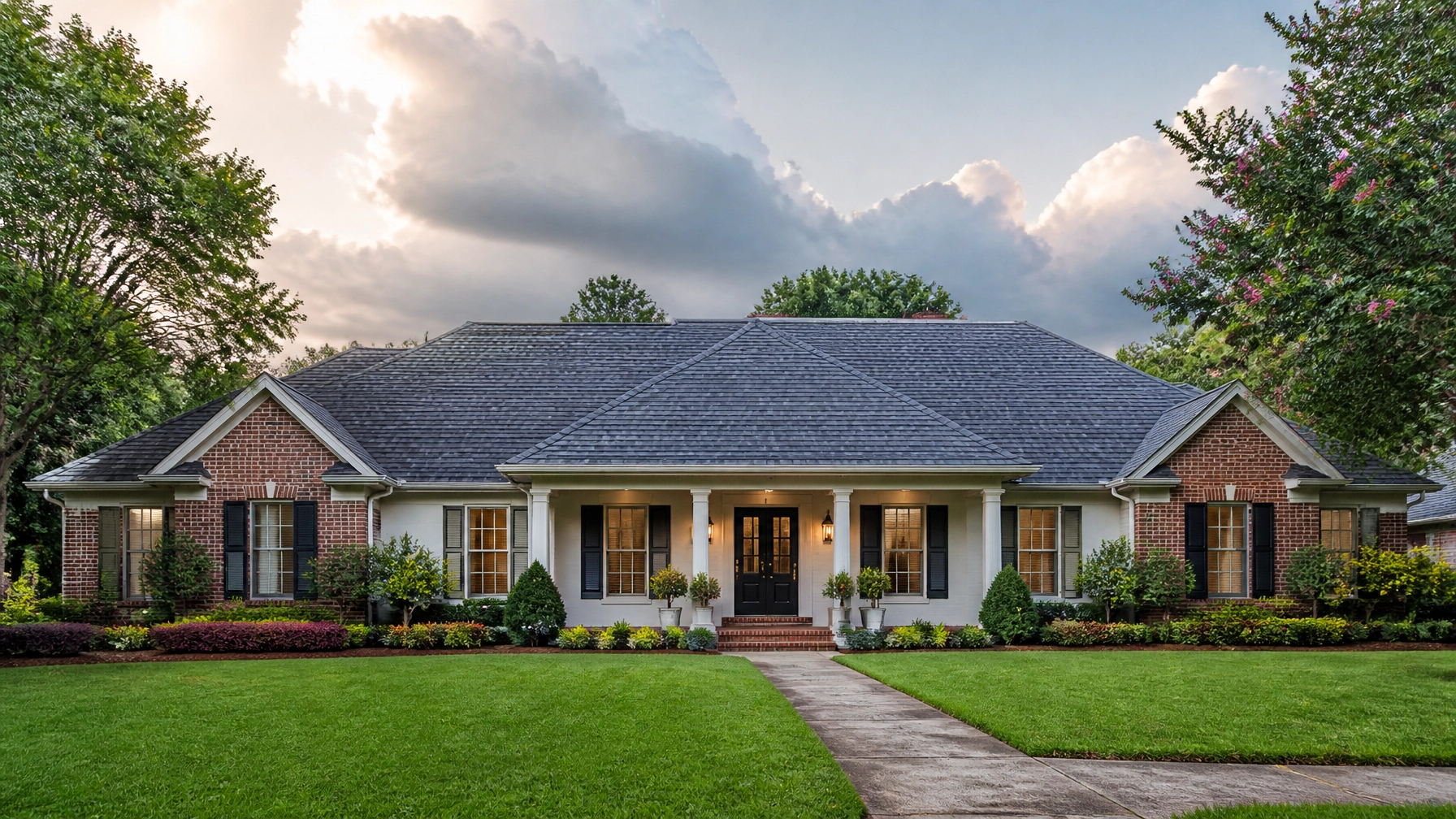
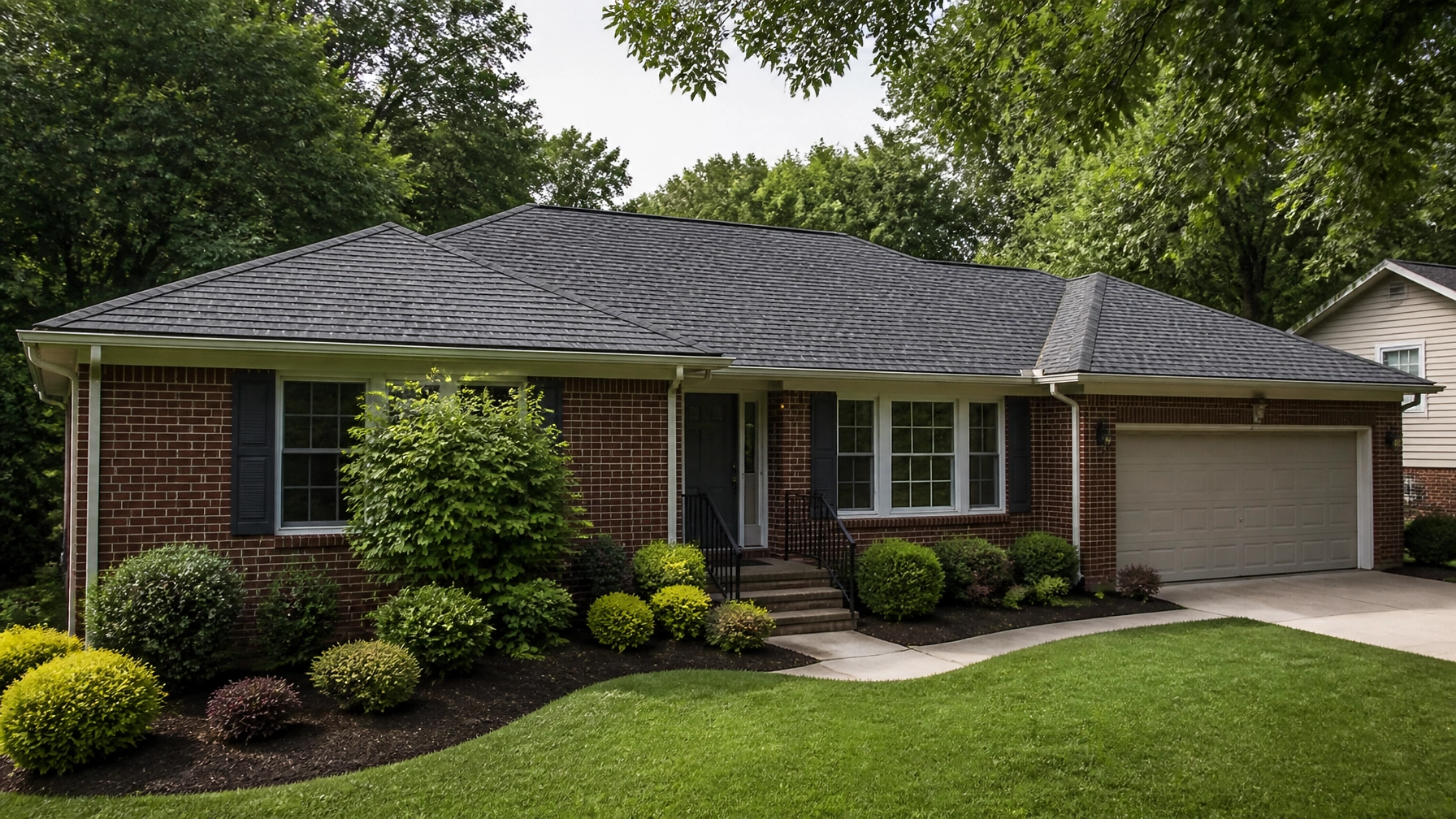
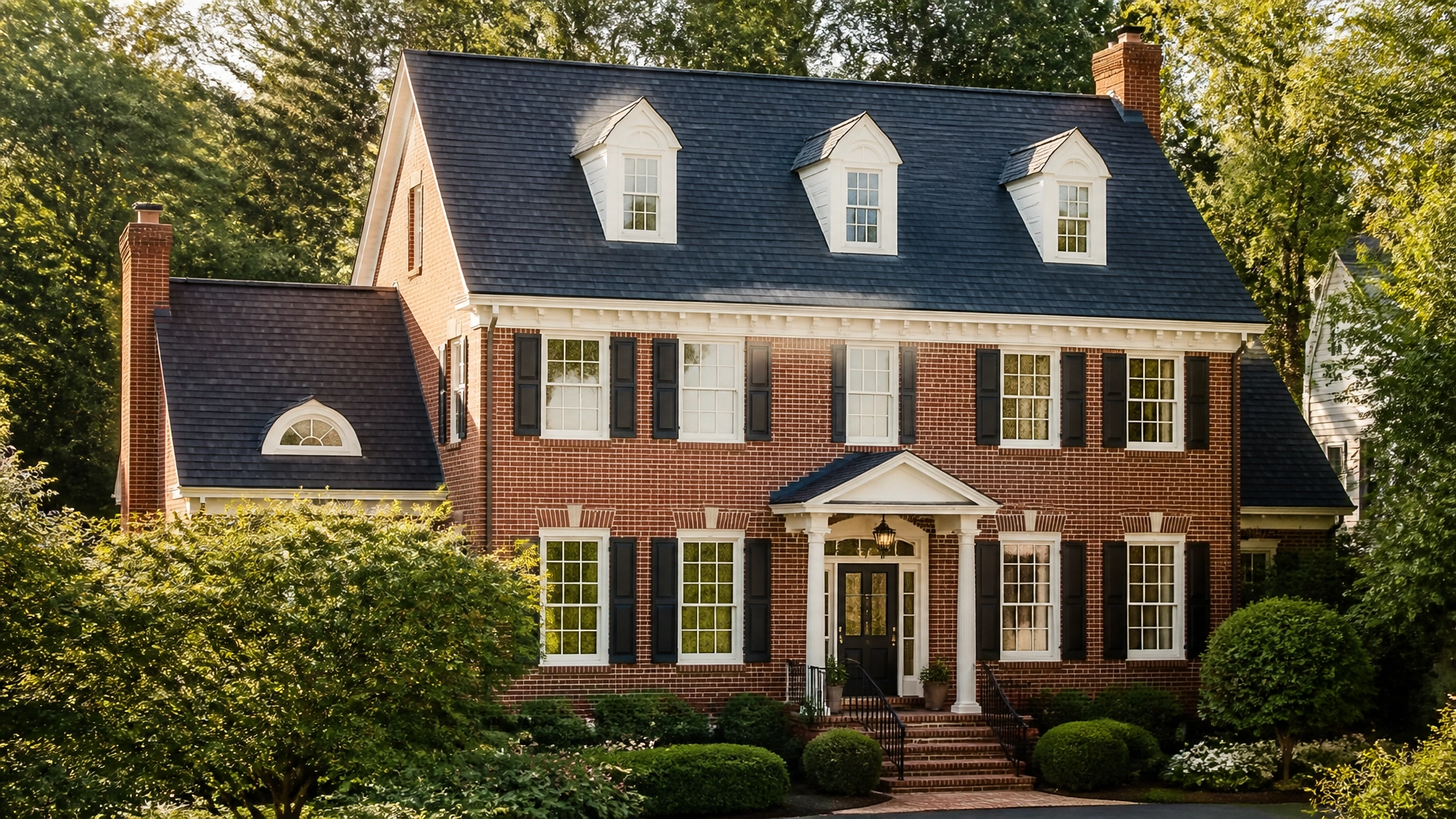
    Richmond-area brick Colonial with a new dimensional asphalt shingle roof

    Richmond new roof ROI: the resale recovery math

    Consider a typical Richmond asphalt replacement costing $12,000–$16,000.

    Using the national 57%–68% resale recovery range:

    • A $12,000 roof may recover approximately $6,840–$8,160
    • A $16,000 roof may recover approximately $9,120–$10,880

    This is the direct roof replacement ROI calculation. It does not include avoided leak damage, fewer emergency repairs, improved insurance documentation, or the potential benefit of selling faster.

    The resale value of a roof also depends on the condition of the roof it replaces. A new roof installed on a home with an actively failing roof may protect more value than the same roof installed as a purely cosmetic upgrade.

    What buyers are actually evaluating

    Richmond buyers usually look for:

    • A roof with documented installation date
    • Clean, uniform shingles without visible curling or discoloration
    • Proper flashing around chimneys and wall intersections
    • Adequate attic ventilation
    • No ceiling stains or attic moisture concerns
    • Transferable manufacturer and workmanship warranties
    • A material choice that fits the home’s architecture

    A roof replacement can strengthen the home’s overall presentation, but it should be treated as a value-protection project first and a profit project second.

    Storm exposure makes roof condition more important

    Richmond’s severe storm season generally runs from April through October. Thunderstorms, hail, damaging straight-line winds, and tropical remnants can all affect roofing systems.

    The 2026 season has already highlighted these risks:

    • August 7, 2026: hurricane-force wind gusts were reported in the West End and Tuckahoe area
    • August 14, 2026: hail up to 3 inches was reported in Henrico County
    • Mid-August 2026: power outages affected communities across the region

    Hail can bruise asphalt shingles without creating an obvious hole. Wind can lift shingle edges, loosen flashing, or remove sections of roofing. After a major storm, inspect the roof from the ground and check the attic for leaks or daylight. Avoid climbing onto the roof yourself.

    The National Weather Service Wakefield office provides Richmond-area severe weather information and storm reporting.

    Virginia insurance changes take effect January 1, 2027

    Virginia law changes how insurers may treat asphalt shingle roof age and condition beginning January 1, 2027.

    For owner-occupied homes, insurers generally cannot cancel, non-renew, refuse coverage, or raise premiums solely because of roof age or condition when the law’s requirements are met.

    Important thresholds include:

    • Roofs under 15 years old receive specific age-related protections
    • For roofs 15 years or older, an authorized inspection may establish remaining useful life
    • Older roofs with at least five years of documented useful life may receive additional protection from adverse action based solely on condition
    • Homeowners may need invoices, permits, inspection reports, or other proof of roof age

    Read the official language in Virginia Code § 38.2-2114.

    Impact-resistant and FORTIFIED roofing discounts

    Class 4 impact-resistant shingles and FORTIFIED construction may improve storm resilience. Depending on the insurer and policy, homeowners may qualify for discounts in the approximate range of 5%–35%.

    These discounts are not guaranteed statewide. Ask your insurer:

    1. Whether Class 4 shingles qualify for a premium credit
    2. Whether documentation or testing certification is required
    3. Whether FORTIFIED certification changes the premium
    4. Whether the discount applies to the entire policy or only a portion

    Keep the product label, installation invoice, inspection documents, and certification records.

    Richmond roof permits and historic-district rules

    For a basic roof-covering replacement in the City of Richmond, a building permit is generally not required when no structural work is involved. However, a permit is generally required when:

    • More than 256 square feet of structural decking is replaced
    • Roof framing or pitch is changed
    • New skylights, dormers, or structural openings are added
    • The roof work affects a fire-rated assembly

    Applications and permit information are available through the City of Richmond Online Permit Portal and Permits & Inspections department.

    Historic properties require additional care. In Old and Historic Districts, including The Fan, Church Hill, and Jackson Ward, visible changes to roof material, design, or color may require a Certificate of Appropriateness from the Commission of Architectural Review.

    In-kind replacements are often exempt, but confirm before ordering materials. Contact Richmond Planning and Preservation at 804-646-6340. The Commission of Architectural Review provides additional guidance.

    In Henrico County, a permit is generally required when repairing or replacing more than 256 square feet of roof sheathing. Roofers and homeowners should verify requirements through the county’s Build Henrico system before work begins.

    Historic Richmond row houses with preserved architectural details and replacement roofing

    Best roof for home value in Richmond

    Architectural shingles (Popular)

    Architectural shingles offer the broadest resale appeal. They fit most Richmond Colonial, ranch, brick, and suburban homes while providing a strong balance of price, appearance, and durability.

    They are usually the safest choice when your goal is improving roof curb appeal home value without creating a material mismatch.

    Class 4 impact-resistant shingles (Storm-smart)

    Class 4 shingles are a practical option in areas exposed to hail. They may cost more upfront but can reduce damage risk and may qualify for an insurance discount.

    They are especially worth comparing after recent hail activity in Henrico and the surrounding Richmond region.

    Standing-seam metal (Premium)

    Standing-seam metal roofing has a higher initial cost but can last for decades with proper installation. It is best suited to homeowners planning to stay long term or those who want low-maintenance performance.

    For resale, metal works best when its color and profile complement the home. In a historic district, approval may be required before changing from an existing material.

    Richmond West End home with a premium standing-seam metal roof

    How to estimate your Richmond roof ROI before calling contractors

    Start with an accurate roof measurement. Interior square footage is not enough because pitch, overhangs, valleys, and attached sections change the roof surface area.

    Use our roof cost calculator for a planning range, or enter your address at Get My Roof Estimate Now.

    Our satellite-powered tool provides:

    • Roof measurements accurate to approximately 90%–95% for most properties
    • Roof size, pitch, and complexity factors
    • Low, middle, and high replacement ranges
    • Pricing for asphalt, metal, synthetic, and coating options
    • Results in approximately 60 seconds
    • No credit card and no upfront cost

    Use the estimate as a benchmark when comparing licensed and insured Richmond-area contractors. A final contractor quote should still confirm decking, flashing, ventilation, permits, disposal, warranties, and storm damage in person.

    Frequently Asked Questions

    Does a new roof increase home value in Richmond?

    Yes, a new roof can increase buyer confidence, improve curb appeal, and reduce negotiation concerns. National benchmarks commonly show approximately 57%–68% cost recovery at resale, but the actual result depends on neighborhood, roof quality, home condition, and market timing.

    What is the average roof replacement ROI?

    A replacement asphalt roof often recovers approximately 57%–68% of its cost at resale. A Richmond roof costing $12,000–$16,000 may therefore recover about $6,840–$10,880 in direct resale value.

    What is the best roof for home value?

    Architectural asphalt shingles are usually the best choice for broad resale appeal. Class 4 shingles are stronger for hail-prone locations, while standing-seam metal is better for long-term ownership.

    Does Richmond require a permit to replace a roof?

    A basic roof-covering replacement usually does not require a building permit in the City of Richmond unless structural decking replacement exceeds 256 square feet or other structural work is involved. Historic-district properties may also need a Certificate of Appropriateness.

    Can a new roof lower homeowners insurance?

    It may. A newer roof can improve underwriting information, while Class 4 shingles or FORTIFIED construction may qualify for insurer-specific discounts. Confirm savings directly with your carrier.

    Get your Richmond roof estimate in 60 seconds

    Before scheduling multiple contractor visits, get a property-specific starting point. Enter your address at getmyroofestimatenow.com for a free satellite roof estimate with transparent low, middle, and high pricing.

    No credit card. No obligation. Just a faster way to understand your roof replacement cost and plan your next move.
  • Daily FAQ Blitz – Slot 3: AEO FAQ Quick Answers for Fayetteville, NC Homeowners (2026)

    Daily FAQ Blitz – Slot 3: AEO FAQ Quick Answers for Fayetteville, NC Homeowners (2026)

    Fayetteville homeowners face a demanding roofing climate. The Fort Liberty area experiences hot, humid summers, severe thunderstorms, hail, high winds, and hurricane remnants moving inland from the coast. On August 20, 2026, severe storms in the Fayetteville region produced damaging winds, including nearby reports of shingles blown from roofs and large tree branches brought down.

    That makes roof planning more than a cosmetic decision. For a typical 2,000-square-foot Fayetteville home in 2026, expect approximately:

    • 3-tab asphalt shingles (Budget): $9,000–$14,000
    • Architectural shingles (Popular): $12,000–$18,000+
    • Standing-seam metal (Premium): $18,000–$35,000+

    Local roof pricing commonly falls near $3.10–$7.05 per square foot for asphalt shingles and $5–$12.30 per square foot for metal roofing. Your final estimate depends on roof size, pitch, complexity, tear-off, decking repairs, material selection, and Fayetteville labor rates.

    Below are nine quick answers for homeowners in Fayetteville and Cumberland County.

    1. How much does a roof replacement cost in Fayetteville, NC, in 2026?

    Quick answer: A typical 2,000-square-foot Fayetteville home costs about $9,000–$14,000 for 3-tab shingles, $12,000–$18,000 or more for architectural shingles, and $18,000–$35,000 or more for standing-seam metal.

    Roofers measure roof area in squares, with one square equal to 100 square feet. The roof surface is usually larger than the home’s indoor floor area because of pitch, overhangs, garages, porches, and multiple roof sections.

    Your estimate may increase when the roof has:

    • Steep slopes
    • Multiple ridges and valleys
    • Dormers or skylights
    • Chimneys and complex flashing
    • Two or more existing roof layers
    • Rotted or damaged decking
    • Difficult access for workers and materials

    Use the roof cost calculator for a general starting range, then get an address-specific estimate before requesting contractor bids.

    2. What is the most affordable roofing material for a Fayetteville home?

    Quick answer: 3-tab asphalt shingles are usually the Budget option, while architectural shingles offer a stronger balance of appearance, durability, and cost.

    Asphalt shingles typically cost about $3.10–$7.05 per square foot in the Fayetteville market. Three-tab shingles sit at the lower end. Architectural shingles cost more but generally provide better wind performance, a dimensional appearance, and a longer expected service life.

    Metal roofing ranges from approximately $5–$12.30 per square foot, depending on the panel type, finish, underlayment, flashing, and installation method. Standing-seam metal typically costs more than exposed-fastener panels but offers a cleaner appearance and long service life.

    In Fayetteville’s storm-prone climate, compare more than the material price. Ask about wind ratings, installation requirements, ventilation, flashing, and warranty coverage.

    New architectural shingle roof on a Colonial-style Fayetteville home

    3. Does Fayetteville require a permit for roof replacement?

    Quick answer: Roof replacement projects in Fayetteville should be reviewed for building-permit requirements and filed through the City’s E-Development portal when a permit is required.

    The City of Fayetteville uses the E-Development portal for applicable building and development permits. Permit requirements can depend on the project’s scope, including structural repairs, decking or framing work, additions, and total construction cost.

    For official confirmation, contact Fayetteville Permitting & Inspections at 910-433-1707. The City’s Permitting & Inspections page provides current guidance and application information.

    Before work begins, ask the contractor:

    • Who will apply for the permit?
    • Is the permit included in the written estimate?
    • Will inspections be required?
    • Is any decking, rafter, or truss repair included?
    • What happens if hidden structural damage is found?

    Do not assume a contractor’s statement is enough. Confirm the requirements with the City for your specific Fayetteville address and scope of work.

    4. What roofing code applies to Fayetteville’s wind conditions?

    Quick answer: Fayetteville sits in an approximately 110–120 mph wind zone, so high-wind installation practices matter.

    North Carolina code requires a six-nail shingle pattern in applicable high-wind conditions. Inspectors verify the fastening pattern during inspection. The exact nail placement must follow both the North Carolina Residential Code and the shingle manufacturer’s instructions.

    A proper high-wind installation generally requires:

    • Six nails per standard shingle, where applicable
    • Nails placed in the manufacturer’s designated nailing zone
    • Proper deck penetration
    • Flush-driven nails that do not cut through the shingle mat
    • Correct starter, hip, and ridge installation
    • Manufacturer-approved wind-rated products

    Ask to see the shingle packaging or installation instructions. A four-nail pattern may be common in lower-wind markets, but Fayetteville homeowners should confirm that the six-nail pattern is being used where required.

    5. Does a roofer need a North Carolina contractor license?

    Quick answer: A North Carolina general contractor license is required for covered projects of $40,000 or more, and roofing is classified under the S(Roofing) specialty.

    Verify contractors through the North Carolina Licensing Board for General Contractors. Check the contractor’s:

    • Active license status
    • S(Roofing) classification
    • Monetary limitation
    • Business name and contact information
    • Insurance documentation

    The $40,000 threshold applies to the total project value, including labor and materials. A project below that threshold may not require a state general contractor license, but local permits, inspections, code compliance, and insurance requirements can still apply.

    Fayetteville homeowners should also request proof of general liability insurance and workers’ compensation coverage before signing a contract.

    6. What should I do after storm or hail damage in Fayetteville?

    Quick answer: Document the damage safely, prevent additional damage, and report the claim within your insurer’s deadline.

    After high winds or hail, do not climb onto the roof. From the ground, look for:

    • Missing, lifted, or torn shingles
    • Dark exposed areas or excessive granules in gutters
    • Dents in vents, flashing, gutters, or downspouts
    • Fallen branches or punctures
    • Water stains on ceilings or walls
    • Damp insulation or attic leaks

    Take wide and close-up photos. Save receipts for emergency tarps or temporary repairs. A roofing professional can document damage that is not visible from the ground.

    The August 20, 2026 storm activity is a useful reminder for Fayetteville homeowners to inspect roofs after severe weather. A nearby August 20 storm report recorded shingles blown from a roof and large branches down in the region.

    7. How does homeowners insurance cover roof damage?

    Quick answer: Coverage depends on the cause of loss, policy language, roof age, and whether your policy pays Replacement Cost or Actual Cash Value.

    If you believe your Fayetteville roof has wind or hail damage:

    1. Photograph the roof and related exterior damage.
    2. Take photos of interior leaks and water stains.
    3. Report the loss within your policy deadline.
    4. Avoid permanent repairs before documentation, unless needed to prevent further damage.
    5. Ask whether your policy uses Replacement Cost Value (RCV) or Actual Cash Value (ACV).
    6. Confirm your wind or hail deductible.

    Wind and hail deductibles are often 1%–2% of the dwelling coverage limit. For example, a $300,000 dwelling limit with a 2% deductible could mean a $6,000 deductible. Your policy may have different terms, so review the declarations page or contact your insurance company.

    8. How accurate is a satellite roof estimate?

    Quick answer: A satellite-powered estimate is typically 90%–95% accurate, provides results in about 60 seconds, and is free with no credit card required.

    The technology measures the roof’s size and analyzes factors such as:

    • Roof sections and dimensions
    • Approximate pitch
    • Roof complexity
    • Material quantities
    • Regional pricing
    • Low, middle, and high replacement ranges

    A satellite estimate is an efficient planning tool. It can help a Fayetteville homeowner understand the likely budget before scheduling contractor visits. It cannot always identify hidden decking damage, active leaks, ventilation problems, or installation defects. A contractor’s in-person inspection may still be needed before construction.

    Start with a free satellite roof estimate. There is no obligation to hire a contractor.

    Modern Fayetteville home with a new standing-seam metal roof

    9. Is replacing a roof a good investment before selling?

    Quick answer: A new roof commonly returns about 60%–75% of its cost, while also reducing buyer concerns and improving curb appeal.

    A replacement may be especially worthwhile when:

    • The roof is 20–30 years old
    • Shingles are curling, cracked, or missing
    • Leaks are recurring
    • A buyer’s inspection is approaching
    • Insurance concerns could delay a sale
    • Storm damage has not been resolved

    A new roof does not guarantee a dollar-for-dollar return. The outcome depends on material choice, workmanship, home condition, neighborhood demand, and market timing. Keep the permit records, paid invoices, warranty documents, and before-and-after photos for future buyers.

    Quick Fayetteville Roof Planning Checklist

    Before requesting bids, complete these steps:

    • Confirm the roof’s approximate age.
    • Check for missing shingles, granule loss, stains, and visible sagging.
    • Get a free satellite estimate in about 60 seconds.
    • Compare 3-tab, architectural, and metal roofing ranges.
    • Ask Fayetteville Permitting & Inspections whether your project requires a permit.
    • Verify the contractor through NCLBGC.
    • Confirm the six-nail high-wind installation pattern.
    • Request proof of liability insurance and workers’ compensation.
    • Review your wind and hail deductible.
    • Get a written, itemized proposal.
    • Keep all permits, warranties, receipts, and storm photos.

    A roof replacement is a major investment, but Fayetteville homeowners do not need to begin with a week of contractor appointments. Get a clear budget first, understand local code requirements, and then compare qualified contractors with better information.

    Have more questions about Fayetteville roofing, storm damage, permits, or material costs? Visit Get My Roof Estimate Now to get a free, satellite-powered estimate for your home: no credit card and no contractor visit required upfront.

    Category: Home Improvement

    Tags: Fayetteville roofing, Fayetteville roof replacement, Cumberland County roofing, North Carolina roof cost 2026, roof replacement cost, architectural shingles, standing seam metal roofing, roof permits, E-Development portal, six-nail pattern, hurricane season, hail damage, NC roofing contractors, free roof estimate

  • Daily Tech Blitz – Slot 5: Baton Rouge’s Satellite Tech Edge Is Bringing Red Stick Precision to Louisiana Roofs

    Daily Tech Blitz – Slot 5: Baton Rouge’s Satellite Tech Edge Is Bringing Red Stick Precision to Louisiana Roofs

    Baton Rouge is becoming a practical proving ground for satellite technology.

    From NASA’s radar mapping of the Mississippi River Delta to LSU’s artificial intelligence research and Louisiana-built flood intelligence, Earth-observation technology is moving from research labs into everyday planning. It is helping officials understand wetlands, anticipate flooding, monitor fires, and make faster decisions across the state.

    That same technology is changing how homeowners can plan for roof replacement.

    Instead of waiting days or weeks for multiple contractors to visit simply to provide a ballpark figure, homeowners can now use satellite imagery to get a free, property-specific roof estimate in less than 60 seconds.

    Baton Rouge From Space: What NISAR Reveals

    In January 2026, NASA published a radar image of southeastern Louisiana captured by the NASA-ISRO NISAR satellite on November 29, 2025.

    The image covers the Mississippi River Delta region, including Baton Rouge, New Orleans, Lake Pontchartrain, farmland, forests, wetlands, and urban areas. It demonstrates why radar imagery is valuable in Louisiana, where clouds, humidity, and storms can make conventional optical imagery difficult to use.

    NISAR’s L-band radar can:

    • See through cloud cover
    • Measure changes in vegetation and wetlands
    • Detect differences in soil moisture
    • Map forests, farmland, and developed areas
    • Track subtle movement of the land surface

    The mission uses a massive radar reflector: approximately 39 feet across, the largest radar antenna NASA has flown. Its microwave signals can interact with vegetation, buildings, soil, and water in ways that reveal details not visible in a standard photograph.

    NASA-ISRO NISAR radar image of the Mississippi River Delta region including Baton Rouge and New Orleans

    According to NASA’s description of the NISAR image, the radar image shows healthy forest areas west of the Mississippi River, agricultural parcels along the river corridor, and changes within the Maurepas Swamp ecosystem.

    For Baton Rouge and surrounding parishes, this type of observation supports a larger goal: understanding how land and water are changing before those changes create bigger risks for communities.

    LSU Is Turning Satellite Data Into Action

    LSU is also developing tools that make satellite data faster and more useful.

    Its DeepSAT project, developed in collaboration with NASA and the U.S. Geological Survey, uses artificial intelligence to classify land cover. The system can identify categories such as:

    • Wetlands
    • Farmland
    • Forests
    • Developed or impervious surfaces
    • Bare soil
    • Vegetation with signs of stress

    Traditional land-cover mapping can take months. AI-assisted analysis can reduce that work to hours, allowing agencies and researchers to update maps more frequently.

    That speed matters in Louisiana because the landscape is constantly changing. Wetlands shift, cities expand, agricultural fields change with the seasons, and floodplains are affected by development.

    DeepSAT’s datasets, known as SAT-4 and SAT-6, have also given researchers standardized resources for training and testing satellite-imagery classification models. The results can support:

    • Coastal Protection and Restoration Authority planning
    • FEMA flood-risk assessments
    • Wetland and forest monitoring
    • Carbon-credit validation for Louisiana landowners
    • More detailed parish-level environmental analysis

    LSU has also developed DeepFire, an AI-driven system that combines satellite observations with weather, terrain, and vegetation data. The technology is designed to detect fire conditions earlier and forecast wildfire risk weeks in advance.

    According to LSU’s environmental AI research update, DeepFire confirmed 96.2% of its alerts during testing and generated risk forecasts approximately 28 to 35 days ahead by analyzing weather projections, vegetation dryness, and terrain.

    The larger trend is clear: satellite data is no longer useful only for viewing the planet. It is becoming a decision-making tool.

    Ascension Parish Is a Living Lab for Flood Forecasting

    Nearby Ascension Parish is helping demonstrate how satellite imagery and Earth observation can support local flood forecasting.

    LSU is piloting an AI-powered flood forecasting system in the parish, using the area as a “living lab.” The goal is to combine land-cover information, satellite observations, weather conditions, and hydrologic modeling to improve understanding of how water moves through a changing landscape.

    This is especially relevant in the Baton Rouge region, where homeowners and communities face a combination of:

    • Heavy rainfall
    • River and drainage issues
    • Low-lying areas
    • Rapid development
    • Saturated ground
    • Tropical storm and hurricane threats

    Accurate land-cover information helps flood models understand where water may collect, where soil can absorb runoff, and where paved surfaces may accelerate drainage.

    Louisiana’s FloodID Technology Goes Global

    Louisiana is also exporting its flood-technology expertise.

    FloodID, developed by The Water Institute, combines hydrologic modeling, physics-guided artificial intelligence, Earth-observation data, and cloud computing. The platform is designed to help emergency managers understand how floods may develop from the first signs of an event through recovery.

    In August 2026, ICEYE announced a strategic partnership with The Water Institute. The partnership combines FloodID’s predictive modeling with ICEYE’s satellite-based flood monitoring.

    The combined approach creates an observation-informed forecast:

    1. A model predicts how flooding may develop.
    2. Satellite imagery observes what is actually happening.
    3. New observations update the forecast.
    4. Emergency managers receive a more current picture of conditions.

    The 2026 hurricane-season pilot, supported by Amazon Web Services and an Amazon grant, includes more than 200 government users. This is a strong example of Louisiana technology moving from local flood challenges to national and international applications.

    Globalstar Puts Covington on the Satellite Map

    Louisiana’s satellite economy is also expanding beyond environmental monitoring.

    In April 2026, Amazon agreed to acquire Covington-based satellite communications company Globalstar for approximately $11.6 billion. The transaction is expected to support Amazon’s satellite connectivity strategy, including direct-to-device communications and expanded low-Earth-orbit services.

    Globalstar’s announcement positions the deal as a major development for satellite communications. It also highlights the growing importance of Louisiana’s aerospace and satellite sector.

    For Baton Rouge-area homeowners, these developments may seem far removed from a roof replacement. They are not.

    The same broader satellite ecosystem is making high-resolution property analysis faster and more accessible.

    How Satellite Imagery Helps Estimate a Baton Rouge Roof

    A roof replacement estimate begins with measurements. The more accurately a roof can be measured, the more useful the initial budget range becomes.

    Satellite-powered roof-estimating technology analyzes a property’s roof from above and evaluates details such as:

    • Total roof area
    • Roof sections and planes
    • Pitch or steepness
    • Valleys and dormers
    • Roofline complexity
    • Approximate material requirements
    • Local pricing conditions

    Roofing contractors commonly measure in squares, with one square equal to 100 square feet of roofing material.

    A 2,000-square-foot roof, for example, contains approximately 20 roofing squares before accounting for waste, cuts, and project complexity. A steep roof with multiple valleys may cost more than a simple low-slope roof of the same measured area.

    Aerial view of a Baton Rouge-style colonial home with a new architectural shingle roof

    Through Get My Roof Estimate Now, homeowners enter their address and receive a free estimate in under 60 seconds. The system uses satellite imagery and roof analysis to provide a property-specific range rather than relying only on a generic national average.

    The estimate accounts for variables including:

    • Roof size: The number of roofing squares
    • Pitch: Steeper roofs generally require additional labor and safety equipment
    • Complexity: Valleys, dormers, penetrations, and multiple roof sections
    • Material: Architectural shingles, metal, synthetic roofing, or coatings
    • Region: Local labor and material price differences
    • Tear-off: The cost of removing the old roof

    The company’s estimates are designed to be approximately 90% to 95% accurate for most homes, with satellite-powered measurements intended to provide precision to within inches. The result includes transparent low-middle-high price ranges, with no credit card required and no contractor visit needed upfront.

    Baton Rouge Roof Stressors Make Fast Estimates Useful

    Louisiana roofs face demanding conditions.

    Heat and humidity can accelerate material aging. Heavy rainfall can expose weak flashing or drainage problems. Hurricanes and tropical storms can cause wind damage, lifted shingles, punctures, and hidden moisture intrusion.

    After a storm, homeowners may not want to schedule several contractor visits just to understand whether replacement is financially realistic. A fast satellite-based estimate can help answer the first planning questions:

    • Is replacement within my budget?
    • How much might architectural shingles cost?
    • Would metal roofing change the project range?
    • How much does roof size affect pricing?
    • Should I begin gathering contractor bids?
    • Is the project likely to fall near $10,000, $15,000, or $25,000?

    Modern Louisiana home with a new standing-seam metal roof and storm-resilient design

    For a broad 2026 benchmark, Get My Roof Estimate Now’s roof cost calculator lists average roof replacement costs of approximately $9,000 to $22,000. Asphalt shingles, metal, tile, pitch, tear-off requirements, and regional labor rates can move the actual number higher or lower.

    An instant estimate is not a substitute for a final inspection. Structural damage, rotten decking, ventilation problems, and concealed storm damage may require an in-person review. But it gives homeowners a faster, more informed starting point.

    Get Red Stick Precision for Your Roof

    Baton Rouge is showing how satellite technology can turn complex information into practical decisions. NISAR is mapping the delta. LSU is using AI to classify land and improve environmental forecasting. FloodID is helping emergency managers anticipate changing flood conditions. Globalstar is placing Covington at the center of a major satellite communications deal.

    Now, homeowners can use satellite-powered analysis for a decision much closer to home.

    If you are planning a roof replacement, comparing materials, preparing to sell, or assessing storm-related damage, get a free estimate before scheduling contractor visits.

    Enter your Baton Rouge address and get an instant roof replacement estimate in under 60 seconds.

  • Daily FAQ Blitz – Slot 5: AEO FAQ Quick Answers for Louisville, KY Homeowners (2026)

    Daily FAQ Blitz – Slot 5: AEO FAQ Quick Answers for Louisville, KY Homeowners (2026)

    Louisville homeowners searching for “AEO” information may be looking at the wrong industry. AEO means Authorized Economic Operator, an international customs and trade designation. It is not a roofing credential, contractor license, or insurance term.

    For residential roof replacement, the issues that matter are permits, contractor licensing, code compliance, storm damage coverage, and accurate local pricing. Here are the quick answers Louisville and Jefferson County homeowners need in 2026.

    What does AEO mean in Louisville?

    AEO means Authorized Economic Operator. It is a customs and trade designation used to identify businesses that meet certain supply-chain security and compliance standards.

    In the United States, the closest comparable program is CTPAT, administered by U.S. Customs and Border Protection.

    AEO status can matter to Louisville-area businesses involved in:

    • Importing and exporting
    • Logistics and distribution
    • Manufacturing
    • Air freight through UPS Worldport
    • Ohio River shipping through the Port of Louisville
    • Regional freight, trucking, and rail networks

    AEO has no role in residential roof replacement. Homeowners do not need AEO status to replace a roof.

    Does Louisville require a permit to replace a roof?

    Yes. A full residential roof replacement in Louisville and Jefferson County generally requires a building permit. Minor repairs and small patches typically do not.

    Permits are handled by the Louisville Metro Department of Codes and Regulations, Office of Construction Review. Homeowners and contractors can begin through the Louisville Metro website.

    The department’s listed contact information is:

    Office Details
    Department Louisville Metro Department of Codes and Regulations
    Division Office of Construction Review
    Address 444 S. 5th Street, Louisville, KY 40202
    Phone 502-574-3300

    Ask your contractor who will pull the permit. Get the permit number and keep it with your project documents.

    Could a historic review be required?

    Possibly. If your property is inside a Louisville historic district or is designated as a landmark, exterior work may require review before construction begins.

    The review may consider:

    • Roofing material
    • Roof color
    • Visible roof elements
    • Changes to rooflines
    • Metal roofing or other nontraditional materials

    Confirm requirements with Louisville Metro before signing a roofing contract, especially if your home is in an older neighborhood or designated district.

    How much is a Louisville residential building permit?

    For a 1–2 family residential building permit, the stated fee is $0.105 per square foot of floor area, with a $75 minimum.

    For example:

    Home floor area Approximate fee
    1,500 sq. ft. $157.50
    2,000 sq. ft. $210
    2,500 sq. ft. $262.50

    The calculation is based on floor area, not roof area. A 2,000-square-foot home with a larger or more complex roof should not assume that the permit fee is based on 2,000 square feet of roofing.

    Starting work without the required permit can trigger a penalty equal to the standard permit fee. Confirm the current fee category with the Office of Construction Review because project classifications and related inspection charges can vary.

    Does Kentucky require a roofing license?

    Kentucky does not have a separate statewide roofing license. However, residential contractors performing work over $10,000 must hold a Kentucky residential contractor license under KRS Chapter 198B.

    Review the current requirements through the Kentucky General Assembly statutes and the Kentucky Department of Housing, Buildings and Construction.

    Before hiring a Louisville roofer, verify:

    • Kentucky residential contractor license, when required
    • Louisville Metro registration requirements
    • General liability insurance
    • Workers’ compensation coverage
    • Written contract and itemized scope of work
    • References from recent local projects

    Do not rely on the phrase “licensed and insured” alone. Ask for documentation and confirm that the policy is current.

    Louisville Kentucky ranch home with a new architectural shingle roof after a storm

    Which building code applies to Louisville roof replacements?

    The applicable residential standard is the 2018 Kentucky Residential Code, based on the 2015 International Residential Code, with Kentucky amendments.

    One important Kentucky-specific point concerns ice barriers. Kentucky amendments removed the statewide residential ice-barrier requirement that appears in the unamended IRC. The state’s formal interpretation says ice barriers are not required under the Kentucky Residential Code.

    You can review the 2018 Kentucky Residential Code and the state’s ice-barrier formal interpretation.

    That does not mean ice-and-water protection is never useful. A contractor may recommend it in valleys, around penetrations, or at vulnerable roof edges. Ask whether the recommendation is:

    • Required by the applicable code
    • Required by the manufacturer’s warranty
    • Required by the contractor’s installation standard
    • An optional upgrade for added protection

    How much does a new roof cost in Louisville in 2026?

    For a standard roof of approximately 2,000 square feet, current Louisville planning ranges are:

    Roofing material Approximate cost per sq. ft. Typical total
    Architectural shingles (Popular) $4.50–$9.00 $8,500–$14,500
    Standing-seam metal (Premium) $7.00–$18.00+ $12,000–$36,000

    These totals can change based on roof size, pitch, complexity, tear-off, decking repairs, flashing, ventilation, access, and local labor.

    Roofers measure roofing in squares. One square equals 100 square feet of roofing. A home with 2,000 square feet of living space may have more than 2,000 square feet of roof area because of roof pitch, overhangs, garages, porches, and multiple roof sections.

    Get a property-specific starting point with the Get My Roof Estimate Now roof cost calculator.

    Is Louisville exposed to hail and wind damage?

    Yes. Louisville is an active hail region. Local storm tracking reported approximately 30 verified hail days in 2025. Quarter-sized hail was reported in downtown Louisville on May 16, 2026, with another hail event reported on August 16, 2026.

    After a severe storm, look for:

    • Bruised or soft spots on shingles
    • Missing or lifted shingles
    • Exposed underlayment
    • Damaged vents, flashing, or gutters
    • Granules collecting in downspouts
    • Ceiling stains or attic moisture

    The National Weather Service Louisville office is a useful starting point for reviewing regional storm events.

    Does homeowners insurance cover hail damage?

    A standard HO-3 policy generally covers sudden hail and wind damage, but not normal wear and tear. The exact policy controls.

    A claim may be settled on either:

    • Replacement cost value (RCV): The cost to replace covered damage, subject to policy terms
    • Actual cash value (ACV): Replacement cost minus depreciation

    Many Kentucky policies use a separate wind or hail deductible, often between 1% and 2% of the home’s insured value.

    Kentucky roof matching rules and insurer practices can also affect the scope of repairs when new materials cannot reasonably match the undamaged sections. Ask your insurer to explain:

    • Whether your policy includes matching coverage
    • Whether cosmetic damage is excluded
    • Whether the deductible is separate from the standard deductible
    • Whether depreciation applies
    • What documentation is required

    Do not replace a roof solely because a contractor says insurance will pay. Document the damage, review your policy, and communicate directly with your carrier.

    Modern Louisville-area home with premium standing-seam metal roofing

    Can satellite imagery provide an accurate roof estimate?

    Yes, satellite imagery can provide a fast and useful planning estimate. Get My Roof Estimate Now measures roof size, pitch, and complexity using satellite-powered technology.

    The estimate is:

    • Free
    • Available without a credit card
    • Delivered in about 60 seconds
    • Based on your property address
    • Presented as low, middle, and high price ranges
    • Available for multiple roofing materials

    Satellite measurements are typically accurate within inches and approximately 90–95% accurate for most properties. An in-person inspection is still valuable for conditions satellites cannot see, such as rotten decking, hidden leaks, ventilation problems, and storm impact details.

    Use the instant estimate to establish a budget before scheduling contractor visits.

    Quick-answer recap for Louisville homeowners

    Question Quick answer
    What is AEO? Authorized Economic Operator, a customs and trade designation: not a roofing credential.
    Is AEO relevant to roof replacement? No. It applies to international trade and logistics businesses.
    Is a full roof replacement permit required? Generally yes in Louisville Metro; minor patches usually do not require one.
    Where are permits handled? Louisville Metro Department of Codes and Regulations, Office of Construction Review.
    What is the stated residential permit rate? $0.105 per square foot of floor area, with a $75 minimum.
    Does Kentucky have a roofing license? No separate statewide roofing license, but residential contractor licensing applies to qualifying projects over $10,000.
    What code applies? 2018 Kentucky Residential Code with Kentucky amendments.
    Are residential ice barriers required statewide? Kentucky removed the statewide requirement, but verify local project requirements.
    What does a Louisville roof cost in 2026? Approximately $8,500–$14,500 for architectural shingles or $12,000–$36,000 for standing-seam metal on a typical 2,000-square-foot roof.
    Does insurance cover hail? Usually sudden hail and wind damage, subject to policy terms and deductibles.

    Get a free Louisville roof estimate in 60 seconds

    AEO may matter to Louisville’s logistics and trade economy, but your residential roof decision depends on measurements, materials, permits, code requirements, contractor qualifications, and insurance coverage.

    Start with an address-specific number before you schedule multiple inspections. Get My Roof Estimate Now provides a free satellite roof estimate with no credit card and no obligation.

    Get your free satellite roof estimate

  • Daily ROI Blitz – Slot 7: Louisville, KY New Roof ROI ,  What a Replacement Adds to Your Home Value in 2026

    Daily ROI Blitz – Slot 7: Louisville, KY New Roof ROI , What a Replacement Adds to Your Home Value in 2026

    For Louisville homeowners, a full roof replacement typically costs $8,500–$18,000 in 2026. Asphalt shingles generally run $3.75–$9.00 per square foot, while metal roofing costs approximately $8.00–$25.00 per square foot.

    The good news: a new roof can recover roughly 60%–70% of its cost at resale, add an estimated $8,000–$18,000 in perceived home value, and help a property sell 15%–20% faster than a comparable home with an aging roof.

    That makes roof replacement more than a repair. In the Louisville market, it can be a strategic investment in your home’s value, saleability, and protection.

    Louisville’s 2026 Housing Market: Why Roof ROI Matters

    Louisville and Jefferson County remain relatively accessible compared with many major U.S. housing markets. Current 2026 market reports place the city’s median home price in the range of approximately $275,000–$295,000.

    For reference, homeowners can review current market data from Redfin’s Louisville housing market page and Zillow’s Louisville home value data.

    On a $275,000–$295,000 Louisville home, a roof replacement represents approximately:

    • 3%–7% of the home’s value for a typical asphalt roof
    • 6%–10% or more for a premium metal roof
    • A potentially significant resale advantage when competing homes have older or visibly worn roofs

    A roof in poor condition can also lead to an $8,000–$20,000 appraisal deduction. Buyers may request a credit, demand repairs, or reduce their offer to cover the expected replacement cost.

    New Roof ROI in Louisville: The Numbers

    Typical Replacement Cost (Popular)

    A standard Louisville roof replacement often falls within the following range:

    • Architectural asphalt shingles: $8,500–$15,000
    • UL 2218 Class 4 shingles: approximately $9,500–$18,000
    • Metal roofing: commonly $18,000–$35,000 or more
    • Additional tear-off, decking, ventilation, or flashing work: extra

    Final pricing depends on roof size, pitch, complexity, number of roof planes, accessibility, labor rates, and the condition of the decking underneath the existing shingles.

    A new roof typically recoups 60%–70% of its cost at resale. For example:

    Project Estimated Cost Potential Resale Recovery
    Architectural shingle roof $12,000 $7,200–$8,400
    Class 4 shingle roof $15,000 $9,000–$10,500
    Premium metal roof $25,000 $15,000–$17,500

    These figures do not include the indirect benefits of a faster sale, fewer inspection objections, improved insurance eligibility, and reduced negotiation pressure.

    Roof Replacement Resale Value: What Buyers Notice

    A newer roof influences a buyer’s decision in several ways.

    1. It Removes a Major Immediate Expense

    A buyer who sees a roof that is 20–25 years old may assume replacement is coming soon. Even if the roof is not leaking, that future expense affects the buyer’s offer.

    A newer roof gives buyers more confidence that they will not face an $8,500–$18,000 project shortly after closing.

    2. It Helps the Appraisal and Inspection

    Appraisers consider the roof’s age, condition, and remaining useful life. Inspectors also look for:

    • Missing or damaged shingles
    • Curling or cracking
    • Soft decking
    • Poor flashing
    • Inadequate ventilation
    • Signs of leaks or water intrusion

    An aging roof can trigger repair requests or appraisal deductions. A documented, professionally installed roof can help support the home’s asking price.

    3. It Improves Buyer Financing Options

    Some lenders and insurers are cautious about homes with older roofs. In certain situations, a buyer may have difficulty obtaining homeowners insurance if the roof is near the end of its expected life.

    A replacement can remove one potential financing obstacle before it becomes a deal problem.

    Louisville Colonial home with new Class 4 impact-resistant roof

    Roof Curb Appeal and Home Value

    Roof curb appeal is easy to underestimate. The roof may cover a large portion of the home’s visible exterior, especially on ranches, Colonials, and two-story homes.

    The right roof can improve:

    • Color balance between siding, brick, trim, and landscaping
    • The appearance of the home from the street
    • Listing photos and online presentation
    • Buyer perception of overall maintenance
    • Confidence that other major systems have also been cared for

    A clean architectural shingle roof in charcoal, weathered wood, or another neighborhood-appropriate color usually delivers strong mainstream appeal.

    For Louisville homes, avoid selecting a material based only on appearance. The best roof for home value should also match the property’s architecture, neighborhood expectations, and local weather exposure.

    Best Roof for Home Value in Louisville

    Architectural Asphalt Shingles (Popular)

    Architectural shingles are usually the strongest ROI choice for a typical Louisville property.

    Advantages:

    • Familiar to buyers
    • Broad range of colors and styles
    • Lower upfront cost than metal
    • Typical lifespan of 25–30 years
    • Easy to repair or replace in the future
    • Strong fit for most ranch, Colonial, and traditional homes

    For homeowners planning to sell within three to five years, architectural shingles often provide the best balance between cost and resale appeal.

    UL 2218 Class 4 Shingles (Storm-Ready)

    Louisville sits in the Ohio River Valley and Kentucky’s broader hail belt. Hail, tornadoes, straight-line winds, and severe thunderstorms can all damage roofing materials.

    That is driving stronger interest in UL 2218 Class 4 impact-resistant shingles.

    Class 4 shingles typically cost 10%–20% more upfront than standard architectural shingles, but they may offer:

    • Better resistance to hail impacts
    • A longer expected service life of approximately 25–30 years or more
    • Improved appeal to storm-conscious buyers
    • Potential insurance premium discounts of approximately 10%–28%, depending on the carrier and policy

    Insurance discounts are not automatic. Ask your carrier what documentation is required, including the product approval, installation records, and inspection paperwork.

    For many Louisville homeowners, Class 4 shingles offer the best overall roof replacement ROI when storm protection and resale value are both priorities.

    Freshly replaced dimensional shingle roof on a Louisville brick ranch home

    Metal Roofing (Premium)

    Metal roofing is increasingly popular among Louisville homeowners who plan to stay in their homes long term.

    A properly installed metal roof can last 40–60 years or more, depending on the product and maintenance. Reflective finishes may also reduce cooling costs by approximately 10%–25% during warm weather.

    Metal roofing benefits include:

    • Long service life
    • Strong wind resistance
    • Low routine maintenance
    • Excellent energy performance with the right finish
    • Distinctive premium appearance

    The main limitation is upfront cost. A metal roof may not recover its entire price difference at resale, especially on a median-priced home. It makes the most financial sense when you plan to remain in the property for many years or own a higher-value home where premium materials are expected.

    What Damages Louisville Roof ROI?

    A replacement may not deliver its full value if the installation is incomplete or poorly documented. Watch for these issues:

    • Choosing a material that conflicts with the home’s style
    • Skipping ventilation improvements
    • Reusing damaged flashing
    • Failing to replace deteriorated decking
    • Hiring an uninsured or inexperienced contractor
    • Not keeping permits, invoices, warranties, and product records
    • Selecting the cheapest quote without comparing the scope of work

    A low bid can become expensive if it leads to leaks, premature failure, or insurance complications.

    Before hiring, compare at least two or three written estimates. Confirm licensing, liability insurance, workers’ compensation coverage, manufacturer certifications, warranty terms, and cleanup responsibilities.

    Calculate Your Louisville Roof Replacement Cost in 60 Seconds

    National averages are useful for planning, but your actual roof cost depends on your home’s measurements.

    Our free roof cost calculator uses roof size, material, pitch, tear-off requirements, and regional pricing to produce a starting range.

    For a property-specific estimate, use Get My Roof Estimate Now:

    1. Enter your Louisville or Jefferson County address.
    2. Let the system analyze satellite imagery.
    3. Review your roof’s size, pitch, and complexity.
    4. Compare low, middle, and high replacement prices.
    5. See material options, including asphalt and metal.

    The estimate is free, requires no credit card, and is delivered in approximately 60 seconds. Satellite-powered measurements are accurate to within inches for planning, with typical measurement accuracy around 90%–95%. A contractor should still complete an in-person inspection before finalizing a construction contract.

    Modern Louisville home with premium standing-seam metal roof

    Bottom Line: Is a New Roof Worth It in Louisville?

    For most Louisville homeowners, the answer is yes: particularly when the existing roof is aging, storm-damaged, or creating problems during a sale.

    A quality replacement can:

    • Recover approximately 60%–70% of its cost
    • Add roughly $8,000–$18,000 in perceived value
    • Help the home sell 15%–20% faster
    • Reduce the risk of an $8,000–$20,000 appraisal deduction
    • Improve curb appeal and buyer confidence
    • Protect the home from Ohio River Valley weather

    For the strongest balance of price, durability, and resale value, Class 4 architectural shingles are often the leading choice in Louisville. Metal roofing is a compelling premium option for long-term homeowners and properties where durability, energy savings, and design are major priorities.

    Start with the numbers before you schedule contractor visits. Get your free Louisville roof estimate in under a minute: satellite measured, transparent, and with no obligation.

    Frequently Asked Questions

    What is the new roof ROI home value in Louisville?

    A Louisville roof replacement typically recoups about 60%–70% of its cost at resale. It may also add approximately $8,000–$18,000 in perceived home value, depending on the roof’s condition, material, workmanship, and the home’s overall market position.

    How much does a roof replacement cost in Louisville in 2026?

    Most Louisville homeowners should budget approximately $8,500–$18,000 for a full asphalt roof replacement. Metal roofing commonly costs $18,000–$35,000 or more. Roof size, pitch, complexity, tear-off, and decking repairs can change the final price.

    Is a metal roof the best roof for home value?

    Metal roofing offers a long lifespan of 40–60 years or more, strong wind resistance, and possible cooling savings. However, it has a higher upfront cost. It is usually best for long-term homeowners or premium properties rather than homeowners seeking the fastest resale payback.

    Can a new roof help a Louisville home sell faster?

    Yes. Homes with newer roofs can sell approximately 15%–20% faster than comparable homes with visibly aging roofs because buyers face less immediate maintenance risk and fewer financing or inspection concerns.

    Are Class 4 shingles worth the additional cost?

    They can be, particularly in Louisville’s hail- and storm-exposed climate. Class 4 shingles typically cost 10%–20% more than standard options and may qualify for insurance discounts. Confirm available discounts with your insurance carrier before choosing the product.

    How accurate is the instant roof estimate?

    The satellite-powered estimate measures roof dimensions, pitch, and complexity to within inches for planning. Typical accuracy is approximately 90%–95%. A final contractor inspection is still recommended before work begins.

  • Daily FAQ Blitz – Slot 8: AEO FAQ Quick Answers for Nashville, TN Homeowners (2026)

    Daily FAQ Blitz – Slot 8: AEO FAQ Quick Answers for Nashville, TN Homeowners (2026)

    Nashville roof replacement costs vary by material, roof pitch, size, and complexity. For a typical 2,000-square-foot roof in 2026, use these planning ranges:

    • 3-tab shingles (Budget): $7,500–$11,000
    • Architectural shingles (Popular): $9,500–$18,000
    • Standing-seam metal (Premium): $16,000–$32,000

    How much does a new roof cost in Nashville in 2026?

    Most Nashville homeowners should budget approximately $9,500–$18,000 for architectural shingles. Roofs with steep pitches, multiple valleys, dormers, skylights, or decking damage may cost more.

    Material is only one factor. The final estimate also includes labor, tear-off, ventilation, flashing, disposal, permits, and local pricing.

    For a property-specific starting point, use the Nashville roof estimate tool or the roof cost calculator.

    What is the best roof for home value in Nashville?

    Architectural shingles are often the best roof for home value. They provide a strong balance of:

    • Moderate upfront cost
    • Better appearance than basic 3-tab shingles
    • Broad color and style selection
    • Approximately 25–30 years of expected service
    • Familiarity among Nashville buyers and inspectors

    They work well on homes in East Nashville, Germantown, Donelson, Sylvan Park, and 12 South.

    Nashville craftsman bungalow with a new architectural shingle roof

    Does a new roof increase home value?

    A new roof can improve buyer confidence, reduce inspection concerns, and strengthen your negotiating position. The new roof ROI home value connection is usually strongest when the existing roof is visibly worn, near the end of its service life, or damaged by hail.

    A replacement typically recoups roughly 60%–68% of its cost at resale. That does not mean every dollar is added to the sale price. The benefit also comes from fewer repair requests, better marketability, and reduced buyer concern.

    What is the roof replacement resale value in Nashville?

    The roof replacement resale value depends on neighborhood, roof material, installation quality, and the condition of the rest of the home. A clean, properly documented roof can be especially helpful when selling in competitive areas such as Green Hills, Belle Meade, and 12 South.

    Keep your permit records, material information, warranty documents, and paid invoices. These documents help demonstrate that the work was completed professionally.

    Does roof curb appeal affect home value?

    Yes. The roof curb appeal home value connection is easy to see from the street. A clean roof with straight lines, consistent color, finished flashing, and new gutters can make an older home look better maintained.

    Choose a shingle color that complements the siding, brick, trim, and neighborhood style. HOA or historic-district requirements may also affect your options.

    Modern Nashville ranch home with a premium standing-seam metal roof

    Do Nashville homeowners need a roof replacement permit?

    Yes. Davidson County requires a building permit for a full roof replacement. Partial repairs generally need a permit only when the work exceeds 33% of the total roof area.

    Permits are filed online through the Metro Nashville ePermits portal. Typical single-family permit costs are approximately $75–$200, and processing commonly takes one to two weeks. A Class A fire-resistance rating is typically required.

    Ask your contractor who will pull the permit and whether the fee is included.

    What Tennessee roofing license does a Nashville contractor need?

    For residential work from $3,000 to $24,999, Davidson County contractors generally need a Home Improvement License (HIC). The HIC requirements include a $10,000 bond, $250 biennial fee, and proof of insurance.

    Projects costing $25,000 or more require a Tennessee contractor license with the appropriate roofing classification, commonly BC-21. Confirm current credentials through the Tennessee Board for Licensing Contractors.

    What should I do after Nashville hail damage?

    Nashville recorded multiple hail events in 2026, including February 26, March 11, March 15, April 14, April 16, July 26, August 8, and August 17. Homeowners generally have one year from the storm date to file an insurance claim, but check your policy.

    Look for:

    • Bruised or fractured shingles
    • Dislodged granules
    • Fractured fiberglass matting
    • Damaged gutters, vents, or AC fins

    Do not climb onto the roof. Photograph visible damage from the ground and contact your insurer and a qualified roofing professional.

    Nashville suburban home with new architectural shingles and clean roof flashing

    What is the roof replacement ROI?

    The roof replacement ROI is strongest when the project solves a clear buyer concern and uses a material appropriate for the home. Architectural shingles are commonly the practical choice for resale, while standing-seam metal may make more sense for long-term ownership or premium construction.

    Get My Roof Estimate Now provides a free, satellite-powered estimate in under 60 seconds, with measurements typically accurate to 90%–95%. No contractor visit is needed upfront, and no credit card is required.

    Category: Tennessee Roofing Costs

    Tags: Nashville roof replacement, Nashville TN roof estimate, Tennessee roofing FAQ, hail roof damage Nashville, satellite roof estimate Nashville, new roof ROI home value, roof replacement resale value, roof curb appeal home value, best roof for home value, roof replacement ROI

  • 2026 Roof Replacement Cost in Austin, TX: Hill Country Pricing, Hail Season & Permit Rules

    2026 Roof Replacement Cost in Austin, TX: Hill Country Pricing, Hail Season & Permit Rules

    A 2026 roof replacement in Austin, TX typically costs $10,000–$16,000+ for architectural shingles or $20,000–$36,000 for standing-seam metal on a 2,000-square-foot roof.

    Those are planning ranges: not guaranteed quotes. Austin pricing changes with roof pitch, valleys, skylights, decking damage, tear-off requirements, material availability, and storm-related labor demand.

    The fastest way to get a property-specific number is a free satellite-powered roof estimate. Enter your address and receive a low-middle-high range in about 60 seconds, with no credit card required.

    2026 Austin Roof Replacement Cost at a Glance

    For a roof measuring approximately 2,000 square feet (about 20 roofing squares), use these benchmarks:

    • Architectural asphalt shingles (Popular): Approximately $5–$9.50 per square foot, or about $10,000–$16,000+ for many standard projects. Complex or premium installations can exceed that range.
    • Class 4 impact-resistant shingles (Storm-ready): Usually 10%–20% more than standard architectural shingles.
    • Synthetic roofing (Premium alternative): Commonly about $8–$14 per square foot, depending on the product, underlayment, and installation details.
    • Standing-seam metal (Premium): Approximately $10–$18 per square foot, or $20,000–$36,000 for a 2,000-square-foot roof.

    A roof’s measured area is not always the same as your home’s interior square footage. Roof slopes, overhangs, attached garages, and covered porches can increase the actual roofing area.

    Austin Roofing Material Comparison

    Roofing material Approx. 2026 installed cost per sq. ft. Approx. 2,000 sq. ft. project Best fit
    Architectural asphalt shingles $5–$9.50 $10,000–$16,000+ Popular: Most Austin homes
    Class 4 impact-resistant shingles Standard price + 10%–20% About $11,000–$19,000+ Storm-ready: Hail-prone areas
    Synthetic shingles or slate-style products $8–$14 $16,000–$28,000 Premium: Designer appearance and durability
    Standing-seam metal $10–$18 $20,000–$36,000 Premium: Long service life and modern Hill Country design

    These ranges generally include roofing materials, installation, standard underlayment, and typical tear-off. They may not include extensive decking replacement, structural repairs, new gutters, chimney work, or upgraded ventilation.

    Austin ranch home with a new architectural asphalt shingle roof

    Why Austin Roof Prices Are Changing in 2026

    Asphalt and accessory increases

    Asphalt roofing products saw increases of approximately 4%–8% early in 2026, followed by additional manufacturer increases beginning June 1. Underlayment, ice-and-water protection, flashing, ridge vents, and disposal costs can rise with the shingle price.

    When comparing estimates, check whether the contractor’s quote locks in material pricing. A quote that remains open for several weeks may change if the supplier adjusts pricing.

    Metal follows steel, aluminum, and tariff conditions

    Standing-seam metal prices are tied to steel and aluminum markets. Tariffs, transportation costs, coil availability, panel thickness, finish, and custom fabrication all affect the final number.

    Metal also requires specialized installation. The panels may be more durable, but labor is not interchangeable with standard shingle installation.

    Storm-driven labor demand

    Central Texas roofing demand can increase sharply after hail and wind events. When many homeowners file claims at once:

    • Crews become less available.
    • Temporary repairs may cost more.
    • Material lead times can lengthen.
    • Some contractors add peak-season pricing.
    • Door-to-door solicitation increases.

    A detailed scope and written estimate are especially important after a storm.

    Austin Climate: What Your Roof Must Handle

    Austin roofs face a combination of conditions that can shorten service life or expose installation weaknesses:

    • Central Texas heat and UV exposure: Repeated summer heat cycles can dry and weaken asphalt materials.
    • Hail alley conditions: Hail can bruise shingles, damage vents, crack skylights, and dent metal panels.
    • Drought and temperature swings: Dry periods followed by intense storms stress flashing and sealants.
    • Flash flooding: Heavy rain tests valleys, gutters, downspouts, wall transitions, and roof-to-deck installation.
    • High winds: Loose shingles, poorly secured metal panels, and damaged ridge caps can become entry points for water.

    For many Austin homeowners, a quality architectural shingle is the best balance of cost, appearance, and resale appeal. Class 4 shingles may make sense where hail exposure and insurance requirements justify the premium. Standing-seam metal is often a strong choice for modern Hill Country homes, but the higher initial cost may not produce the highest percentage return at resale.

    What to Do After the August 28, 2026 Hailstorm

    The late-August storm brought severe thunderstorm warnings across parts of Travis and Hays counties. National Weather Service reports cited 60 mph wind gusts and hail up to approximately 0.75 inches. Strong winds also contributed to the collapse of a home under construction, resulting in one reported death and one injury. See the NWS Austin/San Antonio event report and local reporting from the Austin American-Statesman.

    After hail, take these steps:

    1. Stay off the roof. Hail damage is easy to miss and roofs can be slippery or unstable.
    2. Photograph ground-level evidence. Document hail marks on siding, gutters, screens, windowsills, and outdoor equipment.
    3. Check the attic and ceilings. Look for wet insulation, stains, daylight, or active leaks.
    4. Call your insurer promptly. Ask about deadlines, deductibles, and the claim inspection process.
    5. Get an independent roof assessment. Do not rely only on a contractor who approached you after the storm.
    6. Avoid deductible-waiver offers. Texas contractors cannot pay, rebate, or absorb an insurance deductible.

    Do not authorize a full replacement solely because a salesperson says your roof was damaged. Ask for dated photos, marked locations, and a written scope.

    Austin colonial-style home with new impact-resistant architectural shingles

    Austin Permit Rules for Roof Replacement

    Austin permit requirements depend on the work scope and property location. A standard roof-covering replacement that does not affect the roof structure may qualify as work exempt from a building permit outside special areas. However, homeowners should confirm the exact scope before work begins.

    A permit or express permit may be required when:

    • The property is in Austin’s Wildland-Urban Interface (WUI) and 50% or more of the roof covering is being replaced.
    • More than approximately 100–128 square feet of roof decking must be replaced. The city’s current express-permit guidance uses a 128-square-foot threshold.
    • The project changes roof pitch, adds skylights or dormers, modifies framing, or involves other structural work.
    • The work falls outside a like-for-like, nonstructural reroof.

    Applications are handled through the Austin Build + Connect portal. Review the city’s work-exempt building permit guidance and express permit information.

    Typical Austin roofing permit costs are approximately $150–$600+, depending on valuation, inspections, and plan review. For confirmation, contact Austin Development Services at 512-978-4000.

    Texas Contractor Licensing and Insurance Rules

    Texas implemented a new statewide roofing contractor licensing framework under TDLR and Occupations Code Chapter 1306 in 2026. Before signing, ask for the contractor’s current license information, proof of general liability insurance, workers’ compensation status, and local permit responsibility.

    For insurance-funded work, contractors cannot advertise or offer to:

    • Waive your deductible.
    • Rebate your deductible.
    • Pay your deductible.
    • Perform the project for insurance proceeds only while hiding your deductible obligation.

    You can review contractor credential information through TDLR. Also confirm that the contractor is not acting as your public adjuster or improperly negotiating your claim.

    Austin ZIP Code Pricing Context

    For a standard 2,000-square-foot architectural shingle roof, a practical Austin planning range is $10,000–$18,000 in ZIP codes such as:

    • 78704: A benchmark near $13,400 has been reported for a typical asphalt replacement.
    • 78745: Usually within the broader South Austin range; roof complexity matters more than the ZIP code.
    • 78746: Larger, steeper, or custom Hill Country homes can trend toward the upper end.
    • 78759: Typical architectural shingle projects generally remain within the citywide planning range.

    ZIP code is a secondary factor. Roof geometry, access, material selection, and decking condition usually move the price more than the neighborhood itself.

    A Step-by-Step Austin Roof Budget

    1. Measure the roof accurately. Use satellite measurements rather than guessing from living area.
    2. Choose the material category. Compare standard architectural, Class 4, synthetic, and metal options.
    3. Add a repair reserve. Set aside extra funds for decking, flashing, ventilation, and drainage repairs.
    4. Confirm permit requirements. Check WUI status and structural scope with Austin Development Services.
    5. Request two or three itemized bids. Require tear-off, disposal, underlayment, ventilation, flashing, warranties, and exclusions in writing.
    6. Compare the low-middle-high range. The lowest bid is not automatically the lowest total cost.
    7. Verify insurance and licensing. Check current credentials before paying a deposit.
    8. Keep project records. Save invoices, photos, permits, warranty documents, and insurance correspondence.

    Roof Replacement ROI and Home Value

    An asphalt roof replacement commonly recoups approximately 60%–70% of its cost at resale, depending on the market, roof quality, installation documentation, and buyer demand.

    The best roof for home value is usually a well-installed architectural shingle roof that matches neighborhood standards. It offers strong curb appeal without forcing the homeowner to recover the much higher cost of premium metal or synthetic materials.

    Metal can still be the right choice when you prioritize:

    • Long service life.
    • Modern Hill Country appearance.
    • Wind and hail performance.
    • Reduced long-term maintenance.
    • A premium architectural design.

    Roof replacement ROI is not only the resale price increase. A new roof can also reduce buyer objections, improve inspection results, support insurance eligibility, and help a home sell faster.

    FAQ: New Roof Cost in Austin, TX

    How much does a new roof cost in Austin in 2026?

    For a 2,000-square-foot roof, plan on approximately $10,000–$16,000+ for architectural shingles and $20,000–$36,000 for standing-seam metal.

    Are Class 4 shingles worth the extra cost?

    They can be worthwhile in hail-prone areas. Expect a 10%–20% premium and compare the added cost with potential insurance benefits and the roof’s expected service life.

    Does every full roof replacement require an Austin permit?

    Not necessarily. A nonstructural, like-for-like roof-covering replacement may be exempt outside the WUI. Structural decking replacement, major modifications, and WUI projects replacing 50% or more of the roof can require permits. Confirm before signing.

    Can a roofer waive my insurance deductible?

    No. Texas contractors cannot pay, rebate, or absorb an insurance deductible.

    How can I get an Austin roof estimate without a contractor visit?

    Use the free roof cost calculator. For a Texas-specific estimate, you can also start with the Texas estimate page. Enter your address and receive satellite-powered pricing in about 60 seconds — free, with no credit card required.

  • 2026 Roof Replacement Cost in Miami, FL: What Magic City Homeowners Need to Budget After the 4-8% Cost Hike

    2026 Roof Replacement Cost in Miami, FL: What Magic City Homeowners Need to Budget After the 4-8% Cost Hike

    For a typical Miami home, the 2026 roof replacement cost is approximately $10,400 to $30,240 after applying a projected 4-8% increase to current local pricing.

    Most homeowners should plan for:

    • Architectural or hurricane-rated shingles (Popular): $11,000-$23,000
    • Concrete tile (Popular/Premium): $25,000-$48,000
    • Clay tile (Premium): $31,000-$52,000+
    • Standing-seam metal (Premium): $19,000-$43,000+
    • Flat TPO or modified bitumen roofing: $13,000-$23,000

    These are planning ranges for roof replacement in Miami. Your actual price depends on the roof’s measured surface area, pitch, shape, existing layers, decking condition, material approval, and required Miami-Dade wind upgrades.

    For a faster property-specific starting point, use the free Miami roof estimate tool. It measures your roof using satellite imagery and returns pricing in about 60 seconds.

    Miami Roof Replacement Cost at a Glance

    The following projected ranges include the estimated 4-8% cost hike in roofing labor and materials.

    Roofing system Projected 2026 installed cost Best fit
    Architectural shingles $5.72-$11.34 per sq. ft. Budget-conscious homeowners
    Concrete tile $12.48-$23.76 per sq. ft. Durable, traditional Miami homes
    Clay tile $15.60-$23.76+ per sq. ft. Premium Mediterranean styles
    Metal roofing $9.36-$21.60 per sq. ft. Long service life and heat reflection
    TPO or modified bitumen $6.24-$10.80 per sq. ft. Flat or low-slope roofs

    These figures are installed costs, including typical labor and materials. Tear-off, permits, decking repairs, structural work, and unusual access conditions may increase the final total.

    Projected New Roof Cost in Miami by Roof Size

    Roofers price by the roof’s actual surface area, not simply the home’s living area. Roofing is measured in squares, with one square equal to 100 square feet of roof surface.

    The table below uses projected 2026 pricing for a hurricane-rated architectural shingle system.

    Roof surface area Approximate squares Projected replacement cost
    1,500 sq. ft. 15 squares $8,600-$17,000
    2,000 sq. ft. 20 squares $11,400-$22,700
    2,500 sq. ft. 25 squares $14,300-$28,400
    3,000 sq. ft. 30 squares $17,200-$34,000

    A simple ranch roof may fall near the lower end. A roof with multiple slopes, valleys, dormers, skylights, or difficult access can reach or exceed the higher end.

    The broader Miami pricing guide from Get My Roof Estimate Now places many local projects between $10,000 and $28,000, with architectural shingle roofs often near $17,000 before unusual upgrades or major repairs.

    Why Miami Roof Replacement Costs More

    Miami homeowners are not pricing a standard roof installation. They are pricing a roof system designed for heat, heavy rain, salt air, tropical storms, and hurricane-force wind.

    High-Velocity Hurricane Zone requirements

    Miami-Dade County is part of Florida’s High-Velocity Hurricane Zone, or HVHZ. This requires roofing products and installation methods designed for significantly higher wind loads than many inland areas.

    Depending on the roof system, the project may require:

    • Miami-Dade Notice of Acceptance, or NOA, products
    • Enhanced roof-deck fastening
    • High-wind fastener schedules
    • Approved edge metal and flashing
    • Sealed or secondary water barriers
    • Wind-uplift testing for tile and other roof coverings
    • Additional inspections during installation

    The Miami-Dade County hurricane mitigation guidance explains requirements for roof sheathing, secondary waterproofing, and roof-to-wall connections.

    These requirements are a major reason that the roof replacement cost in Miami is often higher than pricing in Orlando, Jacksonville, or other non-HVHZ Florida markets.

    New concrete tile roof on a Miami-Dade Mediterranean-style home

    How the 4-8% Cost Hike Changes Your Budget

    A 4-8% increase may sound modest, but it matters on a $20,000 or $30,000 project.

    For example:

    • A $15,000 roof becomes approximately $15,600-$16,200
    • A $20,000 roof becomes approximately $20,800-$21,600
    • A $25,000 roof becomes approximately $26,000-$27,000
    • A $35,000 roof becomes approximately $36,400-$37,800

    The increase may come from several sources:

    • Higher shingle, tile, metal, and underlayment costs
    • Labor shortages during storm recovery periods
    • Increased insurance and contractor operating costs
    • Transportation costs for materials shipped into South Florida
    • Higher demand before or after hurricane activity
    • More expensive HVHZ-approved components

    If only materials rise, the total project may increase less than 4-8%. If both materials and labor increase together, the full project can move close to the upper end of the projected range.

    Material-by-Material Pricing for Miami Homes

    Architectural shingles (Popular)

    Projected 2026 cost: $11,000-$23,000 for a typical 2,000-square-foot roof

    Architectural shingles remain the most common choice for homeowners seeking a balance of appearance, performance, and price. In Miami-Dade, homeowners should confirm that the selected product is approved for local wind requirements.

    Impact-resistant and higher-rated shingles may cost more but can provide stronger storm performance and may support insurance documentation.

    Concrete tile (Popular/Premium)

    Projected 2026 cost: $25,000-$48,000 for a typical 2,000-square-foot roof

    Concrete tile is common on South Florida homes because it offers strong durability, fire resistance, and a classic appearance. It is heavier than shingles, so the roof structure and underlayment system must be evaluated carefully.

    Tile installation is labor-intensive. Broken tiles, complex hips and ridges, and upgraded underlayment can push the price higher.

    Clay tile (Premium)

    Projected 2026 cost: $31,000-$52,000 or more

    Clay tile is a premium option for Mediterranean, Spanish, and luxury homes. It can deliver a long service life and distinctive curb appeal, but it typically costs more than concrete tile.

    The tile profile, structural requirements, underlayment, roof pitch, and installation method all affect the final new roof cost in Miami.

    Standing-seam metal (Premium)

    Projected 2026 cost: $19,000-$43,000 or more

    Metal roofing can last 40-70 years when properly selected and installed. It also reflects solar heat and may reduce maintenance compared with some other systems.

    Aluminum is often considered for coastal areas because of corrosion concerns. Galvanized or Galvalume systems may also be suitable, but product selection and protective coatings matter in salt-air environments.

    Modern Miami home with a new standing-seam metal roof

    Flat roofing systems

    Projected 2026 cost: $13,000-$23,000 for a 2,000-square-foot roof

    Many Miami homes have flat or low-slope sections. These areas may use TPO, modified bitumen, or another approved membrane system.

    Flat roofs require careful attention to:

    • Drainage and ponding water
    • Scuppers and roof drains
    • Flashing around walls and penetrations
    • Seam installation
    • UV exposure
    • Secondary waterproofing

    A low-slope roof that holds standing water may require drainage corrections before the new membrane is installed.

    Wind Mitigation and Roof-to-Wall Connections

    Some Miami-Dade reroofing projects involve wind mitigation work in addition to the roof covering.

    Potential upgrades include:

    • Refastening roof sheathing
    • Improving roof-to-wall connections
    • Adding clips, straps, or approved connectors
    • Installing a secondary water barrier
    • Documenting the roof assembly for insurance purposes

    Miami-Dade guidance notes that certain qualifying single-family homes may require roof-to-wall connection improvements. It also states that required retrofit costs are generally limited to a maximum increase of 15% of the reroofing cost under the applicable statute.

    Not every home requires the same work. The home’s age, construction method, roof shape, assessed value, prior code compliance, and permit review can affect the requirements.

    Ask your contractor to explain which mitigation items are required, which are recommended, and which are optional.

    Roofing professional inspecting a sealed roof deck and hurricane-rated installation

    2026 Florida Building Code Timing

    Miami-Dade County has also published information about the 9th Edition Florida Building Code, which becomes effective on December 31, 2026.

    The county’s official roofing underlayment update explains that changes will affect certain roofing underlayment approvals. For tile systems, product approval and uplift-resistance documentation will be especially important for permit applications submitted after the updated requirements take effect.

    Because code requirements can depend on when a permit is submitted, homeowners planning a late-2026 or early-2027 project should confirm the applicable rules with:

    • Miami-Dade County or the local building department
    • The permitting contractor
    • The product manufacturer
    • A licensed roofing professional

    What Is Usually Included in a Miami Roofing Estimate?

    A detailed estimate should identify whether the price includes:

    • Existing roof tear-off
    • Disposal and cleanup
    • Roof-deck inspection
    • Replacement of damaged decking
    • Underlayment or secondary water barrier
    • Flashing and penetration details
    • Drip edge and ventilation
    • Permit fees
    • Required inspections
    • Wind mitigation work
    • Manufacturer and workmanship warranties

    Do not compare bids by total price alone. Compare the complete scope of work and the exact products being proposed.

    How to Plan Ahead and Control Costs

    Homeowners can reduce surprises by taking these steps:

    1. Measure the roof before requesting bids. Satellite measurement provides a fast starting point for size, pitch, and complexity.
    2. Get pricing before hurricane season becomes active. Contractor schedules and material demand can change quickly after a major storm.
    3. Request at least three written estimates.
    4. Ask whether every component has the required Miami-Dade approval.
    5. Set aside a repair allowance for decking. Rotted plywood or damaged framing is not always visible before tear-off.
    6. Confirm permit responsibility. Your contract should state who applies for and closes the permit.
    7. Document wind mitigation features. Ask whether the completed system can support a new wind mitigation inspection.
    8. Compare total lifecycle cost. A cheaper roof may not be the best value if it requires earlier replacement or more maintenance.

    Get an Instant Miami Roof Estimate

    The most reliable first step is to understand your roof’s actual size instead of relying only on the home’s square footage.

    With Get My Roof Estimate Now, Miami homeowners can enter an address and receive a free, satellite-powered estimate in about 60 seconds. There is no credit card requirement and no contractor visit needed upfront.

    Use the estimate to:

    • Set a realistic 2026 replacement budget
    • Compare shingles, tile, metal, and flat-roof systems
    • Prepare for contractor conversations
    • Identify whether your project may exceed the common $10,000-$28,000 range
    • Plan before prices or storm-related demand increase

    Your final quote should come from a licensed, insured roofing contractor after reviewing the roof, structure, permits, and required HVHZ installation details. But an instant estimate can give you the cost information needed to plan with confidence.

    Frequently Asked Questions

    How much does a roof replacement cost in Miami in 2026?

    The projected 2026 roof replacement cost in Miami is approximately $10,400-$30,240 for many homes after a 4-8% increase. Architectural shingles often cost less, while tile and standing-seam metal can exceed $30,000.

    What is the average new roof cost in Miami?

    The average new roof cost in Miami is often around $17,000 for a typical home with architectural shingles, but actual pricing depends on roof size, pitch, complexity, code requirements, and existing roof condition.

    Does Miami’s HVHZ designation increase roof prices?

    Yes. HVHZ requirements can add costs for approved products, enhanced fastening, sealed underlayment, inspections, and wind mitigation. This is one reason Miami roofing prices are higher than many inland Florida markets.

    Do I need a permit to replace my roof in Miami?

    Most roof replacement projects require a permit. Your contractor should explain the permitting process and identify whether permit fees and inspections are included in the written estimate.

    Should I choose shingles, tile, or metal?

    Architectural shingles are typically the Budget or Popular choice. Concrete and clay tile provide durability and South Florida style. Metal roofing offers long service life and strong heat-reflection potential. The best option depends on your budget, home structure, roof design, and insurance requirements.

    How can I get a Miami roof estimate without a home visit?

    You can start with a satellite-based estimate. Enter your Miami address here to receive a free preliminary price in approximately 60 seconds.

    Sources

  • Daily FAQ Blitz – Slot 1: AEO FAQ Quick Answers for Huntsville, AL Homeowners (2026)

    Daily FAQ Blitz – Slot 1: AEO FAQ Quick Answers for Huntsville, AL Homeowners (2026)

    Quick answer: What is the ROI of a new roof in Huntsville?

    A new roof can improve resale value, curb appeal, buyer confidence, and insurance eligibility. The 2025 Cost vs. Value report shows about 68% national cost recoupment for asphalt shingle replacement and roughly 50%–55% for metal roofing.

    In Huntsville, the practical return can be stronger when the existing roof is visibly worn, storm-damaged, or near the end of its service life. A new roof may help you:

    • Avoid buyer-requested repairs or closing credits
    • Improve first impressions in listing photos
    • Reduce inspection concerns
    • Support a cleaner appraisal
    • Qualify for certain wind, hail, or FORTIFIED insurance savings

    These are planning benchmarks, not guaranteed resale premiums. Local condition, neighborhood, material quality, installation, and market timing all matter.

    How much does a new roof cost in Huntsville, AL, in 2026?

    A typical full roof replacement in Huntsville costs approximately $9,000–$22,000.

    For a standard 2,000-square-foot roof:

    • Architectural shingles (Popular): about $430–$650 per square, or roughly $10,000–$18,000
    • Standing-seam metal (Premium): about $700–$1,200 per square, or roughly $17,000–$40,000

    Your final price depends on:

    • Roof size
    • Pitch and height
    • Valleys, dormers, and other roof complexity
    • Tear-off requirements
    • Decking or structural repairs
    • Material selection
    • Permit and labor costs

    For a fast local benchmark, use the Huntsville roof estimate page.

    New architectural shingle roof on a traditional Huntsville-style colonial home

    How large is the typical Huntsville roof?

    Many Huntsville-area homes have approximately 1,500–2,500 square feet of roofing, or 15–25 roofing squares.

    A useful planning benchmark is 18–22 squares. One roofing square equals 100 square feet of roof surface.

    The roof’s measured surface is not always the same as the home’s interior square footage. Roof pitch, overhangs, attached garages, porches, and multiple roof sections can increase the actual roofing area.

    Does replacing a roof increase home value?

    Usually, yes: but the increase is not always equal to the project cost.

    A new roof primarily protects value by removing a major objection. Buyers generally feel more confident when they do not have to budget for an immediate replacement. A newer roof can also reduce the chance of:

    • Inspection negotiations
    • Insurance underwriting problems
    • Delayed closing
    • Seller concessions
    • Visible curb-appeal concerns

    For Huntsville homeowners preparing to sell, a clean architectural shingle roof in a neutral color is often the most practical resale choice. It typically delivers a better balance of cost, appearance, and buyer familiarity than an expensive specialty material.

    What is the best roof for home value in Huntsville?

    For most homeowners, architectural shingles are the best roof for home value because they offer broad buyer appeal and moderate upfront cost.

    Architectural shingles (Popular)

    • Approximately 25–30 years of expected service life
    • Wide range of colors and profiles
    • Familiar to buyers, appraisers, and inspectors
    • Strong balance of appearance and price

    Impact-resistant shingles (Storm-smart upgrade)

    • Designed to better resist hail damage
    • May support an Alabama insurance discount
    • Useful in neighborhoods exposed to repeated severe weather
    • Ask for documentation showing the applicable impact rating

    Standing-seam metal (Premium)

    • Long service life, often 40–70 years depending on the system
    • Strong modern appearance
    • Higher initial cost
    • May appeal to buyers who value longevity and energy performance

    Modern Huntsville-style home with a new standing-seam metal roof

    Is a metal roof a better investment than asphalt shingles?

    Not necessarily. Metal roofing may provide excellent long-term durability, but its immediate resale ROI is often lower because the upfront cost is substantially higher.

    Metal can make sense when you:

    • Plan to remain in the home for many years
    • Prefer a modern architectural style
    • Want a longer replacement cycle
    • Value heat reflection and durability
    • Are willing to pay a premium upfront

    For a homeowner selling soon, architectural shingles may produce a more predictable roof replacement ROI. For a long-term owner, metal’s lifespan and reduced replacement frequency can improve the total financial picture.

    Use the roof cost calculator to compare material scenarios before requesting contractor bids.

    Why does Huntsville’s climate affect roof replacement ROI?

    Huntsville has a humid subtropical Tennessee Valley climate. Roofs must handle:

    • Hot, humid summers
    • Freeze-thaw winter cycles
    • Heavy rain
    • Strong spring storms and tornado risk
    • Hail
    • Algae growth in shaded neighborhoods

    The dark staining sometimes seen on shaded roofs can be associated with Gloeocapsa magma, an algae that thrives in warm, moist conditions. Algae-resistant shingles, proper attic ventilation, and regular maintenance can help protect curb appeal.

    The area also experienced multiple notable 2026 severe-weather events, including:

    • March 7: approximately 1.5-inch hail in Madison County
    • March 15–16: multiple tornadoes and 1-inch hail
    • April 27: hail
    • June 22: tornadoes near New Market
    • July 9 and July 19: hail events
    • August 17: a 61 mph gust at Huntsville International Airport and reported 1.8-inch hail
    • August 20: approximately 60 mph gusts, downed trees, about 7,000 Huntsville power outages, and reported hail up to 2.3 inches

    After a storm, photograph damage from the ground and report a potential claim within your policy’s deadline. Do not climb onto the roof yourself.

    Can impact-resistant shingles improve insurance ROI?

    Potentially. Alabama homeowners may see approximately 10%–28% discounts for qualifying Class 4 impact-resistant shingles, depending on the insurance carrier and policy.

    FORTIFIED Home improvements may provide approximately 25%–55% off the wind or wind/hail portion of the premium, depending on the designation and insurer. These discounts generally apply to the applicable portion of the policy: not necessarily the full premium.

    The Alabama insurance framework cited for these incentives includes Alabama Code §33-32-11. Because discount rules, documentation, and eligibility can vary, ask your insurer before installation:

    • Is the product eligible for a Class 4 discount?
    • What documentation is required?
    • Does the discount apply to the total premium or only wind/hail coverage?
    • Can Class 4 and FORTIFIED discounts be combined?
    • Is a certified evaluator required?

    For current FORTIFIED guidance, review FORTIFIED Home’s official resources.

    Do I need a roof permit in Huntsville?

    Yes. The City of Huntsville generally requires a building permit for roof replacement.

    The stated fee is the greater of:

    • $25, or
    • 0.0055, or 0.55%, of the total contract price

    A $10,000 roof contract would produce an estimated permit fee of $55. Minor non-structural repairs under $250 may be exempt, but full replacement should be treated as permit-required work.

    Huntsville follows the 2021 IRC with Alabama amendments. The city generally allows no more than two roofing layers; if two layers are already present, a full tear-off is typically required.

    Check current requirements through the City of Huntsville permit information before work begins.

    What license should a Huntsville roofing contractor have?

    For Alabama residential roofing projects over $2,500, verify that the contractor holds the appropriate Residential Roofer license through the Alabama Home Builders Licensure Board.

    Also confirm that the contractor has:

    • A City of Huntsville business license
    • General liability insurance
    • Workers’ compensation coverage
    • A written estimate
    • Clear material and workmanship warranties
    • A plan for permits and inspections

    Ask for license and insurance documentation before signing a contract.

    How can I estimate my roof replacement ROI before calling contractors?

    Start with three numbers:

    1. Current roof condition: Is it leaking, visibly worn, storm-damaged, or near 20 years old?
    2. Expected project cost: Use a realistic Huntsville range, not a national average alone.
    3. Holding period: Will you sell soon, or keep the property for 10 or more years?

    Then compare:

    • Asphalt shingle cost versus expected resale appeal
    • Metal cost versus long-term service life
    • Impact-resistant upgrades versus potential insurance savings
    • Repair cost versus the risk of delaying replacement

    Huntsville’s median sale price is approximately $345,000–$349,000 in 2026, supported by growth around NASA Marshall, Redstone Arsenal, and Cummings Research Park. In a competitive market, a well-installed roof can help a home present as move-in ready.

    Where can I get an instant Huntsville roof estimate?

    Get a free, satellite-powered estimate at Get My Roof Estimate Now.

    You can receive:

    • A roof measurement in about 60 seconds
    • Approximately 90%–95% measurement accuracy
    • Low, middle, and high replacement ranges
    • Pricing based on roof size, pitch, complexity, materials, and location
    • No credit card requirement
    • No contractor visit required upfront

    An instant estimate is a planning tool. Before construction, compare written proposals from licensed and insured contractors.

    Category: Alabama Roofing Costs

    Tags: Huntsville AL roof replacement, Huntsville AL roof estimate, Madison County hail roof damage, Alabama roof permit, Tennessee Valley roofing FAQ, satellite roof estimate Huntsville

  • Daily Weather Blitz – Slot 7: Orlando, FL : August 31, 2026: A Hot, Stormy Labor Day Eve With Remnants of Dolly Bringing Heavy Rain & What Central Florida’s Downpours, Lightning, and Heat Do to Your Roof

    Daily Weather Blitz – Slot 7: Orlando, FL : August 31, 2026: A Hot, Stormy Labor Day Eve With Remnants of Dolly Bringing Heavy Rain & What Central Florida’s Downpours, Lightning, and Heat Do to Your Roof

    Orlando homeowners should plan for a wet and stormy Labor Day week.

    Today, August 31, 2026, starts very humid with partly cloudy skies and temperatures in the upper 70s. Afternoon highs should reach about 89–90°F, while heat indexes push toward 100–104°F. Scattered to numerous thunderstorms are expected later today and through the evening, with storm chances ranging from 30% to 70%.

    The larger concern is tropical moisture. The remnants of former Tropical Storm Dolly are moving toward Central Florida and may produce localized rainfall totals above 4 inches through midweek, with Wednesday and Thursday currently expected to be the wettest days.

    That combination of extreme humidity, daily sea-breeze storms, heavy rain, lightning, wind, and heat can expose roof problems quickly.

    Orlando Roof Replacement Costs: A Practical 2026 Starting Point

    For Orlando homeowners planning a replacement, a reasonable current planning range is approximately $8,500–$23,000, depending on roof size, pitch, material, complexity, tear-off requirements, and local labor.

    Typical material categories include:

    • Architectural shingles (Popular): A practical balance of cost, appearance, and durability.
    • Impact-rated shingles (Storm-ready): Designed to provide additional resistance to wind and hail.
    • Metal roofing (Long-life): Higher upfront cost, but strong durability and heat resistance.
    • Tile roofing (Premium): Common in Florida but heavier and more expensive to install.
    • Roof coatings (Specialized): Often considered for certain low-slope or commercial-style roofing systems.

    These are planning ranges, not a contractor quote. The only reliable way to narrow the number is to measure your specific roof and account for its pitch, valleys, dormers, penetrations, and existing roofing layers.

    You can review Florida roof replacement pricing or use the 2026 roof cost calculator to compare materials and roof sizes.

    Today’s Weather: Heat, Humidity, and Daily Sea-Breeze Storms

    Central Florida’s summer storms often form when warm, humid air interacts with sea-breeze boundaries from both coasts. These storms can develop quickly during the afternoon and continue into the evening.

    For Orlando, the main conditions to watch today are:

    • High humidity from morning through night
    • Heat indexes near or above 100°F
    • Frequent lightning
    • Heavy rain in short periods
    • Gusty winds near stronger storm cells
    • Occasional small hail
    • Rapid changes in visibility and street conditions

    The seven-day outlook calls for above-normal storm activity, highs in the upper 80s to mid-90s, lows in the mid-70s, and daily storm threats.

    A roof may handle ordinary rain without trouble but leak during a fast, wind-driven downpour. Repeated storms also give water more opportunities to enter through small weaknesses.

    Close view of rain flowing across Central Florida roof valleys and flashing during a storm

    Dolly’s Remnant Moisture Could Bring the Week’s Heaviest Rain

    Dolly is no longer the same organized storm system it was earlier in its life cycle. However, its leftover tropical moisture can still matter.

    Moisture-rich air can fuel broader rain coverage and heavier storm cells. If storms repeatedly move over the same neighborhood, rainfall can accumulate quickly. Some Central Florida locations could receive more than 4 inches through midweek, especially where downpours train over the same area.

    That creates three major risks for homes:

    1. Roof drainage systems can become overwhelmed.
    2. Low-lying areas can experience standing water or localized flooding.
    3. Existing roof defects can turn into active leaks.

    The primary Orlando concern is heavy rain and localized flooding rather than a direct hurricane strike. Still, homeowners should monitor updates from the National Weather Service and local emergency officials as the moisture moves through the region.

    What Heavy Central Florida Rain Does to a Roof

    1. Pooling Water on Flat and Low-Slope Roofs

    Steep roofs shed water quickly. Flat and low-slope roofs depend more heavily on drains, scuppers, tapered surfaces, and properly sealed seams.

    When heavy rain falls faster than the roof can drain, water may collect in low areas. Short-term ponding is not always an emergency, but recurring or prolonged ponding can:

    • Add weight to the roofing system
    • Break down membranes and coatings
    • Damage seams and penetrations
    • Reach insulation or roof decking
    • Create conditions for leaks and interior damage

    If you can see standing water on a low-slope roof after rain, do not climb up during wet or stormy conditions. Have a qualified professional inspect it safely.

    2. Clogged Gutters and Overflow

    Leaves, pine needles, roof granules, and small branches can block gutters and downspouts. During a tropical downpour, clogged drainage forces water over the gutter edge and against fascia, soffits, siding, and exterior walls.

    Overflow can also send water toward the foundation or create erosion around the home.

    Before the wettest part of the week:

    • Remove leaves and debris from gutters.
    • Flush downspouts where practical.
    • Confirm downspouts discharge away from the foundation.
    • Clear debris around splash blocks and yard drains.
    • Avoid standing under or beside unstable trees while cleaning.

    Wet Florida home with clean gutters and downspouts directing stormwater away from the foundation

    3. Leaks at Flashing, Valleys, and Seals

    Roof surfaces are usually not the only source of leaks. Water often enters at transition points, including:

    • Valleys where two roof sections meet
    • Chimney and skylight flashing
    • Plumbing vents
    • Bathroom and kitchen exhaust vents
    • Roof-to-wall intersections
    • Dormers and sidewalls
    • Aging pipe boots and sealants

    Wind-driven rain can move sideways or upward beneath loose materials. A small gap may not leak during light rain but can fail during a strong thunderstorm.

    4. Wind Gusts and Small Hail

    Thunderstorms can produce sudden gusts that lift loose shingles, break branches, or damage aging flashing. Stronger cells may also produce small hail.

    After a storm, inspect the roof from the ground for:

    • Missing or displaced shingles
    • Exposed underlayment
    • Broken tiles
    • New dents or marks
    • Bent metal flashing
    • Loose gutters
    • Fallen branches or debris

    Do not inspect the roof during lightning, active rain, or strong wind. A ground-level check is safer, followed by a professional inspection if anything looks unusual.

    Heat, UV Exposure, and Florida Roof Aging

    Orlando roofs take a daily beating from intense sun and heat. Roof temperatures can rise far above the outdoor air temperature, especially on dark shingles or poorly ventilated roof assemblies.

    Over time, UV exposure and heat can:

    • Dry out sealants
    • Make shingles brittle
    • Accelerate granule loss
    • Warp or crack roofing components
    • Increase attic temperatures
    • Reduce the useful life of older materials

    Heat and moisture also create favorable conditions for algae growth. Central Florida’s high humidity can leave dark streaks or biological growth on shaded roof sections. Algae is primarily a cosmetic issue at first, but persistent moisture can contribute to faster surface deterioration.

    Good attic ventilation, appropriate insulation, clean drainage, and regular inspections all help manage these conditions.

    Five Roof Preparation Steps to Take Before Midweek Rain

    1. Clean Gutters and Downspouts

    This is one of the fastest ways to improve rainwater management. Make sure water has a clear path from the roof to the ground and away from your home.

    2. Check Flashing, Valleys, and Seals

    From the ground, look for visibly loose metal, cracked sealant, or damaged materials. Do not walk on the roof unless you are trained and conditions are dry and safe.

    3. Look for Interior Warning Signs

    Inside the home, check ceilings, upper walls, and areas near vents for:

    • Brown or yellow stains
    • Bubbling paint
    • Damp drywall
    • Musty odors
    • Drips during rain

    A stain that appears after a storm may indicate a leak that started earlier.

    4. Check the Attic

    If it is safe to enter, look for wet insulation, dark roof decking, water trails, or daylight coming through the roof. Wet insulation should not be ignored because trapped moisture can lead to mold and wood damage.

    5. Document the Roof Before the Storms

    Take clear photos of the roof, gutters, flashing, exterior walls, and nearby trees before the heaviest rain arrives. Include wide shots and close-ups of existing wear.

    Pre-storm documentation can help distinguish old conditions from new storm damage when speaking with your insurance company.

    Planning for a More Durable Orlando Roof

    If your roof is more than 15 years old, has repeated leaks, or has sustained prior storm damage, this may be a good time to compare replacement options.

    Consider asking contractors about:

    • Impact-rated shingles
    • Wind-rated roofing systems
    • Metal roofing
    • Algae-resistant shingles
    • Improved attic ventilation
    • Proper flashing replacement
    • Enhanced underlayment
    • Local Florida code requirements
    • Warranty coverage and exclusions

    Material selection should match the roof’s design, your budget, and the home’s exposure. A durable material cannot compensate for poor installation or inadequate drainage.

    Modern Florida home with a new impact-rated architectural shingle roof after a thunderstorm

    Get a Free Orlando Roof Estimate in Under a Minute

    You do not need to schedule several contractor visits just to learn whether a roof replacement fits your budget.

    With Get My Roof Estimate Now, you can enter your address and receive a free satellite-powered roof estimate in under 60 seconds. The system measures your roof’s size, pitch, and complexity, then provides a low-to-high replacement range based on local pricing and material choices.

    There is:

    • No cost
    • No credit card requirement
    • No contractor visit needed upfront
    • No hidden fees

    The estimate is a planning tool, not a final inspection or binding quote. It can help you understand potential costs before connecting with verified, licensed, and insured local contractors.

    Final Takeaway for Labor Day Week

    Orlando’s Labor Day week begins with dangerous heat, high humidity, daily thunderstorm chances, and a growing heavy-rain threat from Dolly’s remnant moisture. The wettest conditions are expected around Wednesday and Thursday, when localized totals could exceed 4 inches.

    Before the rain arrives, focus on drainage and early leak detection:

    • Clean gutters.
    • Check downspouts.
    • Inspect valleys and flashing.
    • Look for ceiling stains.
    • Check attic insulation.
    • Photograph existing roof conditions.
    • Avoid roof work during lightning or active storms.

    If your roof is aging or you are unsure what replacement may cost, get an instant satellite estimate now. A 60-second estimate can give you a clearer starting point before the next storm puts your roof to the test.

    Sources and Helpful Resources