Category: Uncategorized

  • Daily ROI Blitz – Slot 4: Lexington, KY New Roof ROI ,  What a Replacement Adds to Your Home Value in 2026

    Daily ROI Blitz – Slot 4: Lexington, KY New Roof ROI , What a Replacement Adds to Your Home Value in 2026

    A new roof in Lexington can cost approximately $10,000–$18,000 for a typical 2,000-square-foot asphalt roof. National 2025 Cost vs. Value data indicates that an asphalt roof replacement recovers roughly 60%–68% of its cost at resale.

    That puts the potential resale value recovered at approximately $6,000–$12,240, depending on project cost, roof quality, local buyer demand, and the condition of the rest of the home.

    Lexington’s market supports a strong case for roof replacement. Zillow reports an average home value of $334,819, up 3.2% year over year, with homes going pending in about seven days. Redfin reports a median sale price near $355,000, up approximately 5.3% year over year. Other market reports place Lexington-area medians between roughly $349,000 and $364,450, with many homes selling within 7–45 days.

    For Fayette County homeowners, the roof is not just a maintenance expense. It is a visible condition signal, an inspection item, and a major part of your home’s first impression.

    Lexington Home Value Baseline in 2026

    Lexington’s citywide home values vary widely by neighborhood, age, lot size, and renovation level.

    Market benchmark 2026 figure
    Zillow average home value $334,819
    Zillow one-year appreciation +3.2%
    Redfin median sale price Approximately $355,000
    Other reported median ranges $349,000–$364,450
    Typical time to pending or sale About 7–45 days

    A roof replacement does not automatically increase a home’s value by the full installation price. Instead, it can help in three ways:

    • Recover part of the project cost through resale value.
    • Prevent a buyer from discounting the property because of roof age or damage.
    • Improve the home’s curb appeal and marketability.

    In a competitive Lexington market, those advantages can influence both the final offer price and how quickly a home attracts serious buyers.

    Neighborhood Benchmarks: Where Roof ROI Matters Most

    Roof replacement ROI should be evaluated against the value and expectations of your neighborhood. A roof that is appropriate for Masterson Station may not be the best choice for a high-value historic property in Ashland Park.

    Lexington area Approximate 2026 value range Roof ROI consideration
    Chevy Chase $600,000–$1.2 million; median listings near $970,000 Buyers expect premium exterior condition and historically appropriate materials.
    Ashland Park $600,000–$3 million for estate-level properties Architectural consistency, craftsmanship, and roof design can strongly influence resale appeal.
    Andover $400,000–$800,000 Durable architectural shingles or well-matched metal can support move-up buyer expectations.
    Beaumont Centre $400,000–$700,000 A clean, newer roof can help a family home compete in a fast-moving suburban segment.
    Masterson Station $270,000–$400,000 A durable architectural shingle roof is usually the most practical value-focused choice.

    These are planning benchmarks, not appraisals. Your home’s actual value depends on comparable sales, interior condition, lot, floor plan, improvements, and current inventory.

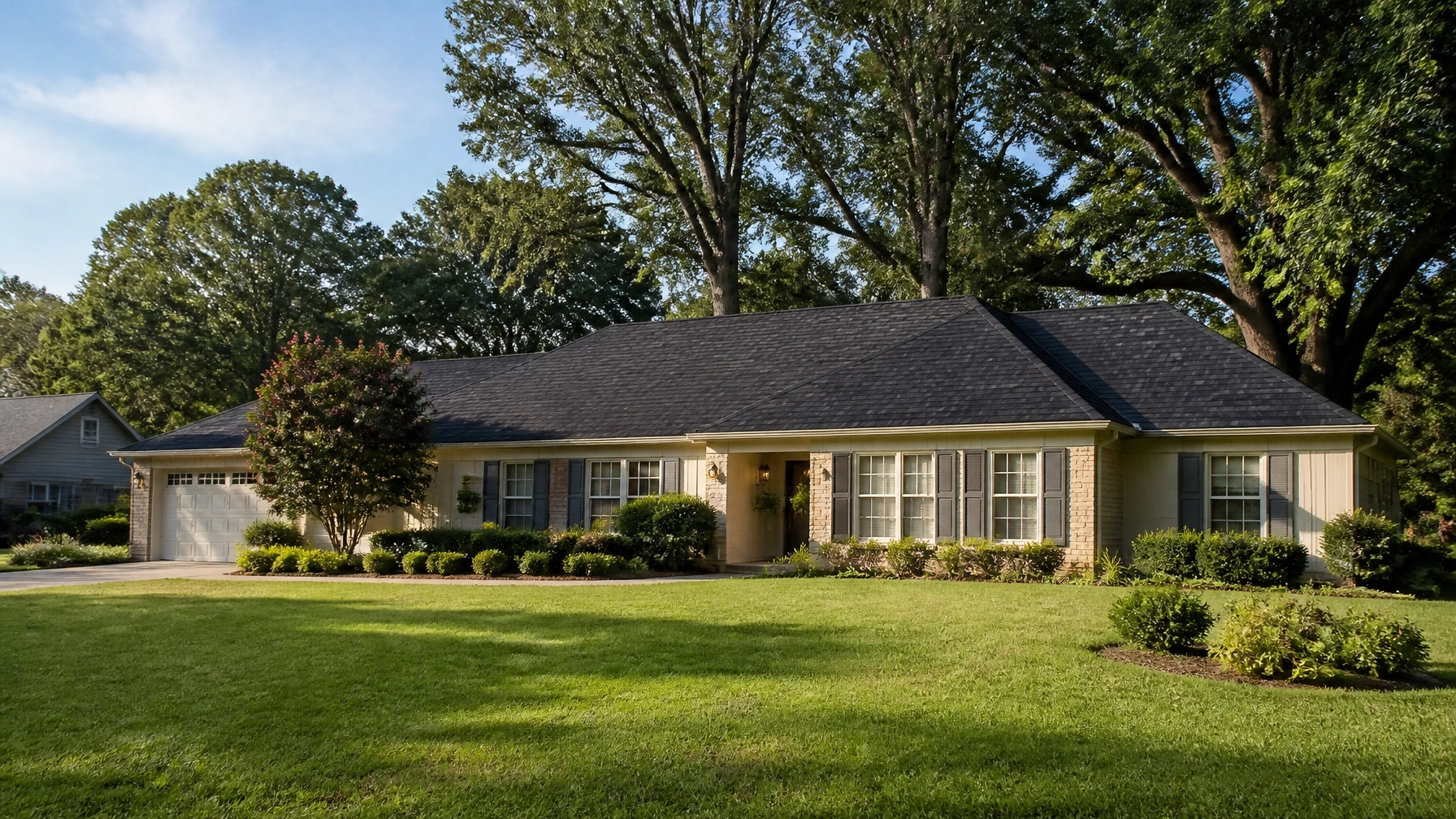
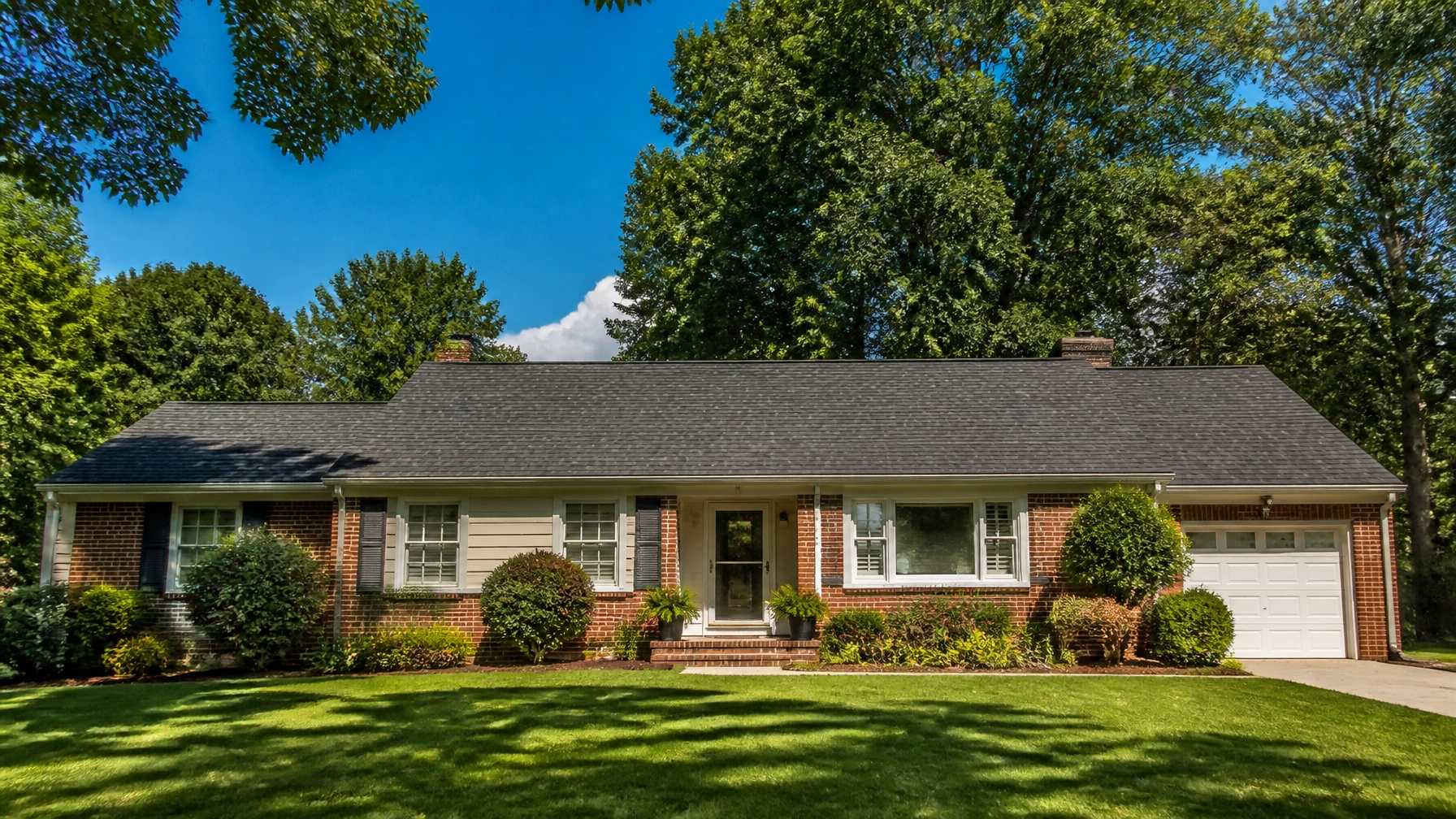
    Lexington Kentucky ranch home with a new charcoal architectural shingle roof

    Lexington Roof Replacement Cost for a Typical 2,000-Square-Foot Roof

    A 2,000-square-foot roof equals approximately 20 roofing squares. The actual roof surface may be larger than the home’s floor area because of pitch, overhangs, garages, porches, and architectural complexity.

    Roofing option Approximate installed price Estimated 2,000-square-foot project Value position
    Basic asphalt shingles Varies by scope Often within the broader $10,000–$18,000 range (Budget)
    Architectural shingles $5.10–$6.38 per sq. ft. for a straightforward project $10,200–$12,760 (Popular)
    Architectural shingles, complex roof Approximately $8–$14 per sq. ft. in higher-cost cases $16,000–$28,000 (Premium asphalt)
    Standing-seam metal $9.50–$15.50 per sq. ft. $19,000–$31,000 (Premium)

    These figures can increase when the project includes:

    • Multiple layers of tear-off.
    • Rotten decking or framing repairs.
    • Steep slopes.
    • Numerous valleys, dormers, and penetrations.
    • Chimney flashing replacement.
    • Skylights, ventilation upgrades, or custom metalwork.
    • Historic-district design requirements.

    For most Lexington homeowners focused on resale value, architectural shingles are the best roof for home value because they balance appearance, durability, cost, and buyer familiarity.

    Standing-seam metal can be an excellent long-term investment, especially on modern homes, steep roofs, or high-end properties. However, the premium cost may not be recovered dollar for dollar at resale unless the material fits the home and neighborhood.

    How New Roof ROI Works

    1. Direct cost recovery

    The 2025 Cost vs. Value report estimates that an asphalt roof replacement recovers about 68% nationally, while regional and project-specific results can be lower or higher.

    For a Lexington project:

    • $10,000 roof: approximately $6,000–$6,800 in potential value recovery.
    • $14,000 roof: approximately $8,400–$9,520.
    • $18,000 roof: approximately $10,800–$12,240.

    This is not a guaranteed appraisal adjustment. It is a national benchmark used to estimate likely resale recovery.

    2. Indirect market benefits

    A new roof can also protect value that might otherwise be lost.

    Better inspection results: Buyers, lenders, and inspectors pay close attention to roof age, leaks, flashing, and visible storm damage.

    Fewer negotiation demands: An aging roof often becomes a seller credit, price reduction, or repair request. Replacing it before listing can reduce that leverage.

    Stronger curb appeal: Roof color, uniformity, and clean rooflines influence the first impression buyers form from listing photos and drive-by traffic.

    Improved buyer confidence: A documented replacement with transferable warranties and permits gives buyers a clearer ownership outlook.

    The National Association of REALTORS® 2025 Remodeling Impact Report gives new roofing a perfect 10 Joy Score, reflecting the strong satisfaction homeowners report after completing the project.

    Lexington’s Hail and Severe Weather Risk

    Lexington has a humid subtropical climate with frequent warm-season thunderstorms. Severe weather can bring:

    • Hail.
    • Damaging straight-line winds.
    • Heavy rainfall.
    • Flash flooding.
    • Occasional tornadoes.

    Local 2026 storm reporting included approximately 1-inch hail on February 19. Additional local storm reports noted hail up to approximately 1.50 inches around April 16, particularly in areas such as Hamburg and Andover, along with damaging winds during late July and on August 5.

    After a storm, inspect from the ground for:

    • Missing or lifted shingles.
    • Exposed underlayment.
    • Dented metal vents or flashing.
    • Granules collecting near downspouts.
    • Water stains in attics or ceilings.
    • Damaged gutters and downspouts.

    Do not climb onto the roof after a storm. If damage is suspected, document it with photographs and arrange a professional inspection.

    Lexington Kentucky home with a premium standing-seam metal roof and mature landscaping

    Kentucky Insurance Details to Check Before Replacing

    Kentucky homeowners policies commonly cover wind and hail, but the policy details matter.

    Many policies use a separate wind-and-hail deductible of 1%–2% of the dwelling coverage limit. On a home insured for $350,000:

    • 1% deductible: $3,500.
    • 2% deductible: $7,000.

    Older roofs may also be settled on an actual cash value (ACV) basis instead of replacement cost value (RCV). ACV deducts depreciation based on age and condition.

    Before filing a claim or scheduling replacement, check:

    1. The wind-and-hail deductible.
    2. Whether the roof is covered at ACV or RCV.
    3. The roof’s documented installation year.
    4. Any age-based roof exclusions or endorsements.
    5. Whether the insurer requires photos or an inspection.

    Do not replace a roof solely because of a sales pitch or an unverified storm claim. Have the damage documented and confirm coverage with your insurer.

    Should You Replace the Roof Before Selling?

    Replacing before listing can make sense when:

    • The roof is near or beyond its expected service life.
    • There are active leaks or visible storm-damage concerns.
    • A buyer’s lender may question the roof’s condition.
    • Comparable homes in your neighborhood have updated roofs.
    • You want to avoid a large inspection credit.

    You may not need a full replacement when the roof is relatively young, damage is limited, or the remaining service life is well documented. In that case, a professional inspection, targeted repair, roof cleaning, and clear maintenance records may be more cost-effective.

    The objective is not to over-improve. It is to prevent a major condition issue from weakening your negotiating position.

    Lexington-Fayette Roof Permit Rules

    Lexington-Fayette Urban County Government’s Division of Building Inspection handles residential construction permits. A full reroof or tear-off should generally be treated as permit-required work. Minor repairs may be exempt, but confirm the scope before work begins.

    For a full replacement, verify:

    • The correct residential building permit.
    • Required inspections.
    • Contractor and project information.
    • Ice-barrier requirements.
    • Any historic-district or neighborhood restrictions.

    The Kentucky Residential Code requires an ice-and-water shield or equivalent ice barrier at eaves where applicable. The barrier should extend at least 24 inches inside the exterior wall line. Steeper roofs may require additional coverage measured along the roof slope.

    Unpermitted work can lead to stop-work orders, inspection problems, resale delays, or difficulty documenting the improvement.

    Get a Free Lexington Roof Estimate in 60 Seconds

    Before comparing contractor bids, get an accurate project baseline.

    Use our Lexington, KY roof estimate tool for a free, satellite-powered estimate based on your roof’s size, pitch, and complexity.

    You can also use our roof cost calculator or start at Get My Roof Estimate Now.

    There is:

    • No cost.
    • No credit card required.
    • No contractor visit needed upfront.
    • No hidden fees.
    • Results in about 60 seconds.
    • Satellite-powered measurements designed for approximately 90%–95% accuracy.
    • Low, middle, and high price ranges.
    • Options for architectural shingles, metal, synthetic materials, and coatings.
    • Connections to verified, licensed, and insured local contractors.

    Key Takeaways

    • A typical Lexington asphalt roof replacement costs approximately $10,000–$18,000.
    • National 2025 data suggests asphalt roofing recovers approximately 60%–68% of its cost at resale.
    • On a $10,000–$18,000 project, potential recovered value may be roughly $6,000–$12,240.
    • Architectural shingles are usually the strongest balance of cost, appearance, and resale value.
    • Standing-seam metal is a premium choice that may fit higher-value or modern homes.
    • Lexington’s storm exposure makes roof age, hail resistance, flashing, and installation quality important.
    • Check wind-and-hail deductibles and ACV versus RCV coverage before filing an insurance claim.
    • Plan on confirming a permit for a full tear-off through LFUCG Building Inspection.
    • Start with a free, no-credit-card, 60-second estimate before scheduling contractor visits.

    Sources

  • Daily Tech Blitz – Slot 7: New Orleans’ Satellite Tech Edge Is Bringing Big Easy Precision to Louisiana Roofs

    Daily Tech Blitz – Slot 7: New Orleans’ Satellite Tech Edge Is Bringing Big Easy Precision to Louisiana Roofs

    New Orleans has always depended on accurate information from above.

    Satellites help forecasters track hurricanes over the Gulf. They support coastal monitoring, maritime operations, and infrastructure planning. At the Port of New Orleans, advanced digital modeling is helping logistics teams determine whether oversized cargo can safely move through a complex rail network.

    That same overhead-precision principle now applies to residential roofing.

    For New Orleans homeowners, a full roof replacement in 2026 generally costs approximately $8,000–$25,000. Asphalt shingles commonly run about $3.50–$8.00 per square foot installed, while standing-seam metal roofing typically ranges from $7–$16 per square foot, with many local metal projects landing toward the higher end.

    The first step is knowing your actual roof size, pitch, and complexity. Satellite-powered estimating can provide that information in about 60 seconds: before you schedule a contractor visit.

    New Orleans’ Satellite Technology Edge

    New Orleans is a city where weather, water, and logistics meet. That makes reliable geospatial data more than a convenience. It is an operational necessity.

    Three local technology applications show why.

    1. NOAA satellites support hurricane readiness

    NOAA’s geostationary weather satellites provide continuous views of the Gulf of Mexico, the Caribbean, the Atlantic, and the southeastern United States. Forecasters use this data to monitor:

    • Tropical storm development
    • Hurricane structure and intensity
    • Rapidly forming thunderstorms
    • Heavy rainfall and flooding threats
    • Cloud movement and atmospheric conditions

    In July 2026, GOES-19, NOAA’s primary eastern satellite, entered safehold after an onboard anomaly. The outage began on July 15. Core imagery returned during the recovery process, and NOAA reported full restoration of all instruments on July 17.

    The event was covered by NOLA.com, which highlighted the importance of the satellite for tracking Atlantic and Gulf Coast hurricanes.

    New Orleans was not left without weather information. Backup satellites, polar-orbiting systems, and forecasting models remained available. That redundancy is part of the technology edge: accurate decisions do not depend on one isolated data source.

    For homeowners, the lesson is straightforward. Gulf Coast properties need planning systems that account for local conditions, changing weather exposure, and the physical details of each structure.

    New Orleans home with a newly installed storm-ready roof after a Gulf Coast weather event

    2. Port NOLA is applying AI to oversized cargo

    The Port of New Orleans and the New Orleans Public Belt Railroad are also using advanced overhead modeling: but for freight instead of weather.

    Their AI-powered oversized cargo routing system uses a digital twin of the rail network built on Palantir Foundry. The model can account for infrastructure details such as:

    • Bridge clearance
    • Track geometry
    • Tunnel restrictions
    • Weight limits
    • Crossing conditions
    • Route-specific constraints

    A shipper enters cargo dimensions, weight, and railcar information. The platform compares those details with the digital representation of the network and helps identify feasible routes.

    The traditional process could require weeks or months of engineering review, manual spreadsheet work, and coordination across multiple railroads. The digital twin compresses much of that work into near-real-time analysis.

    You can read more about the project through Port Technology’s coverage of Port NOLA’s AI rail twin.

    This does not eliminate professional judgment. Railroad personnel and logistics specialists still make final operational decisions. The technology simply gives them faster, more complete information.

    Roof estimating follows the same logic.

    What “Overhead Precision” Means for a Roof

    A roofing project begins with geometry.

    A contractor needs to know more than the home’s interior living area. The relevant measurement is the actual roof surface, including:

    • Individual roof planes
    • Eaves and ridges
    • Valleys
    • Hips
    • Dormers
    • Attached structures
    • Roof pitch
    • Penetrations and flashing areas
    • Approximate material quantities

    Roofers typically measure in squares. One roofing square equals 100 square feet of roof surface.

    A 2,000-square-foot home does not necessarily have a 2,000-square-foot roof. A steep, multi-section roof may have substantially more surface area than the home’s floor plan suggests.

    Satellite imagery helps estimate the structure from above. The system analyzes the roof’s visible footprint and geometry, then uses that information to develop a localized replacement range.

    At Get My Roof Estimate Now, homeowners can receive:

    • A free satellite-based estimate in about 60 seconds
    • Measurement accuracy typically within the 90%–95% range
    • Pricing based on roof size, pitch, and complexity
    • Material comparisons
    • Low-middle-high price ranges
    • No credit card requirement
    • No initial contractor appointment

    It is not a substitute for a final inspection. Satellite imagery cannot confirm hidden decking damage, attic ventilation problems, soft spots, or every flashing condition. Instead, it provides a practical starting point for budgeting and contractor conversations.

    New Orleans Roof Replacement Costs in 2026

    Current New Orleans planning numbers are broad because two homes with the same living area can have very different roof designs.

    For a typical single-family property, use these benchmarks:

    Roofing option Approximate installed price
    Asphalt shingles (Budget to Popular) $3.50–$8.00 per sq. ft.
    Standing-seam metal (Premium) $7.00–$16.00 per sq. ft.
    Typical full replacement range $8,000–$25,000

    Many standard architectural shingle replacements fall near the middle of the overall range. Standing-seam metal commonly costs more because of the panel system, specialized installation, underlayment, trim, and labor.

    Your final price may increase because of:

    • Steep roof pitch
    • Multiple valleys or dormers
    • Multiple layers requiring tear-off
    • Rotten or damaged decking
    • Chimneys, skylights, or complex flashing
    • Difficult property access
    • Ventilation upgrades
    • Hurricane-rated materials
    • Permit and inspection requirements
    • Post-storm labor demand

    For a more general comparison, use the Get My Roof Estimate Now roof cost calculator. For a property-specific number, use the New Orleans satellite roof estimate tool.

    Fresh standing-seam metal roofing on a New Orleans home with strong curb appeal

    Weather Resilience: Look Beyond the Shingles

    New Orleans roofs face more than occasional rain. The local combination of heat, humidity, intense sun, heavy downpours, wind, and tropical weather creates ongoing stress.

    When comparing roofing systems, evaluate the entire assembly:

    • Shingles or metal panels
    • Underlayment
    • Ice and water protection where applicable
    • Drip edge
    • Flashing
    • Ridge and soffit ventilation
    • Fastening patterns
    • Roof-deck attachment
    • Wind-rated installation details

    A stronger roof is not created by the surface material alone. Installation quality and code compliance matter just as much.

    Louisiana FORTIFIED roof programs

    Louisiana homeowners should also research the FORTIFIED Roof standard developed by the Insurance Institute for Business & Home Safety.

    The Louisiana Fortify Homes Program has offered eligible homeowners grants of up to $10,000 toward qualifying FORTIFIED roof upgrades. Program rules can include:

    • Primary-residence requirements
    • Eligible parish restrictions
    • Active homeowners insurance with wind coverage
    • Additional flood insurance requirements in certain areas
    • Full, contiguous roof replacement
    • Use of approved FORTIFIED professionals
    • Evaluation and certification after installation
    • Lottery-based registration periods

    A separate Louisiana FORTIFIED Roof tax credit may also be available for qualifying homeowners, but homeowners generally cannot combine the state grant and tax credit for the same residence and project.

    Review current requirements directly through the Louisiana Department of Insurance Fortify Homes Program and the Louisiana Department of Revenue’s FORTIFIED Roof tax credit information.

    Do not begin grant-related work before confirming eligibility and approval requirements.

    A Faster Way to Start Planning

    New Orleans already uses satellite and digital-twin technology to make better decisions about storms, cargo, infrastructure, and regional resilience.

    Homeowners can apply the same principle to roof replacement.

    Instead of guessing from the home’s square footage or waiting several days for an appointment, start with measured property data. Enter your address, review the roof’s estimated size and complexity, compare material options, and establish a realistic budget.

    Get My Roof Estimate Now provides a free, no-credit-card satellite estimate in approximately 60 seconds. The measurement is typically 90%–95% accurate, and the result can help you decide whether to repair, replace, upgrade for storm resilience, or speak with a verified local contractor.

    That is the New Orleans satellite tech edge: better information from above, delivered faster, so homeowners can make more confident decisions below.

    Aerial perspective of a modern New Orleans home with a newly installed cool roof and clearly defined roof planes

    Start With Your New Orleans Roof Estimate

    Planning a replacement in New Orleans, Metairie, Gentilly, Lakeview, Algiers, or the surrounding area?

    Get your free satellite-powered roof estimate in 60 seconds:

    Check Your New Orleans Roof Replacement Cost

    No credit card. No initial contractor visit. No hidden fees. Just a faster, more accurate starting point for your roofing decision.

  • Daily ROI Blitz – Slot 5: Memphis, TN New Roof ROI : What a Replacement Adds to Your Home Value in 2026

    Daily ROI Blitz – Slot 5: Memphis, TN New Roof ROI : What a Replacement Adds to Your Home Value in 2026

    A new roof is one of the largest maintenance investments a Memphis homeowner will make. In 2026, it can also be one of the most practical ways to protect resale value, avoid appraisal deductions, and improve insurance eligibility.

    For a typical 2,000–2,500-square-foot Memphis home, a full replacement generally costs:

    • Architectural shingles (Popular): $8,000–$22,300
    • Class 4 impact-resistant shingles (Protection upgrade): $9,800–$15,500
    • Standing-seam metal (Premium): $11,900–$41,500

    Homeowners typically recoup approximately 60%–80% of a replacement investment at resale. National Zonda Cost vs. Value benchmarks have placed asphalt roof replacement ROI near 68% and metal roofing near 50%, while some Memphis-area estimates reach 81% for well-matched projects.

    Memphis Housing Market Snapshot: July–September 2026

    According to Redfin’s Memphis housing market data, the city’s median sale price was approximately $209,000 in July 2026, up about 4.7% year over year.

    However, Memphis remains a buyer-leaning market. Buyers have more negotiating power, homes may take longer to sell, and visible defects can quickly become price concessions.

    That makes roof condition especially important. A buyer may accept an older kitchen or dated flooring. An aging roof is different. It can raise concerns about leaks, insurance coverage, storm damage, and immediate repair costs.

    Neighborhood context

    Roof ROI depends partly on the value and expectations of the surrounding neighborhood.

    Memphis area Approximate market context
    East Memphis $340,000–$380,000 median range
    Midtown Approximately $295,000
    Germantown Approximately $525,000
    Harbor Town Higher-end Downtown-adjacent enclave
    Victorian Village Historic district with older, character-rich homes

    In East Memphis and Germantown, buyers often expect a roof replacement to match the home’s overall quality. In Midtown, Harbor Town, and Victorian Village, architectural style and material compatibility may matter as much as the basic roof age.

    How Much Does a Memphis Roof Replacement Cost?

    Roofers price projects by squares, not just house size. One roofing square equals 100 square feet of roof area. A 2,000-square-foot house may have more than 2,000 square feet of actual roof surface because of pitch, overhangs, dormers, and multiple roof sections.

    Roofing material Installed cost per square Typical project range
    Architectural shingles (Popular) $325–$885 $8,000–$22,300
    Class 4 shingles (Protection upgrade) Varies by product $9,800–$15,500
    Standing-seam metal (Premium) $700–$1,200 $11,900–$41,500

    Your final price can change because of:

    • Roof pitch and accessibility
    • Valleys, dormers, skylights, and chimneys
    • Tear-off and disposal
    • Damaged decking
    • Flashing and ventilation upgrades
    • Local labor availability
    • Material choice and warranty level

    Use the Get My Roof Estimate Now roof cost calculator for a general planning range, then compare it with detailed contractor proposals.

    Memphis colonial home with a new charcoal architectural shingle roof

    What ROI Can You Expect From a New Roof?

    A roof replacement does not always return dollar-for-dollar at closing. Its value usually comes from three sources:

    1. Direct resale value
    2. Avoided appraisal deductions
    3. Fewer buyer objections and repair negotiations

    A properly installed new roof may add roughly 5%–6% to a home’s value, depending on neighborhood, material, roof condition, and buyer demand.

    For a $209,000 Memphis home, that represents a potential value effect of approximately:

    • 5%: $10,450
    • 6%: $12,540

    Those figures are not guaranteed appraisal increases. They are a practical benchmark for understanding the financial impact of replacing a visibly aging roof.

    A new roof may also prevent $8,000–$20,000 in appraisal deductions or buyer concessions when an older roof is near the end of its service life. In a buyer-leaning market, buyers are more likely to request a credit, reduce their offer, or walk away if the roof appears likely to need replacement soon.

    Example ROI scenario

    Suppose you replace a Memphis roof for $15,000 and later sell the home:

    • Estimated resale value recovered at 60%: $9,000
    • Estimated resale value recovered at 80%: $12,000
    • Potential avoided concession: $8,000–$20,000
    • Additional benefits: improved insurability, curb appeal, and buyer confidence

    The roof may not produce a perfect financial return by itself. But replacing it before a sale can protect more of your asking price and reduce the risk of a costly negotiation.

    Which Roofing Material Produces the Best ROI?

    Architectural shingles (Popular)

    Architectural shingles usually provide the strongest balance of cost, appearance, and resale appeal.

    They are a practical fit for most Memphis ranch, colonial, and traditional homes. Choose algae-resistant products whenever possible. Memphis humidity can encourage dark streaks and algae growth, especially on shaded roof slopes.

    Best for: Homeowners seeking broad buyer appeal and a reasonable upfront cost.

    Class 4 impact-resistant shingles (Protection upgrade)

    Class 4 shingles are designed to better resist hail impacts. They typically carry a 20%–30% premium over standard architectural shingles.

    Some insurers may offer 10%–35% discounts for qualifying impact-resistant roofing, but discounts depend on the carrier, policy, roof certification, and local underwriting rules. Confirm the savings before choosing the upgrade.

    Best for: Homeowners concerned about hail, insurance costs, or long-term storm protection.

    Standing-seam metal (Premium)

    Standing-seam metal can last 40–60 years or longer with proper installation. It offers strong wind performance and a distinctive appearance, but its higher cost can reduce percentage ROI at resale.

    Metal may be a better fit for premium homes, modern architecture, or homeowners planning to stay for decades. In historic areas, confirm that the material is allowed before ordering it.

    Best for: Long-term ownership and homes where the design supports a premium roof.

    Synthetic roofing and coatings

    Synthetic materials and roof coatings can work in specific applications, especially where weight, appearance, or maintenance strategy matters. They should be evaluated based on the roof system, not just the material price.

    Memphis historic home with a restored standing-seam metal roof

    Memphis Weather Makes Roof Timing Important

    Memphis roofs face a difficult combination of:

    • High humidity and algae growth
    • Severe thunderstorms
    • Straight-line winds
    • Hail
    • Falling tree limbs
    • Aging roofs installed during the 2000s building boom

    On August 22, 2026, a severe bow echo brought destructive straight-line winds across Memphis and Shelby County. Reported wind speeds reached approximately 60–80 mph, with localized reports higher than that. Widespread tree and roof damage followed.

    A June 1, 2026 hail event reportedly affected more than 7,000 properties, adding to the importance of checking for impact damage even when shingles appear intact from the ground.

    After a storm, look for missing shingles, exposed underlayment, lifted flashing, bruised shingles, and granules in gutters. Photograph damage before making temporary repairs, and contact your insurer promptly.

    Insurance and Roof Age in Tennessee

    Tennessee insurers are paying closer attention to roof age. Around 10–15 years, homeowners may see:

    • Premium increases of approximately 10%–15%
    • Actual Cash Value, or ACV, treatment for the roof
    • More frequent inspections
    • Higher wind and hail deductibles
    • Non-renewal concerns after age 15

    The Tennessee Department of Commerce and Insurance explains ACV and Replacement Cost coverage. ACV policies subtract depreciation based on age, while replacement-cost coverage is designed to pay the current cost of comparable materials after the deductible.

    Wind and hail deductibles commonly equal 1%–2% of dwelling coverage. On a $300,000 dwelling limit, a 2% deductible equals $6,000.

    Replacing an aging roof before an insurance coverage change can protect your eligibility for better coverage and reduce out-of-pocket storm exposure.

    Memphis Permits, Licensing, and Historic District Rules

    For a full roof replacement, plan for a Memphis-Shelby County OCCE building permit and approximately $150–$500 in permit and administrative costs, depending on the project scope.

    The OCCE roof installation policy explains local requirements, including decking and code issues. Confirm the current permit requirement before work begins, especially if the project includes sheathing, structural repairs, or changes to the roof system.

    Your contractor should also be licensed through the Tennessee Department of Commerce and Insurance and carry general liability and workers’ compensation coverage.

    For homes in historic districts such as Victorian Village, contact the Memphis Landmarks Commission before changing visible materials, colors, roof profiles, or architectural details. Historic approval is separate from building-code compliance.

    Get Your Memphis Roof ROI Baseline in 60 Seconds

    Before scheduling contractor visits, get a property-specific starting point.

    Get My Roof Estimate Now uses satellite imagery to estimate roof size, pitch, and complexity. You receive low-middle-high pricing for different materials in approximately 60 seconds.

    The estimate is:

    • Free
    • No credit card required
    • Based on satellite-powered measurements
    • Typically 90%–95% accurate
    • Connected to verified, licensed, and insured local contractors

    A fast estimate helps you decide whether to repair, replace, upgrade to Class 4 shingles, or plan ahead for a future sale.

    Memphis Roof Replacement ROI FAQ

    Does a new roof increase a Memphis home’s value?

    It can. A new roof may add approximately 5%–6% to value and can prevent substantial appraisal deductions or buyer concessions. The exact impact depends on the home, neighborhood, material, and roof quality.

    Is a metal roof a better investment than architectural shingles?

    Not always. Metal lasts longer, but its higher upfront price often produces a lower percentage resale ROI. Architectural shingles usually offer the broadest buyer appeal and strongest cost-to-value balance.

    Are Class 4 shingles worth the extra cost in Memphis?

    They can be, particularly in hail-exposed areas or when your insurer offers a meaningful discount. Ask your insurance agent for written confirmation of the discount before purchasing.

    How old is too old for a Memphis roof?

    Many asphalt roofs reach the replacement-planning stage around 20–25 years. However, insurance concerns may begin earlier, around 10–15 years, depending on the carrier and roof condition.

    Should I replace my roof before selling?

    If the roof is visibly worn, near the end of its service life, or likely to be flagged by an inspector, replacement may protect your sale price. At minimum, get an instant estimate so you understand the likely cost before listing.

    How quickly can I get a roof replacement estimate?

    With satellite measurements, you can receive a free pricing range in approximately 60 seconds. Start with the instant Memphis roof estimate tool.

  • Daily FAQ Blitz – Slot 6: AEO FAQ Quick Answers for Birmingham, AL Homeowners (2026)

    Daily FAQ Blitz – Slot 6: AEO FAQ Quick Answers for Birmingham, AL Homeowners (2026)

    Birmingham, Alabama: known as the Magic City: includes ZIP codes 35201–35244 and a wide range of communities, from Homewood and Mountain Brook to Vestavia Hills, Hoover, Avondale, and Highland Park. Roofs across Jefferson County face heavy rain, humidity, hail, severe thunderstorms, and tornadoes associated with the region’s Dixie Alley weather pattern.

    If your roof is aging, storm-damaged, or simply part of your long-term home budget, the answers below will help you plan with current 2026 Birmingham roofing costs and requirements.

    What does a new roof cost in Birmingham in 2026?

    Quick answer: For a roof with 2,000 square feet of actual roof area, expect approximately $10,000–$16,000 for architectural shingles, $14,000–$22,000 for corrugated or ribbed metal, and $22,000–$32,000 for standing seam metal.

    2026 installed price benchmarks

    • Architectural shingles (Popular): About $4.50–$7.50 per square foot installed
    • Corrugated or ribbed metal (Durable): About $7–$11 per square foot installed
    • Standing seam metal (Premium): About $11–$15 per square foot installed

    Your final cost depends on:

    • Actual roof size, measured in squares
    • Roof pitch and accessibility
    • Number of roof planes, valleys, and penetrations
    • Tear-off and disposal requirements
    • Decking or flashing repairs
    • Ventilation improvements
    • Material grade and color
    • Local labor and permit requirements

    A satellite estimate can provide a fast planning range before you schedule contractor visits.

    How can I get a Birmingham roof estimate without an appointment?

    Quick answer: Enter your address at Get My Roof Estimate Now and receive a free estimate in about 60 seconds.

    The platform uses satellite imagery to measure roof dimensions, pitch, and complexity. Estimates are generally 90–95% accurate for initial planning, with no credit card and no upfront cost.

    What the estimate helps you understand

    • Approximate roof area
    • Material quantity
    • Low, middle, and high replacement ranges
    • Pricing for architectural shingles, metal, synthetic materials, and coatings
    • Regional Birmingham labor and material differences
    • Whether it makes sense to compare contractors now

    A satellite estimate is a budgeting tool: not a substitute for a physical inspection when the roof has leaks, structural damage, or storm-related concerns.

    Do Birmingham homeowners need a permit for roof replacement?

    Quick answer: Confirm and obtain the required building permit through the City of Birmingham Inspection Services Department before roof replacement begins. Permit rules can depend on the scope of work.

    For properties within Birmingham city limits:

    For homes in:

    • Unincorporated Jefferson County: Use the county’s ePermitJC system
    • Homewood, Mountain Brook, Vestavia Hills, or Hoover: Contact that municipality’s building department
    • Historic districts: Ask whether exterior design approval or a certificate of appropriateness is also required

    Do not assume that a nearby city’s rules apply to your property. Jurisdiction is based on the home’s location.

    Does Alabama require roofers to be licensed?

    Quick answer: Alabama generally requires a residential roofer license for residential roofing work over $2,500 when the roofer contracts directly with the homeowner.

    Verify the contractor through the Alabama Home Builders Licensure Board.

    Before signing a contract, request:

    • Current Alabama roofer or home builder license number
    • General liability insurance certificate
    • Workers’ compensation certificate
    • Local business license, when required
    • Written scope of work
    • References from recent Birmingham-area customers

    The license requirement does not replace your responsibility to check insurance, workmanship history, contract terms, and warranty coverage.

    What roofing materials work best in Birmingham?

    Quick answer: Architectural shingles are the most common choice, while Class 4 impact-resistant shingles and metal roofing offer stronger long-term storm performance.

    Traditional Birmingham brick colonial home with a new architectural shingle roof

    Recommended options

    Architectural shingles (Popular)

    • Strong curb appeal
    • Broad color and style selection
    • Typical service life of approximately 25–30 years
    • Usually the best balance of appearance and cost

    Class 4 impact-resistant shingles (Storm-focused)

    • Designed to better resist hail impact
    • Useful during Birmingham’s spring hail season
    • May support insurance savings, depending on the carrier
    • Must be installed according to the manufacturer’s requirements

    Algae-resistant shingles (Low maintenance)

    • Help reduce dark streaks caused by humidity and moisture
    • Particularly useful in shaded, tree-lined neighborhoods
    • Look for algae-resistant granules and documented manufacturer coverage

    Metal roofing (Durable or Premium)

    • Corrugated or ribbed metal provides a lower-cost metal option
    • Standing seam metal offers a clean, modern appearance
    • Typical service life can exceed 40 years with proper installation
    • Costs more initially but may reduce replacement frequency

    Modern Birmingham home with a standing seam metal roof

    Is spring a good time to replace a Birmingham roof?

    Quick answer: Spring is a practical installation season, but March through May is also Birmingham’s peak hail season, so contractor schedules can fill quickly after storms.

    Planning tips

    • Request estimates before severe weather arrives
    • Inspect the roof after every major hail or wind event
    • Avoid scheduling installation when rain is forecast
    • Ask how the contractor protects exposed roofing if weather changes
    • Reserve materials early for specialty colors or metal systems

    Fall can also offer favorable installation conditions. Emergency repairs should not wait for the “perfect” season.

    Should I repair my roof or replace it?

    Quick answer: Repair is usually appropriate for isolated damage on a younger roof. Replacement is often more practical when damage is widespread, the roof is near the end of its service life, or repair costs approach roughly 30% of replacement cost.

    Repair may make sense when:

    • Damage is limited to a few shingles
    • Flashing or pipe boots have failed in one area
    • The roof is less than 15 years old
    • The decking is dry and structurally sound
    • There are no repeated leaks

    Replacement may make sense when:

    • The roof is 20 years old or more
    • Shingles are brittle, curling, or losing granules
    • Leaks appear in several locations
    • There is sagging or widespread decking damage
    • Storm damage affects multiple roof slopes
    • Repeated repairs are becoming expensive

    Never climb onto a damaged roof after a storm. Photograph visible damage from the ground and arrange a professional inspection.

    Professional inspecting architectural shingles on a Birmingham-area home

    What should I know about Alabama insurance coverage?

    Quick answer: Check both your wind/hail deductible and whether your policy values the roof at ACV or RCV.

    Key terms

    • ACV (Actual Cash Value): Pays the roof’s depreciated value based on age and condition.
    • RCV (Replacement Cost Value): Generally pays the cost to replace the roof with similar new materials, minus the deductible, subject to policy terms.

    Alabama wind and hail deductibles are often 1–5% of dwelling coverage. For example, a 2% deductible on a home insured for $300,000 equals $6,000.

    Before filing or planning a claim:

    • Review your declarations page
    • Ask whether wind and hail have a separate deductible
    • Confirm the deductible in dollars, not just as a percentage
    • Ask whether your roof is covered under ACV or RCV
    • Check for age-based roof limitations
    • Photograph your roof condition before storm season

    A claim decision should come from you and your insurer. Be cautious of contractors who promise that every storm-damaged roof will qualify for replacement.

    Can a FORTIFIED roof lower insurance costs?

    Quick answer: A certified FORTIFIED Roof may qualify for an insurance discount on the wind portion of your premium: up to approximately 30% for many inland Alabama homeowners, depending on the insurer and certification level.

    The Strengthen Alabama Homes program may also help eligible homeowners pursue FORTIFIED improvements. Review current requirements through Strengthen Alabama Homes and FORTIFIED incentives in Alabama.

    Important details:

    • The discount applies to the wind portion, not necessarily the entire policy premium
    • Certification requirements must be followed during installation
    • The insurer may require the completed certification documentation
    • Grant availability, eligibility, and program rules can change
    • Ask your insurance agent for the exact expected discount in writing

    What warranties should a Birmingham roofing contract include?

    Quick answer: Look for separate manufacturer and workmanship warranties.

    Manufacturer warranty

    Covers specified defects in the roofing product. Review:

    • Coverage length
    • Transfer rules if you sell the home
    • Wind and algae limitations
    • Required installation standards
    • Whether upgraded coverage requires a certified installer

    Workmanship warranty

    Covers installation errors by the contractor. Confirm:

    • Warranty length
    • What labor and repairs are included
    • Exclusions for storm damage or poor maintenance
    • Who handles warranty claims
    • Whether the company is likely to remain available locally

    A long material warranty does not automatically cover installation problems.

    Birmingham roof replacement planning checklist

    Use this checklist before hiring a contractor:

    • Get a free satellite estimate for an initial budget
    • Confirm the actual roof area and number of squares
    • Inspect for missing shingles, leaks, sagging, and granule loss
    • Review your wind/hail deductible
    • Confirm ACV or RCV roof coverage
    • Ask about Class 4 and algae-resistant options
    • Compare at least two or three written estimates
    • Verify the Alabama license at hblb.alabama.gov
    • Request liability and workers’ compensation certificates
    • Confirm the correct city or county permit process
    • Require a written scope, payment schedule, and cleanup terms
    • Compare manufacturer and workmanship warranties
    • Ask whether the contractor documents decking damage with photos
    • Keep permits, invoices, product information, and inspection records

    Get a Birmingham roof estimate in 60 seconds

    Start with reliable numbers before scheduling multiple contractor visits. Get My Roof Estimate Now uses satellite-powered measurements to provide a free Birmingham roof replacement estimate in about 60 seconds.

    You can also review the roof cost calculator to compare materials and plan your next step: without a credit card, hidden fees, or an upfront contractor appointment.

    For official insurance consumer information, review the Alabama Department of Insurance. Always confirm current permit, licensing, insurance, and program requirements with the responsible government agency or your insurance carrier.

  • Daily FAQ Blitz – Slot 3: AEO FAQ Quick Answers for Charleston, SC Homeowners (2026)

    Daily FAQ Blitz – Slot 3: AEO FAQ Quick Answers for Charleston, SC Homeowners (2026)

    Charleston homeowners need roof information that is fast, local, and practical. Coastal wind exposure, salt air, hurricane season, historic-home requirements, and changing material prices can all affect the cost of a roof replacement.

    This Charleston, SC FAQ provides quick answers using 2026 pricing benchmarks, local permit guidance, storm considerations, and insurance-related savings opportunities. For a property-specific starting point, Get My Roof Estimate Now can measure your roof from satellite imagery and return a free estimate in under 60 seconds.

    1. How much does a roof replacement cost in Charleston, SC, in 2026?

    For a typical Charleston roof, architectural asphalt shingles cost approximately $3.50–$9.70 per square foot installed.

    A typical 2,000-square-foot roof may cost roughly:

    • $7,000–$20,500 for architectural shingles (Popular)
    • $15,100–$34,000+ for standing-seam metal (Premium)

    These ranges may include common installation costs, but the final price depends on roof pitch, complexity, tear-off, underlayment, flashing, ventilation, permits, and repairs to the roof deck.

    Remember: roofing is usually measured in squares. One roofing square equals 100 square feet. A 2,000-square-foot roof equals approximately 20 squares.

    However, a home advertised as 2,000 square feet does not always have a 2,000-square-foot roof. Roof slope, overhangs, garages, porches, and multiple roof sections can increase the measured area.

    2. What is the Charleston price difference between shingles and standing-seam metal?

    Architectural shingles are the more affordable and common choice for Charleston homes. They offer a wide selection of colors and styles and typically last about 20–30 years when properly installed and maintained.

    Standing-seam metal costs more upfront, but it can offer a 40–70-year service life depending on the material, coating, installation quality, and coastal exposure.

    Material 2026 Charleston range Typical position
    Architectural shingles $3.50–$9.70 per sq. ft. Popular
    Standing-seam metal $7.55–$18.00 per sq. ft. Premium

    Metal roofing may be a strong fit for homeowners planning to stay in their Charleston home long term or those prioritizing durability against wind, intense sun, and heavy rain. Aluminum and properly coated systems may deserve special consideration near salt air.

    Charleston SC home with a new architectural shingle roof

    3. Does Charleston require a permit for a full roof replacement?

    Yes. A full roof replacement generally requires a building permit inside the City of Charleston.

    The City identifies residential roofing under alteration or repair work. A simple re-roofing project may qualify for an over-the-counter review, and same-day approval may be possible when the application is complete. Approval is not guaranteed.

    Permit requirements can vary depending on whether the property is located in:

    • The City of Charleston
    • Charleston County
    • North Charleston
    • A historic district or preservation area

    For a contractor-pulled permit, use a roofing company with a valid South Carolina contractor’s license and an active City of Charleston business license, when required. A homeowner may be able to pull the permit for their own primary residence, but it is still wise to confirm the requirements directly with the City of Charleston Permit Center.

    Historic homes, preservation easements, and properties subject to review may require additional steps. Before scheduling work, ask who will obtain the permit and whether product, color, or design approvals apply.

    4. Can a Charleston homeowner pull their own roofing permit?

    A homeowner may be allowed to pull a permit for a primary residence.

    City guidance indicates that a homeowner applying for work on their own primary residence may not need a City business license. If a contractor applies instead, the contractor should provide the appropriate South Carolina license information and City business license documentation.

    Before applying, confirm:

    • Whether the property is your primary residence
    • Whether the project is inside the City of Charleston
    • Whether the home is in a historic or preservation area
    • Whether a tear-off, structural repair, or roof design change is planned
    • What application, valuation, and inspection documents are required

    A licensed contractor is usually the simpler option because the contractor can coordinate the permit, installation, inspections, and documentation.

    5. Can wind mitigation lower my South Carolina insurance cost?

    Possibly. South Carolina insurers offer wind-mitigation credits, but the exact savings depend on the carrier, policy, location, and documented improvements.

    Charleston homeowners may see discounts commonly discussed in the range of:

    • 10%–30% on eligible wind-related portions of a policy
    • In some situations, up to 50% off the wind portion, depending on the carrier and the complete mitigation package

    These discounts are not automatically applied just because a new roof is installed. You may need documentation, a wind-mitigation inspection, or certification under a recognized standard.

    A FORTIFIED Roof can improve resistance to high winds by addressing details such as roof-deck attachment, sealed roof decking, edge protection, and stronger installation practices. Ask your insurer how a FORTIFIED certification would affect your policy before selecting materials or installation methods.

    Charleston homeowners should also review the South Carolina Department of Insurance coastal insurance resources for current guidance.

    6. Is there a South Carolina grant for a stronger roof?

    Eligible coastal homeowners may qualify for assistance through the SC Safe Home Mitigation Grant Program.

    Current program information lists grants of up to $7,500 for qualifying FORTIFIED Roof retrofits. Eligibility can depend on:

    • Owner-occupied, single-family home status
    • Location in an eligible coastal county
    • Available program funding
    • Application timing
    • Compliance with program requirements
    • Whether the work is a retrofit rather than new construction

    Grant rules and funding windows can change. Review the current SC Safe Home program information before signing a contract. Do not assume reimbursement is guaranteed, and confirm whether approval must occur before work begins.

    Standing-seam metal roof on a Charleston coastal residence

    7. What storm activity should Charleston homeowners review in 2026?

    Charleston roofs face repeated exposure to thunderstorms, tropical systems, wind-driven rain, and coastal humidity.

    The August 22, 2026 storm produced severe-weather warnings in the broader Charleston area, with warnings citing radar-indicated winds near 60 mph. A nearby Pinopolis measurement recorded a gust of approximately 64 mph. Reports from the broader Lowcountry also referenced heavy rain, flooding or ponding in some areas, and storm-related damage such as downed trees.

    Weather and storm-report summaries also referenced wind and hail activity near Charleston on July 5 and July 29, 2026, including reports associated with the Shadowmoss and Charleston Airport areas. Conditions can vary significantly from one neighborhood to the next, so a report near Charleston does not automatically prove damage at a specific address.

    After a storm, look for:

    • Missing, lifted, or creased shingles
    • Exposed underlayment
    • Damaged flashing around chimneys and vents
    • Dented metal components
    • Granules collecting in gutters
    • Ceiling stains or attic moisture
    • Loose gutters, branches, or debris on the roof

    Photograph what you can safely see from the ground. Do not climb onto a wet or damaged roof. For official weather documentation, start with the National Weather Service Charleston office and keep copies of inspection reports for your insurer.

    Charleston-style home with a new roof and clean rooflines

    8. How accurate is a free satellite roof estimate?

    Get My Roof Estimate Now uses satellite-powered measurements that are typically 90%–95% accurate for estimating roof size, pitch, and complexity.

    The process is simple:

    1. Enter your Charleston property address.
    2. Confirm the correct home.
    3. Receive a low, middle, and high replacement price range.

    The estimate is:

    • Free
    • Available in under 60 seconds
    • Provided without a credit card
    • Based on your property rather than a generic average

    Satellite measurements are excellent for budgeting and planning. They cannot identify every condition visible during an in-person inspection, such as hidden rot, damaged decking, poor ventilation, or concealed flashing problems. Use the result as a reliable starting point, then request a detailed written quote before construction.

    9. Should Charleston homeowners get an estimate before hurricane season?

    Yes. Planning before a leak or emergency can give you more choices and better budget control.

    If your Charleston roof is 15–30 years old, has repeated repairs, or shows storm wear, get a replacement range before hurricane season intensifies. A fast estimate can help you compare:

    • Architectural shingles (Popular)
    • Standing-seam metal (Premium)
    • Synthetic roofing options
    • Roof coatings for compatible low-slope systems
    • Tear-off and replacement scenarios
    • Potential wind-mitigation upgrades

    A property-specific estimate also gives you a benchmark for comparing contractor proposals. If a quote is far above or below the expected range, ask what explains the difference.

    Get a Charleston roof estimate in 60 seconds

    Roof replacement is a major investment, but the first planning step does not need to be complicated. Get a free satellite-powered estimate for your Charleston, SC home at getmyroofestimatenow.com. See your roof size, material pricing, and low-middle-high replacement range with no credit card and no obligation.

    Have another Charleston roofing question? Contact us for more information or start your estimate today.

    Sources and local resources

  • Daily Weather Blitz – Slot 6: Atlanta, GA ,  September 1, 2026: An Upper-90s Heat Dome With 103°F Heat Indices & What the Big Peach’s Humidity, Heat, and Afternoon Storm Cells Do to Your Roof

    Daily Weather Blitz – Slot 6: Atlanta, GA , September 1, 2026: An Upper-90s Heat Dome With 103°F Heat Indices & What the Big Peach’s Humidity, Heat, and Afternoon Storm Cells Do to Your Roof

    Atlanta is starting September with a serious late-summer heat pattern. For homeowners in ZIP 30305, Buckhead, Midtown, and nearby Intown neighborhoods, Tuesday’s high is expected to reach roughly 96–97°F, with peak heat index readings near 100°F from about 2 to 6 p.m.

    By Tuesday and Wednesday, the “feels-like” temperature may reach 102–103°F. The National Weather Service office in Peachtree City is warning of well-above-normal temperatures, while FOX 5 Atlanta and Atlanta News First report persistent heat, rising humidity, and increasing storm chances later in the week.

    The early-week pattern should remain mostly dry, with only a stray afternoon thunderstorm possible. Rain chances increase toward Friday and Labor Day weekend. A storm line could develop Saturday evening, bringing lightning, heavy rain, and gusty straight-line winds, but no complete washout is expected.

    Check the latest updates from the NWS Peachtree City forecast office, WSB-TV weather, and FOX 5 Atlanta weather before scheduling any roof inspection or exterior work.

    What Atlanta Weather Does to Your Roof

    Atlanta’s humid subtropical climate creates a challenging roofing environment:

    • Approximately 50 inches of rain annually
    • Roughly 45–50 days above 90°F each year
    • Long, hot, humid summers
    • Brief winter freezes and occasional ice storms
    • Frequent afternoon thunderstorms, hail, and downbursts
    • Dense tree canopy across many neighborhoods

    Atlanta is known as “The City in a Forest.” Mature oaks, pines, maples, and other trees provide valuable shade, but they also drop leaves, pine needles, and limbs onto the roof. That debris holds moisture, blocks gutters, and can damage shingles during high-wind events.

    Heat and UV Exposure: Slow, Constant Roof Wear

    A roof absorbs direct sunlight throughout the summer. Dark shingles can become significantly hotter than the surrounding air, especially on south- and west-facing slopes.

    Repeated heat cycles cause roofing materials to expand during the day and contract as temperatures fall overnight. Over time, this can contribute to:

    • Shingle curling and cracking
    • Premature granule loss
    • Brittle seal strips
    • Deteriorating pipe boots and flashing
    • Faster aging around roof penetrations

    The 103°F heat index does not mean the shingle surface reaches only 103°F. The heat index measures how hot conditions feel to people. Roof surfaces can become much hotter under direct sun. Proper attic ventilation helps release trapped heat and reduces stress on the roof deck.

    Modern Atlanta home with a standing seam metal roof

    Humidity, Algae, Moss, and the Black-Streak Problem

    Warm moisture is one of Atlanta’s most common roof-aging factors. North-facing slopes and heavily shaded roof sections may stay damp long after a storm passes.

    The familiar black streaks seen across metro Atlanta roofs are usually associated with Gloeocapsa magma, a type of roof algae. Moss and lichen can also develop where debris and moisture remain in place.

    Heavy growth can:

    • Make shingles look prematurely old
    • Hold moisture against the roof surface
    • Lift or loosen shingle edges
    • Block drainage paths
    • Reduce curb appeal before a home sale

    When replacing a roof, ask about algae-resistant shingles, often made with protective copper or other mineral granules. Avoid pressure washing asphalt shingles. High-pressure cleaning can remove granules and shorten roof life. A qualified professional can recommend a manufacturer-approved cleaning method.

    Tree Canopy Debris: Atlanta’s Everyday Roof Stress

    A roof under mature trees needs more maintenance than one in an open lot. Pine needles and leaves collect in valleys, behind chimneys, and along roof-to-wall intersections. Wet debris can create a persistent moisture pocket.

    Overhanging limbs also raise the risk of impact damage during storms. Even a healthy branch can fall when saturated by rain or pushed by a downburst.

    For Buckhead and Intown homes, schedule these tasks:

    • Clean gutters and downspouts at least twice a year
    • Clear leaves from valleys and roof edges
    • Trim branches that touch or overhang the roof
    • Remove dead limbs before storm season
    • Inspect for lifted or missing shingles after major storms
    • Check attic areas for damp insulation or staining

    Do not climb onto a steep or wet roof. Use binoculars from the ground or arrange a professional inspection.

    Atlanta tree-canopy home with a new architectural shingle roof

    Severe Weather: Hail, Downbursts, Tornadoes, and Ice

    Atlanta’s summer thunderstorms can produce more than rain. Hail can bruise shingles, while straight-line winds can lift tabs, damage flashing, and scatter tree limbs across the roof.

    The region also has a meaningful history of severe weather:

    • An EF-2 tornado moved through downtown Atlanta on March 14, 2008.
    • An EF-4 tornado struck Newnan southwest of Atlanta on March 25, 2021.
    • The February 2014 “Snowpocalypse” ice storm caused widespread tree and roof damage.

    For homes exposed to falling limbs or hail, Class 4 impact-resistant shingles may be worth comparing. They cost more, but they can offer improved resistance to hail damage. Ask your insurance carrier whether a qualifying roof could receive a premium reduction.

    What a Durable Atlanta Roof System Should Include

    A durable roof is more than the visible shingle layer. Your written estimate should identify the full roofing system:

    • Synthetic or high-quality felt underlayment: Secondary water protection beneath shingles
    • Ice-and-water protection: Especially useful around valleys, eaves, walls, and penetrations
    • Step and counterflashing: Critical around chimneys and sidewalls
    • Valley protection: Properly designed valleys move heavy Atlanta rainfall away from the roof
    • Pipe boots: Flexible seals around plumbing penetrations must be replaced when brittle
    • Drip edge: Helps direct water into gutters
    • Ridge and soffit ventilation: Reduces trapped attic heat and moisture
    • Starter strips and ridge caps: Complete the shingle system and improve wind performance

    Close-up of roofing flashing, pipe boot, valley, and ridge ventilation

    2026 Atlanta Roof Replacement Cost Table

    A typical 2,000–2,500-square-foot Atlanta home often has about 22–28 roofing squares. One square equals 100 square feet of roof surface.

    Roofing material Cost category Typical installed range
    3-tab asphalt shingles Budget $8,000–$12,500
    Architectural asphalt shingles Popular $9,400–$18,100
    Class 4 impact-resistant shingles Storm-focused $11,200–$23,100
    Exposed-fastener metal Durable upgrade $14,000–$25,000
    Standing seam metal Premium $20,000–$35,000+
    Premium synthetic/slate Premium appearance $18,000–$36,000+

    For architectural asphalt shingles, many standard Atlanta projects fall between $10,000 and $16,000, depending on roof pitch, complexity, access, material grade, and contractor pricing.

    Also budget for:

    • Atlanta roof permit: Approximately $100–$400
    • Class 4 upgrade: Approximately $1,800–$5,000
    • Tear-off and disposal: Additional cost when removing existing roofing
    • Decking repairs: Extra if concealed wood damage is found

    Use the 2026 roof cost calculator for a broad planning range. A property-specific measurement provides a better starting point than using living-area square footage alone.
    New Roof ROI and Atlanta Home Value

    A new roof can improve more than weather protection. Metro Atlanta remains a competitive resale market, and buyers pay close attention to visible condition, inspection findings, insurance requirements, and curb appeal.

    Atlanta homeowners can often expect a roof replacement to recover approximately 80% of its cost at resale, although the actual return depends on the material, neighborhood, roof condition, and timing.

    A new roof may help by:

    • Improving first impressions and curb appeal
    • Reducing buyer concerns about near-term repairs
    • Preventing inspection-related price concessions
    • Supporting smoother insurance underwriting
    • Making the home easier to market against competing listings

    Architectural shingles are usually the strongest value choice for a typical Buckhead or Intown home. Metal, synthetic slate, or premium materials may be appropriate when the architectural style and expected ownership period justify the added investment.

    Practical Atlanta Roof Checklist

    Before the next storm cycle:

    • Confirm your roof’s approximate installation year
    • Look for missing, cracked, curling, or heavily stained shingles
    • Check gutters for granules, leaves, and pine needles
    • Inspect ceilings and attic areas for water stains
    • Trim branches that contact the roof
    • Photograph visible damage after hail or high winds
    • Review your insurance policy before filing a claim
    • Ask contractors for license, insurance, permit, warranty, and cleanup details
    • Compare at least two or three written estimates
    • Do not sign under pressure from storm chasers

    If your roof is 15–30 years old, planning now can help you avoid an emergency replacement during a hot, stormy week.

    Get an Atlanta Roof Estimate in 60 Seconds

    You do not need to schedule multiple contractor visits just to learn your roof’s approximate replacement cost.

    With Get My Roof Estimate Now, enter your Atlanta address and receive a free estimate based on satellite-powered measurements of your roof’s size, pitch, and complexity.

    You can compare low, middle, and high pricing for materials such as architectural shingles, metal, synthetic roofing, and coatings. Results typically arrive in under 60 seconds, with no credit card and no upfront contractor visit required.

    Start your free Atlanta roof estimate.

  • Daily Weather Blitz – Slot 5: Charlotte, NC : September 1, 2026: First Alert Heat Days With Mid-90s Temps, 104°F Heat Indices & What a Queen City September Heat Dome Does to Your Roof

    Daily Weather Blitz – Slot 5: Charlotte, NC : September 1, 2026: First Alert Heat Days With Mid-90s Temps, 104°F Heat Indices & What a Queen City September Heat Dome Does to Your Roof

    Charlotte is starting September with a serious heat surge. On Tuesday, September 1, temperatures are climbing into the mid-90s, while heat indices reach approximately 100°F to 104°F. WBTV has issued First Alerts from Tuesday through Friday as heat and humidity build across the Carolinas.

    The heat arrives with very little rain. That means long hours of direct ultraviolet exposure for shingles, high attic temperatures, and repeated thermal expansion and contraction across the roof system.

    For Charlotte homeowners, this is more than a comfort issue. It is a useful reminder to check roof age, attic ventilation, shingle condition, and future replacement costs before the next storm arrives.

    Charlotte Weather Recap: Tuesday, September 1

    According to WBTV’s Charlotte forecast and the WCCB Charlotte forecast, Tuesday brings:

    • High: Mid-90s, approximately 95°F to 96°F
    • Heat index: Around 100°F to 104°F
    • Sky: Mostly sunny and dry
    • Rain chance: Very low, with only a slight chance of an isolated pop-up storm
    • Morning humidity: Approximately 76%
    • Midday humidity: Trending down toward approximately 58%
    • Overnight low: Mid-70s

    The drop in humidity during the afternoon may keep Charlotte just below formal heat advisory criteria, but conditions will remain uncomfortable and potentially dangerous for extended outdoor work.

    The sun will also be intense. A roof absorbs heat for hours, especially dark asphalt shingles. Surface temperatures can rise well above the outdoor air temperature, sending additional heat into the attic below.

    Week-Ahead Forecast: Heat First, Storms Later

    Wednesday: Near 97°F With Heat Indices Around 105°F

    Wednesday is expected to be sunny and hotter, with highs near 97°F. WCCB forecasts heat indices pushing approximately 105°F.

    This is likely to be one of the most stressful days for exposed roofing materials. A roof that is already brittle, curling, or losing granules will be more vulnerable to damage during future wind and thunderstorm activity.

    Thursday: Another Dangerous Heat Day

    Thursday continues the pattern, with temperatures in the mid-to-upper 90s. Heat indices may again reach approximately 105°F, and heat advisories are possible if humidity remains higher than expected.

    The combination of heat and humidity matters. Moist air slows overnight drying and can contribute to a warmer attic environment. If the roof has poor ventilation, that heat may remain trapped well after sunset.

    Friday: Mid-90s With Scattered Showers and Storms

    Friday should remain hot, with highs in the mid-90s. Scattered showers and thunderstorms become more likely, offering some relief from the heat.

    After several mostly dry days, a sudden storm can expose weak points in the roof system. Watch for:

    • Missing or lifted shingles
    • Damaged ridge caps
    • Loose flashing around chimneys and walls
    • Clogged gutters and downspouts
    • Water stains in the attic or on ceilings

    Saturday: Possible Cold Front and Better Storm Chances

    A weak cold front may move through Saturday, bringing a better chance of showers and thunderstorms. Temperatures should ease, but storms may include heavy rain and damaging wind.

    The forecast pattern is straightforward: heat and limited rain through Friday, followed by better storm chances and cooler conditions during the weekend.

    How Unusual Is This September Heat for Charlotte?

    Charlotte’s typical late-summer climate is hot, humid, and prone to afternoon thunderstorms. However, early September normally begins with highs closer to the mid-80s. The National Weather Service Charlotte September climate information places normal early-September highs around 86°F, with overnight temperatures generally in the upper 60s.

    This week’s mid-to-upper 90s temperatures are therefore roughly 10 degrees above a typical early-September high. Heat indices near 105°F make the event feel even more extreme.

    Whether described as a heat dome pattern or a September heat wave, the practical roofing concern is the same: several consecutive days of high solar load, limited rainfall, and warm overnight temperatures.

    What Charlotte Heat and Humidity Do to a Roof

    Southern Colonial home with a new architectural shingle roof in hot Charlotte sunshine

    1. Thermal Stress Causes Expansion and Contraction

    Roofing materials expand when heated and contract as they cool. This happens every day, but prolonged heat increases the size and duration of those temperature swings.

    Over time, repeated movement can contribute to:

    • Cracked or brittle shingles
    • Loosened fasteners
    • Stressed flashing
    • Opened seal strips
    • Small gaps around roof penetrations

    Thermal stress does not usually destroy a healthy roof during one hot week. It becomes a bigger concern when the roof is already 15 to 30 years old or has a history of storm damage.

    2. UV Exposure Accelerates Shingle Aging

    Ultraviolet radiation gradually breaks down asphalt binders and fades surface color. The protective granules on shingles help shield the material beneath, but granule loss reduces that protection.

    Look for:

    • Bare or thin-looking patches
    • Excessive granules in gutters
    • Faded areas on south- and west-facing slopes
    • Cracking, blistering, or curling
    • Shingles that no longer lie flat

    Dark roofs generally absorb more solar heat than lighter-colored roofs. Reflective coatings and lighter roofing options may reduce heat gain, although material selection should also account for appearance, durability, ventilation, and local installation quality.

    3. Attic Heat Can Raise Cooling Demand

    A poorly ventilated attic can trap heat beneath the roof deck. That may increase the workload on your air-conditioning system and make upper-level rooms less comfortable.

    A balanced ventilation system typically uses:

    • Intake ventilation at the soffits or eaves
    • Exhaust ventilation at the ridge or roof
    • Adequate insulation at the attic floor
    • Properly sealed air leaks between the living area and attic

    More vents are not automatically better. Ventilation must be designed as a balanced system. A roofing professional can check whether intake and exhaust paths are blocked or undersized.

    4. Humidity Increases Moisture Risk

    Charlotte’s humid climate makes moisture management important. Warm, moist air can enter the attic through air leaks, condense on cooler surfaces, and contribute to wood deterioration or mold if ventilation and insulation are inadequate.

    Humidity also supports algae growth on shaded roof areas. Algae streaks are often cosmetic, but heavy growth can retain moisture and make the roof appear older than it is.

    5. Heat Softens Asphalt Shingles

    On very hot afternoons, asphalt shingles can become more flexible. This is normal, but walking on a hot roof can damage the surface and dislodge protective granules.

    Avoid climbing onto the roof during this heat wave. Use binoculars or inspect from the ground. Leave close-up evaluations to a qualified roofing professional.

    Practical Roof Durability Tips for Charlotte Homeowners

    Modern Charlotte home with a new standing-seam metal roof in intense summer sun

    Use this checklist before the next major storm:

    • Check your roof’s age. Asphalt shingle roofs commonly last about 15 to 30 years, depending on material, ventilation, installation, and maintenance.
    • Clean gutters and downspouts. Proper drainage limits water backup at roof edges and fascia.
    • Inspect attic ventilation. Look for blocked soffit vents, damaged insulation, moisture staining, or excessive heat.
    • Trim branches near the roof. Limbs can scrape shingles and fall during thunderstorms.
    • Look for granules in gutters. Significant accumulation may indicate accelerating shingle wear.
    • Schedule inspections during cooler weather. A professional can safely examine flashing, penetrations, valleys, and roof edges.
    • Document storm damage. Photograph visible issues after high winds or hail and contact your insurance carrier promptly if needed.
    • Do not pressure-wash shingles. High-pressure cleaning can remove granules and shorten roof life.

    Is a New Roof a Good Home-Value Investment?

    A roof replacement is one of the most visible improvements a homeowner can make. A clean, properly installed roof can improve buyer confidence, reduce inspection concerns, and strengthen overall roof curb appeal home value.

    The best roof for home value is not always the most expensive material. In Charlotte, the right choice usually balances:

    • Expected service life
    • Heat and moisture performance
    • Wind resistance
    • Color and architectural style
    • Maintenance requirements
    • Local buyer expectations
    • Installation quality

    Architectural shingles are often the practical (Popular) choice for resale appeal and budget control. Metal roofing is a higher-cost (Premium) option that may appeal to long-term owners seeking extended service life and strong solar performance.

    There is no universal percentage for new roof ROI home value or roof replacement resale value. Returns depend on neighborhood conditions, roof condition, material selection, and whether the old roof was visibly failing. Still, a replacement can protect saleability when an aging roof would otherwise become a negotiation problem.

    Before choosing materials, compare the likely cost. The Get My Roof Estimate Now roof cost calculator lists a national 2026 replacement range of approximately $9,000 to $22,000, while actual Charlotte pricing depends on roof size, pitch, complexity, tear-off requirements, labor, and material.

    Get a Charlotte Roof Cost Estimate in 60 Seconds

    Charlotte ranch home with a durable roof and visible ridge and soffit ventilation

    You do not need to wait days for several contractors to provide a starting price.

    With Get My Roof Estimate Now, Charlotte homeowners can enter an address and receive a free, satellite-based roof replacement estimate in approximately 60 seconds. The system measures roof size, pitch, and complexity, then provides low-to-middle-to-high pricing ranges for material options.

    The estimate is:

    • Free
    • Available without a credit card
    • Based on satellite imagery
    • Typically 90% to 95% accurate
    • Designed for planning before an in-person inspection

    A satellite estimate is not a substitute for a final contractor evaluation. It is a faster way to understand your likely budget before scheduling visits or discussing replacement options with licensed, insured local contractors.

    Charlotte’s September heat wave will pass. Your roof’s accumulated exposure will not. Use this week as a practical reminder to check its age, ventilation, and visible condition: and get a clear replacement budget before heat, wind, or the next storm makes the decision urgent.

  • Daily ROI Blitz – Slot 3: Charlotte, NC New Roof ROI : What a Replacement Adds to Your Home Value in 2026

    Daily ROI Blitz – Slot 3: Charlotte, NC New Roof ROI : What a Replacement Adds to Your Home Value in 2026

    If you are evaluating new roof ROI and home value in Charlotte, the short answer is clear: a replacement roof can protect a significant portion of your investment while making your home easier to sell.

    In 2026, the Charlotte-region median home price is approximately $410,000–$413,000, based on mid-year Canopy MLS reporting. The market is stable and normalizing, with more inventory and more buyer negotiating power than during the peak years. That makes condition, presentation, and documented maintenance more important.

    For a typical Charlotte home, plan on:

    • Architectural shingles (Popular): $9,000–$20,000
    • Typical 2,000-square-foot architectural roof: $12,000–$18,000
    • Standing-seam metal (Premium): $15,000–$60,000
    • Roofing permit: approximately $130–$250
    • National asphalt-shingle replacement ROI: about 68% recouped
    • National metal-roof replacement ROI: approximately 50%–61%

    A new roof does not always add its full cost to the sales price. However, it can prevent larger losses caused by appraisal deductions, inspection objections, delayed closings, and buyer concessions.

    Charlotte’s 2026 housing market makes roof condition matter

    Charlotte remains a desirable market, but buyers are no longer accepting every home at any price. Growing inventory gives buyers more choices in neighborhoods such as:

    • Ballantyne
    • South End
    • Plaza Midwood
    • Myers Park
    • Dilworth
    • NoDa
    • Steele Creek

    In a more balanced market, buyers compare homes carefully. A property with a 20-year-old roof may compete against another home with a new roof, updated gutters, and transferable warranties.

    That difference affects more than curb appeal. It can influence:

    • Offer price
    • Inspection negotiations
    • Appraisal support
    • Buyer confidence
    • Time on market
    • The seller’s willingness to accept repair credits

    A roof near the end of its expected life can become a financial objection even when it is not actively leaking.

    How much does a new roof increase home value?

    The most useful national benchmark for 2026 is the Cost vs. Value estimate for asphalt shingle replacement, which places average recouped value near 68%. Other industry estimates place asphalt roof replacement ROI between 57% and 68%, depending on location, project quality, material selection, and market conditions.

    For metal roofing, estimates are less consistent. A reasonable planning range is approximately 48%–65%, with many benchmarks clustering around 50%–61%.

    Here is what that could look like for a Charlotte replacement:

    Roof type Example project cost Estimated value recouped
    Architectural shingles $12,000 About $6,840–$8,160
    Architectural shingles $18,000 About $10,260–$12,240
    Standing-seam metal $25,000 About $12,000–$15,250
    Standing-seam metal $40,000 About $19,200–$24,400

    These are broad estimates, not guaranteed appraised values. The roof replacement resale value depends on the roof’s condition before replacement, the neighborhood, the quality of installation, visible design appeal, and whether the project solves a known defect.

    The financial return can also come from avoiding a discount. If an inspector identifies an aging or damaged roof, buyers may request $8,000–$30,000 in price reductions, credits, or repairs. A replacement completed before listing can reduce that negotiating risk.

    Charlotte ranch home with a new architectural shingle roof

    Roof curb appeal and home value are closely connected

    Roofing covers a large portion of your home’s visible exterior. Its color, texture, alignment, and condition shape the first impression buyers get from the street.

    That makes roof curb appeal and home value especially relevant in established Charlotte neighborhoods such as Myers Park, Dilworth, Plaza Midwood, and NoDa, where architectural character matters.

    A new roof can improve curb appeal by providing:

    • Uniform shingle color
    • Clean, straight rooflines
    • New flashing around chimneys and walls
    • Improved gutter appearance
    • A more finished look against updated siding or paint
    • Better visual consistency with nearby homes

    Architectural shingles are often the best choice for broad resale appeal because they provide dimensional texture at a moderate price. Neutral colors such as charcoal, weathered gray, and blended brown typically work well across ranch, colonial, and two-story home designs.

    What is the best roof for home value in Charlotte?

    For most homeowners, the best roof for home value is not necessarily the most expensive option. It is the roof that matches the home, neighborhood, climate, and expected ownership period.

    Architectural asphalt shingles (Popular)

    Architectural shingles are usually the strongest resale-focused choice for an average Charlotte home.

    Advantages include:

    • Lower upfront cost
    • Broad buyer acceptance
    • Many color and profile options
    • Easier replacement of like-for-like materials
    • Strong national ROI benchmarks
    • Good performance when properly installed

    A typical 2,000-square-foot home may cost approximately $12,000–$18,000, although roof pitch, complexity, tear-off requirements, decking repairs, ventilation, and material grade can move the price outside that range.

    Standing-seam metal (Premium)

    Standing-seam metal can be attractive for modern homes, higher-end properties, and homeowners planning to stay for decades.

    Advantages include:

    • Long service life, often 40–70 years
    • Strong resistance to rain and wind
    • Low routine maintenance
    • Distinctive architectural appearance
    • Potentially lower lifetime replacement frequency

    The tradeoff is a higher initial investment. Charlotte pricing can range from $15,000 to $60,000, with a typical 2,000-square-foot standing-seam project often landing around $19,000–$30,000 before unusual complexity or premium upgrades.

    Metal does not always produce a higher immediate resale return because buyers may not pay dollar-for-dollar for the added lifespan. It can still be the right choice when durability and long-term ownership matter more than short-term payback.

    Modern Charlotte home with a standing-seam metal roof

    Charlotte weather can shorten the roof’s practical lifespan

    Charlotte roofs face several recurring stressors:

    • Summer thunderstorms
    • Hail
    • High winds
    • Heavy pollen
    • Heat and ultraviolet exposure
    • Rapid shifts between wet and dry conditions
    • Falling limbs during severe storms

    In August 2026, strong storms across the metro produced hail and downed trees, particularly in parts of Cabarrus County. Reports included hail in the Kannapolis and Midland areas and tree damage near the Harrisburg-Concord corridor.

    Hail maps dated August 22 and August 28, 2026 can help homeowners screen for nearby storm activity. However, a map is not proof of damage or a substitute for an inspection. Some hail maps may not show every affected neighborhood or may use different reporting thresholds.

    Hail damage is also frequently invisible from the ground. After a storm, look for:

    • Excess granules in gutters or downspouts
    • Dented metal flashing
    • Bruised or darkened shingle spots
    • Missing or lifted shingles
    • Damaged vents, skylights, or gutters
    • Tree limbs on the roof
    • Ceiling stains or attic moisture

    Charlotte roof inspection after a summer hailstorm

    If you suspect damage, take dated photos from the ground or another safe location. Do not climb onto a wet or damaged roof. In North Carolina, the best practice is to notify your insurance company as soon as possible: ideally within 24–72 hours of discovering damage, subject to the exact requirements in your policy.

    The North Carolina Department of Insurance recommends prompt reporting after wind or hail events. Keep photos, weather reports, temporary repair receipts, and written notes about when you noticed the damage.

    Calculate your Charlotte roof replacement ROI before listing

    Before choosing a material or scheduling contractors, establish three numbers:

    1. Your roof’s measured size and complexity
    2. A realistic local replacement cost
    3. The potential resale and negotiation impact

    A roof’s square footage is not the same as your home’s interior square footage. Roof pitch, hips, valleys, dormers, attached garages, and waste factors all affect the final measurement.

    You can start with a free, instant estimate from Get My Roof Estimate Now. The satellite-powered tool measures your roof and provides pricing in about 60 seconds: with no credit card required. It considers roof size, pitch, complexity, material options, and regional pricing, then provides low-to-high ranges for planning.

    You can also compare assumptions with the company’s roof cost calculator.

    Final takeaway: protect value before buyers ask

    A roof replacement is rarely a guaranteed dollar-for-dollar investment. But in Charlotte’s 2026 market, it can be a practical value-protection decision.

    For many homes, architectural shingles provide the best balance of:

    • Cost
    • Appearance
    • Buyer acceptance
    • Weather protection
    • Roof replacement ROI

    A new roof can also prevent a larger loss by removing a major inspection concern and reducing the likelihood of substantial credits or price reductions.

    Start with accurate information. Get your free satellite roof estimate at getmyroofestimatenow.com. Enter your Charlotte address and receive a transparent roof replacement price range in under 60 seconds: free, with no credit card and no contractor visit required upfront.

    Sources and benchmarks

  • Daily Weather Blitz – Slot 2: Jacksonville, FL : September 1, 2026: Warm & Muggy With Scattered Storms, Heat Indices Near 100°F & What a First Coast Hurricane-Season Pattern Does to Your Roof

    Daily Weather Blitz – Slot 2: Jacksonville, FL : September 1, 2026: Warm & Muggy With Scattered Storms, Heat Indices Near 100°F & What a First Coast Hurricane-Season Pattern Does to Your Roof

    Jacksonville starts September with a familiar First Coast pattern: warm temperatures, high humidity, onshore Atlantic winds, and scattered afternoon thunderstorms.

    According to local forecasts from News4JAX and Action News Jax, Tuesday, September 1, will bring partly sunny skies, late-morning and afternoon showers, and thunderstorms across parts of the Jacksonville area. There is no direct tropical threat to Jacksonville right now, but September is the peak month of Atlantic hurricane season. That makes early roof preparation a practical priority: not a last-minute response.

    Jacksonville Weather Snapshot for September 1, 2026

    Here is the expected weather pattern for Jacksonville and nearby First Coast communities:

    • High temperature: Approximately 89–90°F
    • Heat index: Near 100°F during the afternoon
    • Humidity: High, with muggy conditions throughout the day
    • Rain coverage: Approximately 40–50%
    • Storm timing: Scattered showers and thunderstorms developing from late morning through the afternoon
    • Rain intensity: Locally heavier downpours possible
    • Wind: Northeast winds around 5–13 mph, with occasional gusts near 20 mph
    • Overnight low: Approximately 76°F
    • Extended pattern: Onshore Atlantic winds and daily rain chances continuing through the week

    The National Weather Service Jacksonville office also provides local radar, hazardous weather outlooks, tropical information, and storm safety guidance for Northeast Florida.

    A scattered-storm forecast does not mean every Jacksonville neighborhood receives the same weather. One part of Duval County may stay dry while another sees intense rain, lightning, and brief gusty winds. Your roof still needs to be ready for the conditions that do arrive.

    Why This Pattern Matters for Jacksonville Roofs

    A single afternoon thunderstorm usually does not destroy a sound roof. The concern is repeated exposure. Heat, moisture, wind, and salt air can gradually weaken roofing components before a stronger storm tests the system.

    1. Heat accelerates material wear

    Roof surfaces can become significantly hotter than the surrounding air. Repeated exposure to temperatures near 90°F, combined with intense Florida sunshine, can accelerate aging in asphalt shingles, sealants, flashing materials, and roof membranes.

    Older shingles may become brittle or lose some of their protective granules. Once that happens, wind-driven rain can reach vulnerable areas more easily.

    2. Humidity supports moisture problems

    Jacksonville’s high humidity and warm overnight temperatures create conditions where moisture can linger around roof edges, attic ventilation points, and shaded areas.

    Moisture-related warning signs include:

    • Dark stains on ceilings or walls
    • Musty attic odors
    • Damp insulation
    • Peeling paint near exterior walls
    • Algae or moss-like growth
    • Soft areas in the roof deck

    These problems may begin as small leaks and become more expensive after several weeks of repeated rain.

    3. Daily storms test flashing and drainage

    Thunderstorm downpours place heavy, short-duration demands on gutters, valleys, downspouts, and roof-to-wall transitions. Flashing around chimneys, skylights, plumbing vents, and roof penetrations is especially important because these areas interrupt the roof’s normal water-shedding surface.

    A roof can have intact shingles and still leak if flashing has lifted, corroded, separated, or was installed incorrectly.

    4. Salt air can corrode exposed metal

    Homes closer to the Atlantic Ocean, Intracoastal Waterway, and Jacksonville beaches face greater exposure to salty air. Over time, salt can contribute to corrosion on:

    • Metal flashing
    • Fasteners
    • Gutter components
    • Roof vents
    • Drip edges
    • HVAC and solar equipment near the roof

    Coastal homeowners should pay particular attention to rust, discoloration, and deteriorating metal details.

    5. September raises the stakes

    There is no direct tropical threat to Jacksonville today. However, September is historically the peak of hurricane season. Conditions can change quickly, and a roof with existing damage is more vulnerable when tropical moisture, sustained winds, or wind-borne debris enter the forecast.

    The best time to identify loose shingles or weak flashing is before a storm warning: not during it.

    Jacksonville Florida home with a new roof and visible flashing around roof penetrations

    Storm-Proofing Best Practices for Jacksonville Homeowners

    Storm readiness begins with the roof system as a whole. Shingles matter, but so do the deck, fasteners, flashing, ventilation, drainage, and surrounding trees.

    1. Consider impact-resistant and wind-rated shingles

    When replacing an aging asphalt roof, ask about shingles tested for impact resistance and wind performance. Product ratings are not the same as a guarantee against hurricane damage, but stronger materials can provide an additional layer of protection against hail, debris, and severe weather.

    Choose roofing products that:

    • Meet applicable Florida Building Code requirements
    • Match local wind-rating requirements
    • Are approved for your roof design and slope
    • Work with your insurance company’s guidelines
    • Include a clear manufacturer warranty

    A licensed local roofing contractor can explain which products are appropriate for your Jacksonville property.

    2. Use proper flashing and underlayment

    A storm-ready roof requires more than visible shingles. Ask how the installation will protect vulnerable transitions and penetrations.

    Important components include:

    • Step flashing at walls and dormers
    • Flashing around chimneys and skylights
    • Pipe boot flashing around plumbing vents
    • Sealed valleys and roof-to-wall connections
    • Water-resistant or high-performance underlayment
    • Proper drip-edge installation at roof borders

    Underlayment acts as a secondary water-shedding layer beneath the outer roofing material. It becomes especially valuable when wind-driven rain gets underneath a shingle edge.

    3. Reinforce the roof deck when needed

    If an inspection identifies weak sheathing, gaps, water damage, or inadequate fastening, roof deck repairs may be necessary before installing new roofing.

    Ask a contractor about:

    • Damaged or soft roof decking
    • Proper nail spacing
    • Fastener penetration into structural framing
    • Weak areas around overhangs and roof edges
    • Connections between the roof structure and walls

    Deck reinforcement is not a do-it-yourself project. It should be evaluated and completed by a qualified professional who understands local code requirements.

    4. Clear gutters and downspouts

    Gutters clogged with leaves, pine needles, or roof granules can overflow during a heavy downpour. Water may then collect near fascia boards, siding, foundations, and roof edges.

    Before the next round of storms:

    • Remove visible gutter debris
    • Confirm downspouts discharge water away from the home
    • Check for sagging or separated gutter sections
    • Look for rust or holes
    • Make sure water is not backing up under the roof edge

    If the roof is steep or difficult to access, hire a professional rather than climbing during hot, wet, or windy conditions.

    5. Inspect for loose or missing shingles

    From ground level, look for:

    • Missing shingles
    • Lifted corners
    • Exposed underlayment
    • Excessive granules around downspouts
    • Damaged ridge caps
    • Bent or detached flashing
    • Visible roof debris

    Do not walk on the roof yourself. A professional inspection can identify wind damage and moisture entry points without creating additional damage or fall risk.

    6. Trim overhanging trees

    Jacksonville’s mature live oaks, pines, and other trees provide shade and curb appeal, but overhanging branches can scrape shingles and break during thunderstorms or tropical-weather events.

    Trim branches that:

    • Touch the roof
    • Hang directly over roof slopes
    • Block gutters
    • Rub against flashing, vents, or chimneys
    • Could fall onto the home

    Tree work near power lines or large limbs should be handled by a qualified arborist.

    Coastal Florida home with a durable metal roof and trees trimmed away from the roofline

    Know Your Roof’s Replacement Budget Before Storm Season

    If your roof is 15–30 years old, has experienced repeated leaks, or shows widespread shingle wear, repairs may only provide a temporary solution.

    Get My Roof Estimate Now lists Jacksonville roof replacement pricing at approximately $8,000–$21,000, depending on roof size, material, pitch, complexity, labor, and local conditions. For comparison, the company’s 2026 roof cost calculator places broad national replacement costs around $9,000–$22,000.

    These are planning ranges: not a contractor quote. A complex roof with multiple valleys, dormers, steep sections, or structural repairs can cost more. Material selection also affects the budget:

    • Architectural shingles (Popular): Practical balance of cost and performance
    • Metal roofing (Premium): Durable, long-lasting, and available in storm-rated systems
    • Synthetic or specialty products (Premium): May offer enhanced durability or appearance
    • Roof coatings: Appropriate for certain low-slope systems, not every roof type

    Your roof’s actual size and shape matter more than your home’s interior square footage. Roofing is measured in squares, with one square equal to 100 square feet of roof surface.

    Get a Free Jacksonville Roof Estimate in 60 Seconds

    You do not need to wait for a contractor visit just to understand your potential replacement cost.

    With Get My Roof Estimate Now, Jacksonville homeowners can enter an address and receive a free satellite-based estimate in about 60 seconds. The system measures the roof’s size, pitch, and complexity, then provides a low-to-high pricing range based on material options and regional costs.

    There is:

    • No credit card requirement
    • No upfront cost
    • No obligation
    • No need to schedule a contractor visit first
    • Transparent pricing ranges for planning

    Use the estimate as a starting point, then connect with verified, licensed, and insured local contractors for a detailed inspection and written proposal.

    September storms are part of life on the First Coast. Knowing your roof’s condition and replacement budget before the next major weather event gives you more control, better information, and fewer surprises.

    Jacksonville home roof drainage system with clean gutters after a summer thunderstorm

    Jacksonville Roof and Weather Resources

  • 2026 Roof Replacement Cost in Tampa, FL: Cigar City Pricing, Permit Rules & Hail-Ready Tips

    2026 Roof Replacement Cost in Tampa, FL: Cigar City Pricing, Permit Rules & Hail-Ready Tips

    A roof replacement in Tampa typically costs $9,000–$25,000 in 2026, with many homeowners paying about $14,000–$16,000 for a standard 2,000-square-foot roof with architectural shingles. Metal, impact-resistant materials, complex rooflines, code upgrades, and storm-related repairs can push the total higher.

    This guide covers current Tampa and Hillsborough County pricing, permit requirements, Florida Building Code considerations, recent hail activity, and ways to plan a more storm-ready roof.

    2026 Tampa Roof Replacement Cost at a Glance

    The figures below assume approximately 2,000 square feet of actual roof surface, not the home’s interior floor area.

    Roofing material Typical 2026 Tampa range Cost context
    Architectural shingles (Popular) $9,000–$20,500 About $4.50–$8.75 per sq. ft.; most common projects are approximately $14,000–$16,000
    Standing-seam metal (Premium) $14,000–$38,000+ About $7–$25 per sq. ft., depending on steel or aluminum, gauge, finish, roof complexity, and installation
    Class 4 impact-resistant shingles (Hail-ready) $12,000–$19,000 Higher upfront price, with possible insurance advantages depending on your policy
    Tile roofing (Premium) Varies widely Structural reinforcement and tear-off requirements can significantly affect the final quote

    These are planning ranges, not fixed bids. A satellite estimate can help establish a property-specific starting point before you schedule contractor visits.

    Get a free Tampa roof estimate in 60 seconds or use the company’s roof cost calculator.

    Why Tampa Roofing Costs Increased in 2026

    Material pricing has changed noticeably this year:

    • Asphalt shingle manufacturers implemented increases of approximately 4%–8% early in 2026.
    • Additional asphalt increases of approximately 6%–9% took effect June 1, 2026.
    • Steel and aluminum tariffs have contributed to metal roofing prices rising approximately 15%–25% since 2024.

    Labor availability also affects Tampa pricing. Roofing demand typically increases before and during hurricane season, which runs from June 1 through November 30.

    For a 2,000-square-foot roof, the most important cost variables are:

    • Roof size and number of roofing squares
    • Roof pitch and accessibility
    • Valleys, dormers, skylights, and penetrations
    • Number of existing roofing layers
    • Decking or sheathing repairs
    • Wind-rated underlayment and fastening
    • Permit, inspection, and disposal costs
    • Material availability and contractor workload

    Tampa’s Climate Requires More Than Basic Shingles

    Tampa’s humid subtropical climate creates several recurring roofing challenges:

    • Intense ultraviolet exposure can accelerate shingle aging.
    • High humidity can encourage algae and moss on shaded slopes.
    • Heavy rain tests flashing, valleys, pipe boots, and drainage.
    • Tropical systems and severe thunderstorms create high-wind and wind-driven-rain risks.
    • Hail can damage shingle surfaces even when damage is difficult to see from the ground.

    A roof that looks acceptable from the street may still have bruised shingles, lifted edges, deteriorated flashing, or wet decking. Do not climb onto the roof after a storm. Use a licensed professional for inspection.

    New standing-seam metal roof on a Tampa suburban home

    2026 Tampa Hail Events: What Homeowners Should Know

    Tampa Bay homeowners had two notable storm dates in 2026:

    • July 10–12: Severe storms produced approximately 0.5–1.25-inch hail and 50–55 mph wind gusts, with an estimated 25,000 Tampa Bay homes inside the hail path.
    • August 26: A larger Central Florida hail event produced hail up to 2.3 inches, affecting more than 23,000 properties according to radar-based hail mapping.

    You can review the July 2026 storm damage roundup and August 26 Tampa Bay Times coverage for additional weather details.

    After a hailstorm:

    1. Photograph visible damage from the ground.
    2. Check gutters and downspouts for shingle granules.
    3. Look for ceiling stains or attic moisture.
    4. Contact your insurer and ask about your wind or hail deductible.
    5. Schedule an inspection with a licensed roofing contractor.
    6. Avoid signing an insurance assignment or emergency contract before understanding the terms.

    Insurance may cover storm damage, but homeowners are usually responsible for their policy deductible. Code upgrades may also depend on whether your policy includes ordinance-or-law coverage.

    Tampa and Hillsborough County Roof Permit Rules

    A building permit is generally required for roof replacement work over 500 square feet inside the City of Tampa. The City provides an online roof covering replacement permit page, including application, fee, and inspection information.

    You can also use Tampa’s online construction permit payment and search portal.

    For properties in unincorporated Hillsborough County, roofing work generally requires a permit regardless of the project’s size. Applications and payments are handled through the county’s online system, and homeowners can review the official Hillsborough County building permit fee information.

    Typical 2026 planning costs are approximately:

    • City of Tampa roofing trade permit: about $150–$350, with a straightforward permit often near $177 plus applicable surcharge.
    • Unincorporated Hillsborough County: approximately $250–$450, commonly including a roofing permit, application fee, and applicable surcharges.

    Permit fees may be valuation-based and can change. Confirm the current amount with the applicable building department.

    Florida Building Code Requirements for a Tampa Reroof

    A compliant Tampa roof replacement should address more than the visible roof covering. Ask your contractor how the proposal handles:

    Florida Product Approval

    Shingles, metal panels, underlayments, flashing systems, and other components should be approved for Florida’s required wind conditions. The contractor should install the complete assembly according to the applicable Florida Product Approval and manufacturer instructions.

    Six-nail fastening

    Many wind-rated shingle systems require a six-nail fastening pattern, especially where the product approval or roof design calls for it. The exact fastening pattern depends on the selected product, roof slope, wind pressures, and approved assembly.

    Your written estimate should identify the shingle system and nail pattern rather than simply stating “install shingles to code.”

    Secondary water barrier

    A secondary water barrier helps protect the structure if the primary roof covering is damaged. Depending on the project and local interpretation, this may include:

    • Self-adhered membrane over the roof deck
    • Sealed or taped sheathing joints
    • Approved underlayment assemblies

    The 25% rule

    Florida’s 25% rule can affect partial roof repairs. If more than 25% of a roof area or roof section is repaired, replaced, or recovered within a 12-month period, current-code requirements may apply to the affected roof section.

    The rule can be more complicated for roofs permitted under newer Florida Building Code editions. Have the contractor and local authority determine whether the repair qualifies for an exception.

    Licensed contractor requirements

    Use a Florida Department of Business and Professional Regulation-licensed roofing contractor. Depending on the work and license classification, this may involve a certified roofing contractor license such as CCC or an applicable building contractor classification such as CBC.

    Verify the license, general liability insurance, workers’ compensation coverage, references, permit responsibility, and warranty terms before signing.

    Impact-resistant architectural shingles installed on a Florida home

    Tampa Home Values Make Roof Planning Important

    A new roof protects both the structure and the property’s marketability. Tampa-area home values vary significantly by neighborhood:

    • Tampa metro median: approximately $415,000–$460,000
    • South Tampa: approximately $725,000–$750,000
    • Westchase: approximately $588,000
    • Carrollwood: approximately $420,000
    • Seminole Heights: approximately $385,000–$558,000

    Roof replacement often returns approximately 60%–75% of its cost for asphalt shingles. A well-installed metal roof may return up to 80%, although actual ROI depends on material quality, installation, maintenance, market conditions, and how long you remain in the home.

    If you are preparing to sell, keep the permit record, final inspection approval, paid invoices, product details, and warranty documents.

    How to Get a Reliable Tampa Roof Budget

    Start with an accurate roof measurement. Roofing contractors price by squares, with one square equal to 100 square feet. The home’s floor plan does not always match the roof surface because of overhangs, pitch, attached structures, and complex sections.

    A satellite-powered estimate can give you:

    • Roof measurements based on your address
    • Estimated low, middle, and high pricing
    • Material comparisons
    • Regional Tampa cost adjustments
    • A starting point before an in-person inspection

    Get your instant, free satellite roof estimate. It takes about 60 seconds, requires no credit card, and helps you compare your options before choosing a local, licensed, and insured contractor.

    Online estimates are useful for budgeting. A contractor must still inspect the roof, verify decking and flashing conditions, confirm code requirements, and provide the final written proposal.

    Tampa Roof Replacement FAQs

    What is the most common roof replacement price in Tampa in 2026?

    For a typical 2,000-square-foot roof with architectural shingles, many homeowners should plan for approximately $14,000–$16,000, with broader project ranges from $9,000 to $20,500.

    Is metal roofing worth the higher price?

    Standing-seam metal can provide long service life, strong storm performance, and heat-reflective benefits. However, the initial investment is usually much higher: approximately $14,000–$38,000 or more for a 2,000-square-foot roof.

    Does a new impact-resistant roof lower insurance costs?

    It may. Some insurers offer wind or hail-related credits for approved roofing systems, but discounts vary by carrier, roof certification, deductible, and policy. Ask your insurance company before choosing materials.

    Should I replace my roof before hurricane season?

    If the roof is near the end of its service life or has storm damage, waiting can increase the risk of interior water damage and contractor delays. Get a measurement and written scope early so you can make a fact-based decision.