Category: Uncategorized

  • 2026 Roof Replacement Cost in Monroe, LA: Twin Cities Pricing, Act 239 Permit Rules & Storm-Ready Tips

    2026 Roof Replacement Cost in Monroe, LA: Twin Cities Pricing, Act 239 Permit Rules & Storm-Ready Tips

    A full roof replacement in Monroe, Louisiana, typically costs $10,500–$24,100 for architectural shingles on a 2,000–2,500-square-foot roof in 2026. A standing-seam metal roof generally costs $18,000–$34,000, while a basic 3-tab shingle roof may range from $7,000–$12,500.

    Monroe pricing commonly runs 8%–12% above national averages because of high humidity, storm exposure, local code requirements, and regional labor costs. Material prices are also moving higher in 2026: asphalt shingles are expected to receive two increases, including a 6%–9% June 1 hike, while metal roofing has risen approximately 10%–22% following tariffs affecting steel and aluminum.

    This guide covers 2026 roof replacement cost in Monroe, LA, permit requirements, storm-ready material choices, and the potential roof replacement ROI when you sell your home.

    2026 Roof Replacement Cost in Monroe, Louisiana

    Roofers price by the square, with one roofing square equal to 100 square feet of roof area. The home’s living area is not always the same as its roof area because roof pitch, overhangs, garages, porches, and multiple roof sections increase the measured surface.

    Monroe roof replacement price ranges

    For a typical 2,000–2,500-square-foot roof, use these installed planning ranges:

    • 3-tab asphalt shingles (Budget): $3.50–$5.00 per square foot, or approximately $7,000–$12,500
    • Architectural shingles (Popular): $4.75–$8.75 per square foot, or approximately $10,500–$24,100
    • Class 4 impact-resistant shingles: Usually 10%–20% more than standard architectural shingles
    • Exposed-fastener metal (Value metal): Often less expensive than standing seam, with the final price depending on panel gauge, coatings, trim, and roof complexity
    • Standing-seam metal (Premium): $9–$16 per square foot, or approximately $18,000–$34,000 for many Monroe-area homes

    These figures generally assume tear-off, underlayment, standard flashing, installation, cleanup, and ordinary decking conditions. Rotten decking, chimney work, skylights, steep slopes, and complex valleys can increase the final price.

    For a second benchmark, you can compare national material ranges using our roof cost calculator. A property-specific satellite estimate will be more useful than a national average.

    New standing-seam metal roof on a modern home near Monroe-West Monroe

    Why Monroe Roof Prices Are Higher in 2026

    Monroe and West Monroe homeowners face a combination of weather and market pressures:

    • Humid subtropical weather: Moisture accelerates deterioration of underlayment, flashing, and exposed wood.
    • Intense summer heat and UV exposure: Repeated heating and cooling can shorten shingle life.
    • Algae and moss: Shaded slopes, especially around mature trees, may develop dark staining and organic growth.
    • Freeze-thaw swings: Northeast Louisiana can experience occasional cold snaps that stress roofing materials.
    • Storm exposure: Hail and high winds can damage shingles even when the roof appears intact from the ground.
    • Material increases: Asphalt and metal manufacturers have announced substantial 2026 increases, which contractors must account for in bids.

    Recent 2026 weather events reinforce the need for storm-ready roofing. Monroe-area homeowners reported quarter-sized hail on April 29 and May 10, wind gusts near 59 mph on July 4, approximately 60 mph winds with quarter-sized hail on August 6, and additional hail on August 8.

    After a storm, photograph visible damage from the ground, save repair records, and contact your insurer promptly. Do not climb onto the roof yourself.

    Which Roofing Material Is Best for Monroe Homes?

    Architectural shingles (Popular)

    Architectural shingles are the most practical choice for many homes in Garden District, Forsythe Park, Bawcomville, Sterlington, West Monroe, and nearby Ouachita Parish communities.

    They offer:

    • Strong curb appeal
    • Broad color and profile options
    • Lower upfront cost than metal
    • Easier repairs and replacement
    • Good resale compatibility

    A higher-grade architectural shingle may provide better wind ratings, algae resistance, and warranty coverage than an entry-level product.

    Class 4 impact-resistant shingles (Storm-ready upgrade)

    Class 4 shingles are designed to better resist hail impact. They generally cost 10%–20% more than standard architectural shingles, but the added protection may be valuable in Monroe’s storm-prone climate.

    Some insurers offer discounts for qualifying impact-resistant roofing. Ask your insurance agent for the exact requirements before choosing a product. A discount is not automatic and may require documentation from the installer.

    Metal roofing (Long-term option)

    Exposed-fastener metal can provide a lower-cost entry into metal roofing. Standing-seam metal has concealed fasteners, cleaner lines, and stronger long-term performance, but it costs more.

    Metal may be a good fit when you:

    • Plan to remain in the home for decades
    • Want a 40–70-year service life
    • Prefer lower maintenance
    • Want strong wind and weather performance
    • Are replacing a roof on a modern or agricultural-style home

    Metal is not always the best resale investment if the style does not fit the neighborhood. Material, color, and installation quality all affect the result.

    Monroe and Ouachita Parish Permit Rules

    Louisiana’s Act 239 roofing requirements make permitting and inspection a central part of a replacement project. For Monroe homeowners, a re-roof covering 50% or more of the roof area requires a building permit and inspection process. Local enforcement can vary, so confirm the current rule before work begins.

    Where to apply

    Typical permit-related costs are approximately $150–$300, although parish inspection charges and additional visits may increase the total. Ask your contractor for a written breakdown.

    Your project may require:

    • Building permit
    • Roofing inspection
    • Final inspection
    • Documentation of decking or structural repairs
    • Permit certificate for your insurance file

    Keep the permit, final inspection approval, paid invoices, photographs, and warranty documents. These records can help with future insurance claims and resale disclosures.

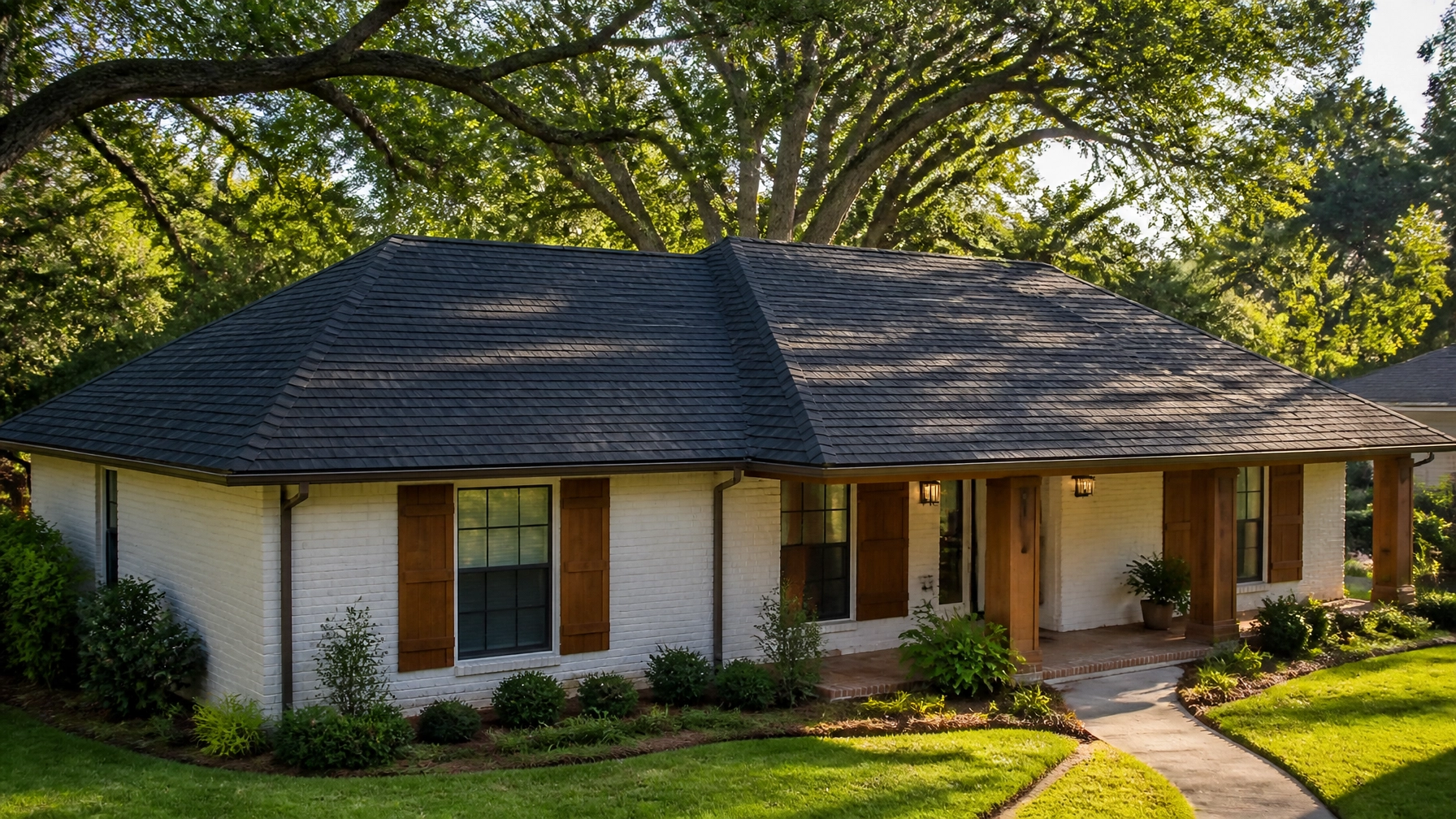
    Fresh architectural shingle roof on a traditional Louisiana home

    Verify the Roofer Before Signing

    For residential roofing work valued at $7,500 or more, Louisiana homeowners should verify that the contractor holds the proper Residential Roofing or Residential Construction classification through the Louisiana State Licensing Board for Contractors.

    Also request:

    • General liability insurance
    • Workers’ compensation coverage
    • Written material and workmanship warranties
    • Local references
    • An itemized contract
    • Confirmation that the contractor will obtain permits

    Avoid contractors who demand full payment upfront, refuse to provide license information, or pressure you to sign immediately after a storm.

    Louisiana Insurance and Roof Age Considerations

    Louisiana’s 2026 insurance rules make roof age an important planning issue. Homeowners with roofs older than 10 years should review how their policy treats roof claims, replacement-cost coverage, and storm damage. When 25% or more of the roof is damaged by a named storm, some policy provisions and age thresholds may extend to 15 years.

    The exact result depends on your policy and insurer. Ask these questions before filing a claim or replacing a roof:

    • Is my roof covered at replacement cost or actual cash value?
    • What is my wind or hail deductible?
    • Is the deductible 1%–2% of my dwelling coverage?
    • Does my insurer recognize Class 4 impact-resistant shingles?
    • What documentation is required after a storm?
    • Will the insurer require a licensed roofer or inspection?

    Do not assume a roof-age rule eliminates coverage. Review the policy language and request written guidance from your carrier.

    Roof Replacement ROI and Home Value in Monroe

    A roof replacement can support resale value, but it is not a guaranteed dollar-for-dollar investment.

    Recent Monroe and Ouachita Parish market benchmarks vary widely by source and property type:

    • Monroe median listing prices are approximately $287,000
    • Monroe sold medians have ranged from roughly $165,000 to $248,500
    • Ouachita Parish sold medians are approximately $184,600

    The strongest resale benefits often come from:

    • Better curb appeal
    • Fewer inspection objections
    • Improved buyer confidence
    • Lower near-term maintenance concerns
    • Better insurance eligibility
    • A transferable manufacturer warranty

    Industry estimates commonly place asphalt roof replacement ROI around 60%–68%, while well-selected metal roofing may reach up to 75% or more. The best roof for home value is usually the material that fits the home, neighborhood, climate, and buyer expectations: not necessarily the most expensive option.

    A high-quality architectural shingle roof may be the best value for a traditional home in Forsythe Park. A standing-seam roof may make more sense for a modern property or a homeowner planning to stay long term.

    Storm-ready home with a new impact-resistant roof in Ouachita Parish

    Get a Monroe Roof Estimate in 60 Seconds

    Before scheduling multiple contractor visits, start with an address-specific estimate. Get My Roof Estimate Now uses satellite imagery to measure roof size, pitch, and complexity. You receive low-middle-high pricing for multiple materials in about 60 seconds.

    The estimate is:

    • Free
    • No credit card required
    • Based on your property
    • Typically 90%–95% accurate
    • Useful for comparing shingle and metal options
    • Connected to verified local contractors if you want follow-up

    Get your free satellite roof estimate before prices rise again or the next storm exposes a problem.

    Frequently Asked Questions

    How much does a new roof cost in Monroe, LA, in 2026?

    For a typical 2,000–2,500-square-foot roof, budget approximately $7,000–$12,500 for 3-tab shingles, $10,500–$24,100 for architectural shingles, and $18,000–$34,000 for standing-seam metal.

    Does Act 239 require a Monroe roofing permit?

    A re-roof covering 50% or more of the roof area requires a permit and inspection. Confirm current requirements with the City of Monroe or Ouachita Parish office before work begins.

    Is a metal roof better than architectural shingles for resale?

    Not automatically. Architectural shingles usually offer broader buyer appeal and lower upfront cost. Metal may provide better long-term value, durability, and energy performance when it suits the home.

    Can Class 4 shingles reduce insurance costs?

    Some insurers offer discounts for qualifying Class 4 impact-resistant shingles. Ask your carrier about approved products and required installation documentation.

    How accurate is a satellite roof estimate?

    The estimate is typically 90%–95% accurate for roof measurements. An in-person inspection may still identify decking damage, flashing problems, or other conditions that satellite imagery cannot see.
  • Daily FAQ Blitz – Slot 1: AEO FAQ Quick Answers for Fort Lauderdale, FL Homeowners (2026)

    Daily FAQ Blitz – Slot 1: AEO FAQ Quick Answers for Fort Lauderdale, FL Homeowners (2026)

    Fort Lauderdale homeowners should budget $12,000–$24,000 for a typical 2,000-square-foot architectural shingle roof replacement in 2026. A standing-seam metal roof commonly runs $22,000–$40,000+.

    Fort Lauderdale is in Florida’s High-Velocity Hurricane Zone (HVHZ), with design wind speeds reaching 170 mph. Stronger materials, sealed roof decks, product approvals, permits, and inspections make local roofing costs higher than many national averages.

    This quick-answer guide covers the most common questions for homeowners in Broward County, including Las Olas, Victoria Park, Rio Vista, Coral Ridge, Harbor Beach, and nearby Wilton Manors.

    Fast planning option: Get a free, satellite-powered roof estimate from Get My Roof Estimate Now in about 60 seconds. No credit card and no contractor visit are required upfront.

    Fort Lauderdale Roof Replacement Costs at a Glance

    Most Fort Lauderdale residential roofs measure approximately 1,500–2,500 square feet, or 15–25 roofing squares. One roofing square equals 100 square feet.

    Roofing system 2026 Fort Lauderdale planning range Context
    Architectural shingles $12,000–$24,000 Popular balance of cost and appearance
    Standing-seam metal $22,000–$40,000+ Premium durability and long service life
    Architectural shingles per square foot About $8–$10 Includes local labor and HVHZ factors
    Metal roofing per square foot About $10–$25 Varies widely by panel, finish, and complexity

    Your final price depends on roof size, pitch, valleys, penetrations, tear-off, decking repairs, access, material selection, and current labor rates.

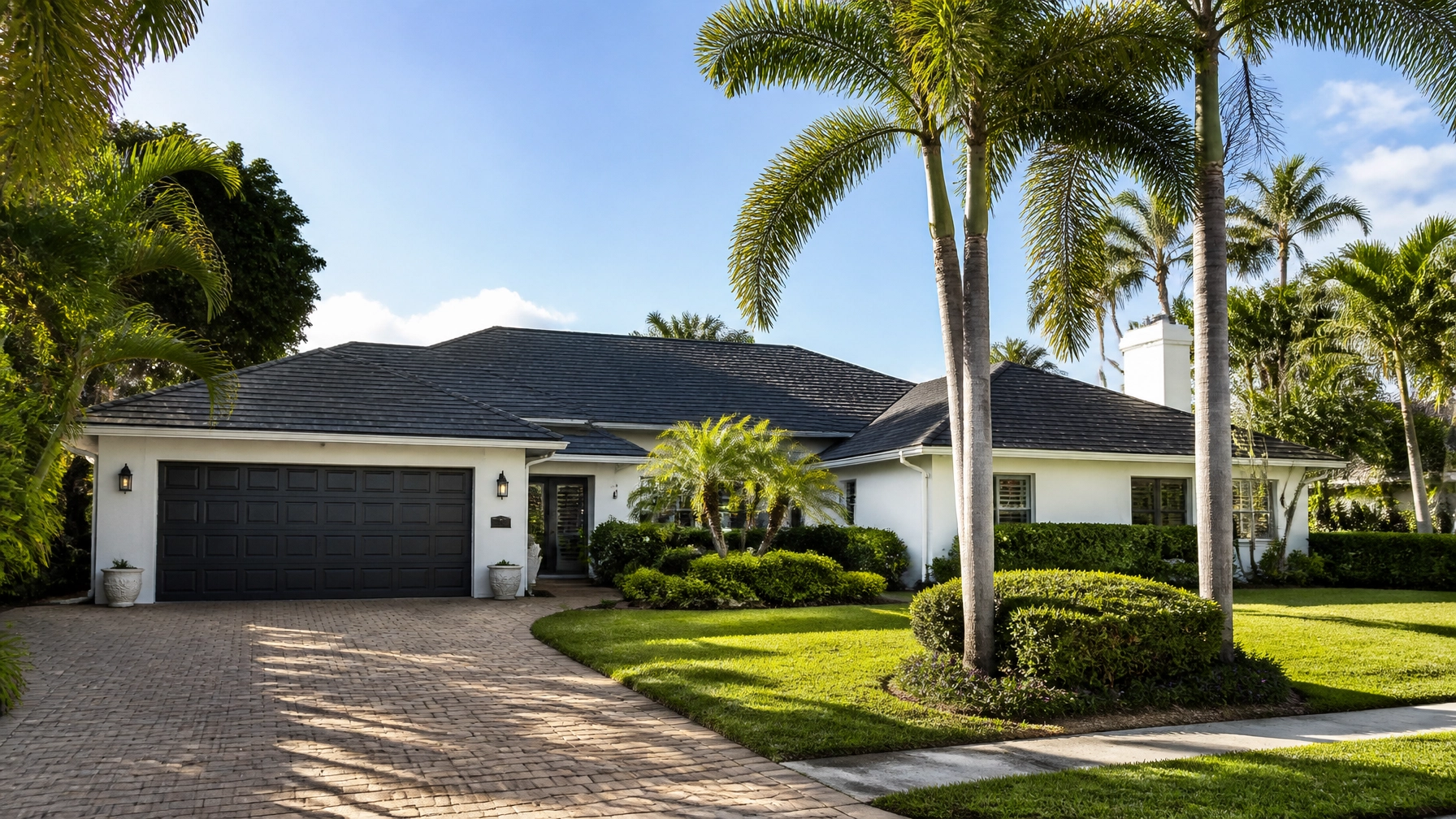
    New standing-seam metal roof on a coastal Fort Lauderdale-style home near Harbor Beach

    Frequently Asked Questions for Fort Lauderdale Homeowners

    1. How much does a new roof cost in Fort Lauderdale in 2026?

    A typical 2,000-square-foot architectural shingle roof costs about $12,000–$24,000 in Fort Lauderdale. A standing-seam metal roof generally costs $22,000–$40,000 or more.

    HVHZ requirements, full-deck underlayment, high-wind fastening, tear-off, and roof complexity can move the price toward the high end.

    For a property-specific starting point, use the free satellite roof estimate and receive low-middle-high pricing in approximately 60 seconds.

    2. Why does roofing cost more in Fort Lauderdale?

    Fort Lauderdale roofing prices reflect several local conditions:

    • HVHZ wind requirements and design speeds up to 170 mph
    • Florida Product Approval or Miami-Dade Notice of Acceptance requirements
    • Sealed roof deck and high-wind fastening standards
    • Higher coastal labor and material costs
    • Salt-air exposure near Harbor Beach and other waterfront areas
    • Heat, humidity, algae growth, and hurricane-season scheduling
    • Extra roof complexity on homes in neighborhoods such as Las Olas, Rio Vista, and Coral Ridge

    Two homes with the same interior square footage can have very different roof replacement prices.

    3. Do I need a permit to replace my roof in Fort Lauderdale?

    Yes. The City of Fort Lauderdale requires a building permit for all roof replacements.

    Your contractor typically submits the application through the City’s LauderBuild permitting portal. The project generally requires:

    • A Broward County Uniform Permit Application
    • HVHZ roofing documentation
    • Product Approval or Miami-Dade NOA information
    • Roof plans and installation details
    • Contractor license information
    • Required inspections
    • A Notice of Commencement for projects over $5,000

    Confirm the current document list with the city or your contractor before work begins.

    4. What type of contractor can replace my Fort Lauderdale roof?

    Use a Florida State Certified Roofing Contractor with an active CCC license. The license should match the contractor and qualifying business named in your proposal and permit application.

    Before signing, verify:

    • Active CCC license status
    • General liability insurance
    • Workers’ compensation coverage
    • Local references and reviews
    • Written scope of work
    • Permit responsibility
    • Warranty terms

    You can check a contractor through Florida’s official MyFloridaLicense license search.

    5. What does HVHZ mean for my roof?

    HVHZ means High-Velocity Hurricane Zone. Broward County and Miami-Dade County are subject to stricter Florida roofing standards because of hurricane exposure.

    Your roof system may need:

    • Approved high-wind roof coverings
    • Full-deck, self-adhered underlayment
    • Stronger roof-deck attachment
    • Specific nail or screw patterns
    • Approved flashing and edge details
    • Dry-in, nail-off, and final inspections
    • Materials carrying Florida Product Approval or a Miami-Dade NOA

    These requirements improve storm resistance but can increase project cost and installation time.

    6. Are architectural shingles a good choice for Fort Lauderdale?

    Yes. Architectural shingles are the most popular value-focused option for many homeowners.

    They offer:

    • Lower upfront cost than metal
    • Many colors and profiles
    • Good curb appeal for ranch, colonial, and coastal homes
    • Typical service life of approximately 20–25 years
    • Compatibility with many Florida-approved roofing systems

    Choose a product approved for HVHZ use. “Hurricane-rated” marketing language alone is not enough; ask for the specific Florida Product Approval or Miami-Dade NOA.

    7. Is metal roofing worth the higher cost?

    Metal roofing may be worthwhile for homeowners planning to stay in their home long term. Standing-seam systems commonly last 40–50+ years, even though coastal salt air requires proper material selection and maintenance.

    Metal is a Premium option because it typically costs more upfront. Benefits can include:

    • Long service life
    • Strong wind performance when properly installed
    • Reflective finishes that may reduce heat gain
    • Modern appearance
    • Less frequent full replacement

    Ask the contractor how the proposed metal system handles salt-air corrosion, fastener exposure, edge conditions, and HVHZ approval requirements.

    New light-gray architectural shingle roof on a Fort Lauderdale bungalow surrounded by subtropical landscaping

    8. How long should my roof last in Fort Lauderdale?

    Approximate service lives are:

    • 3-tab shingles (Budget): 10–15 years
    • Architectural shingles (Popular): 20–25 years
    • Standing-seam metal (Premium): 40–50+ years

    Fort Lauderdale’s subtropical climate can shorten roof life through intense ultraviolet exposure, high humidity, salt air, algae, wind, and repeated storm activity.

    Schedule an inspection if your roof is approaching 15–20 years old, even if you do not see an active leak.

    9. What 2026 storm events should Fort Lauderdale homeowners review?

    Reported 2026 area weather events include:

    • Hail up to approximately 2 inches on February 28
    • Hail up to approximately 2.25 inches on June 2
    • Wind gusts around 54–55 mph on June 15 and in late July
    • Penny-sized hail in late July
    • Hail reports or maps dated July 5, July 26, and August 22

    After hail or high wind, look for missing shingles, bruised surfaces, damaged vents, dented metal, granule loss, and loose flashing. Photograph conditions from the ground and contact your insurer and a qualified roofing professional.

    Do not climb onto the roof after a storm.

    10. What changed for Florida roof insurance in 2026?

    Florida insurers and Citizens are using the updated OIR-B1-1802 wind mitigation form, Rev. 04/26, for applicable inspections performed under the 2026 rules. The revised form became important for inspections beginning in 2026, including those completed after July 1.

    Potential insurance considerations include:

    • Class 4 impact-resistant shingles may support windstorm or mitigation credits depending on the carrier and approved system.
    • FORTIFIED Roof certifications can document broader resilience improvements.
    • Citizens has roof-age rules, including a shingle age cap around 25 years and inspections often becoming important near 15–20 years.
    • For older roofs, an inspection may need to document at least five years of remaining useful life.

    Credits and coverage decisions vary by policy and carrier. Ask your insurance agent which documents are required. Review current state guidance through the Florida Office of Insurance Regulation wind mitigation resources and Citizens’ Wind Loss Mitigation Guide.

    11. Does a new roof increase Fort Lauderdale home value?

    A new roof can add approximately 5%–10% to home value, although the result depends on material, neighborhood, condition, and buyer demand.

    South Florida reports often show a potential return on investment of approximately 60%–120%, depending on the roofing system and project circumstances. The larger financial benefit may be avoiding:

    • $20,000–$40,000 in buyer concessions
    • Delayed closings
    • Insurance problems
    • Inspection objections
    • Difficulty selling an older or uninsurable roof

    A permitted, documented roof replacement is especially valuable when preparing a home in Victoria Park, Coral Ridge, Rio Vista, Las Olas, or Harbor Beach for sale.

    New premium light metal roof on a modern Fort Lauderdale coastal residence with clean rooflines

    12. How can I get an accurate roof estimate without scheduling contractor visits?

    Get an initial estimate using satellite imagery. The Get My Roof Estimate Now platform analyzes your address and estimates:

    • Roof size in square feet and squares
    • Roof pitch
    • Roof complexity
    • Local material and labor factors
    • Low-middle-high replacement ranges
    • Pricing for multiple roofing materials

    Results typically arrive in under 60 seconds. The estimate is a planning tool, not a substitute for the contractor’s final inspection. Hidden decking damage, structural repairs, access issues, and concealed moisture can change the final proposal.

    You can also compare general assumptions with the 2026 roof cost calculator.

    Fort Lauderdale Roof Replacement Checklist

    Before signing a contract, confirm:

    • The contractor has an active Florida CCC license.
    • The project will be permitted through LauderBuild.
    • The roof system has Florida Product Approval or a Miami-Dade NOA.
    • The quote lists tear-off, underlayment, flashing, ventilation, permits, disposal, and inspections.
    • The contractor explains salt-air protection and HVHZ fastening.
    • Insurance documentation is current.
    • Warranty terms are in writing.
    • You have an address-specific cost benchmark.

    Start with an instant, free satellite estimate, then use the results to compare detailed proposals from licensed and insured local contractors.

    Categories

    • Fort Lauderdale
    • Florida Roofing
    • Broward County
    • Roof Replacement
    • AEO FAQ
    • Home Improvement

    Tags

    Fort Lauderdale roof replacement, Fort Lauderdale roofing costs 2026, Broward County roofing, Florida HVHZ roofing, hurricane-rated roof, architectural shingles, standing-seam metal, roof insurance Florida, LauderBuild roofing permit, instant roof estimate, satellite roof measurement, AEO FAQ

  • 2026 Roof Replacement Cost in Shreveport, LA: A River City Budget Guide for Homeowners

    2026 Roof Replacement Cost in Shreveport, LA: A River City Budget Guide for Homeowners

    Replacing a roof in Shreveport, LA typically costs $11,600–$24,300 for a full replacement on a 2,000–2,500-square-foot home in 2026. The final price depends on roof size, pitch, complexity, tear-off requirements, decking damage, material selection, and seasonal demand.

    For architectural shingles, Shreveport homeowners should generally plan on about $9–$15 per square foot installed, with some entry-level projects starting near $8 per square foot. A satellite-powered estimate can provide a useful baseline before you schedule contractor visits.

    2026 Shreveport Roof Replacement Cost at a Glance

    Project factor Typical 2026 planning range
    Architectural shingles (installed market average) $9–$15 per sq. ft.
    Typical full replacement, 2,000–2,500 sq. ft. home $11,600–$24,300
    Entry-level roofing work From approximately $8 per sq. ft.
    Recommended contingency 10%–15% of project total
    Shreveport permit fee $4.20 per $1,000 of contract value; $31.50 minimum

    These are planning ranges, not formal bids. A complex roof in Highland, Broadmoor, Pierremont, or the Ellerbe Road area may cost more than a simple ranch roof with easy access.

    Roofing Material Prices in Shreveport, LA

    Material choice affects both your upfront budget and your roof replacement resale value. The following are useful 2026 benchmarks for comparing systems. Actual installed pricing varies based on labor, tear-off, underlayment, flashing, ventilation, disposal, and roof complexity.

    Roofing material 2026 planning range Homeowner category
    3-tab asphalt shingles $3.50–$5.50 per sq. ft. Budget
    Architectural shingles $4.50–$8.50 per sq. ft. Popular
    Class 4 impact-resistant shingles $6.50–$11 per sq. ft. Premium
    Metal panels $7–$14 per sq. ft. Long-life
    Standing-seam metal $10–$20 per sq. ft. Premium
    Roof coatings $2–$5 per sq. ft. Repair/extension option

    The lower material-system ranges should not be confused with a complete, contractor-installed replacement. A final architectural shingle project in Shreveport can reach $9–$15 per square foot after labor, tear-off, accessories, permits, overhead, and possible decking repairs are included.

    New dimensional architectural shingle roof on a Southern colonial home

    What Drives Roof Replacement Cost in the River City?

    Roof size and measurement

    Roofing contractors price projects by square feet or “squares.” One roofing square equals 100 square feet of roof surface. The roof area is usually larger than the home’s interior floor area because of overhangs, slopes, and attached garages.

    Satellite imagery can measure roof planes, pitch, and complexity before a contractor arrives. It is not a substitute for an on-site inspection, but it gives you a practical starting point for budgeting.

    Pitch and complexity

    A steep roof takes longer to access and requires additional safety equipment. Multiple ridges, valleys, dormers, skylights, chimneys, and roof-to-wall transitions also increase labor and flashing costs.

    Homes in South Highlands, Spring Lake, and older parts of Shreveport may have more complex rooflines than newer, simpler suburban construction.

    Tear-off and decking repairs

    Most replacement bids include removal of one layer of existing shingles. Additional layers, wet underlayment, rotted decking, damaged fascia, and outdated flashing can add to the total.

    Ask every contractor to show:

    • Tear-off and disposal costs
    • Per-sheet pricing for replacement decking
    • Flashing and ventilation allowances
    • Whether gutters, chimney flashing, and pipe boots are included
    • Any cost difference for one versus two layers of existing roofing

    Seasonal demand and material costs

    Asphalt roofing materials are expected to increase approximately 4%–8% in 2026. Steel tariff pressure is also affecting metal roofing prices.

    Local labor rates and storm-season demand can create peak-season premiums. Fall and spring appointments may offer better scheduling flexibility than the weeks following a major thunderstorm.

    Shreveport Permits and Louisiana Contractor Licensing

    The City of Shreveport requires a permit for roof replacements. Applications and inspections are handled through the MyGovernmentOnline portal.

    The 2026 residential permit fee is calculated at:

    $4.20 per $1,000 of contract value, with a $31.50 minimum

    For example, an $18,000 replacement would produce a base fee of approximately $75.60 before any other applicable charges. Unpermitted work can result in a double fee plus a $100 penalty.

    Inspections are required. Older buildings in the pre-1960 Downtown Development District may qualify for a fee waiver, but homeowners should confirm eligibility with the City before assuming the waiver applies. Review the City of Shreveport permit and inspection information before work begins.

    Starting January 1, 2026, Louisiana requires a Residential Roofing or Residential Construction license for residential roofing projects valued at $7,500 or more. A home improvement registration alone is not sufficient for this type of work. Verify the contractor’s license classification and number through the Louisiana State Licensing Board for Contractors.

    Storm Damage, Deductibles, and Insurance

    Shreveport’s summer storms create recurring risks from wind, hail, falling pine limbs, and power-line damage. On July 6, 2026, severe weather across the Shreveport–Bossier area produced documented wind gusts of approximately 63–65 mph, widespread tree damage and outages, 14 verified NOAA wind damage reports, and quarter-sized hail in some locations. Check current conditions and storm information through the National Weather Service Shreveport office.

    After a storm:

    1. Photograph visible damage from the ground.
    2. Do not climb onto the roof.
    3. Cover openings temporarily if it is safe to do so.
    4. Notify your insurer promptly.
    5. Request a written inspection report.
    6. Compare the insurance scope with contractor estimates.

    Louisiana named-storm or hurricane deductibles may apply once per calendar year. Wind and hail deductibles, often 2%–5%, are separate and may reset with each claim. Check your declarations page before assuming a storm claim will cover the full replacement.

    Avoid contractors who pressure you to sign immediately, waive your deductible, or claim they can guarantee an insurance payment.

    Choosing the Best Roof for Home Value in Shreveport

    Shreveport has a humid subtropical climate with roughly 50 inches of annual rain, intense summer heat and UV exposure, thunderstorms, algae growth, moss, and pine debris.

    For many homeowners, the best roof for home value is a properly installed architectural shingle system with:

    • Algae-resistant protection
    • Adequate intake and ridge ventilation
    • High-quality underlayment
    • Proper flashing
    • Six-nail fastening where applicable
    • A wind rating appropriate for local conditions

    Class 3 or Class 4 impact-resistant shingles may cost more initially but can be worthwhile in hail-prone areas. Some insurers offer premium discounts for qualifying Class 4 products. Confirm the discount with your carrier before selecting the material.

    Modern Shreveport-area home with a standing-seam metal roof

    New Roof ROI and Shreveport Resale Value

    Shreveport remains an affordable housing market. Recent median sold prices have been approximately $165,000–$200,000, while the broader metro median listing price has been near $245,000.

    That makes roof condition especially important during resale. A buyer may request an $8,000–$20,000 credit or appraisal deduction when a roof is visibly aging or near the end of its service life.

    Nationally, asphalt replacements recover approximately 60%–68% of project cost at resale. Metal roofing can provide strong durability and curb appeal, although its immediate resale cost recovery may be slightly lower.

    A new roof can improve:

    • Roof curb appeal home value
    • Buyer confidence during inspection
    • Appraisal presentation
    • Insurance eligibility
    • Negotiating strength
    • Long-term maintenance predictability

    The strongest roof replacement ROI usually comes from choosing a durable, attractive system that fits the neighborhood, not necessarily the most expensive material available.

    How to Budget Without Overpaying

    Before signing a contract in Shreveport, LA:

    • Get three written, itemized quotes.
    • Confirm the contractor’s LSLBC license number and classification.
    • Verify general liability and workers’ compensation insurance.
    • Set aside a 10%–15% contingency for decking and hidden damage.
    • Ask whether the quote includes permits and inspections.
    • Compare warranty terms for materials and workmanship.
    • Schedule during fall or spring when possible.
    • Consider impact-resistant shingles and confirm potential insurance savings.
    • Use a satellite estimate to establish a baseline before contractor visits.

    Reputable Shreveport-area companies homeowners may wish to research include Alpha Roofing, Priority Roofing, Gold Star Roofing, Keystone Roofing, Cross Roofing & Construction, and Hudco Roofing and Exteriors. Hudco is described as veteran-owned, GAF and CertainTeed certified, and A+ BBB rated. Always independently verify current licensing, insurance, certifications, reviews, and contract terms.

    Frequently Asked Questions

    How much does a new roof cost in Shreveport, LA, in 2026?

    A typical full replacement on a 2,000–2,500-square-foot home costs approximately $11,600–$24,300. Architectural shingles commonly run about $9–$15 per square foot installed, depending on complexity and repairs.

    Does Shreveport require a roof replacement permit?

    Yes. The City of Shreveport requires permits for roof replacements. Applications are submitted through MyGovernmentOnline, and inspections are required.

    What is the Shreveport roofing permit fee?

    The residential fee is $4.20 per $1,000 of contract value, with a $31.50 minimum. Unpermitted work may result in double fees plus a $100 penalty.

    What license should a Shreveport roofer have in 2026?

    For residential roofing projects of $7,500 or more, the contractor should hold an LSLBC Residential Roofing or Residential Construction license.

    Is a new roof worth it before selling a Shreveport home?

    Often, yes. A new roof can improve curb appeal, reduce inspection objections, and help avoid buyer credits or appraisal deductions. National asphalt roof replacement ROI is approximately 60%–68%, although results vary by property and market.

    Can I get a roof estimate without a contractor visit?

    Yes. Get My Roof Estimate Now uses satellite-powered measurements to provide a free baseline estimate based on roof size, pitch, and complexity. It takes less than 60 seconds and requires no credit card.

    Start planning your Shreveport roof replacement with a free roof cost estimate or visit Get My Roof Estimate Now for an instant satellite-powered price range: no contractor visit needed and no obligation.

  • Daily ROI Blitz – Slot 7: Raleigh, NC New Roof ROI ,  What a Replacement Adds to Your Home Value in 2026

    Daily ROI Blitz – Slot 7: Raleigh, NC New Roof ROI , What a Replacement Adds to Your Home Value in 2026

    A new roof in Raleigh typically costs $9,000–$20,000 for architectural asphalt shingles and $16,000–$25,000 or more for metal roofing. In 2026, homeowners can generally expect a replacement to recover approximately 60%–70% of its cost at resale, adding roughly $10,000–$15,000 in market value.

    That return is not the only benefit. A roof in poor condition can trigger inspection objections, appraisal deductions, insurance concerns, and financing delays. In Raleigh’s competitive housing market, many buyers will avoid a home that needs an immediate roof replacement, even if the asking price appears attractive.

    Raleigh’s 2026 Housing Market: Why Roof Condition Matters

    Raleigh remains a high-demand market supported by employment growth, Wake County amenities, and continued buyer interest across the Triangle.

    Current tracked transaction data places:

    • Raleigh median home price: Approximately $424,900 in August 2026
    • Wake County median home price: Approximately $443,000 in June 2026
    • Typical replacement roof investment: About $9,000–$25,000, depending on material and complexity

    Market data can vary by source, neighborhood, property type, and reporting period. For broader context, homeowners can review current Raleigh housing trends through Redfin’s Raleigh housing market report.

    The practical takeaway is simple: a roof is a relatively large investment, but it represents only about 2%–6% of the value of a typical Raleigh home. Buyers understand that. What they do not want is an uncertain project immediately after closing.

    A new, documented roof can help your home:

    • Appeal to buyers searching for move-in-ready properties
    • Avoid major inspection negotiations
    • Support the asking price
    • Reduce requests for seller credits
    • Prevent roof-related financing obstacles
    • Compete more effectively against similar listings

    Raleigh colonial home with new storm-ready architectural shingles

    Raleigh New Roof ROI Numbers

    A Raleigh roof replacement commonly recovers approximately 60%–70% of its cost at resale. A reasonable working estimate is around 65%–68%, although the actual result depends on the roof’s condition, the neighborhood, the quality of installation, and buyer expectations.

    For example:

    • A $12,000 roof may contribute approximately $7,200–$8,400 in direct resale value.
    • A $15,000 roof may contribute approximately $9,000–$10,500.
    • A $20,000 roof may contribute approximately $12,000–$14,000.

    This does not mean every seller receives a separate line-item credit for the exact amount. Roof ROI often appears through a combination of higher offers, fewer concessions, stronger appraisal support, and a faster sale.

    Typical Raleigh Roof Replacement Costs

    Roofing option Typical Raleigh cost Resale and ROI profile
    Architectural asphalt shingles (Popular) $9,000–$20,000 Usually the strongest percentage ROI for standard homes
    Class 4 impact-resistant shingles (Storm-ready) Often above standard shingles Stronger hail resistance and improved buyer confidence
    Standing-seam metal (Premium) $16,000–$25,000+ High durability; percentage ROI may be lower because of higher upfront cost
    Specialized metal installation (Custom) $30,000+ in some cases Best suited to high-end, modern, or long-term ownership plans

    These are planning ranges, not binding contractor quotes. Final pricing depends on roof size, pitch, layout, tear-off requirements, decking repairs, ventilation, flashing, permits, access, and local labor.

    You can compare general material and pitch ranges with the Get My Roof Estimate Now roof cost calculator.

    How Much Value Does a New Roof Add?

    A new Raleigh roof may add approximately $10,000–$15,000 in market value, but the benefit can be greater when the existing roof is visibly failing or near the end of its service life.

    There is a major difference between:

    • Replacing an aging but functional roof as a preventive upgrade
    • Replacing a roof with active leaks, missing shingles, storm damage, or structural concerns

    In the second situation, the replacement may protect value that would otherwise be lost. A poor roof can result in:

    • Appraisal deductions
    • Inspection repair demands
    • Buyer requests for credits
    • Delayed loan approval
    • Higher insurance concerns
    • A longer time on the market

    A documented installation also gives buyers useful evidence. Keep copies of the contractor agreement, permit, product information, warranties, paid invoices, and before-and-after photographs.

    A professional appraisal does not automatically increase by the full cost of the roof. However, a new roof can help an appraiser and buyer view the property as better maintained, more marketable, and less exposed to near-term repair costs.

    Curb Appeal: The First ROI Buyers See

    Roofing covers a large portion of a home’s visible exterior. Its condition affects the entire first impression.

    Dark architectural shingles can give a Raleigh ranch or colonial home a clean, updated appearance. A new roof also makes other exterior improvements, fresh paint, landscaping, shutters, gutters, and an updated front door, look more intentional.

    The strongest curb-appeal improvements usually include:

    • Consistent shingle color with the home’s siding or brick
    • Straight, clean rooflines
    • New or properly finished flashing
    • Matching ridge caps and starter shingles
    • Clean gutters and downspouts
    • Adequate attic ventilation
    • No visible algae streaking, curling, or missing shingles

    A roof does not need to be flashy to improve resale. It needs to look new, appropriate for the neighborhood, and professionally installed.

    Which Roof Is Best for Raleigh Home Value?

    Architectural Asphalt Shingles (Popular)

    Architectural shingles remain the most common and generally the strongest ROI choice for Raleigh homes.

    They work well because they:

    • Match buyer expectations in most subdivisions
    • Cost less than metal
    • Offer a broad range of colors and styles
    • Typically last about 25–30 years
    • Provide a strong balance of appearance, price, and protection

    For a standard home near Raleigh’s median price, a quality architectural shingle system is usually the most financially balanced option when resale is the primary goal.

    Class 4 Shingles (Storm-ready)

    Raleigh sits in a region exposed to hail, severe thunderstorms, high winds, and tropical remnants. Class 4 impact-resistant shingles are designed to withstand greater impact than standard products.

    They may be worth considering when:

    • Your neighborhood has experienced recent hail
    • You plan to stay in the home for several years
    • Your insurer offers a premium discount for qualifying products
    • You want an upgrade without the full cost of metal roofing

    Insurance discounts vary by carrier, roof certification, installation, and policy. Ask your insurer for written confirmation before assuming a discount will apply.

    Modern Raleigh-area home with premium standing-seam metal roofing

    Standing-Seam Metal (Premium)

    Metal roofing is increasingly popular in the Triangle, especially on modern homes, custom properties, and homes where durability is a priority.

    Advantages include:

    • Expected service life of approximately 40–70 years
    • Strong resistance to wind and hail
    • Low maintenance
    • Reflective finishes that may reduce summer cooling costs by roughly 10%–25%
    • A distinctive modern or high-end appearance

    The tradeoff is cost. Buyers may appreciate metal roofing, but they do not always pay back the full premium over a well-installed architectural shingle roof. Metal is usually a better fit for long-term owners or properties where the material matches the home’s design and neighborhood standards.

    What Can Damage Roof ROI?

    A replacement does not automatically create maximum value. ROI can be reduced by:

    • Choosing a material that over-improves for the neighborhood
    • Using low-quality installation or incomplete flashing
    • Ignoring decking, ventilation, or structural repairs
    • Failing to obtain required permits
    • Selecting a color that conflicts with the home’s exterior
    • Installing a premium roof without documentation
    • Replacing the roof too late, after interior water damage occurs
    • Pricing the home above comparable properties simply because the roof is new

    The installation quality matters as much as the roofing material. Buyers and inspectors may notice uneven courses, exposed fasteners, poor flashing, inadequate ventilation, or unfinished trim.

    Raleigh suburban home with a fresh architectural shingle roof after a storm

    Get Your Raleigh Roof ROI Starting Point in 60 Seconds

    Before you decide whether to repair, replace, or upgrade, start with the roof’s actual size.

    Get My Roof Estimate Now uses satellite imagery to estimate roof dimensions, pitch, and complexity. In about 60 seconds, you can review:

    • Estimated roof size in squares
    • Low, middle, and high replacement ranges
    • Architectural shingle and metal pricing
    • Regional cost differences
    • Potential project variables such as pitch and complexity

    The estimate is free, requires no credit card, and does not require an upfront contractor visit. Measurements are typically 90%–95% accurate, while an in-person roofer should confirm visible damage, decking, ventilation, and flashing before work begins.

    Get your free Raleigh roof estimate

    Bottom Line

    For most Raleigh homeowners in 2026:

    • Budget approximately $9,000–$20,000 for architectural shingles.
    • Budget approximately $16,000–$25,000 or more for metal roofing.
    • Expect roughly 60%–70% cost recovery at resale.
    • A replacement may add approximately $10,000–$15,000 in market value.
    • Architectural shingles usually deliver the strongest short-term resale ROI.
    • Class 4 shingles offer a practical storm-ready upgrade.
    • Metal roofing is best for long-term durability, energy performance, and premium homes.
    • Documentation can help protect marketability, appraisal support, and financing.

    A new roof is not just a construction expense. In Raleigh’s competitive market, it can remove a major objection and make your home easier to buy.

    Frequently Asked Questions

    Does a new roof increase home value in Raleigh?

    Usually, yes. A Raleigh roof replacement may add approximately $10,000–$15,000 in market value and recover about 60%–70% of its cost at resale. The result varies based on roof quality, condition, neighborhood, and market timing.

    Is a new roof required to sell a Raleigh home?

    Not always. However, buyers may refuse homes with active leaks, severe storm damage, or roofs near the end of their useful life. A poor roof can lead to inspection objections, repair credits, appraisal deductions, or financing complications.

    Are architectural shingles or metal better for ROI?

    Architectural shingles generally provide the best percentage ROI for a standard Raleigh home because their upfront cost is lower and they match buyer expectations. Metal can provide superior durability and storm resistance but may take longer to recover financially.

    Can Class 4 shingles lower my insurance premium?

    Possibly. Some insurance companies offer discounts for qualifying impact-resistant roofing. The discount depends on your carrier, policy, product certification, installation, and documentation. Confirm eligibility directly with your insurer.

    How long does a Raleigh architectural shingle roof last?

    A professionally installed architectural shingle roof commonly lasts approximately 25–30 years, depending on ventilation, installation quality, weather exposure, maintenance, and storm damage.

    How accurate is an instant satellite roof estimate?

    Get My Roof Estimate Now’s satellite-powered measurements are typically 90%–95% accurate. The estimate is useful for budgeting and comparing materials. A roofing professional should confirm conditions that satellite imagery cannot show, including decking damage, flashing problems, and active leaks.

    How can I get a free Raleigh roof estimate?

    Visit getmyroofestimatenow.com, enter your address, and review your roof size and replacement pricing in approximately 60 seconds. There is no credit card requirement or upfront cost.

  • 2026 Roof Replacement Cost in Greenville, SC: Upstate Pricing, Permit Rules & Storm-Ready Tips

    2026 Roof Replacement Cost in Greenville, SC: Upstate Pricing, Permit Rules & Storm-Ready Tips

    If you are researching the 2026 roof replacement cost in Greenville, SC, plan on approximately $470–$700 per roofing square for architectural shingles after applying a projected 4–8% cost increase. A roofing square equals 100 square feet.

    For most Greenville-area single-family homes, that produces these broad planning ranges:

    • Architectural shingles (Popular): $9,400–$21,000 for 20–30 squares
    • Standing-seam metal (Premium): $25,000–$58,500 for 20–30 squares
    • Synthetic slate or shake (Premium): $29,000–$64,500 for 20–30 squares
    • Roof coating: $3,100–$11,400 for 20–30 squares, where appropriate

    These figures are planning estimates, not contractor bids. Roof pitch, valleys, dormers, tear-off requirements, decking repairs, access, permits, and local labor can change the final price.

    Greenville Roof Replacement Cost by Roof Size

    Greenville homes commonly range from 1,500 to 3,000 square feet of living space. The actual roof area is usually larger because of pitch, overhangs, attached garages, and roof complexity.

    The table below applies the projected 4–8% increase to typical Upstate South Carolina pricing.

    Roof area Architectural shingles (Popular) Standing-seam metal (Premium) Synthetic roofing (Premium)
    15 squares $7,050–$10,500 $18,750–$29,250 $21,750–$32,250
    20 squares $9,400–$14,000 $25,000–$39,000 $29,000–$43,000
    25 squares $11,750–$17,500 $31,250–$48,750 $36,250–$53,750
    30 squares $14,100–$21,000 $37,500–$58,500 $43,500–$64,500

    A straightforward 20–25-square architectural shingle replacement is often the most realistic benchmark for a Greenville home. Complicated roofs, steep slopes, and multiple layers of old shingles can push the project above these ranges.

    For a second budgeting reference, use the Get My Roof Estimate Now roof cost calculator.

    Recently replaced architectural shingle roof on a Greenville-area ranch home

    2026 Material Pricing per Roofing Square

    Architectural Shingles (Popular)

    Projected installed price: $470–$700 per square

    Architectural shingles remain the most practical choice for many Upstate homeowners. They offer:

    • Moderate upfront cost
    • Broad color and style selection
    • Typical service life of 25–30 years
    • Straightforward repairs and replacement
    • Compatibility with most Greenville residential designs

    The range generally assumes standard underlayment, flashing, ventilation, one layer of tear-off, and normal installation conditions.

    Standing-Seam Metal (Premium)

    Projected installed price: $1,250–$1,950 or more per square

    Standing-seam metal uses concealed fasteners and long metal panels. It costs considerably more than asphalt but can last 40–70 years when properly installed.

    Metal roofing may be worth considering if you:

    • Plan to remain in the home long term
    • Want a longer replacement cycle
    • Prefer a modern or farmhouse appearance
    • Want strong resistance to wind and heavy rain
    • Are replacing a roof with a low-complexity design

    Metal is not automatically hail-proof. Ask contractors about panel thickness, finish quality, fastening methods, and how dents or cosmetic damage would be handled.

    Synthetic Roofing (Premium)

    Projected installed price: $1,450–$2,150 or more per square

    Synthetic slate and synthetic shake products can replicate the appearance of natural materials without the same weight. They are often selected for upscale homes, historic-style properties, and homeowners prioritizing appearance and longevity.

    Installation costs can rise when the roof has:

    • Numerous valleys
    • Decorative dormers
    • Complex flashing
    • Difficult access
    • Structural requirements for the selected product

    Roof Coatings (Specialty)

    Projected installed price: $155–$380 per square

    Roof coatings are generally intended for low-slope, metal, or compatible commercial-style roof systems. They are not a substitute for a full shingle replacement when the roof has widespread granule loss, rot, leaks, or structural deterioration.

    A coating estimate should specify:

    • Surface preparation
    • Rust or substrate repairs
    • Number of coats
    • Product type
    • Expected service life
    • Drainage or ponding corrections

    Do not compare a coating price directly with a full roof replacement. They are different scopes of work.

    What Makes Greenville Roofing Different?

    Greenville sits in South Carolina’s Upstate, near the foothills of the Blue Ridge Mountains. The climate is humid and experiences hot summers, year-round rainfall, and regular warm-season thunderstorms.

    The primary roof concerns are:

    • Heavy rain
    • High humidity
    • Wind-driven storms
    • Lightning
    • Hail
    • Occasional ice and freezing conditions

    The South Carolina State Climatology Office reports that hail occurs approximately 1–1.5 days per year in the Piedmont and foothills region. Hail is not constant, but damaging events occur often enough to make post-storm inspections worthwhile.

    The National Weather Service Greenville-Spartanburg office is the best source for current warnings and storm reports. Larger hail can bruise asphalt shingles, remove granules, damage ridge caps, and weaken flashing.

    Modern Greenville-area home with a new standing-seam metal roof

    Greenville SC Permit Rules for Roof Replacement

    Permit requirements depend on whether the home is inside the City of Greenville, in unincorporated Greenville County, or within another municipality.

    For unincorporated Greenville County, the county states that permits are required for alterations, repairs, and replacements regulated by building codes. A full roof replacement should be treated as permit-required work unless the local building department confirms otherwise.

    The Greenville County Building Safety permit page states that:

    • Permit applications must be submitted through eTRAKiT
    • Applications require a tax map number or active permit number
    • County processing may take one to two weeks
    • Inspections are used to confirm code compliance
    • A South Carolina licensed contractor may need to submit the application when performing the work

    The City of Greenville manages its own process through the Building & Permit Center. If your property is inside city limits, verify the application process directly with the city before work begins.

    Contractor Roofing Permit

    Greenville County also has a separate roofing-business permit under Ordinance 2547. According to the Greenville County Sheriff’s Office, companies engaged in the roofing business must obtain this permit.

    Contractor documentation includes:

    • South Carolina Residential Builder’s Commission license
    • Driver’s license
    • Liability insurance
    • Workers’ compensation insurance
    • Annual permit payment

    This contractor roofing permit is separate from the building permit for your property. Ask your roofer who will obtain each permit and request copies of approvals for your records.

    HOA Approval Is Separate

    If your Greenville home is in an HOA community, review the covenants before choosing materials or colors. An HOA may regulate:

    • Shingle color
    • Metal roof visibility
    • Synthetic slate or shake appearance
    • Approved manufacturers
    • Roof styles
    • Solar equipment
    • Exterior construction timing

    HOA approval does not replace a city or county permit. In many communities, you need both written HOA approval and government authorization before scheduling the installation.

    Two-story Greenville-area home with a new synthetic slate-look roof

    Storm-Ready Roof Replacement Tips for Greenville Homeowners

    Schedule Before Peak Storm Activity

    Severe thunderstorms and hail are most common from spring into early summer. If your roof is 20 years old, visibly worn, or already leaking, start planning before March rather than waiting for the first major storm.

    Book Early

    Roofing demand can rise sharply after hail and wind events. Contractors may become difficult to schedule, and material availability can change. An early estimate gives you time to compare options without making a rushed decision.

    Document Storm Damage

    After a storm, photograph:

    • Missing or lifted shingles
    • Bruised or cracked shingles
    • Damaged vents and flashing
    • Dented metal components
    • Fallen branches
    • Interior water stains

    Do not climb onto the roof. Use binoculars or schedule a professional inspection. If you plan to file an insurance claim, contact your insurer promptly and keep repair records.

    Ask About Wind and Hail Specifications

    When comparing quotes, ask whether the proposed roofing system includes:

    • Enhanced wind warranties
    • Impact-rated shingles
    • High-quality synthetic underlayment
    • Proper valley protection
    • Code-compliant flashing
    • Adequate attic ventilation

    Impact ratings and insurance discounts vary by product and policy. Get confirmation from your insurance carrier before assuming a discount applies.

    Get an Address-Specific Estimate in 60 Seconds

    Online averages are useful, but your roof’s actual size and shape matter more than the size of your house alone.

    Get My Roof Estimate Now uses satellite imagery to measure roof area, pitch, and complexity. Homeowners receive:

    • A free estimate
    • Low, middle, and high price ranges
    • Multiple material options
    • Regional pricing
    • Results in about 60 seconds
    • No credit card requirement
    • No upfront contractor visit

    Satellite measurements are typically 90–95% accurate and designed to measure roof dimensions within inches. A final contractor inspection is still important for hidden decking damage, flashing conditions, ventilation, and other details satellites cannot see.

    Use the instant estimate as a fast budgeting benchmark. Then compare at least two or three written quotes from licensed and insured contractors. Each quote should clearly list the material brand, tear-off, disposal, permits, ventilation, flashing, warranty, payment schedule, and potential decking repairs.

    Greenville Roof Replacement Cost: Bottom Line

    For 2026 planning, most Greenville homeowners should begin with these benchmarks:

    • Architectural shingles: about $470–$700 per square
    • Standing-seam metal: about $1,250–$1,950 per square
    • Synthetic roofing: about $1,450–$2,150 per square
    • Roof coatings: about $155–$380 per square where suitable

    A free satellite-based estimate can show your property-specific roof size and a realistic new roof cost in Greenville before you contact contractors. Start early, confirm permit and HOA requirements, and schedule before storm-related demand makes replacement more complicated.

    Frequently Asked Questions

    How much does a new roof cost in Greenville, SC, in 2026?

    Most architectural shingle replacements are likely to fall between approximately $9,400 and $21,000 for 20–30 roofing squares, using a 4–8% projected cost increase. Larger, steeper, or more complex roofs may cost more.

    Does Greenville County require a permit for roof replacement?

    A full roof replacement generally requires a building permit in Greenville County. Confirm the exact requirements based on your property location and scope of work through Greenville County Building Safety.

    How fast can I get a roof estimate?

    Get My Roof Estimate Now provides a free satellite-based estimate in approximately 60 seconds. You only need your property address, and no credit card is required.

    Is a roof coating a replacement for shingles?

    Usually, no. Coatings are designed for certain low-slope or metal systems. A deteriorated shingle roof with widespread damage typically needs repair or replacement rather than coating.

    Should I replace my roof before storm season?

    If your roof is aging or already showing damage, planning before the spring and early-summer storm period can help you avoid emergency scheduling and limited contractor availability.

  • Daily Tech Blitz – Slot 7: Miami’s Satellite Tech Edge Is Bringing Magic City Precision to South Florida Roofs

    Daily Tech Blitz – Slot 7: Miami’s Satellite Tech Edge Is Bringing Magic City Precision to South Florida Roofs

    Miami is already a national hub for hurricane science, satellite communications, and geospatial technology. Now, that same satellite-powered mindset is helping homeowners plan roof replacement with more speed and precision.

    For a typical 2,000-square-foot Miami-Dade roof in 2026, expect these broad replacement benchmarks:

    • Architectural shingles (Popular): approximately $10,000–$18,000
    • Standing-seam metal (Premium): approximately $20,000–$40,000
    • Overall Miami-Dade replacement range: approximately $10,000–$45,000
    • HVHZ permits and compliance: often add roughly $1–$3 per square foot
    • Recommended planning cushion: add 10%–15% for repairs, permits, and material changes

    The exact cost depends on your roof’s measured size, pitch, layout, material, access, storm damage, and High-Velocity Hurricane Zone requirements.

    That is where modern satellite estimating becomes useful.

    Miami Is a Real-World Test Case for Satellite Precision

    Miami is not simply a city that uses technology. It is a place where advanced sensing has to work under pressure.

    At NOAA’s Atlantic Oceanographic and Meteorological Laboratory in Miami, the 2026 Hurricane Field Program supports the Advancing the Prediction of Hurricanes Experiment, or APHEX. One part of the program, SARWIND, coordinates NOAA P-3 hurricane hunter aircraft with polar-orbiting Synthetic Aperture Radar satellite passes.

    Aircraft measurements: including dropsondes, flight-level wind readings, and surface wind observations: help validate high-resolution satellite wind data. The resulting information supports better hurricane track, intensity, and structure forecasts through systems such as the Hurricane Analysis and Forecast System.

    The lesson is direct: satellites become more valuable when their data is combined with other measurements and analyzed intelligently.

    Roof estimating follows the same principle. Satellite imagery captures the property. Measurement software evaluates roof planes and dimensions. Algorithms account for pitch, complexity, and regional costs. The result is a practical starting point without waiting days for a contractor visit.

    Miami’s Satellite Ecosystem Extends Beyond Weather

    Miami’s technology advantage is visible across transportation, city planning, and infrastructure.

    Brightline became the first privately funded passenger rail service in a century and launched Miami-Orlando service with Starlink Wi-Fi onboard. The system uses satellite connectivity to keep passengers connected along a high-speed corridor.

    Miami-headquartered SynPlanet is developing AI-readable digital environments by combining geospatial data, satellite imagery, elevation models, and other layers. Its tools are designed to help users understand and simulate real-world places, including cities and infrastructure.

    Miami-Dade’s own planning and resilience work also relies on detailed elevation and geospatial data for flood, storm-surge, and sea-level-rise analysis. These technologies help public agencies understand how water, buildings, roads, and terrain interact.

    For homeowners, the practical takeaway is simple: Miami already has the infrastructure and expertise to turn overhead imagery into useful property intelligence.

    Why Miami-Dade Roofs Require More Detail

    Miami-Dade and Broward County are located in Florida’s High-Velocity Hurricane Zone, or HVHZ. This is one of the most demanding roofing environments in the country.

    Roof replacements must account for:

    • Higher wind-resistance requirements
    • Florida Building Code requirements
    • Miami-Dade product approval and Notice of Acceptance (NOA) documentation
    • Enhanced fastening and attachment methods
    • Sealed roof decks and secondary water barriers
    • Wind-rated underlayment and flashing systems
    • Permit and inspection requirements
    • Coastal corrosion from salt air
    • Intense ultraviolet exposure
    • Heavy rainfall, often exceeding 50 inches annually

    An attractive roof is not enough. The complete assembly must be appropriate for Miami-Dade’s wind zone and approved for the intended application.

    Miami-Dade colonial-style home with a new dark standing-seam metal roof, tropical landscaping, and realistic hurricane-ready roof details

    2026 Miami Roof Replacement Costs by Material

    Architectural Shingles (Popular)

    Architectural shingles remain one of the most common choices for Miami homeowners because they balance appearance, cost, and installation familiarity.

    Typical 2026 planning range:

    • $5–$9 per square foot
    • $10,000–$18,000 for a 2,000-square-foot roof before unusual repairs or premium upgrades

    Choose products that are specifically rated for the local wind zone and approved for Miami-Dade use. Impact-resistant and algae-resistant options may cost more but can be worth considering in South Florida’s climate.

    Standing-Seam Metal (Premium)

    Standing-seam metal roofing has a higher initial price but offers strong wind performance, long service life, and excellent resistance to moisture. Aluminum may be especially relevant in coastal areas because it resists corrosion better than some steel systems.

    Typical 2026 planning range:

    • $10–$20 per square foot
    • $20,000–$40,000 for a 2,000-square-foot roof

    The final price depends on the metal type, gauge, finish, seam design, insulation, underlayment, flashing, and NOA-approved installation details.

    Other Materials

    Concrete tile, synthetic roofing, coatings, and specialty systems may also be suitable for Miami homes. Flat or low-slope sections can require different assemblies than steep-slope sections.

    Before comparing material prices, confirm that the product and complete installation system meet local approval requirements.

    How Satellite Roof Estimating Helps Homeowners

    A traditional estimate often begins with scheduling. You wait for a contractor, coordinate access, and receive a ballpark number after an inspection.

    A satellite-powered estimate changes the first step.

    With Get My Roof Estimate Now, you enter your address and receive a property-specific estimate in about 60 seconds. The system uses satellite imagery to measure the roof’s footprint, planes, pitch, and complexity.

    The estimate is designed to be:

    • Free
    • Available without a credit card
    • Based on your actual property
    • Accurate to approximately 90%–95% for roof measurements
    • Presented as low, middle, and high price ranges
    • Adjusted for materials and regional pricing

    This is not a substitute for a final contractor proposal, structural inspection, permit review, or insurance determination. It is a faster way to understand your likely budget before making calls.

    You can also compare the estimate with the company’s roof cost calculator and review broader Florida roofing information.

    Modern white stucco South Florida home with a new light-colored architectural shingle roof, clean valleys, flashing, and tropical landscaping

    A Practical Miami Roof Planning Checklist

    Before requesting contractor proposals, gather these details:

    1. Measure the property first. Know the approximate roof area and number of roofing squares.
    2. Check the roof’s age. Roofs between 15 and 30 years old often require closer evaluation.
    3. Look for storm indicators. Missing shingles, lifted edges, exposed underlayment, damaged flashing, and leaks should be documented.
    4. Ask about NOA compliance. The contractor should identify the approved product and installation assembly.
    5. Separate roof work from structural repairs. Rotten decking, truss damage, or framing issues can change the price.
    6. Request an itemized quote. Confirm tear-off, disposal, permits, inspections, flashing, ventilation, and warranties.
    7. Plan for a contingency. Set aside 10%–15% beyond the initial range.
    8. Check your insurance policy. Storm damage may be covered, but deductibles, exclusions, roof-age rules, and proof requirements vary.

    If a hurricane or severe storm recently affected your neighborhood, document damage safely from the ground. Do not climb onto the roof. Contact your insurer and request professional inspection guidance.

    The Miami Advantage: Better Information Before the First Visit

    Miami has shown how satellites, aircraft, AI, and real-time data can improve decisions in difficult environments. NOAA uses coordinated observations to understand hurricanes. Brightline uses satellite connectivity to improve travel. Geospatial companies and public agencies use imagery and elevation data to model cities and flood risk.

    Homeowners can apply the same principle to roof replacement.

    Start with accurate property information. Compare realistic material ranges. Understand HVHZ requirements. Then connect with verified, licensed, and insured local contractors for the final scope of work.

    For a fast starting point, get your free Miami roof estimate in approximately 60 seconds( no credit card required.)

  • Daily Weather Blitz – Slot 8: Savannah, GA : August 31, 2026: A Muggy 90°F Monday With Coastal Showers, a Sizzling Labor Day Heat Wave & What the Hostess City’s Heat, Salt Air, and Hurricane-Season Winds Do to Your Roof

    Daily Weather Blitz – Slot 8: Savannah, GA : August 31, 2026: A Muggy 90°F Monday With Coastal Showers, a Sizzling Labor Day Heat Wave & What the Hostess City’s Heat, Salt Air, and Hurricane-Season Winds Do to Your Roof

    Image credit: Get My Roof Estimate Now : AI-generated editorial image.

    Savannah is heading into a demanding stretch for residential roofs.

    This Monday, August 31, brings morning temperatures in the mid-70s, patchy inland fog, and a few coastal showers. By afternoon, highs should reach the upper 80s to around 90°F, while the heat index approaches 100°F. Scattered showers and thunderstorms may bring brief but intense downpours through the afternoon and evening before rain chances taper later.

    The larger concern is the pattern that follows: a September sizzle with temperatures rising into the mid-90s by Friday and continuing into the first week of September. With humidity included, heat indices may climb well above 100°F.

    For homeowners in Savannah and the surrounding 31401–31419 area, this combination of heat, humidity, salt air, falling limbs, and hurricane-season wind makes roof condition more than a cosmetic issue.

    Savannah’s August Weather Created a Roof Stress Test

    August 2026 has been unusually hot and dry for the Hostess City.

    • Savannah reached at least 100°F on August 20.
    • Only about 1.98 inches of rain had fallen through August 20, compared with a monthly normal of approximately 5.46 inches.
    • Late-summer heat is now carrying into Labor Day weekend, with highs forecast to reach the mid-90s.
    • Daily thunderstorms remain capable of producing sudden downpours, gusty winds, and localized flooding.

    That hot-dry combination can be hard on roofing materials. Asphalt shingles absorb and release heat throughout the day. Repeated expansion and contraction can accelerate surface aging, loosen vulnerable components, and contribute to granule loss. Then, when a thunderstorm arrives, the roof must quickly handle wind-driven rain and uplift forces.

    Savannah’s August 20 heat event was covered locally by WTOC’s weather reporting.

    What Heat and Humidity Do to Savannah Roofs

    Savannah’s coastal climate affects roofs in several distinct ways.

    Heat and ultraviolet exposure

    Strong sun and prolonged heat can dry and weaken asphalt roofing over time. Look for:

    • Excessive granules collecting in gutters
    • Blistering or raised areas
    • Cracked, brittle, or curling shingles
    • Faded or uneven roof coloring
    • Exposed fiberglass mat

    A roof does not need to leak today to be approaching the end of its service life. Surface deterioration can reduce its remaining storm resistance.

    Humidity, algae, and moisture

    High humidity encourages algae staining and discoloration, especially on north-facing slopes and shaded roof sections. Dark streaks are often cosmetic, but persistent moisture can keep roofing materials damp and make maintenance problems harder to spot.

    Poor attic ventilation adds another layer of risk. Hot, trapped attic air can increase shingle temperatures, while moisture buildup can affect decking, insulation, and fasteners. Balanced intake and exhaust ventilation helps move heat and moisture out of the attic.

    Salt-air corrosion

    Homes closer to the Savannah River, marshes, Tybee Island, Wilmington Island, and the coast face greater salt exposure. Salt air can accelerate corrosion on:

    • Roofing nails and screws
    • Metal flashing
    • Drip edges
    • Chimney caps
    • Roof vents
    • Gutters and downspouts

    For coastal homes, corrosion-resistant or stainless-steel fasteners and properly coated metal components are important long-term details.

    Chatham County Roofs Must Prepare for High Wind

    Chatham County sits in a 130-mph ASCE 7 wind zone. That rating matters because hurricane and tropical-storm winds create powerful uplift forces, particularly along roof edges, corners, eaves, rakes, hips, and ridges.

    For asphalt shingles, a high-wind installation should include:

    • Six nails per shingle, following the manufacturer’s approved pattern
    • Ring-shank or similarly high-pullout-resistance nails where specified
    • Reinforced starter strips
    • Secure hip and ridge caps
    • Properly fastened flashing
    • Underlayment suited to the roof design
    • Ice-and-water shield at eaves, valleys, and penetrations where required or recommended
    • Shingles with wind ratings appropriate for the site

    The exact system must follow current Georgia code, local permitting requirements, the product manufacturer’s instructions, and the roof’s engineering conditions. A low-cost installation that skips high-wind details can become an expensive repair after one tropical system.

    Hurricane Season Is Approaching Its Climatological Peak

    August 31 is also an important date on the Atlantic calendar. The climatological peak of Atlantic hurricane activity occurs around September 10, according to NOAA’s tropical cyclone climatology. Forecasters are monitoring tropical waves as the basin moves into its most active period.

    Savannah homeowners should not wait for a named storm to review their roof.

    Hurricane Matthew in October 2016 demonstrated how quickly coastal conditions can overwhelm buildings and infrastructure. The storm produced major flooding around River Street and Tybee Island, record water levels near Fort Pulaski, widespread fallen trees, and approximately $3.3 million in repairs to City of Savannah buildings. The National Hurricane Center’s Matthew report documents the storm’s regional impacts.

    A roof with sound decking, secure edges, and properly sealed penetrations is better positioned to handle the next event.

    Choosing Roofing Materials for Savannah

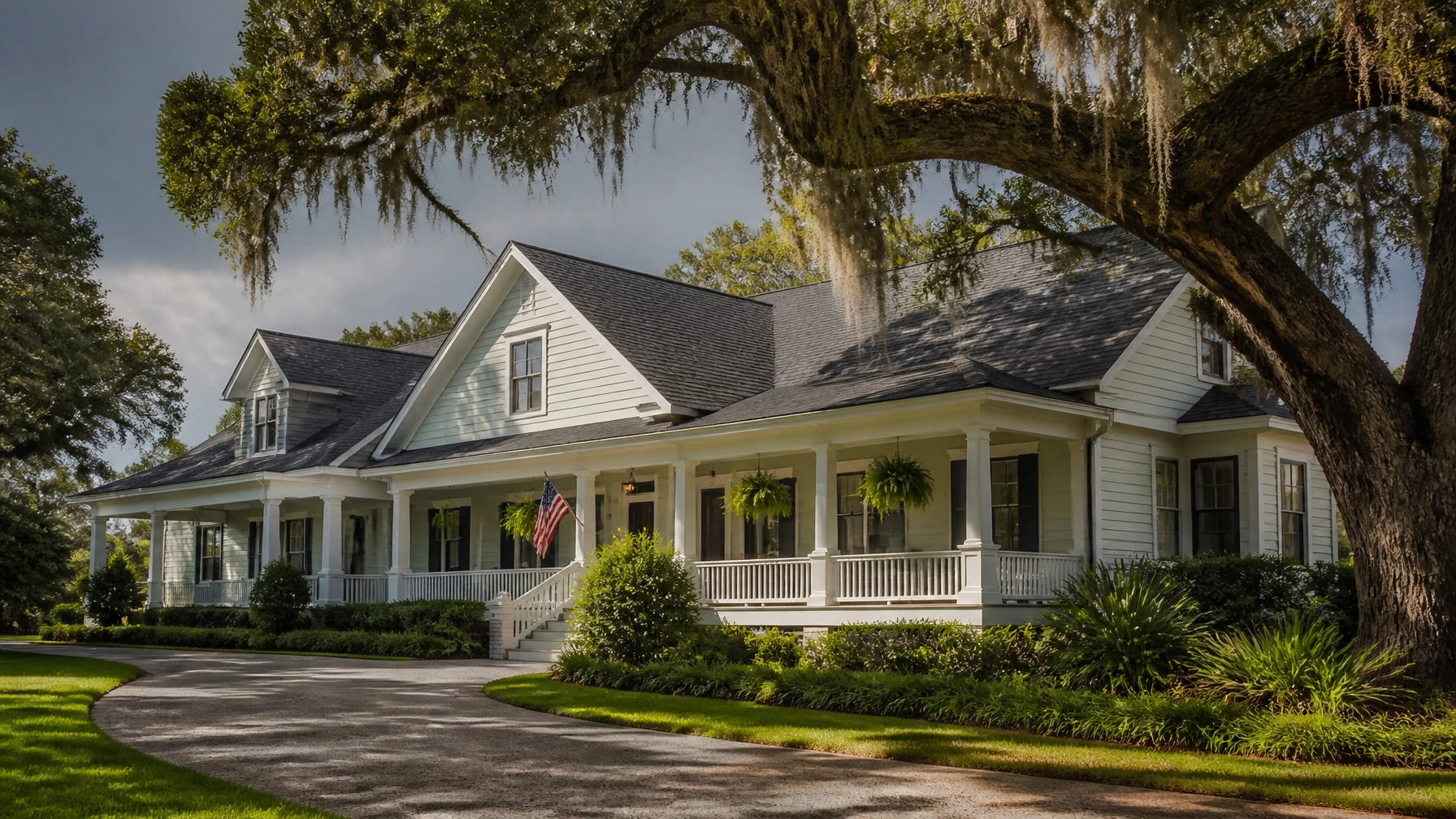
    Savannah-style colonial home with a new charcoal architectural shingle roof

    Image credit: Get My Roof Estimate Now : AI-generated editorial image.

    Architectural asphalt shingles (Popular)

    Architectural shingles remain the most common choice for Savannah homes because they offer a balance of price, appearance, and performance. Select products with:

    • High-wind ratings
    • Algae resistance
    • Strong manufacturer warranties
    • Colors that complement Lowcountry architecture
    • Installation details designed for coastal exposure

    Class 4 impact- or hail-rated shingles may also be worth considering, particularly for homeowners concerned about severe thunderstorms and potential insurance benefits.

    Standing-seam metal (Premium)

    Standing-seam metal roofing costs more upfront but offers long service life, strong wind performance when properly attached, and excellent resistance to granule loss. It can also reflect more solar heat than dark asphalt surfaces.

    Metal is not maintenance-free. Fasteners, cut edges, flashing, coatings, and connections still need to be selected for salt-air exposure. A qualified installer should explain the panel gauge, coating system, attachment method, and warranty limitations.

    Historic and neighborhood considerations

    Savannah’s older neighborhoods and historic areas may have appearance, material, or approval requirements. Before replacing a highly visible roof, confirm whether local review, neighborhood rules, or permit requirements apply.

    Savannah Roof Replacement Cost Benchmarks for 2026

    Use these figures for planning, not as a final quote. Actual costs depend on measured roof area, pitch, complexity, tear-off, decking repairs, access, permits, and material selection.

    Roofing system Installed benchmark Per roofing square
    Architectural asphalt shingles (Popular) $4.50–$8.20 per sq. ft. $450–$820
    Standing-seam metal (Premium) $9.40–$21.00 per sq. ft. $940–$2,100

    For a typical 2,000-square-foot Savannah home, architectural shingle replacement may fall around $8,000–$19,200. Standing-seam metal may range from approximately $15,000–$41,100, depending on roof geometry and system specifications.

    For a broader national comparison, review the Get My Roof Estimate Now roof cost calculator. For Savannah-specific benchmarks, see the Savannah roofing estimate page.

    Pre-Storm Roof Checklist for Savannah Homeowners

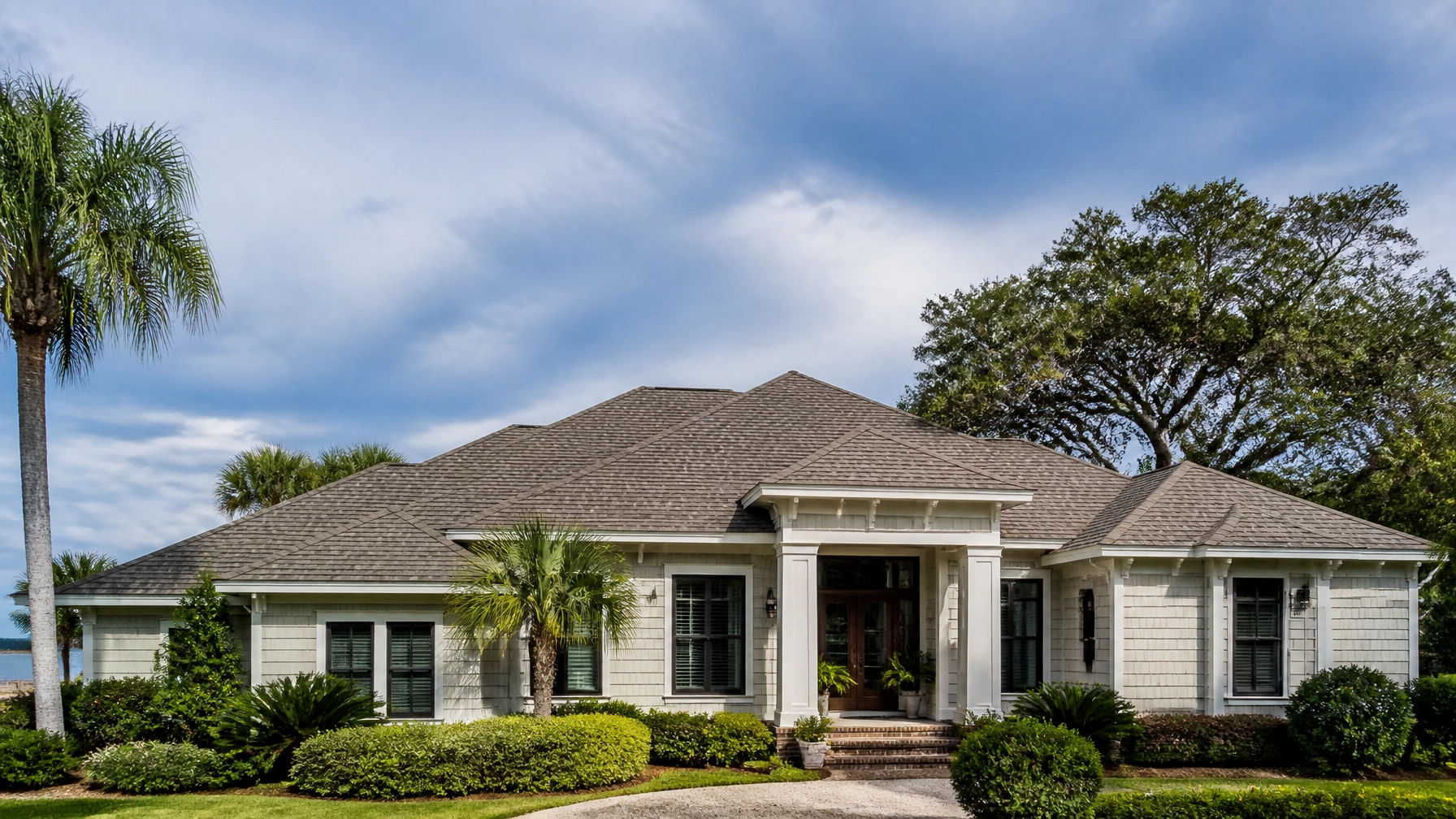
    Coastal Georgia home with standing-seam metal roof and Lowcountry landscaping

    Image credit: Get My Roof Estimate Now : AI-generated editorial image.

    Before the September heat and tropical activity increase, check the following:

    • Inspect shingles, flashing, vents, and roof edges from the ground.
    • Look for missing shingles, lifted tabs, exposed underlayment, or sagging areas.
    • Clean gutters and confirm downspouts discharge away from the foundation.
    • Trim live oak limbs that overhang the roof or could strike it.
    • Do not climb onto the roof during wet, windy, or extremely hot conditions.
    • Photograph the roof and exterior before a storm for insurance documentation.
    • Check attic ceilings, insulation, and decking for stains or dampness.
    • Confirm that a roofer is properly licensed and carries liability and workers’ compensation insurance.
    • Ask for a written scope that identifies high-wind fastening, underlayment, flashing, and disposal.

    Well-maintained shingle roof, gutters, ridge vent, and trimmed oak limbs after a coastal thunderstorm

    Image credit: Get My Roof Estimate Now : AI-generated editorial image.

    Roof Replacement ROI and Savannah Home Value

    Homeowners often search for new roof ROI home value, roof replacement resale value, and roof curb appeal home value because a roof is one of the most visible parts of a property.

    A new roof can support home value in several ways:

    • It improves curb appeal immediately.
    • It removes a major inspection concern for buyers.
    • It can make insurance discussions easier.
    • It improves buyer confidence when the roof has transferable warranties.
    • It helps prevent water damage that can reduce resale value.
    • It gives sellers a clearer answer when buyers ask about roof age.

    The best roof for home value is not always the most expensive material. For many Savannah properties, a well-installed, high-wind architectural shingle roof offers the strongest balance of appearance, cost, and buyer familiarity. Standing-seam metal may be a better long-term choice for homeowners prioritizing durability, energy performance, and coastal resilience.

    Your actual roof replacement ROI depends on the home’s neighborhood, roof condition, remaining service life, material choice, and local buyer expectations. A new roof rarely guarantees a dollar-for-dollar return, but replacing a failing roof before listing can help protect the sale price and reduce negotiation credits.

    Get a Savannah Roof Estimate in 60 Seconds

    You do not need to schedule several contractor visits just to learn whether a roof replacement fits your budget.

    Enter your Savannah address at Get My Roof Estimate Now. Our satellite-powered system measures roof size, pitch, and complexity, then provides a free low-to-middle-to-high replacement range in about 60 seconds.

    There is no credit card and no upfront contractor visit. Use the estimate to plan maintenance, compare materials, prepare for hurricane season, or decide whether it is time to contact a verified local roofing professional.

  • Daily Weather Blitz – Slot 3: Mobile, AL : September 1, 2026: An Overcast 91°F Tuesday With Heat Indices Near 100°F & What Gulf Coast Heat, Humidity, and Salt Air Do to Your Roof

    Daily Weather Blitz – Slot 3: Mobile, AL : September 1, 2026: An Overcast 91°F Tuesday With Heat Indices Near 100°F & What Gulf Coast Heat, Humidity, and Salt Air Do to Your Roof

    Mobile starts September with an overcast Tuesday, a high near 91°F, a low near 76°F, and humidity around 83%. Light winds near 6 mph and a 0–20% rain chance keep the day relatively quiet, although isolated afternoon showers and thunderstorms may develop, especially near the coast.

    The bigger concern is the heat. A Heat Advisory is in effect, with heat indices approaching 100°F. The hot, humid Gulf Coast pattern is expected to continue through the week as Atlantic hurricane season enters its climatological peak.

    For Mobile homeowners, this is more than a weather update. It is a reminder that roofing materials must handle heat, moisture, salt air, intense sun, and sudden hurricane-season wind.

    Mobile Roofing Forecast: September 1–7, 2026

    Day Expected pattern Roofing impact
    Tuesday, Sept. 1 Overcast, high near 91°F, low near 76°F, humidity near 83%, light winds, isolated coastal showers Heat stress for workers; inspect for moisture, algae, and weakened shingles
    Wednesday Hot and humid with isolated to widely scattered afternoon storms Avoid roof work during lightning or wet conditions
    Thursday Increasing humidity and storm potential Check gutters, valleys, flashing, and roof-to-wall connections
    Friday Scattered to numerous showers and thunderstorms possible Strong gusts and heavy rain may expose existing weaknesses
    Saturday Warm, humid, and unsettled Monitor tropical weather and remove loose yard debris
    Sunday Continued Gulf Coast heat with periodic storms Look for wind-lifted shingles and clogged drainage paths
    Monday Hot and humid pattern likely continues Schedule a professional inspection if your roof is older or storm-damaged

    The National Weather Service Mobile/Pensacola office notes that lower rain chances may give way to more scattered storms later in the week. Heavy rain, lightning, and strong wind gusts are the primary roofing concerns: not just the daily rain percentage.

    What Gulf Coast Weather Does to a Mobile Roof

    1. Heat accelerates aging

    A roof in Mobile absorbs substantial solar heat even when the air temperature is in the low 90s. Dark shingles can become significantly hotter than the surrounding air.

    Repeated heating and cooling can cause:

    • Shingle expansion and contraction
    • Loss of flexibility in older asphalt
    • Curling or cracking at exposed edges
    • Premature breakdown of sealant strips
    • Faster granule loss

    Heat also makes roofing surfaces hazardous for workers. During a Heat Advisory, roofing crews should work during safer morning hours, use fall protection, hydrate frequently, and stop when conditions become dangerous.

    2. Humidity keeps the roof system damp

    Humidity near 83% reduces drying time after rain and increases moisture exposure in shaded roof areas. Poor attic ventilation can make the problem worse by trapping warm, damp air beneath the roof deck.

    Watch for:

    • Dark algae streaks
    • Moss or organic growth
    • Musty attic odors
    • Rust around metal flashing and fasteners
    • Soft or discolored roof decking
    • Condensation around roof penetrations

    Algae may begin as a cosmetic issue, but persistent moisture can contribute to surface deterioration and clogged drainage.

    3. Salt air attacks exposed metal

    Homes closer to Mobile Bay, Dauphin Island, the shoreline, or open waterways receive more salt-laden air. Salt deposits can accelerate corrosion on:

    • Drip edges
    • Valley metal
    • Pipe flashings
    • Chimney flashing
    • Fasteners
    • Gutters and downspouts
    • Metal roofing panels

    Standing-seam metal can be an excellent long-term choice, but its coating, fasteners, trim, and installation details must be appropriate for a coastal environment. Regularly inspect areas where dissimilar metals meet, because galvanic corrosion can damage connections over time.

    4. Hurricane-season wind exposes weak details

    September 10 is the climatological peak of Atlantic hurricane activity, according to NOAA’s hurricane climatology. That does not mean a storm will affect Mobile on that date. It does mean homeowners should take roof weakness seriously now.

    Wind damage often begins at:

    • Rakes and eaves
    • Roof corners
    • Valleys
    • Ridge caps
    • Skylights
    • Chimneys
    • Gable ends
    • Inadequately fastened shingles
    • Loose soffits and fascia

    A roof can appear acceptable from the ground while still having loose fasteners, deteriorated sealant, or lifted shingle tabs.

    New architectural shingle roof on a Mobile-area ranch home after humid coastal weather

    Mobile County Wind Requirements: What Homeowners Should Know

    Mobile County is a high-wind market. For typical residential construction, the local requirements include important provisions tied to hurricane resistance and roof attachment.

    According to the Mobile County code adoption materials, homeowners and contractors should discuss these items before replacement:

    • ASCE 7-22 design wind speed: Risk Category II structures use a 160 mph ultimate design wind speed minimum under the county’s adopted requirements.
    • Shingle fastening: Asphalt shingles generally require a six-nail pattern placed in the manufacturer’s designated nailing zone, or more fasteners when the manufacturer’s high-wind instructions require it.
    • Nail penetration: Fasteners should penetrate the roof decking by at least 3/4 inch, without extending excessively through the decking.
    • Underlayment: Use reinforced synthetic underlayment with ICC approval as an approved alternative to ASTM D226 Type II felt. The county amendment also addresses minimum tear strength.
    • Shingle performance: Asphalt shingles must meet ASTM D7158 Class H requirements for high-wind performance.
    • Additions: Additions over 400 square feet may require a continuous load path where design winds exceed 115 mph.

    Code requirements can vary between Mobile County, the City of Mobile, and other municipalities. Confirm the current permit requirements with the applicable building department and require your contractor to identify the design wind basis in writing.

    Roof Problems to Check After Hot, Humid Weather

    You can safely inspect from the ground or attic. Do not climb onto a roof unless you have the proper training and equipment.

    Look for:

    • Missing, slipped, cracked, or curling shingles
    • Shingle granules collecting in gutters
    • Rust around flashing or exposed fasteners
    • Staining near chimneys, vents, and skylights
    • Water spots on attic insulation or roof decking
    • Sagging roof sections
    • Blocked gutters and downspouts
    • Loose ridge caps or visible gaps at roof edges
    • Peeling paint or stains beneath roof overhangs
    • Daylight visible through the attic roof deck

    After a storm, photograph visible damage from the ground. If you suspect a leak, contact a licensed roofing professional and your insurance carrier promptly.

    Mobile Roof Replacement Costs in 2026

    For a typical Mobile-area home with approximately 2,000–2,500 square feet of roof area, replacement costs vary with pitch, complexity, tear-off requirements, decking repairs, material choice, and coastal labor conditions.

    Architectural shingles (Popular)

    • Approximately $409–$857 per roofing square
    • Roughly $10,300–$26,000 for a typical 2,000–2,500 square-foot home

    One roofing square equals 100 square feet. Architectural shingles are popular because they balance cost, appearance, installation availability, and adequate performance when correctly fastened.

    Standing-seam metal (Premium)

    • Approximately $15–$27 per square foot
    • Roughly $20,000–$40,000 total

    Standing-seam metal generally costs more upfront but can offer a longer service life, strong wind performance, and improved solar reflectivity. Coastal-grade coatings and correct fastening are essential.

    FORTIFIED Roof upgrades (Resilience-focused)

    A FORTIFIED Roof can add enhanced roof-deck attachment, sealed-deck protection, improved edge details, and more rigorous documentation. In Alabama, qualifying FORTIFIED construction may earn an insurance discount on the wind portion of the homeowners policy. The actual credit depends on the insurer, policy, certification, and current state-approved filing.

    Maintenance Steps for This Week

    Use this hot, humid week to prepare before storm activity increases:

    1. Clean gutters and downspouts. Confirm water flows away from the foundation.
    2. Trim branches. Remove limbs that could strike or scrape the roof.
    3. Inspect attic ventilation. Check that soffit, ridge, and gable vents are not blocked.
    4. Check roof penetrations. Look for cracked sealant around vents, pipes, and skylights.
    5. Inspect metal components. Watch for rust, white corrosion, or coating failure.
    6. Secure outdoor items. Patio furniture, grills, and loose decorations can become windborne debris.
    7. Document your roof condition. Save dated photos before the next storm.
    8. Get a replacement budget. Knowing your roof’s size and likely cost makes storm decisions easier.

    Coastal Alabama colonial home with a new standing-seam metal roof and hurricane-ready curb appeal

    Roof Replacement and Home Value

    A sound roof protects more than the structure. It can improve buyer confidence, reduce inspection objections, and help prevent moisture damage that spreads into ceilings, insulation, framing, and interior finishes.

    In Mobile, buyers may also value:

    • High-wind-rated shingles
    • Documented installation practices
    • FORTIFIED Roof certification
    • New flashing and ventilation
    • Coastal-appropriate metal components
    • Transferable material and workmanship warranties

    The best return on investment is usually not the most expensive material. It is a roof system that matches the home, local weather, insurance requirements, and expected ownership period.

    Get a Free Mobile Roof Estimate in 60 Seconds

    Before scheduling multiple contractor visits, get a fast planning number based on your actual property.

    Get My Free Roof Estimate Now uses satellite imagery to estimate your roof’s size, pitch, and complexity. You receive low-middle-high pricing and material options in about 60 seconds: with no credit card and no upfront cost.

    You can also compare general material assumptions with the Roof Cost Calculator, then use the address-specific satellite estimate for a more useful Mobile budget.

    A satellite estimate is a planning tool, not a substitute for a contractor’s final inspection. But it gives you an accurate starting point before Gulf Coast heat, humidity, salt air, and hurricane-season wind put additional stress on an aging roof.

    Sources

  • Daily Weather Blitz – Slot 1: Nashville, TN : September 1, 2026: First Alert Weather Days All Week With Near-100°F Heat, 105°F Heat Indices & What a Music City September Heat Dome Does to Your Roof

    Daily Weather Blitz – Slot 1: Nashville, TN : September 1, 2026: First Alert Weather Days All Week With Near-100°F Heat, 105°F Heat Indices & What a Music City September Heat Dome Does to Your Roof

    Nashville is entering September with a serious heat problem: and homeowners have a roofing problem to watch.

    First Alert Weather Days are in effect today through Saturday across Middle Tennessee and Southern Kentucky because of excessive heat and humidity. A Heat Advisory also covers portions of northwest Middle Tennessee and southwestern Kentucky through the end of the week.

    For Nashville homeowners, this is more than a comfort issue. Prolonged heat, strong ultraviolet exposure, and warm overnight temperatures can accelerate roof aging before rain and storm activity return this weekend.

    Nashville Weather Briefing: September 1–7, 2026

    According to the WSMV First Alert forecast, Middle Tennessee will remain hot and humid through the week.

    Tuesday, September 1

    • Sunny
    • High near 100°F
    • Heat index near 105°F
    • Morning low in the mid-70s

    The Cumberland River valley can hold humidity overnight, so Nashville roofs may not get much relief after sunset. A low in the 70s is still warm enough to keep roofing materials and attic spaces elevated for hours.

    Wednesday and Thursday: Peak Heat

    Wednesday and Thursday are expected to bring the most intense conditions:

    • Highs near the century mark
    • Heat indices near 105°F
    • Overnight lows in the mid-70s
    • Strong sun with little meaningful rainfall

    This is the part of the week that matters most for older asphalt shingle roofs. Several consecutive days of near-100°F temperatures can expose existing weaknesses in shingles, flashing, sealant, and attic ventilation.

    Friday and Labor Day Weekend

    Friday should remain sunny, with a high in the mid-90s and a low chance of an afternoon shower or storm.

    By the Labor Day weekend:

    • Heat and humidity ease slightly
    • Highs remain in the lower to middle 90s
    • Afternoon and evening rain chances return
    • Downpours and thunderstorms become more likely

    The dry stretch gives the roof a final period of intense sun exposure before moisture returns. That transition is when small problems can become active leaks.

    Nashville Has Already Had an Unusually Hot 2026

    Nashville has reached at least 90°F on 55 days so far in 2026, exceeding the annual average of 49 days.

    The average last 90°F day in Nashville is around September 15, but the city has recorded 90-degree temperatures as late as October 19, including in 2016. In other words, homeowners should not assume the roof is past its summer stress period simply because September has arrived.

    The National Weather Service Nashville office also notes that September can bring heavy storms and downpours. However, drought and dry conditions are often the larger concern. This week’s forecast reflects that pattern: intense heat now, with more meaningful rain expected mainly toward the weekend.

    What Near-100°F Heat Does to a Nashville Roof

    Nashville ranch home with dimensional asphalt shingles and sealed flashing in intense September sunlight

    1. UV Exposure Dries and Weakens Asphalt Shingles

    Asphalt shingles depend on protective granules. These small ceramic particles shield the asphalt coating from ultraviolet radiation and help limit direct solar heating.

    Extended sun exposure can:

    • Break down asphalt binders
    • Loosen protective granules
    • Expose darker asphalt beneath the surface
    • Increase brittleness and cracking
    • Reduce resistance to future hail and wind

    Once granules begin to disappear, the process can accelerate. Exposed asphalt absorbs more heat and receives more UV radiation, which further weakens the shingle.

    2. Thermal Cycling Stresses the Roof System

    A roof can become dramatically hotter than the outdoor air. Under strong Nashville sun, dark shingles may reach temperatures well above 150°F.

    The roofing system expands during the afternoon and contracts as temperatures fall overnight or after rain. This repeated movement is called thermal cycling.

    Thermal cycling can place added stress on:

    • Shingle mats and edges
    • Nail areas
    • Flashing around chimneys and walls
    • Pipe boots and roof vents
    • Sealant at penetrations
    • Underlayment beneath the shingles

    Warm nights with lows in the 70s reduce the roof’s recovery time. Instead of cooling quickly, the roof may remain hot well into the night.

    3. Attic Heat Can Accelerate Aging

    Poor attic ventilation allows heat and moisture to build up beneath the roof deck. That can raise temperatures on the underside of the roofing system and contribute to faster deterioration.

    A balanced system needs:

    • Clear soffit or intake vents
    • Adequate ridge, box, or gable exhaust vents
    • No insulation blocking airflow
    • No debris covering vent openings

    Ventilation will not make a roof immune to extreme heat, but it can help reduce the duration and intensity of heat buildup.

    4. The First Heavy Rain Can Expose Existing Weaknesses

    Dry, sun-baked shingles may become more brittle after prolonged heat. When weekend rain returns, water can find openings around:

    • Cracked or curled shingles
    • Lifted tabs
    • Aging pipe boots
    • Loose flashing
    • Valleys with worn granules
    • Areas damaged by previous hail or wind

    Rain does not necessarily cause the original roofing failure. It often reveals damage that was already present.

    Why Nashville’s Hail-Belt Location Matters

    Middle Tennessee sits in a region that regularly experiences severe thunderstorms, straight-line winds, and hail during spring and fall storm seasons.

    A roof with heavy granule loss or brittle shingles has less protective capacity when the next storm arrives. Hail impact can bruise the shingle mat, while straight-line winds can lift or remove shingles that no longer seal properly.

    For homeowners planning a replacement, Class 3 or Class 4 impact-rated shingles may be worth evaluating. These products are tested under the UL 2218 impact-resistance standard, with Class 4 representing the highest classification in that system.

    Impact-rated shingles are not storm-proof. Installation quality, flashing, ventilation, roof design, and wind exposure still matter. However, they can provide an additional layer of protection in hail country.

    Roof edge and gutter on a Nashville home showing loose granules and localized shingle wear

    Nashville Roof Checklist Before Weekend Rain

    Use this checklist from the ground. Do not climb onto a hot or steep roof. If you see significant damage, contact a licensed roofing professional.

    Check the Gutters

    Look for unusual amounts of loose, sand-like granules near downspouts and gutter corners. A small amount may be normal, especially on a newer roof. Widespread buildup can indicate accelerated shingle wear.

    Inspect Shingles from the Ground

    Use binoculars or a phone camera to look for:

    • Curling or lifted edges
    • Cracks and splits
    • Missing shingles
    • Bald or dark patches
    • Shingles that appear wavy or loose
    • Exposed underlayment or roof decking

    Pay special attention to south- and west-facing roof slopes, which typically receive the strongest afternoon sun.

    Review Flashing and Penetrations

    Flashing around chimneys, walls, skylights, and roof vents is a common leak location. Look for lifted metal, open seams, cracked sealant, or gaps.

    Do not apply roofing cement as a quick fix unless a professional recommends it. Temporary patches can hide the problem without correcting the underlying issue.

    Check the Attic

    From inside the attic, look for:

    • Daylight through the roof deck
    • Water stains or damp wood
    • Musty odors
    • Rust around fasteners
    • Compressed or blocked insulation near soffit vents
    • Excessive heat or moisture buildup

    An attic inspection can reveal a roof problem before it appears as a ceiling stain.

    Document the Roof Before Storms

    Take ground-level photos of each roof slope, gutter, chimney, and exterior wall. Date the photos and save them. If hail or wind damage occurs later, a “before” record can help distinguish new damage from older wear.

    Do Not Walk on Brittle Shingles

    Walking on hot, aged, or impact-damaged shingles can break the surface and knock off granules. Leave close inspection to a professional with the right safety equipment.

    Should You Repair or Replace?

    A localized issue on a newer roof may only require a repair. Replacement becomes more practical when you see:

    • Widespread granule loss
    • Curling or cracking across multiple slopes
    • Repeated leaks
    • Multiple layers of old roofing
    • A roof approaching 20 years or more
    • Storm damage across a large area
    • Decay or soft decking beneath the shingles

    The correct decision depends on roof age, condition, repair scope, and remaining service life. An estimate gives you a budget benchmark before an urgent leak forces a rushed decision.

    Get a Nashville Roof Replacement Estimate Before Storm Season

    Modern Nashville home with a storm-ready standing-seam metal roof beneath building late-summer clouds

    Most U.S. homeowners spend approximately $8,000–$25,000 on a full roof replacement in 2026. Your Nashville price depends on the actual roof size, pitch, complexity, material, tear-off requirements, and local labor costs.

    Get a property-specific starting point with the Nashville roof estimate tool. Our satellite-powered system measures your roof and provides low, middle, and high replacement ranges in about 60 seconds.

    You can compare options such as:

    • Architectural shingles (Popular)
    • Impact-rated shingles (Storm-ready)
    • Metal roofing (Premium durability)
    • Synthetic roofing (Premium alternative)
    • Roof coatings (Project-dependent)

    The estimate is free, requires no credit card, and creates no obligation. Once you have a pricing baseline, you can compare it with written proposals from verified, licensed, and insured local contractors.

    Before Nashville’s next hail or wind event, know what your roof is worth: and what replacement may cost.

    Get Your Free Satellite Roof Estimate

  • Daily Tech Blitz – Slot 6: Tampa’s Satellite Tech Edge Is Bringing Lightning Capital Precision to Bay Area Roofs

    Daily Tech Blitz – Slot 6: Tampa’s Satellite Tech Edge Is Bringing Lightning Capital Precision to Bay Area Roofs

    Florida is North America’s lightning capital. Tampa Bay sits directly in one of the country’s most active thunderstorm corridors.

    On August 20, 2026, Florida had already exceeded 2.3 million reported lightning strikes for the year. A stormy 24-hour period produced more than 90,000 strikes statewide, including major activity around Tampa Bay. That level of weather activity is more than a forecasting statistic. It affects roof inspections, construction schedules, insurance decisions, and the lifespan of every roofing system in the region.

    The technology watching those storms is advancing quickly. NOAA’s Geostationary Lightning Mapper (GLM) aboard GOES-19 continuously maps total lightning across Florida and the Gulf. At the same time, satellite imagery, coastal models, artificial intelligence, and property-level roof measurement are making roofing decisions faster and more precise.

    For Tampa homeowners, the takeaway is simple: you can now understand your roof’s condition, replacement cost, and storm exposure before scheduling multiple contractor visits.

    The satellite advantage starts with GOES-19

    GOES-19 is NOAA’s eastern geostationary weather satellite. Its GLM instrument detects and maps in-cloud, cloud-to-cloud, and cloud-to-ground lightning across the Western Hemisphere.

    The important advantage is continuity. Unlike a single radar scan or a ground observation, GLM watches storm activity over Tampa Bay, the Gulf of Mexico, and surrounding areas continuously.

    Forecasters use lightning behavior to identify:

    • Rapidly intensifying thunderstorms
    • Strong updrafts and developing storm cores
    • Dangerous lightning near outdoor work areas
    • Convective bursts inside tropical systems
    • Changes in hurricane structure and intensity

    NOAA explains that GLM data can reveal the spatial and timing patterns of lightning, not simply whether one strike occurred. That gives forecasters a faster picture of storm development.

    For roofing crews, this matters operationally. A roof replacement should not continue when lightning is approaching, even if rain has not yet started. Real-time satellite data helps crews make safer stop-and-start decisions.

    A July 2026 outage showed the value of redundancy

    On July 15, 2026, GOES-19 entered safehold after an onboard anomaly. NOAA temporarily shifted some coverage to GOES-18 while engineers restored the eastern satellite’s systems.

    Normal operations, including GLM coverage, were restored by July 17. The event demonstrated an important point: modern weather forecasting depends heavily on geostationary satellites, but it also requires backup systems, radar, ground observations, and models.

    That same layered approach is useful in roofing. Satellite imagery can measure and screen a roof quickly. A licensed contractor still verifies deck damage, flashing, ventilation, and code requirements in person before construction.

    GeoXO will expand the satellite technology edge

    NOAA’s next-generation GeoXO program is being rebaselined for a four-satellite series launching from 2032 through 2043.

    The planned system includes:

    • GeoXO Imager (GXI): Higher-resolution environmental and weather imagery
    • GeoXO Sounder (GXS): Detailed profiles of atmospheric moisture, temperature, and winds
    • Improved support for severe weather, flooding, fires, and coastal hazards

    As of NOAA’s August 31, 2026, user-readiness update, a lightning mapper is not yet included in the core baseline, although the capability remains under consideration. That means Tampa’s current lightning monitoring still relies primarily on GOES-18 and GOES-19 GLM systems.

    NOAA is also working with three companies to advance satellite technology for severe-weather tracking. The direction is clear: more data, faster processing, and better local decision-making.

    Tampa Bay colonial-style home with a new standing-seam metal roof

    Tampa’s storm-surge models add coastal precision

    Lightning is only one part of Tampa’s weather risk. Storm surge can cause catastrophic damage even when a roof itself remains intact.

    The University of South Florida’s College of Marine Science operates high-resolution coastal modeling systems, including:

    • Tampa Bay Coastal Ocean Model (TBCOM)
    • West Florida Coastal Ocean Model (WFCOM)

    These models combine satellite observations, ocean sensors, tide data, and atmospheric forecasts to estimate water levels, currents, and surge conditions. TBCOM can model conditions inside Tampa Bay and nearby waterways at much finer scales than broad regional forecasts.

    For homeowners, coastal modeling supports better preparation decisions:

    • Moving vehicles and equipment before surge arrives
    • Protecting electrical systems and stored materials
    • Understanding whether a property may face flooding
    • Coordinating emergency roof work before a storm
    • Avoiding unsafe travel during a storm response

    A roof estimate does not predict storm surge. It does, however, help homeowners understand the size and cost of a roofing project before an emergency creates a rushed decision.

    Tampa’s space operations reinforce the technology ecosystem

    MacDill Air Force Base is home to U.S. Space Forces–Central, the Space Force component supporting U.S. Central Command.

    Its responsibilities include integrating:

    • Satellite communications
    • Missile warning
    • GPS-based positioning, navigation, and timing
    • Space operations for military missions

    That mission is separate from residential roofing, but it reflects Tampa’s broader position in satellite technology and operations. The region is not only exposed to severe weather; it is also connected to organizations that operate and depend on space-based systems every day.

    Commercial satellite imagery and AI are changing roof assessments

    Commercial imagery and AI tools are increasingly useful for storm-damage triage.

    Aerial and satellite comparisons can help identify:

    • Missing or displaced shingles
    • Blue tarps or emergency coverings
    • Large areas of discoloration
    • Debris patterns
    • Changes between pre-storm and post-storm imagery
    • Roof sections that may need closer inspection

    AI should be treated as a screening tool, not a final diagnosis. It may miss concealed leaks, lifted flashing, soft decking, or damage under overlapping materials. A professional inspection remains necessary for insurance documentation and construction planning.

    The technology is most valuable when it reduces wasted time. Homeowners can identify likely damage, estimate project scope, and decide which contractors to contact before arranging a full site visit.

    What a Tampa roof replacement costs in 2026

    Typical Tampa-area single-family homes have approximately 1,500 to 2,600 square feet of roof area. Replacement prices commonly range from $9,000 to $30,000, with many homeowners landing between $11,000 and $19,500.

    Tier Typical material Tampa planning range Best fit
    Budget Basic asphalt shingles $9,000–$12,000 Lowest upfront cost on a straightforward roof
    Popular Architectural shingles $11,000–$19,500 Balanced appearance, durability, and price
    Premium Metal or tile roofing $18,000–$30,000+ Longer service life and upgraded storm performance

    Typical material benchmarks include:

    • Architectural shingles (Popular): $5–$12 per square foot
    • Metal roofing (Premium): $9–$25 per square foot
    • Tile roofing (Premium): $10–$25 per square foot
    • Tear-off: approximately $1,500–$3,000
    • Permits: commonly $150–$500

    Your final price will also depend on roof pitch, valleys, dormers, penetrations, access, ventilation, decking repairs, and the number of roofing squares. One roofing square equals 100 square feet.

    Modern Tampa home with a new light-colored tile roof and clean flashing

    Florida code and insurance factors to check

    Tampa homeowners should confirm more than the shingle price.

    Florida’s 25% replacement rule generally means that when more than 25% of a roof is replaced, the entire roof must meet current Florida Building Code requirements. Your licensed contractor should explain how the rule applies to your project and local jurisdiction.

    Ask about:

    • Permit responsibility
    • Required inspections
    • Wind-rated roof coverings
    • Secondary water barriers
    • Correct nailing patterns
    • Decking and flashing upgrades
    • Manufacturer and workmanship warranties

    A wind-mitigation inspection may also document features such as a 130-mph-rated roof covering, 8d ring-shank nails in a 6/6/6 pattern, and a secondary water barrier. Depending on the home, policy, insurer, and documentation, these features may contribute to wind-premium savings in the range of 10%–35%.

    Insurers are also scrutinizing roofs that are 15 years or older, especially after hurricanes and severe thunderstorms. Keep inspection reports, permit records, invoices, photographs, and warranty documents.

    Tampa hurricane-season roof checklist

    NOAA’s 2026 Atlantic outlook calls for a below-normal season: 7–13 named storms, 2–6 hurricanes, and 0–2 major hurricanes. A strong El Niño is one factor behind the outlook, but a below-normal forecast does not mean Tampa homeowners can ignore preparation. One storm is enough to create major damage.

    Use this checklist:

    1. Check the roof before the next storm. Look from the ground for missing shingles, lifted edges, sagging areas, or loose metal.
    2. Clean gutters and downspouts. Heavy rain needs a clear drainage path.
    3. Trim branches near the roof. Remove dead limbs that could break during high winds.
    4. Photograph current conditions. Store date-stamped roof and exterior photos.
    5. Confirm your insurance requirements. Ask whether a roof inspection or wind-mitigation form is required.
    6. Do not climb onto the roof during or after a storm. Use a licensed professional.
    7. Get an instant replacement cost range. Knowing whether your likely project is $12,000 or $25,000 improves emergency planning.

    Get a Tampa roof estimate in 60 seconds

    Get My Roof Estimate Now uses satellite imagery to measure your actual roof and estimate replacement pricing based on size, pitch, and complexity.

    The service provides:

    • A free estimate with no credit card
    • Results in approximately 60 seconds
    • Satellite-powered measurements accurate to within inches
    • Low, middle, and high price ranges
    • Material options for shingles, metal, synthetic roofing, and coatings
    • Connection to verified, licensed, and insured local contractors

    You can also compare assumptions with the roof cost calculator, but a property-specific satellite estimate is the better starting point for a Tampa home.

    Tampa ranch home with a newly installed architectural shingle roof after rain

    Final takeaway

    Tampa’s satellite technology edge is practical, not theoretical. GOES-19 GLM tracks lightning activity. USF models coastal water behavior. Commercial imagery and AI help identify potential roof damage. Property-level satellite measurement turns that broader technology into a fast replacement-cost estimate.

    For Tampa homeowners, the smartest sequence is straightforward: check the roof, understand the code and insurance requirements, get a property-specific price range, and then compare qualified contractors before the next storm creates urgency.

    Frequently Asked Questions

    How much does a roof replacement cost in Tampa in 2026?

    Most Tampa roof replacements cost approximately $9,000–$30,000. Many homeowners pay between $11,000 and $19,500, depending on roof size, material, pitch, complexity, tear-off, permits, and repairs.

    What roofing material is best for Tampa?

    Architectural shingles are the most popular balance of cost and performance. Metal and tile are premium options that can provide longer service life and strong storm performance when properly installed and code-compliant.

    Does satellite imagery replace a roof inspection?

    No. Satellite imagery can measure roof size and identify visible changes, but it cannot reliably confirm concealed leaks, decking damage, flashing problems, or every code issue. A licensed roofing professional should complete the final inspection.

    How fast can I get a Tampa roof estimate?

    Get My Roof Estimate Now provides a free, satellite-powered estimate in approximately 60 seconds. No contractor visit or credit card is required to get started.

    Do I need a permit for a Tampa roof replacement?

    Permits are typically required for roof replacement in Tampa and Hillsborough County. Confirm the exact requirements with your licensed contractor and local building department.

    Can a new roof lower my Florida insurance premium?

    It may. Wind-mitigation features and proper documentation can qualify some homeowners for insurance savings. The amount depends on the insurer, policy, roof system, inspection, and documented construction features.