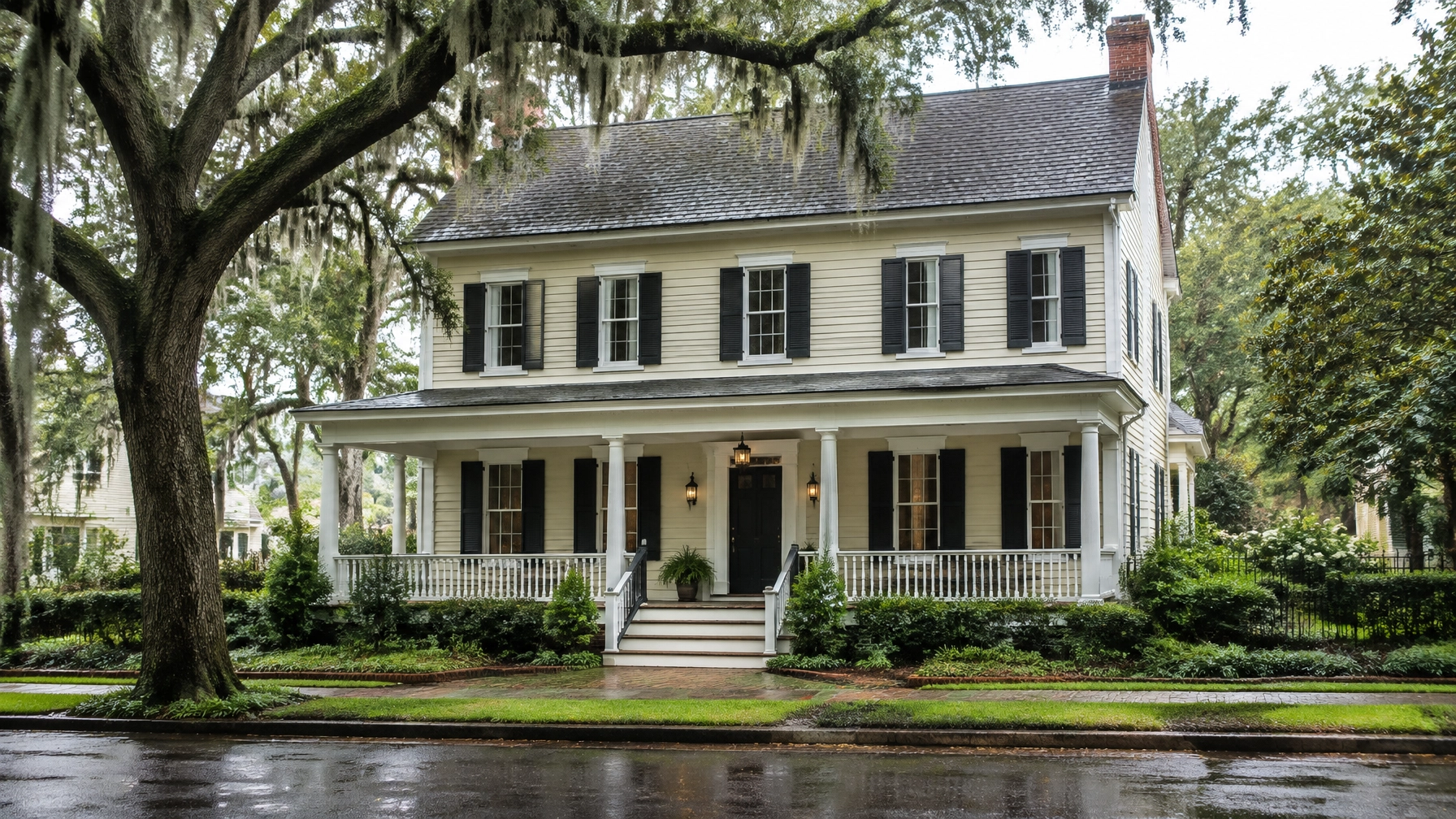
Savannah homeowners planning a roof replacement in 2026 should budget $11,000–$41,000+ for a typical 2,000-square-foot roof, depending on material, roof complexity, storm-resistance upgrades, and hidden deck damage.
Savannah sits in coastal Chatham County, where historic districts, humid subtropical weather, heavy rain, salt air, and hurricane-season winds all affect roofing decisions. A simple ranch roof outside a historic district may cost far less than a steep, detailed roof in the Landmark Historic District.
For a quick local starting point, use our Savannah roof estimate page or the roof cost calculator.
Savannah Roof Replacement Costs in 2026
| Roofing material | Cost category | Estimated cost for approximately 2,000 sq. ft. |
|---|---|---|
| 3-tab asphalt shingles | Budget | $7,500–$11,000 |
| Architectural shingles | Popular | $11,000–$19,200 or about $5.20–$9.00 per sq. ft. |
| Class 4 impact-resistant shingles | Upgraded | $13,500–$23,000 |
| Standing-seam metal | Premium | $18,000–$41,100+ or about $9.40–$21 per sq. ft. |
These are planning ranges, not binding quotes. Roof pitch, valleys, dormers, skylights, access, tear-off requirements, ventilation, flashing, and rotten decking can all change the final number.
Material pricing is also moving in 2026. Asphalt costs rose approximately 4%–8% early in the year, with additional mid-year increases possible. Standing-seam metal has seen increases of roughly 10%–22%, largely connected to steel and aluminum tariffs.

Savannah Roofing FAQs: Quick Answers
Does the City of Savannah require a roof permit?
No standard building permit is generally required for a residential roof replacement within the City of Savannah, but historic properties require additional review.
If your home is in a Savannah historic district, contact the Historic Preservation Office at 912-651-1457 or the Metropolitan Planning Commission at 912-651-1440 before changing roofing materials, colors, profiles, or visible exterior details.
You may need a Certificate of Appropriateness before work begins. The requirement commonly applies to properties in areas such as:
- Landmark Historic District
- Victorian District
- Streetcar District
- Mid-City
- Cuyler-Brownsville Phase I
The MPC’s historic preservation materials provide examples of roof replacements and approved like-for-like work. A 2026 Certificate of Appropriateness packet shows how material, color, roof configuration, and exterior appearance may be reviewed.
Properties in unincorporated Chatham County may follow separate permitting rules. Confirm the requirements for your exact address before scheduling tear-off.
What Georgia contractor license does a roofer need?
Georgia does not issue a separate state roofing license because roofing is treated as an exempt specialty trade.
A roofer working only within the roofing specialty may not need a state Residential or General Contractor license. However, the contractor still must follow local codes, business licensing requirements, insurance rules, and manufacturer installation instructions.
A state Residential-Basic, Residential-Light Commercial, or General Contractor license may be needed when the contractor takes responsibility for broader construction work or coordinates multiple trades.
Before hiring, ask for:
- Local Savannah or Chatham County business license information
- General liability insurance
- Workers’ compensation coverage
- Written contract and warranty
- References from recent local projects
You can review Georgia contractor licensing information through the Georgia State Licensing Board.
What wind requirements apply in Savannah?
Most of Chatham County uses an approximately 130-mph design wind speed under ASCE 7-16, with enhanced roof fastening requirements.
A coastal Savannah roofing proposal should address:
- Six-nail shingle fastening
- Ring-shank, corrosion-resistant roofing nails
- Secure starter strips
- Sealed hip-and-ridge caps
- Proper roof-deck attachment
- High-wind-rated shingles
- Strong perimeter and edge detailing
Tybee Island and more exposed barrier-island locations may fall into approximately 140–150 mph design wind conditions, depending on the exact site and exposure. Salt air also makes corrosion-resistant fasteners especially important.
Ask the roofer to identify the applicable wind zone and specify the fastening pattern in writing.
What is a FORTIFIED Roof, and does Georgia offer an insurance discount?
FORTIFIED Roof is a voluntary, above-code roof system designed to reduce damage from hurricanes and severe wind events.
Typical improvements may include:
- A sealed roof deck
- Enhanced edge protection
- Stronger roof-to-wall detailing
- Improved flashing
- High-wind-rated materials
- Independent evaluation and documentation
Georgia Act 476 requires admitted insurers to offer a discount or rate reduction for qualifying properties built or retrofitted to recognized FORTIFIED standards. The law does not set one mandatory percentage for every carrier.
In practice, homeowners may hear estimates of approximately 5%–20%, often applied to the wind portion of the policy. The exact savings depend on the insurer, policy, location, and certification level.
A FORTIFIED discount usually requires a full tear-off and certification by an independent IBHS-qualified evaluator. Ask your insurance agent about eligibility before construction begins. More information is available through FORTIFIED Home incentives and Georgia legislative materials concerning Act 476.
How long do roofs last in Savannah?
Expected service life depends on the material and Savannah’s humidity, algae growth, storm exposure, and salt air.
| Material | Typical service life |
|---|---|
| 3-tab asphalt | 15–20 years |
| Architectural shingles | 20–30 years |
| Class 4 impact-resistant shingles | 25–35 years |
| Standing-seam metal | 40–70+ years |
Good attic ventilation, clean gutters, prompt flashing repairs, and regular inspections can extend roof life. Coastal exposure, poor ventilation, repeated storm damage, and persistent moisture can shorten it.
Will insurance cover a Savannah roof replacement?
Homeowners insurance may cover sudden wind or hail damage, but it usually does not cover normal aging or deferred maintenance.
Review these policy details before filing:
- Wind or hurricane deductible, commonly 1%–5%
- Actual Cash Value versus Replacement Cost Value
- Roof-age limitations
- Exclusions for wear, algae, and maintenance issues
- Deadlines for reporting storm damage
- Whether wind coverage is included or separately insured
After a storm, photograph damage from the ground, prevent additional water intrusion if safe, and notify your insurer promptly. Do not climb onto the roof yourself. A professional inspection can document missing shingles, lifted edges, damaged flashing, and interior leaks.

What is the fastest way to estimate a Savannah roof?
Enter your property address into a free satellite-based estimate tool and receive a roof replacement range in approximately 60 seconds.
Get My Roof Estimate Now uses satellite imagery to measure roof size, pitch, and complexity. The system is designed for approximately 90%–95% measurement accuracy and provides pricing ranges for common materials.
There is:
- No contractor visit required upfront
- No credit card requirement
- No charge
- No obligation
Use the free Savannah satellite estimate to establish a budget before collecting contractor proposals.
Savannah Hurricane and Storm-Prep Checklist
Before hurricane season or a major storm:
- Inspect shingles, flashing, pipe boots, and roof edges.
- Clear leaves and pine needles from gutters and valleys.
- Trim branches that overhang the roof.
- Secure loose patio furniture and outdoor equipment.
- Check attic insulation and ventilation.
- Photograph the roof and exterior for your records.
- Confirm your wind and hurricane deductibles.
- Store insurance and contractor documents in a secure location.
- Arrange a professional inspection if the roof is more than 15 years old.
- Never walk on the roof during or immediately after a storm.

Get a Savannah Roof Estimate in 60 Seconds
Start with your address. The satellite estimate measures the roof and provides a fast low-to-high range based on size, pitch, complexity, material, and regional pricing.
Then compare the estimate with written proposals from verified, licensed, and insured local contractors. The online estimate is not a final construction contract, but it gives you a practical benchmark before scheduling inspections.
Savannah Roof Replacement Checklist
Before signing a roofing contract, confirm:
- The roof size is measured in squares or square feet.
- The proposal identifies the roofing material and product line.
- Wind rating and six-nail fastening are addressed.
- Ring-shank, corrosion-resistant nails are specified where appropriate.
- Tear-off, disposal, underlayment, flashing, ventilation, and cleanup are included.
- Potential decking repairs are explained.
- Historic-district Certificate of Appropriateness requirements are confirmed.
- City or Chatham County requirements are verified for your address.
- The roofer provides insurance documentation.
- Material and workmanship warranties are included.
- FORTIFIED Roof certification is discussed before installation, if desired.
- The contract includes total price, payment schedule, timeline, and change-order terms.
- You receive final inspection and warranty documents.
WordPress category: Roofing Costs
WordPress tags: Savannah GA roofing, Georgia roof replacement cost 2026, Savannah roof permit, Certificate of Appropriateness, Chatham County wind code, FORTIFIED Roof Georgia, Savannah hurricane roofing, coastal Georgia roofing
Leave a Reply