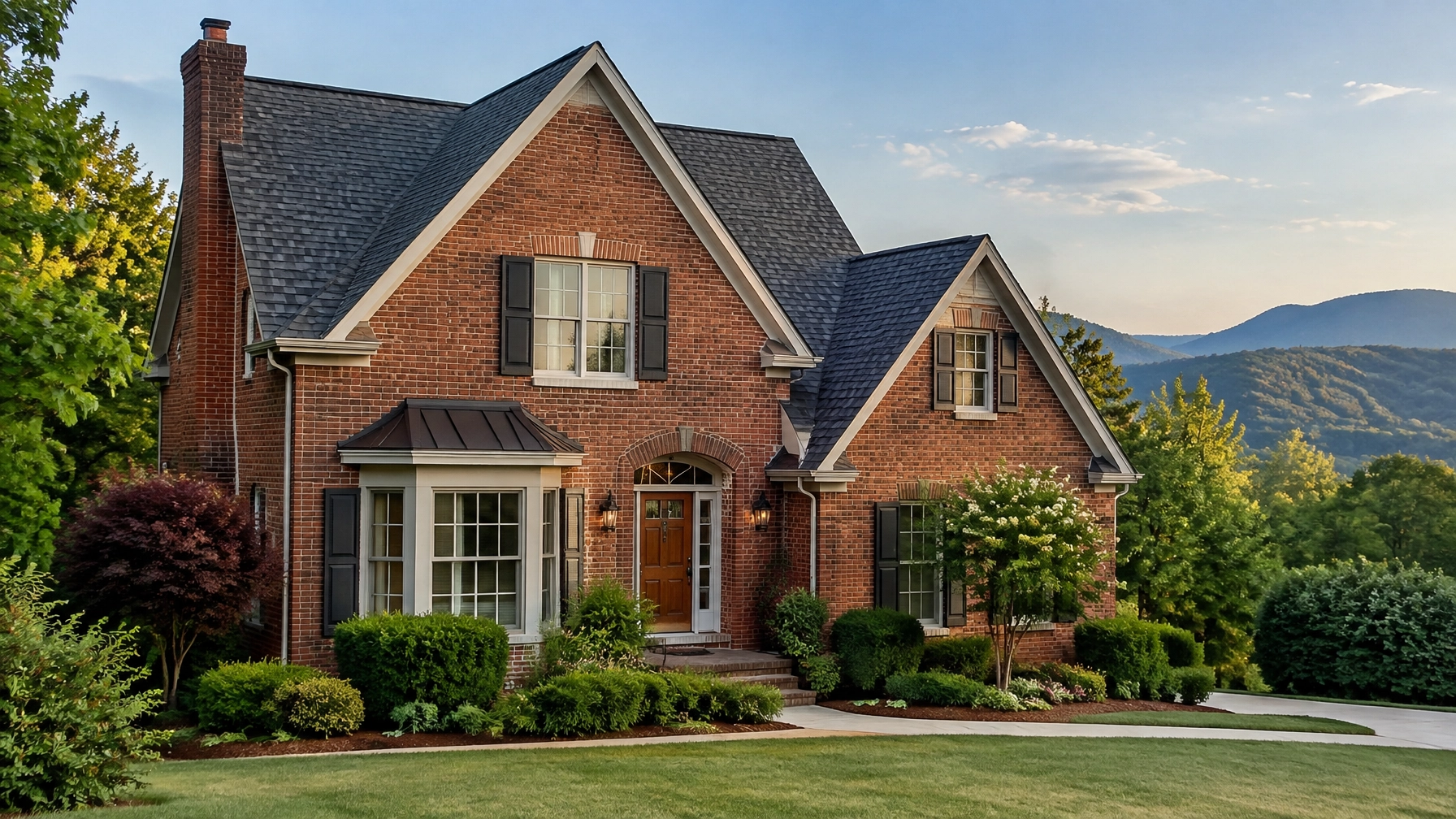
Chattanooga is proving that overhead data can solve very local problems.
UTC researchers are using aerial imagery, artificial intelligence, GIS, and LiDAR data to map millions of trees, identify urban heat, and guide investment across Hamilton County. The same class of measurement science is changing how homeowners can price a roof replacement.
Instead of waiting days for multiple contractor visits, Chattanooga homeowners can now use satellite-powered roof measurements to see their roof size, pitch, complexity, and replacement cost in about 60 seconds.
That matters in a city where heat, humidity, storms, tree canopy, and development all affect how a roof performs.
Chattanooga roof cost snapshot for 2026:
Architectural shingles generally run about $4.50–$7.80 per square foot, or approximately $12,500–$19,200 for a typical 2,000-square-foot roof. Standing-seam metal commonly runs $8.80–$16 per square foot, or roughly $22,800–$40,500.
Chattanooga’s satellite technology is mapping more than trees
The University of Tennessee at Chattanooga launched its Center for Applied Geospatial Data Science, or CAGDS, in September 2025. Led by GIS Director Charlie Mix, the center applies geospatial data to real-world regional challenges.
One major project trained a deep-learning model using USDA aerial imagery and Hamilton County LiDAR data. The model learned to distinguish tree canopy from rooftops, pavement, and grass.
The results were significant:
- Approximately 5.3 million trees counted across Chattanooga
- About 97% accuracy
- Analysis performed at approximately 60-centimeter resolution
- An estimated 2,837 acres of canopy lost between 2014 and 2023
- Approximately 48% of forest cover lost since 1984
The goal is not simply to create attractive maps. Chattanooga officials use the data to identify heat-risk areas, guide tree planting, and support public planning.
This is where the connection to roofing begins: the technology can identify and measure the built environment from above with impressive detail.
How satellite imagery measures a Chattanooga roof
Get My Roof Estimate Now uses satellite-powered imagery and automated analysis to create a property-specific estimate without an upfront contractor visit.
The system evaluates the visible roof structure and calculates:
- Total roof area
- Roof sections and planes
- Ridges, hips, and valleys
- Approximate pitch
- Roof complexity
- Material quantities
- Local pricing factors
Roofing is priced in squares, with one square equal to 100 square feet of roof area. A home with 2,000 square feet of roof area has approximately 20 roofing squares before accounting for waste, cuts, and additional complexity.
The technology is typically 90–95% accurate for most homes, with measurements accurate to within inches. That makes it useful for budgeting, comparing materials, and deciding whether a contractor’s quote appears reasonable.
It does not replace a final inspection. Satellite imagery cannot confirm hidden decking damage, attic ventilation problems, active leaks, or structural deterioration. However, it gives homeowners a fast and practical starting point.
Get a free satellite-based roof estimate or use the roof cost calculator to begin planning.
Chattanooga’s heat island effect has a roof connection
NASA surface-temperature data shows how sharply heat can vary across Chattanooga.
Downtown surface temperatures can reach approximately 136°F during summer, nearly 40 degrees hotter than heavily tree-covered neighborhoods. Reported summer afternoon air temperatures have reached roughly 112°F downtown versus 90°F in Moccasin Bend, only a few miles away.
The difference is tied to the urban heat island effect. Pavement, rooftops, and other hard surfaces absorb solar energy and release it slowly.
That heat reaches the roof system and attic. Over time, repeated heating and cooling can contribute to thermal cycling, faster shingle aging, and higher cooling demand.
A dark, aging asphalt roof with missing granules generally absorbs more heat than a newer, reflective roof surface. That does not mean every homeowner needs metal roofing. It does mean material selection should consider more than color.
A Chattanooga roof decision should account for:
- Reflectivity and solar exposure
- Attic ventilation
- Roof orientation
- Material life span
- Local humidity
- Wind and hail exposure
- The home’s architectural style

Tree canopy helps roofs: but can also create problems
Charlie Mix has described Chattanooga as a “big bowl” where heat and moisture can become trapped. His research also shows the economic benefit of shade, including potentially lower cooling costs.
For homeowners, tree canopy can protect a roof from direct sunlight and reduce heat exposure. But heavy shade and overhanging branches create other maintenance concerns:
- Leaves collect in valleys and gutters
- Branches can scrape or puncture shingles
- Moss and algae grow more easily on shaded, damp slopes
- Falling limbs can cause storm damage
- Blocked gutters can contribute to water backup
The Chattanooga canopy maps are not roof inspections, but the same overhead view helps explain why two homes with similar roofs may age differently. A roof under dense shade should be evaluated for debris, moss, algae streaking, and drainage issues.
Keep branches trimmed away from the roof while preserving healthy shade where practical.
Development, runoff, and the Friar Branch corridor
UTC environmental geoscientist Azad Hossain is studying how development affects Friar Branch Creek in the South Chickamauga Creek watershed, including the Hamilton Place and Brainerd corridor.
The research combines decades of satellite imagery with field data to map land-use changes and feed watershed and hydrodynamic models.
The basic principle is straightforward: more development creates more hard surfaces. Roads, parking areas, and rooftops prevent water from soaking into the ground. Runoff moves faster and can carry sediment into waterways.
For homeowners, this reinforces the importance of a complete roof drainage system:
- Properly installed gutters
- Clear downspouts
- Secure flashing
- Well-designed valley drainage
- Positive water flow away from the foundation
A new roof protects more than the shingles. When correctly installed, it also helps manage the water moving off the home.
Chattanooga roof replacement prices for 2026
The following ranges are useful planning benchmarks for a typical 2,000-square-foot roof. Actual pricing depends on roof squares, pitch, tear-off requirements, accessibility, labor, and repairs.
Architectural shingles (Popular)
- Approximately $4.50–$7.80 per square foot
- Roughly $12,500–$19,200 for a typical roof
- Broad color and style selection
- Strong balance of appearance, cost, and service life
Architectural shingles are often the practical choice for Chattanooga homeowners who want a new roof with good curb appeal without the premium cost of metal.
Standing-seam metal (Premium)
- Approximately $8.80–$16 per square foot
- Roughly $22,800–$40,500 for a typical roof
- Long service life
- Strong performance against sun, wind, and weather
- Higher initial investment
Metal can make sense for homeowners planning to stay long term or prioritizing durability and solar reflectivity.
Synthetic roofing or compatible coatings (Budget-to-Popular)
Synthetic roofing products can occupy a middle range depending on the product and installation system. Roof coatings may cost less, but they are not appropriate for every roof and are usually intended for compatible existing systems rather than a universal replacement solution.
Always compare the complete roof assembly: not just the surface material.
Permits
A residential roof replacement inside the City of Chattanooga generally requires a residential modification or building permit through the Land Development Office.
A typical planning allowance is approximately $75–$500, although fees may be based on project valuation or scope. Confirm the current amount with the city or your contractor before work begins.
What is the best roof for home value in Chattanooga?
The best roof for home value is not always the most expensive option. It is the material that fits the home, local climate, neighborhood expectations, and long-term ownership plans.
A new roof can support:
- Better curb appeal
- Improved buyer confidence
- Fewer inspection objections
- Better protection from water damage
- Lower maintenance concerns
That is the practical relationship between new roof ROI home value, roof replacement resale value, and roof curb appeal home value.
Roof replacement ROI is rarely a dollar-for-dollar return. However, a visibly worn roof can reduce buyer interest or lead to price negotiations. A clean, professionally installed roof can help a home present better and reduce uncertainty during resale.
For many Chattanooga homes, architectural shingles offer the strongest balance of cost and appearance. Metal may provide better long-term value for the right property, especially when reflectivity, durability, and service life are priorities.

Frequently asked questions
Can satellite imagery see my entire roof?
It can measure visible roof planes and estimate size, pitch, and complexity. It cannot confirm hidden damage beneath the roof covering or inside the attic. A final contractor inspection remains important.
How fast is the estimate?
You can receive a free, property-specific estimate in about 60 seconds after entering your address.
Is the estimate really free?
Yes. There is no credit card requirement and no upfront cost. The estimate provides low, middle, and high pricing ranges for available materials.
Should I choose shingles or metal?
Choose based on budget, expected ownership period, curb appeal, reflectivity, maintenance, and service life. Compare the total roof system: not just the visible material.
Do tree-shaded roofs last longer?
Shade can reduce direct solar exposure, but heavy shade can increase moisture, algae, moss, and debris. Regular trimming and gutter maintenance are important.
Takeaway: Chattanooga’s mapping technology shows how precise overhead data can guide decisions about heat, trees, runoff, and development. The same measurement concept now lets homeowners understand roof size and replacement cost before scheduling contractor visits.
Sources and credits: LIDAR Magazine, May 2026; Esri, “How Maps, AI, and Trees Fight Urban Heat in Chattanooga”; UTC News, CAGDS launch; The Chattanoogan, April 1, 2026; NASA Earth Observatory surface-temperature and land-use data, including Building Out Chattanooga.
Get your Chattanooga roof estimate in 60 seconds
Enter your address at Get My Roof Estimate Now to see your roof size, material options, and local replacement price range.
It is free, satellite-measured, and requires no contractor visit upfront.
Leave a Reply