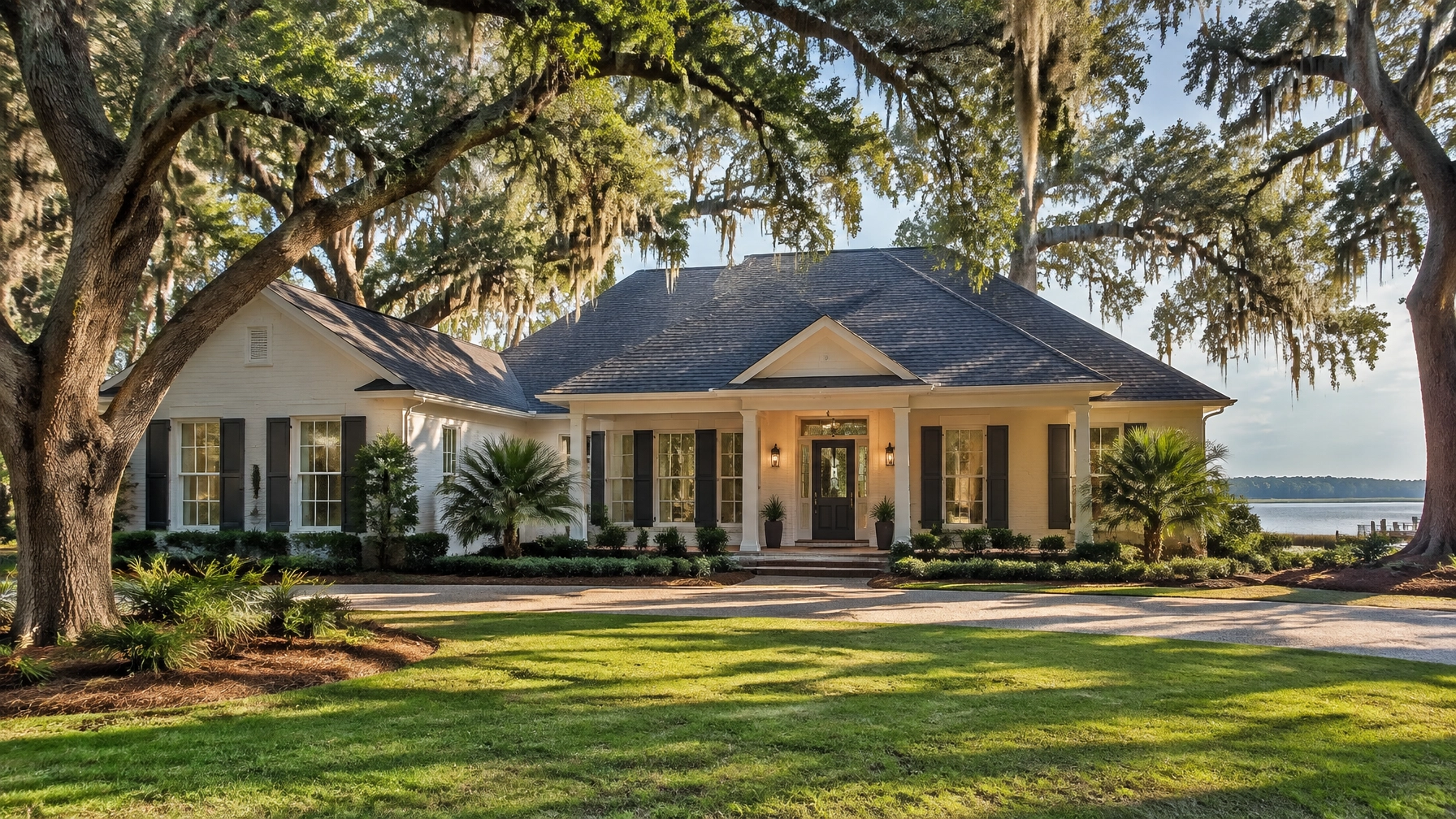
Savannah gets a short break from late-summer mugginess today. Inland neighborhoods started Thursday, September 17, with lows in the mid-to-upper 60s: the coolest morning in approximately three months: while coastal locations stayed closer to 70°F. Dew points in the 60s are making the air feel noticeably more comfortable.
That relief will not last all weekend. Humidity begins returning Friday, and Sunday brings the best chance for showers and thunderstorms. For Savannah homeowners, this is a useful roof-maintenance window: inspect wind-sensitive areas now, clear drainage paths before heavier rain arrives, and check for damage after Sunday’s storm cells.
Savannah roofs face more than one weather threat. Chatham County has recorded 148 hail events since 1996, including approximately 0.75-inch hail near Savannah on July 29, 2026. Hurricane Matthew also established a local wind benchmark, with reported gusts ranging from about 71 mph in Savannah to 96 mph on Tybee Island.
Add approximately 48.1 inches of annual rain, 72% average relative humidity, 81 days per year at or above 90°F, and persistent salt air, and the result is a demanding environment for asphalt, metal, flashing, fasteners, and roof ventilation.
Savannah weather snapshot: Thursday through early next week
According to the local WTOC forecast and National Weather Service forecast data, the pattern looks like this:
- Thursday, September 17: Inland lows in the mid-to-upper 60s; around 70°F near the coast. A few coastal showers are possible in the morning, but most of the area should remain dry during the afternoon. Highs reach the upper 80s to about 90°F. Beaches will be breezy, with northeast winds around 15–20 mph, 2–3-foot waves, and a moderate rip-current risk.
- Friday, September 18: Humidity creeps back. Morning lows range from the upper 60s to lower 70s, with highs near the lower 90s. Rain chances remain slight, and conditions should stay generally favorable for Friday night football.
- Saturday, September 19: Highs remain near 90°F. A few afternoon showers and an isolated storm are possible, but the day should be less damp than Sunday.
- Sunday, September 20: The most active day of the period. Showers and thunderstorms are likely during the afternoon and early evening, with highs around 88°F.
- Early next week: Elevated afternoon rain chances continue, with highs in the mid-to-upper 80s. Additional morning lows in the 60s may return toward the end of next week.
- Tropical outlook: An area of low pressure east of Bermuda has a 40% chance of becoming a tropical depression within 48 hours. Long-range models also hint at possible tropical development during September 23–29. There are no local concerns at this time, but conditions can change quickly later in September.
The Atlantic season has been historically quiet so far, with ACE near 6% of normal and strong El Niño-related wind shear. However, NOAA’s broader outlook still calls for 7–13 named storms, and changing MJO support could improve development conditions later this month.
Why Savannah’s climate shortens roof service life
A roof does not age from one storm alone. It ages from repeated exposure.
Savannah’s combination of heat, moisture, wind, and salt air creates several predictable failure points:
- Granule loss: High heat and frequent rain gradually wear away the protective granules on asphalt shingles.
- Algae streaking: Warm, humid conditions encourage dark algae growth, especially on north-facing and shaded roof slopes.
- Fastener corrosion: Salt-laden air can accelerate corrosion around exposed or poorly protected metal components.
- Flashing seal failure: Repeated expansion, contraction, and heavy rain can weaken flashing around chimneys, walls, skylights, and roof penetrations.
- Pipe boot deterioration: Flexible rubber boots can crack in heat and humidity, allowing water into the attic.
- Tree-related impact: Live oak and pine branches can scrape, puncture, or lift roofing materials during gusty storms.
- Water backup: Nearly 48 inches of annual rain places a heavy burden on gutters, downspouts, valleys, and low-slope sections.
A roof that looks acceptable from the ground may still have brittle sealant, loose flashing, corroded nails, or deteriorating underlayment.

Storm-readiness checklist for this weekend
Use today’s calmer weather to complete a ground-level inspection. Do not climb onto a wet or steep roof. If you see damage, hire a qualified roofing professional for a closer evaluation.
1. Look for lifted, creased, or missing shingles
Pay special attention to ridges, hips, eaves, rake edges, and roof sections facing prevailing wind. Lifted shingles may not leak immediately, but their seals can fail during the next thunderstorm.
Creases, exposed underlayment, and missing tabs are more urgent. Photograph the areas from the ground and document the date.
2. Check gutters and downspouts before Sunday
Remove leaves, pine needles, and granules from gutters. Confirm that downspouts discharge away from the foundation and are not blocked at ground level.
Heavy afternoon rain can overwhelm a clogged system, forcing water behind fascia boards or beneath roof edges.
3. Trim limbs above the roofline
Branches do not need to fall to cause damage. Wind-driven limbs can rub shingles, strip granules, and damage vents or flashing. Trim hazardous growth before the next storm, but use a licensed tree professional for large or unstable limbs.
4. Inspect for algae and granule loss
Dark streaks do not always mean immediate roof failure, but widespread algae growth signals persistent moisture. Look for bare patches, shingle discoloration, and gritty material collecting in downspouts.
Avoid pressure-washing asphalt shingles. It can remove granules and shorten service life.
5. Verify coastal fastening details during replacement
Mainland Chatham County is commonly associated with an ultimate design wind speed near 130 mph, while exposed barrier-island locations can reach approximately 140–150 mph. Exact requirements depend on the property and applicable code edition.
When replacing a roof, ask the contractor to explain:
- Whether the roof requires a six-nail fastening pattern
- Whether ring-shank or other high-withdrawal-resistance nails are specified
- The shingle’s tested wind rating
- Starter-strip and ridge-cap attachment
- Underlayment and flashing details
- Permit and inspection requirements for the address
The goal is not simply to install a new covering. It is to build a roof system suited to the site’s wind exposure.
Material choices for a 2,000–2,500-square-foot Savannah home
The following planning ranges are typical broad estimates for a Savannah-area replacement project. Final pricing depends on actual roof squares, pitch, complexity, tear-off, decking repairs, access, permits, and contractor rates.
| Material | Positioning | Planning range |
|---|---|---|
| Architectural shingles | Budget-to-popular | $10,000–$17,000 |
| Metal roofing | Popular-to-premium | $21,000–$35,000+ |
| Synthetic roofing | Premium | $18,000–$36,000+ |
Architectural shingles (Popular)
Architectural shingles are the most common choice for Savannah homes because they balance cost, appearance, and availability. Select products with algae-resistant granules and a strong wind rating. A higher-quality shingle may be worthwhile in a humid coastal climate, particularly if the home has heavy tree cover.
Metal roofing (Premium)
Standing-seam metal can provide long service life, excellent wind performance when properly engineered, and strong resistance to heat and moisture. Installation quality is critical. Ask about corrosion-resistant fasteners, coastal-compatible coatings, panel attachment, flashing, and expansion details.

Synthetic roofing (Premium)
Synthetic composite materials can replicate slate or shake styles while weighing less than traditional products. They may offer strong impact and weather resistance, but product ratings, installer experience, and warranty terms vary widely. Confirm that the product is appropriate for coastal wind exposure and local permitting requirements.
For general material comparisons, review the company’s guides to asphalt shingles, metal roofing, and metal versus shingles.
After Sunday’s storms: inspect these areas first
Once lightning has passed and conditions are safe, inspect the property from the ground. Look for:
- New shingle pieces in the yard
- Exposed dark underlayment
- Bent vents or damaged ridge caps
- Hail dents in soft metals, gutters, and flashing
- Fallen branches or broken limbs
- Water stains in ceilings and upper walls
- Damp insulation or musty attic odors
- Overflow marks beneath gutters
Hail is not specifically forecast as a heightened threat for Sunday, but thunderstorms can still produce locally strong wind, lightning, heavy rain, and occasional small hail. A historic hail count is a reason to inspect: not a reason to assume every storm will damage the roof.

Get a Savannah roof price before you need a contractor visit
Knowing your roof’s likely replacement cost makes storm decisions easier. Get My Roof Estimate Now uses satellite imagery to measure roof size, pitch, and complexity. Homeowners enter an address and receive low, middle, and high replacement ranges in under 60 seconds.
There is:
- No credit card requirement
- No upfront contractor visit
- No cost to receive the estimate
- Pricing for multiple roofing materials
- A pathway to verified, licensed, and insured local contractors
The estimate is a planning tool, not a substitute for a final on-site inspection. A contractor still needs to verify decking, flashing, ventilation, hidden moisture, and storm damage. But satellite-based pricing gives you a fast, objective starting point before you schedule visits.
Use the free roof cost calculator for a general range, or enter your Savannah address for a satellite-powered estimate.
Bottom line for September 17
Savannah’s coolest morning in months is a brief maintenance opportunity. The weather turns warmer and more humid Friday, becomes unsettled Saturday, and reaches its highest rain risk Sunday afternoon and evening.
Before the next round of storms:
- Clear gutters and downspouts.
- Check for lifted or creased shingles.
- Trim dangerous limbs above the roof.
- Look for algae, bare granules, and corroded metal.
- Confirm coastal fastening requirements before replacement.
- Get a property-specific budget range before damage becomes an emergency.
In Savannah, roof durability is determined by preparation, installation quality, and material selection; not by appearance alone.
Forecast sources: WTOC Savannah weather update and National Weather Service point forecast. Historical weather context includes NOAA Hurricane Matthew documentation and NOAA climate data for Savannah.
Leave a Reply