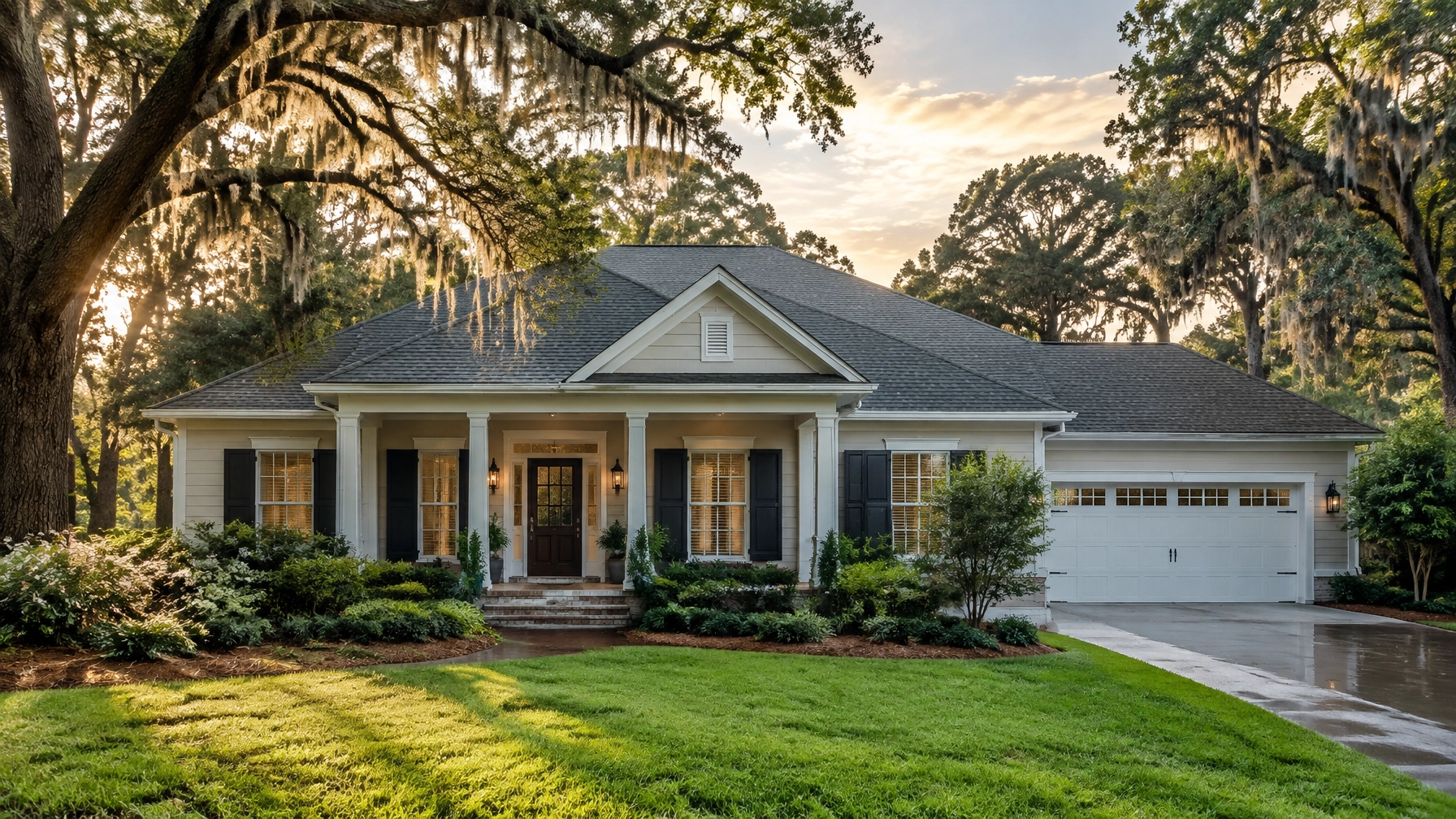
Savannah homeowners in ZIP code 31401 can expect a warm, mostly sunny Saturday with storms becoming more likely after 2 p.m. The National Weather Service forecast for Savannah calls for a 50% chance of showers and thunderstorms, a high near 89°F, and less than one-tenth of an inch of rain outside of heavier storms.
Tonight, storms remain likely before 8 p.m., with a 60% chance of rain and a low near 75°F. Sunday should be the drier weekend day overall, but the heat will be more demanding: mostly sunny skies, a high near 91°F, a 30% afternoon storm chance, and heat index values as high as 102°F.
Monday reaches approximately 92°F under sunny skies. Tuesday brings a 40% storm chance with a high near 87°F, followed by mostly sunny conditions Wednesday and Thursday near 85°F.
This is not a washout weekend. Still, Savannah homeowners should keep an umbrella nearby: and use the weather window to check the roof before the next round of heavy rain, wind, and humidity.
Savannah weekend forecast at a glance
- Saturday, September 12: Mostly sunny; storms mainly after 2 p.m.; high near 89°F
- Saturday night: Storms likely before 8 p.m.; low near 75°F
- Sunday: Mostly sunny; storms mainly after 4 p.m.; high near 91°F
- Sunday heat index: Up to 102°F
- Monday: Sunny; high near 92°F
- Tuesday: 40% storm chance; high near 87°F
- Wednesday–Thursday: Mostly sunny; highs near 85°F
- Tropical outlook: No immediate Atlantic tropical development concern within the next seven days
For roof performance, the key issue is not only this weekend’s rain. Savannah roofs operate under repeated coastal stress: salt air, high humidity, ultraviolet exposure, algae growth, sudden thunderstorms, and hurricane-season wind.
Why Savannah’s climate is hard on roofing materials
Savannah’s Lowcountry environment creates several durability challenges that do not affect inland roofs to the same degree.
1. Salt-air corrosion (Coastal exposure)
Salt-laden air can accelerate corrosion on exposed metal components. Depending on distance from the coast, orientation, and exposure, roofing hardware may age 15% to 25% faster than similar components in inland conditions.
The most vulnerable components include:
- Roofing nails and metal clips
- Step flashing and chimney flashing
- Valley metal and drip edge
- Gutter hangers and downspout connections
- Roof vents and fasteners
- Hurricane straps and other connectors
For a coastal replacement, ask for Type 316 stainless steel fasteners where required by local code and site exposure. Hot-dipped galvanized hardware may be appropriate in some areas, but standard bright steel or lightly plated fasteners are poor choices for long-term coastal service.
Flashing should generally be aluminum or stainless steel, with compatible fasteners to limit galvanic corrosion.

2. High-wind construction (130 mph design zone)
Chatham County’s coastal wind requirements are a major part of the roof specification. Many Savannah properties fall within a 130 mph ultimate design wind zone, subject to the exact parcel, exposure, code edition, and building department requirements.
For architectural shingles, a coastal installation should typically include:
- A six-nail pattern per shingle where required by the manufacturer and code
- Ring-shank, corrosion-resistant roofing nails
- Reinforced starter strips at eaves and rakes
- Enhanced hip and ridge-cap fastening
- Proper adhesive sealing
- Tight roof-deck nailing near edges, ridges, and gable ends
- Correct installation of drip edge, underlayment, and flashing
The nail count alone does not make a roof wind resistant. Nail placement matters. Nails driven too high, too low, or outside the manufacturer’s nail line can reduce holding power and may affect the shingle warranty.
A professional roofer should confirm the exact wind speed, exposure category, and fastening schedule for the property at 31401 before work begins.
3. Humidity, algae, and moss growth (Maintenance concern)
Savannah’s humid climate keeps roof surfaces damp longer after rain. Shaded roof planes, north-facing slopes, and areas beneath live oaks are especially vulnerable to algae streaks, moss, and organic debris.
Algae may be mostly cosmetic at first, but heavy growth can:
- Hold moisture against the shingle surface
- Reduce granule retention
- Block drainage paths
- Lift or separate shingles
- Mask damaged flashing and sealant
Avoid pressure washing asphalt shingles. It can remove protective granules and shorten roof life. A qualified professional can recommend a roof-safe cleaning method and determine whether growth is cosmetic or evidence of a larger moisture problem.
4. Heat and ultraviolet exposure (Summer wear)
A 102°F heat index does not mean the roof surface reaches only 102°F. Dark roofing materials can become substantially hotter under direct sun. Repeated heating and cooling cycles gradually affect asphalt flexibility, sealants, flashing, and shingle granules.
Common signs of heat and UV wear include:
- Curling or brittle shingle edges
- Cracked sealant around vents
- Excessive granules in gutters
- Faded or uneven shingle color
- Exposed fiberglass mat
- Deteriorated pipe flashing
Proper attic ventilation helps remove trapped heat and moisture. It does not eliminate normal roof aging, but it can reduce stress on the roof deck and roofing system.
Hurricane history is a durability reminder
Hurricane Matthew in 2016 produced some of the clearest recent evidence of Savannah’s exposure. The National Hurricane Center’s official Matthew report recorded hurricane-force conditions on the Georgia barrier islands, including a 65-knot sustained wind and 83-knot gust on Tybee Island. Savannah and Chatham County also experienced major rainfall, storm surge, downed trees, and roof-related impacts.
Older or improperly installed roofs are especially vulnerable at:
- Ridge caps
- Starter strips
- Rakes and eaves
- Roof corners
- Valleys
- Skylights and plumbing penetrations
- Areas around chimneys and wall intersections
Dorian in 2019 and Ian in 2022 were less severe for Savannah than Matthew, but both reinforced a practical point: coastal homeowners do not need a direct landfall to experience damaging wind, heavy rain, or flying debris.

Savannah roof replacement costs in 2026
For planning purposes, a typical 2,000-square-foot roof in Savannah may fall within these ranges:
Architectural shingles (Popular)
- Approximately $5.00–$8.20 per square foot
- About $10,000–$17,000 for a typical 2,000-square-foot roof
Architectural shingles remain the most common value choice for Savannah homeowners. Coastal upgrades may include high-wind-rated shingles, six-nail installation, synthetic underlayment, corrosion-resistant fasteners, algae-resistant surfaces, and improved starter and ridge systems.
Standing-seam metal (Premium)
- Approximately $9.40–$18.00 per square foot
- About $18,000–$38,000 for a typical 2,000-square-foot roof
Standing-seam metal costs more upfront but offers long service life, strong resistance to heat and wind when properly installed, and fewer exposed fasteners. Panel gauge, finish, roof complexity, flashing details, underlayment, and coastal corrosion requirements can significantly affect the final price.
A roof is measured in squares, with one roofing square equal to 100 square feet. Actual costs depend on roof size, pitch, complexity, tear-off requirements, deck repairs, permits, labor, and material selection. The Get My Roof Estimate Now roof cost calculator provides general planning ranges, while a property-specific estimate accounts for the actual roof shape and location.
Savannah homeowner checklist before weekend storms
Before Saturday afternoon storms arrive, complete these low-risk checks from the ground:
- Clean leaves and debris from gutters and downspouts.
- Confirm that downspouts discharge away from the foundation.
- Look for loose, lifted, cracked, or missing shingles.
- Check for rust around flashing, vents, and gutter connections.
- Look for dark algae streaks or moss on shaded slopes.
- Trim dead or overhanging limbs near the roof.
- Check the attic after rain for damp insulation, stains, or daylight.
- Do not climb onto a wet roof.
- Photograph visible damage for your records.
- Schedule a professional coastal roof inspection if the roof is 15–20 years old, has leaked, or has experienced prior storm damage.

Get an instant Savannah roof estimate
Storm preparation starts with knowing the roof’s condition and replacement cost. Get a free, satellite-powered estimate from Get My Roof Estimate Now using your Savannah address.
The service measures roof size, pitch, and complexity from satellite imagery and provides low, middle, and high replacement ranges for different materials: often in 60 seconds, with no credit card and no contractor visit required upfront.
Use the estimate to budget, compare contractor proposals, and plan coastal upgrades before the next storm threatens your roof.
Weather information is based on the National Weather Service forecast for Savannah, Georgia, issued September 12, 2026. Roof pricing is for planning purposes; an in-person inspection is still necessary to identify concealed damage, structural repairs, and installation-specific requirements.
Leave a Reply