Blog

  • Daily ROI Blitz – Slot 6: Lafayette, LA New Roof ROI : How a Cajun Country Replacement Adds Home Value in 2026

    Daily ROI Blitz – Slot 6: Lafayette, LA New Roof ROI : How a Cajun Country Replacement Adds Home Value in 2026

    A new roof in Lafayette can cost approximately $11,500–$24,200 for architectural shingles or $17,900–$45,100 for standing-seam metal on a typical 2,000–2,500-square-foot home. That is a major investment: but in a buyer-friendly 2026 market, a roof can protect your selling price, reduce inspection objections, improve curb appeal, and make your home easier to finance and insure.

    This guide explains the new roof ROI home value connection in Lafayette Parish and Acadiana, including local pricing, material choices, insurance considerations, permitting, and a practical way to estimate your potential return.

    Lafayette Housing Market Snapshot: Why Roof Condition Matters in 2026

    Lafayette’s market is giving buyers more time and negotiating power than they had during the peak seller-market years. Inventory is rising, homes are taking longer to sell, and buyers are paying closer attention to major systems: including the roof.

    Lafayette-area metric 2026 planning range
    Median listing price Approximately $300,000–$350,000
    Median sold price Approximately $259,000–$270,000
    Typical days on market Approximately 49–78 days
    Inventory trend Rising
    Market direction Balanced to buyer-friendly
    Common buyer concern Remaining roof life and insurance eligibility

    Market figures vary by source, neighborhood, property type, and measurement period. Review current data from Redfin’s Lafayette housing market page before pricing a specific property.

    In this environment, a visibly aging roof can become a negotiating tool for buyers. A buyer may request a price reduction, closing credit, repair, or replacement-cost concession after the inspection. A new roof does not guarantee a dollar-for-dollar return, but it can preserve value that an older roof puts at risk.

    Why a New Roof Protects Home Value

    Roof replacement resale value usually comes from three sources:

    1. Fewer inspection objections

    A roof near the end of its service life can trigger questions about:

    • Leaks and water intrusion
    • Missing, lifted, or brittle shingles
    • Soft decking
    • Poor attic ventilation
    • Storm and hail damage
    • Remaining useful life
    • Insurance eligibility

    A documented new roof gives buyers a clearer maintenance outlook. It can also reduce the likelihood of a last-minute negotiation.

    2. Better financing and insurance confidence

    Lenders and insurers may pay closer attention to roof age and condition. Louisiana homeowners should review whether their policy pays roof claims on an actual cash value (ACV) or replacement cost value (RCV) basis. These are not the same:

    • ACV: Replacement cost minus depreciation
    • RCV: The cost to replace the damaged roof, subject to policy terms and deductibles

    A new roof may also help avoid age-related underwriting concerns. However, it does not automatically change an ACV policy to RCV. Confirm coverage directly with your insurance agent.

    3. Stronger buyer perception

    Buyers often interpret a new roof as evidence that the home has been maintained properly. That perception matters when comparing homes in neighborhoods such as River Ranch, the Saint Streets, Oil Center, Greenbriar Estates, Bendel Gardens, and Brookshire Gardens.

    Roof Curb Appeal and Lafayette Neighborhoods

    Roof curb appeal home value is especially important when the roof represents a large portion of the visible exterior.

    In River Ranch and newer subdivisions, clean rooflines and coordinated colors support a polished, move-in-ready appearance. In the Saint Streets district, a new roof should complement the home’s historic character and mature oak canopy rather than overpower it.

    A replacement roof can improve curb appeal by delivering:

    • Consistent color across all roof planes
    • Straight, clean ridgelines
    • Properly finished valleys and flashing
    • Updated vents and penetrations
    • Better coordination with siding, brick, shutters, and trim
    • A more maintained appearance from the street

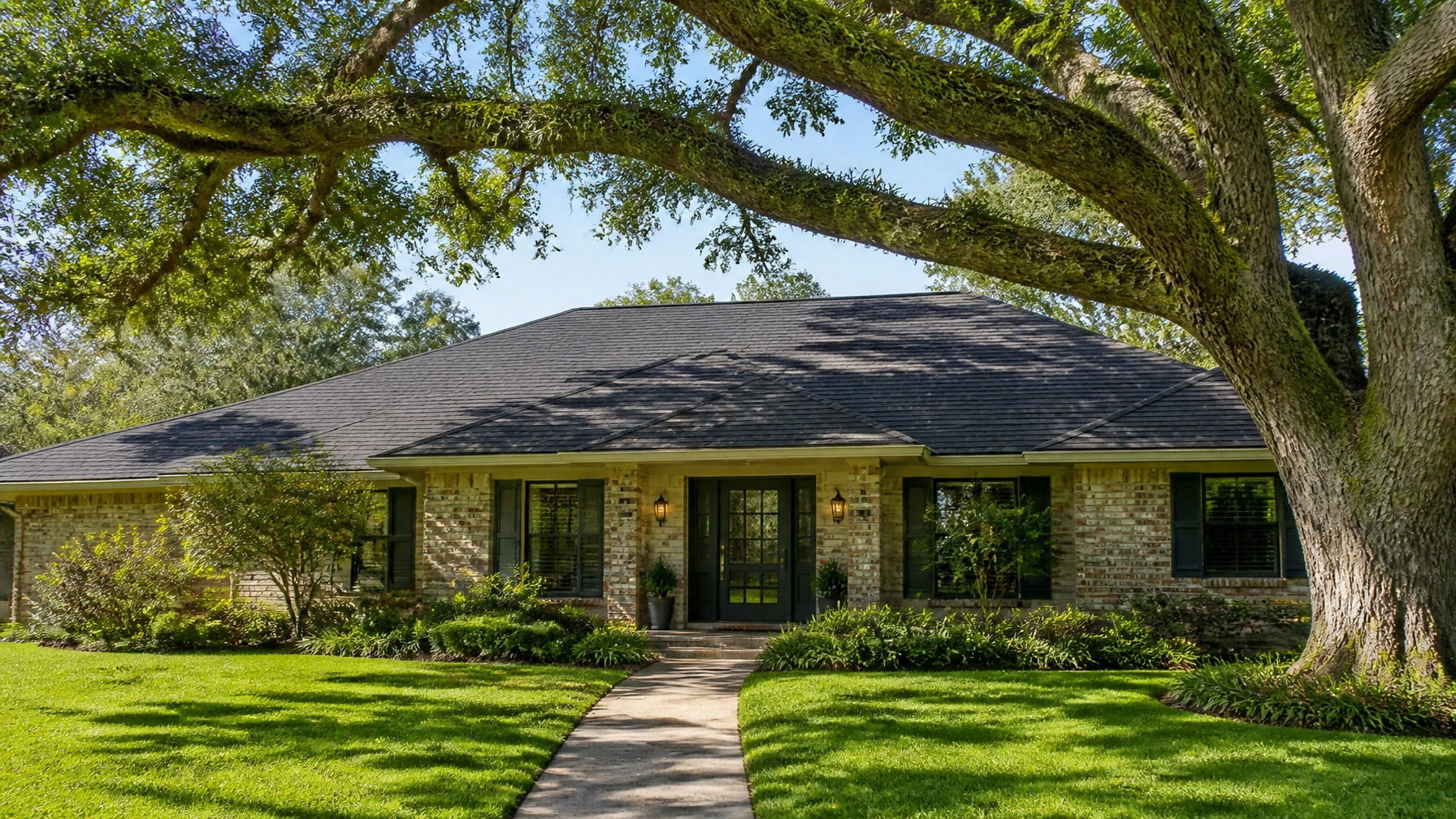
    Historic-style home in Lafayette’s Saint Streets district with a new roof and mature oak trees

    The best visual result is not necessarily the most expensive material. It is the material, color, and profile that fit the home’s architecture and surrounding neighborhood.

    Best Roof for Home Value in Lafayette

    Architectural shingles (Popular)

    Architectural shingles are the most practical choice for many Lafayette homeowners balancing cost, appearance, and resale appeal.

    For a 2,000–2,500-square-foot home, a realistic 2026 planning range is approximately:

    • $456–$960 per roofing square installed
    • Approximately $11,500–$24,200 total
    • Typical service life: roughly 24–32 years, depending on ventilation, installation, maintenance, and weather exposure

    A roofing square equals 100 square feet. The final project price depends on actual roof area: not simply the home’s living-space square footage.

    Architectural shingles are popular because they offer:

    • Broad color and texture selection
    • Strong compatibility with ranch, Colonial, and traditional homes
    • Lower upfront cost than metal
    • Familiarity among local contractors and buyers
    • Good curb appeal without looking overly customized

    Standing-seam metal (Premium)

    Standing-seam metal is a premium option for homeowners prioritizing long service life, storm performance, and a modern architectural appearance.

    Typical Lafayette planning range for a 2,000–2,500-square-foot home:

    • Approximately $17,900–$45,100
    • Typical service life: roughly 40–60 years
    • Higher cost for premium finishes, complex roof geometry, tear-off, and detailed flashing

    Modern Louisiana home with a premium standing-seam metal roof

    Metal can be an excellent long-term investment, but resale ROI depends on the neighborhood and buyer expectations. A premium metal roof may not recover its entire cost in a near-term sale. It can, however, create strong differentiation and reduce concerns about another replacement during ownership.

    For a fast first-pass comparison, use the roof cost calculator, then verify the property-specific numbers with a satellite estimate and contractor quote.

    Acadiana’s Climate and Roof Performance

    Lafayette roofs must handle more than ordinary rain. Acadiana conditions include:

    • Gulf humidity and prolonged heat
    • Severe thunderstorms and hail
    • Tropical storms and hurricane remnants
    • Heavy rainfall and drainage demands
    • Algae and moss growth
    • Wind uplift and flashing exposure
    • UV damage and thermal cycling

    A roof’s performance depends on the entire system: not just the surface material. Ask about:

    • Correct underlayment
    • High-quality flashing
    • Proper ventilation
    • Wind-rated fasteners
    • Ice-and-water protection where appropriate
    • Sealed penetrations
    • Adequate attic airflow
    • Decking inspection after tear-off

    A less expensive roof installed correctly can outperform a premium roof installed poorly.

    Louisiana Insurance: FORTIFIED Roofs and Documentation

    Louisiana’s 2026 insurance changes make storm-resilient construction more important for homeowners planning a replacement.

    Under the state’s FORTIFIED framework, South Louisiana homeowners with a qualifying IBHS FORTIFIED Roof may receive an approximately 29% discount on the hurricane or wind portion of the homeowners premium. Higher FORTIFIED levels may qualify for larger benchmark discounts.

    The 2026 rulemaking established the discount framework, with insurers required to implement the benchmark schedule for policies issued or renewed on or after January 1, 2027. The discount generally applies to the hurricane/wind portion: not automatically to the entire insurance bill.

    Before construction, ask your insurer:

    • Is my roof covered on an ACV or RCV basis?
    • Are there roof-age restrictions or endorsements?
    • What documentation is required for a FORTIFIED discount?
    • Does the contractor need specific certifications?
    • Which portion of my premium is subject to the discount?

    Keep your permit, paid invoice, product information, inspection records, photos, warranty, and FORTIFIED certificate if applicable. The Louisiana Department of Insurance Fortify Homes page provides current program information. Louisiana homeowners may also find grants and other incentives through the FORTIFIED Louisiana resource page.

    Permits and Code Planning in Lafayette

    Louisiana residential roofing work must follow the Louisiana State Uniform Construction Code and applicable local permitting requirements. In Lafayette Parish and the City of Lafayette, confirm permit and inspection procedures with Lafayette Consolidated Government.

    Plan for:

    • A residential roofing permit
    • Required inspections
    • Licensed contractor classification
    • Code-compliant fastener patterns
    • Wind-resistance requirements
    • Underlayment and ventilation standards
    • Documentation for future resale

    Do not assume a contractor’s price includes permits. Ask for that item in writing.

    A Practical Roof Replacement ROI Calculation

    Use this basic formula:

    Roof ROI = (Added resale value + avoided concessions + insurance savings + avoided repair costs − project cost) ÷ project cost

    Example:

    • Roof replacement cost: $16,000
    • Avoided buyer concession: $8,000
    • Avoided near-term repairs: $3,000
    • Added marketability and value protection: $7,000
    • Estimated total benefit: $18,000

    In this example:

    ($18,000 − $16,000) ÷ $16,000 = 12.5% estimated return

    This is a planning model, not a guarantee. Actual results depend on roof age, neighborhood, material, workmanship, buyer demand, insurance conditions, and whether you sell immediately or remain in the home for years.

    Lafayette Homeowner Checklist

    Before replacing your roof:

    • Confirm the roof’s approximate age.
    • Check for leaks, storm damage, and soft decking.
    • Review ACV versus RCV coverage.
    • Ask about roof-age underwriting rules.
    • Compare architectural shingles with standing-seam metal.
    • Request a written scope covering tear-off, decking, flashing, vents, labor, permits, and cleanup.
    • Verify contractor licensing and insurance.
    • Ask whether the roof can qualify for FORTIFIED certification.
    • Save all receipts, permits, photos, and warranties.
    • Obtain at least two detailed contractor proposals.

    Get a Free Lafayette Roof Estimate in 60 Seconds

    You do not need to schedule multiple contractor visits just to learn whether your roof may cost $12,000 or $25,000.

    Use Get My Roof Estimate Now’s Lafayette roof estimate page. Enter your address and receive a free satellite-powered estimate in about 60 seconds: with pricing based on roof size, pitch, complexity, material, and regional costs.

    There is no credit card required. You receive a low-to-high planning range before deciding whether to speak with a verified local contractor.

    Lafayette New Roof ROI FAQ

    Does a new roof increase home value in Lafayette?

    It can protect and improve value by reducing inspection objections, improving curb appeal, supporting insurability, and reducing the chance of a buyer requesting a large concession. Dollar-for-dollar recovery is not guaranteed.

    What is the best roof for home value?

    Architectural shingles are generally the Popular value choice because they offer attractive appearance and moderate cost. Standing-seam metal is a Premium choice with longer service life and stronger differentiation.

    How much does a Lafayette roof replacement cost in 2026?

    For a 2,000–2,500-square-foot home, architectural shingles may cost approximately $11,500–$24,200. Standing-seam metal may cost approximately $17,900–$45,100, depending on the actual roof area and project complexity.

    Does a FORTIFIED Roof reduce Louisiana insurance costs?

    A qualifying FORTIFIED Roof may reduce the hurricane or wind portion of the premium. In South Louisiana, the 2026 benchmark for the basic FORTIFIED Roof level is approximately 29%, subject to certification, policy terms, and implementation timing.

    Should I replace my roof before selling?

    If the roof is near the end of its useful life, replacement may improve marketability and reduce buyer negotiations. Compare the expected project cost with likely concessions, repair requests, insurance concerns, and the time you plan to remain in the home.

    How accurate is a satellite roof estimate?

    Satellite imagery can measure roof dimensions, pitch indicators, and complexity without an initial contractor visit. Use the result as a fast planning estimate, then confirm hidden conditions such as decking damage and flashing details through an in-person inspection.
  • Daily ROI Blitz – Slot 7: Nashville, TN New Roof ROI : How a Music City Replacement Adds Home Value in 2026

    Daily ROI Blitz – Slot 7: Nashville, TN New Roof ROI : How a Music City Replacement Adds Home Value in 2026

    A new roof in Nashville typically costs $9,500–$22,300 for a 2,000-square-foot home with architectural shingles. A broader asphalt replacement can range from approximately $7,500–$28,000, depending on roof size, pitch, tear-off requirements, decking repairs, and material quality.

    The resale case is also strong. National asphalt shingle replacement studies commonly show approximately 65%–68% cost recoupment. The East South Central region: which includes Tennessee: has reported benchmarks as high as 81% at resale.

    That does not mean every Nashville roof adds 81% of its invoice to a home’s sale price. It does mean a properly installed, visually appealing roof can protect value, reduce buyer objections, and improve your position in a market where homes may now take roughly 54–67 days to sell.

    Nashville’s 2026 housing market: condition matters

    Nashville prices are relatively stable to slightly lower than last year, while marketing times have increased. Buyers have more time to inspect a property: and more leverage to request credits for visible exterior problems.

    Nashville market benchmark 2026 working range
    Nashville metro median sale price $450,000–$520,000
    Davidson County / city-level benchmarks Approximately $450,000–$535,000
    July regional closing benchmark Approximately $520,000
    Citywide median listing price Near $599,000
    Typical days on market Approximately 54–67 days

    See current market context through Redfin’s Nashville housing data and the Federal Reserve’s Nashville days-on-market series.

    In this environment, a roof that is near the end of its service life can become a negotiation problem. A newer roof gives buyers fewer reasons to delay, discount, or request a seller concession.

    What does a Nashville roof replacement cost?

    Roofing contractors price projects by squares, with one square equal to 100 square feet of roof area. A home advertised as 2,000 square feet may have more than 2,000 square feet of actual roof surface once pitch, overhangs, valleys, and attached structures are measured.

    Roofing option Typical installed cost Positioning
    3-tab asphalt shingles Approximately $7,500–$13,000 Budget
    Architectural asphalt shingles Approximately $9,500–$22,300 Popular
    Class 4 impact-resistant shingles Approximately $12,000–$25,000+ Storm-ready
    Corrugated or stone-coated metal Approximately $14,000–$26,000 Durable
    Standing-seam metal Approximately $20,000–$32,000+ Premium

    Use the Get My Roof Estimate Now roof cost calculator for a starting range. Your final price can change because of:

    • Roof pitch and access
    • Valleys, dormers, skylights, and penetrations
    • Old roof tear-off and disposal
    • Rotted or damaged decking
    • Ice-and-water protection and ventilation upgrades
    • Flashing and chimney work
    • Local labor availability
    • Permit and inspection requirements

    Worked Nashville ROI example

    Consider a typical 2,000-square-foot Nashville roof:

    • Architectural shingle replacement: $15,000
    • East South Central resale benchmark: 81%
    • Potential value reflected at resale: about $12,150
    • Approximate unrecovered project cost: $2,850

    The national 65%–68% benchmark would produce a lower recovered amount: approximately $9,750–$10,200 on a $15,000 project.

    The roof’s financial return is not only the amount added to an appraisal. It can also include:

    • Fewer repair credits during negotiations
    • Better buyer confidence
    • Reduced risk of failed inspections
    • Improved exterior appearance
    • Potential insurance savings for impact-resistant materials
    • Protection against water damage and interior repairs

    ROI is strongest when the replacement is necessary, professionally installed, properly permitted, and visually appropriate for the neighborhood.

    Neighborhood-specific value considerations

    Roof ROI is not identical across Nashville. The right material and finish should match the property’s price point and buyer expectations.

    East Nashville

    East Nashville sold prices often fall around $540,000–$567,000, while ZIP code benchmarks can vary significantly. The 37206 area may approach $670,000, while 37207 can be closer to $440,000.

    Architectural shingles are usually the practical choice for this resale-heavy, in-town market. Choose a dimensional profile and neutral color that complements historic bungalows, renovated cottages, and newer infill homes.

    Renovated East Nashville bungalow with a new architectural shingle roof

    Donelson-Hermitage

    With typical values around $390,000–$418,000, Donelson-Hermitage buyers are often cost-conscious. A clean architectural shingle replacement generally offers the best balance of appearance, durability, and resale return.

    Avoid over-improving with a premium roof system unless the home’s architecture and surrounding properties support the expense.

    Green Hills

    Green Hills prices can range from approximately $780,000 to $1.29 million. Buyers expect strong curb appeal and fewer deferred-maintenance issues.

    Premium architectural shingles, designer profiles, upgraded flashing, and coordinated gutters may be worthwhile. Standing-seam metal can also fit modern or architect-designed homes.

    Brentwood

    With values around $1.58 million, Brentwood properties may support premium roofing systems. Standing-seam metal, high-end impact-resistant shingles, and enhanced ventilation can complement larger homes: but installation quality and design coordination are critical.

    Premium Nashville home with a standing-seam metal roof

    Nashville permits and wind requirements

    Metro Nashville and Davidson County adopted the 2024 International Residential Code with local amendments. The residential wind design speed is approximately 115 mph.

    For homeowners, the practical rules are:

    • A full tear-off and re-roof generally requires a building permit.
    • Installing a new roof layer requires a permit.
    • Replacing more than approximately 33% of the roof area requires a permit.
    • Smaller, non-structural maintenance repairs may not require a permit.
    • Structural decking or framing work can trigger additional requirements.

    Confirm your project with the Metro Nashville Codes and Building Safety Department before work begins. A permit creates a documented installation record, which can help during resale and inspections.

    Hail, thunderstorms, and Nashville insurance

    Nashville roofs face repeated exposure to hail and severe thunderstorms. 2026 storm tracking has included Nashville-area hail maps for July 26 and August 7, with possible hail up to 3.00 inches in affected areas. Additional reports have identified localized hail on June 23, storm damage across Middle Tennessee on July 21, and a September 6 microburst near Lebanon that downed trees close to the metro area.

    After a storm:

    1. Photograph the roof, gutters, siding, windows, and fallen limbs from the ground.
    2. Prevent further interior damage with temporary protection.
    3. Contact your insurance carrier before authorizing major work.
    4. Ask whether your roof is covered at replacement cost or actual cash value.
    5. Get an independent roof evaluation before signing a claim-related contract.

    Tennessee policies may include a separate wind or hail deductible of 1%–2% of Coverage A, rather than a flat $1,000 deductible. Older roofs may also receive actual cash value treatment, meaning depreciation is deducted from the settlement.

    Class 4 impact-resistant shingles may qualify for an insurance premium discount, but the discount depends on the carrier and policy. It does not automatically eliminate a deductible.

    Also, Tennessee contractors cannot legally waive, rebate, or absorb an insurance deductible. Treat “free roof” or “we will cover your deductible” offers as a serious warning sign. Review your policy and ask your insurer for written terms.

    Tennessee ranch home with Class 4 impact-resistant roofing after a storm

    Resale-focused roof checklist

    Before replacing your Nashville roof, confirm that the project includes:

    • Accurate roof measurements in squares
    • A written tear-off and disposal scope
    • Architectural or impact-resistant shingle specifications
    • Compatible underlayment and flashing
    • Proper ridge and soffit ventilation
    • Decking replacement pricing if needed
    • Manufacturer and contractor warranties
    • Permit responsibility and inspection details
    • Color selection that fits the neighborhood
    • Final completion documentation for future buyers

    For higher-end homes, compare standing-seam metal with premium shingles using the metal roofing guide and metal-versus-shingles comparison.

    Nashville roof ROI FAQ

    Is a new roof worth it before selling in Nashville?

    Usually, if the existing roof is visibly worn, leaking, storm-damaged, or near the end of its expected life. A new roof may not return every dollar, but it can reduce buyer objections and prevent large repair credits.

    What is the best roof material for most Nashville homes?

    Architectural asphalt shingles are the most practical choice for many homes because they offer broad style compatibility and moderate installed cost. Class 4 shingles make sense in hail-prone areas, while standing-seam metal is better suited to premium properties and homeowners planning to stay longer.

    Should I replace or repair a storm-damaged roof?

    That depends on the damage area, roof age, shingle condition, and insurance coverage. If damage exceeds approximately one-third of the roof or the roof is already near the end of its service life, replacement may provide better long-term value.

    How can I get a Nashville roof estimate without scheduling a visit?

    Use Get My Roof Estimate Now to enter your address. Satellite imagery measures your roof and provides a free price range in about 60 seconds, with no credit card required.

    Get your Nashville roof ROI number in 60 seconds

    Do not budget from a generic national average. Get a property-specific estimate based on your roof’s measured size, pitch, complexity, material choice, and regional pricing.

    Start your free satellite-powered Nashville roof estimate at getmyroofestimatenow.com. You will receive transparent low-to-high pricing before speaking with verified, licensed, and insured local contractors.

  • Daily Weather Blitz – Slot 5: Nashville, TN : September 7, 2026: A 94°F Labor Day With Lower Humidity After Historic Triple-Digit Heat & What Music City’s Heat, Hail, and Storm Cycles Do to Your Roof’s Durability

    Daily Weather Blitz – Slot 5: Nashville, TN : September 7, 2026: A 94°F Labor Day With Lower Humidity After Historic Triple-Digit Heat & What Music City’s Heat, Hail, and Storm Cycles Do to Your Roof’s Durability

    Nashville gets a short break from the region’s historic early-September heat today. But a few cooler degrees do not erase the stress that intense sun, triple-digit heat, hail, wind, humidity, and winter freeze-thaw cycles place on a residential roof.

    For homeowners in Davidson County and across Middle Tennessee, this is a useful roof-maintenance checkpoint. If your roof is 15 to 30 years old, today’s weather pattern is a reminder to inspect its condition before the next round of storms arrives.

    Nashville Weather Snapshot: Labor Day, September 7, 2026

    As of midday, Nashville is around 83°F, with a “feels like” temperature near 88°F. Skies range from overcast to partly sunny, humidity is around 59%, and rain chances remain very low.

    The main forecast points for today are:

    • High: Approximately 93–94°F
    • Sky: Mostly sunny
    • Humidity: Lower than the weekend after a cold front
    • Rain: Very low chance overall
    • Storm risk: A slim chance of an isolated shower, mainly east of I-65
    • Heat index: Still hot, but lower than the 105–110°F readings seen over the weekend

    This is minor heat relief: not a return to normal September weather.

    Nashville just experienced back-to-back 100°F-plus days from September 4 through September 6, part of a historically hot start to the month. Local reporting noted that consecutive September triple-digit days had not occurred in Nashville since 1990.WSMV coverage

    The Week Ahead: Brief Relief, Then More Heat and Storms

    The National Weather Service forecast keeps Middle Tennessee warmer than normal through the week.NWS Nashville forecast discussion

    Day Nashville-area pattern Roofing relevance
    Monday, Sept. 7 Near 93–94°F, mostly sunny, less humid Good visibility for a ground-level roof check
    Tuesday, Sept. 8 Near 91°F, mostly sunny and dry Heat begins building again
    Wednesday, Sept. 9 Around 92–93°F, hot and mostly dry Continued UV and thermal stress
    Thursday, Sept. 10 Mid-90s with scattered showers and storms Higher wind, hail, and leak risk
    Friday, Sept. 11 Around 90°F, possibly cooler with rain Storm runoff and hidden-damage concerns

    The practical message is straightforward: use the dry weather early this week to document your roof before storms return Thursday and Friday.

    What the Heat Does to Nashville Roofs

    A roof does not experience the same temperature as the air. Under direct September sun, an asphalt shingle surface can become substantially hotter than the reported 93–94°F outdoor temperature.

    That heat creates repeated expansion and contraction in the roof system. Over time, this can contribute to:

    • Curling or lifting shingle edges
    • Cracks in aging asphalt
    • Blistering or surface wear
    • Faster granule loss
    • Deteriorating seal strips and flashing
    • Brittle shingles that break more easily during wind or hail

    One hot weekend will not automatically destroy a sound, modern roof. The concern is cumulative exposure. Nashville roofs endure hot, humid summers, powerful thunderstorms, occasional hail, and winter freeze-thaw swings. Each season adds another stress cycle.

    Why Humidity Matters

    Humidity can also affect roof durability. Moisture slows drying, encourages algae and organic growth, and increases the chance that small flashing or ventilation problems become recurring issues.

    A roof with poor attic ventilation may experience even greater heat buildup. That can accelerate shingle aging from below while intense sunlight stresses the surface from above.

    Close-up of clean dimensional architectural asphalt shingles under bright Nashville-area summer sun

    Hail Damage Is Often Difficult to See From the Ground

    Middle Tennessee’s September 5 storms produced significant hail across the region, with stones reported up to approximately 2.8 inches in the broader Davidson County and Middle Tennessee context.

    Hail damage is not always obvious from the street. A shingle can look intact while its underlying mat is bruised. Hail may also remove protective granules without creating an immediate hole.

    Look for these possible indicators:

    • Dark circular bruises or soft spots on shingles
    • Fresh granules collecting in gutters or downspouts
    • Dented metal vents, flashing, gutters, or downspouts
    • Missing or displaced shingles
    • New ceiling stains after rainfall
    • Small leaks around chimneys, skylights, and roof penetrations

    Do not climb onto the roof to inspect storm damage yourself. Use binoculars from the ground, take photos of accessible components, and arrange a professional inspection if you notice changes.

    Close-up of asphalt shingles showing realistic hail bruising, missing granules, and impact marks after a Middle Tennessee storm

    A Practical Nashville Roof Durability Checklist

    1. Check the roof’s age

    Typical asphalt shingle roofs often last approximately 20 to 30 years, depending on material quality, installation, ventilation, slope, and weather exposure.

    If your roof is:

    • Under 15 years old: Focus on storm inspection and maintenance.
    • 15–20 years old: Start planning for replacement and compare pricing.
    • Over 20 years old: Get a professional condition assessment and budget range.
    • Near 30 years old: Replacement may be more cost-effective than repeated repairs.

    2. Inspect the attic

    From inside the attic, look for:

    • Damp insulation
    • Water stains on roof decking
    • Daylight around penetrations
    • Musty odors
    • Rusted nails or flashing
    • Inadequate ventilation

    Attic problems can develop before a ceiling stain appears.

    3. Clean and observe the gutters

    Granules in gutters are not automatically proof of hail damage. Older shingles naturally shed more granules. However, a sudden increase after a storm is worth documenting.

    Also make sure gutters and downspouts move water away from the foundation. Heavy Thursday or Friday rainfall can expose drainage problems quickly.

    4. Document storm conditions

    Record the date of the September 5 storm and any visible changes. Photograph damaged gutters, vents, siding, outdoor equipment, and roof edges. If you contact your insurer, provide the service address and storm date.

    An insurance claim decision should be based on documented property damage and your policy: not on a general weather report alone.

    Nashville Roof Replacement Costs in 2026

    For Middle Tennessee homeowners planning ahead, current replacement pricing commonly falls within these broad ranges:

    • Architectural shingles (Popular): Approximately $5–$7 per square foot installed
    • Metal roofing (Premium): Approximately $9–$14 per square foot installed
    • Typical whole-roof replacement: Roughly $11,800–$19,800, depending on size, pitch, material, tear-off, and complexity

    A roof is measured in squares, with one square equal to 100 square feet. A 2,000-square-foot roof contains about 20 squares before accounting for waste and installation details.

    Your final price can change based on:

    • Roof size and number of planes
    • Pitch and accessibility
    • Valleys, dormers, and penetrations
    • Existing roof removal
    • Decking repairs
    • Flashing and ventilation work
    • Local labor and material costs

    Use a roof cost calculator for a planning range, or compare material options through the company’s metal roofing guide.

    Roof Replacement ROI and Home Value

    A new roof is primarily a protection investment, but it can also support resale value.

    A replacement may help you:

    • Reduce buyer concerns during inspection
    • Improve curb appeal
    • Avoid negotiating against known leaks or storm damage
    • Improve energy performance with better ventilation and materials
    • Present a more complete maintenance history

    Roof replacement ROI depends on material, installation quality, neighborhood expectations, and how long you remain in the home. A premium metal roof may not be the best financial choice for every seller, while architectural shingles often provide a balanced combination of appearance, cost, and durability.

    Professional crew installing a new architectural shingle roof on a Nashville-area ranch home

    The Bottom Line for Nashville Homeowners

    Labor Day offers Nashville a modest weather break, but the roof is still recovering from an exceptional heat event. With more heat Tuesday and Wednesday and storms returning Thursday and Friday, this is a smart time to:

    1. Check your roof from the ground.
    2. Inspect the attic for moisture or heat-related problems.
    3. Look for unusual granules or dents after the hail event.
    4. Confirm your roof’s age and maintenance records.
    5. Get a replacement budget before an emergency leak forces the decision.

    Get My Roof Estimate Now can measure your Nashville roof using satellite imagery and provide an instant, free replacement estimate in about 60 seconds. The tool requires no contractor visit upfront, no credit card, and measures roof size, pitch, and complexity with accuracy typically within inches.

    Start with your address at GetMyRoofEstimateNow.com and see low, middle, and high pricing ranges for your property before the next storm cycle.

  • DIY vs Pro Roof Replacement in Dothan AL: What Circle City Homeowners Should Weigh Before Going Solo in 2026

    DIY vs Pro Roof Replacement in Dothan AL: What Circle City Homeowners Should Weigh Before Going Solo in 2026

    For a typical 2,000–2,500-square-foot home in Dothan, a full roof replacement costs approximately $7,500–$21,500 in 2026. An architectural shingle roof usually falls near $10,000–$16,000, while standing-seam metal can cost $13,000–$32,000.

    A DIY project may reduce the cash price, but the savings come mainly from unpaid labor. You also take on fall risk, permitting, disposal, inspections, warranty limitations, and the possibility of lowering your home’s resale appeal.

    That tradeoff matters in Dothan, where severe weather is a recurring concern across the Wiregrass region. Houston County homeowners saw tornado and wind activity near Dothan on May 25–26, severe storms around June 2, hail and wind reports on August 12, and additional storm outages across the Wiregrass on August 14, 2026. In a Dixie Alley market, installation quality is not a cosmetic detail. It directly affects weather performance, insurance questions, and buyer confidence.

    Dothan roof replacement costs: DIY vs. professional

    The following comparison uses a 20–25-square roof, or approximately 2,000–2,500 square feet. One roofing “square” equals 100 square feet.

    Cost category DIY architectural shingles (Budget) Licensed professional installation (Popular)
    Roofing materials $4,500–$8,500 Included
    Tools and safety equipment $400–$700 Included in contractor overhead
    Permit Approximately $75–$200 Usually included
    Dumpster and disposal $350–$600 Included or itemized
    Decking repairs Extra if discovered Usually priced as an allowance or change order
    Labor Your time Roughly 45%–60% of installed price
    Typical total Approximately $5,300–$10,000 before unexpected repairs Approximately $10,000–$16,000
    Workmanship warranty Usually none Commonly provided by the contractor
    Manufacturer warranty May be limited Better access when installed by a certified contractor

    A complete Dothan replacement can range from $7,500 to $21,500, depending on roof size, pitch, valleys, penetrations, tear-off requirements, material, and structural repairs.

    For material selection:

    • Architectural shingles (Popular): Approximately $10,000–$16,000 installed, or about $4.50–$9.00 per square foot.
    • Class 4 shingles (Hail-resistant): Approximately $10,000–$16,000 for a typical home.
    • Standing-seam metal (Premium): Approximately $13,000–$32,000, or about $9–$16 per square foot.
    • DIY shingles (Budget): Approximately $4,500–$8,500 in materials before equipment, permitting, disposal, and repairs.

    Use the roof cost calculator for a starting range. It factors in roof size, pitch, material, tear-off, and region.

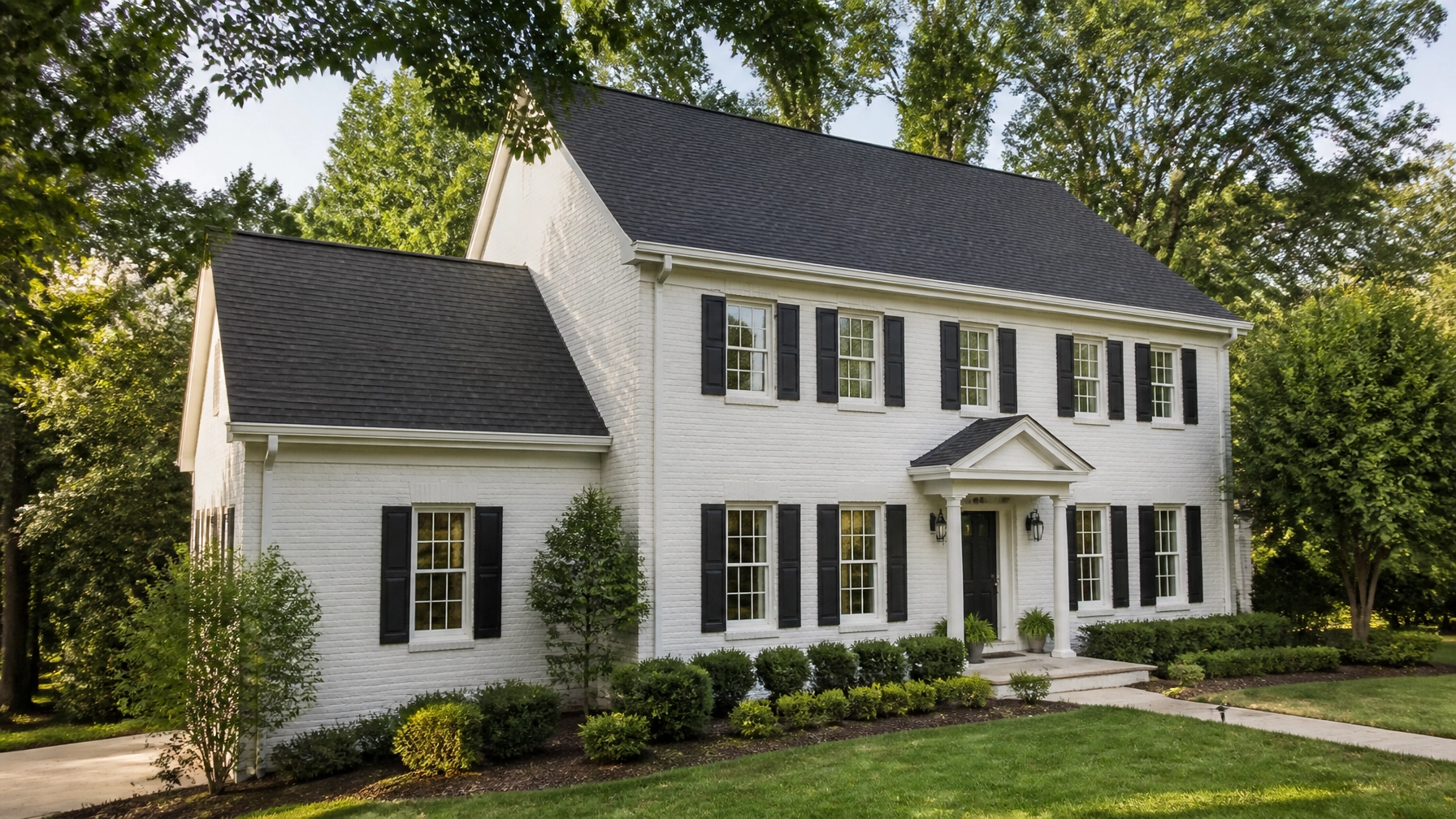
    Fresh architectural shingle roof on a two-story Southern Colonial home

    What DIY roofing really requires

    A roof replacement is more than installing shingles. A complete system includes:

    • Roof decking inspection
    • Ice and water protection where required
    • Synthetic underlayment
    • Drip edge
    • Starter course
    • Correct shingle nailing pattern
    • Valley flashing
    • Step flashing around walls and chimneys
    • Pipe boots and roof penetrations
    • Ridge vents and intake ventilation
    • Proper fastening for the local wind design
    • Clean tear-off and debris removal

    A small error can produce a large problem. Misplaced nails may cause leaks. Poorly installed flashing can damage siding and framing. Blocked ventilation can shorten shingle life and contribute to heat and moisture problems.

    Dothan’s local wind-load requirement is 120 mph. Materials and fastening methods must meet applicable code and manufacturer requirements. A roof that looks acceptable from the ground may still fail an inspection or perform poorly during a high-wind event.

    DIY safety is a serious factor

    Roofing combines several hazards:

    • Falls from roof edges, ladders, and wet surfaces
    • Heat exhaustion during long summer workdays
    • Electrocution near overhead lines
    • Nail-gun punctures and ricochets
    • Hand and back injuries from carrying shingles
    • Falling materials that injure people or damage property

    A professional crew can generally complete a straightforward replacement in one to three days. A homeowner working nights and weekends may need one to three weekends or longer, especially when weather, tear-off, or decking repairs interfere.

    Dothan permits and Alabama licensing rules

    The City of Dothan generally requires a permit for a full roof replacement. Homeowners can check the Dothan permit portal or contact Permits & Inspections at:

    Dothan Civic Center
    126 N Saint Andrews Street
    Dothan, AL 36303
    Phone: 334-615-4450
    Email: permits@dothan.org

    The city allows an owner to apply for a permit for their own property under owner-builder rules. You may need to prove ownership, and the city states that no business license is needed for an owner working on their own home.

    However, that does not mean a homeowner can use the exemption to hire an unlicensed roofer. Alabama’s Home Builders Licensure Board generally requires proper roofing licensing for residential roofing projects over $2,500. Review the Alabama HBLB requirements before beginning work.

    If you hire a contractor, verify that the company has:

    • A City of Dothan business license
    • The required surety bond
    • An Alabama residential roofing license or qualifying home-builder license
    • General liability insurance
    • Workers’ compensation coverage
    • A clear permit and inspection process

    Dothan may require deck and final inspections. Debris removal is the applicant’s responsibility. Historic district properties may also need Planning & Development or Historic Preservation Commission approval. Minor non-structural repairs under $1,000 may qualify for a waiver at the Building Official’s discretion, but a full replacement should not be assumed exempt.

    ROI, resale value, and curb appeal

    The best roof for home value is not always the most expensive roof. It is the roof that matches the home, local weather, buyer expectations, and installation requirements.

    A professionally installed asphalt shingle replacement typically recoups approximately 60%–68% of its cost at resale, based on 2026 Cost vs. Value-style benchmarks. The return is not a guaranteed dollar-for-dollar increase. Instead, the roof helps protect value by reducing buyer objections and inspection negotiations.

    A documented roof replacement can support:

    • Stronger new roof ROI home value
    • Better roof replacement resale value
    • Improved roof curb appeal home value
    • Fewer insurance and inspection questions
    • Greater buyer confidence
    • A transferable manufacturer warranty, when available

    The paperwork matters. Buyers and appraisers may ask whether the work was permitted, who performed it, whether inspections were completed, and whether warranties can transfer.

    A DIY roof without permits, invoices, inspection records, or a workmanship warranty can create red flags. A buyer may request a professional evaluation, negotiate a credit, or question whether the roof meets code. Insurance carriers may also scrutinize roof age, condition, installation, and storm damage history in hail-prone Houston County.

    FORTIFIED roofing and insurance considerations

    Dothan homeowners should also ask about wind and hail mitigation. Alabama’s Strengthen Alabama Homes program has offered grants of up to $10,000 for eligible FORTIFIED Roof retrofits. Availability, county eligibility, application windows, and contractor requirements can change, so review the official Strengthen Alabama Homes program before budgeting around a grant.

    Alabama FORTIFIED discounts are commonly discussed in approximate ranges such as:

    • FORTIFIED Roof: 25%–35% of the wind portion
    • FORTIFIED Silver: 35%–45% of the wind portion
    • FORTIFIED Gold: 45%–55% of the wind portion

    Actual savings depend on the insurer, policy, certification, and underwriting rules. Class 4 shingles may also qualify for separate insurer hail credits.

    A DIY roof may not qualify for the documentation, evaluator confirmation, or certified installation required by a specific FORTIFIED or insurance program. Ask the program administrator and your insurer before selecting materials.

    Modern Alabama home with a new charcoal standing-seam metal roof

    When DIY may make sense

    DIY replacement is only reasonable for a homeowner with substantial roofing experience, strong safety systems, enough time, and a clear understanding of local code.

    It may be more appropriate when:

    • The roof is simple and low-pitched
    • The homeowner is performing the work personally
    • There are no complex valleys, dormers, or skylights
    • The decking is known to be sound
    • The homeowner can arrange inspections
    • The project is not tied to a near-term home sale
    • The homeowner accepts the warranty and resale limitations

    A small repair may be a realistic DIY task. A complete replacement on a complex or steep roof is a different category of work.

    When hiring a professional is the better choice

    Professional installation is usually the stronger option when:

    • You plan to sell within the next five to ten years
    • Your home is in Westgate, Beverlye, Hidden Lake, Deer Path, the Hodgesville Road area, or the Taylor area
    • The property is older or located near Dothan’s historic district
    • The roof has storm, hail, or wind damage
    • You are considering standing-seam metal
    • You need a FORTIFIED roof or insurance documentation
    • The roof includes multiple valleys, chimneys, or penetrations
    • You want a workmanship warranty
    • You need the project completed quickly

    For older homes around downtown and midtown, permit records and historic approvals deserve special attention. For homes in ZIP codes 36301, 36302, 36303, 36304, and 36305, local pricing still varies by roof complexity and contractor availability, not simply by ZIP code.

    Completed residential roof replacement showing clean flashing, valleys, drip edge, and ridge ventilation

    Get a Dothan roof estimate before choosing DIY

    Start with the actual size and complexity of your roof. Get My Roof Estimate Now uses satellite imagery to measure roof areas, pitch, and complexity within inches, typically producing an estimate in 60 seconds.

    The estimate is:

    • Free
    • Available without a credit card
    • Based on your property address
    • Available without an initial contractor visit
    • Designed to show low, middle, and high price ranges

    Get your free satellite roof estimate. Use it to compare DIY material costs against a professionally installed roof before ordering supplies or signing a contract.

    FAQ

    Is it cheaper to replace a roof yourself in Dothan?

    Usually, yes: but not by as much as materials-only pricing suggests. A DIY architectural shingle project may cost approximately $5,300–$10,000 after equipment, permitting, disposal, and basic extras. Unexpected decking repairs, injuries, rework, or disposal overages can increase that total.

    Does Dothan require a permit for roof replacement?

    A full roof replacement generally requires a City of Dothan permit. Confirm your specific scope with Permits & Inspections at 334-615-4450 or through the city’s online permit portal.

    Can I pull my own roof permit?

    Dothan allows an owner to apply for work on their own property under owner-builder rules. Alabama’s exemption is limited and generally requires the owner to personally perform and supervise the work. It cannot be transferred to an unlicensed contractor.

    What roof has the best resale value?

    For many Dothan homes, a permitted and professionally installed architectural shingle roof offers the best balance of cost, appearance, weather performance, and buyer acceptance. Standing-seam metal may provide long service life and strong curb appeal, but its higher initial price does not guarantee a higher resale return.

    How much roof replacement cost is recovered at resale?

    A professionally installed asphalt shingle replacement may recover approximately 60%–68% of its cost at resale. Documentation, permits, installation quality, warranty coverage, and local market conditions affect the result.

  • Daily Weather Blitz – Slot 3: Montgomery, AL : September 7, 2026: Pop-Up Storms & Heavy Downpours for Labor Day, a Drier Midweek Window & What the River Region’s Heat-to-Downpour Pattern Does to Your Roof’s Durability

    Daily Weather Blitz – Slot 3: Montgomery, AL : September 7, 2026: Pop-Up Storms & Heavy Downpours for Labor Day, a Drier Midweek Window & What the River Region’s Heat-to-Downpour Pattern Does to Your Roof’s Durability

    Montgomery’s Labor Day forecast is not a washout: but it is a day to keep an eye on the sky.

    According to WSFA 12 News, the Capital City and surrounding River Region will be hot and humid Monday, September 7, with a few pop-up showers and thunderstorms developing as daytime heat builds. Highs should reach the middle 90s, around 94–95°F where storms do not form.

    The storm coverage will be spotty. However, any storm that develops could produce a brief heavy downpour, frequent lightning, and gusty winds.

    That weather pattern matters to your roof. Montgomery’s long hot season, high humidity, intense sunlight, and repeated thunderstorms create several forms of cumulative stress: even when no single storm causes obvious damage.

    Montgomery Weather at a Glance

    • Today: Hot, humid, and partly to mostly sunny before storms develop.
    • High temperature: Approximately 94–95°F in areas that remain dry.
    • Storm timing: Pop-up showers and thunderstorms are most likely during the afternoon and early evening.
    • Rain character: Spotty coverage, but locally heavy downpours are possible.
    • Storm hazards: Frequent lightning, gusty winds, and brief intense rainfall.
    • Heat background: Earlier in the holiday weekend, heat indices approached 105°F. Slightly lower dewpoints kept conditions below heat-advisory criteria.
    • Tuesday–Wednesday: Slightly drier air arrives from the east, lowering rain chances.
    • Thursday–Friday: Richer Gulf moisture returns, increasing humidity and afternoon storm chances.
    • Weekend trend: Rain chances should begin to taper.

    For outdoor plans, the practical advice is simple: do not automatically cancel, but have an indoor option ready and monitor radar as temperatures peak.

    The Week-Ahead Pattern: Drier, Then More Gulf Moisture

    Tuesday and Wednesday: A Better Roof-Check Window

    Slightly drier air should move into central Alabama from the east Tuesday and Wednesday. Expect mostly sunny to partly cloudy conditions, lower rain chances, and highs in the lower to middle 90s.

    This is the best short-term window for a ground-level roof and drainage check.

    You may not see storm damage from the street immediately after a downpour. A quick inspection of gutters, downspouts, roof edges, and visible shingles can identify problems before the next round of tropical moisture arrives.

    Thursday and Friday: Humidity and Storm Chances Increase

    By late week, richer moisture from the Gulf is expected to push north. Afternoon shower and thunderstorm chances should increase Thursday and Friday, with heat-feel values potentially approaching 100°F.

    More moisture means more than discomfort. It increases the likelihood of repeated heavy-rain events, slower drying, and moisture exposure around roof penetrations and drainage systems.

    The weekend outlook is somewhat more favorable, with rain chances expected to trail off.

    For updated local conditions, check WSFA weather coverage and the Alabama Weather Network forecast page.

    Why Montgomery’s Climate Is Hard on Roofs

    Montgomery has a humid subtropical climate. The Capital City also sits within the broader Dixie Alley severe-weather belt, where spring and warm-season storms can produce damaging wind, hail, lightning, and tornadoes.

    The region has already experienced severe spring weather in 2026, including reports of hail around 2.5 inches in the broader Montgomery area. Even though September storms are typically driven by heat and humidity rather than a major spring outbreak, they still create meaningful roofing risks.

    1. Heat and UV Exposure Age Shingles

    Repeated exposure to temperatures in the 90s, high humidity, and strong sunlight can accelerate asphalt-shingle aging.

    Over time, that stress may contribute to:

    • Granule loss
    • Curling or lifted edges
    • Surface cracking
    • Thermal splitting
    • Brittle seal strips and exposed underlayment

    A roof can still look acceptable from the driveway while its protective surface is beginning to deteriorate. Granules in gutters are often an earlier warning sign than a visible leak.

    Ground-level view of a Southern Alabama home with aging asphalt shingles and subtle granule loss after hot, humid weather

    2. Downpours Test Flashing, Valleys, and Gutters

    A short storm can deliver a large amount of rain in a limited period. That concentrated flow tests the parts of the roof system responsible for moving water away from the home:

    • Valley flashing
    • Chimney and wall flashing
    • Pipe boots
    • Skylight edges
    • Drip edges
    • Gutters and downspouts

    Clogged gutters are especially problematic. When leaves and debris block drainage, water can back up beneath the roof edge and contribute to fascia damage, soffit deterioration, and edge rot.

    3. Humidity Encourages Algae and Moss

    Persistent moisture supports black algae streaks and moss growth. These are not only cosmetic issues.

    Algae can darken shingles and increase heat absorption. Moss can hold moisture against the roofing surface, lift shingle edges, and keep vulnerable areas damp between storms.

    Avoid pressure-washing asphalt shingles. It can remove protective granules and shorten roof life. If growth is widespread, ask a qualified roofing professional about an appropriate cleaning or replacement strategy.

    4. Lightning Creates a Separate Risk

    Frequent lightning is a real concern in the River Region. A strike can damage electrical systems, attic components, vents, or sections of the roof: even when there is no obvious hole.

    After a nearby strike, watch for:

    • Burn marks or damaged roof penetrations
    • Tripped breakers or damaged electronics
    • Smoke or unusual odors
    • New attic stains
    • Missing or displaced shingles

    Whole-home surge protection is worth discussing with a licensed electrician, particularly if your home has sensitive electronics, solar equipment, or a history of nearby lightning activity.

    Practical Labor Day Roof Check

    Do not climb onto the roof. From the ground, attic, and safely accessible areas, look for the following.

    Outside the Home

    • Check whether gutters are overflowing or pulling away from the fascia.
    • Confirm that downspouts discharge water away from the foundation.
    • Look for missing, lifted, cracked, or curled shingles.
    • Scan for exposed underlayment or damaged flashing.
    • Check for fallen branches, loose debris, or unusual dark patches.
    • Look for excessive granules in gutters and at downspout outlets.

    Inside the Attic

    Use a flashlight and look for:

    • Brown or yellow water stains
    • Damp insulation
    • Daylight through roof decking
    • Musty odors
    • Signs of mold or excessive heat
    • Sagging wood around roof penetrations

    Do not assume a dry attic means the roof is fine. Some storm-related leaks only appear during wind-driven rain or when a roof valley receives a concentrated flow.

    Document Anything Suspicious

    Take clear photos from the ground and inside the attic. Record the date, approximate storm time, and the location of any visible issue.

    If damage appears recent, contact your insurance carrier before making major repairs. Temporary measures may be appropriate to prevent additional water entry, but permanent work should be documented and completed by a qualified contractor.

    What Roof Replacement Costs in Montgomery

    For Montgomery homeowners, a realistic planning range for a full roof replacement is approximately $7,000–$18,500.

    A typical 2,000-square-foot roof using architectural shingles commonly lands near $11,500, although the final price depends on:

    • Roof size, measured in squares
    • Pitch and accessibility
    • Number of valleys, dormers, and penetrations
    • Tear-off requirements
    • Decking or flashing repairs
    • Material selection
    • Local labor and disposal costs

    Architectural shingles are the most common value choice. Metal roofing costs more upfront but may provide a longer service life and a different approach to heat, wind, and maintenance concerns. Review options with a contractor rather than choosing solely on initial price.

    You can also review broader material ranges with the Get My Roof Estimate Now roof cost calculator.

    Fresh architectural shingle roof on a Montgomery-style colonial home after a summer thunderstorm, with clear gutters and wet pavement

    Get a Montgomery Roof Estimate Before the Next Storm Cycle

    Satellite-based estimating gives you a fast planning number before you schedule contractor visits.

    With Get My Roof Estimate Now, homeowners can:

    • Enter their address
    • View satellite-measured roof dimensions
    • Review estimated roof size, pitch, and complexity
    • Compare material options
    • See low, middle, and high price ranges
    • Get results in about 60 seconds

    The estimate is free, requires no credit card, and does not require an initial contractor visit. Measurements are designed to be accurate within inches in typical conditions, although an in-person inspection is still important before final contracting: especially after hail, wind, or lightning damage.

    Modern Alabama home with a new standing-seam metal roof, clean rooflines, and humid-season landscaping

    The Bottom Line for Montgomery Homeowners

    Montgomery’s Labor Day weather offers usable outdoor conditions: but only if you are ready for a sudden storm. Pop-up downpours, lightning, and gusty winds remain possible Monday, followed by a drier Tuesday-Wednesday window and another increase in Gulf moisture Thursday and Friday.

    Use the midweek break to inspect gutters, downspouts, visible shingles, flashing, and the attic. Heat, UV exposure, humidity, algae, and repeated downpours can reduce roof durability gradually, long before a major leak appears.

    If your roof is 15–30 years old, showing granule loss or curling, or has a history of storm damage, get a current replacement-cost benchmark now. A free satellite roof estimate takes about 60 seconds and gives you a clearer starting point before the next storm cycle.

    Local sources: WSFA 12 News, WSFA Weather, Alabama Weather Network, and the National Weather Service Birmingham/Montgomery forecast office.

  • Daily Tech Blitz – Slot 6: San Antonio’s Satellite Tech Edge Is Bringing Alamo City Precision to South Texas Roofs

    Daily Tech Blitz – Slot 6: San Antonio’s Satellite Tech Edge Is Bringing Alamo City Precision to South Texas Roofs

    San Antonio has always been a city where technology and infrastructure matter. JBSA-Lackland, Fort Sam Houston, cybersecurity operations, aerospace contractors, and UTSA’s research community have helped make the Alamo City a serious geospatial and technology hub.

    That same technology is now changing how homeowners plan roof replacement.

    In September 2026, satellite and geospatial AI systems are moving beyond simple aerial photographs. They can analyze imagery in orbit, compare property changes over time, and combine high-resolution images with 3D elevation data. For San Antonio homeowners, that means faster and more informed answers about roof size, pitch, complexity, condition, and replacement cost.

    A typical 2,000-square-foot San Antonio roof currently falls into these broad replacement ranges:

    • Architectural asphalt shingles (Popular): $9,000–$15,000
    • Standing-seam metal (Premium): $14,000–$28,000
    • Concrete tile (Premium): $15,000–$24,000

    These are budgeting benchmarks, not final contractor bids. Roof pitch, tear-off requirements, ventilation, decking repairs, flashing, access, permits, and material availability can move the final price.

    San Antonio Is Becoming a Real-World Test Case for Roof Intelligence

    San Antonio’s climate creates a demanding environment for roofing materials:

    • Triple-digit summer temperatures
    • Intense ultraviolet exposure
    • Hail and severe thunderstorms
    • Thermal expansion and contraction
    • Rapid weather shifts
    • Heavy cooling demand

    A roof that looks acceptable from the street may have aging underlayment, brittle shingles, exposed flashing, or heat-related deterioration. Homeowners need accurate measurements and realistic pricing before deciding whether to repair, replace, or upgrade.

    That is where satellite-powered estimating helps. Instead of waiting days or weeks for several contractors to visit simply to provide a ballpark number, homeowners can enter their address and receive an initial estimate in about 60 seconds.

    Get an instant San Antonio roof estimate at no cost and without entering a credit card.

    Three Geospatial Developments That Matter for Roofing

    1. NASA’s Prithvi model is analyzing imagery in orbit

    NASA and IBM’s Prithvi geospatial AI foundation model became the first model of its kind deployed in orbit. Researchers tested it on the Kanyini satellite and an International Space Station payload for tasks including flood detection and cloud mapping.

    According to NASA’s report on Prithvi, processing imagery in orbit can reduce the amount of raw data that must be transmitted to Earth. Important information can be identified sooner, while cloudy or irrelevant images can be filtered out.

    The roofing connection is straightforward: faster image processing supports faster property analysis.

    Prithvi is not a consumer roof-estimating tool, and it does not replace a professional roof inspection. However, it demonstrates an important direction for the industry: satellite systems are becoming active analytical platforms rather than passive cameras.

    2. Planet is developing plain-language geospatial queries

    Planet Labs is building an agentic geospatial AI system that allows users to ask questions in ordinary language. A user could ask where new construction is appearing, which buildings changed after a storm, or where large roof changes occurred over a defined period.

    The system can search satellite archives, compare imagery over time, identify likely changes, and return mapped results. Planet’s agentic geospatial AI announcement describes this as a way to make complex geospatial analysis more accessible to non-experts.

    For roofing, this could eventually help identify:

    • Major roof replacements
    • Large-scale storm damage
    • New construction
    • Building additions
    • Roof changes across neighborhoods or property portfolios

    Current satellite resolution still limits the level of detail. It may show a building-scale change, but it cannot reliably identify every missing shingle or small flashing defect. Those findings still require an inspection.

    San Antonio home with a new light-colored reflective shingle roof

    3. NASA is expanding access to commercial imagery and elevation data

    NASA’s Commercial Smallsat Data Acquisition program added commercial products from Satellogic and Vantor, formerly known as Maxar.

    The available products include:

    • Satellogic multispectral imagery at approximately 99 centimeters
    • Vantor color imagery at approximately 30 centimeters
    • Vantor 3D elevation and terrain products, including models around the 1-meter class depending on the dataset

    NASA’s CSDA commercial data resources show how commercial imagery is becoming more useful for urban mapping, disaster response, elevation analysis, and infrastructure planning.

    For a roof estimate, imagery and elevation data can help determine:

    • Roof area
    • Roof sections and planes
    • Approximate pitch
    • Roof complexity
    • Dormers, valleys, and attached structures
    • Material quantities

    What Satellite Roof Measurement Actually Does

    Satellite estimating uses imagery, geographic positioning, automated roof segmentation, and mathematical modeling to calculate a roof’s footprint and shape.

    The process generally looks like this:

    1. You enter the property address.
    2. The system locates the structure using satellite and geospatial data.
    3. Artificial intelligence identifies roof planes and boundaries.
    4. The platform estimates dimensions, pitch, and complexity.
    5. Regional labor and material pricing are applied.
    6. You receive low, middle, and high replacement ranges.

    The result is a fast planning estimate. Get My Roof Estimate Now uses satellite-powered measurements designed to be accurate within inches in many cases, with typical measurement accuracy in the 90%–95% range.

    That estimate is useful for budgeting, comparing materials, preparing for a sale, or deciding whether to schedule contractor appointments. It is not a substitute for checking decking, attic ventilation, chimney flashing, code requirements, or hidden moisture damage.

    UTSA Research Connects Roof Color to San Antonio Heat

    San Antonio’s roofing conversation is not only about storm protection. It is also about heat management.

    A 2026 UTSA computational fluid dynamics study examined roof retrofits for thermally vulnerable older homes in San Antonio. The research modeled a change in roof albedo: the amount of sunlight a surface reflects: from approximately 0.20 to 0.80.

    The modeled results showed:

    • About 75% less roof heat absorption
    • About 60% less conductive heat transfer into the home

    The practical takeaway is simple: a light-colored or reflective roof can reduce the amount of solar energy transferred into the building. That can ease cooling demand, particularly in homes with older insulation or limited attic ventilation.

    UTSA’s wider heat research, including work connected to the Historic Westside digital twin project, uses sensors, AI, and building models to study how housing interventions affect local heat exposure. The City of San Antonio also operates Under 1 Roof: Cool Roofs for High-Heat Areas, which may provide assistance to eligible homeowners.

    Reflective roofing is not a universal answer. Roof orientation, shade, insulation, ventilation, material durability, and neighborhood design all matter. But in South Texas, color and solar reflectance deserve attention during replacement planning.

    San Antonio Roof Replacement Cost Benchmarks for 2026

    For a typical 2,000-square-foot roof, these ranges provide a starting point:

    Roofing material Approx. cost per sq. ft. Typical total Positioning
    Architectural asphalt shingles $4.50–$7.50 $9,000–$15,000 Popular
    Standing-seam metal $7.00–$14.00 $14,000–$28,000 Premium
    Concrete tile $7.50–$12.00 $15,000–$24,000 Premium

    These figures may include standard installation but can change with tear-off layers, structural repairs, steep slopes, complex rooflines, or premium accessories.

    A roof cost calculator can help you establish a preliminary budget before requesting detailed bids.

    San Antonio home with a new standing-seam metal roof

    Which Roof Is Best for Home Value?

    For many San Antonio homeowners, architectural asphalt shingles offer the strongest balance of cost, appearance, and buyer familiarity.

    Architectural shingles (Popular)

    Best for homeowners who want:

    • A controlled upfront budget
    • Broad color and style selection
    • Straightforward repairs
    • Strong neighborhood compatibility
    • Good resale appeal without a premium material investment

    Light-colored architectural shingles may also reduce solar heat absorption compared with darker products.

    Standing-seam metal (Premium)

    Metal roofing offers long service life, strong wind performance, and excellent reflective options. Cool or light-colored metal can be particularly useful in South Texas.

    However, the higher initial cost may not be recovered dollar-for-dollar at resale. Buyers may value the durability, but local market conditions determine how much of the premium appears in the sale price.

    See the company’s metal roofing guide for additional planning information.

    Concrete tile (Premium)

    Concrete tile can complement stucco, Spanish, Mediterranean, and Southwestern architecture. It offers a distinctive appearance and strong durability.

    The tradeoffs include heavier structural loads, higher installation costs, and more specialized repairs. It is most compelling when the home’s design and local buyer preferences support the investment.

    Does a New Roof Increase Resale Value?

    A new roof can improve resale value, but the benefit is often indirect.

    The biggest advantages are:

    • Fewer inspection objections
    • Lower buyer concern about near-term repairs
    • Better curb appeal
    • Potentially improved insurance positioning
    • More predictable closing negotiations
    • Greater confidence for buyers and appraisers

    A roof replacement rarely guarantees a full return on investment. The best financial decision is usually the one that solves a real condition problem, matches the home’s architecture, and avoids over-improving beyond the neighborhood.

    Frequently Asked Questions

    Can satellite imagery detect hail damage?

    Usually not with enough detail to confirm individual hail strikes. Satellite analysis may identify broad roof changes or storm-related patterns, but a professional inspection is still needed for hail damage documentation.

    How accurate is a satellite roof estimate?

    Measurements are typically designed to reach approximately 90%–95% accuracy, often within inches. Final pricing can still change after a contractor confirms decking, flashing, ventilation, access, and local requirements.

    Do I need a contractor visit to get started?

    No. You can receive an initial estimate before scheduling an in-person appointment. A contractor visit is still appropriate before signing a replacement contract.

    Are reflective roofs worth considering in San Antonio?

    They can be, especially for older homes with high cooling demand. Light-colored shingles and reflective metal may reduce solar heat absorption. Insulation and ventilation should be evaluated at the same time.

    Is the estimate really free?

    Yes. Get My Roof Estimate Now provides an instant estimate without a credit card and without hidden fees.

    Get Your San Antonio Roof Estimate in 60 Seconds

    San Antonio’s satellite and geospatial technology ecosystem is making roof planning faster, more measurable, and easier to understand. You can use that information to budget for a replacement, compare asphalt shingles with metal or tile, evaluate a cool-roof upgrade, or prepare your home for sale.

    Start with a free, satellite-powered estimate at getmyroofestimatenow.com. Enter your address and receive a transparent San Antonio roof replacement price range in about 60 seconds: then connect with verified, licensed, and insured local contractors when you are ready.

  • Daily Tech Blitz – Slot 7: Asheville’s Satellite Tech Edge Is Bringing Land-of-the-Sky Precision to Blue Ridge Roofs

    Daily Tech Blitz – Slot 7: Asheville’s Satellite Tech Edge Is Bringing Land-of-the-Sky Precision to Blue Ridge Roofs

    Asheville has earned its “Land of the Sky” identity. It is also a major center for environmental, satellite, and geospatial data.

    Downtown Asheville is home to NOAA’s National Centers for Environmental Information (NCEI), one of the world’s largest environmental data archives. UNC Asheville’s NEMAC turns that data into practical mapping and resilience tools. After Hurricane Helene, high-resolution aerial mapping and LiDAR helped document damage across western North Carolina.

    That technology is now relevant to homeowners, too.

    Satellite-powered roof estimating gives Asheville homeowners a fast way to understand roof size, pitch, complexity, and replacement cost: without waiting days for an initial contractor visit.

    Asheville Already Runs on Satellite Data

    NOAA NCEI archives more than 229 terabytes of data every month from over 130 observing platforms. Its collection includes atmospheric, oceanic, climate, and satellite information, including data from the GOES-R and JPSS satellite programs.

    That means Asheville is not simply surrounded by mountains and weather systems. It is also home to infrastructure that constantly measures them.

    In an important 2026 update, NOAA announced that its National Environmental Satellite, Data, and Information Service (NESDIS) is moving data, products, and services housed in Asheville and Boulder to the Amazon Web Services (AWS) cloud through Spring 2027.

    According to NOAA NCEI, cloud access will make large datasets easier to use for:

    • Artificial intelligence and machine learning
    • Faster product development
    • Disaster-resilient data storage
    • On-demand access to large files
    • More reliable public services

    The same basic principle applies to roof estimating: collect high-quality imagery, analyze it quickly, and turn complex measurements into a useful answer.

    NEMAC Turns Orbital Data Into Local Decisions

    UNC Asheville’s National Environmental Modeling and Applications Center (NEMAC) is an applied research center focused on science communication, geospatial analysis, and decision-support tools.

    NEMAC helps make technical data understandable and useful for communities, planners, emergency managers, and homeowners.

    Its work includes:

    • The U.S. Climate Resilience Toolkit, developed with NOAA
    • The Climate Explorer, which provides county-level climate projections
    • ForWarn forest disturbance monitoring using satellite imagery
    • The Forest Change Assessment Viewer
    • Landslide hazard tools developed with the North Carolina Geological Survey
    • Broadband service-gap mapping for western North Carolina
    • Geospatial tools used in Asheville’s NOAA “Steps to Resilience” planning

    This is practical technology: not science fiction. Satellite and aerial data can show how forests change, where slopes are vulnerable, how climate conditions are shifting, and where mountain communities lack reliable connectivity.

    For a homeowner in Buncombe County, the benefit is simpler: remote imagery can provide a strong starting point for measuring a roof before scheduling an in-person inspection.

    New architectural shingle roof on a wooded Asheville-area home with dormers and complex roof valleys

    After Helene, the Sky Mapped the Damage

    Hurricane Helene struck western North Carolina on September 27, 2024. Parts of the region received approximately 20 to 30 inches of rain, creating a rainfall event described as less likely than once in 1,000 years.

    The recovery required more than ground inspections. Roads were blocked, slopes were unstable, and many properties were difficult to reach.

    The North Carolina Collaboratory redirected $4 million in digital engineering funds to acquire high-resolution LiDAR and six-inch digital orthophotography across 13 hard-hit counties. Flights took place from January through March 2025, during “leaf-off” conditions when foliage would not obstruct the imagery.

    The resulting datasets are being made available through NC OneMap.

    Jeffrey Warren, PhD, executive director of the North Carolina Collaboratory, explained the value of the data:

    “These are data we’ll be using for years. It’s not just about the research and analysis focused on recovery; it’s also about the research and analysis that will allow western North Carolina to be better prepared for the next storm, regardless of magnitude.”

    The LiDAR is detailed enough to help analysts identify individual power lines, mailboxes, and fire hydrants. It also creates a before-and-after record that supports FEMA requests, flood modeling, landslide analysis, and long-term rebuilding.

    For homeowners, the lesson is direct: remote mapping can reveal valuable property information even when physical access is delayed.

    Satellite Broadband Keeps Mountain Communities Connected

    Helene also exposed the limits of traditional connectivity in the mountains.

    Flooding, downed trees, damaged fiber, power failures, and inaccessible roads disrupted terrestrial networks across western North Carolina. Satellite broadband systems such as Starlink helped reconnect emergency operations centers, fire stations, shelters, responders, and residents.

    As WRAL reported, Starlink terminals were requested for emergency communications and family reconnection.

    Satellite broadband does not replace fiber or cellular infrastructure. It provides a resilient backup when those systems fail.

    Satellite roof measurement follows a similar logic. It does not replace a final inspection by a qualified roofing professional. It provides fast, useful information before that inspection: especially when homeowners need to plan around storm damage, difficult terrain, or busy contractor schedules.

    What Satellite Roof Measuring Actually Does

    Get My Roof Estimate Now uses satellite imagery and AI-assisted analysis to produce a property-specific replacement estimate in under 60 seconds.

    The process is simple:

    1. Enter your Asheville-area address.
    2. Confirm the property.
    3. Let the system analyze the roof.
    4. Receive estimated dimensions and low-middle-high replacement pricing.

    The system evaluates:

    • Roof size in square feet and roofing squares
    • Roof pitch or steepness
    • Roof sections and complexity
    • Regional labor and material pricing
    • Material choices such as architectural shingles, metal, synthetic roofing, and coatings

    Measurements are designed to be approximately 90% to 95% accurate, often within inches of actual roof dimensions. The estimate is free, requires no credit card, and does not require an upfront contractor visit.

    It is best used for budgeting, comparing material options, and deciding whether to move forward with an in-person inspection.

    Asheville Roof Replacement Benchmarks for 2026

    Most Asheville-area roofs measure approximately 1,500 to 3,000 square feet, or 15 to 30 roofing squares.

    Roofing option Local planning range Category Best fit
    Architectural asphalt shingles on a 2,000-square-foot roof $10,500–$14,000 Popular Most homeowners seeking value and broad style options
    Typical Asheville roof replacement $8,000–$14,500 Common Smaller or moderately complex shingle roofs
    Standing-seam metal roofing Often $18,000–$30,000+ Premium Long service life, distinctive appearance, and steep or exposed sites
    Synthetic roofing or premium systems Approximately $16,000–$32,000 Premium Homeowners seeking upgraded appearance or performance
    Roof coatings, where appropriate Approximately $6,000–$7,500 Specialized Certain low-slope roofs, subject to professional evaluation

    These are planning benchmarks, not final contractor bids. Tear-off, rotten decking, flashing repairs, permits, steep access, chimney work, and insurance-related requirements can change the final price.

    Use the roof cost calculator for a general comparison, or get a property-specific estimate from Get My Roof Estimate Now.

    Modern Asheville mountain home with a new standing-seam metal roof and clean architectural lines

    Asheville’s Mountain Climate Puts Roofs Under Pressure

    Blue Ridge roofs face several conditions that can shorten roof life:

    • Freeze-thaw cycles that stress flashing and roofing materials
    • Snow and ice dams on shaded or steep slopes
    • Hail and high winds during spring and summer storms
    • Strong ultraviolet exposure at higher elevations
    • Moss and algae growth on shaded roof sections
    • Heavy rain and wind-driven moisture
    • Falling branches in wooded neighborhoods
    • Older roofs between 15 and 30 years old

    Helene-adjacent wear makes a remote measurement especially useful. It can help establish a baseline before you compare repair and replacement options.

    How to Check Your Roof After a Storm

    Do not climb onto a wet, steep, or damaged roof. Instead:

    1. Inspect from the ground. Look for missing shingles, exposed underlayment, damaged flashing, or sagging areas.
    2. Check ceilings and attic spaces safely. Look for new stains, damp insulation, daylight, or musty odors.
    3. Photograph visible damage. Take wide and close-up images from a safe location.
    4. Check gutters and downspouts. Granules, shingle pieces, or large debris can indicate damage.
    5. Protect active leaks. Use containers indoors and contact a qualified professional. Do not make dangerous roof repairs yourself.
    6. Contact your insurer if appropriate. Keep records of the storm date, damage, temporary protection, and communications.
    7. Get a fast cost baseline. A satellite estimate can help you understand likely replacement pricing before contractor appointments.

    For Helene-related primary residence repairs, review Buncombe County’s Tropical Storm Helene recovery resources. The county’s Reduce to Rebuild program provides a 50% reduction in certain planning and inspection fees through June 30, 2027.

    Asheville Roof FAQ

    How accurate is a satellite roof estimate?

    Satellite-based estimates are designed to be approximately 90% to 95% accurate for roof dimensions. An in-person inspection is still needed to identify hidden decking damage, flashing problems, ventilation issues, and other conditions that imagery cannot see.

    Can I get an estimate without a contractor visit?

    Yes. You can receive a free preliminary replacement estimate without an upfront contractor visit. A local professional may recommend an in-person inspection before providing a final contract price.

    How much does an Asheville roof replacement cost in 2026?

    Many local projects fall between $8,000 and $14,500, while a typical 2,000-square-foot architectural shingle roof commonly ranges from $10,500 to $14,000. Metal and premium systems cost more.

    Does the estimate cost anything?

    No. The estimate is free, requires no credit card, and has no obligation.

    What if my roof was damaged by Helene?

    Document the damage from the ground, contact your insurer if appropriate, and arrange a professional inspection. You can also use a satellite estimate to establish a replacement-cost baseline while reviewing Buncombe County recovery resources.

    What roofing material works best in Asheville?

    Architectural asphalt shingles are the most common choice. Standing-seam metal is a premium option for homeowners prioritizing longevity and a distinctive appearance. The best material depends on roof pitch, budget, exposure, structure, and installation quality.

    Get Your Land-of-the-Sky Roof Estimate

    Asheville already uses satellite data to understand climate, forests, hazards, recovery needs, and connectivity gaps. Homeowners can now use the same broader technology trend to make roof planning faster and more transparent.

    Enter your address at Get My Roof Estimate Now and receive a free, satellite-powered roof replacement estimate in under 60 seconds.

  • Daily ROI Blitz – Slot 5: Tuscaloosa, AL New Roof ROI : How a Hail-Ready Replacement Adds Home Value in the Druid City in 2026

    Daily ROI Blitz – Slot 5: Tuscaloosa, AL New Roof ROI : How a Hail-Ready Replacement Adds Home Value in the Druid City in 2026

    A new roof in Tuscaloosa typically costs $8,000–$28,000, depending on material, roof complexity, pitch, tear-off requirements, and installation standards. For a typical 2,000-square-foot roof, architectural shingles average about $12,400, while standing-seam metal can reach $16,500–$28,000.

    The investment can protect the home, improve buyer confidence, reduce storm exposure, and recover a meaningful share of its cost at resale. National benchmarks put asphalt shingle replacement ROI around 60%–68%. Fixr’s 2025 Alabama estimate was higher at 69.8%, while its East South Central regional average reached approximately 81%. Treat the regional figure as an indicator: not a guarantee for every Tuscaloosa property.

    Here is how a hail-ready roof replacement can affect value in the Druid City during 2026.

    Tuscaloosa Housing Market: Buyers Have More Choice

    The latest Alabama Center for Real Estate (ACRE) data show a market that is still healthy but less competitive than it was a year ago.

    July 2026 ACRE market snapshot

    • Median sales price: $274,450, up 3.9% year over year
    • Closed sales: 258, down 5.5% year over year
    • Inventory: 3.6 months of supply, up from 2.7 months in July 2025
    • Average days on market: 43 days
    • New-construction median price: $279,900

    ACRE considers roughly six months of inventory to be a balanced market. Tuscaloosa remains tighter than that, but rising inventory gives buyers more opportunities to compare condition, insurance costs, and expected maintenance.

    Zillow’s July 31, 2026 data provide another view:

    • Average Tuscaloosa home value: $232,816, up 1% year over year
    • Median sale-to-list ratio: 0.986
    • Sales under list price: 61.2%
    • Median time to pending: 38 days

    In this environment, a roof that is nearing the end of its service life can become a negotiation issue. A documented, recently installed roof gives buyers fewer reasons to request repairs, credits, or a price reduction.

    Neighborhood Value Is Not Uniform

    Roof ROI depends partly on the value and expectations of the surrounding neighborhood.

    Zillow’s neighborhood-level figures show a wide spread:

    • University: $468,688 median ZHVI
    • Forest Lake: $242,630
    • Greater Alberta: $181,358

    A roof replacement should match the property and the neighborhood. A basic three-tab roof may be practical for a modest home in Cottondale or Greater Alberta, while a premium architectural roof may better fit a renovated home near the University, Forest Lake, Queen City, or historic University-area districts.

    The same principle applies outside the city. Homeowners in Northport, Taylorville, Cottondale, and around Lake Tuscaloosa should consider local buyer expectations, tree coverage, roof pitch, and exposure to wind-driven rain.

    Ranch-style Alabama home with impact-resistant shingles

    2026 Tuscaloosa Roof Replacement Costs

    Roofing is priced by the square, with one square equal to 100 square feet of roof surface. A home with 2,000 square feet of living space may have more than 2,000 square feet of actual roof area because of pitch, overhangs, dormers, valleys, and attached structures.

    For a roof measuring approximately 2,000 square feet:

    Roofing system Typical installed range Positioning
    3-tab asphalt shingles $8,000–$12,000 Budget
    Architectural shingles $8,500–$16,600 Popular
    Class 4 impact-resistant shingles $11,500–$18,000 Storm-ready
    Standing-seam metal $16,500–$28,000 Premium

    Some local and national estimates place standing-seam metal closer to $15,000–$27,000. Actual pricing depends on material availability, roof access, flashing, ventilation, tear-off, permits, and concealed deck damage.

    Use a general roof cost calculator for a starting point, but do not treat a square-foot average as a property-specific quote.

    Asphalt Versus Metal: Which Has Better ROI?

    Architectural shingles (Popular)

    Architectural shingles generally offer the strongest balance of price, appearance, warranty, and resale appeal.

    Using a national 68% ROI benchmark:

    • $12,400 roof cost
    • Approximately $8,432 in cost recouped at resale
    • Remaining unrecovered cost: about $3,968

    This does not mean the home’s appraised value automatically rises by $8,432. ROI estimates are broad resale benchmarks. The roof may also help prevent inspection problems, insurance complications, and buyer requests for concessions.

    Class 4 shingles (Storm-ready)

    Class 4 impact-resistant shingles cost more than standard architectural shingles but are designed to better withstand impact from hail and debris. They may also qualify for an insurer-specific credit.

    Ask your carrier about:

    • Whether Class 4 materials qualify for a premium discount
    • Whether the discount applies to the whole policy or only a coverage portion
    • Whether the roof must be documented with an invoice, product certification, or inspection
    • Whether your hail deductible changes after installation

    Standing-seam metal (Premium)

    Metal roofing can provide long service life, strong wind performance, and a distinctive appearance. However, the national resale ROI benchmark is approximately 50%, lower than the typical asphalt benchmark.

    A $20,000 metal roof might translate to roughly $10,000 in resale value recaptured under that benchmark. The remaining value comes from durability, reduced maintenance, energy performance, and buyer preference: not immediate resale recovery alone.

    Tuscaloosa-area home with a new standing-seam metal roof

    Why Storm Resistance Matters in the Druid City

    Tuscaloosa’s most active severe-weather period is generally March through June, when hail, straight-line wind, and tornado risk can increase.

    The region also carries significant storm history:

    • The April 27, 2011 tornado outbreak caused extensive damage across Alabama.
    • A February 26, 2026 hail event was reported in the Tuscaloosa region, with some summaries citing hail as large as 2.75 inches.
    • An EF-1 tornado was reported in eastern Tuscaloosa County on May 22, 2026.

    However, homeowners using storm information for an insurance claim should verify event details with the National Weather Service, NOAA Storm Events Database, or their insurer. Available NWS reporting reviewed for February 26 documented verified hail up to approximately two inches in central Alabama, while the best-documented 2.75-inch Tuscaloosa County hail report comes from a historic April 2002 event.

    The practical conclusion remains the same: hail and wind exposure are real considerations when choosing roofing materials and fastening standards.

    Wind Uplift, Fastening, and FORTIFIED Upgrades

    A roof’s performance depends on more than shingle selection. Ask the contractor how the proposal addresses:

    • Nail placement and fastening pattern
    • Drip-edge installation
    • Valleys and wall flashing
    • Ridge and hip caps
    • Sealed roof decking
    • Underlayment and leak barriers
    • Attic ventilation
    • Roof-to-wall connections

    Tuscaloosa-area homeowners may also qualify for the Strengthen Alabama Homes program. The program provides grants of up to $10,000 for eligible improvements that bring an existing, owner-occupied, single-family home to the FORTIFIED Roof standard.

    Important conditions apply:

    • The home must meet program eligibility requirements.
    • A certified FORTIFIED evaluation is required.
    • The grant may not cover all project costs.
    • The homeowner is responsible for evaluation fees and overages.
    • Applications and funding availability can change.

    A FORTIFIED designation can also produce insurance savings. Alabama homeowners commonly see discounts of roughly 25%–35% on the wind portion of the policy for a FORTIFIED Roof, although the exact credit depends on the carrier and policy.

    Do not assume the discount applies to the entire premium. Ask how it affects:

    • The wind premium
    • Hail coverage
    • Roof depreciation
    • Deductibles

    For example, a policy may have a 1%, 2%, or 5% wind or hail deductible based on the home’s insured value. A Class 4 or FORTIFIED upgrade may reduce the premium or deductible, but no specific result is guaranteed without written confirmation from the insurer.

    Tuscaloosa Permits and Contractor Licensing

    Inside the City of Tuscaloosa, a full tear-off and replacement generally requires a building permit. The city processes permits digitally through its contractor portal and inspection system. Homeowners should confirm whether their current workflow is using CityView or the city’s designated online portal.

    Plan for:

    1. Permit application and scope of work
    2. Tear-off and roof-deck inspection
    3. Any required underlayment or attachment inspection
    4. Final inspection

    The city’s permit page and inspection request page provide current instructions. Properties in historic districts may require additional review.

    For contractor verification, Alabama’s residential roofing threshold is important:

    • A roofing project over $2,500 generally requires the appropriate Alabama Home Builders Licensure Board license.
    • A $10,000 surety bond is associated with the Alabama roofer licensing requirement.
    • Contractors also need applicable City of Tuscaloosa business or contractor licensing.

    Do not hire solely from a door-to-door estimate after a storm. Verify license status, liability insurance, workers’ compensation coverage, references, written scope, warranty terms, and permit responsibility.

    Historic-style Tuscaloosa home with a premium new shingle roof

    How to Maximize New-Roof ROI

    Before signing a contract:

    • Measure the actual roof area, not just the home’s living area.
    • Request low, mid-range, and premium material options.
    • Ask whether the estimate includes tear-off and disposal.
    • Confirm the number of shingle layers being removed.
    • Get attic ventilation and deck repairs listed separately.
    • Choose neutral colors that appeal to future buyers.
    • Photograph the roof deck before covering it.
    • Save permits, inspection approvals, invoices, product labels, and warranties.
    • Ask your insurer about Class 4 and FORTIFIED credits before installation.
    • Compare at least three written bids for a major replacement.

    A new roof is not a guaranteed dollar-for-dollar investment. In Tuscaloosa, however, it can combine several benefits: better storm readiness, improved curb appeal, fewer inspection objections, stronger insurance documentation, and a more marketable home.

    Get a Free Tuscaloosa Roof Estimate in 60 Seconds

    Start with property-specific information instead of a broad national average. Get My Roof Estimate Now uses satellite imagery to measure roof size, pitch, and complexity. You can receive a free estimate in under 60 seconds, with no credit card required.

    Compare roofing materials, review low-middle-high pricing, and plan your next step before scheduling contractor visits.

  • Daily FAQ Blitz – Slot 5: AEO FAQ Quick Answers for Atlanta, GA Homeowners (2026)

    Daily FAQ Blitz – Slot 5: AEO FAQ Quick Answers for Atlanta, GA Homeowners (2026)

    Atlanta homeowners in ZIP codes such as 30303, 30305, 30306, 30307, 30309, 30318, and 30327 face different roofing questions than homeowners in Buckhead, Decatur, Marietta, Sandy Springs, Alpharetta, Roswell, or other intown neighborhoods.

    This quick-answer guide covers 2026 Atlanta roof permits, pricing, contractor credentials, storm damage, insurance, wind standards, historic districts, and roof life expectancy.

    Important: Rules, fees, and legislation can change. Confirm project details with the City of Atlanta Office of Buildings, your insurer, and the Georgia Secretary of State licensing division.

    What does “AEO” mean in this FAQ series?

    AEO means Authorized Economic Operator, not a roofing credential.

    In this series, AEO refers to an international customs and supply-chain designation under the World Customs Organization SAFE Framework. It applies to approved businesses involved in international goods movement.

    It is not:

    • A roofing license
    • A building permit
    • An insurance certification
    • Proof that a contractor is qualified to replace an Atlanta roof

    When hiring a roofer, focus on local permits, liability insurance, business registration, references, and the correct Georgia contractor license when the project scope requires one.

    Does Atlanta require a permit for roof replacement?

    Yes. Assume a building permit is required for a full roof replacement.

    A permit is generally required for:

    • Full tear-off and replacement
    • Structural roof repairs
    • Decking replacement or repairs
    • Work affecting framing, trusses, or other structural components

    Minor, non-structural repairs may be exempt in limited situations, including where the completed roof has no more than three total shingle layers. Confirm the exemption before work starts.

    Applications are submitted through the City of Atlanta Accela Citizen Access portal.

    For new 2026 applications, Atlanta follows the 2024 International Residential Code with Georgia amendments. A typical Atlanta reroofing permit commonly runs about $175–$350, depending on project value and processing requirements.

    How much does a new roof cost in Atlanta in 2026?

    A typical 2,000-square-foot Atlanta roof costs about $9,600–$16,000 with architectural shingles.

    Planning ranges include:

    • Architectural asphalt shingles (Popular): $4.50–$10.70 per sq. ft.
    • Typical 2,000-square-foot shingle roof: $9,600–$16,000
    • Common full-tear-off landing zone: $12,000–$16,000
    • Standing-seam metal (Premium): $8.70–$21.00 per sq. ft.
    • Typical standing-seam metal project: $16,000–$33,000 or more

    Roofing is priced in squares. One roofing square equals 100 square feet.

    Your final estimate depends on:

    • Roof pitch
    • Valleys and dormers
    • Number of roof sections
    • Existing tear-off layers
    • Decking repairs
    • Flashing and ventilation
    • Material grade and color
    • Access, labor, and neighborhood conditions

    For a second planning method, compare your result with the company’s roof cost calculator.

    New roof on a leafy Atlanta Craftsman-style home

    Does Georgia require a roofing license?

    Georgia does not issue a separate state roofing license.

    Under O.C.G.A. § 43-41-17(g), contractors performing roofing-only work are generally exempt from the Residential and General Contractors licensing board. That does not eliminate other responsibilities. A roofing contractor must still:

    • Pull required local permits
    • Follow Atlanta building codes
    • Carry liability insurance
    • Maintain appropriate local business registration

    If the contractor performs broader work, such as framing, additions, remodeling, or structural construction, they may need a Georgia Residential-Basic, Residential-Light Commercial, or General Contractor license.

    Before signing, ask for:

    • A certificate of liability insurance
    • Workers’ compensation information, where applicable
    • City or county business registration
    • Written scope of work
    • Permit responsibility in writing

    Verify licensing questions with the Georgia Secretary of State’s contractor licensing board.

    What wind standards apply to Atlanta roofs?

    Metro Atlanta sits in a 115 mph ultimate design wind speed zone.

    For asphalt shingles, ask whether the selected product meets:

    • ASTM D7158 Class G, or
    • ASTM D3161 Class F

    The roof should also use the manufacturer’s required fastening pattern. In some applications, this includes a six-nail pattern per shingle.

    Ask the contractor for the product’s installation documentation. The building official and manufacturer instructions control the final installation requirements.

    What should I check after an Atlanta hailstorm?

    Inspect from the ground first, and call a qualified professional if you see possible damage.

    A severe storm on September 5, 2026 produced hail reported up to 2.3 inches across metro Atlanta and knocked out power to more than 50,000 customers. The National Weather Service office in Peachtree City also issued severe thunderstorm warnings citing roof, siding, and tree-damage risks on September 5, July 9, and July 29, 2026.

    Look for:

    • Bruised, cracked, or missing shingles
    • Excessive granules in gutters or downspouts
    • Dented vents, flashing, or metal trim
    • Exposed underlayment
    • Fallen branches
    • Damaged siding, windows, or gutters

    Do not climb onto a wet or damaged roof. Photograph conditions from the ground and contact your insurer promptly. Standard homeowners claim windows are commonly about 12 months from the date of loss, but your policy controls the deadline.

    Atlanta-area home viewed from the ground after a severe thunderstorm

    Does homeowners insurance cover Atlanta wind and hail damage?

    Most Georgia homeowners policies include wind and hail coverage, but deductibles and exclusions vary.

    Atlanta is inland, so homeowners typically have a standard or flat deductible rather than a coastal percentage deductible. Coastal Georgia policies may use separate wind or hail deductibles of approximately 1%–5% of the dwelling value.

    Check your declarations page for:

    • All-perils deductible
    • Separate wind or hail deductible
    • Roof-age limitations
    • Actual cash value versus replacement-cost coverage
    • Claim reporting deadlines

    Georgia’s SB 132 makes it illegal for roofing contractors to pay, waive, or absorb a homeowner’s insurance deductible. A contractor offering to “cover” your deductible is a serious warning sign.

    New for 2026, HB 1344, the Georgia Insurance Affordability and Claims Integrity Act, requires insurers to share date-stamped aerial or satellite images used to justify cancellation or nonrenewal. Homeowners receive at least 60 days to address identified issues. The law also creates the Georgia Storm Damage Mitigation Program, with matching and nonmatching grants for roof reinforcement and other storm retrofits.

    Modern Atlanta-area home with a new standing-seam metal roof

    Are historic-district roof replacements different?

    Yes. Historic-district approval may be required before the building permit.

    In City of Atlanta locally designated historic districts — including Druid Hills, Inman Park, Grant Park, Ansley Park, and West End — an in-kind roof replacement will often qualify for administrative review.

    Changing the roof material, profile, or color typically requires a Type II or Type III Certificate of Appropriateness hearing before the Urban Design Commission. That process can add roughly 30–60 days.

    Obtain the required COA approval before applying for the building permit. This is especially important when changing from shingles to metal or selecting a noticeably different roof profile.

    How long should an Atlanta roof last?

    Atlanta’s heat, humidity, pine debris, and afternoon storms can shorten normal service life.

    Typical planning ranges are:

    • 3-tab shingles (Budget): 15–20 years
    • Architectural shingles (Popular): 20–25+ years
    • Metal roofing (Premium): 40–50+ years

    Ventilation, installation quality, roof slope, tree coverage, storm exposure, and maintenance all affect actual performance.

    Atlanta roof replacement recap

    Question Quick answer
    Full replacement permit? Usually required through Atlanta Office of Buildings
    2026 code 2024 IRC with Georgia amendments
    Typical permit cost About $175–$350
    Architectural shingles $4.50–$10.70 per sq. ft.
    Standing-seam metal $8.70–$21.00 per sq. ft.
    Atlanta wind zone 115 mph ultimate design wind speed
    Georgia roofing license No separate state roofing license
    Roof-only contractor Verify insurance, permits, and registration
    Common roof life 15–20 years to 40–50+ years, by material

    Need a starting number for your home in 303xx Atlanta, Buckhead, Decatur, Marietta, Sandy Springs, Alpharetta, Roswell, or an intown neighborhood? Get a free satellite-powered roof replacement estimate in about 60 seconds from Get My Roof Estimate Now. There is no credit card and no contractor visit required upfront.

  • Daily ROI Blitz – Slot 8: Charlotte, NC New Roof ROI ,  How a Queen City Replacement Adds Home Value in 2026

    Daily ROI Blitz – Slot 8: Charlotte, NC New Roof ROI , How a Queen City Replacement Adds Home Value in 2026

    Meta description: Discover Charlotte, NC roof replacement costs, resale ROI, storm-damage tips, and buyer benefits for 2026. Get a free satellite-powered estimate in 60 seconds.

    Featured image suggestion: Use a bright, hyper-realistic exterior photo of a Charlotte home with a new architectural shingle roof, mature trees, and clean curb appeal.

    Charlotte homeowners are entering a more balanced 2026 housing market. Closed-sale medians generally fall between $412,500 and $445,000, depending on the month and data source. Prices are up a moderate 1% to 4% year over year, inventory is improving, and homes are averaging approximately 27 to 52 days on market.

    That creates a clear question for homeowners planning to sell:

    Does replacing an aging roof add enough value to justify the investment?

    In Charlotte, the answer is often yes: especially when the existing roof is 15 to 25 years old, visibly worn, or showing signs of hail and wind damage.

    A new roof can improve:

    • Resale value
    • First impressions and curb appeal
    • Buyer confidence
    • Inspection results
    • Insurance conversations
    • Time on market

    It may not return every dollar spent. But in a competitive market, a roof replacement can prevent negotiation discounts, reduce buyer objections, and position your home as move-in ready.

    Charlotte Roof Replacement Costs in 2026

    Roof pricing depends on measured roof area: not the home’s interior square footage: along with pitch, complexity, material, tear-off requirements, and local labor.

    For a typical Charlotte home, broad asphalt replacement pricing commonly falls between $5,700 and $12,200. A more specific example is a 2,000-square-foot architectural shingle roof with tear-off, which typically runs approximately $9,700 to $14,300 in 2026.

    Roof option Charlotte planning range Best fit
    Budget: Basic asphalt shingles $5,700–$8,000 Smaller or simple roofs
    Popular: Architectural shingles $9,700–$14,300 for roughly 2,000 sq. ft. Most resale-focused homeowners
    Premium: Standing-seam metal Approximately $19,000–$28,000 Long-term ownership and durability

    These are planning ranges, not final bids. Steep slopes, multiple valleys, dormers, skylights, rotted decking, multiple shingle layers, and difficult access can raise the total.

    Use the Charlotte roof estimate page to see a property-specific range before scheduling contractor visits.

    What National ROI Data Says About a New Roof

    Recent Cost vs. Value data places asphalt shingle replacement at approximately 67% to 68% cost recouped at resale. A metal roof typically recoups about 50% nationally, although regional performance can reach the 50% to 65% range depending on buyer preferences, material quality, energy savings, and local market conditions.

    That does not mean a $12,000 roof automatically increases a home’s value by $8,160. Remodeling ROI is not a guaranteed appraisal formula.

    The value often appears in several ways:

    1. Higher buyer confidence: Buyers are less likely to worry about immediate leaks or replacement costs.
    2. Fewer inspection objections: A documented, newer roof can remove a major negotiating issue.
    3. Better presentation: Clean shingles and updated flashing improve listing photos and showings.
    4. Reduced price concessions: Sellers may avoid giving buyers a large repair credit.
    5. Faster marketability: A move-in-ready home can attract more serious offers.

    Charlotte sellers still have leverage, but buyers have more choices than they did during the tightest pandemic-era market. An older roof can make an otherwise attractive property feel like a project.

    Charlotte ranch home with a new gray architectural shingle roof and clean gutters

    Why a New Roof Matters More in Charlotte’s 2026 Market

    Charlotte’s housing market is no longer defined by instant bidding wars on every property. Inventory is improving but remains below pre-pandemic norms. Depending on the reporting period and methodology, homes may sell or go under contract in roughly 27 to 52 days.

    That makes condition a competitive advantage.

    A home with a 20-year-old roof may still be structurally sound. However, buyers and inspectors may ask:

    • How much life is left?
    • Has the roof sustained storm damage?
    • Will insurance cover it?
    • Will the lender require repairs?
    • Should the buyer budget $10,000 or more immediately after closing?

    A new roof answers those questions before they become objections. It signals that the home has been maintained and that the buyer is less likely to face an immediate capital expense.

    For sellers, the best ROI may come from protecting the sale price, not simply adding the entire roof cost to the asking price.

    Charlotte Storm Risk: Hail, Wind, and Insurance Documentation

    Charlotte faces severe thunderstorms, high winds, and hail, particularly during the April-through-September storm season. Local roofing information reports more than 40 hail events annually across the area, although exposure varies by neighborhood and storm track.

    Working estimates commonly place:

    • North Carolina hail claims around $14,200
    • Charlotte-area roof claims around $12,500 to $28,000
    • National wind and hail claims near $11,695

    Claim totals vary significantly based on roof size, deductible, policy terms, material, and the extent of damage.

    Wear-and-tear disputes are common. Some industry discussions cite denial or reduction rates near 65% when insurers classify damage as deterioration, maintenance, or cosmetic-only damage. That figure is not a formal North Carolina Department of Insurance statistic, so homeowners should treat it as an industry estimate: not a guaranteed statewide rate.

    The practical lesson is simple: document the event and the damage promptly.

    What to document after a Charlotte storm

    • Photograph damaged gutters, downspouts, siding, vents, and flashing from the ground.
    • Record the storm date and save local weather information.
    • Avoid climbing onto the roof yourself.
    • Arrange temporary protection if water is entering the home.
    • Keep receipts for tarping or emergency repairs.
    • Request a written inspection report with photographs.
    • Separate fresh storm damage from older wear.
    • Review your policy’s notice deadline and wind or hail deductible.

    The North Carolina Department of Insurance storm and hail guidance is a useful starting point. Insurance coverage depends on the individual policy, so do not assume every damaged roof qualifies for replacement.

    Should Charlotte Homeowners Choose Impact-Resistant Shingles?

    For hail-prone neighborhoods, Class 4 impact-resistant shingles are worth comparing. They generally cost more than standard architectural shingles but may provide stronger resistance to hail impacts and may qualify for insurance discounts with some carriers.

    Ask your insurer about:

    • Whether Class 4 materials qualify for a discount
    • Required documentation
    • Approved product listings
    • Impact-resistance testing requirements
    • How the roof’s age affects coverage

    A Class 4 roof is not hail-proof. Large hail can still damage shingles, metal components, gutters, and accessories. But impact resistance can be a sensible risk-management upgrade when replacement is already necessary.

    Asphalt Shingles vs. Metal Roofing for Resale

    Architectural shingles (Popular)

    Architectural shingles remain the most practical resale option for many Charlotte homeowners.

    Advantages include:

    • Lower upfront cost
    • Broad color and style selection
    • Familiar appearance to buyers
    • Straightforward installation
    • Strong national resale ROI benchmarks
    • Typical life expectancy of approximately 25 to 30 years

    Choose a neutral color that complements the home’s siding, brick, and neighborhood style. A dramatic color may appeal to one buyer but limit options for another.

    Metal roofing (Premium)

    Metal roofing costs more but can last approximately 40 to 70 years, depending on the system and installation quality. It can also reflect solar heat, resist fire, and provide strong wind performance.

    A metal roof may make more financial sense when:

    • You plan to own the home for 10 years or longer.
    • The roof has a complex replacement history.
    • You value long service life over immediate ROI.
    • You want a modern or premium exterior appearance.
    • You are comparing long-term maintenance costs.

    National resale ROI is usually lower than asphalt because the initial investment is much higher. Metal’s strongest benefits are longevity, durability, energy performance, and potential insurance advantages: not guaranteed short-term resale recovery.

    Modern Charlotte home with a premium standing-seam metal roof

    Verify the Contractor Before You Sign

    North Carolina roofing work falls under the state’s general contractor licensing system. For larger projects, verify the contractor through the NC Licensing Board for General Contractors license search.

    Before signing, request:

    • Active license information
    • General liability insurance certificate
    • Workers’ compensation information, when applicable
    • A detailed written scope of work
    • Tear-off and disposal details
    • Underlayment, flashing, ventilation, and drip-edge specifications
    • Material and workmanship warranty terms
    • Permit responsibilities
    • Change-order procedures

    You can also compare local providers through our guide to Charlotte roofing companies.

    Professional roofing crew installing impact-resistant shingles on a Charlotte-area home

    Get Your Charlotte Roof Price Before Calling Contractors

    A contractor estimate is necessary before construction, but it does not have to be your first step.

    Get My Roof Estimate Now uses satellite imagery to measure your roof’s size, pitch, and complexity. You can receive a free price range in approximately 60 seconds, without an appointment, credit card, or in-home sales visit.

    That gives you a practical benchmark before comparing contractor proposals.

    Start with the roof cost calculator, or enter your Charlotte address for a free satellite-powered roof estimate.

    Bottom Line: Is a New Roof a Good Charlotte Investment?

    A roof replacement is rarely a guaranteed dollar-for-dollar investment. But in Charlotte’s 2026 market, it can be one of the most important improvements a seller makes.

    For many homeowners, the strongest return comes from combining:

    • A well-priced architectural shingle system
    • Professional installation
    • Documented storm history and repairs
    • Updated curb appeal
    • Verified contractor credentials
    • A clear roof warranty
    • A realistic asking price

    A new roof protects the structure, improves the home’s presentation, and removes one of the largest concerns buyers have during inspections. If your roof is aging or storm-damaged, start with an accurate estimate before deciding whether to repair, replace, or sell.

    Get your free Charlotte roof replacement estimate in 60 seconds at getmyroofestimatenow.com.

    Frequently Asked Questions

    How much does a new roof cost in Charlotte in 2026?

    A typical Charlotte asphalt roof replacement may cost $5,700 to $12,200, while a 2,000-square-foot architectural shingle roof with tear-off may run approximately $9,700 to $14,300. Metal roofing generally costs more.

    Does a new roof increase home value?

    It can improve resale value, buyer confidence, curb appeal, and negotiating strength. National Cost vs. Value data indicates asphalt shingle replacements recoup approximately 67% to 68% of project cost at resale, but local results vary.

    What is the best roof for Charlotte hail?

    Class 4 impact-resistant shingles are a strong option for homeowners concerned about hail. Ask your insurance company whether the upgrade qualifies for a discount.

    How quickly can I get a roof estimate?

    Get My Roof Estimate Now provides a satellite-measured estimate in approximately 60 seconds. It is free, requires no credit card, and helps you establish a planning range before contacting contractors.

    How do I verify a North Carolina roofing contractor?

    Ask for the contractor’s license information and verify it through the NC Licensing Board for General Contractors. Also confirm current liability and workers’ compensation coverage.