Blog

  • 2026 Roof Replacement Cost in Savannah, GA: Complete Price Guide for Hostess City Homeowners

    2026 Roof Replacement Cost in Savannah, GA: Complete Price Guide for Hostess City Homeowners

    A roof replacement in Savannah typically costs $8,000–$21,000 in 2026, with many homeowners paying about $13,000 for architectural asphalt shingles on a typical 2,000-square-foot roof. Premium materials, complex roof designs, structural repairs, and hurricane-resistant upgrades can push the total higher.

    For a 2,000-square-foot roof surface, realistic installed price ranges are:

    • Budget: $8,000–$11,000 for basic asphalt roofing
    • Popular: $11,000–$16,000 for architectural asphalt shingles
    • Premium: $18,000–$28,000 for standing seam metal
    • Premium tile: $20,000–$35,000 or more for clay or concrete tile

    These are planning ranges, not binding quotes. Your actual price depends on roof size, pitch, complexity, material, tear-off requirements, accessibility, and hidden damage.

    Important: A 2,000-square-foot home does not always have a 2,000-square-foot roof. Roofers price by roof surface area, measured in squares. One roofing square equals 100 square feet.

    2026 Savannah Roof Replacement Cost by Material

    Roofing material Typical installed cost for 2,000 sq. ft. Typical service life Best fit
    Basic asphalt shingles (Budget) $8,000–$11,000 15–25 years Cost-conscious replacement
    Architectural asphalt shingles (Popular) $11,000–$16,000 20–30 years Most Savannah homes
    Standing seam metal (Premium) $18,000–$28,000 40–60 years Longevity and storm performance
    Clay or concrete tile (Premium) $20,000–$35,000+ 50+ years High-end or tile-compatible homes

    The company’s Savannah roofing estimate page places many local roof replacements between $8,000 and $21,000. That range generally reflects common asphalt systems. Metal and tile can exceed it because of higher material costs, specialized labor, structural requirements, and coastal detailing.

    Architectural Asphalt Shingles (Popular)

    Architectural shingles remain the most common choice for Savannah homeowners because they balance appearance, cost, availability, and performance.

    For a 2,000-square-foot roof, expect approximately $11,000–$16,000 installed for quality architectural shingles. The price may include:

    • Removal of the existing roofing
    • New underlayment
    • Starter shingles and ridge caps
    • Drip edge and standard flashing
    • Ventilation components
    • Labor and disposal
    • Basic permit allowances

    In coastal Georgia, consider algae-resistant shingles, high-wind ratings, enhanced nailing patterns, and upgraded water barriers. These features can increase the price but may provide better protection from wind-driven rain, humidity, and tropical storms.

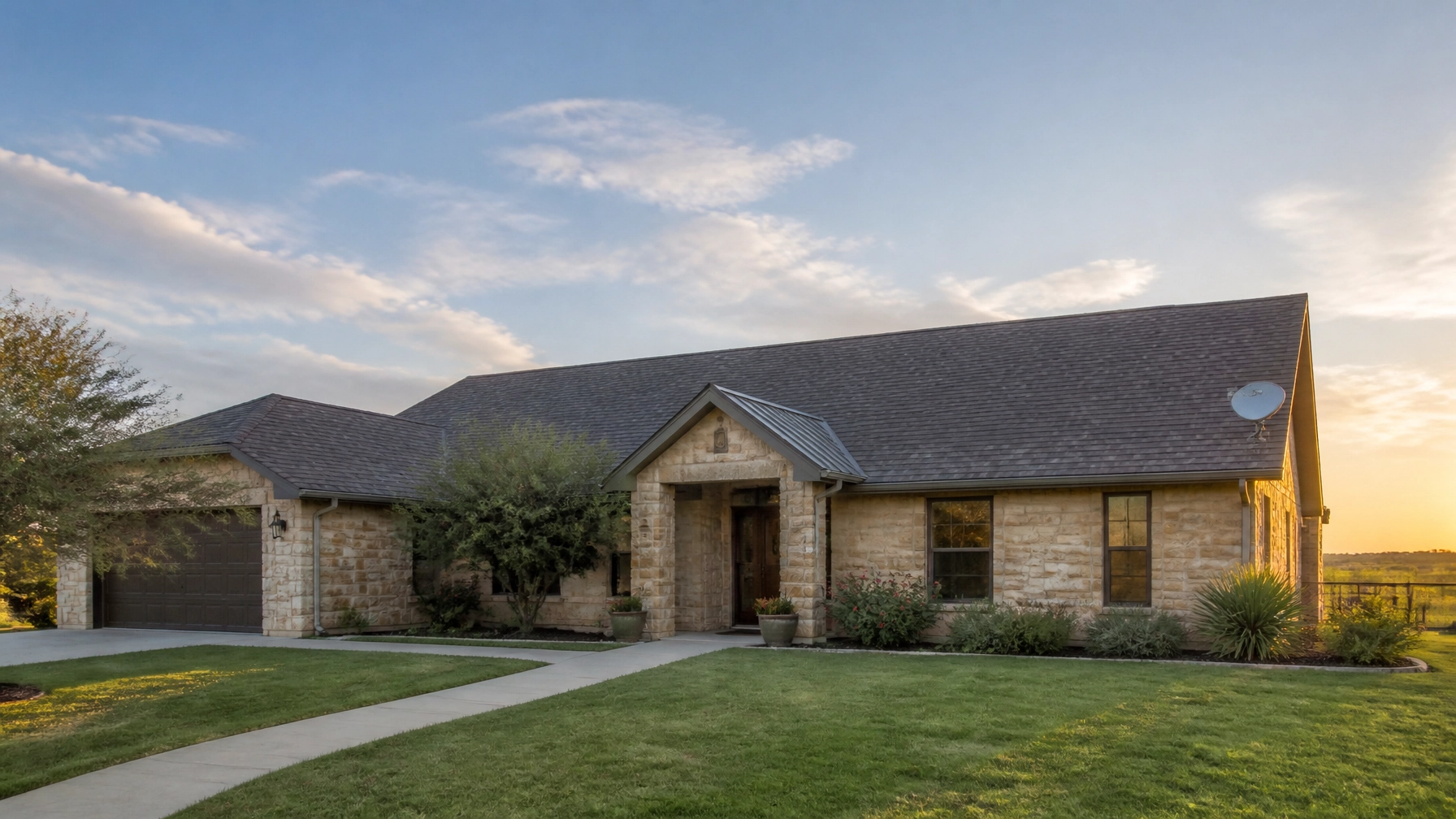
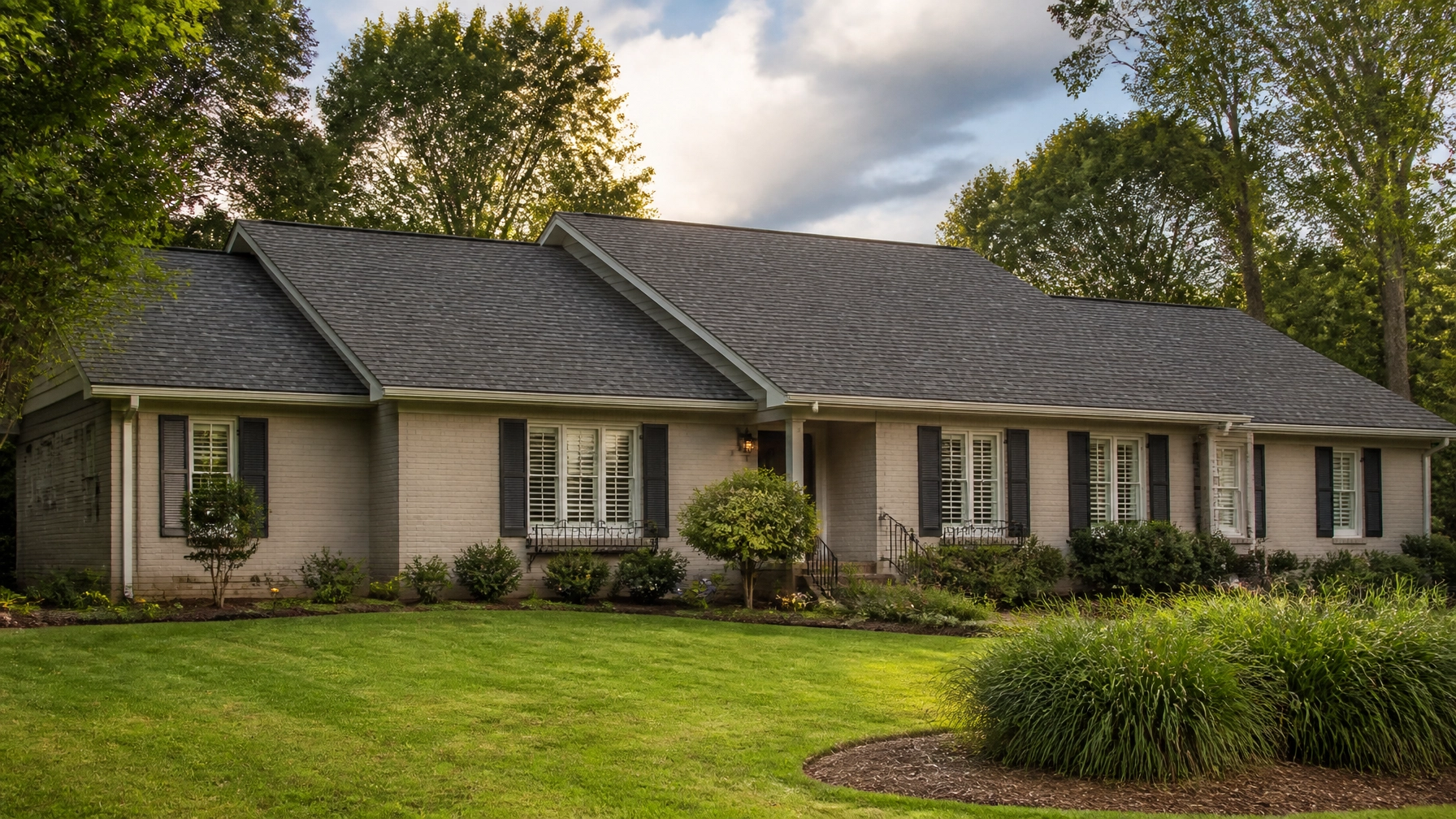
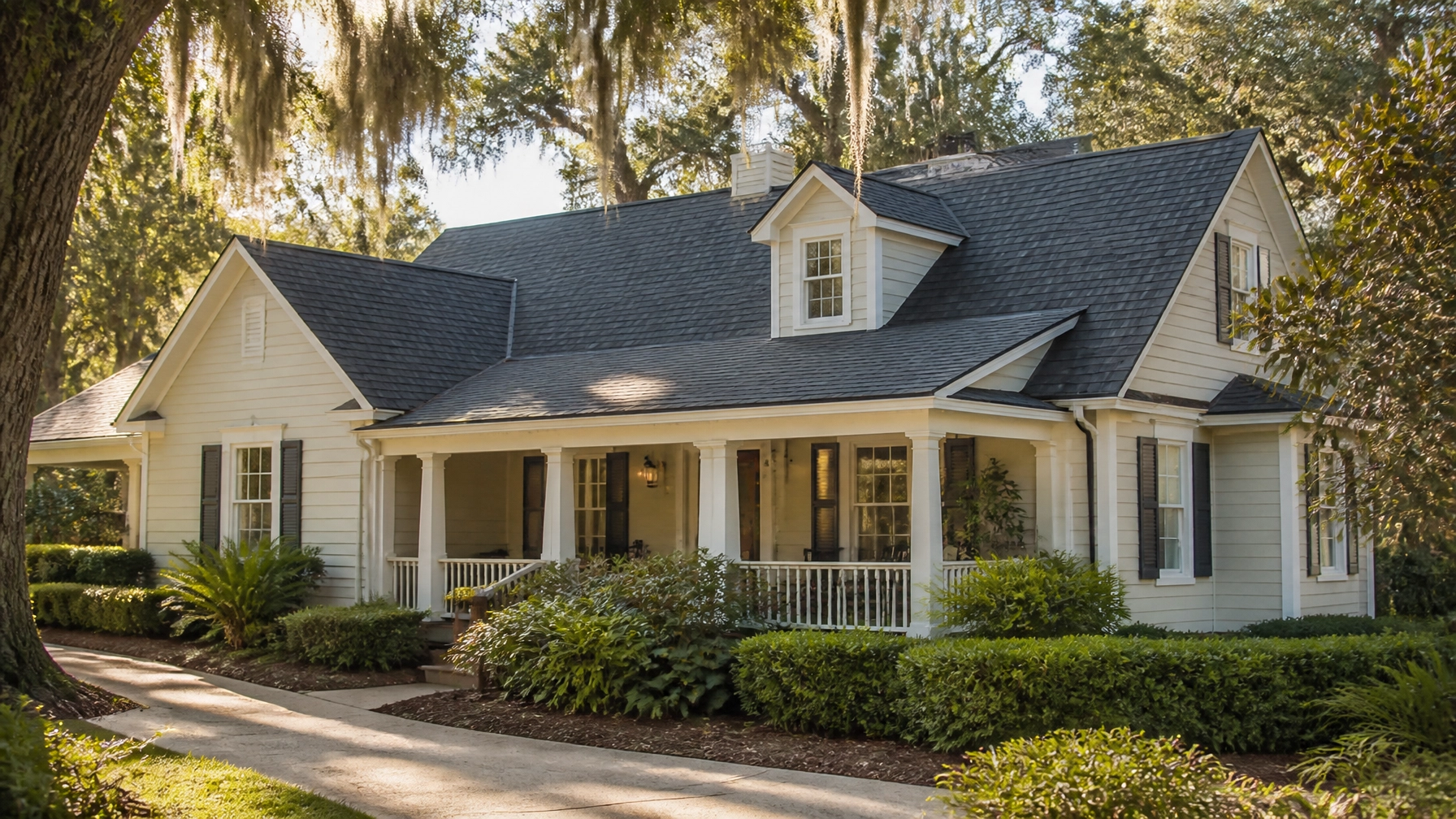
    New architectural shingle roof on a renovated Savannah ranch home

    Standing Seam Metal (Premium)

    Standing seam metal roofing generally costs $18,000–$28,000 for a 2,000-square-foot roof in Savannah.

    Metal is more expensive upfront, but it offers a longer service life and strong water-shedding performance. Proper installation is critical. Ask about:

    • Corrosion-resistant steel or aluminum
    • Coastal-grade paint finishes
    • Stainless or corrosion-resistant fasteners
    • Engineered clip spacing
    • Secure ridge, eave, and gable-edge details
    • Proper flashing around chimneys, skylights, and wall intersections

    Metal roofing can also support energy-efficiency goals. Reflective finishes and lighter colors may reduce roof surface temperatures during Savannah’s hot summers.

    Clay or Concrete Tile (Premium)

    Clay and concrete tile typically cost $20,000–$35,000 or more for a 2,000-square-foot roof. Tile can last 50 years or longer, but it requires specialized installation.

    Before choosing tile, confirm that the home’s framing can support its weight. Coastal wind conditions also require carefully engineered fastening and edge details. Tile may be a strong aesthetic choice for Mediterranean, Spanish, or upscale coastal architecture, but it is not the simplest replacement for every Savannah home.

    How Savannah’s Climate Affects Roofing Costs

    Savannah’s humid subtropical climate creates several roofing challenges. Homeowners must account for coastal humidity, high heat, heavy seasonal rainfall, and tropical storm exposure.

    Coastal Humidity and Salt Air

    Moist air can accelerate corrosion on metal components and contribute to algae, mildew, and wood rot. Metal roofing may require higher-quality coatings and corrosion-resistant fasteners. Asphalt shingles should include algae-resistant protection, particularly on shaded roof slopes.

    Attic ventilation and moisture control are also important. Excess heat and trapped humidity can shorten shingle life and damage roof decking.

    High Heat and UV Exposure

    Long, hot summers expose roofing materials to intense ultraviolet radiation and thermal cycling. Dark roofs can absorb more heat, increasing attic temperatures and cooling demand.

    Ask your contractor about:

    • Light-colored or reflective shingles
    • Reflective metal coatings
    • Balanced intake and exhaust ventilation
    • Adequate attic insulation
    • Sealing around roof penetrations

    A cool-roof option may cost more initially but can improve comfort and reduce heat buildup.

    Heavy Rainfall and Wind-Driven Water

    Savannah receives roughly 44 inches of rain annually, with intense downpours common during the warmer months. The City of Savannah’s hurricane information and the National Weather Service Georgia Hurricane Guide provide local preparedness information for tropical storms, heavy rain, and wind.

    Roofing upgrades that help manage heavy rainfall include:

    • Self-adhering membrane in valleys and around penetrations
    • Proper step flashing and counterflashing
    • Correctly sized gutters and downspouts
    • Secure drip-edge installation
    • Durable pipe boots and vent flashing
    • A continuous secondary water barrier where appropriate

    Tropical Storm and Hurricane Wind Risk

    A roof’s wind performance depends on more than the shingle or panel itself. The full roof assembly must work together, including the deck, fasteners, underlayment, flashing, edges, and connections to the structure.

    For asphalt shingles, look for high-wind-rated products installed according to the manufacturer’s enhanced nailing requirements. For metal, ask about uplift-rated systems and secure perimeter details. Tile roofs may require additional structural review and mechanical fastening.

    What Drives the Final Roof Replacement Price?

    The material is only one part of the estimate. These factors often create the largest price differences between Savannah projects.

    1. Roof Size

    A 2,000-square-foot roof equals approximately 20 roofing squares. A 2,500-square-foot roof needs more material, labor, disposal, and underlayment.

    2. Pitch and Accessibility

    Steep roofs require additional safety equipment, slower installation, and more labor. Limited driveway access, tight lots, landscaping, or historic properties can also affect labor and material handling.

    3. Roof Complexity

    Dormers, valleys, multiple ridgelines, skylights, chimneys, and intersecting roof sections increase measurement and flashing requirements. A simple ranch roof usually costs less than a complex colonial or multi-level design.

    4. Tear-Off and Disposal

    Removing one existing layer is different from removing multiple layers or heavy materials. Tear-off charges also depend on local disposal rates and the amount of damaged material.

    5. Roof Decking and Structural Repairs

    Replacing rotted plywood or OSB is a common source of change orders. Moisture damage around valleys, eaves, chimneys, and plumbing penetrations may not be visible until the old roof is removed.

    Request a written price per sheet or square foot for any decking replacement.

    6. Flashing, Ventilation, and Drainage

    Replacing old flashing, improving attic ventilation, adding ridge vents, or correcting drainage can increase the project cost. These components are essential in Savannah’s heat and rainfall, so cutting them to lower the initial bid can create future problems.

    7. Historic District Requirements

    Some Savannah properties fall within areas with architectural or historic requirements. Material, color, roof profile, and permitting rules may apply. Confirm requirements with the appropriate city department before signing a contract.

    Satellite Roof Inspection and 2026 Roofing Technology

    Traditional roof inspections often begin with scheduling a contractor visit. That can take days, especially after a major storm. New satellite technology roofing tools provide a faster starting point.

    Get My Roof Estimate Now uses satellite imagery roof analysis to estimate:

    • Roof surface area
    • Roof sections and dimensions
    • Pitch and slope characteristics
    • Roof complexity
    • Material quantities
    • Regional labor and material pricing

    The platform is designed to produce a property-specific estimate in about 60 seconds, without an initial contractor visit. Measurements are generally designed for approximately 90–95% accuracy and can be accurate to within inches, while the final proposal should still account for on-site conditions.

    This approach is useful when you need to:

    • Budget for a roof that is 15–30 years old
    • Compare asphalt, metal, and tile pricing
    • Assess storm damage before scheduling visits
    • Prepare for a home sale
    • Compare low, middle, and high replacement scenarios

    What About AI Roof Damage Detection?

    AI roof damage detection and smart roofing technology are developing quickly. Image-based systems can help identify visible indicators such as missing shingles, unusual roof patterns, or apparent storm-related changes.

    However, satellite imagery cannot confirm every condition. It generally cannot see:

    • Hidden decking rot
    • Attic moisture
    • Small punctures
    • Loose fasteners below the roof surface
    • Interior leaks
    • Structural weaknesses

    That makes satellite roof inspection a practical budgeting and screening tool: not a replacement for a licensed contractor’s inspection when damage or safety concerns exist. The future of roof inspection will likely combine satellite imagery, AI-assisted analysis, contractor verification, and detailed on-site review.

    Modern Savannah-area home with a new standing seam metal roof

    How to Get a More Reliable Savannah Roofing Budget

    Before comparing bids, gather the same information from each contractor:

    • Exact roof area and number of squares
    • Material brand, profile, and color
    • Wind rating and installation method
    • Underlayment and flashing specifications
    • Tear-off and disposal scope
    • Decking replacement price
    • Ventilation work
    • Permit responsibilities
    • Labor and manufacturer warranties
    • Payment schedule and project timeline

    Avoid choosing a contractor based only on the lowest number. Confirm that the roofer is licensed, insured, experienced with coastal conditions, and willing to provide a detailed written estimate.

    Get Your Savannah Roof Estimate in 60 Seconds

    You can use the Get My Roof Estimate Now satellite-powered estimate tool to see a fast, free starting range for your property. Enter your Savannah address and receive pricing based on your roof’s measured size, pitch, complexity, material options, and regional costs.

    There is:

    • No contractor visit required upfront
    • No credit card requirement
    • No charge
    • No hidden fees
    • No obligation to move forward

    For a broader planning comparison, the roof cost calculator can also show how roof size, material, pitch, region, and tear-off affect pricing.

    Upscale Savannah home with a new clay tile roof

    A fast estimate gives you the information needed to plan. Once you are ready, Get My Roof Estimate Now can help connect you with verified, licensed, and insured local roofing contractors for the next step.
  • Daily Tech Blitz – Slot 5: Birmingham’s Satellite Tech Edge Is Mapping the Magic City From Space

    Daily Tech Blitz – Slot 5: Birmingham’s Satellite Tech Edge Is Mapping the Magic City From Space

    Birmingham’s technology story is moving higher, well above the Magic City’s rooftops.

    In 2026, advanced imaging, satellite communications, and aerospace manufacturing are expanding across Alabama. Kratos Defense & Security Solutions is growing its Oxmoor Valley campus. Huntsville is adding major space and defense capacity. Local imaging specialists are developing sensors that help machines see more clearly in difficult conditions.

    For Birmingham homeowners, that technology has a practical benefit: satellite-powered roof measurements can deliver an accurate replacement estimate in under 60 seconds, without a contractor visit upfront.

    That means faster budgeting, fewer appointments, and better information before you decide what to do next.

    Birmingham’s Space Technology Momentum

    Kratos expands in Oxmoor Valley

    In January 2026, Kratos announced a new 40,000-square-foot facility at its Oxmoor Valley campus in Birmingham.

    The expansion brings Kratos’ total Birmingham footprint to approximately 150,000 square feet. The new facility includes office space, electro-mechanical systems development, and systems integration areas.

    The campus supports work involving:

    • Space and satellite communications
    • HORUS, a high-altitude intelligence, surveillance, and reconnaissance imaging system
    • CRADLE, a mobile bistatic radar communications platform
    • UltraSpec, a non-destructive inspection technology for advanced composite materials
    • Hypersonic platforms and advanced defense systems
    • Materials testing, microelectronics, and imaging technologies

    The point is not that a homeowner’s roof estimate uses military hardware. It is that Birmingham is part of a growing regional ecosystem focused on remote sensing, imaging, communications, and data-driven decisions.

    Those same core ideas: capture information remotely, process it quickly, and turn it into useful measurements: are now improving residential roofing estimates.

    Huntsville adds more regional momentum

    The Birmingham story connects directly to Huntsville, Alabama’s established space and defense cluster.

    Redwire’s Huntsville expansion adds approximately 164,000 square feet and is expected to create about 150 high-skilled jobs. The facility will support manufacturing, integration, technical operations, unmanned systems, gimbal payloads, advanced energy solutions, and broader space capabilities.

    Huntsville is also home to Polaris Sensor Technologies, a company developing optical, infrared, and polarization-based imaging systems. Its work helps reveal information that standard cameras may miss, including details in low-light, low-contrast, or difficult environments.

    Together, these developments show Alabama’s expanding strength in:

    • Remote imaging
    • Sensor technology
    • Space communications
    • Automated measurement
    • Advanced manufacturing
    • Data-based inspections

    For homeowners, that regional momentum matters because technology developed for complex environments often leads to simpler tools for everyday decisions.

    What Satellite Roof Technology Does for Homeowners

    A traditional roof replacement process often starts with several phone calls. Then you wait for a contractor to visit, measure the roof, prepare a quote, and schedule another conversation.

    That process can take days or weeks: especially after a major storm.

    Satellite roof estimation changes the first step. Instead of waiting for an in-person measurement, you enter your property address into an online estimate tool. The system uses satellite imagery and roof-measurement technology to evaluate the visible structure.

    The result is a fast, property-specific estimate based on:

    • Roof size
    • Roof pitch
    • Roof sections and complexity
    • Regional labor and material costs
    • Roofing material selection
    • Estimated tear-off and replacement requirements

    With Get My Roof Estimate Now’s Alabama estimate tool, Birmingham homeowners can receive pricing information for their specific property in about 60 seconds.

    Fresh architectural shingle roof on a Birmingham Alabama ranch-style home

    Accuracy: Useful Measurements Without the First Visit

    Satellite estimates are not a replacement for every type of roof inspection. They are designed to provide a reliable starting point for replacement planning.

    Get My Roof Estimate Now uses satellite-powered measurements designed to be accurate to within inches, with approximately 90%–95% accuracy. The system measures the roof in roofing squares, where one square equals 100 square feet.

    That information helps homeowners avoid relying on rough assumptions such as:

    “My house is about 2,000 square feet, so the roof must be about the same size.”

    The roof is often larger than the home’s living area because of pitch, overhangs, attached garages, porches, valleys, and multiple roof sections.

    A property-specific measurement gives you a better basis for comparing materials and planning a realistic budget.

    What satellite estimates do well

    Satellite measurement is especially useful for:

    • Establishing a replacement budget
    • Comparing multiple roofing materials
    • Understanding roof size and complexity
    • Preparing for contractor conversations
    • Planning before a roof reaches emergency condition
    • Reducing unnecessary visits for basic measurements

    For unusual structures, very steep sections, hidden damage, or structural concerns, a contractor should still verify details before finalizing a contract.

    Birmingham Roof Replacement Costs in 2026

    For Birmingham homeowners with roofs between 1,500 and 3,000 square feet, a practical 2026 planning range is approximately $8,000–$25,000.

    Your final price may fall outside that range, but these figures provide a useful starting point.

    Typical cost categories

    • Budget: About $8,000–$12,000 for a smaller, straightforward asphalt-shingle roof with limited complexity
    • Popular: About $12,000–$18,000 for many mid-sized homes using architectural shingles
    • Premium: About $18,000–$25,000 or more for larger roofs, complex designs, extensive tear-off, metal roofing, or upgraded materials

    Costs can rise when the roof includes:

    • Multiple valleys and dormers
    • Steep slopes
    • Several attached roof sections
    • Skylights, chimneys, or difficult flashing areas
    • Rotted decking or structural repairs
    • More than one existing roofing layer
    • Premium metal, synthetic, or specialty materials
    • Storm-related labor demand

    Birmingham pricing also reflects local labor rates, material availability, permitting, and regional weather conditions. That is why a national calculator may be less useful than a property-specific estimate using local pricing factors.

    You can also review the roof cost calculator to compare material and pitch assumptions.

    Material Choices: Budget, Popular, and Premium

    Satellite technology can estimate the size of the project, but you still choose the roofing system.

    Architectural shingles (Popular)

    Architectural shingles are the most common choice for many Birmingham homes. They provide a dimensional appearance, broad color selection, and a balance between cost and durability.

    Metal roofing (Premium)

    Standing-seam and other metal systems can offer long service life and strong weather performance. They generally cost more upfront and may require specialized installation.

    Synthetic roofing (Premium)

    Synthetic products can replicate slate, shake, or other high-end appearances while reducing some of the weight and maintenance associated with natural materials.

    Roof coatings (Specialized)

    Coatings may be appropriate for certain low-slope or compatible roofing systems. They are not a universal replacement solution for an aging pitched shingle roof.

    The right material depends on your roof design, drainage, ventilation, budget, and long-term plans.

    Modern Alabama home with a standing-seam metal roof and clean geometric roofline

    When Drone and Thermal Inspections Make Sense

    Satellite estimates are excellent for fast replacement pricing. They do not identify every condition issue beneath the roof surface.

    For older roofs: especially roofs more than 15 years old: a drone or thermal inspection may be the next step.

    Drone inspection (Practical)

    A drone can capture close visual images of:

    • Missing or lifted shingles
    • Hail and wind damage
    • Granule loss
    • Damaged flashing
    • Moss or algae growth
    • Sagging or visibly uneven sections
    • Hard-to-reach roof areas

    This can be useful for documenting storm damage or deciding whether a repair is possible.

    Thermal inspection (Specialized)

    Thermal imaging detects temperature differences across roofing areas. Under the right conditions, those patterns may help identify trapped moisture, insulation gaps, or possible leak zones.

    Thermal inspections are often more valuable when:

    • The roof is flat or low-slope
    • A leak is suspected but difficult to locate
    • The roof has a history of moisture problems
    • You need more information before choosing repair or replacement

    A thermal scan is not a guarantee of hidden damage. Weather, roof materials, sunlight, and moisture conditions affect results. It should be interpreted by a qualified professional.

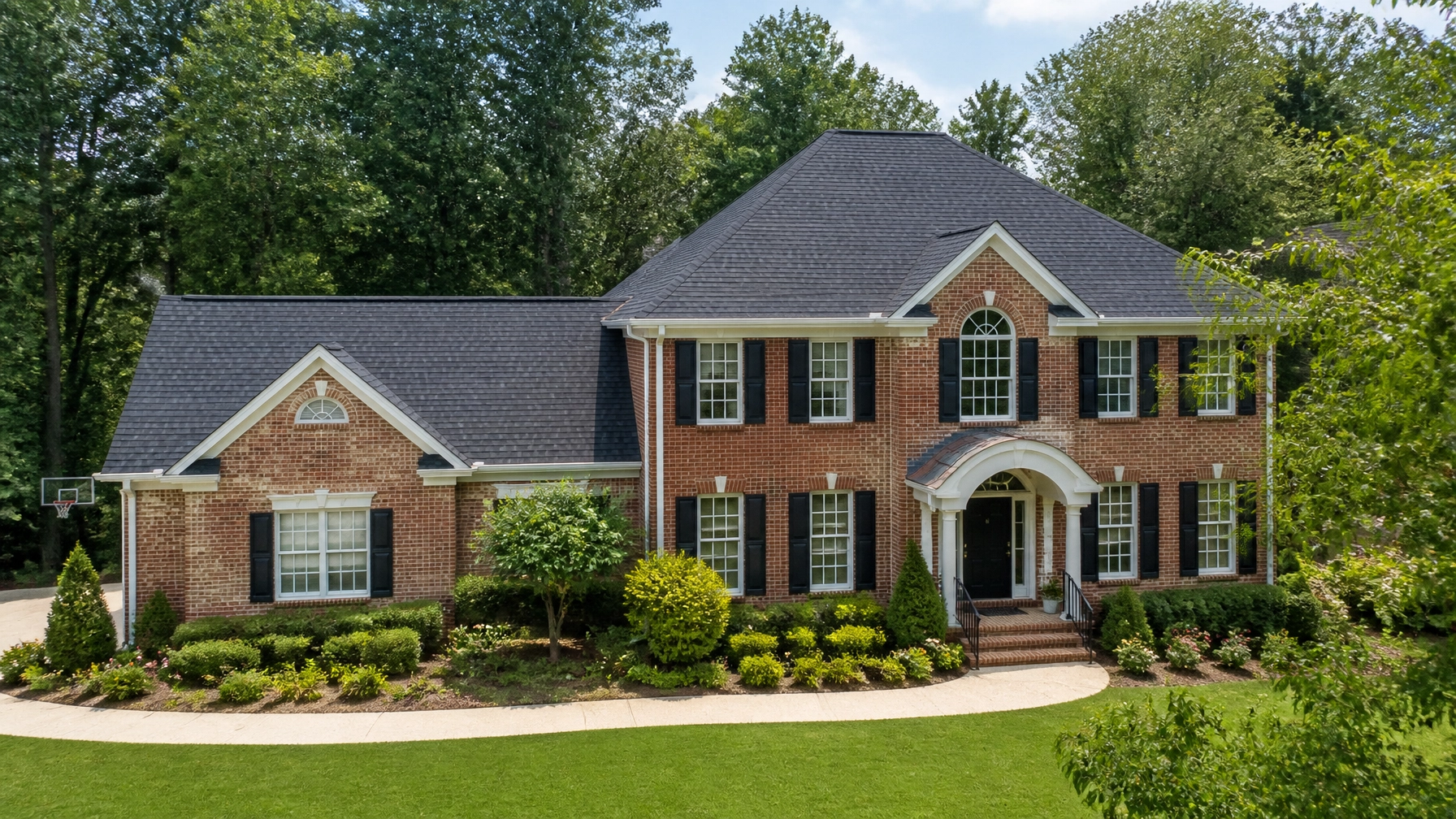
    Aerial view of an aging Birmingham Alabama colonial roof ready for further inspection

    The Bottom Line for Birmingham Homeowners

    Birmingham’s satellite and imaging technology story is no longer limited to defense laboratories or space programs.

    Kratos’ expanded Oxmoor Valley campus, Redwire’s growing Huntsville facility, and Polaris Sensor Technologies’ advanced imaging work all reflect Alabama’s broader technology direction: measure more accurately, process information faster, and make better decisions remotely.

    That same approach can simplify your next roofing decision.

    If your roof is aging, storm-damaged, or simply difficult to budget, start with a fast satellite estimate. Enter your address, review the roof size and complexity, and receive low-middle-high price ranges in about 60 seconds: free, with no credit card required.

    Use the estimate to plan intelligently. Then, when needed, move to a drone, thermal, or contractor inspection for detailed condition verification.

    Better roof planning starts with better information; and Birmingham homeowners can now get that information almost instantly.

    Get your free Birmingham roof estimate.

  • Daily Tech Blitz – Slot 7: How Satellite Tech Is Rewiring Texas

    Daily Tech Blitz – Slot 7: How Satellite Tech Is Rewiring Texas

    Satellite technology is no longer a last-resort connection for remote households. In parts of West Texas, it is becoming core infrastructure for businesses, students, healthcare access, emergency response, and public services.

    The contrast between Odessa and Fort Davis shows why.

    Odessa has broad fiber, cable, and fixed-wireless coverage. Satellite adds resilience and reaches rural edges. Fort Davis has a thinner terrestrial network, making satellite a primary broadband option for many homes and small businesses.

    The numbers are clear:

    • Fort Davis: Starlink availability is reported at 100% of the community, compared with approximately 20.4% fiber, 44.1% cable, and 35.4% fixed wireless coverage in BroadbandNow’s August 2026 data.
    • Odessa: FCC-derived commercial coverage datasets report more than 95% fixed broadband availability across major ZIP codes, alongside universal satellite availability.
    • Ector County ISD: A pandemic-era survey found as many as 20% of its approximately 32,000 students rarely or never had internet access at home.
    • Fort Davis household performance: Allconnect reports average local speeds of approximately 52 Mbps download and 21 Mbps upload.

    Satellite is not replacing fiber everywhere. It is doing something more practical: filling the gaps faster than underground infrastructure can.

    The satellite tech edge: LEO changes the equation

    Traditional satellite internet relies primarily on geostationary satellites positioned roughly 22,000 miles above Earth. These systems provide wide coverage but typically introduce higher latency: the delay between sending and receiving data.

    Low-Earth-orbit, or LEO, networks operate much closer to the ground. Starlink’s constellation uses thousands of LEO satellites to deliver:

    • Faster response times
    • Higher advertised download speeds
    • Better support for video calls and cloud applications
    • Rapid deployment without waiting for cable or fiber construction

    The limitation is capacity. Each satellite serves a defined area, and performance can vary during peak periods or when obstructions block the signal. Satellite also requires clear sky visibility and professional attention during installation.

    Still, the technology is now viable for applications that older satellite systems struggled to support.

    That distinction matters in West Texas, where distance, rugged terrain, sparse population, and long construction timelines make universal fiber expensive.

    Odessa: satellite as a bridge and backup layer

    Odessa is not an internet desert. The city benefits from extensive cable, fiber, 5G, and fixed-wireless networks. Many businesses and public facilities can obtain high-capacity terrestrial service.

    Satellite has a different role here.

    It provides a resilience layer for oilfield operations, remote worksites, rural homes, temporary facilities, and businesses located outside the city’s strongest wired footprint. For companies operating across the Permian Basin, the ability to establish connectivity at a remote site can directly affect productivity.

    A fiber build can take months or years. A satellite terminal can be operational far sooner.

    Freshly reroofed Odessa ranch home with dimensional shingles and a discreet satellite dish

    The same logic applies to families living outside central Odessa. A 2022 report by Texas Monthly documented how families in Pleasant Farms, near Odessa, relied on mobile hotspots, radio-wave service, and satellite internet.

    During remote learning, one mobile hotspot could not reliably support several children at once. Ector County ISD responded by purchasing Starlink kits for rural families through a program supported by local businesses and nonprofit funding.

    The district initially purchased 45 kits. By June 2022, it had connected 121 families, with more expected to follow. Speed testing recorded approximately 350 Mbps download and 30 Mbps upload: a major improvement over the family’s previous connection.

    Crystal Macias, one of the participating parents, summarized the practical result:

    “It’s been working great ever since.”

    That is the real measure of infrastructure. Students can complete assignments. Parents can work remotely. Families no longer need to drive to a library parking lot simply to connect.

    Education: from homework access to digital participation

    Satellite connectivity affects education in three ways.

    1. It supports the home learning environment

    A school campus may have excellent broadband while students return to homes with weak or nonexistent service. That creates a hidden inequality. Satellite helps extend the school’s digital reach beyond the campus.

    Students can:

    • Download assignments
    • Join video classes
    • Access cloud-based learning platforms
    • Submit work from home
    • Use digital libraries and research tools

    2. It improves family-wide bandwidth

    The issue is not just whether a home has internet. It is whether the connection can support multiple users at the same time.

    A household may need to run:

    • Two video classes
    • A work conference
    • Cloud backups
    • Streaming or security devices
    • Multiple phones and laptops

    LEO satellite service can provide substantially more capacity than a congested mobile hotspot, although actual speeds vary by plan, location, and network demand.

    3. It expands the service area of local institutions

    Libraries, community centers, and schools can serve as digital anchors. Satellite allows institutions outside the strongest cable or fiber footprint to maintain access to cloud systems, online registration, remote tutoring, and telehealth resources.

    This is especially important in small communities where one facility may serve residents spread across a large geographic area.

    Fort Davis: satellite as foundational broadband

    Fort Davis presents a different technology profile.

    The community sits near the Davis Mountains in Jeff Davis County, where distance and terrain complicate terrestrial deployment. BroadbandNow’s current local data lists:

    Technology Reported Fort Davis availability
    Satellite 100%
    Cable 44.1%
    Fixed wireless 35.4%
    Fiber 20.4%
    DSL Approximately 13%

    These figures are provider-availability estimates, not a guarantee that every address can order every plan. Address-level confirmation remains essential. The FCC National Broadband Map provides the most precise way to check a specific location.

    The pattern is still significant: satellite reaches virtually the entire community, while wired and fixed alternatives cover only portions of it.

    New standing-seam metal roof on a Fort Davis home with the Davis Mountains in the background

    For Fort Davis businesses, satellite can support:

    • Cloud-based accounting
    • Online reservations and point-of-sale systems
    • Remote work
    • Video conferencing
    • Digital marketing
    • Guest Wi-Fi for tourism operators
    • Security monitoring and connected devices

    Small businesses do not need a data center. They need reliable access to the systems that keep them operating. Satellite can deliver that access where a traditional line may not yet exist.

    Public services: speed, mobility, and continuity

    Public-service connectivity is not limited to permanent offices.

    Emergency managers, first responders, utility crews, and public-health teams often need communications at temporary locations. Wildfires, flash floods, severe storms, and infrastructure failures can disrupt terrestrial networks precisely when agencies need them most.

    Starlink’s emergency-response materials state that the system can be deployed in minutes to provide high-speed, low-latency internet in remote or devastated areas.

    That claim describes a general capability: not a confirmed list of Fort Davis or Odessa deployments. But the operational advantage is straightforward:

    • A portable terminal can move with a response team.
    • It does not require local fiber access.
    • It can support mapping, dispatch, medical coordination, and field reporting.
    • It can provide a backup connection when ground infrastructure is damaged.

    In 2025, Starlink also reported providing connectivity support during Texas flood response, including Mini kits for search-and-rescue efforts and temporary service for affected customers. That example demonstrates how satellite is moving from household broadband into mobile public-safety operations.

    The hidden infrastructure issue: rooftops matter

    Satellite connections depend on physical installation. The terminal needs a clear view of the sky, secure mounting, reliable wiring, and weather-resistant penetrations.

    That brings roofing into the technology conversation.

    A roof is not just a surface for shingles. It may carry satellite dishes, solar equipment, antennas, vents, and weather sensors. Poor mounting or improperly sealed penetrations can create leaks and shorten roof life.

    Homeowners planning a roof replacement should account for:

    • Existing satellite equipment
    • Dish relocation requirements
    • Mounting brackets and flashing
    • Cable routing
    • Wind exposure
    • Contractor coordination
    • Warranty requirements

    Before scheduling work, identify every roof-mounted device. A replacement project is the best time to correct questionable penetrations and establish a cleaner equipment layout.

    Modern Texas home with a new synthetic shingle roof and discreet satellite equipment at blue hour

    For homeowners in Texas, the first step is understanding the roof itself: its size, pitch, material, and complexity. Get My Roof Estimate Now’s Texas estimate page uses satellite imagery to measure a roof remotely and provide a free estimate in about 60 seconds.

    That is a separate use of satellite technology, but the principle is similar: better information, faster decisions, and less unnecessary travel.

    What comes next for Odessa and Fort Davis

    Satellite will remain part of a broader connectivity mix.

    In Odessa, fiber and cable will continue serving dense neighborhoods, schools, hospitals, and major commercial facilities. Satellite will support remote operations, redundancy, temporary sites, and households beyond the strongest wired footprint.

    In Fort Davis, satellite is likely to remain a foundational option while local fiber, cable, and fixed-wireless networks expand selectively.

    The winning model is not “satellite versus fiber.” It is a layered network:

    • Fiber: highest capacity and lowest latency where available
    • Cable: broad urban and town coverage
    • Fixed wireless: flexible local deployment
    • LEO satellite: fast coverage across difficult terrain
    • Mobile networks: portable access and emergency redundancy

    Texas communities do not need one technology everywhere. They need the right combination for each geography.

    Bottom line

    Satellite technology is rewiring Texas by changing the timeline of connectivity.

    Odessa shows how satellite can bridge the final rural gaps and provide backup capacity. Fort Davis shows how satellite can function as primary broadband infrastructure when wired networks remain limited.

    The impact reaches well beyond faster downloads. It affects whether a student can attend class, whether a business can run cloud software, whether a public agency can coordinate a response, and whether a remote household can participate fully in modern life.

    The infrastructure may be in orbit, but the results are local.

  • Daily FAQ Blitz – Slot 5: AEO FAQ Quick Answers for Montgomery, AL Homeowners (2026)

    Daily FAQ Blitz – Slot 5: AEO FAQ Quick Answers for Montgomery, AL Homeowners (2026)

    Montgomery, AL homeowners often think roofing prices depend only on shingles, labor, and roof size. In reality, the supply chain behind those materials also matters.

    Roofing products may enter Alabama through the Port of Mobile, move by rail or truck through central Alabama, and reach distributors serving the Montgomery River Region through the I-65 and I-85 corridors. Trade-security programs such as AEO and CTPAT help make that movement more predictable.

    This FAQ explains the connection between international trade security, roofing material availability, and 2026 roof replacement costs in Montgomery.

    1. What are AEO and CTPAT, and why should Montgomery homeowners care?

    AEO stands for Authorized Economic Operator. It is an international customs framework that recognizes businesses with secure, compliant supply chains.

    CTPAT, or the Customs Trade Partnership Against Terrorism, is the primary U.S. program operated by U.S. Customs and Border Protection. It is voluntary and applies to qualified importers, exporters, carriers, brokers, manufacturers, and logistics providers.

    These programs are not homeowner certifications. You do not need AEO or CTPAT approval to replace your roof.

    You should care because secure trade networks can help reduce avoidable delays involving:

    • Imported metal roofing and coils
    • Synthetic roofing components
    • Underlayment and flashing products
    • Roofing equipment and accessories
    • Containers moving through ports and distribution centers

    According to U.S. Customs and Border Protection, CTPAT participants may receive benefits such as fewer examinations, shorter border wait times, prioritized processing, and business-resumption priority after major disruptions.

    That does not guarantee a specific product will be available. It can, however, support a more predictable flow of materials into Alabama.

    2. How does supply chain security keep roofing materials moving into central Alabama?

    Montgomery is an inland logistics hub. Roofing materials arriving through the Gulf can move north from Mobile by truck, rail, or a combination of both.

    The key connections include:

    • Port of Mobile: Alabama’s major deep-water shipping gateway
    • I-65: The primary north-south route between Mobile and Montgomery
    • I-85: A major east-west corridor connecting Montgomery with Georgia and the broader Southeast
    • CSX rail connections: Important for containerized freight moving inland
    • Montgomery Intermodal Container Transfer Facility: A developing rail and container connection for central Alabama

    The Alabama Port Authority describes Mobile and Montgomery as part of a larger inland rail and distribution network. That network is designed to connect seaport cargo with manufacturers, distributors, and regional businesses.

    For roofing, the practical chain may look like this:

    1. A manufacturer produces metal, shingles, or synthetic roofing products.
    2. The products move by ocean freight or domestic transport.
    3. Cargo enters through Mobile or another U.S. gateway.
    4. A secure carrier, rail operator, or logistics provider moves the cargo inland.
    5. A distributor supplies roofing contractors in Montgomery County and the River Region.

    CTPAT security practices can reduce the risk of cargo tampering, documentation problems, and unnecessary inspections. Stronger visibility helps distributors plan inventory and contractors plan installation dates.

    Still, storms, fuel costs, manufacturing interruptions, and demand spikes can affect availability even when the supply chain is secure.

    3. Does AEO or CTPAT directly lower roofing prices in Montgomery?

    No. AEO and CTPAT do not set retail roofing prices, eliminate tariffs, or guarantee lower material costs.

    Their effect is indirect. A more predictable supply chain can reduce costs connected to:

    • Cargo delays
    • Storage and detention
    • Emergency material substitutions
    • Missed delivery windows
    • Expedited freight
    • Contractor downtime

    Those savings may help stabilize distributor and contractor pricing. They are not usually shown as a separate discount on your roof estimate.

    Montgomery pricing is also shaped by:

    • Regional labor rates
    • Asphalt, steel, and aluminum prices
    • Fuel and trucking costs
    • Seasonal storm demand
    • Roof pitch and complexity
    • Tear-off and disposal
    • Local material availability
    • Permit and inspection requirements

    For 2026 budgeting, use a current estimate rather than relying on a 2025 quote. Our roof cost calculator lists broad national benchmarks of approximately $3–$7 per square foot for asphalt shingles and $8–$16 for metal roofing. Actual Montgomery pricing depends on your property and selected system.

    Southern Colonial home in Montgomery with a new standing-seam metal roof

    4. What does it cost to replace a roof on a 2,000-square-foot home in Montgomery in 2026?

    First, confirm whether 2,000 square feet refers to the home’s living area or the actual roof area. A 2,000-square-foot home may have more than 2,000 square feet of roofing after accounting for overhangs, pitch, garages, porches, and roof shape.

    For a roof area near 2,000 square feet, these are practical 2026 Montgomery planning ranges:

    Material tier Typical installed range Best fit
    3-tab asphalt (Budget) $7,000–$9,000 Basic replacement with a simple roof design
    Architectural shingles (Popular) $9,000–$14,000 Most homeowners seeking durability and curb appeal
    Impact-resistant or designer shingles (Premium) $12,000–$18,000 Enhanced performance, appearance, or warranty options
    Corrugated or exposed-fastener metal $18,000–$24,000 Long service life with a lower metal-system cost
    Standing-seam metal (Premium) $24,000–$30,000+ Premium appearance, durability, and metal performance
    Synthetic coating or restoration $3,000–$8,000 Sound existing roofs that qualify for coating: not full replacement

    These figures are planning ranges, not binding quotes. A coating is not appropriate for every roof and will not correct major leaks, rotten decking, or structural problems.

    Your final cost may increase because of:

    • Multiple existing roof layers
    • Steep slopes
    • Valleys, dormers, and skylights
    • Chimney and vent flashing
    • Rotten decking
    • Storm damage
    • Specialty underlayment
    • Improved attic ventilation
    • Permit or engineering requirements

    Our Montgomery roof estimate page lists a broad local range of approximately $6,500–$18,000 for common residential projects. Premium metal systems or complex roofs can exceed that range.

    5. How does satellite technology save Montgomery homeowners time?

    Traditional estimating often begins with several contractor appointments. Each contractor may need to drive to your home, inspect the roof, measure it, and prepare a preliminary quote.

    Get My Roof Estimate Now starts with your address.

    Our satellite-powered system analyzes your roof remotely and estimates:

    • Roof dimensions
    • Roof squares
    • Roof pitch
    • Roof sections and complexity
    • Material quantities
    • Regional pricing factors

    You receive a free estimate in approximately 60 seconds, with no credit card required and no contractor visit needed upfront.

    That is useful during Montgomery’s busy storm seasons, especially after spring severe weather when contractors may be handling large numbers of inspections.

    The estimate is designed to help you:

    • Set a realistic budget
    • Compare material tiers
    • Decide whether to repair or replace
    • Prepare for contractor conversations
    • Avoid scheduling multiple visits just to learn a ballpark price

    Modern Montgomery-area home with a clean synthetic roofing system

    6. How accurate are satellite roof measurements?

    Our satellite measurements are designed to be approximately 90%–95% accurate, with measurements intended to be accurate within inches under suitable imagery conditions.

    The system uses aerial and satellite imagery to calculate roof size and geometry. It is particularly useful for estimating roof squares, material quantities, and preliminary costs.

    Accuracy can be affected by:

    • Heavy tree cover
    • Obstructed roof sections
    • Low-quality or outdated imagery
    • Unusual roof structures
    • Recent additions or renovations
    • Covered portions of the roof
    • Structural damage not visible from above

    A satellite estimate is a strong starting point: not a substitute for a contractor’s final scope of work. Before installation, a licensed contractor should confirm decking, flashing, ventilation, code requirements, and hidden damage.

    7. How are local Montgomery contractors vetted?

    Contractor verification has two parts: state licensing and local project requirements.

    For residential roofing work exceeding $2,500, Alabama’s Home Builders Licensure Board generally requires the contractor to hold an appropriate license, such as:

    • An HBLB Roofers License
    • An Unlimited Home Builders License
    • The required combination for a Limited Home Builders License holder

    Ask for the contractor’s license information and verify it directly with HBLB. Also confirm:

    • General liability insurance
    • Workers’ compensation coverage
    • Written workmanship warranty
    • Material manufacturer warranty
    • References and recent local work
    • Clear payment schedule
    • Detailed scope and exclusions

    Permits depend on your jurisdiction and project scope. Inside the City of Montgomery, the City Inspections Department states that a true like-for-like roof replacement generally does not require a permit when there are no changes to the original installation.

    A permit may be required if you change:

    • Roofing material
    • Roof slope
    • Structural supports
    • Bracing
    • Other elements of the original roof system

    For homes outside city limits, contact the Montgomery County building permit office. Always confirm requirements before work begins.

    8. What should Montgomery homeowners do next?

    Use this simple process:

    1. Enter your Montgomery, AL address into the free satellite estimate tool.
    2. Review your estimated roof size and price range.
    3. Compare material tiers, such as architectural shingles, impact-resistant shingles, metal, or a suitable coating.
    4. Ask contractors about HBLB licensing, insurance, permits, tear-off, warranties, and decking repairs.
    5. Get a written final proposal before signing a contract.

    AEO and CTPAT help support secure, predictable movement of roofing materials through the Port of Mobile and central Alabama’s inland logistics network. Satellite technology helps you understand your own roof faster.

    For a free, no-obligation Montgomery roof estimate, get your satellite-powered price in about 60 seconds.

    Traditional Montgomery brick ranch with a new dimensional shingle roof

  • Daily Tech Blitz – Slot 6: Atlanta’s Satellite Tech Edge Is Rewiring Space From Peachtree Street

    Daily Tech Blitz – Slot 6: Atlanta’s Satellite Tech Edge Is Rewiring Space From Peachtree Street

    Atlanta is usually associated with logistics, fintech, film, and the world’s busiest airport. But this week, the city added another distinction: an increasingly important role in the American space economy.

    From Peachtree Street to Marietta and Kennesaw, Atlanta-area companies and universities are working on satellite data fusion, orbital protection, miniature spacecraft, and AI-designed radio-frequency chips. The activity is not limited to launch vehicles or government laboratories. It is building the software, materials, electronics, and workforce that make modern satellite systems practical.

    The latest development arrived Friday, August 7, when Atlanta-based AI company MapLarge was awarded a U.S. Space Development Agency contract to develop a Tasking and Data Fusion Platform for missile tracking.

    That news puts Atlanta technology directly inside one of the Pentagon’s most important space architectures. It also highlights a broader point: satellite technology is moving into more everyday applications: including the ability to measure an Atlanta roof and produce a free replacement estimate in about 60 seconds.

    1. MapLarge puts Atlanta software at the center of missile tracking

    The U.S. Space Development Agency awarded MapLarge a fixed-price Other Transaction Agreement to develop the Tasking and Data Fusion Platform, or TDFP.

    According to the August 7 announcement, the system will task commercial sensors and combine their information with government sensor data. The goal is a unified, operational picture that turns rapidly changing feeds into decision-ready cues.

    That distinction matters. Collecting satellite data is only the first step. Military operators need systems that can:

    • Identify relevant signals from multiple sources
    • Combine commercial and government sensor feeds
    • Track objects and events as they change
    • Present information quickly enough to support decisions
    • Scale as the number of sensors and satellites increases

    MapLarge’s platform is being advanced into the Space Development Agency’s Proliferated Warfighter Space Architecture Tracking Layer. That layer supports missile warning and tracking, including the challenge of detecting fast, maneuverable threats.

    The contract is significant for Atlanta because the city’s contribution is not a rocket or satellite bus. It is the software layer that makes a large satellite network usable.

    This is the same basic principle behind many modern technology services: raw data becomes valuable only when it is processed into a clear answer.

    2. Marietta’s Atomic-6 is making spacecraft lighter and tougher

    A few miles northwest of Atlanta, Marietta-based Atomic-6 is tackling one of the oldest problems in spaceflight: protecting spacecraft from debris without adding excessive weight.

    Its Space Armor™ system uses composite tiles designed to absorb hypervelocity impacts while minimizing secondary debris. The company’s published specifications describe tiles tested against projectiles traveling at 7.2 kilometers per second: roughly 16,000 miles per hour.

    Space Armor Lite is designed to protect against particles up to 3 millimeters in diameter. Space Armor Max extends protection to particles up to 12.5 millimeters. The tiles are also designed to reduce backside deformation, an important consideration when sensitive equipment sits behind the shield.

    That engineering tradeoff is critical. Every pound added to a spacecraft affects launch costs, fuel requirements, payload capacity, or mission life. A lighter shield can create room for additional electronics, solar capacity, sensors, or communications equipment.

    Atomic-6 is preparing to launch its debris-shielding technology into orbit in fall 2026 through a SpaceX mission. The company is also known for its Light Wing solar arrays and has launched ODC.space, an orbital data-center concept with pricing reported to start at approximately $575,000 per month.

    The larger trend is clear: Georgia companies are not only supplying components for space missions. They are developing infrastructure for a growing commercial orbital economy.

    New Atlanta-area ranch home with architectural shingle roof

    3. Kennesaw State is lowering the barrier to orbit

    Space technology is also being developed in classrooms and university laboratories.

    At Kennesaw State University, the Modular Aerospace and Robotic Systems Lab: known as the MARS Lab: is building a PocketQube satellite under the direction of Dr. Cary Chun.

    A PocketQube measures just 5 centimeters on each side. It is smaller than a traditional CubeSat and can be built with commercially available electronics. The compact format forces students to solve real spacecraft problems involving power, communications, thermal control, weight, and reliability.

    The current KSU prototype includes:

    • Custom circuit boards
    • A radio communication system
    • Temperature sensors
    • An onboard computer upgrade planned for future testing
    • Ground-based communication range testing

    Students are also working with the KSU Rocketry Team to prepare the satellite for a suborbital flight test. That test will help determine whether the spacecraft can withstand launch conditions while transmitting data back to a ground station.

    In a July 13, 2026 report, Chun estimated that a PocketQube mission could reach orbit for approximately $30,000 with the appropriate support. That is a major difference from the millions of dollars often associated with larger satellite missions.

    Kennesaw State’s recently launched aerospace engineering degree program adds another important piece. The Atlanta region needs engineers who understand embedded systems, radio design, software, mechanical integration, and testing. Projects like this give students practical experience before they enter the aerospace workforce.

    The result is an emerging local pipeline: from university research to startups to national-security programs.

    4. Falcomm is using AI to accelerate satellite communications hardware

    In Midtown Atlanta, semiconductor startup Falcomm is working on another bottleneck: designing the radio-frequency chips that help satellites, radar systems, and defense networks communicate.

    Falcomm’s GaNdalph.ai platform uses artificial intelligence to design RF power amplifiers. At IMS 2026, the company demonstrated chip designs in approximately 90 seconds: a process that traditionally can take months.

    RF power amplifiers are essential, but they are difficult to design. Engineers must account for heat, signal strength, frequency, transistor behavior, packaging, and electromagnetic effects. A more efficient amplifier can reduce power consumption and thermal stress while improving communications performance.

    Falcomm says its platform can support applications across:

    • Satellite communications
    • Radar
    • Defense infrastructure
    • Wireless networks
    • Tactical communications
    • Aerospace electronics

    The company has raised approximately $10.5 million and is working with a tier-one aerospace customer. Its Midtown location adds to Atlanta’s unusual concentration of space-related capabilities: MapLarge contributes software, Atomic-6 contributes materials, Kennesaw State develops talent, and Falcomm contributes advanced RF hardware.

    Contemporary Atlanta-area home with a standing-seam metal roof

    What Atlanta homeowners can take from the satellite boom

    These companies are solving high-stakes problems in orbit, but the underlying technology is also useful on the ground.

    Satellite imagery can measure a roof’s footprint, roof planes, pitch, and layout without requiring an initial contractor visit. That gives homeowners a faster starting point when planning a replacement, comparing materials, or checking whether a storm-damaged roof may need more than a repair.

    For an Atlanta home with roughly 2,000 square feet of roofing, a replacement with architectural shingles typically falls in the range of $8,500 to $18,000. Metal roofing commonly runs approximately $11 to $14 per square foot, depending on the system, roof complexity, labor, and material selection.

    Actual pricing can change based on:

    • Roof size and number of roofing squares
    • Pitch and accessibility
    • Valleys, dormers, and other complex features
    • Tear-off requirements
    • Material choice
    • Hidden decking or structural damage
    • Local labor and permit costs

    You can use the Atlanta roof estimate page to begin with property-specific pricing. The system uses satellite imagery to measure the roof and returns an estimate in about 60 seconds. There is no credit card requirement and no contractor visit needed upfront.

    For a broader comparison of materials, the roof cost calculator explains how size, pitch, location, tear-off, and material affect the final range.

    Atlanta’s next technology advantage is already visible

    Atlanta’s satellite edge is not built around one launchpad. It is distributed across software companies in Midtown, materials startups in Marietta, engineering programs in Kennesaw, and homeowners using satellite data from their phones and laptops.

    The MapLarge contract is the clearest signal yet that Atlanta-built technology can support national missile defense. Atomic-6 is helping protect spacecraft. Kennesaw State is training the next generation of engineers. Falcomm is compressing months of chip design into seconds.

    And for Atlanta homeowners, the same satellite-powered innovation can make roof planning faster and more transparent.

    If you are budgeting for a replacement, start with an instant, free estimate at getmyroofestimatenow.com. It is a practical example of advanced satellite technology delivering value right here at home.

  • Daily FAQ Blitz – Slot 3: Roof Replacement FAQs for Nashville, TN Homeowners (2026)

    Daily FAQ Blitz – Slot 3: Roof Replacement FAQs for Nashville, TN Homeowners (2026)

    Nashville homeowners face a demanding roofing environment. Hot, humid summers expose shingles to intense heat. Spring and summer storms can bring heavy rain, strong winds, hail, and falling branches. Older roofs in neighborhoods such as East Nashville, 12South, Germantown, Green Hills, and Belle Meade may show damage long before a leak appears inside the home.

    For 2026, a typical Nashville roof replacement commonly falls between $7,500 and $20,000, with many homeowners paying around $12,500 for architectural shingles on a standard roof. Larger, steeper, storm-damaged, or premium-material projects can reach $20,000–$30,000 or more.

    This FAQ Blitz provides quick answers to the questions Nashville homeowners ask most often.

    Architectural shingles installed on a residential roof in Middle Tennessee

    Nashville Roof Replacement: Quick Answers

    1. How much does a roof replacement cost in Nashville in 2026?

    A full roof replacement in Nashville typically costs $7,500–$20,000 for a standard single-family home. A realistic planning range for architectural shingles is often $12,000–$22,000.

    Your final price depends on:

    • Roof size, measured in squares
    • Roof pitch and accessibility
    • Number of valleys, dormers, and roof sections
    • Material selection
    • Old roof removal and disposal
    • Plywood or decking repairs
    • Local labor and permit requirements

    Use the Nashville roof estimate tool to get a property-specific starting range.

    2. What roofing material works best for Nashville weather?

    Architectural shingles (Popular) are the most common choice because they balance cost, appearance, and durability. They generally last around 25–30 years when properly installed and ventilated.

    Other options include:

    • 3-tab asphalt shingles (Budget): Lower upfront cost but shorter expected lifespan
    • Class 4 impact-resistant shingles (Storm-ready): Better resistance to hail and debris impacts
    • Metal roofing (Premium): Often lasts 40–70 years and reflects more solar heat
    • Synthetic roofing (High-end): Provides premium slate or shake appearance with less weight

    Nashville’s storms make impact resistance, proper fastening, flashing, and attic ventilation important regardless of the material you choose.

    3. How long does a Nashville roof usually last?

    Typical lifespan estimates are:

    • 3-tab asphalt shingles: 15–25 years
    • Architectural shingles: 25–30 years
    • Impact-resistant shingles: Approximately 25–35 years, depending on the product and installation
    • Metal roofing: 40–70 years
    • Tile or slate: 50 years or more

    Extreme heat, poor ventilation, repeated hail, wind damage, and trapped moisture can shorten these timelines. If your roof is approaching 15–20 years old, start planning before an emergency occurs.

    4. Can Nashville storms or hail justify a roof replacement?

    They can, but damage must be documented and covered under your specific insurance policy. Hail may cause:

    • Granule loss
    • Bruising beneath the shingle surface
    • Cracked or split shingles
    • Damage to ridge caps, vents, flashing, and gutters

    Wind can lift shingle edges or break the factory seal. Do not climb onto the roof after a storm. Instead:

    1. Photograph visible damage from the ground.
    2. Check ceilings and attic areas for water stains.
    3. Arrange a professional inspection.
    4. Review your wind and hail deductible.
    5. Contact your insurance carrier promptly if damage appears significant.

    A satellite roof inspection can help identify roof size, slope, and visible surface patterns. However, satellite imagery cannot replace a close-up inspection for hidden bruising, underlayment damage, or structural problems.

    Roofing professional inspecting storm damage with a tablet

    5. What is a satellite imagery roof analysis?

    A satellite imagery roof analysis uses high-resolution aerial or satellite imagery to estimate your roof’s dimensions without an initial in-person visit.

    The process can evaluate:

    • Approximate roof area
    • Roof planes and sections
    • Pitch or slope indicators
    • Roof complexity
    • Material quantities
    • Regional pricing variables

    Get My Roof Estimate Now uses satellite-powered measurements designed to be approximately 90–95% accurate for many residential properties. The service provides a low-middle-high price range for different materials in about 60 seconds, with no credit card required.

    This makes satellite analysis useful for budgeting, comparing contractor quotes, and deciding whether a replacement is financially realistic.

    6. Can AI roof damage detection find hail or storm damage?

    AI roof damage detection can help screen imagery for visible damage patterns, but it is not a complete diagnosis.

    AI-assisted systems may flag:

    • Missing shingles
    • Discolored roof areas
    • Irregular roof sections
    • Possible storm-related changes
    • Visible wear patterns

    The technology is most useful as an early screening tool. It may not detect soft hail bruises, concealed leaks, damaged decking, or problems beneath the shingles. A licensed roofing professional should confirm any suspected damage before you file an insurance claim or authorize replacement work.

    This is an important distinction in roofing technology 2026: faster digital analysis improves planning, but it should support: not replace: professional judgment.

    7. Should I repair or replace my Nashville roof?

    A repair may make sense when:

    • Damage is limited to a small area
    • The roof is less than 15 years old
    • Most shingles remain in good condition
    • There are no recurring leaks or decking problems

    Replacement is usually worth considering when:

    • The roof is more than 20 years old
    • Shingles are curling, cracking, or missing across multiple slopes
    • Granules collect in the gutters
    • Leaks keep returning
    • The roof has widespread storm damage
    • Repairs would cost a substantial portion of a new roof

    A free estimate can help you compare the cost of continued repairs with the cost of a complete replacement.

    8. Do I need a permit for roof replacement in Nashville?

    Roofing permit requirements depend on the project scope and local jurisdiction. Metro Nashville and surrounding counties may have different procedures.

    Ask your contractor:

    • Is a permit required for this project?
    • Who will pull the permit?
    • Is the permit included in the written estimate?
    • Will the work be inspected?
    • Does the installation meet current local code requirements?

    A reputable contractor should explain the permit process clearly instead of leaving you to handle it alone.

    9. What should a Nashville roofing estimate include?

    A detailed estimate should list more than one total price. Look for:

    • Roof measurements and estimated squares
    • Material brand, type, and color
    • Underlayment and ice-and-water protection
    • Flashing, vents, ridge caps, and ventilation work
    • Tear-off and disposal costs
    • Decking repair allowances
    • Labor and permit charges
    • Cleanup and magnetic nail sweep
    • Material and workmanship warranties
    • Payment schedule
    • Change-order terms

    Compare at least two or three written estimates. A quote that is dramatically lower than the others may exclude important materials, cleanup, repairs, or code requirements.

    10. When is the best time to replace a roof in Nashville?

    Spring and fall (Popular) generally offer comfortable working temperatures and lower heat stress for crews and materials. However, these seasons can be busy because many homeowners schedule projects at the same time.

    Summer roofing is possible, but high heat and afternoon storms can create scheduling delays. Winter work may be practical during mild weather, although cold temperatures can affect shingle sealing and installation timing.

    The best time to replace your roof is before active leaks or major storm damage force an emergency decision. Getting your estimate early gives you more control over materials, contractor availability, and budget.

    Modern Tennessee home with a new metal roof

    How Modern Roofing Technology Helps Nashville Homeowners

    Traditional estimates often require multiple phone calls, contractor visits, ladder access, and several days of waiting. A satellite-based estimate simplifies the first step:

    1. Enter your address.
    2. Confirm the property.
    3. Review satellite measurements.
    4. Receive low, middle, and high replacement ranges.
    5. Compare material options.
    6. Connect with verified local contractors when ready.

    This approach is especially useful after storms, when local contractors may be overwhelmed with inspection requests. It gives you a fast budget benchmark before scheduling an in-person visit.

    The estimate is free, takes about 60 seconds, and does not require a credit card. It is a planning tool: not a final contract price: so the selected contractor should still verify the roof, decking, flashing, and hidden conditions before work begins.

    Final Takeaway for Nashville Homeowners

    Nashville roofs must handle summer heat, high humidity, heavy rainfall, wind, hail, and sudden severe storms. For 2026, budgeting $7,500–$20,000 is reasonable for many standard replacements, while larger or premium projects may exceed that range.

    Use satellite roof inspection tools to understand your roof’s size and replacement budget quickly. Then confirm the scope with a licensed, insured roofing professional: especially if you suspect storm damage.

    Have another Nashville roofing question? Ask it in the comments, or get your free Nashville roof estimate in about 60 seconds. You can also use the roof cost calculator to compare material and roof-size scenarios.

  • Daily Weather Blitz – Savannah, GA : August 9, 2026: Coastal Heat, Afternoon Downpours & How Savannah’s Climate Tests Your Roof’s Durability

    Daily Weather Blitz – Savannah, GA : August 9, 2026: Coastal Heat, Afternoon Downpours & How Savannah’s Climate Tests Your Roof’s Durability

    Savannah is starting August 9, 2026, at approximately 91°F with high humidity. Afternoon coastal thunderstorms and heavy downpours are expected. That combination creates a demanding test for every roofing system in the area.

    Savannah’s long-term August pattern is consistently hot, humid, and wet. Average highs are typically around 90–91°F, while the month can bring roughly 6–7 inches of rain and frequent afternoon storms. You can review broader historical patterns through TimeandDate’s Savannah climate data and WeatherSpark’s August weather overview.

    The important question for homeowners is not simply, “Is my roof leaking today?”

    It is: How is Savannah’s heat, humidity, UV exposure, and sudden rainfall affecting the roof’s remaining durability?

    Why Savannah Weather Is Hard on Roofs

    A roof in Savannah manages several stresses at the same time:

    • Intense summer heat softens and ages asphalt-based materials.
    • Strong UV exposure breaks down exposed roofing surfaces.
    • High humidity keeps materials and attic spaces damp.
    • Heavy downpours test valleys, flashing, gutters, and drainage.
    • Thunderstorm winds can lift aging shingles or loosen trim.
    • Coastal air increases corrosion risk for vulnerable metal components.

    These conditions can shorten the practical service life of a roof that has poor ventilation, weak flashing, improper fastening, or low-quality materials.

    A roof is not just the visible shingle or metal panel. It is a complete system that includes the decking, underlayment, flashing, ventilation, fasteners, gutters, and drainage paths. If one part fails, a sudden downpour can expose the problem quickly.

    Architectural Shingles: Popular, Practical, but Heat-Sensitive

    Architectural shingles remain the most common roofing choice for Savannah homes. They are attractive, widely available, and less expensive than most metal or slate systems.

    For a typical Savannah home, architectural shingles fall into the Popular category. The local roof replacement range is generally about $8,000–$21,000, with many standard 2,000-square-foot homes near the middle of that range. You can review the local figures on our Savannah, GA roofing estimate page.

    How heat affects shingles

    Asphalt shingles absorb significant solar heat. The roof surface can become much hotter than the outdoor air temperature. Repeated heating and cooling cycles gradually stress the asphalt binder and fiberglass mat.

    Over time, homeowners may notice:

    • Granules collecting in gutters and downspouts
    • Shiny or bald areas on shingle surfaces
    • Curling or lifted edges
    • Cracks around exposed areas
    • Uneven color on heavily sun-exposed slopes
    • Loss of flexibility and brittle shingle tabs

    A small amount of granule loss may be normal, particularly after installation. However, heavy or continuous granule loss is a warning sign. Granules protect the asphalt from UV radiation and weather. Once large areas are exposed, aging accelerates.

    How humidity affects shingles

    Humidity does not usually destroy a shingle by itself. The problem is the combination of humidity, heat, shade, and poor airflow.

    Warm, damp conditions can encourage:

    • Algae streaking
    • Mildew and organic growth
    • Moisture accumulation in the attic
    • Corrosion at nails and flashing
    • Faster deterioration of roof decking if water enters

    A balanced ventilation system: with clear soffit intake and ridge or other exhaust ventilation: helps remove heat and moisture. It also reduces the strain placed on the underside of the roof deck.

    Savannah colonial home with architectural shingles and visible roof flashing

    Metal Roofing: Strong Durability with Coastal Details

    Metal roofing is increasingly attractive to Savannah homeowners who want a longer-lasting system and better resistance to heat, rain, and biological growth.

    A properly installed metal roof can last significantly longer than asphalt shingles. It also sheds heavy rain quickly and does not lose protective mineral granules.

    Metal roofing is often a Premium choice because installation and material costs are higher. Current national benchmarks on our roof cost calculator place metal roofing above architectural shingles, with the final price depending on roof size, pitch, complexity, and regional labor.

    The coastal metal roofing issue

    Not every metal roof is equally suited to Savannah.

    For homes exposed to coastal or marsh air, homeowners should ask about:

    • Aluminum or high-quality Galvalume steel
    • Factory-applied PVDF or comparable protective coatings
    • Stainless or otherwise corrosion-resistant fasteners
    • Concealed-fastener standing-seam systems
    • Compatibility between different metals
    • Proper flashing at walls, chimneys, vents, and skylights

    Low-quality exposed-fastener panels may develop problems sooner because fasteners, washers, cut edges, and penetrations are more exposed to moisture and salt-laden air.

    Metal also expands and contracts as temperatures change. A properly designed standing-seam system uses clips and seams that accommodate movement. Poor installation or inadequate detailing can create leaks even when the panels themselves remain durable.

    Standing-seam metal roof on a coastal Georgia ranch home after a summer storm

    Today’s Priority: Check Flashing Before the Downpour

    Flashing is one of the first areas to inspect when heavy rain is forecast. Flashing redirects water around vulnerable transitions and penetrations. It is commonly found around:

    • Chimneys
    • Roof-to-wall intersections
    • Skylights
    • Plumbing vents
    • Dormers
    • Valleys
    • Porches and additions
    • Exterior walls and parapets

    Look from the ground for visibly lifted metal, open seams, rust, cracked sealant, or gaps. Do not climb onto a wet roof. If you see interior staining, hear dripping, or notice a musty odor in the attic, contact a qualified roofing professional.

    A satellite roof inspection or satellite imagery roof analysis can help estimate roof geometry and identify visible condition concerns. It cannot confirm hidden deck damage, active leaks, ventilation performance, or the integrity of every flashing joint. Those issues still require an in-person inspection.

    Savannah Homeowner Checklist for Sudden Downpours

    Before the next afternoon storm, take these low-risk steps:

    1. Clear gutters and downspouts

    Leaves, pine straw, and debris can block drainage. When downpours arrive, backed-up water may overflow near fascia boards or work its way beneath roof edges.

    2. Check attic warning signs

    From inside the attic, look for:

    • Dark water marks
    • Damp insulation
    • Mold-like growth
    • Rusted nails
    • Daylight through the roof deck
    • Musty smells

    Use caution and avoid stepping between framing members.

    3. Review roof edges from the ground

    Use binoculars or a phone camera with optical zoom. Look for missing shingles, lifted corners, exposed underlayment, or damaged ridge caps.

    4. Trim branches near the roof

    Tree limbs can scrape granules from shingles and drop debris onto valleys and gutters. Keep branches away from roof surfaces where possible.

    5. Document conditions before storms

    Take exterior photos of each roof slope, gutter line, and visible flashing area. Dated photos make it easier to compare conditions after a storm and can support an insurance discussion if damage occurs.

    When Granule Loss Becomes a Problem

    After a heavy rain, a small amount of grit in the gutter is not automatically a reason for replacement. The pattern matters.

    Treat granule loss as a priority when you see:

    • Dense piles of granules at downspouts
    • Repeated accumulation after multiple storms
    • Bare or shiny patches
    • Exposed dark asphalt
    • Uneven wear across one roof slope
    • Granule loss combined with curling or cracking

    Humidity-driven roof aging is often gradual. A roof may continue to shed water while its protective surface is deteriorating. That is why early documentation and professional evaluation are useful.

    Use Roofing Technology 2026 to Budget Before You Need a Contractor

    Savannah homeowners do not have to wait for several contractor appointments just to learn whether a roof replacement fits the budget.

    Get My Roof Estimate Now uses satellite-powered measurements to evaluate roof size, pitch, and complexity. Enter your address and receive a free estimate in about 60 seconds: with no credit card and no upfront contractor visit.

    The estimate can help compare:

    • Architectural shingles (Popular)
    • Metal roofing (Premium)
    • Synthetic roofing options
    • Roof coatings
    • Low, middle, and high price scenarios
    • Regional labor and material differences

    Our satellite imagery roof analysis is designed for budgeting and planning. Measurements are typically accurate within the practical range needed for an initial replacement estimate, but a local contractor should verify conditions before finalizing a scope of work.

    If replacement is necessary, the service can also connect you with verified, licensed, and insured local contractors who understand Savannah’s storm exposure and humid coastal conditions.

    Modern Savannah-area home with shingles, metal porch roof, clean valleys, and storm-ready detailing

    Bottom Line for August 9

    Today’s 91°F heat, high humidity, and afternoon downpours are typical of the conditions that gradually test Savannah roofs.

    Architectural shingles can perform well when they are properly installed, ventilated, and maintained. Coastal-grade metal can offer longer service life, but only when the coating, fasteners, flashing, and material selection match the local environment.

    For now:

    1. Check gutters and downspouts.
    2. Look for flashing gaps and interior water stains.
    3. Monitor granule loss after storms.
    4. Never climb onto a wet roof.
    5. Use an instant satellite estimate to establish a realistic replacement budget.
    6. Have a licensed roofing professional investigate leaks or suspected storm damage.

    Start with a free Savannah roof replacement estimate, or use the instant estimate tool to see your property-specific range in 60 seconds.

  • Daily Tech Blitz – Slot 1: Raleigh’s Satellite Tech Edge Is Mapping the Future of Smart Homes and Roofing

    Daily Tech Blitz – Slot 1: Raleigh’s Satellite Tech Edge Is Mapping the Future of Smart Homes and Roofing

    Published August 9, 2026

    Raleigh is becoming one of the Southeast’s most technology-forward cities. As North Carolina’s capital and a major Research Triangle hub, the city is investing in smarter infrastructure, advanced mapping, property analytics, and data-driven services.

    That technology is now reaching the residential roofing market.

    Homeowners in Raleigh can use satellite-powered roof measurement to receive a free replacement estimate in under 60 seconds: without scheduling an initial contractor visit. The result is a faster way to understand roof size, complexity, material options, and likely project cost before making a major home improvement decision.

    Raleigh’s Satellite Technology Edge

    Raleigh benefits from a growing ecosystem of satellite imagery, aerial imaging, 3D elevation data, and spatial analytics.

    One important development is the availability of high-resolution aerial imagery across North Carolina. Vexcel reports coverage across all 100 counties, including Wake County and Raleigh, with urban imagery available at approximately 7.5 centimeters: about 3 inches: per pixel. Statewide imagery is also available at approximately 15 centimeters per pixel.

    That level of detail can support:

    • Infrastructure and roadway planning
    • Construction monitoring
    • Utility and environmental analysis
    • Property assessments
    • Storm and disaster response
    • Building footprint measurements
    • Roof and exterior property analysis

    Vexcel also provides oblique imagery, which allows users to view multiple sides of a structure rather than relying only on a straight-down image. Its elevation products add height and terrain information, helping analysts understand the three-dimensional shape of buildings and neighborhoods.

    Explore the Vexcel North Carolina imagery program for more technical information.

    Raleigh’s local mapping resources add another layer. The City of Raleigh’s iMAPS system and Wake County property data provide historical and current geographic information that can help businesses, planners, and homeowners understand how properties and neighborhoods have changed over time.

    How Satellite Imaging Supports Smart Homes

    Satellite and aerial imagery are not limited to maps. They are becoming useful inputs for smart-home planning and residential property decisions.

    For example, high-resolution imagery can help identify:

    • Roof orientation and available surface area
    • Solar panel placement potential
    • Tree coverage and shading
    • Driveway and outdoor living areas
    • Building footprints and additions
    • Nearby drainage or terrain concerns
    • Changes in construction or land use

    These applications do not replace an in-person inspection. Instead, they provide a reliable starting point for planning and budgeting.

    For homeowners, that distinction matters. A roof estimate is not the same as a final construction proposal. Satellite measurements can calculate the roof’s size and geometry, while a contractor must still verify decking, flashing, ventilation, hidden moisture, and structural conditions on-site.

    Instant Satellite Roof Estimates in Raleigh

    Traditional roof planning often begins with several phone calls and multiple appointments. Homeowners may wait days for a contractor to visit just to receive a ballpark price.

    Satellite-based estimating shortens that first step.

    With Get My Roof Estimate Now’s Raleigh roof estimate tool, homeowners enter their address and receive a property-specific estimate in approximately 60 seconds.

    The system analyzes the roof’s:

    • Total surface area
    • Number of roof planes
    • Pitch or steepness
    • Ridges and valleys
    • Dormers and other structural details
    • Overall roof complexity

    The service measures roofing in squares, with one square equal to 100 square feet. It then uses regional pricing and material assumptions to produce a low-to-high replacement range.

    The company reports satellite-powered measurements designed to be accurate within inches, with approximately 90%–95% measurement accuracy. The estimate is free, requires no credit card, and does not require an initial contractor visit.

    That gives Raleigh homeowners a faster way to answer the first financial question: What should I budget for this project?

    Raleigh Roof Replacement Costs in 2026

    Current Raleigh planning ranges generally fall between $7,500 and $20,000 for a typical roof replacement. The final number depends on roof size, pitch, complexity, materials, tear-off requirements, labor, permits, and concealed damage.

    A typical local range looks like this:

    • Budget: Approximately $7,500 for basic materials and simpler roof designs
    • Popular: Approximately $12,500 for architectural shingles on a typical 2,000-square-foot roof
    • Premium: Approximately $20,000 or more for designer materials, complex roof geometry, or higher-end systems

    These are planning figures, not binding contractor bids. A final quote may change after an inspection identifies rotted decking, ventilation problems, multiple existing roof layers, or damaged flashing.

    Material Cost Benchmarks

    Material selection can significantly change a Raleigh roof replacement budget.

    Architectural Shingles (Popular)

    Installed architectural shingle pricing commonly falls near $4.50–$8 per square foot in the Raleigh market, depending on product quality, roof complexity, labor, and tear-off.

    For a 2,000-square-foot roof, that creates a broad planning range of approximately $9,000–$16,000 before unusual structural repairs or premium upgrades.

    Architectural shingles remain popular because they offer:

    • Moderate upfront cost
    • Many color and style options
    • Reliable performance in Raleigh’s climate
    • Typical service life of approximately 25–30 years

    Metal Roofing (Premium)

    Metal roofing commonly ranges from approximately $8–$18 per square foot, although the exact price depends heavily on the system.

    • Corrugated panels (Budget): Approximately $6–$9 per square foot
    • Metal shingles (Popular/Premium): Approximately $7.50–$11 per square foot
    • Standing-seam metal (Premium): Approximately $10–$18 or more per square foot

    Metal roofs can last 40–70 years when properly installed. They may also reflect more solar heat than darker traditional roofing products, which can be useful during Raleigh’s hot and humid summers.

    Homeowners can review general material and pitch assumptions with the Get My Roof Estimate Now roof cost calculator.

    Raleigh ranch home with a new architectural shingle roof

    Raleigh Use Case: Planning a Roof Before Calling Contractors

    Consider a common Raleigh homeowner scenario.

    A 20-year-old ranch home in ZIP code 27609 has visible granule loss and several aging roof areas. The homeowner is not yet ready to schedule work but wants to understand whether replacement is likely to cost $8,000, $15,000, or $25,000.

    Using an instant satellite estimate, the homeowner can:

    1. Enter the property address.
    2. Review the estimated roof size in squares.
    3. Compare architectural shingle and metal roofing ranges.
    4. See how pitch and complexity affect the price.
    5. Use the estimate to set a realistic budget.
    6. Request detailed bids from qualified local contractors.

    This is an illustrative planning example, not a reported customer result. Its value is the process: homeowners can obtain useful cost information before opening their home to multiple sales visits.

    Raleigh Use Case: Storm and Infrastructure Response

    Raleigh faces heavy rain, severe thunderstorms, high winds, occasional hail, and tropical storm remnants. Tree debris is also a common roofing concern in neighborhoods with mature oaks and dense canopy.

    After a major weather event, updated aerial imagery can help insurers, utilities, local agencies, and property professionals identify affected areas and prioritize response. Vexcel specifically describes post-disaster imagery as useful for insurers, emergency responders, and utility providers.

    For an individual homeowner, satellite imagery can provide a fast visual reference point. It may help compare a roof’s appearance before and after a storm, but it cannot independently confirm every type of damage. A licensed roofing professional and the homeowner’s insurance carrier should handle the actual inspection and claim decision.

    Use Case: New Construction and Smart-Home Planning

    Raleigh’s growth creates constant demand for property intelligence. New subdivisions, additions, solar installations, accessory structures, and neighborhood improvements all change the built environment.

    High-resolution imaging and spatial analytics help businesses:

    • Track construction progress
    • Confirm building footprints
    • Measure exterior areas
    • Analyze roof orientation
    • Assess tree coverage
    • Plan solar or outdoor improvements
    • Monitor changes across large property portfolios

    For roofing companies, this data can reduce time spent on basic measurements. For homeowners, it can make early project planning more convenient and less intrusive.

    Raleigh home with a new standing-seam metal roof and modern architecture

    What Satellite Estimates Can: and Cannot: Tell You

    A satellite-powered estimate is most useful during the research and budgeting stage.

    It can help estimate:

    • Roof area
    • Roof squares
    • Roof geometry
    • Material quantities
    • Regional replacement pricing
    • Low-middle-high cost ranges

    It generally cannot confirm:

    • Hidden decking damage
    • Attic ventilation performance
    • Interior leaks
    • Structural weakness
    • Exact shingle condition
    • Flashing installation quality
    • Manufacturer warranty eligibility

    Use the instant estimate as a fast, transparent baseline. Then compare written proposals from licensed and insured contractors. Ask each contractor to explain tear-off, underlayment, flashing, ventilation, disposal, permits, warranties, and potential repair allowances.

    A Faster Standard for Raleigh Homeowners

    Raleigh’s satellite and aerial imaging infrastructure shows how location data is moving from government and enterprise applications into everyday home decisions.

    For homeowners, the practical benefit is straightforward: better information before committing time, money, and access to the property.

    A free satellite roof estimate can deliver a useful starting point in less than a minute. It can show whether a likely project falls near the $7,500 range, the $12,500 range, or closer to $20,000 or more. It can also make material comparisons easier, from architectural shingles to standing-seam metal.

    If your Raleigh roof is 15–30 years old, has storm damage, or may need replacement before selling your home, start with the numbers. Use the instant Raleigh roof estimate, review the assumptions, and then connect with verified local professionals for an on-site inspection and final proposal.

    Classic Raleigh brick Colonial with a newly replaced architectural shingle roof

  • Richmond VA Weather Blitz – August 9, 2026: Heat, Humidity & Storm-Ready Roofing Tips

    Richmond VA Weather Blitz – August 9, 2026: Heat, Humidity & Storm-Ready Roofing Tips

    Richmond is facing a classic mid-August weather blitz today: highs in the low 90s, a heat index above 100°F, and a 40% chance of scattered afternoon and evening thunderstorms. Storms may produce gusty winds, brief heavy rain, and localized damage across Central Virginia.

    For homeowners, this combination is more than uncomfortable. Repeated heat, humidity, wind, and sudden rainfall can accelerate roof aging: especially on homes with roofs between 15 and 30 years old.

    A full Richmond, VA roof replacement typically costs about $7,000–$20,000 in 2026, depending on roof size, pitch, material, complexity, tear-off requirements, and hidden decking damage. Before scheduling contractor visits, homeowners can use Get My Roof Estimate Now’s Richmond roofing estimate tool to check a satellite-measured price range in about 60 seconds.

    Richmond Weather Snapshot: August 9, 2026

    Today’s conditions are expected to include:

    • High temperature: Low 90s°F
    • Heat index: 100°F or higher
    • Thunderstorm chance: Approximately 40%
    • Storm timing: Scattered afternoon and evening storms
    • Primary risks: Gusty winds, localized heavy rain, lightning, and isolated hail
    • Overnight conditions: Warm and humid

    The National Weather Service Richmond-area forecast is a useful resource for checking updates before inspecting your roof or beginning exterior work. Never climb onto a roof during or immediately after a storm.

    How Richmond’s Hot, Humid Climate Affects Roof Durability

    Richmond’s humid subtropical climate creates several recurring stress points for residential roofing systems. The most important issues are ultraviolet exposure, thermal cycling, trapped attic moisture, and storm-related debris.

    1. UV exposure causes shingle granule loss

    Roof shingles absorb direct sunlight throughout the summer. Prolonged ultraviolet exposure can dry and weaken asphalt materials over time. As shingles age, they may begin losing protective granules.

    Granule loss can appear as:

    • Accumulation of dark or gritty material in gutters
    • Bare-looking patches on shingle surfaces
    • Uneven color changes
    • Exposed fiberglass mat
    • Faster deterioration around south- and west-facing roof slopes

    Granules protect the asphalt coating from sunlight and weather. Once significant areas become exposed, shingles can become more vulnerable to cracking, blistering, and water intrusion.

    2. Thermal cycling stresses roofing materials

    A Richmond roof can become extremely hot during the afternoon and cool substantially after sunset. This repeated expansion and contraction is called thermal cycling.

    Over many seasons, thermal cycling can contribute to:

    • Cracked or brittle shingles
    • Deteriorated seal strips
    • Shrinkage around flashing
    • Opened seams and exposed fasteners
    • Stress around vents, chimneys, and wall intersections

    Thermal cycling is especially important on older roofs that have already experienced years of summer heat and winter cold.

    3. Humidity can create attic mold and mildew

    A roof can appear acceptable from the ground while moisture problems develop underneath. Poor attic ventilation allows heat and moisture to remain trapped below the roof deck.

    Warning signs include:

    • Musty attic odors
    • Dark staining on roof sheathing
    • Visible mold or mildew
    • Damp insulation
    • Rusted roofing nails
    • Peeling paint near upper-floor ceilings
    • Excessive indoor humidity

    Ventilation alone is not a substitute for air sealing. A properly designed system should allow warm air to escape while drawing in outside air through intake vents, such as soffit vents. During a roof replacement, ask whether the contractor will evaluate both ventilation and attic air leakage.

    Richmond Virginia ranch home with a new dimensional asphalt shingle roof and visible ventilation details

    Richmond’s Tree Canopy Increases Storm Damage Risk

    Richmond’s mature neighborhoods and suburban communities often feature extensive tree cover. Trees improve shade and curb appeal, but they also create additional roof risks during summer thunderstorms.

    High winds can break limbs or push branches against shingles. Heavy rain can weigh down saturated branches, while lightning or decay can cause larger sections of trees to fail.

    After a storm, check the roof from the ground for:

    • Missing or lifted shingles
    • Fallen branches or broken limbs
    • New dents or impact marks
    • Damaged gutters and downspouts
    • Bent flashing
    • Debris near valleys and roof penetrations
    • Water stains in ceilings or upper-floor rooms

    Do not attempt to remove large branches yourself. Contact a qualified tree professional and a licensed roofing contractor if the roof may be damaged.

    Four Storm-Ready Roofing Upgrades for Richmond Homes

    1. Improve attic ventilation (Practical)

    Attic ventilation is one of the most effective ways to manage Richmond’s summer heat and humidity.

    Ask a roofing professional to review:

    • Soffit or other intake vents
    • Ridge, box, or turbine exhaust vents
    • Vent balance across the roof
    • Air sealing around plumbing and electrical penetrations
    • Insulation depth and placement
    • Moisture staining or mold growth

    A ventilation upgrade should be designed as a complete intake-and-exhaust system. Adding an exhaust vent without sufficient intake airflow may not solve the underlying problem.

    2. Consider Class 4 impact-resistant shingles (Premium)

    Class 4 shingles are tested under UL 2218, an impact-resistance standard that evaluates how roofing materials respond to simulated hail impacts.

    For Richmond homeowners, Class 4 shingles may provide an extra layer of protection against:

    • Hail
    • Wind-driven debris
    • Repeated storm impacts
    • Premature cracking and surface damage

    Class 4 does not mean the roof is hailproof, and it does not replace proper installation. Ask contractors about the specific product’s wind rating, warranty terms, fastening requirements, and impact classification.

    Also check with your insurance carrier before choosing this upgrade. Any potential premium discount depends on the insurer, policy, and documented product certification.

    3. Use storm-resistant installation details (Popular)

    The shingle itself is only one part of a roof system. Richmond homeowners should also ask about:

    • High-quality synthetic underlayment
    • Properly installed drip edge
    • Sealed pipe boots
    • Durable chimney and wall flashing
    • Correctly fastened ridge caps
    • Ice and water protection in vulnerable areas
    • Adequate attic intake and exhaust ventilation

    A lower-cost roof can become expensive if flashing or ventilation is poorly installed.

    4. Schedule annual post-storm inspections (Practical)

    A roof does not always leak immediately after wind or hail damage. Small defects can allow moisture to enter gradually, causing damage to insulation, drywall, framing, and roof decking.

    Schedule an inspection:

    • After a major thunderstorm
    • After visible tree or branch impact
    • When hail is reported nearby
    • Before filing an insurance claim
    • Before buying or selling a home
    • At least once each year for older roofs

    Professional inspections are safer and more reliable than climbing onto the roof yourself.

    Richmond VA Roof Replacement Cost: 2026 Planning Range

    For a typical Richmond-area single-family home, homeowners should generally plan for $7,000–$20,000 for a complete replacement.

    The local range may look like this:

    • Budget: $7,000–$10,000 for a simpler roof with basic asphalt shingles
    • Popular: $10,000–$15,000 for architectural shingles and standard installation
    • Premium: $15,000–$20,000 or more for Class 4 shingles, complex rooflines, upgraded ventilation, or premium materials

    The final price is influenced by:

    • Roof size, measured in squares
    • Roof pitch and accessibility
    • Number of valleys, dormers, and penetrations
    • Existing roof layers and tear-off requirements
    • Rotten or damaged decking
    • Material selection
    • Ventilation upgrades
    • Local labor and permit requirements

    One roofing square equals 100 square feet of roof surface. A home’s interior square footage is not the same as its roof area, which is why accurate measurements matter.

    For a general starting point, use the Get My Roof Estimate Now roof cost calculator. For a property-specific result, enter your address at getmyroofestimatenow.com.

    Modern Richmond Virginia home with a new standing-seam metal roof and storm-ready exterior

    How Satellite Roof Estimating Helps Richmond Homeowners

    Traditional estimates often begin with scheduling several contractor visits just to obtain a ballpark figure. Satellite-powered estimating provides a faster way to start the process.

    Get My Roof Estimate Now uses satellite imagery to evaluate key roof characteristics, including:

    • Roof size
    • Roof planes
    • Pitch
    • Roof complexity
    • Material options
    • Regional pricing factors

    The service is free, requires no credit card, and provides an estimate in approximately 60 seconds. Satellite measurements are designed to be accurate within inches, generally reaching approximately 90%–95% accuracy. A contractor may still need to perform an in-person inspection before finalizing a proposal, particularly when checking decking, flashing, ventilation, or storm damage.

    That combination: fast satellite estimating followed by professional verification: helps homeowners budget before inviting contractors to the property.

    Richmond Roof Checklist for Today

    Before the next storm arrives:

    • Walk around the home and photograph the roof from ground level.
    • Clear leaves and debris from gutters.
    • Trim branches that touch or overhang the roof.
    • Check attic areas for moisture, mold, or musty odors.
    • Look for missing, curled, or heavily worn shingles.
    • Confirm that downspouts direct water away from the foundation.
    • Do not climb onto the roof during wet or windy conditions.
    • Schedule an inspection if you see visible damage.

    Richmond Virginia colonial home with impact-resistant shingles and clean chimney flashing after a summer thunderstorm

    Final Takeaway

    Richmond’s August heat and humidity can quietly shorten roof life, while scattered thunderstorms add sudden risks from wind, hail, heavy rain, and falling branches. Attic ventilation, impact-resistant shingles, sound flashing, and annual inspections are practical ways to improve long-term performance.

    If your roof is approaching 15–30 years old or showing signs of granule loss, curling, leaks, or storm damage, start with accurate information. Get a free, satellite-powered Richmond roof estimate in about 60 seconds, review your low-to-high replacement range, and then compare proposals from verified local contractors.

    Frequently Asked Questions

    How much does a roof replacement cost in Richmond, VA, in 2026?

    Most Richmond homeowners should plan for approximately $7,000–$20,000. A typical architectural shingle replacement often falls near the middle of that range, while complex roofs and premium materials cost more.

    Are Class 4 shingles worth considering in Richmond?

    They may be worthwhile for homeowners concerned about hail, wind-driven debris, and long-term storm resilience. Ask your insurer and contractor about product ratings, warranties, and installation requirements before deciding.

    How often should a Richmond roof be inspected?

    An annual inspection is a practical baseline. Schedule an additional inspection after severe thunderstorms, hail, strong winds, or nearby tree damage.

    Can I get a Richmond roof estimate without a contractor visit?

    Yes. Get My Roof Estimate Now uses satellite imagery to measure the roof and provide a free estimate in about 60 seconds. An in-person inspection may still be needed for a final quote and hidden-condition review.

  • Daily Weather Blitz – Knoxville, TN ,  August 9, 2026: Pop-Up Storms, Mid-90s Heat & Storm-Ready Roofing Tips

    Daily Weather Blitz – Knoxville, TN , August 9, 2026: Pop-Up Storms, Mid-90s Heat & Storm-Ready Roofing Tips

    Knoxville starts Sunday, August 9, with light morning rain possible before the atmosphere becomes hotter, more humid, and increasingly unstable. The main weather concern arrives this afternoon, when scattered pop-up thunderstorms are expected across East Tennessee.

    Storm coverage may be highest near the Tennessee–North Carolina border and the Smokies, where terrain can help trigger stronger cells. Some storms could produce strong wind gusts, brief heavy rain, frequent lightning, and localized flooding.

    The heat will also be a factor. While Knoxville’s air temperature may reach the upper 80s to around 90°F, humidity could push the heat index into the mid-to-upper 90s.

    For homeowners, today is a useful reminder: East Tennessee roofs must handle intense summer heat, wind-driven rain, heavy downpours, and rapid weather changes.

    Knoxville Weather Snapshot for August 9

    Morning: Light rain and muggy conditions

    The morning should be relatively quiet compared with the afternoon.

    Expect:

    • Mostly cloudy to partly cloudy skies
    • Light rain or isolated showers in some areas
    • High humidity
    • Temperatures rising through the 70s
    • Damp roof surfaces and slower drying conditions

    Not every Knoxville neighborhood will receive measurable morning rain. The early showers may be brief and uneven.

    Afternoon: Pop-up thunderstorms become the main risk

    Storm development should increase after late morning and through the afternoon. Storms may form quickly, with one neighborhood seeing heavy rain while another remains dry.

    The highest-impact areas may include:

    • The Great Smoky Mountains
    • Sevier and Blount County mountain areas
    • Communities near the Tennessee–North Carolina line
    • Foothills and higher terrain southeast of Knoxville
    • Urban areas with poor drainage

    The National Weather Service Hazardous Weather Outlook identifies the potential for strong storms, damaging wind gusts, and locally heavy rainfall across the region.

    Storm hazards to watch

    Most storms should be short-lived, but a few may become strong. The primary concerns are:

    • Strong wind gusts: Sudden outflow winds can move unsecured outdoor items and stress older shingles, ridge caps, soffits, and flashing.
    • Heavy downpours: Intense rain can overwhelm gutters, downspouts, and storm drains.
    • Localized flooding: Repeated storms over the same area may cause ponding in yards, streets, low crossings, and mountain creek basins.
    • Lightning: Any thunderstorm creates a dangerous outdoor environment.
    • Wind-driven rain: Rain forced beneath loose shingles or aging flashing can cause leaks even when no obvious roof damage is visible.

    If thunder is audible, move indoors. Avoid roof inspections during rain, lightning, or strong wind.

    New architectural shingle roof on a brick Colonial home after a morning shower in East Tennessee

    Why Today’s Heat Matters to Your Roof

    High heat and humidity affect more than indoor comfort. They also place additional stress on asphalt shingles and the roof system below them.

    During a hot summer afternoon:

    • Shingle surfaces can become significantly hotter than the surrounding air.
    • Repeated heating and cooling cause expansion and contraction.
    • Poor attic ventilation traps heat beneath the roof deck.
    • Humidity can contribute to condensation, mold, and wood deterioration.
    • Older shingles may become brittle and lose protective granules more quickly.

    A roof that appears acceptable from the ground may still have ventilation problems, deteriorating flashing, or moisture damage in the attic.

    East Tennessee Roofing Tip No. 1: Check Attic Ventilation

    Proper attic ventilation is one of the most important roof-maintenance considerations in Knoxville.

    A balanced system typically includes:

    • Intake ventilation through clear soffit vents
    • Exhaust ventilation through a ridge vent, box vents, or another approved system
    • Insulation that does not block airflow
    • Baffles that preserve the air channel between the soffits and attic
    • Adequate ventilation for the size and design of the attic

    Poor ventilation can lead to:

    • Excessive attic temperatures
    • Premature shingle aging
    • Higher cooling demand
    • Condensation and moisture buildup
    • Mold or wood rot
    • Reduced roof-system performance

    If your home feels unusually hot upstairs or your attic remains extremely warm long after sunset, schedule a professional evaluation. Ventilation improvements are often easier and less expensive to address during a roof replacement than afterward.

    East Tennessee Roofing Tip No. 2: Consider Impact-Resistant Shingles

    Mountain-border homes and properties near open ridges may experience stronger storm winds than sheltered homes in the Knoxville valley. Trees, steep terrain, and sudden wind shifts can increase exposure.

    When replacing an aging roof, ask about:

    • Impact-resistant or Class 4 shingles
    • High-wind installation requirements
    • Six-nail fastening patterns where specified
    • Manufacturer-approved starter strips
    • Reinforced ridge-cap installation
    • Properly secured drip edge

    Impact-resistant shingles will not prevent every type of storm damage. However, they may offer better resistance to hail and flying debris than basic roofing products.

    They are especially worth considering if your home is:

    • On a hilltop or exposed ridge
    • Near mature trees
    • In a wind-prone mountain or foothill location
    • Scheduled for a full replacement soon
    • Intended as a long-term residence

    Always confirm potential insurance discounts directly with your carrier. Eligibility varies by insurer and policy.

    Mountain-border home with impact-resistant shingles beneath heavy Smokies thunderstorm clouds

    East Tennessee Roofing Tip No. 3: Inspect Flashing Before the Next Storm

    Flashing protects the areas where the roof meets walls, chimneys, skylights, valleys, and other penetrations. These transitions are common leak points during heavy, wind-driven rain.

    After today’s storms pass and conditions are safe, look for signs such as:

    • Water stains on ceilings or upper walls
    • Damp attic insulation
    • Rusted or lifted flashing
    • Missing caulk around roof penetrations
    • Loose chimney flashing
    • Stains around skylights
    • Overflowing gutters
    • Shingle granules collecting in downspouts

    Important flashing components include:

    • Step flashing at sidewalls
    • Kick-out flashing where roofs meet exterior walls
    • Valley flashing
    • Chimney flashing and counterflashing
    • Drip edge along roof edges
    • Ice-and-water protection in valleys and around vulnerable penetrations

    Do not climb onto a wet roof. From the ground, use binoculars for a preliminary look, then have a licensed and insured professional perform a closer inspection.

    Close-up of properly installed roof flashing at a brick chimney and sidewall

    Knoxville Roof Replacement Cost Benchmarks for 2026

    For Knoxville homeowners, a full roof replacement commonly falls between $8,500 and $22,000, depending on roof size, material, pitch, complexity, tear-off requirements, and decking repairs.

    Typical planning categories include:

    • 3-tab asphalt shingles (Budget): Lower upfront cost, but generally less durable and less wind-resistant than newer options.
    • Architectural shingles (Popular): A practical balance of appearance, performance, and price for many Knoxville homes.
    • Impact-resistant shingles (Storm-ready): Higher initial cost with improved resistance to certain hail and impact events.
    • Metal roofing (Premium): Long service life and strong weather performance, but a larger initial investment.

    The final price depends on the roof itself, not simply the home’s heated square footage. Roofers measure in squares, with one square equal to 100 square feet of roofing material.

    Cost drivers include:

    • Total roof area
    • Roof pitch
    • Number of valleys and dormers
    • Chimneys and skylights
    • Existing roof layers
    • Damaged decking
    • Ventilation upgrades
    • Flashing replacement
    • Material selection
    • Local labor and disposal costs

    For a broader starting point, review the Get My Roof Estimate Now roof cost calculator. It provides general pricing based on roof size, material, pitch, region, and tear-off requirements.

    Get a Knoxville Roof Estimate in 60 Seconds

    You do not need to wait for multiple contractor visits just to understand your roof’s approximate replacement cost.

    With Get My Roof Estimate Now, you can:

    1. Enter your property address.
    2. Let satellite imagery measure the roof.
    3. Receive an estimate based on roof size, pitch, and complexity.
    4. Compare low, middle, and high price ranges.
    5. Review options for shingles, metal, synthetic materials, and coatings.
    6. Connect with verified, licensed, and insured local contractors when you are ready.

    The service is free, requires no credit card, and typically provides results in under 60 seconds. Satellite measurements are designed to be approximately 90%–95% accurate, giving you a practical starting point before scheduling on-site work.

    Knoxville Storm-Ready Roof Checklist

    Before the next East Tennessee storm:

    • Clear leaves and debris from gutters.
    • Confirm downspouts discharge water away from the foundation.
    • Secure patio furniture, umbrellas, and loose outdoor items.
    • Check visible flashing from the ground.
    • Look for missing, curled, or lifted shingles.
    • Inspect attic ventilation and insulation.
    • Trim branches that overhang the roof.
    • Photograph existing roof conditions for your records.
    • Avoid roof access during wet or stormy weather.
    • Get an instant estimate if your roof is approaching 15–30 years old.

    Today’s weather may be temporary, but the pattern is familiar: heat, humidity, heavy rain, and fast-building storms. A properly ventilated roof with sound flashing, secure installation, and suitable materials is better prepared for East Tennessee’s changing conditions.

    For a free, property-specific starting point, get your satellite roof estimate now.

    Weather Sources