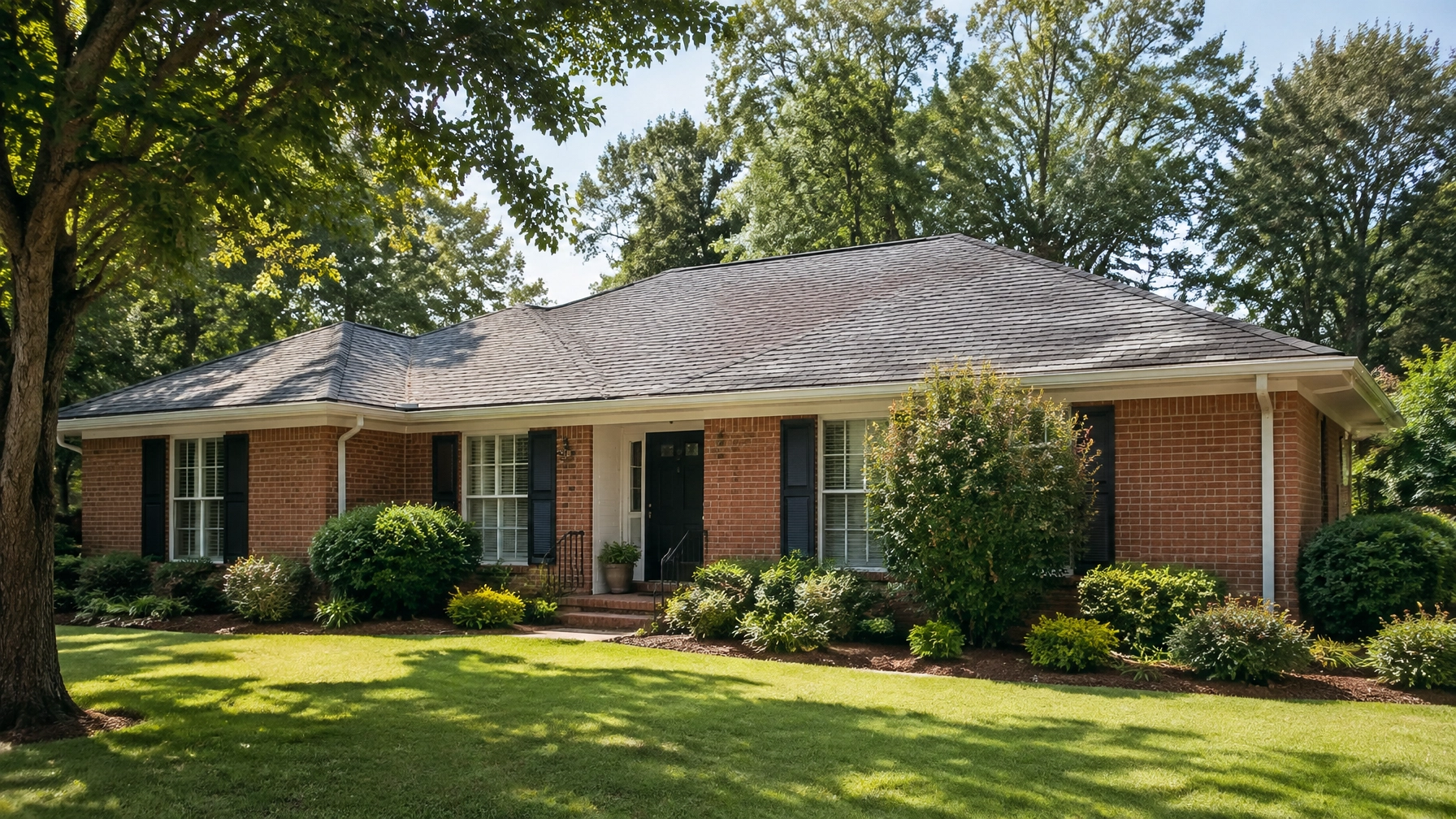
Columbia’s roof forecast is quiet today: but the next several days deserve attention.
The National Weather Service forecast for Thursday, September 17, 2026, calls for sunny skies and a high near 92°F. At 8:53 a.m., Jim Hamilton L.B. Owens Airport reported fair conditions, 73°F, 79% humidity, a 66°F dew point, and calm wind.
Friday gets hotter, with a high near 96°F and heat-index values as high as 102°F. Then the storm window opens:
- Friday night: 50% chance of showers and thunderstorms
- Saturday: 60% chance of showers and thunderstorms, especially after 2 p.m.
- Saturday night: 60% chance of additional showers and storms
- Sunday: Mostly sunny, near 91°F
- Monday through Wednesday: Cooler, wetter pattern with recurring shower and storm chances
You can follow the official NWS Columbia forecast for updates.
For homeowners, this is a familiar Midlands pattern: hot and dry, then sudden heavy rain and thunderstorms. That transition can expose weaknesses in an aging roof.
Why a dry week followed by storms is hard on a roof
A roof does not fail only during a dramatic storm. Damage often develops gradually as roofing materials expand, contract, dry out, and absorb repeated moisture.
1. Thermal expansion and contraction
A dark asphalt roof can become much hotter than the surrounding air during a sunny 92°F afternoon. By early morning, temperatures may fall into the upper 60s or low 70s.
That daily movement causes shingles, flashing, sealants, and roof decking to expand and contract. Over time, the cycle can contribute to:
- Brittle or cracked shingles
- Curling edges
- Loosened flashing
- Failed sealant around pipe boots and vents
- Small openings at valleys and roof-to-wall transitions
2. UV exposure and asphalt oxidation
Columbia receives strong summer and early-fall ultraviolet exposure. Years of sun can dry asphalt shingles and reduce the flexibility of the material.
Look for:
- Excessive granules in gutters
- Bald or discolored shingle areas
- Cracked or exposed fiberglass mat
- Curling corners
- Shingles that appear stiff or brittle
Granule loss matters because those small ceramic particles protect the asphalt surface from UV damage.
3. Fast water on dried-out sealant
A sudden downpour can send a large volume of water across roof valleys, flashing, and gutter systems within minutes. If sealant has shrunk or separated during a hot, dry period, stormwater can find a path underneath lifted shingle tabs.
Wind-driven rain is especially concerning around:
- Chimneys
- Skylights
- Plumbing vents
- Dormers
- Wall intersections
- Valleys
- Loose ridge caps
4. Gutters full of late-summer debris
Pine straw, leaves, and small branches often collect in Columbia-area gutters during late summer. When weekend storms arrive, clogged gutters can overflow against fascia boards and siding.
Before Friday night, clear the gutters and check that downspouts discharge water away from the foundation.

Columbia’s storm history is a roof-maintenance warning
The Midlands is not a coastal hurricane zone, but it is still a serious thunderstorm environment.
Weather records and regional storm-history data show:
- More than 100 tornadoes within 25 miles of Columbia since 1950
- Tornadoes ranging from EF0 through EF3 in the broader area
- Historic wind gusts near 87 mph
- Repeated severe-wind events affecting homes, businesses, and mobile homes
- Hail reports ranging from golf-ball size to baseball size during severe supercell events
Severe weather is most active in South Carolina during spring, but early fall can bring another sharp increase when cooler fronts interact with warm, humid Gulf air. That setup is relevant this weekend.
The NWS Columbia event archive and Today in Weather History page provide additional background on Midlands tornadoes, hail, flooding, and damaging winds.
An 87 mph gust does not guarantee roof damage, but it can expose installation or age-related problems. Vulnerable areas include roof edges, rake shingles, ridge caps, flashing, and older fasteners.
What Columbia homeowners should know about wind-resistant roofing
South Carolina’s residential code context is based on the 2021 IRC as adopted and amended by the state. Columbia and Richland County fall within an inland design-wind area commonly referenced at approximately 115 mph.
When replacing a roof, ask the contractor to document:
- The shingle’s wind-resistance rating
- The manufacturer’s required nail pattern
- Whether six nails per shingle are required for the selected product and installation
- The type of starter course and ridge-cap system
- The fastening method used at roof edges and corners
- Any required roof-deck repairs
For high-wind performance, asphalt shingles should meet the applicable high-wind standards, such as ASTM D7158 Class H or ASTM D3161 Class F, when specified for the selected roofing system. Most architectural shingles commonly sold in the area offer strong wind ratings, but the product must still be installed exactly according to its instructions.
Use a sealed, self-adhered starter course, properly installed hip-and-ridge caps, and approved roofing nails. On older homes, have the contractor inspect roof-to-wall connections, deck fastening, and areas where the roof meets porches or additions.
Always confirm the current requirements with the local building department and the product manufacturer before work begins.
Storm-ready upgrades worth considering
A roof replacement is an opportunity to improve more than the visible shingles.
Impact-resistant shingles (Premium)
Class 4 shingles tested under UL 2218 can provide improved resistance to hail impact. Depending on the insurer and policy, homeowners may qualify for premium discounts: often in the range of 10% to 35%, although eligibility varies.
Synthetic underlayment (Popular)
Synthetic underlayment provides a more durable secondary water barrier than traditional felt in many roofing systems.
Ice-and-water protection (Protective)
Even though Columbia is not known for severe ice accumulation, self-adhered membrane in valleys and along vulnerable eaves helps protect against wind-driven rain and backup water.
Balanced attic ventilation (Efficiency)
Proper ridge-and-soffit ventilation can help reduce attic temperatures, limit moisture buildup, and reduce stress on shingles and roof decking.
Reinforced flashing (Critical detail)
Flashing around chimneys, vents, walls, and pipe boots should be inspected carefully. A durable roof can still leak if the flashing system is poorly installed or deteriorated.

Friday pre-storm checklist
Before the heat peaks Friday and storms return, walk the property from the ground and complete these tasks:
- Clean gutters and downspouts
- Remove leaves and pine straw from valleys
- Trim branches hanging over the roof
- Secure loose outdoor furniture and decorations
- Check for missing, lifted, or curled shingles
- Look for damaged ridge caps
- Inspect visible pipe boots and flashing
- Confirm attic access is clear for a later inspection
- Photograph existing roof conditions for your records
Do not climb onto the roof during hot, wet, or windy conditions. A ground-level inspection is safer, and a licensed contractor can perform a closer assessment.
What to check after the storm
After Saturday’s storms pass, look for:
- Missing shingle tabs
- Lifted or creased shingles
- Dented ridge caps
- Granules collected in gutters or downspouts
- Broken or displaced vent covers
- Damaged pipe boots
- Ceiling stains or attic moisture
- Soft spots in the roof deck
- Fallen branches or punctures
Photograph the damage from multiple angles. Record the date and approximate time of the storm. If you suspect storm damage, contact your insurer and a licensed, insured local contractor promptly. Avoid anyone who arrives uninvited and says they “just finished a job down the street.” Verify the license, insurance, business address, references, and written scope before allowing roof access.
2026 Columbia roof replacement cost ranges
For Columbia homeowners, architectural shingle replacement typically runs $7,100 to $15,200, with many projects landing between $8,600 and $11,800. A practical installed range is about $4.30 to $8.00 per square foot, or approximately $430 to $800 per roofing square.
Typical planning ranges include:
- Budget: $6,500–$8,500 for a 3-tab roof on an approximately 1,800–2,000-square-foot home
- Most Popular: $9,000–$12,000 for architectural shingles on an approximately 2,000–2,500-square-foot home
- Premium: $15,000–$23,000 for designer or impact-resistant shingles, or a roof with a standing-seam metal accent
Steep pitches, multiple dormers, difficult access, extensive flashing, tear-off requirements, and damaged decking can move the project toward the high end.
For a general planning tool, use the roof cost calculator. For a property-specific estimate, Get My Roof Estimate Now measures your roof using satellite imagery and provides pricing in under 60 seconds.

Get ahead of the weekend storm window
Today’s sunny 92°F weather is not a sign that the roof is trouble-free. It is the best time to identify weak points before Friday’s heat and Saturday’s thunderstorms arrive.
Get a free, satellite-based roof replacement estimate in under 60 seconds. You will receive roof measurements, low-middle-high pricing, and material options: without a contractor visit or credit card. If you decide to move forward, you can connect with verified, licensed, and insured Columbia-area contractors.
Leave a Reply