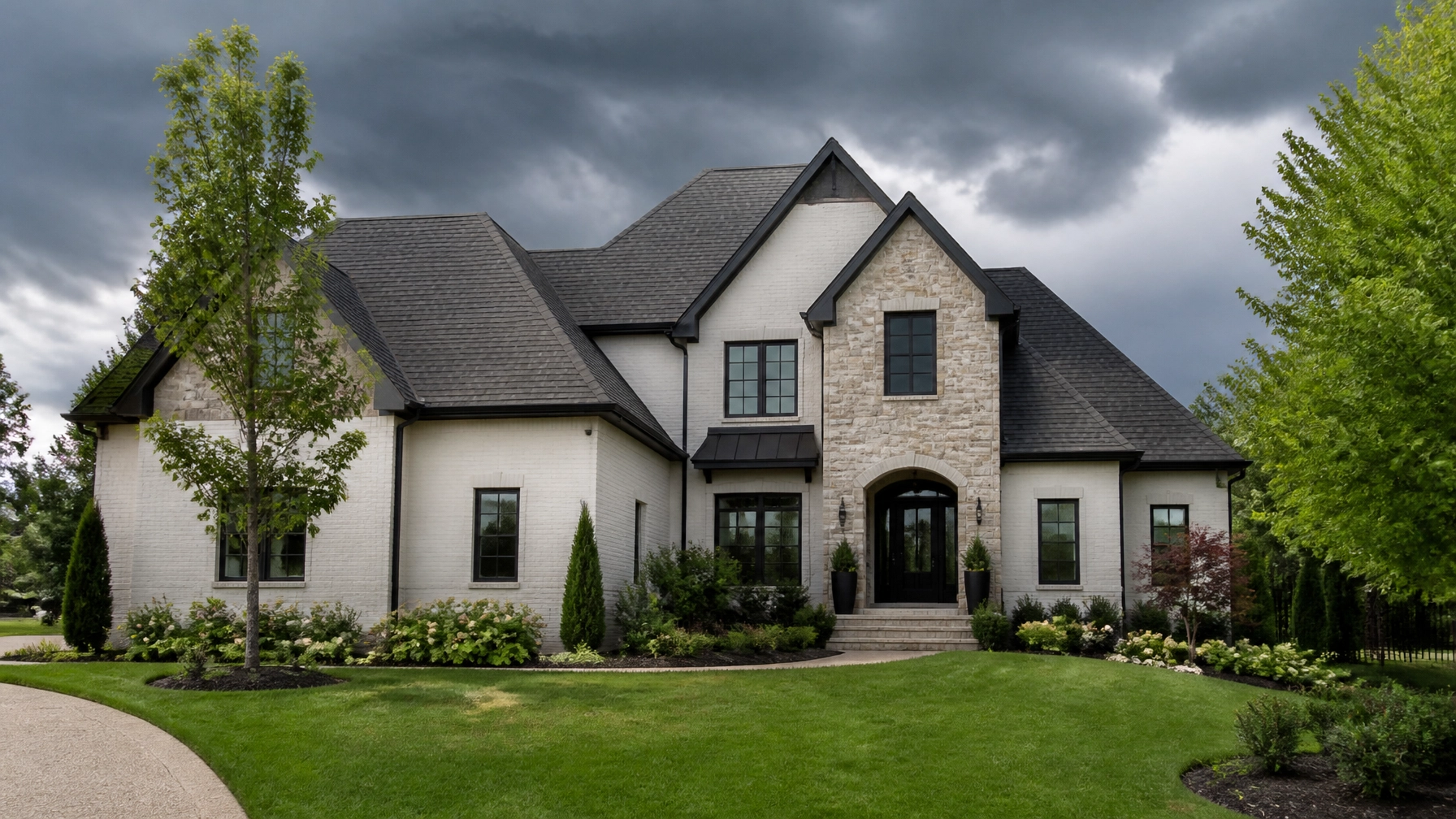
Nashville homeowners are currently navigating a demanding weather cycle. As of Friday, July 24, 2026, the region remains under a Heat Advisory, with heat indices surging between 100°F and 110°F. While the sky remains overcast with a high of 86°F and a low of 68°F, the primary concern for residential durability lies in the developing showers and severe thunderstorms forecasted for Friday night.
This week has already tested Middle Tennessee’s infrastructure with damaging 60 mph winds, localized flash flooding, and hail. For those managing a property in the Nashville metro area, these conditions aren't just a matter of discomfort: they are a direct assault on your home’s primary defense system: the roof.
The Thermal Challenge: 150°F Attic Temperatures
While the thermometer reads 86°F, the physics of your roof tells a different story. In the direct Southern sun, even under overcast conditions, infrared radiation penetrates the cloud cover. Without proper mitigation, attic temperatures in Nashville homes frequently reach 150°F.
This extreme heat is the leading cause of "shingle cooking." When heat is trapped in the attic space, it bakes the asphalt shingles from the underside, leading to premature granule loss, curling, and "thermal shock": the rapid expansion and contraction of materials as afternoon storms hit a scorching roof.
Resilience Tip (Ventilation): To combat this, we recommend a continuous ridge ventilation system. Ridge vents, when paired with clear soffit vents, allow hot air to escape naturally, keeping your attic temperature closer to the ambient outdoor temperature. This simple airflow correction can extend the life of an architectural shingle roof by 5–10 years.

Storm Defense: Engineering for 130 MPH Winds
The severe thunderstorms hitting Nashville this week have produced straight-line winds clocked at 60 mph. However, high-performance building standards in 2026 demand a much higher safety margin. Modern building codes in storm-prone regions of Tennessee increasingly point toward materials rated for 130 mph winds.
Standard 3-tab shingles (Budget) typically fail at 60–80 mph. For Nashville resilience, homeowners should prioritize Architectural Shingles (Popular). These are engineered with a heavier laminate construction and advanced adhesive strips that create a structural bond across the roof deck.
| Feature | Standard 3-Tab | Architectural Shingle | Standing Seam Metal |
|---|---|---|---|
| Wind Rating | 60-80 MPH | 110-130 MPH | 140-180 MPH |
| Hail Rating | Class 1-2 | Class 3-4 (Impact) | Class 4 |
| Lifespan | 15-20 Years | 25-30 Years | 50+ Years |
| Heat Reflection | Low | Moderate | High |
Impact Resistance: The Class 4 Standard
With hail becoming a recurring feature of Nashville’s July storms, "impact resistance" is no longer a luxury. We strongly advise homeowners to look for UL 2218 Class 4 impact-rated shingles.
A Class 4 rating means the material has been tested to withstand the impact of a 2-inch steel ball dropped from 20 feet without cracking the fiberglass mat. In real-world terms, this is the difference between a roof that needs a full replacement after a July storm and one that survives unscathed. Furthermore, most Tennessee insurance providers offer significant premium discounts for homes with verified Class 4 installations.

Material Deep Dive: Humidity and Durability
Nashville’s humidity doesn't just make the afternoons "muggy": it creates a breeding ground for Gloeocapsa magma, the blue-green algae responsible for those unsightly black streaks on roofs.
To maintain curb appeal and structural integrity, modern roofing systems for the Southeast utilize copper or zinc-infused granules. As it rains, these metals release ions that naturally inhibit algae and mold growth. When choosing a replacement material, ensure your contractor specifies "Algae Resistance" (AR) shingles to combat Tennessee's high dew points.
The 60-Second Resilience Check
Waiting for a contractor to visit your home just to get a ballpark price is a relic of the past. In today’s fast-paced environment, Nashville homeowners need data instantly.
Using advanced satellite imagery, Get My Roof Estimate Now provides an accurate measurement of your roof’s size, pitch, and complexity in under a minute. Our technology calculates the exact "squares" (100 sq. ft. units) of your home, factoring in the regional price differences for materials like architectural shingles and metal.
How it works:
- Enter your address: We pull high-resolution satellite data of your Nashville property.
- 60-Second Analysis: Our AI measures every facet, ridge, and valley.
- Transparent Pricing: You receive a roof cost estimate with low-middle-high price ranges for different materials.
- No Pressure: Use this data to budget, plan for storm repairs, or compare against contractor bids.

Summary of Resilience Benchmarks for Nashville (July 2026)
- Target Material: Class 3 or 4 Impact-Rated Architectural Shingles.
- Wind Requirement: Minimum 130 mph uplift rating.
- Ventilation Goal: Passive ridge ventilation to keep attics below 120°F.
- Humidity Defense: Copper or zinc-infused granules to prevent algae.
- Estimation Strategy: Use satellite-powered tools to avoid the 2-week wait for contractor visits.
Whether you are dealing with active leaks from this week's storms or simply planning for a future replacement during this heat advisory, information is your best tool. Don't guess the size of your investment: know the numbers before the next storm rolls through the Cumberland Valley.
Ready to see where your roof stands?
Get your instant, free estimate here and secure your home against Nashville’s unpredictable weather.
Leave a Reply