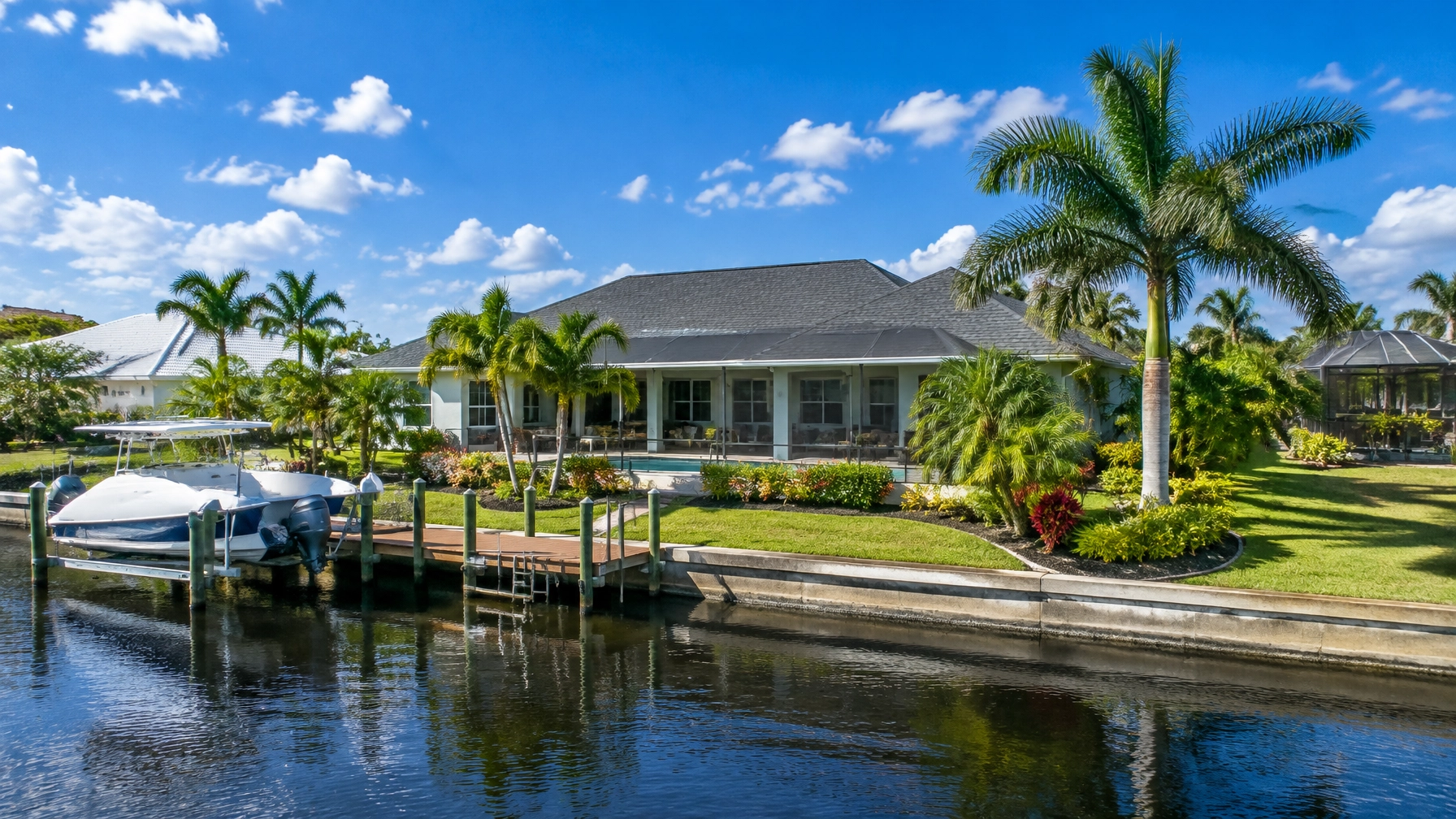
Cape Coral homeowners should budget $9,000–$24,500 for a typical 1,600–2,300-square-foot architectural shingle roof replacement in 2026. Metal roofing generally costs $11,000–$40,000, while concrete or clay tile can reach $20,000–$52,000.
Those are installed planning ranges for Cape Coral and Lee County. Your final price depends on roof size, pitch, complexity, material, decking condition, coastal exposure, wind-rated components, permits, and the contractor’s installation method.
Cape Coral’s roughly 400 miles of canals also create a meaningful pricing difference. Gulf-access canal homes may carry a 6%–10% premium because of salt air, corrosion-resistant fasteners, stricter wind specifications, and heavier fastening schedules.
Cape Coral roof replacement costs at a glance
| Roofing system | 2026 installed price | Category |
|---|---|---|
| Architectural shingles | $5.00–$9.00 per sq. ft. | Budget–Popular |
| Metal roofing | $5.50–$18.00 per sq. ft. | Premium |
| Concrete or clay tile | $10.00–$25.00 per sq. ft. | Premium |
| Typical shingle replacement | $9,000–$24,500 | 1,600–2,300 sq. ft. |
| Typical metal replacement | $11,000–$40,000 | Varies by profile and complexity |
| Typical tile replacement | $20,000–$52,000 | Labor-intensive system |
A simple, single-story 1,700-square-foot gable roof with architectural shingles often falls near $10,500–$16,500.
A two-story home, cut-up roofline, or tile system commonly reaches $22,000–$45,000 or more.
For a quick starting point, use the Get My Roof Estimate Now roof cost calculator. For a property-specific range, the company’s satellite-powered estimate tool measures roof size, pitch, and complexity without requiring an initial contractor visit.

Why Cape Coral roofing costs run higher
1. Salt air and Gulf humidity
Salt-laden air accelerates corrosion on exposed metal components. High humidity can also contribute to adhesive degradation, moisture intrusion, and faster deterioration of low-grade underlayment.
A coastal roofing proposal should identify:
- Corrosion-resistant fasteners
- High-grade underlayment
- Proper flashing metals
- Sealants rated for Florida heat and moisture
- Ventilation and moisture-management details
2. Hurricane wind exposure
Cape Coral homes must be designed for significant wind loads. Gulf-access canal areas may use design wind speeds around 150 mph, while inland areas commonly fall within the 130–140 mph range.
Florida Product Approval numbers are required for roofing components. That can include the roof covering, underlayment, fasteners, vents, flashing assemblies, and other system components.
The important point is that a roof is not hurricane-ready simply because it uses an expensive material. The complete assembly must be installed and documented correctly.
3. Tile-heavy construction
Concrete and clay tile are common on newer Cape Coral homes, including properties in communities such as Cape Harbour, Tarpon Point, Sandoval, and Entrada.
Tile can deliver long service life and strong curb appeal, but installation is more labor-intensive. The system may require:
- A secondary water barrier
- Tile-approved underlayment
- Tested uplift resistance
- Specialized fastening
- Additional labor around valleys, hips, ridges, and penetrations
4. Post-Ian labor demand
Hurricane Ian made landfall near Cayo Costa and the Cape Coral area in September 2022. Florida’s insured losses from the storm and related recovery exceeded $112 billion, and the rebuilding cycle continues to affect contractor availability, material scheduling, and labor pricing.
That is one reason homeowners should avoid waiting until the next major storm to request estimates.
What the FBC 9th Edition means for Cape Coral roofs
The Florida Building Code 8th Edition is in force now. The 9th Edition has a statewide effective date of December 31, 2026. Some industry reports describe phased 2026 adoption, so confirm the applicable code edition with the City of Cape Coral Building Division before pulling a permit.
The direction of the code is clear:
- Greater use of sealed roof decks or secondary water barriers
- Clarified flashing requirements for each roof covering type
- Enhanced roof-to-wall connections
- Product Approval documentation for system components
- Tested uplift resistance for tile underlayments
The 25% rule
If repair, replacement, or recovery work exceeds 25% of the roof plan area or roof section within a 12-month period, the affected roof may need to be brought into compliance with the current code.
For older, pre-2007 systems, exceeding that threshold can turn a repair project into a full replacement requirement. Florida law provides an exception for roof systems built, repaired, or replaced under the 2007 Florida Building Code or a later edition. In those cases, only the repaired or replaced portion may be required to meet the current code.
Because the result depends on permit history, roof sections, and project scope, ask the building department or a licensed contractor to review:
- The original roof permit date
- The code edition used for the existing roof
- The percentage of roof area affected in the past 12 months
This is why “patch it now” can become a much larger project on older Cape Coral canal-grid homes.

Cape Coral permits, fees, and contractor licensing
A building permit is mandatory for a complete roof replacement in Cape Coral. Work without a permit can create inspection problems, insurance issues, stop-work orders, and fines.
Jurisdiction matters. Some properties are within the City of Cape Coral, while others fall under unincorporated Lee County. Confirm the correct jurisdiction before signing a contract.
Typical 2026 planning figures are:
- Cape Coral roof permit fees: approximately $215–$485, depending on valuation and scope
- Unincorporated Lee County residential fee: approximately $85
- Notice of Commencement: generally required for Cape Coral projects valued at $2,500 or more; Lee County guidance may cite a different threshold, so verify the current requirement
- Applications: submitted through the city’s EnerGov permitting portal
- Materials: Florida Product Approval numbers required for the roofing system
Ask for the permit, inspections, and Notice of Commencement to appear as clear line items in the written contract.
Before hiring, verify the contractor through myfloridalicense.com. A roofing contractor license commonly begins with CCC. A registered contractor credential may begin with RC.
Also require:
- General liability insurance
- Workers’ compensation coverage
- A written scope of work
- Tear-off and disposal details
- Decking replacement pricing
- Final inspection and permit closeout documentation
Add-ons that can change the final price
Your estimate may increase for:
- Full tear-off of existing roofing layers
- Decking replacement at approximately $90–$150 per sheet
- Secondary water barrier installation
- Additional flashing
- Permit and inspection charges
- Dumpster and disposal fees
- Difficult canal-side access
- Structural repairs
- Complex roof geometry
- Class 4 impact-resistant shingles
Class 4 impact shingles generally run 10%–20% more than standard architectural shingles. They may also support wind mitigation credits, depending on your insurer and the rest of the home’s construction.
Insurance, wind mitigation, and grant opportunities
A Florida hurricane deductible is often 2%–10% of dwelling coverage. On a $500,000 home, that equals $10,000–$50,000 before a covered claim begins paying.
Insurance usually does not cover ordinary age-related deterioration or maintenance failure. Wind or hurricane damage may be covered, subject to the policy, deductible, exclusions, and claim deadlines.
Florida homeowners generally have a one-year window from the date of loss to report a hurricane or windstorm claim. Document the roof with dated photos after every major storm. Review current requirements under Florida Statute §627.70132.
The My Safe Florida Home program remains available for eligible single-family homes and townhomes permitted before January 1, 2008. Income-tiered grants, a free wind mitigation inspection, approximately $405 million in 2026 budget funding, and Chapter 2026-174 may help eligible homeowners address mitigation work or reapply after a prior rejection. Check the current status at MySafeFLHome.com.
Features that may earn insurance credits include:
- Secondary water barriers
- Class 4 shingles
- 8d ring-shank nails or better
- Six-inch and 12-inch fastening patterns
- Reinforced roof-to-wall straps
- A continuous roof deck
Ask for the completed OIR-B1-1802 Uniform Mitigation Verification Inspection Form.
Does a new roof improve Cape Coral home value?
Southwest Florida’s housing market has cooled from its 2022 peak but remains elevated. A documented, permitted, code-compliant roof is often less about luxury and more about keeping the property insurable and financeable.
An uninsurable or failed four-point inspection can reduce a Cape Coral listing by an estimated 10%–20% or prevent a transaction from closing. A new roof with a permit record and wind mitigation report typically recovers approximately 55%–70% of its cost at resale in this market.
The return also includes avoided costs:
- Fewer buyer repair concessions
- Less appraisal friction
- Better insurance eligibility
- Possible wind mitigation credits
- Stronger buyer confidence
Depending on the carrier and home, wind mitigation improvements may reduce premiums by approximately 10%–30%.
Older homes in the SE and SW canal grid, especially those built from the 1960s through the 1990s, should be evaluated carefully for decking damage. Newer gated communities are often more straightforward, with single-layer tear-offs and fewer hidden repairs.
Bottom line for Cape Coral homeowners
For 2026 planning, use these benchmarks:
- Architectural shingles: $9,000–$24,500
- Metal roofing: $11,000–$40,000
- Concrete or clay tile: $20,000–$52,000
- Gulf-access premium: add 6%–10%
- Class 4 shingles: add approximately 10%–20%
- Decking replacement: $90–$150 per sheet
Start with an instant satellite estimate to understand your roof’s measured size and likely price range. Then compare that information with a licensed contractor’s on-site inspection, permit plan, Product Approval documentation, and written hurricane-ready scope.
Leave a Reply