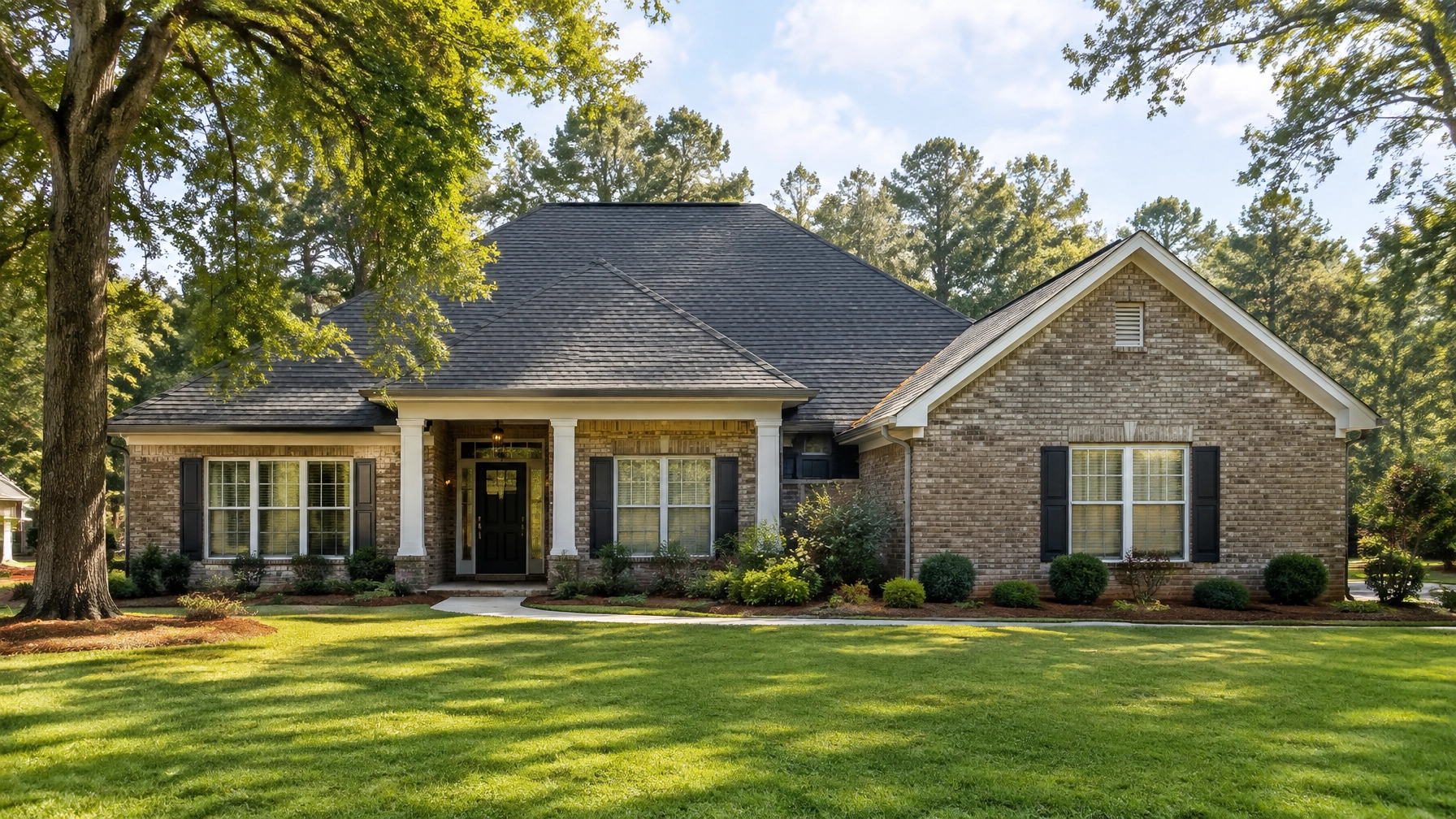
Macon gets one more relatively comfortable morning today before heat and humidity rebuild. Thursday, September 17, will be mainly clear and dry, with a high near 92°F, a low in the low-to-mid 60s, humidity near 33%, dewpoints in the low-to-mid 60s, and a 0% rain chance.
Northeast winds around 10–15 mph may gust to 20–25 mph before becoming lighter and more variable. The dry air also creates an elevated fire-danger window, so secure loose roof debris, outdoor materials, and anything that could blow against shingles.
This is more than a weather update. It is a Macon roof durability report. Heat, ultraviolet exposure, hail, wind, humidity, algae, soil movement, and drainage all work together to determine whether a roof lasts its expected service life, or develops leaks and premature granule loss.
Macon Weather Snapshot: September 17–24, 2026
- Thursday, September 17: The most comfortable day of the period. Mostly clear and dry, with highs in the upper 80s to low 90s. Dry air limits rain.
- Friday, September 18: Heat and humidity return. Highs reach the low-to-mid 90s, with heat index values returning to the triple digits.
- Saturday, September 19: High near the low 90s. Isolated afternoon showers and thunderstorms are possible.
- Sunday, September 20: Storm chances increase as the upper ridge weakens and a front approaches. Afternoon thunderstorms are possible.
- Monday and Tuesday, September 21–22: More widespread afternoon storm chances, generally 40–50%. Total rainfall should remain under 1 inch for much of the region.
- Wednesday and Thursday, September 23–24: Temperatures moderate into the upper 80s and low 90s but remain above normal for late September.
- For official updates, monitor the NWS Peachtree City forecast for Macon.
Georgia’s broader climate background matters, too. July 2026 ranked as the state’s seventh-warmest July on record, and January through July ranked fifth warmest. The drought that peaked across Georgia in April has eased, but heat and drying conditions continue to stress roofing materials.
Why This Heat Matters to Your Roof
UV exposure weakens the shingle surface
Clear September skies allow direct sunlight to work on asphalt shingles for hours. Ultraviolet radiation gradually breaks down the oils and binders that keep shingles flexible. As shingles become brittle, they are less able to absorb wind, hail, and thermal movement.
Thermal load expands and contracts the roof system
A roof can experience a major difference between daytime surface temperatures and nighttime temperatures. Repeated expansion and contraction affects shingles, flashing, sealants, underlayment, and fasteners.
The concern increases when warm days are followed by warm nights. Materials receive less overnight relief, and small weaknesses may continue developing before the next storm arrives.
Attic heat works from underneath
An unventilated attic during low-90s weather and triple-digit heat indices can push roof-deck temperatures well above outdoor air temperatures. Shingles, underlayment, and fasteners are then exposed to heat from both sides.
Proper intake and exhaust ventilation cannot stop summer heat, but it can help reduce trapped attic heat and moisture. During a roof replacement, ventilation should be evaluated as part of the complete roof system, not treated as an afterthought.
Granule loss reduces protection
Granules shield asphalt shingles from ultraviolet exposure. When granules loosen and collect in gutters, the exposed asphalt becomes more vulnerable to brittleness, heat, and weathering.
Look for:
- Bare or unusually smooth patches on shingles
- Excessive granules in gutters or downspout outlets
- Curling, cracking, or blistering
- Dark streaks combined with thinning shingle surfaces

Macon’s Severe-Weather History Is a Durability Benchmark
Bibb County has recorded 72 hail events and 147 thunderstorm wind events since 1996. Those events do not mean every home needs immediate replacement, but they do show why storm inspection and material selection matter.
The most significant event in the county’s record was the May 11, 2008, Mother’s Day tornado. The EF2 tornado touched down near Lizella and tracked approximately 18 miles through Macon, including the Macon State College, Eisenhower Parkway, and Pio Nono Avenue corridors, before lifting near Dry Branch. It damaged 1,479 homes, destroyed 93, and caused approximately $5 million in property damage.
Other important benchmarks include:
- A 2019 hail event that caused approximately $2 million in damage
- An April 13, 2020, EF1 tornado affecting the Zebulon Road area
- Overnight severe storms in March 2026 that damaged roofs, windows, and siding near Thomaston Road
- Quarter-size hail reported in the region in May 2026
- 1.00-inch hail over Macon on August 5, 2026
- July 9, July 18, and August 16, 2026, severe thunderstorm warnings citing 60 mph gusts and penny-size hail
After a storm, damage may look obvious, or nearly invisible. Check for missing or lifted shingles, bruised shingle surfaces, exposed underlayment, damaged ridge caps, dented vents, bent flashing, and granules beneath downspouts. Roof leaks may not appear indoors until the next heavy rain.
Macon’s Local Durability Factors
Red clay soil and roof-to-wall movement
Macon’s expansive red clay soil swells when saturated and shrinks when dry. That movement creates hydrostatic pressure and can contribute to foundation movement.
The roof is not isolated from the rest of the structure. Movement may place stress on roof-to-wall joints, valleys, flashing, and penetrations. This is one reason gutters and downspouts matter: water should be carried 5–10 feet away from the foundation, not released directly beside the home.
Pine pollen and algae streaking
Middle Georgia’s pine pollen can coat a roof in a thick yellow film. That organic material can support the growth of Gloeocapsa magma, the blue-green algae associated with black roof streaks.
The algae feeds on limestone filler in asphalt shingles and creates a dark sheath that helps protect it from ultraviolet exposure. Over time, algae activity can accelerate granule loss. Once the granules are gone, shingles become more exposed to heat and UV brittleness.
Do not pressure wash an asphalt shingle roof. High pressure strips granules and may void warranties. A low-pressure soft wash using a properly diluted chlorine or bleach solution is the standard approach. Algae-resistant shingles with copper or zinc granules can help inhibit regrowth.
Humidity, rainfall, and freeze-thaw cycles
Macon’s humid subtropical climate brings approximately 47–51 inches of annual rainfall and average annual humidity around 68–70%. Moisture challenges roof edges, valleys, flashing, penetrations, and gutters.
Macon also experiences roughly 40–50 frost days per year. Freezing is less severe than in the Midwest, but repeated cold snaps still work on sealants and flashing joints.

2026 Macon Roof Replacement Cost Ranges
Macon roof replacement projects commonly fall between $8,000 and $25,000 in 2026, depending on roof size, pitch, complexity, tear-off requirements, materials, and local labor.
One roofing square equals 100 square feet of roof surface. A 2,000-square-foot home is often around 20 squares before waste, pitch, valleys, and complexity are included.
Planning ranges by material
- Architectural asphalt shingles (Popular): Approximately $400–$650 per square
- Class 4 impact-resistant shingles (Storm-ready): Approximately $500–$750 per square
- Standing-seam metal (Premium): Approximately $900–$1,350 per square
A typical 20-square architectural shingle replacement often falls between $10,000 and $18,000.
For low-middle-high planning:
- Low: Around $8,000 for a smaller or simpler replacement
- Middle: Approximately $10,000–$18,000 for a typical 20-square architectural shingle roof
- High: Up to $25,000 for larger, steeper, more complex, or premium-material projects
Quotes usually expire because material and labor costs change. For a full tear-off, a 10–15% contingency is wise for possible decking repairs and other conditions that cannot be confirmed from satellite imagery alone.
Roof Replacement, Resale, and Curb Appeal
A roof is one of the first exterior features buyers notice. Streaking, curling shingles, mismatched repairs, and visible storm damage can raise concerns during showings and inspections.
The relationship between new roof ROI home value and resale is not a single guaranteed percentage. It depends on the roof’s age, material, neighborhood, buyer expectations, and the condition of the rest of the home.
Still, a replacement can support:
- Roof replacement resale value: Buyers are less likely to negotiate around an immediate major expense.
- Roof curb appeal home value: A clean roofline improves the appearance of brick, siding, and landscaping.
- Best roof for home value: For many Macon homes, architectural shingles offer a practical balance of appearance, cost, and availability. Metal may make more sense for long-term ownership or a specific architectural style.
- Roof replacement ROI: The strongest return often comes from reducing buyer uncertainty, protecting the structure, and presenting a complete, well-maintained exterior.

Macon Roof Durability Checklist
- Check for missing, lifted, cracked, or bruised shingles after every major storm.
- Inspect gutters for granules, pine pollen buildup, leaves, and standing water.
- Keep downspouts pointed 5–10 feet away from the foundation.
- Look closely at valleys, chimneys, walls, vents, skylights, and other penetrations.
- Never pressure wash asphalt shingles; use a low-pressure soft-wash method instead.
- Ask whether replacement shingles include algae resistance and appropriate storm performance.
- Evaluate attic ventilation before installing a new roof.
- Watch for ceiling stains, musty odors, daylight in the attic, and recurring leaks.
- Keep a dated photo record after hail or wind events.
- Compare written estimates that identify squares, materials, tear-off, flashing, ventilation, warranties, and cleanup.
Get an Instant Macon Roof Estimate
Start with an instant, free satellite-powered roof estimate for your Macon address. The system measures roof size, pitch, and complexity and provides an accurate 90–95% estimate in under 60 seconds.
There is no credit card required, no upfront contractor visit, and no hidden fee. You can review low-middle-high pricing for different materials and connect with verified, licensed, and insured local contractors.
For general planning, use the roof cost calculator. The satellite estimate is a faster way to move from a broad budget range to property-specific information.
A final in-person inspection is still needed to verify decking, flashing, ventilation, and other conditions that satellite imagery cannot confirm.
Leave a Reply