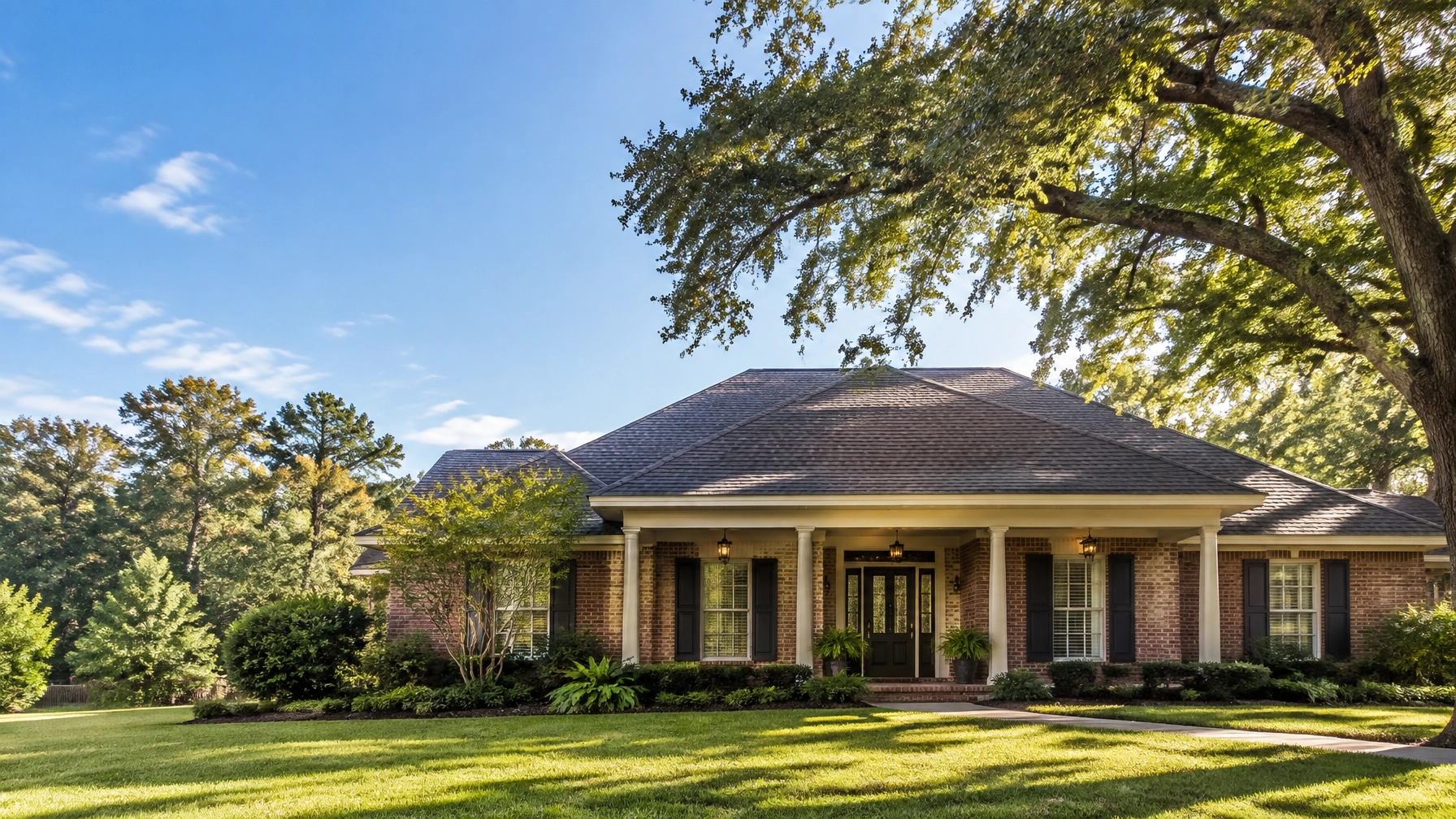
Image credit: Get My Roof Estimate Now / AI-generated editorial visual.
As of midday and early afternoon Thursday, September 17, Baton Rouge is mainly clear and sunny at about 91°F, with a forecast high near 92°F. The heat index is expected to reach approximately 95°F to 100°F, but the rain chance is essentially zero.
The important change is humidity. A weak cool front is moving through, bringing drier air and lower dewpoints this afternoon. Baton Rouge is getting a break from the humidity, not the heat.
That makes this week’s dry stretch a useful window for roof inspections, attic ventilation checks, and storm preparation: provided exterior work starts early.
Baton Rouge roofing outlook: $8,000–$21,000 for many replacement projects
For a typical Baton Rouge home, a roof replacement may fall in the range of approximately $8,000 to $21,000, depending on the roof’s size, pitch, complexity, material, tear-off requirements, and local labor conditions.
Common material categories include:
- Architectural shingles (Popular): A practical balance of cost, appearance, and performance.
- Metal roofing (Premium): Higher upfront cost with a typical lifespan of 40–70 years.
- Designer shingles (Premium): Enhanced appearance and upgraded performance.
- Roof coatings or specialty systems: Useful for certain low-slope or commercial-style applications, but not appropriate for every residential roof.
Get My Roof Estimate Now’s Baton Rouge roofing estimate page provides a property-specific starting point using satellite measurements. The tool measures the roof’s size and shape instead of relying only on neighborhood averages.
What this week’s weather means for your roof
Today: dry conditions help inspections
With virtually no rain expected today, a professional can more easily inspect:
- Missing, lifted, or creased shingles
- Exposed underlayment
- Damaged flashing around chimneys and vents
- Soft or sagging areas of the roof deck
- Gutter granules and signs of accelerated shingle wear
- Ridge vents, soffits, and powered attic fans
Drier air also helps outdoor work proceed with fewer weather interruptions. If shingles need to be installed or repaired, warm conditions generally support proper sealing. However, a roof surface in direct sun can become much hotter than the air temperature.
For homeowners and crews, the main immediate hazard today is heat stress, not rain or wind damage. Early-morning starts are the sensible choice. Work should pause when conditions become unsafe, especially during the afternoon heat peak.
Friday through Sunday: hot and mostly dry
From Friday, September 18, through Sunday, September 20, Baton Rouge is expected to remain hot and mainly dry, with highs roughly between 94°F and 98°F. Skies should be mainly clear to partly cloudy, with little to no rain.
The next meaningful rain chance returns around Monday.
This is a useful maintenance window, but it is not a reason to delay storm preparation. A roof with loose tabs, deteriorated seal strips, or open flashing can take on water quickly when the next heavy rain arrives.

Image credit: Get My Roof Estimate Now / AI-generated editorial visual.
Why Hurricane Ida still matters to Baton Rouge roofs
Hurricane Ida made landfall on August 29, 2021, as a Category 4 hurricane. East Baton Rouge Parish experienced widespread wind damage, including roof and shingle issues, minor-to-moderate structural damage, downed trees, and widespread power outages.
The parish was also approved for the federal Blue Roof program. That program provided temporary plastic sheeting over damaged roofs because so many structures had compromised roofing.
A temporary covering can reduce additional water intrusion, but it is not a permanent roof system. If a home still has unresolved storm repairs: or if a later repair only addressed the visible surface: today’s clear weather is a good time to arrange a professional inspection.
Look for delayed warning signs such as:
- Ceiling stains that appear after heavy rain
- Musty attic odors
- Discolored or soft roof decking
- Rusted fasteners or flashing
- Shingles that do not match surrounding areas
- Loose ridge caps or exposed nail heads
- Tarps, patches, or sealants that have aged in the sun
The FEMA Hurricane Ida disaster page provides official disaster information and recovery resources. For current repairs, homeowners should also keep insurance records, previous inspection reports, and photographs together.
Gulf humidity creates more than cosmetic roof problems
Baton Rouge’s Gulf South climate is hard on roof systems because heat, moisture, rainfall, and biological growth work together.
Algae and moss
Gloeocapsa magma causes the blue-green or dark streaks often seen on asphalt shingles. The streaks are not only an appearance issue. Algae and moss can retain moisture against the shingle surface, encourage debris buildup, and make it harder for the roof to dry after rain.
Do not pressure-wash asphalt shingles. High-pressure cleaning can remove protective granules and shorten shingle life. A qualified professional can recommend an appropriate cleaning or treatment method.
Deck rot and fastener corrosion
Persistent humidity and heavy rain can affect:
- Roof decking
- Fascia and soffit materials
- Nail heads and fasteners
- Flashing around penetrations
- Gutters and downspouts
- Wood framing near recurring leaks
The roof may look acceptable from the ground while moisture damage develops underneath.
Heat and ultraviolet exposure
Repeated 90°F-plus conditions accelerate the aging process. Over time, intense sunlight and thermal cycling can contribute to:
- Granule loss
- Shingle curling
- Blistering
- Brittle seal strips
- Premature underlayment wear
- Excessive attic temperatures
Attic ventilation is part of the durability equation. A balanced system: with intake ventilation at the soffits and exhaust ventilation near the ridge: helps remove heat and moisture. Adding a powered fan without adequate intake ventilation may not solve the underlying problem.
Central-zone wind risk and FORTIFIED roofing
Baton Rouge is in Louisiana’s FORTIFIED Central zone under Regulation 136. Homes that earn a FORTIFIED designation may qualify for a 27% to 42% discount on the hurricane portion of their insurance premium, subject to insurer and program requirements.
FORTIFIED construction can include stronger roof-deck attachment, sealed roof-deck details, improved edge protection, enhanced flashing, and more secure shingle fastening. These details matter because a roof can suffer water intrusion after wind removes only a portion of its shingles.
Baton Rouge has experienced repeated tropical threats and near-misses, including Andrew in 1992, Katrina in 2005, Gustav in 2008, Isaac in 2012, and Ida in 2021. Even when a storm does not deliver a direct hit, tropical-storm-force wind can flex and fatigue shingle tabs over multiple seasons.
Two statewide incentives are especially relevant:
- A Louisiana FORTIFIED-related state income tax credit covering 100% of qualified expenses up to $10,000.
- Potential insurance premium savings associated with a qualifying FORTIFIED designation.
The 2026 Louisiana Fortify Homes grant lottery is closed, and East Baton Rouge Parish was not among the grant-eligible parishes for that season. Homeowners should confirm current tax and insurance requirements before budgeting around either incentive.

Image credit: Get My Roof Estimate Now / AI-generated editorial visual.
Baton Rouge roof resilience checklist
Use this dry weather window to complete the following:
- Schedule a professional roof inspection. Do not climb onto the roof yourself.
- Inspect the attic from inside. Look for damp insulation, staining, daylight, mold-like growth, or damaged decking.
- Check ventilation. Confirm that soffit intake and ridge or roof exhaust are not blocked.
- Clean gutters and downspouts. Live oak leaves can restrict drainage and push water behind fascia.
- Trim branches near the roof. Remove dead or rubbing limbs before the next storm.
- Photograph existing conditions. Keep dated exterior and attic photos for maintenance records.
- Review older repairs. Pay special attention to tarp-covered areas, sealant patches, and mismatched shingles.
- Ask about wind resilience. Compare standard installation details with FORTIFIED options.
- Get a replacement budget before an emergency. Knowing the likely cost reduces pressure after storm damage.

Image credit: Get My Roof Estimate Now / AI-generated editorial visual.
Get a roof replacement estimate before the next storm
Baton Rouge’s current weather is favorable for planning: clear skies, virtually no rain today, and slightly lower humidity behind a weak front. The weekend will be hotter, but still mainly dry.
Use the opportunity to learn what your roof would cost before a storm forces a rushed decision. Enter your address into Get My Roof Estimate Now and receive an instant, free satellite-measured roof replacement cost estimate in under 60 seconds.
There is:
- No contractor visit needed upfront
- No credit card required
- No hidden fees
- Pricing based on your roof’s size, pitch, and complexity
- Options for different roofing materials
- Connections to verified, licensed, and insured local contractors
Has your Baton Rouge home experienced Ida-related roof damage, algae growth, attic heat, or wind fatigue? Share your experience in the comments and pass this Weather Blitz update along to another Red Stick homeowner.
Leave a Reply