Category: Uncategorized

  • Daily ROI Blitz – Slot 3: Orlando, FL New Roof ROI : What a Replacement Adds to Your Home Value in 2026

    Daily ROI Blitz – Slot 3: Orlando, FL New Roof ROI : What a Replacement Adds to Your Home Value in 2026

    Replacing a roof on a typical 2,000-square-foot Orlando home costs approximately $9,000–$18,000 for architectural asphalt shingles. A standing-seam metal roof generally costs about $18,000–$46,000, although many standard projects fall closer to $20,000–$35,000.

    For direct resale value, national remodeling benchmarks suggest homeowners recover approximately 57%–68% of an asphalt roof replacement and 48%–65% of a metal roof investment. The commonly used national asphalt benchmark is about 68%.

    That means a $12,000 architectural shingle roof may contribute approximately $6,840–$8,160 in direct resale value. A new roof can also help prevent inspection objections, buyer concessions, appraisal deductions, and price reductions that may cost $8,000–$30,000 on an Orlando sale.

    For homeowners researching new roof ROI home value, the most important point is simple: the best return usually comes from installing the right roof before the existing one becomes a transaction problem.

    Orlando Housing Market Context for 2026

    The Orlando Regional REALTOR® Association’s July 2026 report describes a market that is becoming more balanced and gradually more buyer-friendly.

    Orlando 2026 benchmark Current figure Why it matters
    Overall median home price $410,494 Up approximately 1.9% from July 2025
    Single-family median price $446,375 Most relevant benchmark for roof replacement ROI
    Condo/townhouse median price $299,911 Roof responsibility may depend on the association
    Average days on market 64 days Buyers have more time to inspect and negotiate
    Market direction Balanced, shifting toward buyers Condition and presentation matter more
    Seller concessions Increasing Aging roofs may create direct negotiation pressure

    In neighborhoods such as Winter Park, College Park, Thornton Park, Baldwin Park, Lake Nona, Dr. Phillips, Windermere, Avalon Park, Waterford Lakes, and MetroWest, buyers increasingly compare roof age, insurance eligibility, storm resistance, and maintenance history alongside kitchens and bathrooms.

    In a slower market, an older roof can make a home easier to negotiate against. A newer roof gives buyers fewer reasons to request a credit or reduce their offer.

    What New Roof ROI Really Includes

    Roof ROI has two parts: direct value recovery and avoided loss.

    1. Direct resale recovery (Core ROI)

    If your Orlando roof replacement costs $12,000 and produces a 57%–68% direct return, the estimated value recovered is:

    • 57% return: $6,840
    • 68% return: $8,160

    The remaining cost is not necessarily lost. You receive years of weather protection while living in the home, plus potential benefits such as:

    • Reduced risk of interior water damage
    • Better curb appeal in listing photos
    • Fewer concerns during buyer inspections
    • Easier underwriting for buyers and lenders
    • Lower likelihood of roof-related repair credits
    • A stronger position when competing with nearby listings

    A roof that is already leaking, visibly worn, or near the end of its service life can produce a larger practical return because it removes an immediate liability from the transaction.

    2. Avoided concessions and appraisal problems (Indirect ROI)

    A buyer may not add the full replacement cost to an offer reduction. They may simply ask for a credit, require repairs, or walk away during the inspection period.

    Common financial risks include:

    • $8,000–$30,000 in buyer-requested concessions or price reductions
    • Delays while contractors inspect and price repairs
    • Appraisal concerns if the roof appears near failure
    • Insurance underwriting problems for older or damaged roofs
    • Lost negotiating leverage after a failed inspection

    This is why strict resale ROI percentages do not tell the entire story. Replacing an aging roof before listing may protect your net proceeds even when the project does not recoup 100% of its invoice.

    Orlando Roof Replacement Costs by Material

    For a 2,000-square-foot single-family home, Orlando planning ranges for 2026 include:

    • Budget: architectural asphalt shingles: $9,000–$18,000 installed
    • Storm-focused: Class 4 impact-resistant shingles: Usually above standard architectural shingles
    • Popular: exposed-fastener metal: Approximately $8–$12 per square foot
    • Premium: standing-seam metal: Approximately $9–$23 per square foot, or about $18,000–$46,000 for a 2,000-square-foot roof
    • Permit allowance: Approximately $75–$150 where required, depending on the local jurisdiction and project scope

    Roofing is priced by the actual roof surface, not the home’s interior square footage. One roofing square equals 100 square feet of roof area.

    Your final estimate may change based on:

    • Roof size and pitch
    • Valleys, dormers, skylights, and penetrations
    • Number of existing layers
    • Decking damage
    • Flashing and pipe boot replacement
    • Underlayment and ventilation
    • Florida Building Code requirements
    • Material color, grade, and wind rating
    • Access, disposal, and local labor

    Architectural shingles usually provide the most predictable resale economics. Standing-seam metal may offer longer service life and strong performance, but its higher upfront cost often produces a lower percentage ROI at resale.

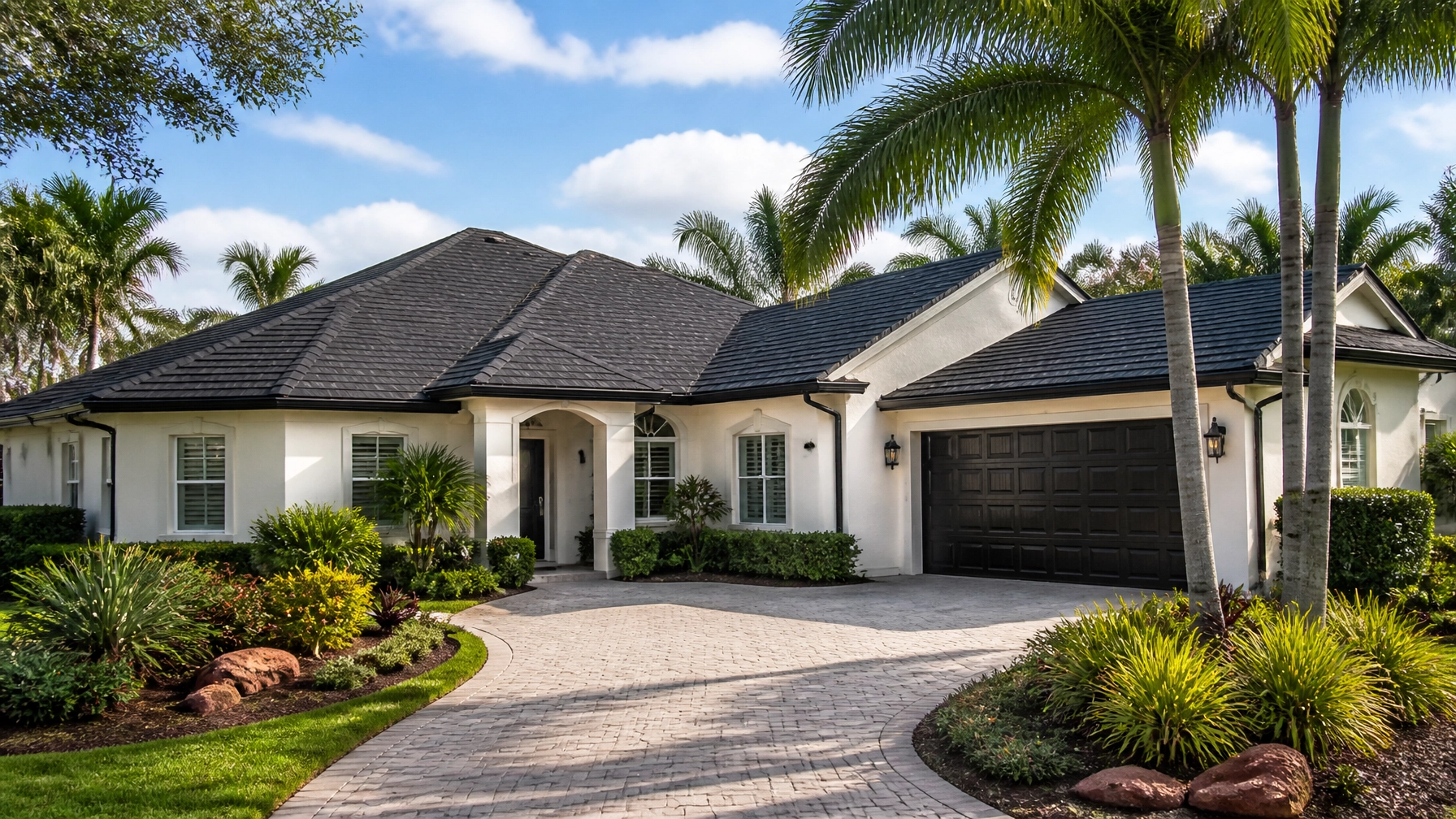
    Modern Orlando home with a new standing-seam metal roof

    Orlando New Roof ROI Examples

    These examples apply national ROI ranges to practical Orlando project costs:

    Roof project Example cost Estimated direct value recovered Planning ROI
    Architectural shingles (Popular) $12,000 $6,840–$8,160 57%–68%
    Metal roof (Premium) $25,000 $12,000–$15,250 48%–61%
    Metal roof (High-end) $40,000 $19,200–$24,400 48%–61%

    These figures are estimates, not guarantees. Appraisers focus on comparable sales, condition, quality, and neighborhood expectations. A premium metal roof may make more sense for a long-term owner than for someone listing within the next year.

    Why Orlando’s Climate Changes the Calculation

    Orlando’s humid subtropical climate places continuous stress on roofing materials.

    Local roofs must handle:

    • Intense summer thunderstorms
    • High heat and ultraviolet exposure
    • Tropical storms and hurricane-force wind risk
    • Heavy rainfall
    • Algae and moss staining on shaded roof planes
    • Humidity that accelerates aging on older materials

    Algae-resistant shingles can help maintain appearance, especially on homes surrounded by mature trees or located in damp, shaded areas. Class 4 impact-resistant shingles, tested under UL 2218, may also be relevant for homeowners concerned about hail damage.

    Florida Building Code changes are another selling point. Many Orlando-area homes built during the 2000s boom now have roofs that are 15–25 years old. A newer replacement may meet stricter wind and installation requirements, giving buyers greater confidence than an older roof with limited documentation.

    2026 Central Florida Storm and Hail Concerns

    Central Florida homeowners should not assume that a roof is undamaged because it looks acceptable from the ground.

    Storm tracking for 2026 includes:

    • A March 15 hail event in Brevard County with reported hail around 1.5–1.75 inches
    • A May 12 hail event affecting parts of Seminole County, including Longwood, Lake Mary, Winter Springs, and Oviedo
    • May 15–16 storms in Volusia County
    • An August 26, 2026 hail map covering portions of Florida and Central Florida

    Hail damage can be difficult to see without a close inspection. After a storm, check for:

    • Granules collecting in gutters or downspouts
    • Dents in vents, flashing, and other soft metal
    • Bruised or fractured shingles
    • Missing, lifted, or creased shingles
    • Damaged screens, siding, vehicles, or outdoor equipment

    Roof inspection after a Central Florida hailstorm

    Florida Insurance Factors That Affect Roof ROI

    Insurance can materially change the economics of a roof replacement.

    Review your policy for:

    • RCV, or Replacement Cost Value: Generally pays the cost to replace covered damage, subject to policy limits and deductibles.
    • ACV, or Actual Cash Value: Subtracts depreciation, which can significantly reduce payment on an older roof.
    • Named-storm or hurricane deductible: Often calculated as 2%–5% of Coverage A, rather than a flat dollar amount.
    • Separate wind or hail deductibles: Policy-specific and different from the standard deductible.
    • Roof age and material restrictions: Some carriers apply limitations to older shingle roofs.

    Florida law and individual policies also establish claim-reporting deadlines after a covered loss. Prompt, documented reporting matters. Keep storm photos, inspection records, invoices, permits, and proof of completion. Before filing or repairing a significant loss, confirm the current deadline and requirements with your insurer or a qualified insurance professional.

    Insurance savings are carrier-specific. A Class 4 roof or improved wind-resistance features may help, but no discount should be assumed until your insurer confirms eligibility in writing.

    Replace Before Selling: or Wait?

    Replacing before listing usually deserves serious consideration when:

    • The roof is more than 15–20 years old.
    • Shingles are curling, cracked, missing, or heavily stained.
    • A buyer’s inspector is likely to flag remaining service life.
    • Your insurance carrier has roof-age requirements.
    • Comparable homes in Winter Park, Lake Nona, Windermere, or nearby areas have newer roofs.
    • You expect buyers to request a credit.
    • The roof has recent storm exposure but no clear documentation.

    Waiting may be reasonable when the roof is still performing well, has substantial remaining life, and a local real estate professional confirms that buyers will not expect replacement.

    Keep these records after installation:

    • Paid invoice and written scope
    • Manufacturer and product information
    • Warranty documents
    • Permit and inspection records
    • Photos of decking, flashing, and underlayment
    • Wind or impact-resistance documentation
    • Insurance confirmation, if applicable

    Get an Orlando Roof ROI Estimate in 60 Seconds

    Before choosing a material or deciding whether to replace, get a property-specific starting number.

    Use Get My Roof Estimate Now for a free, instant satellite-powered roof estimate. The system measures your roof’s size, pitch, and complexity and provides low, middle, and high replacement ranges in under 60 seconds.

    There is:

    • No cost
    • No credit card requirement
    • No contractor visit needed upfront
    • No hidden fees
    • No pressure to proceed

    You can also compare project scenarios with the Orlando roof cost calculator. The service can connect you with verified, licensed, and insured local contractors when you are ready for the next step.

    Final Orlando Roof ROI Summary

    • Budget approximately $9,000–$18,000 for architectural shingles on a typical 2,000-square-foot Orlando home.
    • Standing-seam metal may cost approximately $18,000–$46,000, with many projects near $20,000–$35,000.
    • Asphalt shingles generally recoup approximately 57%–68% of project cost at resale.
    • Metal roofing commonly recoups approximately 48%–65%, depending on product, cost, and market.
    • A $12,000 architectural roof may recover approximately $6,840–$8,160 in direct resale value.
    • Avoided concessions, inspection objections, and appraisal deductions can add substantial practical value.
    • Florida insurance terms, roof age, hurricane deductibles, and ACV depreciation should be reviewed before making a decision.
    • Get an address-specific low-middle-high estimate online in under 60 seconds.

    Sources and Benchmarks

  • Daily Weather Blitz – Slot 2: Richmond, VA : September 2, 2026: A Heat Advisory Wednesday With 105°F-Plus Heat Indices, Afternoon Storm Cells & What a River City September Heat Dome Does to Your Roof

    Daily Weather Blitz – Slot 2: Richmond, VA : September 2, 2026: A Heat Advisory Wednesday With 105°F-Plus Heat Indices, Afternoon Storm Cells & What a River City September Heat Dome Does to Your Roof

    Richmond is facing a dangerous late-summer weather combination on Wednesday, September 2, 2026: upper-90s heat, oppressive humidity, and heat-index readings around 105°F to 108°F.

    A Heat Advisory is in effect during the afternoon. Local forecasts from NWS Wakefield, 12 On Your Side, and WRIC StormTracker8 point to mostly sunny, hot, humid conditions, with isolated to scattered afternoon and evening storms possible.

    Most of Richmond may stay dry. But any storm cell that develops could produce strong wind gusts, very heavy rain, and localized hail.

    For homeowners, this is more than a weather update. Extreme heat stresses aging roofing materials, while sudden Central Virginia storm cells can expose weak shingles, flashing, valleys, and gutters.

    Richmond’s Wednesday Forecast at a Glance

    • High temperature: Upper 90s, with some forecasts near 98°F to 99°F
    • Heat index: Approximately 105°F to 108°F
    • Sky: Mostly sunny and hot
    • Humidity: Very high
    • Storm risk: Isolated to scattered afternoon and evening showers or thunderstorms
    • Primary storm threats: Strong wind gusts, heavy rain, and possible hail
    • Heat Advisory: Afternoon and evening hours

    The NWS Wakefield point forecast for Richmond places Wednesday’s high near 99°F and the heat index as high as 106°F. 12 On Your Side describes the setup as mostly sunny, hot, and humid, with isolated downpours and storms possible later in the day.

    That means outdoor roof work should be scheduled carefully. Roof surfaces can become significantly hotter than the air temperature, especially on dark asphalt shingles. Crews should work during safer morning hours, take frequent cooling breaks, and leave the roof well before lightning or storm cells approach.

    How a September Heat Dome Stresses Asphalt Shingles

    Asphalt shingles are designed to handle summer conditions. However, repeated cycles of intense heat followed by cooler nights can accelerate wear: especially on roofs that are already 15 to 30 years old.

    1. Thermal expansion and contraction

    Roofing materials expand during the day and contract as temperatures fall overnight. Over many cycles, this movement can stress shingle tabs, seal strips, flashing, and fastener points.

    The impact is gradual. One hot day will not destroy a sound roof, but an extended heat event can worsen existing weaknesses.

    2. Granule loss

    The small ceramic granules on asphalt shingles protect the underlying material from ultraviolet light and weather exposure. When shingles age, granules may loosen and collect in gutters or appear near downspouts.

    Granule loss can leave sections of the shingle more vulnerable to sunlight, rain, and hail impact.

    3. Ridge and edge curling

    Heat and ultraviolet exposure can contribute to curling at shingle edges, particularly when attic ventilation is poor. Curled shingles are easier for gusty winds to lift.

    Pay close attention to:

    • Curling or raised shingle edges
    • Cracked or brittle surfaces
    • Missing shingle tabs
    • Exposed underlayment
    • Dark streaks or irregular patches
    • Granules accumulating in gutters

    Close-up of aging architectural asphalt shingles with subtle curling and heat-related granule loss on a Central Virginia home

    Why Richmond Storm Cells Still Matter

    A low storm probability does not mean zero risk. Summer thunderstorms can be highly localized. One neighborhood may receive only sun while another sees a short burst of intense rain and wind.

    Central Virginia has a history of weather-related roof damage involving:

    • Thunderstorm wind
    • Hail
    • Fallen limbs and trees
    • Occasional tornadoes
    • Larger derecho-type wind events

    Strong wind can lift loose shingles, damage ridge caps, loosen flashing, and push water beneath compromised areas. Hail can bruise asphalt shingles even when damage is difficult to see from the ground.

    Heavy rainfall also tests roof valleys, chimney flashing, pipe penetrations, gutters, and downspouts. If these drainage areas are blocked or deteriorated, water can back up beneath the roofing system.

    2026 Richmond Roof Replacement Costs

    Planning a replacement before an emergency gives you more control over material selection, contractor comparisons, and financing.

    For Richmond homeowners in 2026, reasonable planning ranges include:

    Roofing system Approximate Richmond planning range Typical use
    Architectural shingles (Popular) About $425–$625 per square; roughly $5–$8 per sq. ft. for many installed scopes Most single-family homes
    Standing seam metal (Premium) About $875–$1,400 per square; roughly $8–$16 per sq. ft. Long-term durability and modern appearance
    Typical full replacement Approximately $7,500–$20,000 Common residential projects

    One roofing square equals 100 square feet of roof area. A 2,000-square-foot roof contains approximately 20 squares before waste, starter materials, ridge caps, and other components are added.

    Your final price depends on:

    • Roof size and number of squares
    • Pitch and accessibility
    • Valleys, dormers, and roof penetrations
    • Tear-off and disposal requirements
    • Decking repairs
    • Ventilation improvements
    • Flashing replacement
    • Material availability and local labor rates

    Use the Get My Roof Estimate Now roof cost calculator for a starting budget. It helps compare materials and pitch assumptions, while a property-specific satellite estimate provides a more useful first benchmark.

    Stormproof Roofing Steps for Richmond Homeowners

    You do not need to wait for visible leaks to evaluate your roof. A short pre-storm inspection can identify weaknesses before weather exposes them.

    Before the storm

    Ask a qualified roofing professional to check:

    • Shingles, ridge caps, and starter courses
    • Flashing around chimneys, skylights, and walls
    • Valleys and roof-to-wall transitions
    • Pipe boots and vent penetrations
    • Gutters, downspouts, and drainage paths
    • Attic ventilation and signs of moisture
    • Tree limbs overhanging the roof

    Trim hazardous branches, secure outdoor furniture, and clear gutters if it is safe to do so. Never climb onto a roof during high heat, rain, or wind.

    When replacing the roof

    Discuss these specifications with your contractor:

    • Class 3 or Class 4 impact-rated shingles (Premium protection): These may improve resistance to hail impact, although no shingle is completely hailproof.
    • Wind-rated fastening: Confirm the required nail count and nailing pattern.
    • Sealed deck underlayment: This provides additional water protection beneath the shingles.
    • Ice and water protection: Particularly important in valleys, eaves, and vulnerable transitions.
    • Proper attic ventilation: Balanced intake and exhaust ventilation helps manage heat and moisture.
    • Updated flashing: Reusing old, deteriorated flashing can undermine a new roof.

    New standing seam metal roof on a modern Richmond-area home with storm clouds in the distance

    What to Do After Wind or Hail Damage

    If a storm passes through your Richmond neighborhood, inspect from the ground first. Look for missing shingles, exposed underlayment, damaged gutters, fallen branches, and new ceiling stains.

    Within the first 48 hours:

    1. Take photos and video. Document the roof, siding, gutters, windows, interior stains, and fallen trees.
    2. Prevent additional damage. Use temporary protection or emergency tarping when necessary, but avoid unsafe roof access. Keep receipts.
    3. Notify your insurance company promptly. Ask about claim deadlines, inspection procedures, and temporary repair requirements.
    4. Check your policy deductible. Virginia policies may include separate wind or hail percentage deductibles. Confirm the amount before approving work.
    5. Do not accept deductible waivers. A contractor promising to “cover” or “eliminate” your deductible may create insurance and contract problems.
    6. Verify the contractor. Use the official Virginia DPOR License Lookup and confirm the roofer’s license status, roofing classification, and insurance coverage.

    A reputable contractor should provide a written scope of work, proof of general liability insurance, workers’ compensation coverage where applicable, permit information, warranty details, and a clear price.

    Completed storm-resilient ranch roof in Central Virginia with impact-rated shingles, secure flashing, clean gutters, and trimmed trees

    Get a Richmond Roof Estimate Before the Next Storm

    Wednesday’s heat may not create immediate damage by itself. But extreme heat can accelerate deterioration on an aging roof, and isolated storms can quickly reveal problems that were already present.

    Knowing your roof’s size, pitch, complexity, and replacement range helps you make decisions without waiting for a contractor visit just to get a ballpark figure.

    With Get My Roof Estimate Now, you can enter your Richmond address and receive a free satellite-powered roof estimate in about 60 seconds. The service requires no credit card and provides low, middle, and high pricing ranges for different roofing materials.

    Use the estimate to plan ahead, compare written contractor proposals, and respond more confidently if a summer storm damages your home.

    Frequently Asked Questions

    Is it safe to replace a roof during a Heat Advisory?

    Roof work during peak afternoon heat creates additional risks for workers and homeowners. Schedule work during cooler morning hours when possible, and pause work for lightning, high winds, heavy rain, or unsafe roof conditions.

    Can heat alone damage asphalt shingles?

    Heat alone usually does not destroy a properly installed roof. However, prolonged ultraviolet exposure and repeated expansion and contraction can accelerate curling, brittleness, and granule loss on older shingles.

    Do Class 4 shingles prevent hail damage?

    No. Class 4 shingles are tested for improved impact resistance, but severe hail can still damage them. Ask your insurer whether impact-rated materials affect available discounts or coverage.

    How accurate is an instant satellite roof estimate?

    Get My Roof Estimate Now uses satellite imagery to measure roof size, pitch, and complexity. Its estimates are typically 90% to 95% accurate for initial planning. An in-person inspection may still identify decking, flashing, ventilation, or storm damage that imagery cannot confirm.

    How much does a Richmond roof replacement cost in 2026?

    Many Richmond homeowners should plan for approximately $7,500 to $20,000 for a full replacement. Architectural shingles commonly fall near the lower and middle portions of that range, while standing seam metal generally costs more.

  • 2026 Roof Replacement Cost in Detroit, MI: A Motor City Homeowner’s Budget Guide

    2026 Roof Replacement Cost in Detroit, MI: A Motor City Homeowner’s Budget Guide

    A 2,000-square-foot roof in Detroit typically costs $9,500–$20,000 for architectural shingles, $12,000–$17,500 for Class 4 impact-resistant shingles, or $15,000–$38,000+ for standing-seam metal in 2026.

    Those ranges reflect Detroit labor, roof complexity, tear-off, disposal, code requirements, and a 2026 materials increase. Asphalt pricing rose approximately 4%–8% early in 2026, with an additional 6%–9% increase effective June 1 in some product lines. Steel and aluminum tariffs are also pushing metal roofing prices higher.

    For a fast starting point, use the Get My Roof Estimate Now roof cost calculator. For a property-specific number, the company’s satellite-powered estimate tool measures your roof and returns pricing in about 60 seconds.

    Detroit roof replacement costs at a glance

    The following figures assume approximately 2,000 square feet of roof surface, not 2,000 square feet of living space.

    Roofing system 2026 installed price Approximate 2,000-square-foot total Best fit
    Architectural shingles (Popular) $4.75–$10.00/sq. ft. $9,500–$20,000 Most Detroit homes
    Architectural shingles, typical project : $11,000–$15,000 Standard roof with moderate complexity
    Class 4 impact-resistant shingles (Storm-resistant) : $12,000–$17,500 Hail-prone homes
    Standing-seam metal (Premium) $7.50–$22.00/sq. ft. $15,000–$38,000+ Long service life and low maintenance

    Roofers usually measure in squares. One square equals 100 square feet, so a 2,000-square-foot roof contains approximately 20 squares before adding waste.

    Your final quote may be higher if the roof has steep slopes, multiple valleys, dormers, skylights, chimneys, difficult access, damaged decking, or more than one existing layer of roofing.

    What drives Detroit roofing prices in 2026?

    1. Material increases (2026 update)

    Material costs are not static. For 2026, plan around a 4%–8% general cost increase, while some asphalt products saw another 6%–9% adjustment beginning June 1. Metal roofing is especially sensitive to steel, aluminum, transportation, and tariff changes.

    A quote that was reasonable in late 2025 may not remain valid for long. Ask whether the contractor has:

    • Locked in material pricing
    • Included delivery and disposal
    • Specified the exact shingle or metal profile
    • Included ice-and-water protection
    • Included permit and inspection costs

    2. Roof pitch and complexity

    A basic ranch roof generally costs less than a roof with multiple intersecting sections. Steep roofs require additional fall protection, staging, labor, and safety equipment.

    Expect a higher price for:

    • Roof pitches above 8:12
    • Multiple valleys and hips
    • Dormers and complex gable designs
    • Chimneys, skylights, and plumbing penetrations
    • Limited driveway or alley access
    • Structural repairs beneath the existing shingles

    3. Tear-off and decking repairs

    Removing the old roof can add roughly $100 per square or more, depending on the number of layers and disposal rates. Once the shingles are removed, the contractor may find rotted or weakened decking.

    Keep a 5%–15% contingency for unexpected repairs. A written quote should identify the per-sheet price for replacement decking before work begins.

    New architectural shingle roof on a Detroit-area ranch home

    Which roof material makes sense for a Detroit home?

    Architectural shingles (Popular)

    Architectural shingles remain the most common choice because they balance cost, appearance, availability, and repairability.

    For most Detroit homeowners, a realistic 2026 budget is $11,000–$15,000 for a 2,000-square-foot roof with a standard architectural shingle system. Premium colors, upgraded warranties, complex layouts, and extensive flashing work can push the total toward $20,000.

    Look for a complete system that includes:

    • Manufacturer-approved underlayment
    • Ice-and-water barrier
    • Proper ridge and intake ventilation
    • New flashing where required
    • Drip edge
    • High-quality starter strips and ridge caps

    Class 4 shingles (Storm-resistant)

    Class 4 impact-resistant shingles typically cost $12,000–$17,500 for a 2,000-square-foot roof. They are made to resist impact better than standard asphalt shingles and may be worth considering after repeated hail exposure.

    Class 4 shingles do not make a roof hailproof. They can still be damaged by large hail, wind, poor installation, or underlying decking problems. Before choosing this upgrade, ask your insurer whether it offers a premium discount and what testing standard applies to the product.

    Standing-seam metal (Premium)

    Standing-seam metal roofing generally costs $7.50–$22.00 per square foot installed, or approximately $15,000–$38,000+ for 2,000 square feet.

    The broad range reflects major differences in:

    • Steel versus aluminum
    • Panel thickness
    • Kynar or other paint finishes
    • Concealed-fastener versus exposed-fastener systems
    • Custom trims and flashing
    • Roof geometry and installation difficulty

    Metal costs more upfront but can offer a long service life when properly designed and installed. It is not automatically the best option for every Detroit home, particularly where historic-district approval, neighboring materials, or resale expectations limit the design choices.

    Detroit weather makes installation details important

    Detroit and Wayne County roofs face repeated freeze-thaw cycles, lake-effect snow, ice dams, heavy wind, and hail. These conditions can expose weak flashing, inadequate ventilation, and poor attic insulation.

    The 2026 storm season included severe-weather periods from June 10–14 and July 3, with reports and warnings involving quarter-size hail and 60–70 mph wind potential. The July 21 KDTX hail map is another useful reference for checking whether your area was exposed. Forecasters also identified storm risk around August 26.

    The National Weather Service’s June 10, 2026 Detroit/Pontiac severe-weather summary documented 1- to 1.25-inch hail in parts of Wayne County, including Dearborn and Dearborn Heights.

    After a major storm, inspect for:

    • Missing, lifted, or creased shingles
    • Exposed underlayment
    • Dented metal flashing or gutters
    • Granules collecting in downspouts
    • Hail marks on vents, siding, and soft metals
    • Water stains in the attic or upper ceilings

    Photograph damage before making temporary repairs or filing an insurance claim. Do not climb onto the roof yourself. A ground-level inspection and professional evaluation are safer.

    Detroit permits, historic districts, and inspections

    For a full roof replacement inside the City of Detroit, a BSEED building permit is generally required. Applications are submitted through the City’s Accela permitting portal and building-permit resources.

    If the property is in a historic district, the process may require an additional approval before the building permit.

    Boston-Edison and other historic districts

    In Boston-Edison and similar districts, exterior work visible from the street may require a Certificate of Appropriateness from the Historic District Commission. Review the City’s historic-district exterior-change guidance before signing a roofing contract.

    You may need to provide:

    • Existing roof material and color
    • Proposed roofing samples
    • Scope of work
    • Photos of the property
    • Repair estimates
    • Replacement estimates
    • An explanation of why repair is not practical

    After approval, attach the Certificate of Appropriateness to the BSEED permit application.

    Under Michigan’s 2015 residential code requirements, a compliant roof replacement should address:

    • Ice-and-water protection at eaves
    • Proper valley flashing and weatherproofing
    • Attic ventilation
    • Roof-deck condition
    • Underlayment and drip-edge installation
    • Required structural and fastening details

    Plan for an open-roof inspection before the new roof fully covers the assembly and a final inspection after installation. Confirm the inspection sequence with BSEED and your contractor before work begins.

    Carefully installed new roof on a historic Detroit-style brick colonial

    Contractor licensing checklist for Detroit homeowners

    A contractor performing residential work totaling $600 or more in labor and materials must hold an applicable Michigan license.

    Before hiring, verify that the contractor has:

    1. A current Michigan Residential Builder license, or
    2. A Maintenance & Alteration license with roofing listed as an approved trade
    3. A City of Detroit Certificate of Registration for roofing or siding work
    4. General liability insurance and workers’ compensation coverage
    5. A written contract with materials, payment schedule, warranty, cleanup, and permit responsibility

    Use the official Michigan LARA license lookup. The state’s homeowner guidance also recommends getting estimates, avoiding full payment upfront, and putting all terms in writing.

    Does a new roof pay back in Detroit?

    The answer depends on the property’s value and neighborhood.

    Detroit’s citywide housing figures vary by source and by measurement. Some estimates place the median around $90,000–$100,000, while Zillow’s modeled typical home value has been closer to $76,000. In contrast:

    • Entry-level neighborhoods may include homes below $85,000
    • Downtown and ZIP 48201 properties can exceed $400,000
    • Boston-Edison homes commonly approach $300,000 or more

    A new roof protects the home’s marketability, prevents inspection problems, and reduces the risk of negotiating against visible defects. National 2026 estimates suggest asphalt roofing may recover approximately 60%–75% of its cost at resale, with a national average near 68%. Metal roofing may recover up to approximately 80%, although local buyer preferences and installation quality matter.

    The financial return is not only resale value. A sound roof can also reduce emergency repairs, interior water damage, and insurance complications.

    How to budget and schedule your project

    Use this sequence:

    • Measure the actual roof area, not the home’s floor area.
    • Get an instant satellite estimate to establish a realistic range.
    • Request two or three detailed contractor proposals.
    • Compare material specifications, not only totals.
    • Add a 5%–15% contingency.
    • Photograph storm damage before repairs.
    • Confirm permits and historic-district approvals.
    • Verify LARA licensing and Detroit registration.
    • Schedule before winter weather limits installation.

    Detroit homeowners do not need to wait for multiple contractor visits just to get a ballpark figure. A free satellite roof estimate can provide a property-specific starting point in under a minute, with no credit card required and no obligation to hire.

    Modern Detroit-area home with a new matte-black standing-seam metal roof

    Frequently asked questions

    How much does a new roof cost in Detroit in 2026?

    For a 2,000-square-foot roof, budget approximately $9,500–$20,000 for architectural shingles, $12,000–$17,500 for Class 4 shingles, or $15,000–$38,000+ for standing-seam metal.

    Is a permit required for roof replacement in Detroit?

    A full roof replacement generally requires a BSEED building permit. Historic-district properties may also require a Certificate of Appropriateness before the permit is issued.

    Should Detroit homeowners choose Class 4 shingles?

    They are worth comparing if your home has experienced hail damage or is in an area exposed to repeated severe storms. Ask your insurer about eligibility for discounts before selecting the product.

    When should I replace my Detroit roof?

    If the roof is 15–30 years old, has recurring leaks, missing shingles, widespread granule loss, or storm damage, begin budgeting now. Scheduling before winter is generally preferable to waiting for ice, snow, and freeze-thaw conditions.

  • 2026 Roof Replacement Cost in Charleston, SC: Holy City Pricing, Coastal Wind Rules & Money-Saving Tips

    2026 Roof Replacement Cost in Charleston, SC: Holy City Pricing, Coastal Wind Rules & Money-Saving Tips

    A full roof replacement in Charleston typically costs $8,400–$20,000 for architectural shingles and $15,000–$34,000 for standing-seam metal in 2026. On a per-square-foot basis, that equals approximately:

    • Architectural shingles (Popular): $3.50–$9.00 per sq. ft.
    • Standing-seam metal (Premium): $7.00–$18.00 per sq. ft.

    Coastal Charleston pricing commonly runs 10%–20% higher than inland South Carolina because of salt air, higher wind requirements, storm exposure, labor demand, and additional fastening or corrosion-resistant components.

    Charleston Roof Replacement Cost by Material

    Your roof is priced by its actual surface area: not your home’s living area. Roofing contractors measure in squares, with one square equal to 100 square feet.

    Roofing material Charleston 2026 cost Typical lifespan
    Architectural shingles (Popular) $8,400–$20,000 22–30 years
    Standing-seam metal (Premium) $15,000–$34,000 40–70 years
    3-tab asphalt shingles (Budget) About $7,000–$15,000 15–20 years
    Synthetic slate or specialty materials Often $20,000+ 40–60+ years

    For a typical 1,800–2,500-square-foot roof, architectural shingles remain the most common choice. They offer a practical balance of appearance, wind resistance, and upfront cost. Standing-seam metal costs more, but concealed fasteners and coastal-rated alloys can provide better long-term protection against wind and salt exposure.

    Charleston-area ranch home with a fresh architectural shingle roof

    Why Charleston Roofs Cost More

    Several local conditions affect the roof replacement cost in Charleston SC.

    Coastal wind zones

    Charleston properties may fall under design wind speeds ranging roughly from 130 to 150 mph, depending on the exact location and distance from the coast. Homes near barrier islands and exposed coastal areas may face stricter requirements.

    The City of Charleston’s residential roof repair and replacement guideline identifies roofing as permitted work and calls for high-wind-rated materials. Asphalt shingles may need a Type H classification, while metal systems generally require manufacturer specifications showing compliance with local wind loads.

    Hurricane straps and roof fastening

    Hurricane straps or clips connect rafters or trusses to the wall framing. They help create a continuous load path during high winds.

    A simple reroof may not include structural upgrades, but older Charleston homes may need additional evaluation. Ask whether the estimate includes:

    • Roof-deck fastening upgrades
    • Six-nail or enhanced shingle installation patterns
    • Hurricane clips or straps where required
    • Wind-rated underlayment and flashing
    • Corrosion-resistant fasteners

    The exact requirement depends on your jurisdiction, home age, roof design, and project scope. Confirm details with the Charleston Permit Center.

    Salt air and humidity

    Salt-laden air can accelerate corrosion on exposed metal components. A coastal roof should use appropriate flashing, coated or stainless fasteners, and a metal alloy rated for the local environment. Humidity can also contribute to algae growth, poor attic ventilation, and hidden decking deterioration.

    Pitch, complexity, and tear-off

    Steep slopes, dormers, valleys, skylights, chimneys, and multiple roof planes increase labor and safety costs. Removing old roofing typically adds about $1,000–$3,000 or more, depending on the number of layers and disposal requirements. Damaged decking is usually priced separately after the old roof is removed.

    Modern Charleston-area home with a new standing-seam metal roof

    How to Save Money on a New Roof in 2026

    • File an insurance claim after storm damage. Photograph missing shingles, leaks, dents, and damaged flashing. Do not begin permanent repairs before documenting the condition.
    • Compare at least three written estimates. Make sure each quote lists the same material, tear-off scope, ventilation, flashing, warranty, and cleanup.
    • Schedule strategically. Winter and early summer may offer more contractor availability than peak spring and fall periods.
    • Ask about financing. Compare interest rates, promotional terms, and total repayment: not just the monthly payment.
    • Get a roof measurement first. An accurate roof size helps you avoid paying based on rough guesses.

    Choosing a Charleston Roofing Contractor

    Choose a contractor who is:

    • Properly licensed through South Carolina LLR
    • Fully insured for general liability and workers’ compensation
    • Experienced with coastal wind and salt-air conditions
    • Willing to provide recent Charleston-area references
    • Clear about permits, warranties, materials, and change orders

    Avoid high-pressure offers, vague one-line quotes, and contractors who cannot provide proof of insurance.

    Get Your Charleston Roof Estimate in 60 Seconds

    Before scheduling multiple contractor visits, get a property-specific starting point. Get My Roof Estimate Now uses satellite imagery to measure your roof’s size, pitch, and complexity, then provides a free estimate in under 60 seconds.

    There is no credit card and no obligation. You can compare architectural shingles, metal, and other materials while reviewing low-to-high pricing for your Charleston address.

  • 2026 Roof Replacement Cost in Grand Rapids, MI: Furniture City Pricing, Permit Rules & Hail-Ready Tips

    2026 Roof Replacement Cost in Grand Rapids, MI: Furniture City Pricing, Permit Rules & Hail-Ready Tips

    A full roof replacement in Grand Rapids typically costs $9,000–$18,000 for architectural shingles on a 2,000-square-foot roof area. A standing-seam metal roof usually falls between $22,000 and $42,000, depending on the roof’s pitch, layout, tear-off requirements, flashing, and metal system.

    Grand Rapids pricing is being affected by 2026 material increases, severe West Michigan weather, and strong demand for durable roofing systems. Use the figures below to plan your budget: but remember that your roof’s actual size and complexity matter more than your home’s finished floor area.

    For a property-specific starting point, use the free roof cost calculator or get a 60-second satellite roof estimate.

    2026 Grand Rapids Roof Replacement Prices

    The following figures assume a typical 2,000-square-foot roof area, not necessarily a 2,000-square-foot house. Roofers measure in squares, with one roofing square equal to 100 square feet.

    Roofing material Typical 2026 price per sq. ft. Approximate 2,000 sq. ft. project Best fit
    3-tab asphalt shingles (Budget) Lower than architectural shingles Often below $9,000–$18,000 Lowest upfront cost
    Architectural shingles (Popular) $3.75–$6.75 $9,000–$18,000 Most Grand Rapids homes
    Class 4 impact-resistant shingles (Storm-ready) About 10%–20% above standard architectural shingles Roughly $10,000–$21,000 Hail-prone properties
    Synthetic roofing (Premium) Approximately $8–$16 About $16,000–$32,000 Premium appearance and durability
    Standing-seam metal (Premium) $8.50–$15 $22,000–$42,000 installed Long-term ownership

    The standing-seam range reflects full installed project costs. A simple roof may price closer to the lower end, while a steep Colonial roof with multiple valleys, dormers, difficult access, upgraded underlayment, and extensive flashing can reach the higher end.

    Your final quote may also include:

    • Old roof tear-off and disposal
    • Replacement of damaged decking
    • Ice-and-water barrier
    • Ridge, soffit, and intake ventilation
    • Chimney, wall, and plumbing flashing
    • Drip edge and other metal details
    • Permit and inspection costs
    • Snow guards or specialized metal-roof accessories

    Why Grand Rapids Roofing Prices Increased in 2026

    Homeowners planning a replacement should allow a 5%–15% contingency above the initial budget.

    Two asphalt-shingle increases affected 2026 planning:

    • Early-year increases of approximately 4%–8%
    • Additional manufacturer increases effective June 1 of roughly 6%–9%

    These adjustments affect shingles, underlayment, starter strips, ridge caps, and related accessories. ABC Supply’s published manufacturer notice documents the June pricing change.

    Metal roofing has faced additional pressure. Steel and aluminum costs increased approximately 10%–22% in many roofing supply channels following April 2026 Section 232 tariff changes. The White House proclamation on steel, aluminum, and copper imports explains the underlying tariff changes.

    A contractor should identify the material price date in your proposal. Ask whether the quoted price is locked and how long that lock remains valid.

    Why West Michigan Weather Requires a Strong Roof System

    Grand Rapids roofs must handle more than ordinary rain. The local climate brings:

    • Freeze-thaw cycles
    • Heavy snow loads
    • Lake-effect snow and wind
    • Ice dams at eaves
    • Spring and summer hail
    • Wind gusts that can loosen aging shingles

    Reported 2026 storm events included:

    • March 10: Hail near the Grand Rapids area reached approximately 2.50 inches in nearby communities.
    • July 21: Hail affected more than 2,200 properties in reported storm-impact areas.
    • July 27 and August 9: Additional hail and severe-weather activity affected West Michigan homeowners.
    • August 22: Another hail event created new inspection and insurance concerns.
    • Several storms produced severe wind gusts in the 70–80-plus mph range.

    After a storm, do not assume a roof is undamaged because it is not leaking. Hail can bruise shingle matting, damage flashing, crack vents, and shorten the roof’s remaining service life.

    Professional roofing crew performing a tear-off on a Michigan ranch home

    Grand Rapids Permit Rules for Re-Roofing

    The City of Grand Rapids requires a residential building permit for re-roofing. Homeowners or contractors can apply through the city’s Residential Re-Roofing or Re-Siding Permit page.

    Applications are handled through:

    • The Development Center at 1120 Monroe Ave NW, 3rd Floor
    • The city’s Citizen Access portal
    • The ePlan Room for uploading documents when required

    Budget approximately $75–$150 for a straightforward permit, although the city’s published fee schedule lists a flat residential re-roofing fee that may be lower for qualifying projects. Review the current Grand Rapids fee schedule before work begins.

    Michigan code requirements commonly include:

    • Ice-and-water protection at eaves, extending at least 24 inches inside the warm wall line
    • Proper underlayment
    • Code-compliant flashing
    • Attic ventilation verification
    • Proper intake and exhaust ventilation
    • Final inspection after installation

    Do not allow a contractor to begin tear-off before the permit is issued. Confirm who is responsible for applying, posting, and closing the permit.

    Verify Your Roofer’s Michigan License

    Before signing, verify that the contractor holds an active Michigan residential builder license through the Michigan Department of Licensing and Regulatory Affairs.

    For smaller repair work, Michigan has licensing distinctions for maintenance and alteration work, including a commonly referenced threshold of work under $600. A full roof replacement should be handled by a properly licensed residential builder or qualified roofing contractor.

    Also verify:

    • General liability insurance
    • Workers’ compensation coverage
    • Written workmanship warranty
    • Physical business address
    • Recent Grand Rapids-area references
    • Permit responsibility

    Be cautious of storm chasers who arrive immediately after hail. Avoid contractors who demand full payment upfront, pressure you to sign the same day, or ask you to inflate an insurance claim.

    Choosing the Best Roof for Home Value

    Grand Rapids home prices vary by neighborhood. Citywide median prices are approximately $300,000–$335,000, while Kent County figures are roughly $335,000–$360,000. Buyers in areas such as East Grand Rapids, Heritage Hill, Eastown, Gaslight Village, Cascade, Wyoming, Kentwood, and Grandville often evaluate roof age during inspection and negotiations.

    For Michigan homeowners, an asphalt roof replacement commonly recoups approximately 65%–69% of its cost at resale. That makes architectural shingles the strongest choice for many homeowners focused on near-term resale value.

    A new roof can help by:

    • Improving roof curb appeal and home value
    • Removing a major inspection objection
    • Reducing buyer concerns about immediate maintenance
    • Supporting faster, smoother negotiations
    • Preventing buyer credit requests of approximately $8,000–$30,000

    Metal roofing adds longevity, durability, and curb appeal. However, its higher upfront cost does not always produce a higher short-term roof replacement ROI. It is usually a better fit for homeowners planning to stay in the property for decades or buyers specifically seeking a long-life roofing system.

    Standing-seam metal roof installation on a modern Michigan home

    Insurance: RCV, ACV, and Hail Claims

    Review your policy before filing a claim. The difference between replacement cost value (RCV) and actual cash value (ACV) can be substantial.

    • RCV: May cover the cost of replacing the damaged roof, subject to your deductible and policy limits.
    • ACV: Deducts depreciation based on the roof’s age and condition.

    Percentage-based wind and hail deductibles are common in Michigan. Your deductible may be calculated as a percentage of the home’s insured value rather than a fixed dollar amount.

    After hail or wind damage:

    1. Photograph the roof, gutters, siding, vents, and exterior surfaces.
    2. Save storm dates and weather alerts.
    3. Record visible damage with timestamps.
    4. Contact your insurer promptly.
    5. Ask about the policy’s claim deadline.
    6. Get an independent roofing inspection before authorizing repairs.

    A satellite estimate is useful for planning, but an insurance claim still requires close inspection and documentation.

    Close-up of Class 4 impact-resistant architectural shingles on a Michigan roof

    Is Class 4 Roofing Worth the Upgrade?

    Class 4 impact-resistant shingles usually cost 10%–20% more than standard architectural shingles. They are designed to better withstand impact from hail and wind-driven debris.

    The upgrade may make sense when:

    • Your roof is exposed to open fields or heavy weather
    • You have experienced recent hail
    • Your insurer offers a qualifying discount
    • You plan to stay in the home long term
    • You want improved durability without moving to metal

    Ask for the manufacturer’s impact-resistance documentation and confirm whether your insurance company recognizes the specific product.

    Frequently Asked Questions

    How much does a new roof cost in Grand Rapids in 2026?

    A 2,000-square-foot architectural-shingle roof commonly costs $9,000–$18,000. Standing-seam metal is approximately $22,000–$42,000. Roof pitch, complexity, tear-off, decking, and material upgrades can change the final price.

    Does Grand Rapids require a permit to replace a roof?

    Yes. Residential re-roofing in the City of Grand Rapids requires a building permit. Apply through Citizen Access or the Development Center at 1120 Monroe Ave NW.

    What is the best roof for home value in Michigan?

    Architectural asphalt shingles generally provide the best balance of cost, appearance, buyer acceptance, and resale value. Michigan roof replacement ROI is commonly around 65%–69%.

    How long does a satellite roof estimate take?

    Get My Roof Estimate Now measures your roof using satellite imagery and provides a low-middle-high pricing range in approximately 60 seconds. The estimate is free, requires no credit card, and is typically 90%–95% accurate for roof measurements.

    Should I repair or replace my hail-damaged roof?

    Repair may be appropriate for isolated damage on a newer roof. Replacement is more likely to make sense when damage is widespread, the roof is 15–30 years old, leaks are recurring, or repair costs approach half the cost of replacement.

    Get Your Grand Rapids Roof Estimate in 60 Seconds

    Before scheduling contractor visits, find out what your roof may cost based on its actual size, pitch, complexity, material, and Grand Rapids location.

    Get your free satellite roof replacement estimate: no credit card, no upfront cost, and no obligation.

  • 2026 Roof Replacement Cost in Louisville, KY: Derby City Pricing, Permit Rules & Hail-Ready Tips

    2026 Roof Replacement Cost in Louisville, KY: Derby City Pricing, Permit Rules & Hail-Ready Tips

    A full roof replacement in Louisville typically costs $10,000–$18,000 for architectural asphalt shingles on a 2,000-square-foot roof surface in 2026. A standing-seam metal roof generally runs $20,000–$36,000 for the same roof size.

    Prices are higher than they were in 2025 because of material tariffs, labor costs, disposal fees, and continued demand after severe storms. Your final price depends on the roof’s measured surface area, pitch, complexity, material, decking condition, permit requirements, and neighborhood.

    This guide covers Louisville and Jefferson County pricing, ZIP code variation, local permit rules, insurance concerns, and practical ways to prepare for Ohio Valley weather.

    Louisville Roof Replacement Cost at a Glance

    Roofers measure in squares, not simply by the home’s interior living area. One roofing square equals 100 square feet of roof surface. A 2,000-square-foot roof contains approximately 20 squares before adjustments for waste and complexity.

    Roofing option 2026 planning price Typical 2,000 sq. ft. total Homeowner context
    Architectural asphalt shingles $450–$750 per square $10,000–$18,000 Popular balance of cost and durability
    Class 4 impact-resistant shingles Premium over standard asphalt Often $11,000–$20,000+ Hail-ready upgrade; ask your insurer about discounts
    Standing-seam metal $900–$1,500 per square $20,000–$36,000 Premium longevity and weather performance

    These are planning ranges, not binding bids. A simple ranch roof may fall near the lower end. A steep, multi-section roof with dormers, valleys, skylights, or chimney work can exceed the upper end.

    For a second reference point, the Get My Roof Estimate Now roof cost calculator places national 2026 replacement pricing around $9,000–$22,000, with asphalt and metal varying according to size, pitch, region, and tear-off requirements.

    What Louisville Homeowners Usually Pay by Home Style

    The roof’s design matters more than the home’s footprint. Two houses with the same square footage can have very different roof surfaces and installation costs.

    • Small ranch (Budget): Approximately $8,000–$13,000 for standard architectural shingles. Ranch homes often have simple rooflines and easier access.
    • Cape Cod (Popular): Approximately $11,000–$18,000. Dormers, steeper slopes, and multiple roof planes increase labor.
    • Two-story colonial (Premium range): Approximately $13,000–$22,000 or more. Height, steep sections, attached garages, and complex flashing can raise the estimate.
    • Large custom or historic home: $20,000–$40,000+ depending on material, roof geometry, slate replacement, preservation rules, and structural repairs.

    Louisville ranch home with a new dimensional asphalt shingle roof

    Louisville Neighborhood and ZIP Code Price Variation

    Louisville pricing is not uniform across Jefferson County. Contractor availability, home size, permitting jurisdiction, roof complexity, and neighborhood requirements all influence the final bid.

    St. Matthews: ZIP Codes 40207 and 40222

    St. Matthews has many established homes with mature landscaping, additions, and varied rooflines. Roof replacement pricing is often close to the Louisville average, but access limitations and larger homes can increase labor.

    St. Matthews operates its own building department. Before work begins, confirm whether your contractor is pulling the permit through St. Matthews rather than Louisville Metro.

    East End, Prospect, and Anchorage

    Homes in Prospect and Anchorage often have larger roof surfaces, steeper designs, HOA requirements, and more detailed exterior finishes. Planning ranges can run approximately 25% higher than a comparable straightforward roof elsewhere in the market.

    Homeowners should ask about:

    • HOA-approved colors and materials
    • Architectural review requirements
    • Higher roof complexity
    • Historic or neighborhood appearance standards
    • Extra flashing, skylights, and dormers

    Jeffersontown

    Jeffersontown also maintains its own building department. Permit procedures may differ from Louisville Metro, so do not assume a roofer’s Metro process applies automatically.

    Okolona and South Louisville

    Okolona and South Louisville often provide more affordable replacement opportunities, especially for smaller ranch homes with accessible, low-complexity roofs. Prices can still rise quickly if tear-off reveals rotten decking or if the roof has multiple layers.

    Why 2026 Pricing Is Higher Than 2025

    Three cost pressures are especially important this year:

    1. Material tariffs and supply costs: Asphalt, metal panels, underlayment, flashing, and accessories have all become more expensive.
    2. Labor rates: Skilled crews remain in demand, particularly during spring and fall.
    3. Storm-related demand: Hail and wind events create short-term surges in inspections, insurance claims, and contractor scheduling.

    A low quote may not be a bargain if it excludes tear-off, permit fees, ventilation, flashing, or decking repairs. Compare complete scopes of work, not just the final number.

    Louisville Roof Permit Rules

    For a full reroof or roof replacement in Louisville Metro, expect to need a building permit. The contractor should identify the permitting authority before signing the contract.

    The Louisville Metro online permitting portal is the starting point for Metro projects.

    Full replacement

    A permit is generally required when you:

    • Replace most or all roofing materials
    • Tear off existing shingles
    • Add a new roofing material, such as metal
    • Replace or repair roof decking
    • Make structural changes
    • Perform work that affects flashing, ventilation, or weather protection

    Minor, like-for-like repairs to a limited area may be exempt. A small shingle repair is not the same as a reroof. When in doubt, ask Louisville Metro Codes and Regulations: or the applicable city building department: before work starts.

    Inspections

    Your permit instructions should identify required inspections. Depending on the project, inspections may occur after tear-off or before the new roof covering is installed, followed by a final inspection.

    Inspectors may review:

    • Decking condition
    • Underlayment
    • Ice-and-water barrier at vulnerable areas
    • Flashing around chimneys, walls, valleys, and penetrations
    • Ventilation
    • Shingle or panel installation
    • Final weather protection

    Ask your contractor specifically: “Will you schedule every required inspection before the shingles are covered?”

    Historic District and HOA Considerations

    Properties in areas such as Old Louisville, Butchertown, or other designated preservation districts may need Landmarks Commission approval in addition to the standard building permit. A material or color change visible from the street can trigger additional review.

    You may need a Certificate of Appropriateness or comparable approval before replacing a historically visible roof. Confirm requirements before ordering materials.

    HOAs may also regulate:

    • Shingle color
    • Metal roof finishes
    • Visible architectural details
    • Solar equipment
    • Roofing material changes

    Do not treat an HOA approval as a substitute for a building permit. You may need both.

    Contractor Registration in Kentucky and Louisville

    Kentucky does not issue a statewide roofing license in the same way some states do. However, that does not mean every roofer is automatically qualified to work in Louisville.

    For a Louisville project, verify that the contractor has:

    • Louisville Metro or applicable local registration
    • Required occupational licensing
    • General liability insurance
    • Workers’ compensation coverage
    • Surety bond, when required
    • A verifiable business address and references

    The contractor should pull the permit in the contractor’s name and provide permit information for your records. Avoid any company that refuses to show insurance certificates or pressures you to sign immediately.

    Louisville’s Climate: Build for Freeze-Thaw, Hail, and Heat

    The Ohio Valley brings four-season stress to roofing systems:

    • Freeze-thaw cycles can expand small cracks and loosen flashing.
    • Ice dams can form during winter weather, especially with poor attic insulation or ventilation.
    • Spring and summer thunderstorms bring high winds, heavy rain, and hail.
    • High summer heat accelerates aging in lower-quality materials.

    Louisville also experienced a significant hail and wind event on May 16, 2026, including quarter-size hail and winds reported near 65 mph. After an event like this, damage may not be obvious from the ground.

    Upscale East End Louisville home with a standing-seam metal roof

    Insurance Issues: Roof Age, Deductibles, and Class 4 Shingles

    Insurance companies are paying closer attention to roof age and condition.

    • At around 15 years, many insurers begin requesting documentation or inspections.
    • Roofs over 20 years old may face non-renewal risk, coverage restrictions, or ACV treatment.
    • Actual cash value (ACV) subtracts depreciation.
    • Replacement cost value (RCV) generally provides broader replacement reimbursement, subject to policy terms and deductible.
    • Wind and hail deductibles are often 1%–2% of the home’s insured value, not a flat dollar amount.

    Class 4 impact-resistant shingles cost more than standard architectural shingles, but some carriers offer discounts of approximately 10%–35%, depending on the insurer, product certification, policy, and documentation. Ask for the discount before installation and retain the product certification.

    Kentucky’s roof-matching rule is often incorrectly called “KRS 304.12-095.” The relevant matching language is in 806 KAR 12:095. When replacement-cost coverage applies, materials that do not reasonably match in quality, color, and size may require replacement of all items in the affected area to create a reasonably uniform appearance.

    Coverage depends on the policy and claim facts. Document damage promptly, photograph every roof slope from safe locations, and avoid making permanent repairs before your insurer has an opportunity to inspect unless emergency protection is necessary.

    Cape Cod home with a new Class 4-style impact-resistant shingle roof after a storm

    How to Lower Risk and Improve Your Quote

    Use this Louisville-specific checklist:

    1. Get a satellite measurement before scheduling visits. You can establish a realistic budget in about 60 seconds.
    2. Request at least three detailed quotes.
    3. Confirm the roof size in squares.
    4. Ask whether tear-off and disposal are included.
    5. Require a decking-repair allowance or unit price.
    6. Verify permit responsibility in writing.
    7. Ask about ice-and-water barrier, ventilation, and flashing.
    8. Compare standard architectural shingles with Class 4 options.
    9. Book in spring or fall, but schedule early because these are the busiest seasons.
    10. Document storm damage immediately with photos, dates, and weather reports.

    Get a Louisville Roof Estimate in 60 Seconds

    You do not need to wait days for a contractor visit just to get a starting price. Get My Roof Estimate Now uses satellite imagery to measure your roof’s size, pitch, and complexity.

    Enter your Louisville address and receive:

    • A free estimate with no credit card required
    • Low, middle, and high pricing ranges
    • Options for asphalt shingles, metal, and other materials
    • A satellite-based measurement typically accurate within inches and approximately 90%–95% for many homes
    • Access to verified, licensed, and insured local contractors

    Use the estimate to plan your budget, compare bids, and decide whether a standard roof or hail-ready upgrade makes sense for your home.

    Pricing and permitting information is for planning purposes. Confirm current requirements with the applicable building department, your insurance carrier, and a qualified roofing professional.

  • Daily FAQ Blitz – Slot 8: AEO FAQ Quick Answers for Tampa, FL Homeowners (2026)

    Daily FAQ Blitz – Slot 8: AEO FAQ Quick Answers for Tampa, FL Homeowners (2026)

    A typical 2,000-square-foot Tampa roof costs approximately:

    • 3-tab shingles (Budget): $5,600–$11,500
    • Architectural shingles (Popular): $9,800–$18,000
    • Standing-seam metal (Premium): $16,000–$32,000

    Your final price depends on roof size, pitch, complexity, tear-off requirements, material selection, and local installation costs.

    1. How much does a new roof cost in Tampa in 2026?

    For most Tampa homeowners, a complete replacement costs roughly $9,000–$25,000. Architectural shingles are the most common value choice. Metal roofing costs more upfront but can last 40–70 years.

    Use the Tampa roof estimate tool to see pricing based on your actual roof measurements.

    2. What is the best roof for home value in Tampa?

    Architectural shingles are usually best for resale value. Products such as GAF Timberline HDZ offer a familiar appearance, broad color selection, and strong buyer appeal.

    Tampa colonial home with a new architectural shingle roof

    Standing-seam metal is better suited to:

    • Long-term homeowners
    • Coastal homes near saltwater
    • Owners prioritizing durability and energy performance

    3. Does a new roof increase home value?

    Yes. A new roof can recoup approximately 60%–68% of its cost at resale, although results vary by market and material. The value impact is strongest when the existing roof is visibly worn, near the end of its life, or storm-damaged.

    4. What is the roof replacement resale value in Tampa?

    Resale value depends on your neighborhood, material, installation quality, warranty, and permit history. Buyers in South Tampa, Westchase, Carrollwood, Seminole Heights, and Riverview often respond positively to documented, code-compliant roof work with clean final inspections.

    5. Does roof curb appeal affect home value?

    Yes. A roof is one of the largest visible features of a home. Clean rooflines, coordinated shingle colors, straight installation, finished flashing, and well-maintained gutters can improve first impressions and buyer confidence.

    6. Do Tampa homeowners need a roof replacement permit?

    Yes. Hillsborough County generally requires a building permit for re-roofing. Applications are handled through the HillsGovHub portal.

    Owner-builders may apply for a primary residence if they meet Florida requirements, sign the disclosure, supervise the work, and accept responsibility for inspections and code compliance.

    7. What Florida roofing license does a Tampa contractor need?

    A contractor should hold either:

    • A state-certified roofing contractor license through Florida DBPR, allowing statewide work; or
    • A state-registered roofing contractor license, supported by local competency

    The contractor must also maintain Hillsborough County registration, insurance, and required workers’ compensation documentation.

    8. What is Florida’s 25% rule?

    If more than 25% of a roof or roof section is repaired, replaced, or recovered within a rolling 12-month period, the entire roof or section generally must meet the current Florida Building Code.

    An exception applies when the roof was permitted under the 2007 Florida Building Code or a later edition. In that case, only the worked-on portion may need upgrading. Review the Florida statute and current code guidance before approving partial work.

    9. What should I do after Tampa storm or hail damage?

    Tampa Bay experienced hail events on August 14, 18, 19, 20, 21, 22, and 26, 2026, with hail reported up to 3 inches.

    Ground-level documentation of storm damage on a Tampa roof

    After a storm:

    • Photograph damage from the ground; do not climb onto the roof.
    • Look for bruised shingles, missing tabs, exposed underlayment, and dislodged granules.
    • Prevent further water entry with emergency protection.
    • Contact your insurer and request a professional inspection.

    Florida law generally gives homeowners one year from the date of loss for an initial claim and 18 months for a supplemental claim. Confirm deadlines with your insurer and review Florida Statute §627.70132.

    10. What is the roof replacement ROI?

    Roof replacement ROI is strongest when the project solves visible damage, improves curb appeal, and provides buyers with documented permits and warranties. Compare materials and budgets before committing.

    Modern Tampa Bay coastal home with a standing-seam metal roof

    Get My Roof Estimate Now provides a free satellite-powered estimate in under 60 seconds, with measurements typically accurate to 90%–95%. There is no credit card requirement, and homeowners can connect with verified local contractors. Get your Tampa roof estimate.

    Category: Florida Roofing Costs

    Tags: Tampa roof replacement, Tampa FL roof estimate, Florida roofing FAQ, hurricane roof damage Tampa, satellite roof estimate Tampa, new roof ROI home value, roof replacement resale value, roof curb appeal home value, best roof for home value, roof replacement ROI

  • Daily FAQ Blitz – Slot 1: AEO FAQ Quick Answers for Greenville, SC Homeowners (2026)

    Daily FAQ Blitz – Slot 1: AEO FAQ Quick Answers for Greenville, SC Homeowners (2026)

    If you own a home in Greenville, Greenville County, or a nearby 296xx ZIP code, a 2026 roof replacement typically costs $8,500–$16,000 for architectural shingles and $14,000–$30,000 for standing-seam metal on a roof of about 2,000 square feet. Your final price depends on roof size, pitch, complexity, material, tear-off requirements, decking repairs, and local labor rates.

    This quick-answer guide covers Greenville roofing costs, permits, contractor verification, storm damage, insurance discounts, roof lifespan, and resale value.

    How much does a roof replacement cost in Greenville, SC, in 2026?

    Architectural shingles generally cost $4.50–$8.00 per square foot installed, with many 2,000-square-foot projects costing about $8,500–$16,000.

    Some complex or premium projects may reach approximately $18,400.

    Typical price factors include:

    • Roof size: Roofing is priced by roof area, not the home’s interior square footage.
    • Roof pitch: Steeper roofs require additional safety equipment and labor.
    • Complexity: Valleys, dormers, skylights, chimneys, and multiple roof sections increase labor.
    • Tear-off: Removing old roofing adds disposal and labor costs.
    • Decking: Rotten or damaged roof decking may require replacement.
    • Location: Labor and material pricing can vary throughout Greenville County.

    For a property-specific starting point, use the free satellite-powered roof estimate from Get My Roof Estimate Now. It provides low, middle, and high price ranges in about 60 seconds.

    How much does standing-seam metal roofing cost in Greenville?

    Standing-seam metal roofing typically costs $7.00–$16.00 per square foot installed. A 2,000-square-foot roof commonly falls between $14,000 and $30,000.

    Metal roofing costs more upfront because of:

    • Higher material prices
    • Custom-fabricated panels and trim
    • Specialized installation
    • Flashing and penetration details
    • Tear-off and underlayment requirements
    • More complex roof shapes

    Standing-seam metal may be a strong long-term choice for homeowners planning to stay in the property for many years. It can last 40–50 years or longer when properly installed and maintained.

    New standing-seam metal roof on a modern Upstate South Carolina home

    What is a roofing square?

    One roofing square equals 100 square feet of roof area.

    For example:

    • 20 squares = 2,000 square feet
    • 25 squares = 2,500 square feet
    • 30 squares = 3,000 square feet

    Roof measurements include the roof’s slopes and overhangs. A 2,000-square-foot house may have more than 2,000 square feet of actual roofing area because of the roof pitch, attached garages, porches, and eaves.

    The Get My Roof Estimate Now calculator explains how size, pitch, material, tear-off, and regional pricing affect a replacement estimate.

    Do I need a permit to replace a roof in Greenville?

    Yes. A full roof replacement generally requires a building permit in the City of Greenville and Greenville County.

    Minor repairs may be exempt, but a permit is especially important when the project includes:

    • Full tear-off and replacement
    • Structural decking repairs
    • Rafter repairs
    • A change in roof pitch
    • Significant framing changes
    • Changes to roof structure or load

    For unincorporated Greenville County, permit applications are submitted through the county’s eTrakit permitting system. The county states that construction, alterations, repairs, and replacements regulated by applicable codes may require approval before work begins.

    The county’s Building Safety office can confirm the requirement for your exact project at 864-467-7060. If your property is within city limits, check the City of Greenville Building & Permit Center.

    Permit fees often fall in the $100–$500 range, depending on the project and jurisdiction.

    What is Greenville County’s annual roofing permit?

    Contractors working in unincorporated Greenville County must hold an annual roofing permit under County Ordinance 2547.

    This is separate from the building permit for your individual roof project. The annual permit applies to roofing businesses and requires documentation such as:

    • South Carolina Residential Builder’s Commission license
    • Driver’s license
    • General liability insurance
    • Workers’ compensation insurance
    • Annual payment of $50

    You can review the requirements through the Greenville County Sheriff’s Office roofing permit page, or contact the office at 864-467-8145.

    Ask your contractor to confirm both:

    1. The project-specific building permit
    2. The active annual roofing permit, when working in unincorporated Greenville County

    How do I verify a Greenville roofing contractor?

    Use South Carolina LLR’s license lookup and confirm that the contractor’s license is active and properly classified.

    South Carolina does not issue a separate general “roofing license” in the same way some states do. Residential roofing work may be performed under an active residential builder license or an appropriate residential specialty contractor registration.

    Use the South Carolina LLR Residential Builders Commission and its license verification portal.

    Also request:

    • General liability insurance certificate
    • Workers’ compensation certificate
    • Recent Greenville-area references
    • Written scope of work
    • Material specifications
    • Workmanship warranty
    • Manufacturer warranty information
    • Permit responsibility in writing

    Avoid contractors who demand full payment upfront, refuse to provide license information, or pressure you to sign immediately after a storm.

    What should Greenville homeowners check after wind or hail?

    Inspect for missing shingles, granule loss, dented metal, damaged flashing, bent vents, and tree-limb impact after severe weather.

    Upstate South Carolina experienced several 2026 storm events involving wind and hail, including reports on:

    • June 27
    • August 6
    • August 12
    • August 21
    • August 28

    A hail map for Greenville can help identify reported activity, while the National Weather Service Greenville-Spartanburg office provides regional severe-weather information.

    Look for:

    • Shingles missing from exposed roof areas
    • Dark or bruised-looking asphalt shingles
    • Excessive granules in gutters
    • Dents in metal panels, vents, or flashing
    • Loose flashing around chimneys and walls
    • Damaged pipe boots and ridge vents
    • Broken branches or limbs on the roof
    • Water stains in ceilings or attic spaces

    Do not climb onto the roof after a storm. Photograph visible damage from the ground and contact your insurer if you suspect a covered loss.

    Greenville area residential roof after a severe thunderstorm with visible storm inspection context

    How long does a roof last in Upstate South Carolina?

    Architectural shingles usually last 20–25 years in the Upstate, while standing-seam metal can last 40–50 years or longer.

    Typical Greenville-area lifespans are:

    • 3-tab asphalt shingles (Budget): 15–20 years
    • Architectural shingles (Popular): 20–25 years
    • Standing-seam metal (Premium): 40–50+ years

    Greenville’s humidity, rain, moss, algae, storms, and temperature changes can shorten asphalt-shingle life. Proper ventilation, clean gutters, and prompt repairs help protect the roof system.

    If your roof is 15–20 years old, planning an estimate before a leak develops can provide more options and better budgeting flexibility.

    Can a new roof reduce South Carolina insurance costs?

    Possibly, but a standard roof replacement does not automatically qualify for an insurance discount.

    South Carolina insurers may offer wind-mitigation discounts when a home has verified protective features, such as:

    • IBHS FORTIFIED Roof improvements
    • SC Safe Home-certified retrofits
    • Sealed roof decks or secondary water barriers
    • Improved roof-to-wall connections
    • Impact-rated openings
    • Documented wind-resistant installation methods

    Discounts vary by insurer and policy. A common range is approximately 10–30% of the wind-related portion of the premium, not necessarily 10–30% of the entire homeowners insurance bill.

    Most insurers require a third-party wind-mitigation inspection and supporting documentation. Ask your insurer what qualifies before construction begins.

    The South Carolina Department of Insurance provides current information about the SC Safe Home Mitigation Grant Program. Eligibility and funding rules can change, and Greenville homeowners should confirm whether the current grant cycle applies to their property. Qualifying mitigation expenses may also be eligible for a South Carolina income tax credit; review the state fortification credit information before starting work.

    Is a new roof a good investment when selling in Greenville?

    A new asphalt roof may return roughly 60–70% of its cost at resale, while a metal roof may return approximately 65–75%.

    The value is not limited to the direct resale return. A newer roof can also:

    • Reduce buyer concerns during inspection
    • Prevent repair credits or price concessions
    • Avoid insurance delays
    • Improve curb appeal
    • Help a listing compete in popular areas

    This can matter in Greenville neighborhoods such as Augusta Road, North Main, Alta Vista, Nicholtown, Hampton-Pinckney, Overbrook, West Greenville, Sans Souci, and surrounding communities including Greer, Simpsonville, Mauldin, Taylors, and Travelers Rest.

    How accurate is an instant satellite roof estimate?

    A satellite-powered estimate is typically 90–95% accurate for roof measurements and provides a strong planning benchmark before an in-person inspection.

    The system evaluates:

    • Roof size
    • Roof pitch
    • Roof sections
    • Complexity
    • Roofing squares
    • Regional labor rates
    • Material options

    Enter your address to receive a free, no-credit-card estimate in about 60 seconds. The result shows low, middle, and high price ranges for materials such as architectural shingles and metal roofing.

    A contractor should still inspect the roof before finalizing a contract. Satellite imagery cannot confirm hidden decking rot, attic ventilation problems, or concealed flashing damage.

    What should I do first?

    Start with a property-specific estimate, then compare detailed contractor proposals.

    A practical Greenville replacement plan is:

    1. Get a free satellite-based estimate at getmyroofestimatenow.com.
    2. Compare at least two or three written proposals.
    3. Verify the contractor through South Carolina LLR.
    4. Confirm liability and workers’ compensation coverage.
    5. Ask who will obtain the permit.
    6. Request separate pricing for decking, ventilation, flashing, and wind-mitigation upgrades.
    7. Call your insurer before work begins if you want to pursue a discount.
    8. Keep permits, inspection records, invoices, photographs, and warranty documents.

    A fast estimate gives you a realistic budget before you schedule contractor visits or commit to materials.

    WordPress Categories

    • Greenville
    • South Carolina Roofing
    • Greenville County
    • Roof Replacement
    • AEO FAQ
    • Home Improvement

    WordPress Tags

    • Greenville roof replacement
    • Greenville roofing costs 2026
    • Greenville County roofing permit
    • Upstate SC roofers
    • South Carolina wind mitigation discount
    • FORTIFIED Roof
    • SC Safe Home grant
    • architectural shingles
    • standing-seam metal
    • roof insurance South Carolina
    • instant roof estimate
    • satellite roof measurement
    • AEO FAQ

  • Daily Weather Blitz – Slot 1: Lexington, KY : September 2, 2026: A 97°F Heat Dome Peak With 100°F+ Heat Indices & What a Horse Capital September Heat Wave Does to Your Roof

    Daily Weather Blitz – Slot 1: Lexington, KY : September 2, 2026: A 97°F Heat Dome Peak With 100°F+ Heat Indices & What a Horse Capital September Heat Wave Does to Your Roof

    Scheduled for Wednesday, September 2, 2026, at 2:00 PM ET

    Lexington is entering September with August-like heat.

    A strong ridge: commonly described as a heat dome: is settled over the Southeast and Ohio Valley. Fayette County is under a Phase One Heat Plan activation through Friday, September 4. Wednesday’s forecast calls for mostly sunny to partly cloudy skies, little to no rain, and a high near 97°F. Overnight temperatures remain in the mid-70s, around 73–74°F.

    Thursday is expected to bring the peak of the heat. Highs could reach the upper 90s to near 100°F, with heat indices around 100–105°F.

    The weather shift comes late Friday into Saturday. A cold front will bring scattered thunderstorms, with some storms capable of strong wind, heavy rain, and loud thunder. Sunday and Labor Day Monday should turn drier and cooler, with highs closer to the upper 80s.

    For homeowners across the Bluegrass region, this is more than a comfort issue. Intense heat, warm nights, and a fast transition to stormy weather can expose weaknesses in an aging roof.

    Lexington Weather Briefing: September 2–7

    Forecast guidance from WKYT First Alert and Chris Bailey, LEX18, and the National Weather Service Louisville Area Forecast Discussion points to this pattern:

    • Wednesday, September 2: Mostly sunny to partly cloudy. High near 97°F. Low around 73–74°F. Little to no rain.
    • Thursday, September 3: Heat dome peak. Highs in the mid-to-upper 90s, potentially near 100°F. Heat indices around 100–105°F.
    • Friday, September 4: Heat may linger through much of the day. Isolated to scattered thunderstorms become more likely as a back-door cold front approaches.
    • Saturday, September 5: Scattered thunderstorms, including some potentially strong or booming storms. Temperatures fall toward the upper 80s or low 90s.
    • Sunday and Labor Day Monday: Drier and cooler. Highs generally in the upper 80s and closer to seasonal conditions.

    The NWS discussion notes that the heat advisory is extended through Friday evening, with heat indices potentially reaching 107°F in parts of the broader forecast area.

    1. What This Heat Dome Does to a Kentucky Roof

    Close-up of architectural asphalt shingles showing realistic late-summer UV weathering and granule loss

    A single hot day will not destroy a sound roof. The concern is cumulative exposure: especially when a roof is already 15 to 30 years old.

    1. UV exposure accelerates granule loss

    Asphalt shingles use protective ceramic granules to shield the underlying asphalt mat from ultraviolet radiation. Long periods of intense sun can loosen granules and make the shingle surface more vulnerable.

    Look for:

    • Granules collecting in gutters or downspout outlets
    • Bald or discolored patches on shingles
    • Exposed dark asphalt
    • Fading or uneven roof color

    Granule loss does not automatically mean you need a replacement. It does mean the roof should be evaluated before fall storms arrive.

    2. Attic temperatures rise sharply

    A roof deck can become substantially hotter than the outdoor air. Without balanced ventilation, heat builds in the attic and transfers into the living space.

    Check for:

    • Excessive heat when entering the attic
    • Higher-than-normal cooling bills
    • Damp insulation or musty odors
    • Rust around roof nails or metal fasteners
    • Light visible through roof decking

    A properly designed system typically uses intake ventilation at the soffits and exhaust ventilation at the ridge or roofline. More vents are not always better; the system must be balanced.

    3. Thermal cycling stresses shingles and flashing

    The roof expands during the afternoon and contracts overnight. Repeated expansion and contraction can stress:

    • Shingle seals
    • Flashing around chimneys and walls
    • Pipe boots
    • Valley membranes
    • Ridge caps
    • Exposed fasteners

    Heat does not cause every leak, but it can widen small weaknesses. The first heavy storm afterward often reveals the problem.

    4. Older materials may become brittle

    Aging shingles lose flexibility. Heat can make older materials soft during the day and more brittle after cooling. That combination increases the risk of cracked tabs, lifted edges, and broken seal strips when wind moves across the roof.

    A roof that looks acceptable from the driveway may still have weak adhesive bonds or deteriorated flashing.

    2. Why This Weekend’s Cold Front Matters

    Storm-ready Lexington colonial home with impact-resistant shingles, visible flashing, gutters, and approaching storm clouds

    Kentucky has a real severe-weather history. The NWS storm database snapshot for Lexington-Fayette County shows 379 severe events since 1996, including approximately:

    • 244 thunderstorm-wind events
    • 56 hail events

    Counts can vary depending on the database date range and whether individual reports or broader events are counted. The risk, however, is clear.

    On July 20, 2018, the NWS recorded a 70 mph wind gust at Bluegrass Airport. The same storm system produced widespread tree damage, roof damage, hail, and power outages across central Kentucky. The NWS severe-weather summary documents multiple Fayette County reports, including trees on homes.

    That history matters this week because heat can prime an older roof for storm damage:

    • Weakened seal strips may release under wind pressure.
    • Brittle shingles can crack when struck by hail or debris.
    • Deteriorated flashing may allow wind-driven rain into the roof system.
    • Overheated attics can worsen indoor moisture problems after heavy rain.

    This weekend’s forecast does not guarantee severe damage in Lexington. It does justify a quick inspection before the front arrives.

    3. Storm-Ready Roofing for the Bluegrass Region

    A Kentucky roof needs to handle more than summer heat. It also faces spring hail, thunderstorm wind, heavy rain, winter freeze-thaw cycles, and potential ice dams.

    When comparing repair or replacement options, ask about:

    Impact-resistant shingles (Premium protection)

    UL 2218 Class 4 shingles are tested for improved impact resistance compared with standard products. They are not hail-proof, but they can be a practical upgrade in a region with recurring hail exposure.

    Ask whether the specific shingle: not just the product line: is Class 4 rated.

    Six-nail installation (Wind protection)

    Many shingle systems require a six-nail pattern to meet higher wind warranties. The exact requirement depends on the manufacturer and roof design.

    Your written estimate should identify:

    • Nail quantity and placement
    • Fastener type
    • Whether enhanced wind coverage applies
    • How valleys, hips, and ridges will be installed

    Sealed or properly supported roof decking

    A contractor should inspect the deck after tear-off. Rotten, delaminated, or weak decking cannot provide reliable fastener holding power.

    Do not accept a quote that hides decking repairs under a vague “miscellaneous” line item.

    Attic ventilation (System performance)

    A balanced soffit-and-ridge ventilation system helps reduce attic heat and moisture. It should be evaluated alongside insulation, not treated as a separate cosmetic add-on.

    Ice and water protection (Winter readiness)

    Install ice and water shield in vulnerable areas such as:

    • Eaves
    • Valleys
    • Sidewalls
    • Around chimneys and skylights
    • Areas where roof sections meet

    This underlayment does not replace proper flashing or ventilation. It provides an additional barrier when winter ice and freeze-thaw conditions challenge the roof.

    4. Lexington Roof Replacement Pricing in 2026

    For Lexington homeowners, current planning ranges are:

    • Architectural shingles: $4.70–$10.00 per square foot
    • Typical 2,000–2,200 square foot replacement: $10,000–$18,400
    • Standing-seam metal: Often $20,000–$30,000 or more, depending on roof size, pitch, trim, and complexity

    Roofers measure in squares. One roofing square equals 100 square feet. Your final price depends on actual roof area: not simply the home’s interior square footage.

    Lexington budget tiers

    • Budget : approximately $10,500: Standard architectural shingles on a relatively simple 2,000-square-foot roof.
    • Most Popular : approximately $14,000–$15,000: Architectural shingles with a Class 4 upgrade, improved underlayment, sealed deck areas, and stronger ventilation planning.
    • Premium : $25,000+: Standing-seam metal or another high-end roofing system with upgraded trim, flashing, and long-term durability.

    Use our roof cost calculator for general planning. It is not a substitute for a contractor’s close-up inspection, but it helps establish a reasonable local budget before you request detailed bids.

    5. Pre-Storm Homeowner Checklist

    Before Friday’s front reaches Lexington, walk the property from the ground. Do not climb onto the roof.

    • Check for missing, lifted, cracked, or curling shingles.
    • Look for granules in gutters and downspouts.
    • Inspect pipe boots and flashing from a safe distance.
    • Clear leaves and debris from gutters.
    • Confirm downspouts discharge water away from the foundation.
    • Trim dead limbs that overhang the roof.
    • Look in the attic for stains, damp insulation, or daylight.
    • Photograph existing roof conditions before the storm.
    • Secure outdoor furniture and loose objects.
    • After the storms, check ceilings and attic areas for new water marks.

    If you see active leaking, place a container under the leak and contact a qualified roofing professional. Avoid walking on wet shingles.

    6. Repair or Replace After the Heat Wave?

    A repair may be reasonable when:

    • Damage is limited to a small area.
    • The roof is less than 15 years old.
    • The surrounding shingles remain flexible and well sealed.
    • The roof deck and flashing are sound.
    • The repair costs substantially less than replacement.

    Replacement deserves serious consideration when:

    • The roof is more than 20 years old.
    • Damage appears across multiple slopes.
    • Leaks keep returning after repairs.
    • Shingles are brittle, curled, or losing significant granules.
    • Decking or flashing problems are widespread.
    • The projected repair costs approach half the cost of a new roof.

    A satellite estimate can help you understand the roof’s size, pitch, and likely material cost before scheduling multiple contractor visits. It cannot identify every close-up defect, so use it as a fast planning benchmark and follow up with an in-person inspection when needed.

    Get a Lexington Roof Estimate in 60 Seconds

    The heat dome will pass. The roof damage it exposes may not.

    Get a free, address-specific estimate from Get My Roof Estimate Now. Our satellite-powered technology measures roof size, pitch, and complexity, then provides low, middle, and high replacement ranges for materials such as architectural shingles, Class 4 options, and metal roofing.

    There is:

    • No cost
    • No credit card requirement
    • No upfront contractor visit
    • No hidden fees
    • No long scheduling wait

    Enter your Lexington address and receive your estimate in about 60 seconds. Use the information to plan before the next Kentucky storm: not after a leak appears.

    Weather and source links

  • Daily Tech Blitz – Slot 6: Chattanooga’s Satellite Tech Edge Is Bringing Scenic City Precision to Tennessee Roofs

    Daily Tech Blitz – Slot 6: Chattanooga’s Satellite Tech Edge Is Bringing Scenic City Precision to Tennessee Roofs

    Chattanooga homeowners are starting September 2026 with a familiar Tennessee challenge: intense heat followed by the possibility of severe storms.

    The first week of the month is expected to bring highs in the mid-to-upper 90s, with heat indexes near or above 100°F. September 1 also marks the beginning of meteorological fall, but Chattanooga’s roof systems still have to handle late-summer heat, humidity, thunderstorms, hail, wind, and flash-flood-producing rain.

    That makes accurate roof planning more important than ever.

    In Chattanooga, a full roof replacement typically costs about $3–$10 per square foot installed, with many standard projects clustering near $11,000–$13,000. The final number depends on roof size, pitch, complexity, material, tear-off requirements, ventilation, and local labor.

    With satellite-powered measurement technology, homeowners can now receive a fast starting point before scheduling contractor visits.

    Why Chattanooga Is a Natural Home for Satellite Roofing Technology

    Chattanooga has become a regional center for geospatial data, remote sensing, and spatial computing.

    Local environmental intelligence firm Skytec uses satellite imagery, GIS, and GeoAI to identify changes across large areas. The UTC Center for Applied Geospatial Data Science supports applied research using satellite, remote-sensing, and geospatial data. Chattanooga-based SpatialGen is developing infrastructure for real-time 3D reconstruction and spatial computing.

    These technologies are designed for environmental monitoring, infrastructure, disaster response, and mapping. The same core concept applies to residential roofing:

    1. Capture a detailed view of the property.
    2. Measure the roof planes and total surface area.
    3. Analyze pitch, edges, valleys, and complexity.
    4. Convert measurements into material quantities.
    5. Apply local pricing to create a realistic replacement range.

    A homeowner does not need to understand GIS or 3D reconstruction to benefit from the result. The practical advantage is simple: less waiting and better information before contacting contractors.

    Newly reroofed Colonial-style Chattanooga home with premium architectural shingles and a wooded ridge behind it

    Chattanooga’s Tornado Response Demonstrated the Value of Change Detection

    Chattanooga has already seen how satellite technology can support urgent local decisions.

    After the Easter Sunday tornadoes on April 12, 2020, an EF3 tornado with estimated winds up to 145 mph traveled approximately 14.5 miles through southeast Chattanooga, East Ridge, East Brainerd, Collegedale, and surrounding areas.

    Skytec worked with UTC’s Interdisciplinary Geospatial Technology Lab and the Lyndhurst Foundation to analyze Planet satellite imagery. Planet’s constellation of more than 150 satellites provided frequent global coverage, allowing the team to compare imagery taken before and after the tornado.

    The project:

    • Mapped more than 5,000 impacted acres
    • Created a tornado impact index
    • Helped identify damaged trees and vegetation
    • Supported EPB, CDOT, Hamilton County GIS, and cleanup crews
    • Helped guide restoration and power-recovery decisions

    According to Skytec’s account of the project, EPB faced approximately 60,000 customers without power and deployed 1,400 workers. Crews also constructed hundreds of new utility poles and installed 56 miles of new power lines.

    The lesson for homeowners is not that a satellite image replaces an inspection. It does not. The lesson is that high-resolution imagery and change detection can quickly identify where attention is needed.

    For roofing, satellite measurements are useful for estimating the roof’s size and configuration. A contractor still needs to verify decking, flashing, ventilation, underlayment, and hidden moisture conditions before installation.

    Weather Satellites and Roof Risk in the Tennessee Valley

    NOAA’s geostationary weather satellites continuously monitor the Tennessee Valley for developing storms, hail, lightning, heavy rainfall, and flash-flood threats. NOAA and the National Weather Service provide local forecasts, radar, satellite imagery, and climate records for the Chattanooga area.

    GOES-East, now represented by GOES-19, and GOES-18 provide broad regional weather monitoring. Commercial satellite imagery and AI-based analysis add a different layer: property-level screening and measurement.

    That combination matters in Chattanooga because September weather can change quickly:

    • The typical September rainfall benchmark is approximately 4.23 inches.
    • September 2026 begins with unusual heat, including forecast highs near 100°F.
    • Historical September rainfall has been influenced by tropical systems.
    • September 1977 is remembered as an exceptionally wet month, with Hurricane Babe contributing approximately 6.62 inches of rain in the Chattanooga area.

    Heat can accelerate shingle aging, especially on older roofs with poor ventilation. Storms can loosen tabs, damage ridge caps, dent metal panels, crack flashing, or create small openings that are not visible from the ground.

    2026 Chattanooga Roof Replacement Cost Guide

    The following ranges are planning benchmarks, not a final proposal. Your roof’s measured surface area: not the home’s interior square footage: determines the material quantity.

    One roofing square equals 100 square feet of roof surface.

    Tier Material Typical installed range Approximate 2,000-square-foot roof
    Budget Basic asphalt shingles or entry-level system $3–$5 per sq. ft. $7,000–$10,000
    Popular Architectural asphalt shingles $5–$9 per sq. ft. $10,000–$18,000
    Premium Metal or synthetic roofing $8–$20+ per sq. ft. $16,000–$40,000+

    Budget: Basic Asphalt

    Basic asphalt shingles are the lowest-cost replacement option. They may work well for homeowners focused on controlling the initial investment, but product life, wind ratings, appearance, and warranty coverage vary.

    A simple roof with one or two planes may fall near the lower end. Multiple valleys, steep slopes, extensive tear-off, or decking repairs can push the price higher.

    Popular: Architectural Shingles

    Architectural shingles are the most common choice for Chattanooga homeowners.

    They provide:

    • More dimensional appearance than basic three-tab shingles
    • Broad color and style selection
    • Practical protection for most single-family homes
    • A strong balance between cost and curb appeal

    For a typical 1,500–2,600-square-foot home, many homeowners should plan around $11,000–$13,000 for a straightforward architectural shingle replacement. A complex roof or a project with significant repairs may exceed that range.

    Premium: Metal and Synthetic Roofing

    Metal roofing generally costs more upfront but can offer long service life, strong wind performance, and a modern appearance. Synthetic materials can reproduce the look of slate or wood while reducing some weight and maintenance concerns.

    These systems require a larger budget. A quote that appears unusually low may exclude tear-off, ventilation upgrades, flashing replacement, disposal, or code-related work.

    Modern Chattanooga home with a new standing-seam metal roof, stone exterior, and Tennessee Valley greenery

    Chattanooga Storm and Heat Roof Checklist

    After a hot spell or severe-weather event, check your roof from the ground. Do not climb onto a wet or damaged roof.

    Look for:

    • Missing, lifted, or curled shingles
    • Granules collecting in gutters or downspouts
    • Dark patches or exposed underlayment
    • Dented metal vents, flashing, or panels
    • Cracked pipe boots and sealant
    • Loose ridge caps
    • Water stains on ceilings or attic rafters
    • Sagging roof sections
    • Fallen branches or visible impact damage
    • Gutter separation or unusual overflow

    If you see active leaking, place a container under the leak and contact a qualified roofing professional. Avoid temporary repairs that could create additional damage or complicate an insurance claim.

    Get a Chattanooga Roof Estimate in 60 Seconds

    Traditional estimating often starts with multiple calls and several days of scheduling.

    Get My Roof Estimate Now uses satellite imagery to estimate roof size, pitch, and complexity. Results are designed to arrive in under 60 seconds and provide low-to-middle-to-high pricing ranges based on material choices and regional costs.

    The estimate is:

    • Free
    • Available without a credit card
    • Based on satellite-powered measurements
    • Useful for comparing architectural shingles, metal, synthetic materials, and coatings
    • A starting point before connecting with verified, licensed, and insured local contractors

    You can also use the roof cost calculator to review broader replacement scenarios.

    Conclusion

    Chattanooga’s satellite and geospatial technology community is helping make complex local decisions faster and more precise. For homeowners, that translates into a practical advantage: better roof measurements, faster budget planning, and less time waiting for preliminary contractor visits.

    With extreme heat opening September 2026 and Chattanooga’s ongoing exposure to storms and heavy rain, now is a sensible time to understand your roof’s condition and likely replacement cost.

    Frequently Asked Questions

    How much does a roof replacement cost in Chattanooga in 2026?

    Most Chattanooga roof replacements fall roughly between $7,000 and $20,000, depending on roof size, material, pitch, complexity, and repair requirements. Many standard architectural shingle projects are near $11,000–$13,000.

    Is $3 per square foot realistic for a Chattanooga roof replacement?

    It can represent the low end of a basic project, but it may not include every cost. A complete replacement involving tear-off, disposal, underlayment, flashing, ventilation, and labor often trends closer to $5–$9 per square foot for architectural shingles.

    Can satellite imagery determine my entire roof replacement price?

    Satellite imagery can estimate roof dimensions, pitch, and complexity and create a useful pricing range. It cannot confirm hidden decking damage, concealed leaks, ventilation problems, or every code requirement. A contractor should verify those conditions before work begins.

    What roofing material is most popular in Chattanooga?

    Architectural asphalt shingles are the most common balance of affordability, appearance, and performance. Metal is a premium alternative, while synthetic roofing is typically selected for specialized appearance or durability goals.

    Should I replace my roof before selling my Chattanooga home?

    Not always. Start by obtaining an estimate and documenting the roof’s age and condition. A realistic cost range can help you decide whether replacement, repair, a seller credit, or a pricing adjustment makes the most financial sense.